
November 10, 2023

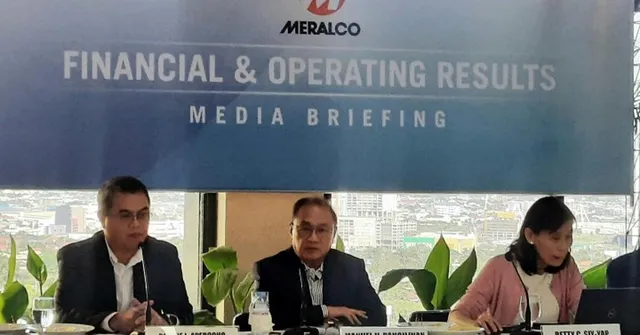
Meralco chairman Manuel V. Pangilinan said the 3,500 megawatts of direct current (MWdc) solar power farm project in Nueva Ecija of SP New Energy Corp. (SPNEC), over which a unit of Meralco will have the majority shares, will need PHP200 billion worth of investments.

In Meralco’s press conference in Ortigas Monday, Pangilinan said the project will also have a 4,000-MW/hour capacity of battery energy storage system.

“There's a battery element for the total project itself. With the batteries, investments estimate for the moment is around PHP200 billion,” he said.

MGen Renewable Energy, Inc. (MGreen), which is the renewables arm of Meralco’s generation unit Meralco PowerGen Corp. (MGen), signed a memorandum of agreement (MOA) with SPNEC last month to secure the rights to subscribe to common and redeemable voting preferred shares of SPNEC amounting to PHP15.9 billion.

“Upon transaction close, MGreen shall have a 50.5 interest in SPNEC,” Meralco said.

Once the transaction is completed, Pangilinan said Meralco aims to lead the development of the largest solar farm not only in Asia but in the entire world.

Meanwhile, for the first nine months of the year, Meralco’s consolidated core net income jumped 53 percent to PHP30 billion from PHP19.6 billion in the same period in 2022.

The company said growth drivers for its performance from January to September period included higher energy volume it distributed, robust performance of its power generation business, turnaround of its Global Business Power Corp. and the completion of the distribution and asset true-up refunds amounting to PHP49.1 billion for the past two years.


Article courtesy of the Philippine News Agency

November 10, 2023

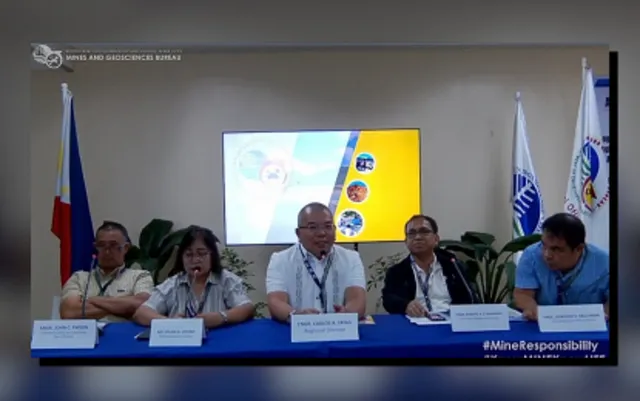
The Mines and Geosciences Bureau (MGB) recorded 4,963 jobs generated through the mining industry in Ilocos Region in 2022.

In a virtual press conference on Monday, MGB Regional Office No. 1 Mine Management division chief Engr. Renato Rimando said the industry in the region is robust as it continues to provide jobs and create wealth in terms of payment of taxes to the local governments and the national government.

According to the MGB data, the sector posted gross earnings of PHP2 billion last year, from the value of limestone, pebbles, sand and gravel, shale, silica, calcareous sandstone, zeolite, and bentonite.

The amount of taxes and fees paid and royalties generated amounted to PHP93.7 million.

"Sand and gravel industry are prime mover in the implementation of infra projects," Rimando said.

In terms of environmental protection and rehabilitation programs, mining companies spent PHP8.1 million for environmental and rehabilitation programs and PHP10.2 million for social development and management programs, with 62 barangays as recipients.

Rimando said they have issued 254 mining permits, two for cement plants, and seven for mineral processing.

MGB Ilocos Regional Director Engr. Carlos Tayag, during the same event, said that although mining has negative connotations it has benefited the region.

"Our country is highly mineralized. We have to really develop them as trees and plants in most of the areas being mined cannot live. There are programs on how to rehabilitate the areas," he said.

Meanwhile, Rimando assured the public that while they intend to open more areas for mining they also consider the rules and regulations before potential areas are put into commercial operations. By Hilda Austria


Article courtesy of the Philippine News Agency

November 10, 2023

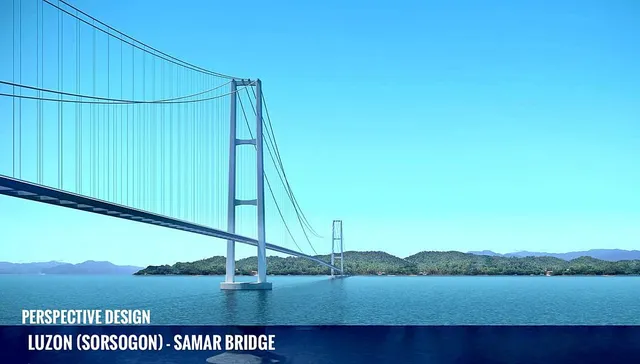
A study team composed of bridge construction experts from the Infrastructure Development Institute (IDI) Japan and the Department of Public Works and Highways (DPWH) is set to commence early stage assessment on the proposed long-span bridge projects that will connect the islands of Luzon, Visayas, and Mindanao.

To discuss the study team’s itinerary, IDI Japan consultants met with DPWH Senior Undersecretary Emil K. Sadain on November 8, 2023 at the DPWH Central Office in Port Area, Manila.

Also present during the meeting were DPWH Undersecretary Maria Catalina E. Cabral, Project Director Rodrigo I. Delos Reyes of DPWH Unified Project Management Office - Bridge Management Cluster; Planning Service - Environmental and Social Safeguards Division Chief Rosemarie B. Del Rosario; and representatives of Regional Offices 5, 8, and 13, who were informed of the assessment coverage and requirements from the DPWH.

According to DPWH Senior Undersecretary Sadain, the pre-feasibility study will cover the Luzon-Samar-Leyte-Mindanao Linkage Project which will not just establish a better link between Luzon to other parts of Visayas and Mindanao but it will provide a permanent solution to the perennial problem of stranding during weather disturbances and port congestion during peak season.

“The realization of Luzon-Samar-Leyte-Mindanao Linkage would significantly improve mobility across the country. On behalf of DPWH Secretary Manuel M. Bonoan, we are thankful for this assistance from IDI Japan, as the previous initiatives on the proposed project did not push through,” said Senior Undersecretary Sadain.

The construction of Luzon-Samar Bridge and Leyte-Mindanao Bridge will cut travel time between major islands and fill in the missing gaps of the country’s main trunk line Maharlika Highway, currently spanning more than 3,500 kilometers from Luzon to Mindanao.

Study Team Leader Masahiko Yasuda of the Dia Nippon Engineering Consultant said that they are looking into the use of maximum single-span length and deep-water foundation as engineering solutions, which were used in the Messina Strait Bridge in Italy and Rion-Antirion Bridge in Greece respectively.

After the meeting, the study team will be heading to Bicol and Eastern Visayas Region to conduct on-site visits, including bathymetric surveys in Matnog, Sorsogon, and Allen, Samar.

Succeeding technical meetings and workshops will then be conducted at the JICA-Philippines Office, DPWH Office, and Japanese Embassy in Manila, before the IDI consultants head back to Japan on November 17, 2023.

November 10, 2023

The Department of Public Works (DPWH) has entered a contract agreement with China Road and Bridge Corporation (CRBC) for the construction of Davao River Bridge also known as Bucana Bridge in Davao City.

DPWH Secretary Manuel M. Bonoan has officially approved the ₱3.126 Billion civil works contract signed by DPWH Senior Undersecretary Emil K. Sadain and CRBC General Manager Ren Xiaopeng for the construction of a four (4)-lane bridge and approaches with a total length of 1,340-lineal meter funded under China-Aid Grant.

The DPWH-CRBC contract signing held on November 3, 2023 was also participated by Counsellor Yang Guoliang of the Embassy of China in the Philippines, CRBC Assistant General Manager Zhang Lei, Project Director Rodrigo I. Delos Reyes of DPWH Unified Project Management Office - Bridges Management Cluster (UPMO-BMC), and DPWH OIC-Chief Accountant June E. Balisi.

In his report to Secretary Bonoan, Senior Undersecretary Sadain said that the Chinese Project Management Company has also gave on November 8, 2023 its confirmation for the civil works contract agreement of the soon to be a modern bridge set to have a profound impact on transportation network, as it is a critical component and will complement to Davao City Coastal Road presently serving as an alternate route to the existing urban road network of Davao City.

According to Senior Undersecretary Sadain, the signing of the contract document mark the formalization of agreements with the selected construction firm procured through competitive bidding among the shortlisted contractors of the Government of the People’s Republic of China (GPRC) and the beginning of the construction phase of Bucana Bridge.

GPRC extends a grant to the Philippines on the basis of the Exchange of Letters signed on November 20, 2018 concerning the construction of the China-Aid Localized Project for Davao River Bridge (Bucana Bridge). The implementation agreement between GPRC and the Government of the Philippines was signed on October 20, 2023.

Senior Undersecretary Sadain shared to Counsellor Yang deepest appreciation to the Government of the People’s Republic of China for working together with the Philippines on various projects that have not only improved infrastructure but also fostered economic growth.

The Binondo-Intramuros Bridge in Manila and the Estrella-Pantaleon Bridge in Makati and Mandaluyong, both across Pasig River, were the first DPWH UPMO-implemented infrastructure project in partnership with the Government of the Republic of China under the Agreement on Economic and Technical Cooperation in 2017.

Over the next 24 months or until November 2025, DPWH UPMO-BMC and CRBC will work for the quality completion of the China-Aid Localized Project for Davao River Bridge located in the estuary of Davao River.

Bucana Bridge Project involves the construction of a 4-lane 6-span extradosed bridge, connection road, traffic engineering, lighting, and other ancillary facilities.

The Detailed Engineering Design (DED) plans is already approved by the DPWH Central Office.

November 10, 2023

Global Ferronickel Holdings, Inc. reported financial results for the nine months of 2023 with consolidated revenues of ₱6.8 billion, operating income of ₱1.8 billion, net income attributable to shareholders of ₱1.5 billion, and earnings per share of ₱0.3021.

Consolidated revenues rose 33.1% year-over-year to ₱6.8 billion due mainly to increased volumes from the Palawan mine and its higher-grade nickel ores, offset in part by lower volumes at the Surigao mine that resulted from wet weather, as well as softer prices for low-grade ores.

Total sold volume grew 20.7% to 3.801 million wet metric tons (WMT), of which 2.711 million WMT were from Surigao and 1.090 million WMT were from Palawan. As a result, the sales mix was 68% low-grade ore and 32% medium-grade ore compared to 78% low grade and 22% medium grade in the year-ago period. The average realized nickel ore price was US$31.93/WMT, reflecting a 10.5% improvement driven by the more favorable mix and the stronger prices of higher-grade ores, which were 16.9% more than last year.

Cost of sales increased 37.8% to ₱2.8 billion due to the opening of Palawan mine which increased contract hires, depreciation and depletion, and personnel costs, while operating costs were up 7.0% to ₱1.8 billion primarily related to general and administrative expenses. Finance costs totaled ₱213.9 million, in line with the recognition of interest expenses resulting from the acquisition of an associate company in 2022.

Consolidated net income contracted 14.4% to ₱1.8 billion, which includes the share in net income of China-based associates of ₱310.3 million. After deducting the net income attributable to noncontrolling interests, net income to FNI shareholders decreased 19.7% to ₱1.5 billion, and earnings per share declined 18.7% to ₱0.3021 as the company continued to return cash to shareholders through share repurchases.

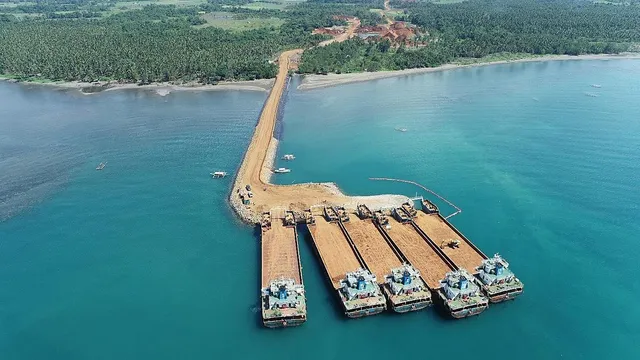
“We are focused on strengthening the business and improving asset diversification,” said FNI President Dante R. Bravo. “Notable progress made on the company’s strategic plans were the purchase of five landing craft tanks (LCTs) to drive meaningful operational and cost efficiencies in transporting nickel ores beginning 2024, and the acquisition of additional land in the Freeport Area of Bataan for our business expansion.”


Article courtesy of the Philippine Stock Exchange

November 08, 2023

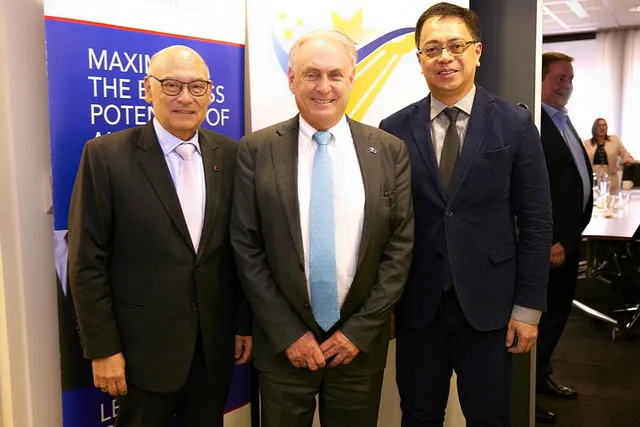
On October 10, 2023, the sixth Philippines–Australia Ministerial Meeting (PAMM) was held in Adelaide, South Australia. The dialogue was headed by Trade and Tourism Minister Senator, the Honorable Don Farrell. The event was chaired by the Australian Ambassador to the Philippines, Her Excellency HK Yu PSM, along with other representatives from the private sector from Australia and the Philippines.

According to Minister Farrell, the Philippines is an extremely important economic partner for which a business mission will be sent to the Philippines in 2024. They will also establish an investment deal team in Manila.

During the dialogue, they also discussed the report by Nicholas Moore’s “Invested: Australia’s Southeast Asia Economic Strategy to 2040”. He is Australia’s Special Envoy for Southeast Asia. Looking back, Mr Moore presented this report during his Manila visit last March 24, 2023 for the media launch of the Partners for Infrastructure (P4I) initiative. The event was hosted by the Australian Ambassador to the Philippines, H.E. HK Yu PSM and was held at Conrad Manila Luxury Hotel. During this visit, Mr Moore mentioned that building greater connections between businesses and people is essential to deepening our economic relationships. “Australia is strengthening links with the Philippines and the region by delivering a Southeast Asia Economic Strategy to 2040, which will set out a pathway to help unlock two-way trade and investment opportunities for business for the next two decades.”

During the dialogue in Adelaide, the business delegation presented their topics and discussed how they can support Australia and their investment strategy in the Philippines. The discussion tackled the “Sectors to Watch” from the “Southeast Asia Economic Strategy to 2040” which include Agriculture and Food, Education and Skills, Resources and Green Energy Transition.

The discussion about Agriculture and Food mentioned how the Australian government can be assisted in the increase of Australian dairy product import into the Philippines.

For the topic on Education and Skills, they talked about narrowing the qualification gap and the recommendation of deploying Australian standards into the Philippines for various industries such as aged care, technology and engineering. [1]

For Resources, they discussed how Australian mining companies can be encouraged to explore and invest in the Philippines for mining and mineral processing. They also talked about having a partnership with Philippine universities and colleges for material science and metallurgical engineering.  

There was great interest in Green Energy Transition as Fortescue shared their progress on Hydrogen energy, Southern Infrastructure with Thorium energy, and Cyclion who provides a Waste to Energy and Fuel solution using waste material such as plastics. [1]

“To place Southeast Asia Economic Strategy into motion, a Philippine action plan has been created and requires the following tactics: Raising awareness, Remove blockages, Build Capacity, and Deepen investment,” [1] from the post of Australia Philippines Business Council.

(Taken from “Invested: Australia’s Southeast Asia Economic Strategy to 2040” by Mr Nicholas Moore AO)

“Discussions on Raising Awareness included outward investment mission programs to the Philippines, and how the private sector firms could offer assistance and collaborate to deliver objectives.” 

“On Removing Blockages, recognition of qualifications must be enabled, along with building ongoing engagement, providing technical support to Philippine regulators and industry associations, and facilitating commercial education training to match Australian education providers and Philippine institutions and businesses. The deployment of Australian standards to the Philippines was recognised during the dialogue. Further discussions included the funding and guidance to address biosecurity challenges. Information about the recent signing of MOUs between Australian universities and Philippine educational providers was welcomed which includes Murdoch University’s MOU with Ateneo UST and Batangas Tech.” [1]

Moreover, during the dialogue, it was mentioned that Building Capacity in the Philippines comprised of subjects such as the increase cooperation on mining policies – including sharing Australia’s expertise in environmental, social and governance frameworks, work with the Philippine Government to strengthen public-private partnerships, enhance support for relevant high-quality research and analysis to foster stronger links between academic institutions and policymakers, and considerations of aged care vocational training program supported by Australian aged care providers.  [1]

It was also recommended for Australia to share their experience and funding with the Philippines for mining and oil and gas projects.

For the fourth required action, Deepening of Investment into the Philippines, some recommendations included extending Partnerships for Infrastructure (P4I) funding for early-stage project preparation support, exploration of a new phase of Australian education and skills assistance to improve standards, and exploration of opportunities for public-private partnerships in digital health.

“These activities could potentially extend to the funding of Feasibility Studies and Project Financing such as EV programs, exploration opportunity for linkages in AI research, and assistance with studies and on-cost for Technology developers in the Philippines.” [1]

It was reported that the Philippines has a Real GDP growth projected to be around 6% annually over the next five years, which is among the highest in Southeast Asia. Other than the recent opening of the economy to foreign investments, there are other important factors that will help sustain the GDP growth of the country. These include the following: better use of capital, labour and technology to increase productivity, and improvements to ease of doing business.

Based on the latest joint statement between Australia and the Philippines, ‘The Ministers and Secretaries reinforced our countries’ commitment to striving for a region that is open, stable and prosperous.’

Atty Dennis Quintero, Chairman of the PABC said, “The Philippines-Australia Business Council (PABC) congratulates the government and private sector representatives from the two countries for the focused and engaging discussions on the identified priority sectors to expand trade and investment between the Philippines and Australia. The PABC is pleased to have provided the Philippine private sector representation in the discussions, working hand-in-hand with our counterpart the Fortescue. Many thanks to our gracious hosts in Adelaide, South Australia!”

The Australian Government Delegation included: Mr Clancy O’Donnell – Trade Adviser to the Minister for Trade and Tourism, Mr Ravi Kewalram – First Assistant Secretary, Free Trade Agreements and Stakeholder Engagement Division DFAT, Mr Jay Meek – General Manager for Trade Austrade, Mr Hugh Robilliard – Assistant Secretary, Southeast Asia Maritime Branch DFAT, Ms Jill Collins – Director DFAT South Australia State Office, Ms Johanna Stratton – Director, Southeast Asia Maritime Branch DFAT and Mr Angus Coverdale – Policy Officer, Philippines Section DFAT.

Business delegation present at the dialogue included: Dr Thomas G. Aquino, Vice Chairman, Philippines Australia Business Council, Mr Sabas “Jun”, Capili – Director Kaizen ANZ Pty Ltd, Ms Carmen Garcia – Founder and CEO Community Corporate, Mr Philip Major – Founder & CEO Cyclion Energy, Dr Simon McKirdy – Pro Vice Chancellor, Harry Butler Institute ; Professor of Biosecurity, Murdoch University, Atty. Dennis A. Quintero – Chairman Philippines Australia Business Council, Mr Christopher Sampson – Conceptual Systems Designer Future Earth Systems, Ms Violy Searby – Treasurer Philippines Australia Business Council, Mr Jeff Pearman – FFI Regional Portfolio Leader Fortescue Metals Group Limited,  Mr John Tantoco – Director Australia Philippines Business Council, Mr Rafael Toda – President Australia Philippines Business Council and Mr Paul Watson – Managing Director, Southern Infrastructure Pty Ltd.

---

Reference:

[1] Australia Philippines Business Council (Oct. 10, 2023). “PAMM Dialogue with Minister for Trade and Tourism Senator the Hon Don Farrell”
https://apbc.org.au/2023/10/17/pamm-dialogue-with-minister-for-trade-and-tourism-senator-the-hon-don-farrell/

[2] “Invested: Australia’s Southeast Asia Economic Strategy to 2040” by Mr Nicholas Moore AO https://www.dfat.gov.au/sites/default/files/invested-southeast-asia-economic-strategy-2040.pdf?ref=snapshot.bcsda.org.au

November 07, 2023

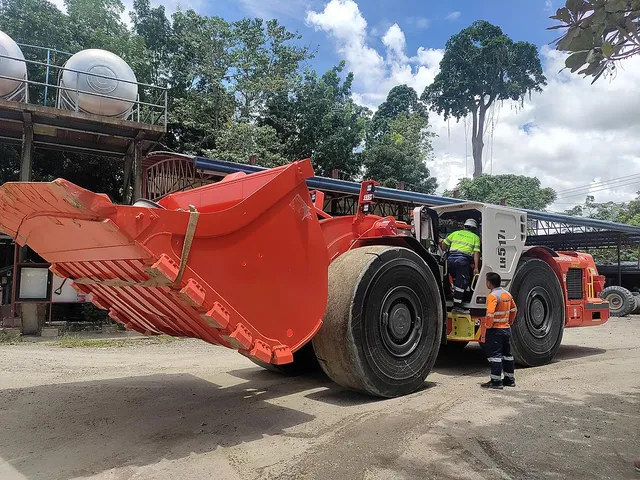
Representatives from Sandvik Mining and Rock Solutions (“Sandvik”) Sales Area South-East Asia (Territory Philippines-Indochina) recently visited Philsaga Mining Corporation (PMC) in Agusan del Sur. They were welcomed and given a tour around the site by Philsaga’s Mechanical Maintenance Engineer, Senior Project Engineer, and Project Manager who were in charge for the development of their Decline project named Tigerway Access. The purpose of Sandvik’s visit was to further enhance their business relations with their client and to have an in-depth study of the activities within the mine site.

Philsaga mine site utilizes Sandvik equipment such as the Sandvik DD421 Development Drill rig and ToroTM LH517i Loader. Just recently, PMC received another ToroTM LH517i to add to its fleet. Meanwhile, Sandvik’s ToroTM TH430 Dump Truck is currently in transit to arrive soon at the mine site.

Sandvik is a global, high-tech engineering group providing solutions that enhance productivity, profitability, and sustainability for the manufacturing, mining, and infrastructure industries. The company operates in the Philippines through its wholly-owned subsidiary, Sandvik Tamrock (Philippines), Inc. (STPI). Through STPI, Sandvik distributes and services the whole range of underground mobile mining equipment and surface drills plus aftermarket spare parts and rock tools.

One of the fast-growing services that Sandvik delivers is offering solutions for automation and remote monitoring of equipment, which increases operational efficiency and process reliability. The mine automation systems called AutomineTM cover all aspects of automation, from single equipment to full fleet control.[1]

During the site visit, PMC expressed that they are highly satisfied with Sandvik Mining and Rock Solutions’ equipment and services. In particular, PMC commended Sandvik’s speed of response and communication, smart advice, and reliability. 

To enhance the experience of customers in availing of Sandvik’s products and services, Sandvik clients can visit online the My Sandvik Portal at https://my.sandvik. This is a useful tool that enables Sandvik customers to request quotations and/or to place orders. The My Sandvik Portal also reports the stages of a transaction and other pertinent information, thus reflecting the excellent level of service that clients receive from their Customer Representatives.

Of note, PMC is highly impressed with the quality of the Sandvik Mining and Rock Solutions equipment and services, in particular, its durability and parts availability. These are important factors and reasons why PMC preferred Sandvik equipment over other OEMs.

Overall, this recent site visit strengthened further the existing robust relationship between PMC and Sandvik. Moving forward, having regular site visits will pave the way for better and closer cooperation, which will result in smoother and more efficient mining operations.

For more information about Sandvik Mining and Rock Solutions, please visit their website at https://www.home.sandvik/en/.

-----

Reference:

[1] https://www.home.Sandvik/en/about-us/business-areas/Sandvik-mining-and-rock-solutions/

November 07, 2023

TVIRD’s Agata Nickel Laterite Project marks end of an era after 382 shipments and nine years of operation

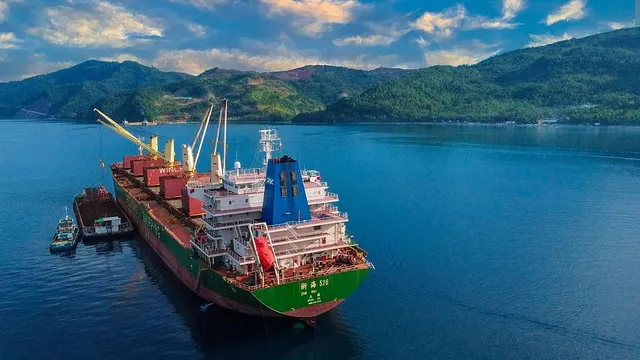
Agata Mining Ventures Inc. (AMVI), a joint venture nickel laterite project of TVI Resource Development Philippines Inc. (TVIRD) and MRL Nickel Philippines Inc., recently concluded its 382nd and final shipment of nickel ore onboard MV Haut Brion last August 17.  Beyond business, Agata marks the conclusion of its nickel project with its world-class environment, safety and health and social development programs as well as IEC campaigns that continue to successfully engage its host communities.

“As far as the TVIRD in the Philippines goes, Agata has achieved exactly what it promised – and that is to expand our foothold in the local extractives industry and land our mining group on higher ground,” said Managing Director Michael G. Regino.  “Agata is a landmark project for our group.  It allowed us to achieve our business objectives while fulfilling our social commitments to our host communities.  But most of all, it made us true stewards of Tubay, Santiago and Jabonga Municipalities’ natural environment.”

Environmental excellence and mine safety

The company has been conferred with multiple national and international awards through the years and has maintained a solid reputation – not only as a steady provider of nickel within the global steel value chain – but also as one of the most responsible mining operators in the country, especially in the meticulous implementation of its progressive rehabilitation program to ensure the sustainability of its environment.

“I am deeply thankful for all the efforts everybody spent through the years for making Agata already a name in the [mining] industry”, General Manager Emilio T. Figueroa III, expressed his gratefulness to everyone involved in the Agata project during his speech at the AMVI’s Thanksgiving Celebration. “One of my favorite mottos in Agata is ‘inspiring change’. Agata may be small compared to other mines, but we made a significant change in the industry. We started the best practices that other mining companies are starting to emulate as Agata became their benchmark that sparked a movement in the entire industry —and this is not a small feat, it is a big thing to teach others our best practices, but for other mining companies to follow in our footsteps means that Agata is not only leaving a lesson, but a legacy for the Philippine mining industry.”

After receiving its first Presidential Mineral Industry Environmental Award (PMIEA) recognition as the Safest Exploration Runner-Up in 2014, Agata became one of the youngest mining projects to be awarded the PMIEA Titanium Achievement Award during its first full year of operations in 2015 – the same honor it would also receive the following year.

In the succeeding years, Agata went on to corner the 2017 PMIEA Platinum Achievement Award, and two more successive Presidential Mineral Industry Environment Awards, namely: the PMIEA-Platinum Award in Surface Mining, and Best Mining Forest Award (2nd Runner Up) in Metallic Mining — top honors for advocating the industry’s highest safety and environmental standards.

In 2019, Agata won an ASEAN Mineral Award under the Metallic Minerals Distribution Category – its first international recognition conferred in Thailand.

Finally, Agata ended its last full year of operations in 2022 with a third Presidential Mineral Industry Environmental Award (PMIEA), once again feted with the country’s highest distinction for exceptional environmental performance, and safety & health practices.

Business and social

During its operations, Agata was able to accomplish a solid business track record. Despite market uncertainty, the company has managed to navigate the minerals market quite well, as evidenced by its consistent shipment history even during the global COVID-19 pandemic. From the start of operations in August 2014 until August 2023, over 165 shipments of Limonite ore and 217 shipments of Saprolite ore were exported to its direct Asian markets – all these, without compromising the integrity of its natural environment.

The company also invested heavily in its communities through the establishment of an agroforestry plantation, poultry and livestock facilities, furniture and handicraft production and fishing equipment.  It also has more than 130 TESDA-certified farmers and established over 150 organic vegetable gardens in local households.

The SDMP is likewise aligned to Agata’s engagement through the Community Royalty Development Plan (CRDP) which transformed the Manobo and Mamanwa tribes’ Royalty Share into sustainable livelihood. The CRDP generated locally certified Cacao Trainers who graduated from the Mabakas Techno Demo Farm – the only TESDA-accredited organic farm school managed by a mining company in the region – and which has over 5,000 graduates to date. It also supports more than 300 indigenous students in both high school and elementary.

To date, there are more than 35 hectares planted with Cacao within Agata’s MPSA while more than 20 hectares have also been established by the indigenous Manobo-Mamanwa Tribe for Cacao production.

Right from the start

Agata’s successful conclusion of its mining operations and the commencement of its final rehabilitation program validates that its core philosophy of “starting it right, keeping the end in mind” is the right one.  This same philosophy drove its employees across the ranks to commit themselves to planting close to 600,000 trees as part of the company’s progressive rehabilitation during Agata’s operations.

It is confident that its self-sustaining communities will continue to thrive long after mining is done. 

It is likewise certain that Agata’s natural environment will continue to flourish under its Agricultural and Eco-tourism framework – testament that a project started right will always have a sustainable future.

November 07, 2023

Greenstone Resources Corporation (GRC), a wholly-owned subsidiary of TVI Resource Development Philippines Inc. (TVIRD), received an official visit from His Excellency David Bruce Hartman, Ambassador of Canada to the Philippines at its Siana Gold MIne (Siana) in Tubod Municipality, Surigao del Norte Province.  Upon the invitation of TVIRD Chairman Clifford M. James, Ambassador Hartman was joined by Second Trade Secretary Kayla Slobodnik and Second Political Secretary Peter Wright on the two-day excursion.

The delegation was welcomed on site by GRC General Manager Albert Chan, key company officers and members of the indigenous Mamanwa Tribe who are part of the company’s host community.  They were likewise toured within the 3,289-hectare Siana Mineral Production Sharing Agreement (MPSA) area where they saw first-hand the developments on the company’s processing plant, main pit, tailings storage facilities and other major infrastructures.

The company also hosted a cocktail reception and welcome dinner for the Ambassador.  Invited guests to the soiree include Brigadier General George L. Banzon, Commander of the 901st Infantry Brigade; Police Brigadier General Rod Mariano; Tubod Vice-Mayor Charlito Ignalig; Alegria Municipal Vice Mayor Dominador Esma; Butuan City Councilor Rey Desiata; Regional Director Larry Heradez, head of the Mines and Geosciences Bureau (MGB) Region 13; and Provincial Environment & Natural Resources Office (PENRO) Head, Agapito Patubo.

“It is through projects and investments like [TVI’s Siana Gold], that the mining industry will lead the way in the pursuit of a green economy,“ said Ambassador Hartman during his keynote message.

“In Canada, we see responsible business conduct as an essential element of the mining sector.  The Government of Canada expects Canadian companies active abroad to respect human rights, to operate transparently and in consultation with host governments and local communities; and to work in a socially and environmentally responsible manner, while respecting local applicable laws as well as the OECD`s Guidelines for Multinational Enterprise. “

“We were thrilled to see the Philippines as the first country in the Indo-Pacific to have adopted Canada’s Toward Sustainable Mining (TSM) framework, and we appreciate TVIRD’s commitment to sustainable mining and [its] regular engagement with local civil society and indigenous peoples,“ he concluded.

Canada and the Philippines

At the center of the Ambassador’s appointment to the Philippines is his two-fold task to conduct an economic and cultural mission – and ultimately to strengthen relations between both countries.

Canada considers the Philippines a strategic partner as evidenced by its growing bilateral relationship, the recent visits of several federal cabinet Ministers and the recently held Joint Economic Commission.  Noteworthy is Canada’s recently launched Indo-Pacific strategy, which promotes regional security, trade and investment, skills development, and environmental and resource conservation. 

Plans to commemorate 75 years of Canada-Philippines relationship in 2024 are currently being spearheaded by the Canadian Embassy in Manila. This will highlight Canada’s successful mission to the Philippines over the years, and the mutual progress that both countries have reaped in harnessing common growth areas like mining and technology.

To date, a number of Philippine mining projects have benefitted from Canada’s participation through technical cooperation, knowledge transfer and investments.  On its part, TVIRD is the first Canadian-invested Filipino company to be licensed and reached production stage under the Mining Act of 1995.

Canadian interests in the country also extends to exploration drilling, financial services, IT and communications, engineering and design, food and beverage, and various charitable institutions.

Business expansion

Canada’s TVI Pacific Inc. owns 30.66% of TVIRD together with majority shareholder Prime Asset Ventures Inc.  In October 2021, the company acquired 100 percent outstanding equity of Greenstone Resources Corporation (GRC) – the owner and operator of the Siana Gold Mine and Mapawa Project – which was previously owned by Australia-based listed gold company Red 5 Limited.

Prior to signing the agreement, Red 5 confirmed that GRC had spent over US$200 million in the development of Siana, which has the only modern gold plant in the region.  Meantime, TVIRD confirmed that the cash portion of the purchase price was funded from internal resources. 

The binding agreement is a landmark deal that underscores the restored investor confidence in the Philippine mining and extractives sector, especially for legitimate large-scale mining projects.  The Siana Mine currently holds all the necessary government permits to restart operations, including an Environmental Compliance Certificate and an approved Declaration of Mining Project Feasibility. 

The project includes a modern 1.1 million tonne per annum Outotec mill, gravity and Carbon-in-Leach (CIL) mill facility commissioned in 2012 – which includes a single stage SAG mill and six CIL tanks.

In addition to Siana, the acquisition also covers the 1,482-hectare Mapawa MPSA and the 595-hectare Ferrer APSA claim.  All assets and properties have obtained government approvals and relationships with key stakeholders.

GRC recently obtained a notice to proceed to construct its seventh tailings storage facility at Siana.  And while it is planning to ramp-up into full commercial operations, it is delivering regular shipments of gold and silver dore bars to the Bangko Sentral ng Pilipinas (BSP).

“The recent visit and encouragement of Ambassador Hartman further increases our confidence in the realization of commercial operations at Siana very soon,” according to TVIRD Chairman Cliff James.  “And in addition to the BSP, we likewise plan to tap our direct markets in Asia, Oceania and Europe for the purpose of distributing our production – just like our Balabag Gold-Silver Mine in Zamboanga,” concluded the executive.

With the necessary technology, equipment, and facilities, there also lies the potential to establish Siana as a processing center for other nearby prospects and gold deposits in the region.  The mine also houses the Mabakas Techno Demo Farm – the only organic farm school owned by a mining company in the region – and which potentially can facilitate skills development for communities within and outside its host municipality.
November 07, 2023

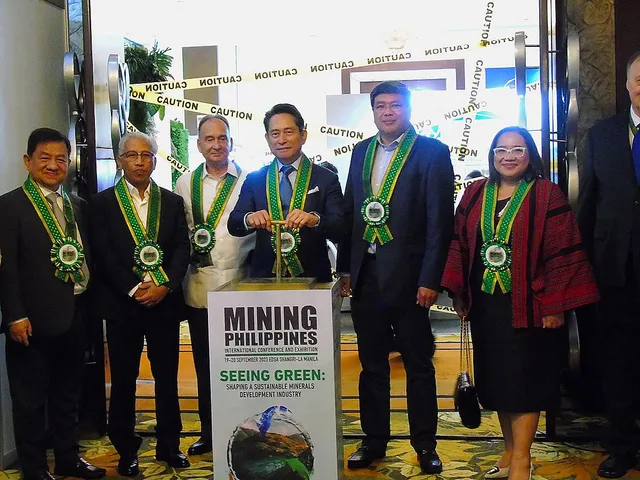
Amidst inflation, supply chain interruptions, geopolitical upheaval, the devastating effects of the COVID-19 pandemic, and their subsequent effects on the energy and industrial commodities markets, mining companies are facing enormous challenges in achieving their profitability and sustainability goals. Environmental, social, and governance (ESG) considerations are more critical than ever, with issues on sustainability gaining prominence and requiring implementation of decarbonization strategic planning. One key aspect of this strategy involves significant investments in renewable energy sources and comprehensive planning to bolster global supply stability in volatile times. Against this backdrop the Chamber of Mines of the Philippines (“COMP”) played host once again to the Mining Philippines Conference 2023 with the theme, “Seeing Green”.

COMP Chair Michael Toledo articulated that the Philippines can only take advantage of opportunities in the energy transition if two conditions were met. First, the country must be able to address the divided public opinion on mining. The second condition involves resolving other issues affecting the investment climate in the industry. These issues include conflicting local and national laws, high costs of power, a protracted permitting process, and a fiscal regime that will not only enhance our country’s competitiveness as a mining investment destination, but equally important, reflective of the government’s designation of mining from being merely a “beneficial” industry to one that is “essential” and “critical”. 

Assessing the Philippines' Potential in the Global Green Metals Revolution

According to the S&P Global Commodity Insights Report, the Philippines is more involved in the upstream industry. A few projects are currently in development, but potential additional value of ores is lost due to lack of local processing capacity. Only fourteen percent (14%) of current Mineral Production Sharing Agreements (“MPSA’) are nickel and copper projects under development.

Philippine exploration budgets dwindled in the recent decade and have not recovered since the imposition of the moratorium on new mining agreements and the ban on open pit mining. In 2022, exploration budget was only US$35 million, representing ten percent (10%) of exploration in the Pacific valued at US$330 million. There was more intensive exploration for green metals in 2022 but most allocations were still directed to exploration activities at mine sites. Local exploration remains gold-focused while advanced exploration for copper and nickel dominates.

The Philippines holds huge untapped and underdeveloped deposits of copper and nickel. The country, which hosts the world’s fourth largest nickel reserves, remains competitive while lagging in copper reserves compared to other countries. It also has the third longest average lead time from discovery to production - 19 years. It maintained its rank in nickel production but lag other countries in copper production.

Nickel and copper production is expected to increase in the medium term with the Philippines maintaining its second spot in 2022 next to Indonesia despite seven percent (7%) year-per-year decrease. The Philippines contributes less than one percent (1%) of global mined copper production in 2022 but there is strong projected growth for copper production when the Tampakan project goes on-stream.

Meanwhile, the Department of Environment and Natural Resources (“DENR”) reported that it is currently undertaking advanced exploration of proposed mineral reservation areas to look for possible local sources of rare earth elements and other critical minerals through its National Mineral Reservation Program. The DENR’s critical mineral policy aspires to provide a sustainable supply of critical minerals and establish value-adding downstream mineral processing industries. No discussion was made, however, as to the source of funding and technical expertise-building in the exploration of critical minerals.

If commodity demand and prices stand their ground, alongside a conducive policy environment and the elimination of physical infrastructure bottlenecks, a significant comeback might be on the horizon. More initiatives from the exploration side to the processing sector are needed to revitalize the Philippines’ position in the nickel and copper value chain. The mining industry’s objectives in expanding the mining and processing involvement of the Philippines must be balanced with the country’s decarbonization goals.

The DENR Continues to Focus on Sustainability and Climate Change Resilience

Globally, climate change has placed the net-zero agenda on top of the objectives of mining companies. At the mining conference, the DENR found it apt to remind the industry to tackle the tangible threats posed by climate change.

In DENR Secretary Maria Antonia Yulo-Loyzaga keynote speech, she mentioned that her department has pilot-tested a new process called Negotiated Sustainability and Resilience Agreement for implementation in 2024. This process involves a dialogue between the DENR and the mining companies to identify and negotiate shared goals such as reduced environmental impacts, renewable energy adoption, and community resilience for the overall improvement of their quality of life.

The DENR also revised the Social Development Management Program under the Philippine Mining Act of 1995 to link it to the Sustainable Development Goals adopted by United Nations member states, to build in the assurance that mining operations respond to host community and ecosystems needs. Secondly, the DENR hopes to formalize small scale miners through step-wise, alternative arrangements to regard them as partners and members of the mining sector. One of these is a proposal to register small scale miners individually, followed by the establishment of a loose organization as the foundation for a more formal association or cooperative towards Minahang Bayan registration. Thirdly, the DENR has adopted the Mitigation Hierarchy in evaluating proposed and ongoing developments in the mining sector. Finally, the DENR reported that it is investing in the digitization of all mining-related information and the processing of applications and permits. Digitization should address making DENR’s procedures more efficient, leading to shorter and more transparent processing permits and applications.

Rationalization of the Mining Fiscal Regime and Developing a Mining Roadmap

With inflation creeping upward, mining companies are pushed to keep cost fluctuation at bay and maximize profits. While investors are pursuing their capital allocation strategies, they are on the lookout not only for mineral prospectivity but on the host country’s tax regime as well. The conference was a venue for the Philippine government to present its new package of fiscal regimes vis a vis other mining jurisdiction.

The Department of Finance (“DOF”) presented that the current mining fiscal regime is heavily geared towards taxation based on gross revenue but does not have a component to capture windfall profits. In contrast, taxes of other countries are skewed towards profitability. The DOF enumerated key reforms under its proposed mining fiscal regime:

  • Simplification of the mining fiscal regime from the current five to two;
  • Imposition of three percent (3%) royalty tax outside mineral reservation to address the constitutional issue;
  • Introduction of a windfall profit tax mechanism to ensure government’s fair share when mineral prices are high; and
  • Provisions on thin-capitalization, ring-fencing, transparency, and accountability.

The proposed special mining tax will be based on “margin”, ranging from zero percent (0%) to fifteen percent (15%). The windfall profit tax is proposed to be not deductible from corporate income tax.

Meanwhile Department of Trade and Industry (“DTI”) Secretary Alfredo E. Pascual in his keynote speech, said the DTI is firmly pushing for the development of the green metals sector by advocating for value-added downstream mineral activities in the segment of battery precursor production used for electric vehicles batteries and battery energy storage system. This initiative is anchored on the global transition to clean energy technologies, which calls for the promotion and development of green metals.

The DTI-Board of Investments also leads the Working Group on Mineral Processing and Battery Manufacturing/Green Metals, which seeks to address concerns and issues vital for developing and promoting the sector to create a strategy that will attract mineral processors and battery manufacturers into the country. As the Philippines aims to strategically position itself in the regional and global value chains of electric vehicles and batteries, it is essential for the government to recognize the suitability of local nickel ores for battery applications particularly battery-grade materials for cathodes. Moreover, Secretary Pascual believes that the abundance of other mineral resources like copper plays a pivotal role in providing essential components of electric vehicles.

Secretary Pascual added that government policy must focus on advancing value-added activities and increasing participation in the regional and global value chains of electric vehicles, batteries, and renewable energy equipment. He mentioned that there is a tremendous opportunity to use the extractive industry's potential to propel long-term economic growth. He identified several opportunities in mining and mineral processing which include:

  • Green metals processing (cobalt, copper, nickel) and other value-added downstream mineral activities;
  • Copper wire rod facility (to address the value chain gap in the local copper industry); 
  • Battery technologies; and
  • End-user industries like renewable energy equipment.

As an added attraction in doing business in the Philippines, Secretary Pascual also mentioned that Section 300 of the Corporate Recovery and Tax Incentives for Enterprises (“CREATE”) Act, provides for the formulation of the Strategic Investment Priority Plan (“SIPP”). Signed on 24 May 2022, the SIPP is the country's investment plan containing the list of priority activities for investment promotion and facilitation supported through fiscal and non-fiscal incentives as provided in the CREATE Act.

The exploration of metallic resources is listed under Tier 1 (Special Laws) which is limited only to capital equipment incentives. On the other hand, green metals processing is listed under Tier 2, where activities cover environment, health, food security, industrial value-chain, and defense-related activities. The SIPP guarantees higher incentives, Tier 2, for registered business enterprises located farther from metropolitan areas and the highest incentives under Tier 3, where projects or activities involve research and development applications, and highly advanced technologies.

Mining Fiscal Regimes and Benchmarking

To realize the revenue potential of the local mining industry and strengthen its international competitiveness, the United States Department of Interior and Department of State provided policy support and technical assistance to the DENR in designing and implementing an upstream fiscal regime. The Technical Assistance on Mining Sector Governance for the Government of the Philippines came out with a report prepared by Deloitte outlining its Key Observations on Philippine mining income taxation. The report presented during the conference stated that income tax rate is comparable to that in benchmarked nations as well as accelerated depreciation. However, the period to carry forward a loss is more restrictive in the Philippines than in the benchmarked nations. Also, special deductions and credits to encourage mining are not offered or are discretionary unlike some benchmarked nations where they are generally automatic and not subject to discretionary approval.

It was recommended in the report that the Philippine government continue to apply the same income tax rates to mines that apply to other taxpayers. In addition, the report recommended not to provide a depletion allowance, like other nations with state-owned minerals, and amend Section 34(G) of National Internal Revenue Code of 1997 (“NIRC”) accordingly and consider not granting income tax holidays to mining taxpayers. This recommendation also calls for an update of Section 83 of the Mining Act, and Sections 39, 217, and 227 of its implementing rules and regulations.

On royalty and excise taxes, the Philippines, unlike most nations, imposes both royalty and excise taxes which total to twelve percent (12%), broken down as follows:

  • 5% Royalty Tax - only levied in a mineral reserve area;
  • 4% Excise Tax - no benchmarked nation charged excise tax on mineral sale;
  • 2% Local Government Tax (maximum); and
  • 1% Royalty Tax to Indigenous People (minimum).

The report mentioned that royalty rates exceed those in benchmarked nations and the combined rate is one of the highest in the world. The current approach imposes a high combined ad-valorem royalty. It recommended that the Philippine government consider imposing a single royalty and subjecting all mines to a five to fourteen percent (5-14%) sliding scale royalty based on net operating ratio applied to net income, like the royalty system in Chile.

To summarize, the key recommendations for reform in the report called for the Philippine government to consider discontinuing royalty imposed on mines within a mineral reservation and zero-rate mineral sales for excise tax. Instead, a new tax based on the Chilean approach of an operating margin-based royalty can be imposed.

A new royalty approach could include the existing one percent (1%) royalty on mines in ancestral lands, existing two percent (2%) local business tax, and a new sliding scale operating margin-based royalty. The benefits of a sliding scale operating-margin (annual profitability) royalty are as follows:

  • Progressive (higher profit mines are taxed more heavily than lower profit mines);
  • More marginal operations can be built, enhancing tax base potential;
  • Automatic adjustments for price cycles (allows the government to capture additional revenue when commodity prices are high without placing a large economic burden on mining companies when prices are low); and
  • Well-tested in major mining nations like Chile and Peru.

It was also recommended that the Philippine government consider adopting non-discretionary exemptions, deductions, and discontinuing the current system where investors must still apply for various fiscal incentives. The discretionary SIPP approach doesn’t suit mining based on the following reasons:

  • Deductions/exemptions/incentives are unstable, unpredictable, ad hoc, and discretionary;
  • The SIPP is revised every 3 years;
  • The tax approach can be standardized in the NIRC, eliminating the need for SIPP; and
  • Investors consider predictability and consistency in fiscal regimes to be of high importance when evaluating where to invest.

Finally, it was recommended that the Philippine government consider making the fiscal systems for Financial or Technical Assistance Agreements (“FTAA”) and Mineral Production Sharing Agreement (“MPSA”) identical. The current approach imposes different fiscal systems on FTAAs and MPSAs. The FTAA approach includes an Additional Government Share that is not conducive to attracting investors. A single system would be administratively easier to regulate and monitor. The unified system can also facilitate the standardization of tax matters set out in the NIRC, negating the need to include these provisions in the MPSA and FTAA contracts, resulting in simpler agreements.

A fiscal regime combining a royalty and tax targeted explicitly on rents (along with the standard corporate income tax) has appeal for many developing countries including the Philippines. Such a regime ensures that some revenue arises from the start of production, and that the government’s revenue rises as rents increase with higher commodity prices or lower costs. In so doing, it can also enhance the stability and credibility of the fiscal regime (though processes to allow renegotiation may also be needed). It can also balance the challenges that each instrument poses for administration. Transparent rules and contracts tend to improve stability and credibility. Poorly designed international tax arrangements, however, can seriously undermine revenue potential.

Continuing the Engagement Between the Government and the Industry

ESG considerations are the driving force for enhanced transparencies in mining operations with calls for urgent compliance by mining companies for greater diversity, equity, and inclusion, as well as responsible mine closure strategies. This has resulted in stronger ties and coordination with host governments and fostering more stakeholder collaboration.

In his Keynote Speech, Manuel V. Pangilinan, Philex Mining Corporation Chair, suggested that the private sector should help government raise its supervisory capabilities through funding of scholarships and training, procurement of equipment, and hiring of requisite personnel. He also called for the separation of the functions of regulation and the promotion of the mining industry. The Mines and Geosciences Bureau (“MGB”) is charged with the promotion, development, and supervision of mining. The Environmental Management Bureau’s (“EMB”) mandate on the other hand, is to enforce environmental laws on mining. Both fall under the supervision of the DENR. These apparently conflicting goals can, at times, place the DENR in a policy dilemma. He suggested spinning off the EMB into a separate and independent body, like the Environmental Protection Agency in the US.
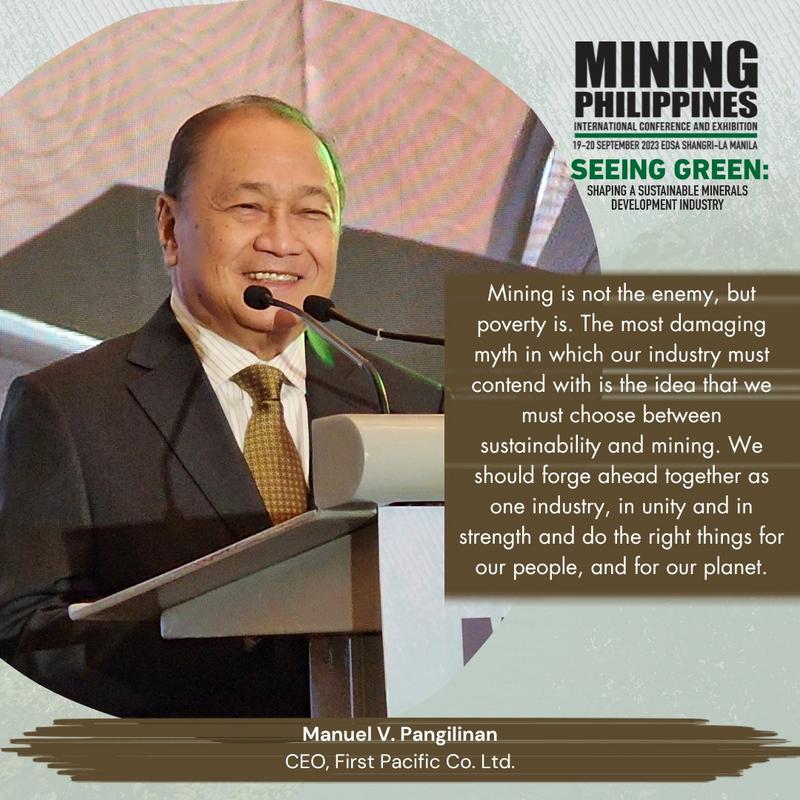
Mr. Pangilinan said that Philex is open to a profit-based fiscal regime to assure the government that an appropriate share of the benefits derived from the resources the state owns. It welcomes the recent congressional approval on second reading of House Bill No. 8937, which proposed a royalty rate calculated against margins realized by mining companies, as well as a windfall profits tax.

Finally, Mr. Pangilinan believes that the mining benefits between the host local government units (“LGU”) and the national government should be shared more equitably. The national government must ensure the timely remittance of taxes due LGUs. As mining is location specific, Philex sympathizes with the LGUs’ desire to realize the fruits of the resources situated in their communities.

Philex is optimistic because the Marcos administration has been clear, predictable, and transparent with respect to mining and applauds the President’s desire to expand the industry, spread the benefits of mining to the countryside, and incentivize the processing of ores into higher value-added export products.

I share Mr. Pangilinan’s sentiments in providing technical assistance to monitoring agencies to build capacity in government regulatory offices. In my capacity as Chair of the Professional Regulatory Board of Geology, I have been recommending mining and energy companies to sponsor scholarships for government employees and local academics in my inspection and monitoring of these establishments. Also, just like Mr. Pangilinan, I have been critical of the administrative set-up of the DENR, having both the MGB and EMB under its wings. However, I have advocated in my previous commentaries that the MGB be removed from the administrative control of the DENR.

With a sold-out attendance, the conference was indeed a success in whetting the appetite of the business community craving a positive outlook for the local mining industry. But quoting Johann Wolfgang Goethe: “The greatest thing in this world is not so much where we stand as in what direction we are moving.” I hope that this level of engagement is soon translated to real action. I see the outcome of the conference as an opportunity for the industry to enhance its reputation, gain greater recognition for the economic benefits mining has bestowed, and pledge commitment to deliver its objective of promoting sustainability. 


Fernando “Ronnie” S. Penarroyo specializes in Energy and Resources Law, Project Finance and Business Development. He is also currently the Chair of the Professional Regulatory Board of Geology; the government agency mandated under law to regulate and develop the geology profession. He may be contacted at fspenarroyo@penpalaw.com for any matters or inquiries in relation to the Philippine resources industry and suggested topics for commentaries. Atty. Penarroyo’s commentaries are also archived at his professional blogsite at www.penarroyo.com

Copies of the Mining Philippines 2023 conference presentations are available for reference at: https://app.glueup.com/event/mining-philippines-international-conference-and-exhibition-81637/
November 07, 2023

At the recently concluded Mining Philippines 2023, Undersecretary Carlos Primo David, speaking on behalf of DENR Secretary Maria Antonia Yulo Loyzaga, detailed how the department is focusing on government-led exploration targeting critical minerals needed to transition to renewable energy.

The limited budget of PHP60 million for minerals exploration, he said, is to be used to revive exploration by government. With the results of the initial exploration by government, there would be enough information for the private sector to get interested in and continue the exploration. This government-led exploration aims to identify, among others, critical minerals and declare more mineralized areas.

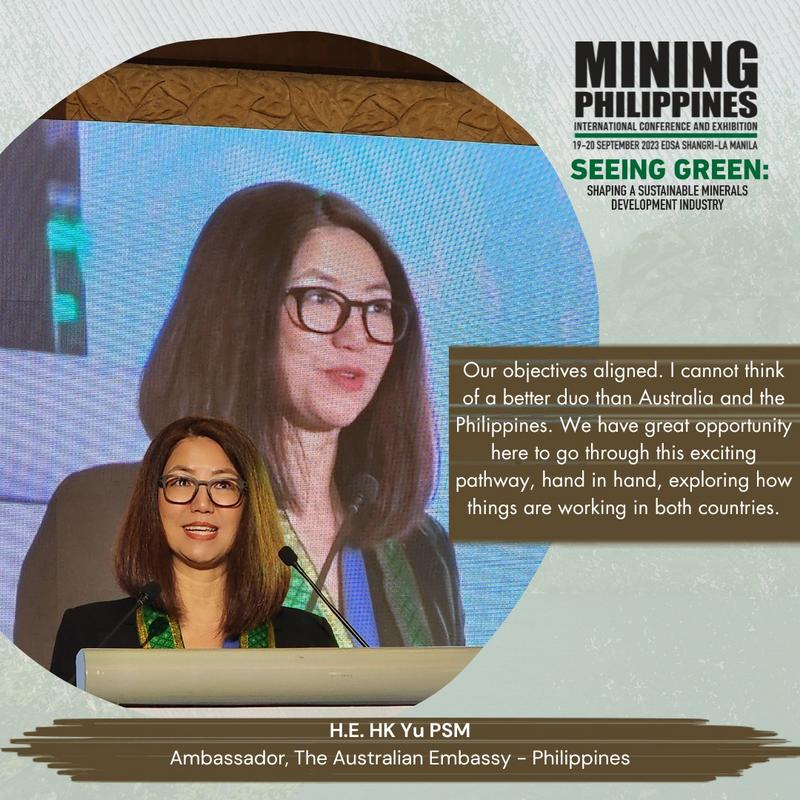
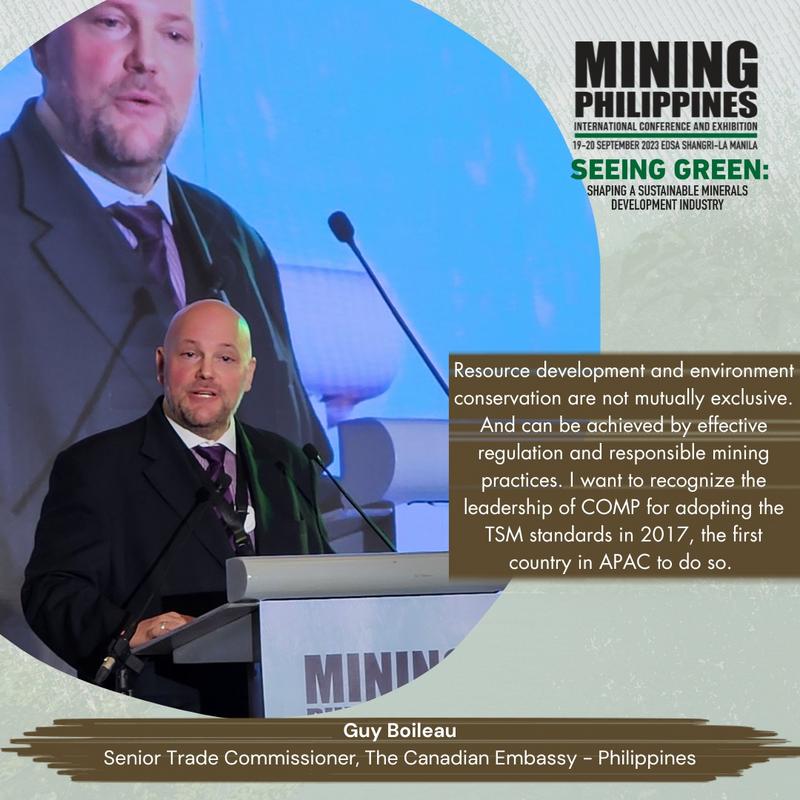
In their respective responses to Undersecretary David‘s keynote, Australia’s Ambassador to the Philippines HK Yu and Canada’s Counsellor (Commercial) Guy Boileau referred to how their countries, which are both mature mining jurisdictions, have adopted long-term strategies designed to take full advantage of the opportunities presented by critical minerals and their role in the transition to clean energy: in exploration, extraction, processing, downstream product manufacturing and recycling.

Critical minerals, as the very name suggests, are critical in making possible a green and digital economy.  There is no energy transition without critical minerals: no batteries, no electric cars, no wind turbines and no solar panels. Electricity flows through copper. Wind turbines need manganese, platinum and rare earth magnets. Nuclear power requires uranium. Electric vehicles require batteries made with lithium, cobalt and nickel. Indium and tellurium are integral to solar panel manufacturing.

Australia has adopted its Critical Minerals Strategy 2023-2030.  By implementing this strategy, it is envisioned that, by 2030, Australia has grown the geostrategic and economic benefits of its critical minerals sector; is a globally significant producer of raw and processed critical minerals and supports diverse, resilient and sustainable supply chains.

It is anchored on the following focus areas: (1) developing strategically important projects; (2) attracting investment and building international partnerships; (3) First Nations engagement and benefit sharing; (4) promoting Australia as a world leader in ESG performance; (5) unlocking investment in enabling infrastructure and services; and (6) growing a skilled workforce.

The strategy recognizes that, while Australia has many competitive advantages and the potential is great, there are corresponding challenges, including fierce global competition as governments around the world race to incentivize investment in diversifying and expanding critical minerals supply chains.

Canada, for its part, adopted its own Critical Minerals Strategy, which had a budget of CAD$4 billion in 2022.  The Strategy sets out a framework for Canada to become a global supplier of choice for critical minerals and the clean digital technologies they enable.

Like Australia, the framework targets job creation, economic growth, the advancement of reconciliation with Indigenous Peoples and close cooperation with Canada’s allies, while meeting international climate and nature protection objectives.

The Philippines has much to learn from these two countries which have led the way in resources development and how their mining industry is at the heart of key sectors driving their economy, including agriculture, manufacturing, artificial intelligence, clean technologies, electric vehicles, energy, among others. 

It is noteworthy that our own Department of Trade & Industry, as discussed by Secretary Alfredo Pascual in his keynote, is pushing for the development a of green mining sector which builds on our mineral riches, particularly in copper, nickel and chromium, and which is anchored on downstream mineral industries, including battery precursor production used in EV batteries and energy storage systems.

Secretary Pascual also highlighted that the Philippines’ wealth lies not in just extracting minerals, but the added value that can be derived from processes such as refining, smelting, and manufacturing, upon mineral extraction.

In this regard, it is worth noting that Canada, in its Critical Minerals Strategy, emphasizes the difference between value chains and supply chains, defining a value chain as the set of activities that add value at each stage of the production and delivery of a product to market (e.g., a product upgrade or process innovation). A supply chain, on the other hand, pertains to the organization and logistics of getting a product to market. For Canada, the value chain for critical minerals includes five segments: geoscience and exploration; mineral extraction; intermediate processing; advanced manufacturing; and recycling.

There is also recognition that critical minerals can change with time based on supply and demand, technological development, and shifting societal needs.  While what are identified as “critical minerals” may vary per country, there is a shared view that critical minerals have few or no substitutes; are strategic and are somewhat limited commodities; or are increasingly concentrated in terms of extraction and in terms of processing location.

The Philippines, therefore, cannot afford to lag in developing these value-adding industries.  While it is certainly in a unique position to be a key player in clean energy market and strategically position itself in regional and global value chains of EV and battery technology, it is not “the only game in town” with other minerally-endowed countries ahead of us in the race.

Notwithstanding the incentives for green metals processing in our 2022 Strategic Investment Priority Plan, it will take a whole-of-government approach plus the indispensable cooperation of the private sector to push our minerals development and clean energy agenda.

Our lofty ambitions must be coupled with mitigating the current uncertainties in minerals exploration and extraction, starting with streamlining the approvals process and strengthening the regulatory regime.

November 06, 2023

Integrated energy company Semirara Mining and Power Corporation (SMPC) recorded a 37-percent drop in net income in the first nine months of the year from P35.9 billion to P22.6 billion. The marked decline was mainly due to lower coal shipments and selling prices.

“The third quarter is always a slow period for us in terms of production and demand because of the rainy season. Last year was an outlier because of high index prices,” said SMPC president and COO Maria Cristina C. Gotianun.

“Our power business really stepped up this year. Their all-time high results offset the sharp earnings drop in our coal business,” she added.

For the third quarter alone, SMPC saw its net income plunge by 66 percent from P10.1 billion to P3.4 billion.

From January to September, average selling price of Semirara coal declined by 23 percent from P5,224/metric ton (MT) to P4,042/MT on stabilizing index prices.

Average Newcastle price during the same period slumped by 48 percent from US$3574 to US$186 while average Indonesian Coal Index 4 slipped by 23 percent from US$84 to US$65.

Nine-month coal production decreased by 14 percent from a record high of 13.7 million metric tons 3 (MMT) to 11.8 MMT due to higher stripping activities in Molave and Narra mines. Coal shipments during the same period dropped by 12 percent from 11.9 MMT to 10.5 MMT.

Meanwhile, the power segment recorded its best-ever overall plant performance over a nine-month period as plant availability improved by 31 percent from 62% to 81%. Consequently, gross generation accelerated by 28 percent from 2,881 gigawatt hours (GWh) to 3,695 GWh while sales volume rose by 24 percent from 2,778 GWh to 3,437 GWh.

Average selling price from January to September posted a 2-percent uptick from P5.62 to P5.75 as higher contract prices offset the impact of receding spot market prices.

Average spot selling price fell by 14 percent from P7.33 to P6.33 largely due to the stabilization of fuel prices and entry of additional capacity into the main grid.

October 30, 2023

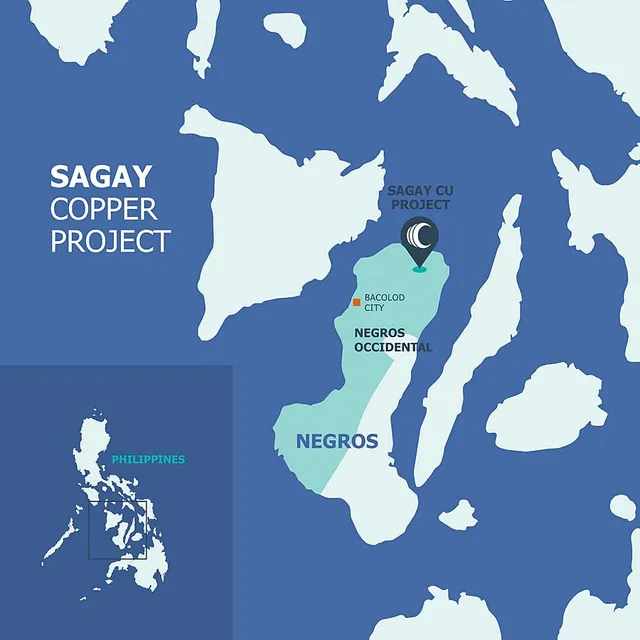
Celsius Resources has completed a program of 12 shallow diamond drill holes to test the extents of oxide copper mineralisation from Nabiga-a Hill at the Sagay Copper-Gold Project.

Highlights from the drilling program include:

  • 69.3m @ 0.56% copper from 10.7m down hole from SGY-040, including
    • 21.3m @ 1.23% copper from 15m down hole.
       
  • 47.0m @ 0.84% copper from 33m down hole from SGY-045, including
    • 35m @ 1% copper from 35m down hole.
       
  • 50.3m @ 0.65% copper from 31.7m down hole from SGY-049, including
    • 30m @ 0.85% copper from 52m down hole.

Celsius Resources is pleased to announce that its Philippine subsidiary, Tambuli Mining Company, Inc. (“TMCI or the “Company”), has concluded the drilling program with positive drilling results for its Sagay Copper-Gold Project in the island of Negros.

Drilling focused on the shallow high-grade copper, or the Secondary Supergene Chalcocite Enrichment zone, to supplement the data gaps and increase confidence in the Mineral Resource1 of this shallow high-grade zone.

Celsius Managing Director, Peter Hume, said:

“The results from the recent drilling confirm the location of copper mineralisation starting from less than 10m beneath the surface. This shallow and relatively flat oxidised zone has potential for a new development to support the phased growth of Sagay. A proposed phased approach for Sagay could deliver project self-reliance towards our goal of ultimately developing the much larger porphyry Cu-Au mineralisation which exists underneath this shallow copper mineralisation and Nabiga-a Hill. This potential mining opportunity is approximately one year behind the Maalinao-Caigutan-Biyog Copper-Gold Project in approvals and has the potential for a rapid start up.” 

To read the full announcement, please click here.
October 30, 2023

Tokyo will continue investing in the Philippines’ big-ticket projects, Japanese Ambassador Kazuhiko Koshikawa reaffirmed Thursday.

Speaking at the 49th Philippine Business Conference and Expo in Manila, the envoy said Japan “has always been and continues to be” the largest official development assistance (ODA) donor of the Philippines but there is still room for the partnership to grow further.

“Japan and the Philippines have very strong, solid economic ties,” he said.

“As we forge commitments in our priority industries, we want to assure you that Japan will continue to invest in big-ticket projects to help shape a thriving future for our fellow Filipinos and for our investors,” the envoy added.

A big chunk of Japanese investments in the country goes into infrastructure projects, among which are the North-South Commuter Railway (NSCR), Metro Manila Subway Project (MMSP), LRT-1 Cavite Extension, LRT-2 East Extension and MRT-3 rehabilitation.

The Japanese envoy said there had been “renewed and growing interest” among Japanese investors in the Philippines, especially as both countries gradually recover from the impacts of the coronavirus disease 2019 pandemic.

Koshikawa also pointed out that need to develop more disaster prevention-related infrastructure in the Philippines and provide a unique opportunity for Japanese companies to leverage their experience, know-how and technology.

‘Amend CREATE’

Just as the Philippines doubles efforts in attracting investors, Koshikawa said the country should also “create a level-playing field for its business environment” that is as attractive or more attractive than its Southeast Asian neighbors.

Koshikawa said the CREATE Act of 2021, with all its good intentions, “has been cited as having made the business environment less competitive”.

“Fortunately, legislators are currently deliberating the CREATE MORE bill in the lower house which has the potential to resolve the taxation challenges being faced by export-oriented companies,” he said.

“We strongly hope that the proposed amendments will soon be realized,” he added.

Koshikawa warned that if the VAT-related provisions are not appropriately amended, “many companies, including that of the Japanese, may pull-out their businesses in the Philippines”.

The envoy said Japan has always been a top investor in the Philippines over the last decade, but compared to investments made through Singapore and the Netherlands, “Japanese companies have invested more than what is represented in the statistics”.

October 30, 2023

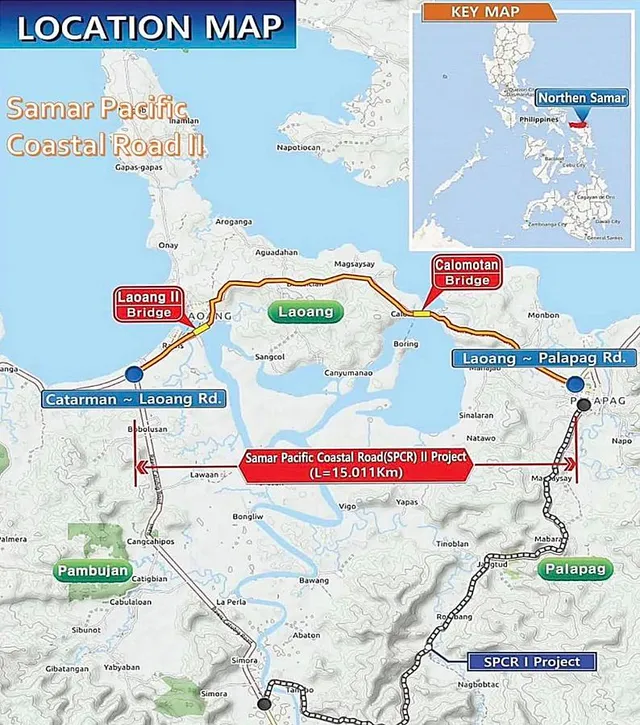
The Department of Public Works and Highways (DPWH) and the Export-Import Bank of Korea (KEXIM), the agency for Economic Development Cooperation Fund (EDCF) of the Government of Korea (GOK), has taken a pivotal move towards construction of Samar Pacific Coastal Road II (SPCR 2) Project in Northern Samar by officially signing the Minutes of Discussion for potential financing for this flagship road project.

Senior Undersecretary Emil K. Sadain, in-charge of DPWH infrastructure flagship projects, and EDCF Director Tae-Bum Kim signed on Friday, October 27, 2023 the Minutes of Discussion which is a crucial milestone in the planning and financing of the SPCR 2 Project.

The ceremonial signing was also attended by KEXIM-EDCF Manila Representative Office Country Director Jae-Jeong Moon and Deputy Country Director Yun-Hak Lee; EDCF Senior Project Officer SoongHo Kim and Project Officer Yoo-Hwan Song; Project Director Sharif Madsmo H. Hasim and Project Manager Teresita V. Bauzon of DPWH Unified Project Management Office - Roads Management Cluster II (Multilateral); DPWH Stakeholders Relations Service Director Randy R. Del Rosario, and Project Manager Shirley Castro of the Office of the DPWH Senior Undersecretary.

Senior Undersecretary Sadain said that the signing of the Minutes of Discussion after the four (4)-day KEXIM appraisal mission to undertake fact-findings and complete review and analysis is a key moment in the efforts to secure loan for the 15-kilometer project that will facilitate direct connectivity and efficient mobility of vehicles between Laoang island and mainland Samar by constructing two (2) bridges namely 800-meter Laoang 2 Bridge and 605-meter Calomotan Bridge and improving the existing roads from the Catarman-Laoang Road Junction to the Laoang-Palapag Road Junction.

According to DPWH Secretary Manuel M. Bonoan, the SPCR 2 Project holds the promise of improving the Filipinos quality of life and boosting economic opportunities within Eastern Visayas Region.

“The development of SPCR 2 Project which forms part of the circumferential road loop of Samar Island and complements the recently completed Samar Pacific Coastal Road 1 Project underscores the administration of President Ferdinand R. Marcos Jr. dedication to provide a more reliable and economical means of transportation”, said Secretary Bonoan.

The team and representatives from the Korea Export-Import Bank, DPWH and other relevant government agencies commence the appraisal mission with a kick-off meeting at the DPWH Central Office in Port Area, Manila on October 24, 2023.

The kick-off meeting marks another chapter in the long-standing partnership of the Government of the Philippines and the Republic of Korea in rolling out projects that will turn the Filipino aspiration of national development into reality.

The proposed SPCR 2 Project is one (1) of the 197 infrastructure flagship projects under President Marcos administration’s “Build, Better, More” program.

President Marcos gave the go-signal for SPCR 2 Project during the 7th National Economic Development Authority (NEDA) Board Meeting on July 19 in Malacañang, five (5) days after he together with South Korean Ambassador to the Philippines Lee Sang-Hwa and DPWH Secretary Manuel M. Bonoan led the inauguration of the 11.6-kilometer SPCR Phase 1 Project in Palapag, Northern Samar funded by Government of the Philippines with assistance from the Export-Import Bank of Korea.

The kick-off meeting focused on technical discussion on the project cost and financing, environment and social impact assessment, road right of way, procurement plans, project implementation and components.

On October 25 and 26, the KEXIM team conducted site visits along the proposed road alignment in the towns of Laoang and Palapag, Northern Samar.

When completed, SPCR 2 Project will not only reduce travel time but will also significantly improve accessibility to goods and services. This will contribute to the economic growth of Northern Samar and enhance the overall quality of life for the people of Laoang and nearby communities.

October 23, 2023

The Department of Public Works and Highways (DPWH), led by Undersecretary for Planning and Public-Private Partnership Services Maria Catalina E. Cabral, inspected on Tuesday, October 17, 2023, the ongoing construction of the 2.55-kilometer NLEX-SLEX Connector Road Section 2 spanning from España Boulevard to the Polytechnic University of the Philippines (PUP) in Sta. Mesa, Manila.

“We want to ensure that right-of-way and construction activities are right on schedule in order to provide seamless travel for motorists, most especially trucks coming from the ports at North Harbor as well as to improve the connectivity and traffic flow between the Southern and Northern part of Luzon and its surrounding areas,” said Undersecretary Cabral.

Presently at 66.64 percent completed, a total of 1.84 kilometer of 4-lane road have already been finished, including the on and off ramp at España Boulevard, while civil works for the entry and exit ramps at Magsaysay Boulevard are being fast-tracked for opening within the last quarter of the year.

When completed, NLEX-SLEX Connector Road Section 2 will link the España Boulevard interchange to the end of Manila Skyway Stage 3 at PUP Sta. Mesa, Manila.

The entire NLEX-SLEX Connector Road, which spans a total of 7.70 kilometers from the end of NLEX Segment 10 at Circumferential Road 3 (C-3) at Caloocan to the end of Manila Skyway Stage 3 at PUP Sta. Mesa, Manila, is a joint project between the Philippine Government thru DPWH and Manila North Tollways Corporation (MNTC) under the Public-Private Partnership (PPP) Program.

“With construction activities on track for the final section, around 35,000 mixed vehicular traffic including heavy vehicles traveling per day from SLEX to NLEX will soon enjoy reduced logistical costs brought by shorter travel time from the current two (2) hours to just 20 minutes,” added Undersecretary Cabral.

Also present during the inspection were DPWH PPP Service OIC Director Pelita V. Galvez, DPWH Planning Service Director Alex G. Bote, NLEX Vice President for Tollway and Development Engineering Nemesio G. Castillo, PPP Service Division Chief David C. Galang, Construction Manager Engineer Ryan Mallari, NLEX Independent Consultant Alex Alcazar, and other officials and representatives from MPTC and NLEX Corporation.


Article courtesy of the Department of Public Works and Highways

October 23, 2023

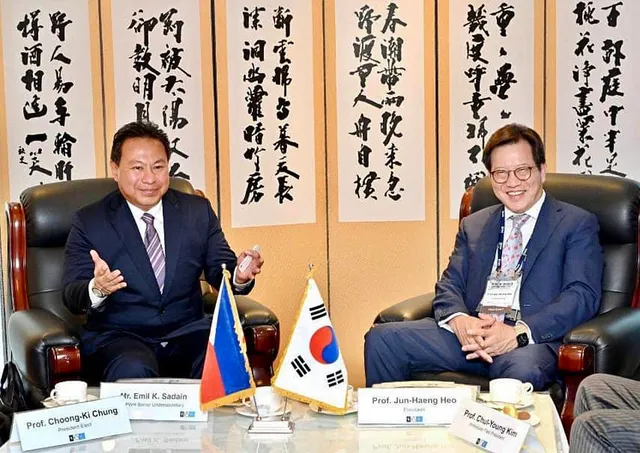
Department of Public Works and Highways (DPWH) Senior Undersecretary Emil K. Sadain was the plenary session speaker at the Korean Society of Civil Engineers (KSCE) 2023 Convention, Conference and Civil Expo on October 19, 2023 at the Yeosu Expo Convention Center, Yeosu, Korea.

Senior Undersecretary Sadain, in-charge of DPWH infrastructure flagship projects under “Build Better More”, discussed the Philippines infrastructure landscape particularly the DPWH flagship projects on roads, bridges and flood control structures including several big-ticket projects supported by Korea Official Development Assistance (ODA).

“This convention is an opportune occasion to share with the world some of our flagship projects that are underway and in the pipeline, some of which are made possible through ODA and are testaments of growing bilateral relations with the Republic of Korea”, said Senior Undersecretary Sadain.

Senior Undersecretary Sadain was warmly received by 2023 KSCE President Jun-Haeng Heo and 2024 KSCE incoming President Choong-Ki Chung and other officers of KSCE.

In this year's convention, KSCE invited all civil engineers in different fields and countries to unite, to participate from October 18 to 20, 2023 and to create a new chapter of discussion under the slogan, “KSCE for the Future”.

The 2023 Convention, Conference and Civil Expo is one (1) of the largest civil engineering event in Korea with about 1,000 papers presented and 100 booths exhibited.

As a high-ranking DPWH official, Senior Undersecretary Sadain heads the specialized infrastructure clusters of the Unified Project Management Office (UPMO) that oversees the implementation of most infrastructure flagship projects being implemented by the Department.

Attendees as part of Philippine delegation at the KSCE 2023 Convention in the Southern part of Korea include UPMO Project Directors Benjamin A. Bautista and Ramon A. Arriola III, former Project Director Virgilio C. Castillo, and Philippine Institute of Civil Engineers (PICE) - Korea Chapter President Engr. Jebie Balagosa.

Senior Undersecretary Sadain, the elected incoming 2024 National President of Philippine Institute of Civil Engineers, Inc. - long been recognized as premier civil engineering professional organization with over a hundred chapters in the Philippines and 13 international chapter, is constantly sharing his wide experience and knowledge in the field in various national and international conferences and forums.

He is a key thought leader when it comes to infrastructure development, and in engaging and collaborating with various high-level stakeholders including international development partners.

A proposal by Senior Undersecretary Sadain for KSCE and PICE international cooperation and technical collaboration in 2024 was optimistically accepted by 2023 KSCE President Heo and President Elect Chung.

KSCE is expected to participate in future PICE-organized civil engineering event for opportunity to exchange information and ideas, networking, and sharing knowledge and technology advancement through wide range of activities including workshops, meetings, and conferences to better serve the public in each country and advance the civil engineering profession globally.

A Career Executive Service Officer (CESO), he is also a model of exemplary performance due to his significant contributions and strategic innovations in Project Management and in the delivery of major and high-impact projects of national significance.

Among the flagship projects of DPWH assisted by Korean government are the Samar Pacific Coastal Road Project (SPCR) in Northern Samar which was inaugurated by President Ferdinand R. Marcos Jr. and DPWH Secretary Manuel M. Bonoan last July 13, 2023; the 3.17-kilometer Panguil Bay Bridge Project (PBBP) that will connect the City of Tangub in Misamis Occidental to the Municipality of Tubod in Lanao del Norte targetted to open to vehicular traffic by first half of 2024; and the Pampanga Integrated Disaster Risk and Reduction and Climate Change Adaptation (IDRR CCA).

The engineering services for the construction of two (2)-sea-crossing bridges connecting Panay Island, Guimaras Island and Negros Island with a total length of 32.47-kilometer located in Western Visayas Region, is also covered by a loan from the Government of the Republic of Korea.

A fact-finding mission from the national headquarters of Export–Import Bank of Korea (KEXIM) also visited Manila last May 2023 for possible enhance cooperation under Economic Development Promotion Facility (EDPF) which is a new ODA loan program of the Korean Government to cover financial gap for large-scale infrastructure.


Article courtesy of the Department of Public Works and Highways
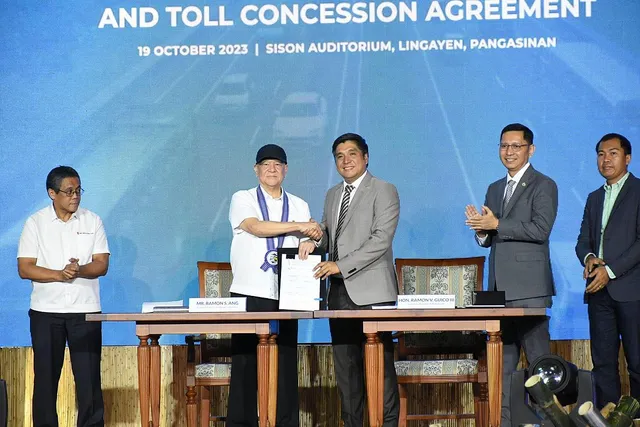
October 23, 2023

San Miguel Holdings Corporation (SMHC) and the Pangasinan provincial government signed Thursday the joint venture and tollway concession agreements for the Pangasinan Link Expressway project phase one costing PHP34 billion.

In his speech, Pangasinan Governor Ramon Guico III said the 42.76-kilometer expressway project, which will connect the province’s eastern and western parts, is a “game changer”.

“It will reinvent the transportation and enrich tourism landscape, prioritize accessibility of citizens to major towns and cities, magnify business and livelihood opportunities, multiply economic activities, build more infrastructures, facilitate province-wide travel, and protect our environmental resources in Pangasinan,” he said.

Once completed within the targeted four-year construction period, the first phase of the expressway is expected to shorten travel time from Tarlac-Pangasinan-La Union Expressway exit in Binalonan town to Lingayen from 90 minutes to just half an hour or less, he said.

The first phase covers 6.9 kms from Binalonan to Manaoag, 11.30 kms from Manaoag to Calasiao and 22.17 kms from Calasiao to Lingayen, with a 2.39-km spur road in Calasiao.

Under the agreement, the province will be entitled to a 5 percent share in the toll revenue and commercial development revenues from the start of the concession period.

The provincial government is also entitled to the 30 percent of the earnings before taxes after the proponent has exceeded a project internal rate of return (PIRR) of 10 percent.

If the PIRR exceeds 12 percent, the province will have a 70 percent share in earnings before tax.

The SMHC submitted its unsolicited proposal to the joint venture selection committee in May this year.

In a press conference, San Miguel Corporation president and chief executive officer Ramon Ang said the design and plan for the expressway’s construction will begin once they have secured the right of way with the help of the provincial government.

“(The) project is worth PHP34 billion at no cost to the government, no government subsidy or guarantee,” he said.

“Kung ano pa pwedeng gawin dito sa Pangasinan, you have my word (na) gagawin ko lahat to support Pangasinan (Whatever needs to be done here in Pangasinan, you have my word that I will do everything to support Pangasinan),” he added.

Meanwhile, Department of Tourism Ilocos regional director Joseph Francisco Ortega said the road project is expected to attract more tourists to visit Pangasinan.

“The tourism industry in the province is ready for the influx of tourists,” he added.

October 23, 2023

Engineers and researchers from both public and private sectors showcased on Friday, October 20, 2023 the latest technologies in the construction industry in an annual symposium organized by the Department of Public Works and Highways (DPWH).
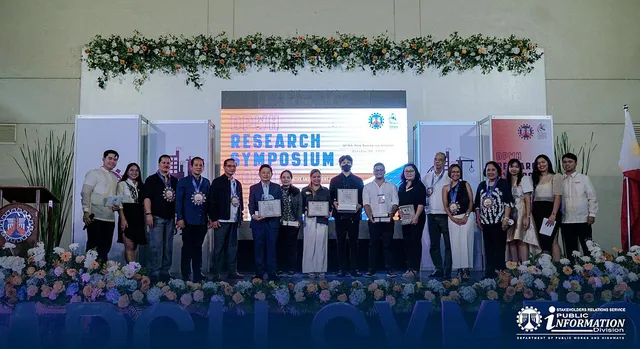
DPWH Undersecretary for Legal Services Anne Sharlyne G. Lapuz, representing Secretary Manuel M. Bonoan, led the 9th DPWH Research Symposium at the Ang Bahay ng Alumni, University of the Philippines – Diliman, Quezon City.

In her message, Usec. Lapuz highlighted the importance of research and maintaining high standards in realizing the Philippines' nation-building efforts and the need for safer and structurally reliable infrastructure in the country as emphasized by no less than President Ferdinand R. Marcos, Jr. in his message during the DPWH 125th anniversary last June 23, 2023.

Also present at the annual research symposium are Assistant Secretary for Planning Services Constante A. Llanes, Jr.; Bureau of Research and Standards (BRS) Director Reynaldo P. Faustino; Bureau of Quality and Safety (BQS) Director Jonathan L. Araullo; BRS Assistant Director Juliana D. Vergara; BRS Research and Development Division Chief Teodoro D. Viyar, Jr.; and past DPWH officials providing mentorship and leadership support namely former Undersecretary for Technical Services Raul C. Asis and former BRS Director Judy M. Sese.

According to BRS Director Faustino and Assistant Director Vergara, more than 200 guests and attendees from the DPWH, the academe, private organizations, other government agencies, and industry partners actively joined this year’s event.

On its 9th year, the DPWH Research Symposium with theme: “Innovative and Resilient Infrastructure” featured nine (9) selected studies on new methodologies and researches, focusing on road safety, as well as innovations for sustainable, resilient, and cost-effective construction materials.

A total of seven (7) research papers were presented by: Maccaferri Philippines Inc.; University of Santo Tomas/PGA-Earth Structure Solutions, Inc.; TIPCO Asphalt Group/Phoenix Asphalt Philippines, Inc.; Geobrugg Philippines Inc./Rebtrade International Corporation; BAS Infrastructure, Inc.; Omya International; and, University of the Philippines – Diliman.

The DPWH, on the other hand, through the BRS and Regional Office 10, showcased two (2) studies on the use of broken pavement as replacement in stone masonry for riverbanks and slope protection projects, and use of mortar sensor for the environmental monitoring of concrete structures.

October 15, 2023

The Bataan-Cavite Interlink Bridge (BCIB) and Panay-Guimaras-Negros Inter-Island Bridges (PGNIB) are expected to start their construction within the next two years, Department of Public Works and Highways (DPWH) Secretary Manuel Bonoan told senators on Tuesday.

For the BCIB, Bonoan said the detailed engineering design is almost complete and already set to be presented to the National Economic Development Authority (NEDA) within the week.

Meanwhile, he said the PGNIB's engineering design will undergo a rebidding process by next year.

"For Panay-Guimaras, the detailed engineering design is for, unfortunately, it's going to be rebid --the consultancy services for the detailed engineering design. But we are confident that we will be able to award by December this year and so that the detailed engineering design will probably commence by next year," Bonoan said during the Senate deliberation of next year’s proposed budget of the DPWH, assuring that by 2025, the BCIB's civil works can start.

"For Bataan-Cavite interlink bridge, we will be presenting this bridge project to the NEDA Board by Friday for their confirmation on the adjustment of the schedules. This is going to be financed by the Asian Development Bank. I think after the NEDA Board, then we will start to negotiate for the loan agreements for the financing of this bridge project. We hope that we can start bidding on the first quarter of next year," he added.

Bonoan was responding to Senator Mark Villar who was asking for an update on both projects.

Villar, a former DPWH Secretary, gave his full backing to the proposed 2024 budget of the DPWH amounting to PHP822.2 billion and praised the agency's performance, particularly in improving its disbursement rate and continuation of big-ticket infrastructure projects.

"I'd like to commend the DPWH for their efforts. [It's] not always recognized, but it's amazing... the accomplishments of this department," Villar said.

The BCIB project, which the Asian Development Bank (ADB) has estimated the cost at PHP175.66 billion, is expected to reduce travel time between the provinces of Bataan and Cavite to 45 minutes from the current five and a half hours.

On the other hand, the PGNIB is expected to cut travel time from Panay to Negros Islands through ferries from three to four hours to just less than one hour.

October 15, 2023

The National Economic and Development Authority (NEDA) Board, headed by President Ferdinand R. Marcos Jr., approved on Friday several high-impact programs and projects amounting to approximately PHP269.7 billion.

In a televised briefing from Malacañan Palace in Manila, Balisacan said the approved projects include the PHP4.5-billion upgrade, expansion, operations and maintenance of the Bohol-Panglao International Airport.

"This unsolicited PPP (public-private partnership) project aims to increase the passenger capacity and improve the passenger experience at the Bohol-Panglao International Airport," said Balisacan.

The expansion project will increase the airport's capacity to 2.5 million passengers per year at the start of the project from the current two million passengers.

After the upgrade, the capacity will further increase to 3.9 million passengers per year.

"We expect this project to boost tourism and, as a result, generate more high-quality jobs," said Balisacan.

Balisacan said the NEDA Board likewise approved the PHP392-million Dialysis Center PPP Project for the Renal Center Facility of the Baguio General Hospital and Medical Center.

The project aims to increase the number of active hemodialysis machines from the current 30 to 108 by 2029.

"This will enable the Baguio General Hospital to provide more affordable dialysis treatment to a greater number of chronic kidney disease patients," said Balisacan.

Aside from these, Balisacan said the NEDA Board confirmed the approval of the Infrastructure Preparation and Innovation Facility’s second additional financing to improve and accelerate the delivery of infrastructure flagship projects (IFPs).

The Infrastructure Preparation and Innovation Facility provides the Department of Public Works and Highways and the Department of Transportation with a better mode for financing and conducting project preparation activities.
"The second additional financing will include more Infrastructure Flagship Projects or IFPs to its scope, allowing more IFPs to be implemented sooner," said Balisacan.

The total project cost is PHP13.08 billion, with PHP11.38 billion to be financed through Official Development Assistance from the Asian Development Bank.

The NEDA Board likewise confirmed the approval of the Green Economy Program which aims to build the capacity of both the national and local government units, and the private sector to mainstream and sustain green economy activities, enhance circular economy, reduce waste and plastic, and increase energy efficiency and renewable energy deployment.

The program will be financed through a PHP3.62-billion grant from the European Union.

To ensure the sustainability and maximize the economic benefits of previously approved infrastructure projects, Balisacan said the NEDA Board approved certain changes to the Bataan-Cavite Interlink Bridge and the Cebu Bus Rapid Transit (BRT) project.

"The cost of the Bataan-Cavite Interlink Bridge (BCIB) project will be increased to PHP219.3 billion from PHP175.6 billion, and the implementation period will be extended to December 2029," said Balisacan.

The project involves the construction of a 32.15-kilometer bridge over Manila Bay that will significantly reduce travel time between Bataan and Cavite from four to five hours to just 30 to 45 minutes.

Balisacan said the project is also expected to decongest traffic in Metro Manila since travelers going to and from either Bataan or Cavite passing through Manila could use the BCIB instead.

For the Cebu BRT project, the updated project plan will now include mixed traffic sections from Bulacao-Talisay, SRP-Talisay, and IT Park-Talamban.

Balisacan said there will be an increase in the number of stations and terminals, optimization of routes, and an overall increase in the number of buses.

The project cost will be increased to PHP28.78 billion from PHP16.3 billion, while the implementation period will be extended until the end of December 2027.

The loan validity from the Agence Française de Développement (French Development Agency) and the World Bank will also be extended until September 2027.

"With these approved projects, the Marcos Administration reaffirms its commitment to aggressively advance infrastructure development to attain our medium-term development goals of more high-quality jobs and better lives for all Filipinos," Balisacan said. 

October 15, 2023

The Philippines wants to craft a national strategy that would deal with the exploration and exploitation of deep-sea mineral resources in the future, the Department of Foreign Affairs (DFA) said Monday.

The Philippines, together with Jamaica-based International Seabed Authority (ISA), is hosting a two-day national capacity development workshop on deep-sea-related issues to discuss the framework needed to enable the country to participate in ocean mining.

In his opening remarks Monday, Foreign Affairs Undersecretary Charles Jose noted that resources containing cobalt, manganese, copper, nickel and other rare minerals are believed to be abundant on the seabed ocean floor -- most of which are beyond national jurisdictions.

“The Philippines as an archipelagic state is entirely dependent on the sea and our state's ecosystem is affected by changes in the larger ocean ecology. We are therefore committed to the conservation and sustainable management of the oceans and the seabed,” he said.

“The Philippines encourages a whole-of-society approach to tackle these matters and form a holistic strategy, with regard to the exploration and possible development of the seabed in the future,” he added.

Mario Aurelio, ISA Legal and Technical Commission Commissioner, hoped the workshop would allow stakeholders to look at how the Philippine Mining Act can be revised in accordance with international law.

A country can only participate in activities in the ISA if it has an UNCLOS (United Nations Convention on the Law of the Sea)-compliant deep-sea mining legislation, he said.

The ISA regulates and controls all minerals-resources-related activities in the so-called “The Area” or the seabed beyond a country’s national jurisdiction “for the benefit of mankind as a whole”.

The ISA has already issued at least 31 exploration contracts in the Pacific, Indian and Atlantic Oceans while developing regulations for the mining itself.

“What we know is, from many, many years of research, that the minerals in the seabed contain more metals, more minerals than all the resources that are left on land,” ISA Secretary-General Michael Lodge told reporters in a press conference.

“Obviously, we've been exploiting land-based resources for thousands of years. And the seabed we haven't exploited at all. So it's new territory in that sense,” he added.

Lodge said one part of the abyssal plain -- an underwater plain on the deep ocean floor -- between Hawaii and Mexico alone, also known as the Clarion-Clipperton Zone, contains more copper, cobalt, nickel and manganese than all the remaining terrestrial reserves of those minerals.

“(There’s a) great potential. But so far, we are still at the stage of exploration of understanding the resources and understanding even more how to exploit it in a sustainable way,” he said. By Joyce Ann L. Rocamora


Article courtesy of the Philippine News Agency

October 15, 2023

A high ranking official of the Department of Public Works and Highways (DPWH) attended the Korea-Philippine Infrastructure and Plant Forum and the Korea-Asean Project Plaza in Taguig City on October 12, 2023 organized by Korean Embassy (Embassy of the Republic of Korea in the Philippines) in Manila with the Korea Trade-Investment Promotion Agency (KOTRA).
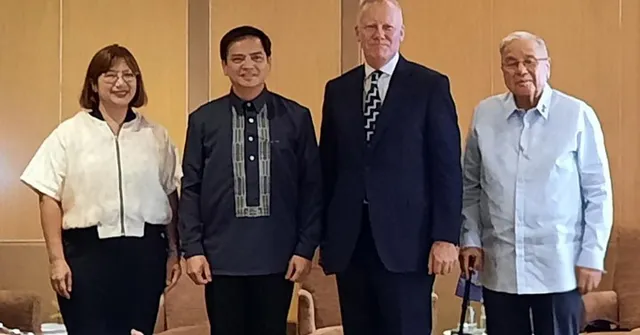
DPWH Senior Undersecretary Emil K. Sadain represented Secretary Manuel M. Bonoan at the gathering intended to be a sharing experience between the governments of the Republic of Korea and the Philippines on infrastructure development with Filipino and Korean construction and engineering companies participating to explore the opportunity to find business partners.

The forum was also attended by Department of Transportation Secretary Jaime Bautista, Korean Ambassador to the Philippines Lee Sang-Hwa, and KOTRA Manila Director General Lee Sujung.

Senior Undersecretary Sadain said that the fora along with the representatives of other neighboring countries is a great opportunity to forge new business alliances and to showcase projects in the pipeline which will soon benefit Filipino people.

Over the 70 years of the establishment of Korea-Philippines diplomatic relations, Korea has emerged as an active ally, providing the much-needed support to bolster our infrastructure.

The alliance between Korea and the Philippines extends far beyond economic cooperation but also technology transfer, educational exchange, and disaster relief efforts.

This has been evident with the infrastructure project that was successfully built under Official Development Assistance through the Export-Import Bank of Korea such as the recently completed Samar Pacific Coastal Road Project in Northern Samar.

In his message, Senior Undersecretary mentioned some of the infrastructure development plans under the “Build Better More” infrastructure program of the administration of Philippine President Ferdinand R. Marcos Jr.

According to Senior Undersecretary Sadain, collaborations between the Republic of Korea and the Philippines continue to thrive, with a focus on future-oriented projects such as the Panguil Bay Bridge Project in Northern Mindanao, Pampanga Integrated Disaster Risk and Reduction and Climate Change Adaptation in Central Luzon and detailed engineering design (DED) activities for the Panay-Guimaras-Negros Island Bridges, a long-time dream project for the people of Western Visayas.

The Republic of Korea's unwavering support for the Philippines in infrastructure development exemplifies the power of international partnerships and as time goes on, this enduring friendship continues to shine as a beacon of cooperation and goodwill on the world stage.