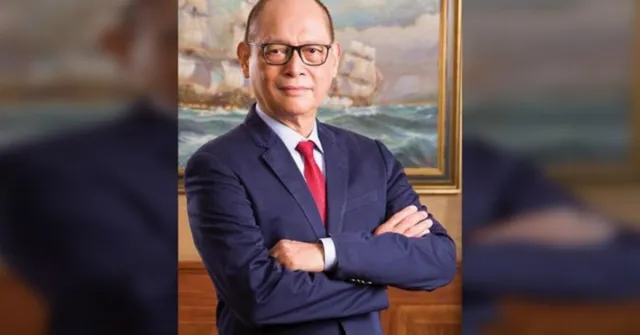
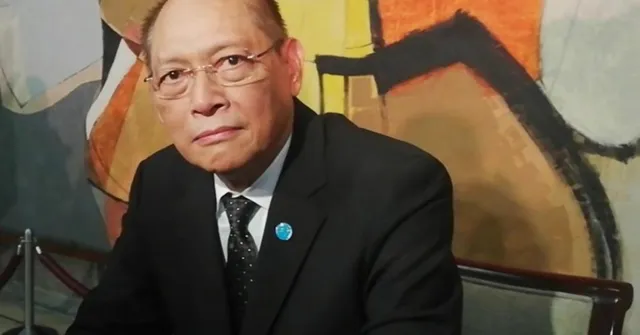
Photo credit: PNA - Finance Secretary Benjamin Diokno
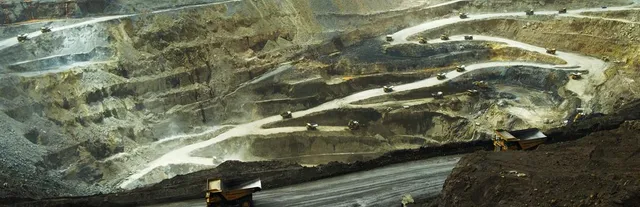
Finance Secretary Benjamin Diokno said the mining industry is a potential source of sustained economic growth as he underscored the benefit of mobilizing investments for mine development.
“The mining industry holds the greatest potential to be a key driver in our economic recovery and long-term growth, especially now that world metal prices are high. The Philippines, after all, is one of the world’s most richly endowed countries in terms of mineral resources,” he said Wednesday at the listing of Philex Mining Corporation’s (Philex) common shares in the Philippine Stock Exchange (PSE).
Philex is mobilizing investments for the development of its Silangan underground copper-gold mine in Surigao del Norte.
In a disclosure to the PSE, the company said it is offering a maximum of 842 million common shares at the rate of one offer share for every 5.8674 shares owned for PHP3.15 each to raise a total of PHP2.652 billion new equity.
The stocks rights offering (SRO) period started on July 12, 2022 and ended July 25, 2022.
The Silangan project, considered one of the biggest copper-gold mines in the country, is planned to be mined in two phases. The first phase has a mineable ore reserve of 81 million metric tonnes which will be mined for 22 years at a rate of 4 million tonnes per year.
The mine is targeted to commence commercial operations in the first quarter of 2025.
Diokno said Philex’ SRO listing demonstrates the mining industry’s confidence in the country’s promising economic growth prospects.
He said the offering means more jobs will be created, local economies will be reinvigorated, and additional revenues will be contributed to the government.
The Department of Finance (DOF) estimates that the project will generate around PHP8.5 billion in excise taxes alone for its entire mine life.
Diokno said the listing sends a strong signal to the mining industry that the country's capital markets are viable instruments for fast tracking the development of large mining projects.
He said the Marcos administration is committed to continue creating an enabling environment for mining activities to flourish in the country as he looks forward to similar listings in the future.
“We recognize that apart from boosting local development, mining is a strong magnet for investments that can propel our economy into a higher growth trajectory,” he added.
Diokno said the government expects the mining industry to strictly adhere to responsible and sustainable mining practices.
He said the mining industry should strike a balance between protecting the environment, uplifting local communities, and supporting the government’s socioeconomic agenda.
“This is a non-negotiable condition so we can guarantee the sustainability of the industry and the strong economic growth of its host communities,” he said.
Article courtesy of the Philippine News Agency
Photo credit: PH Stocks
Integrated energy company Semirara Mining and Power Corporation (SMPC) posted P10.8 billion in second-quarter net income, 171 percent better than the P4 billion reported last year.
All-time high coal selling prices coupled with higher spot electricity sales volume at elevated prices accounted for the upsurge.
From January to June, SMPC’s bottom line more than quadrupled (311%) from P6.3 billion to P25.8 billion, its highest for any given semester.
“As expected, we had a weaker performance quarter over quarter because of the China lockdowns but compared to last year, we did very well,” said SMPC president and COO Maria Cristina C. Gotianun.
“We maintain our view that the second semester will be anemic because of market volatility and unfavorable weather conditions,” she added.
For the second quarter alone, contributions from the coal segment grew by 195 percent from P3 billion to P9 billion while SEM-Calaca Power Corporation (SCPC) accounted for P1 billion, up 81 percent from P581 million. Southwest Luzon Power Generation Corporation (SLPGC) contributed P742 million, a 107-percent increase from P359 million.
Coal Operating Results
Total shipments from April to June dropped by 24 percent from 4.9 million metric tons (MMT) to 3.7 MMT as China imposed COVID-19 lockdowns and shifted to Russian coal.
Export sales plunged by 44 percent from 3.2 MMT to 1.8 MMT while domestic sales grew by 12 percent from 1.7 MMT to 1.9 MMT.
Buffering the impact of lower shipments was the 126-percent increase in average selling prices from P2,393 to P5,399, the highest for any given quarter.
Heavy rainfall and higher stripping activities curbed coal production, dropping 21 percent from 4.3 MMT to 3.4 MMT. This, together with lower sales volume, raised high-grade coal inventory by 50 percent from 1.0 MMT to 1.5 MMT.
Power Operating Results
Overall gross generation in the second quarter was mostly flat at 984 GWh as SCPC Unit 2 remained on forced outage because of a defective generator stator.
Total electricity sales declined by 9 percent from 987 GWh to 900 GWh, most (56%) of which was sold to the spot market. The rest (393 GWh) was sold through bilateral contracts.
High uncontracted capacity allowed SMPC to boost spot electricity sales by 188 percent from 176 gigawatt-hour (GWh) to 507 GWh. Average spot selling prices remained elevated at P6.91 versus P6.87 last year.
Total spot purchases declined by 60% from P617 million to P245 million on higher plant availability, which improved by 8 percent from 60% to 65%.
Article courtesy of the Philippine Stock Exchange
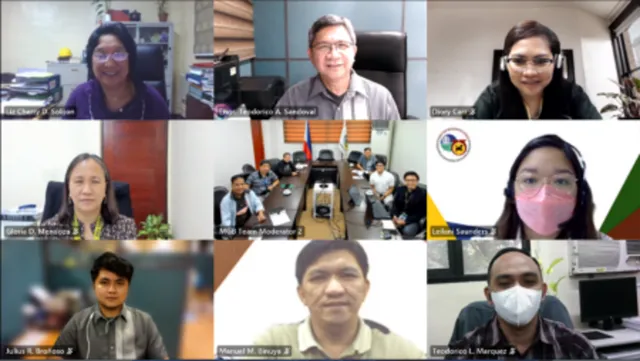
Photo: Group photo of the participants after the MGB Management approved the Capstone Project (CP) for implementation during CP Orientation on July 12, 2022
With the start of online transactions, the Mines and Geosciences Bureau (MGB) is currently developing a system that will serve as a digital platform for the submission of the compliances by the mining companies and stakeholders with the terms and conditions of the Contracts/Permits/other similar Mining Tenements, and other pertinent laws, rules, and regulations.
The project is the approved Capstone Project (CP) of Mr. Jeffrey S. Ledesma, a scholar of the Development Academy of the Philippines under the Public Management Development Program. His CP entitled, “Strengthening Mining Monitoring Method by Enhancing Mining Compliance Procedures Through Process Automation: Development of an Electronic Mining Compliance and Monitoring System (eMCMS)” was conceptualized through the guidance of his Institutional Partners, Engr. Nonita S. Caguioa, Department of Environment and Natural Resources Assistant Secretary for Finance, Information Systems, and Mining Concerns and Engr. Teodorico A. Sandoval, Chief of the MGB Planning, Policy, and International Affairs Division (PPIAD). The project was approved for implementation by the MGB Management on July 12, 2022, during the CP Orientation.
The project targeted the internal and external stakeholders as the beneficiaries. It is designed in three phases based on its scope and coverage in terms of mining scale, mineral type, and policy requirements. The Phase I will serve as the pilot phase which aims to use the system by the selected mining companies who will initially be engaged in the design, development, and implementation. Phases II and III will commence after the successful pilot testing and integration of provisions in the mining-related policies which will serve as the legal basis for its implementation. Phase I is expected to be completed at the end of September 2022.
The eMCMS development is an in-house system development through the collaborative effort of the eMCMS Technical Working Group created on July 28, 2022.
The success of this project will improve the organizational productivity of the MGB and mining companies’ technical personnel conducting the monitoring activities and mining compliance respectively. Likewise, it will provide an efficient and effective way of delivering services to its stakeholders because of the conversion of manual to electronic and digital transactions. It is also expected that related information will easily be generated and shared to the public.
This initiative will ensure the integration of other government policies such as the ease of doing business, e-commerce law, and the Data Privacy Act among others.
Article courtesy of the MGB
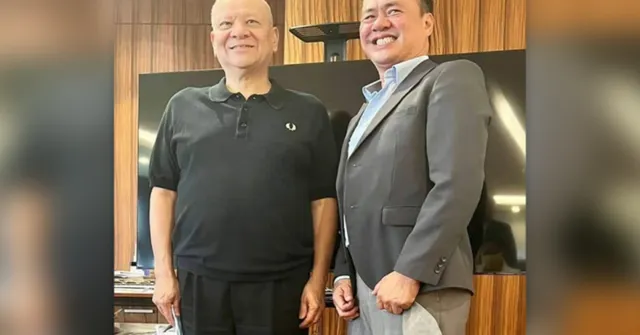
San Miguel Corp. (SMC), one of the country’s largest and most diversified conglomerates, is set to open a USD500 million electric car battery plant in Dinagat Islands province, Governor Nilo Demerey Jr. said Thursday.
Demerey confirmed the company’s decision to establish the plant in Dinagat Islands after his meeting with SMC president and chief executive officer Ramon S. Ang on Wednesday.
“The establishment of the electric car battery plant will commence in September this year,” Demerey said in an interview.
The plant will be constructed within the company’s 25,000 mining claim in the province, he added.
“This is part of our efforts to industrialize Dinagat Islands and create more job opportunities, increase the income of the province, and uplift the lives of our people,” Demerey said.
He said the construction and full operation of the electric car battery plant would generate about 10,000 jobs.
“The components for the manufacture of electric car batteries are already present on the island,” Demerey said.
The SMC has mining interests in the towns of Cagdianao, San Jose, and Basilisa. Its mining claims are reportedly rich in minerals, such as nickel, manganese, chromite, and iron that are needed for the manufacture of the batteries.
“We are now working on the necessary documents and pertinent papers for the start of the construction of the plant in September,” Demerey said.
He thanked President Ferdinand Marcos Jr. for supporting the initiatives of the local officials of the Dinagat Islands for industrialization.
“President Marcos is instrumental in this endeavor, especially in the setting up of this battery plant in the Dinagat Islands,” Demerey said.
Other matters between the provincial government and the SMC about the construction of the plant, such as tax holidays, are still being finalized, the governor said.
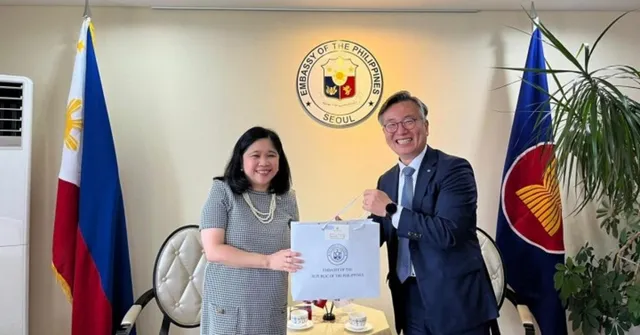
Philippine Ambassador to South Korea Ma. Theresa Dizon-De Vega met with Korea Hydro and Nuclear Power Co. Ltd (KHNP) executives last July 19 to discuss future Philippines-Republic of Korea (ROK) cooperation on nuclear technology and renewable energy.
The KHNP executives include Project and Overseas Nuclear Business Division Executive Vice President Nam Yoh-Shik, Overseas Nuclear Business Section Vice President Kim Yongsoo and Overseas Nuclear Business Section Senior Manager Choi Younghwan.
During the call, De Vega affirmed the Philippines’ interest in focusing on a viable and sustainable energy plan and informed ROK that President Ferdinand R. Marcos Jr. himself expressed interest in pursuing nuclear technology and other energy cooperation platforms with South Korea.
KHNP is the largest power generator in Korea, producing one-third or around 28 percent of Korea’s domestic demand for power through a combination of nuclear power, hydropower, pumped-storage power, and new and renewable energy.
It is also an energy partner of 29 countries for the global power supply.
KHNP is a long-time partner of the Philippines on energy-related activities, having led the feasibility studies for the safe use of the Bataan nuclear power plant and the Cagayan Eco Zone.
The KNHP likewise shared they are trying to support more experts in the nuclear energy sector and was pleased to share that Korea Electric Power Corporation (KEPCO) International School has a student engineer from the Philippines.
The officials looked forward to further strengthening PH-ROK energy cooperation in the future.
Photo credit:
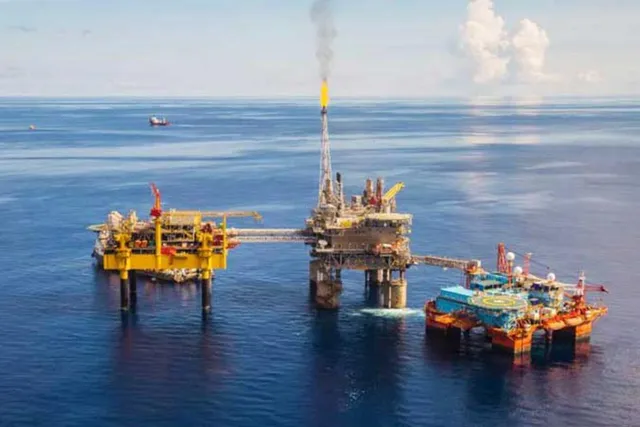
A subsidiary of Enrique Razon Jr.-led company has signed a share purchase agreement to formalize the acquisition of stakes in Malampaya gas field from Dennis Uy’s firm.
In a statement Friday, Prime Infrastructure Capital, Inc. bared that its unit, Prime Exploration Pte. Ltd., sealed the share purchase deal with MEXP Holding Pte. Ltd., a subsidiary of Udenna Corp.
Prime Infra added the transaction is still subject to the consent of the Philippine National Oil Company Exploration Corp. (PNOC EC) and the Department of Energy (DOE).
To recall, MEXP acquired 45-percent share of Shell Philippines Exploration B.V. (SPEX) in Malampaya deep-water gas-to-power project. SPEX is also the operator of the natural gas field.
MEXP’s buyout of SPEX’s share in Malampaya was a subject of Senate inquiries in 2021.
Senator Sherwin Gatchalian then urged the DOE to carefully assess the financial health of Udenna’s subsidiary.
Prime Infra said its acquisition of shares in Malampaya will inject investments to expand Malampaya operations, adding it supports the administration’s goal of energy security.
“We believe that gas is an important transition fuel in the near-term, reducing the need for baseload fossil fuels like coal. Hence, we intend to accelerate investments on the Malampaya gas field to improve the output of existing wells and, if possible, develop new wells in the area once the license extension is secured from the government,” Prime Infra chairperson Enrique Razon Jr. said.
Razon added that Prime Infra, Shell, and Udenna are working closely to ensure the smooth transition of Malampaya operations from SPEX to Prime Exploration. By Kris Crismundo
Photo credit: IHS Markit
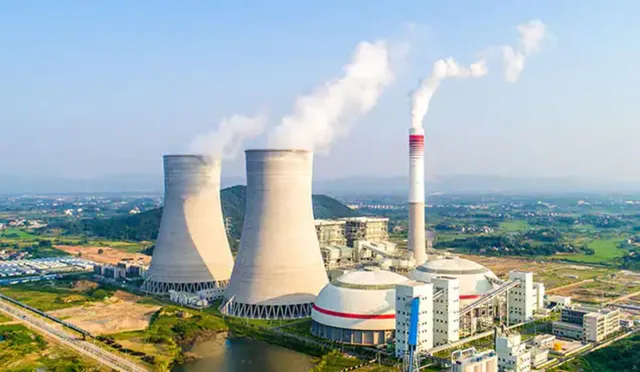
Senate President Juan Miguel Zubiri said Tuesday he will fully support the plan of President Ferdinand Marcos Jr. to explore the country’s potentials on nuclear energy as a cheap and reliable source.
Marcos said in his first State of the Nation Address (SONA) on Monday that if the country wants to attract investors, both local and foreign, energy-level production must be increased.
"Why not? We are one of the few countries that have not looked at the nuclear option in Southeast Asia. The countries that are developing nuclear power in Asia -- Indonesia, Thailand, Vietnam, Malaysia, even Singapore, are looking at the nuclear option, smaller nuclear power plants, and even Myanmar. We're already left behind," Zubiri said in an interview with a news channel.
Despite being a renewable energy advocate, as evidenced by the Renewable Energy Act which he authored, Zubiri admitted that there are not enough efforts to produce the energy requirement the country needs over the next six years.
"If you want to have an 8-percent GDP (Gross Domestic Product) growth rate, we better have an energy sector that is robust, that can deliver the power the different industries need to be able to power other programs and projects," he said.
A nuclear power plant, Zubiri said, might take six years to develop starting from its infancy, but can deliver thousands of megawatts from a single plant.
He said the facility must be built right, strong enough to withstand calamities, and away from earthquake faults.
Senate President Pro Tempore Loren Legarda, a known environmentalist, said she is open to exploring the possibility of nuclear energy but it must be considered "clean energy".
"I may not be an expert in nuclear energy. I am open to hearing discussions and consultations with various stakeholders and experts in science on nuclear energy. I have read that nuclear energy is said to be clean. However, what about the nuclear waste? I am interested to know how it will be handled. At the same time, the safety measures," she said.
Senator Francis Tolentino is likewise in favor of nuclear energy, which he learned has zero emission.
"President Marcos’ notion is that nuclear energy will provide greater means of support in uplifting the lives of our countrymen," he said.
Senator Sherwin Gatchalian, meanwhile, asked the Department of Energy (DOE) to brief legislators on whether nuclear energy must be injected in the country’s energy mix, especially in light of climate change.
“We should request the Department of Energy to brief us, because that is a large sum of money to study the possibility, the risk, and the opportunities, the benefits to consumers and we have not seen the report of that study. To support the scientific-based approach, that study should be scientific and should be in the hands of the legislators because that would be a guiding document for us,” Gatchalian said, referring to the million-peso budget spent for studies.
In his SONA, Marcos said he believes it is time to reexamine the country's strategy toward building nuclear power plants.
He said it should be compliant with the regulations of the International Atomic Agency Regulations for Nuclear Power Plants which has been strengthened after the Fukushima Daiichi incident in Japan in 2011.
Following a major earthquake, a 15-meter tsunami disabled the power supply and cooling of three reactors.
According to the World Nuclear Association, there have been no deaths or cases of radiation sickness from the nuclear accident but over 100,000 people were evacuated as a preventative measure.
Official figures showed 2,313 disaster-related deaths among evacuees, in addition to the about 19,500 that were killed by the earthquake or tsunami.
Photo credit: Embassy of France to the Philippines and Micronesia - French Ambassador Michèle Boccoz
The French government is keen to help the Philippines develop its nuclear power program as the Marcos administration looks for other reliable sources of energy.
French Ambassador Michèle Boccoz said the embassy has met with some of the Cabinet members and nuclear power was listed among the key areas Paris and Manila could cooperate on.
"(T)here's obviously an interest. As I said, we have an experience and expertise in many different sectors of renewable energy, including the nuclear sector," Boccoz said at a reception in Makati City on Tuesday.
She said working on small modular reactors is "probably much more realistic" than reviving the Bataan Nuclear Power Plant.
"I think that this is a thing of the past because the technologies have evolved so much that it wouldn't really make sense to work to build this kind of project and it's probably too big and it probably needs too much of the grid to be operational," she added.
"So having a sort of more modular systems is probably much more realistic and also in terms of the terrain here and the systemic risks and others. These are much smaller units that can be much more easily protected."
Boccoz, meanwhile, clarified that talks are still in the "very early stages" as Manila has to put in place a framework first.
In his first State of the Nation Address on July 25, President Ferdinand Marcos Jr. sought to re-examine the country's strategy towards building nuclear power plants in the Philippines.
"We will comply of course with the International Atomic Energy Agency regulations for nuclear power plants as they have been strengthened after Fukushima. In the area of nuclear power, there have been new technologies developed that allow smaller-scale modular nuclear plants and other derivations thereof," he said.
"Once again, PPPs (public-private partnerships) will play a part in support as funding in this period is limited."
France generates about 70 percent of its electricity from nuclear power plants but plans to reduce this to 50 percent by 2035 as its shifts to more renewables, such as solar and wind.
Besides nuclear, Boccoz said, France is also beginning to have discussions on hydrogen and other renewable energy sources with the new administration. By Joyce Ann L. Rocamora
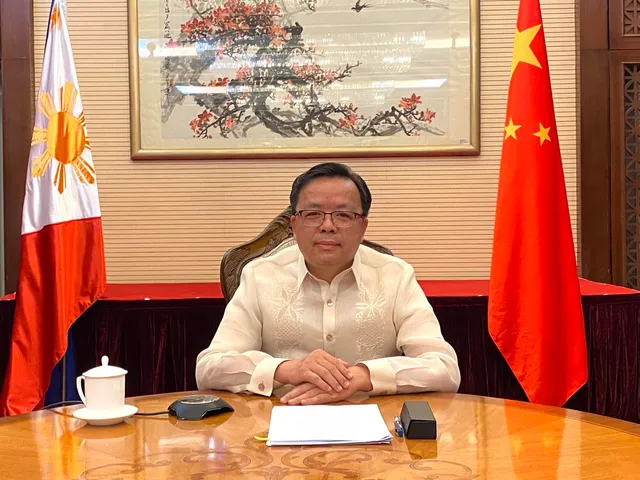
Photo credit: Embassy of the People's Republic of China in the Republic of the Philippines - Chinese Ambassador Huang Xilian
China is ready to restart talks on oil and gas exploration with the Philippines as soon as the latter gives the go signal, Chinese Ambassador Huang Xilian said Wednesday.
"In the field of energy, we hope that we will continue to work on oil and gas cooperation. (W)e hope we start that negotiation and find some solution for the benefits of our two peoples to meet the need or the demand of energy of this country and China," he told reporters in Pasay City.
"I think with the new administration in place, we are ready to restart our negotiation anytime."
At the same time, Huang said Beijing is open to working with Manila as it shifts to renewables.
The two countries signed a memorandum of understanding (MOU) on joint oil and gas development in the West Philippines Sea in November 2018.
After three years of negotiations, the Philippines terminated the talks, citing possible issues with the Constitution just before former president Rodrigo Duterte stepped down from office.
In addition, the envoy said the two nations must also "work harder" on developing clean energy as a means of addressing the climate crisis.
"Last year, the export of electric vehicles of China accounts for more than half of the world's. We are one of the leading players in terms of clean energy and so we are ready to work with this country to share our technology, share our expertise to move forward hand-in-hand," he said. By Joyce Ann L. Rocamora
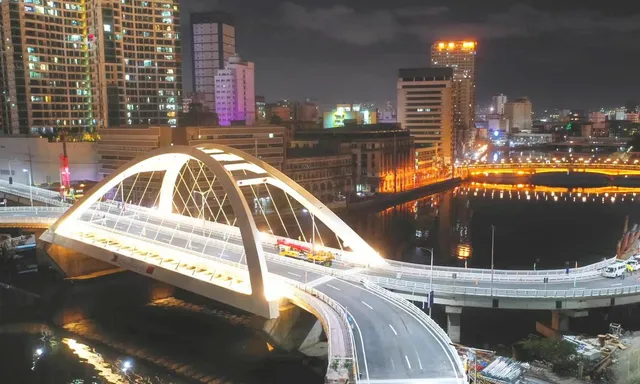
Photo credit: Rappler - Binondo-Intramuros Bridge, Manila
The government will build several bridges in Metro Manila to further improve mobility, the Department of Public Works and Highways (DPWH) said Tuesday.
Secretary Manuel Bonoan said construction and development in the National Capital Region (NCR) will include “I think, five or six bridges, across the Pasig River.”
“As far as the infrastructure program is concerned, we will continue with the construction of more bridges across Pasig River and Marikina River so that the mobility will be enhanced from north to south sectors because there are just but a few bridges connecting north and south sector,” he said at the post-SONA (State of the Nation Address) Economic Briefing held at the Philippine International Convention Center in Pasay City.
Apart from bridges, the government is also looking at constructing more expressways “that would be leading toward the other areas of Metro Manila.”
“Right now, I think there are several expressway projects that are in line. There’s an expressway that is going to be developed in the eastern corridor of Metro Manila that will go through, Pasig, Cainta, and all the way to Bulacan,” Bonoan said.
He said the extension of the South Luzon Expressway going to Lucena City and the Cavite-Laguna Expressway to Tagaytay City are underway.
Bonoan said President Ferdinand Marcos Jr. announced in his inaugural State of the Nation Address (SONA) on Monday that the “Build, Build, Build” (BBB) programs initiated by the Duterte administration will continue.
“I reiterate today (Tuesday) the marching order of the President during his SONA that under his administration, the infrastructure development program will be pursued relentlessly. We will continue what has been started under the BBB program of the past administration and must not only continued but whenever possible, be expanded,” he said.
“As the President said, the infrastructure program will be very vital to support national government efforts to push for the revival of the economy which has slumped due to the Covid-19 pandemic. This is the foundation that we will build upon as the President pronounced we must keep the momentum and aspire to build better more and faster,” he added.
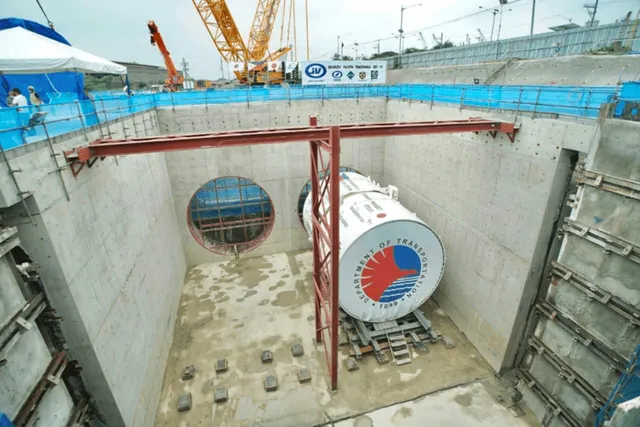
An official of the Department of Transportation (DOTr) on Tuesday said the Metro Manila Subway Project has reached 60 percent completion rate on procurement.
“Metro Manila Subway is 33 kilometers (km) from Valenzuela all the way to the Ninoy Aquino International Airport (NAIA), around 17 stations. We expect to provide daily ridership from 400,000 to as high as 800,000,” DOTr Undersecretary for Railways Cesar Chavez said during the post-State of the Nation Address (SONA) economic briefing at the Philippine International Convention Center (PICC) in Pasay City.
He also gave an update on the railway projects based on four indicators—procurement, design, right-of-way (ROW) acquisition, and construction.
Another big-ticket project is the North-South Commuter Railway (NSCR) project, with both its Tutuban to Malolos and Malolos to Clark segments at 93 percent complete on procurement, while the Manila to Tutuban to Calamba segment is at 61 percent complete on procurement.
“As to the detail and design, we're more than 70 percent complete, and as to ROW, it's 55 to 60 percent,” he said.
The NSCR is expected to be operational by 2026 to 2027 and will run for 147 kilometers from Clark to Calamba.
It will have 35 stations and is expected to have a daily passenger capacity of 400,000 to 700,000 daily.
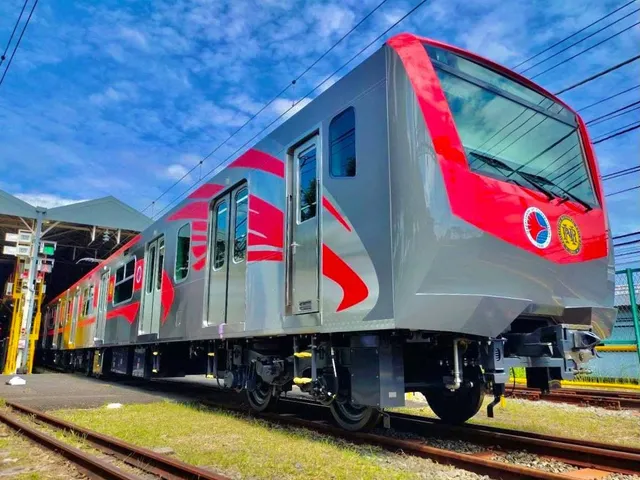
Chavez said the Light Rail Transit Line 1 (LRT-1) Extension Project—which will extend the LRT-1 southward from Baclaran to Bacoor, Cavite—is at 69 percent completion rate on construction.
“The 122 trains are there already, around 24 rolling stocks. The station developments are in place already, except Las Piñas to Bacoor,” he said.
Meanwhile, the Metro Rail Transit Line 7 (MRT-7), a public-private partnership (PPP) project with San Miguel Corp., is at a 61 percent completion rate on construction.
Once complete, Chavez said the MRT-7 is seen to have a daily passenger capacity from 400,000 to 800,000.
It will run for 22.8 km from northeast to northwest, have 14 stations, and will connect San Jose del Monte, Bulacan to the Common Station in Quezon City.
To date, Chavez said the common station, or the Unified Grand Central Station, is expected to be completed by “the second quarter of 2023.”
Designed to connect the LRT-1, MRT-3, MRT-7, and the Metro Manila Subway with access to road transport, he said the station is expected to serve “at least 150, passengers daily.”
In addition to these projects in Luzon, he reiterated President Ferdinand “Bongbong” Marcos Jr.’s desire to complete the Cebu Railway System, the Panay Railway Project, and the Mindanao Railway Project (MRP).
The MRP, he said, is to be “resubmitted” to the National Economic Development Authority (NEDA) “in the coming weeks” for funding reapproval.
“The intention is to continue whether we're going to PPP or ODA (official development assistance), we will leave it to the Department of Finance, NEDA, and the economic team of the President,” he said.
He said while the Panay Railway Project is not “in the master plan,” he said at least five railway projects have been identified for development in the Visayas.
“Good news for Cebu, because in the master plan of rail transport from 2018 to 2019 there are five railway projects identified for development in the Visayas, in particular in Cebu province,” he said.
On Monday, Marcos in his first SONA announced his administration’s desire to continue the “Build, Build, Build” program of the previous administration and other projects such as the Panay Railway Project and the Cebu Railway System.
The 12 railway projects have a combined cost of PHP1.9 trillion and are at various stages of implementation.
Marcos noted that the infrastructure development spending of the country will be sustained at 5 percent of the gross domestic product in addition to making use of PPPs.
Photo: The government will review other funding options for several major railway projects that were proposed to be financed by China. Finance Secretary Benjamin Diokno said the Japanese government, the World Bank, and the Asian Infrastructure Investment Bank are among the options to finance the projects. (PNA file photo)
The government will review funding proposals and options for several infrastructure projects previously eyed to be financed by China.
“We will revisit. At saka (and we will) we will resubmit it to NEDA (National Economic and Development Authority) just in case,” Finance Secretary Benjamin Diokno told journalists after the post-State of the Nation Address (SONA) Philippine economic briefing in Pasay City on Tuesday.
Transportation Undersecretary Cesar Chavez earlier said the official development assistance loan deals for three major infrastructure projects have been considered “withdrawn” after the Chinese government failed to act on the previous administration’s funding request.
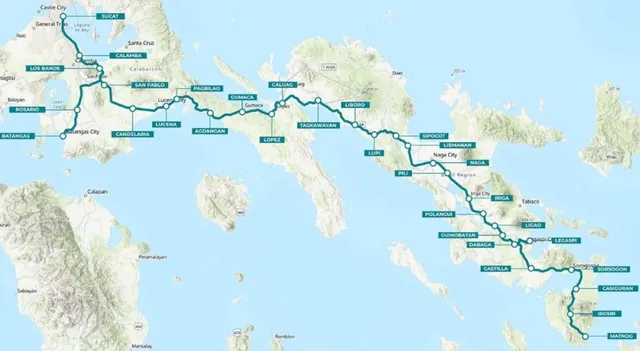
The financial deals are for the engineering, procurement, construction, and commissioning for the Subic-Clark Railway project, the design-build pact for the Philippine National Railways (PNR) South Long-Haul Project, and the management consultancy for the Mindanao Railway Project (MRP).
The Department of Finance (DOF) earlier informed the China Eximbank that the loan applications would be valid only until May 31, 2022, or a month before the end of the Duterte administration’s official term.
Diokno said the government has other funding options for the said infrastructure projects, such as those from the Japanese government, World Bank (WB) and the Asian Infrastructure Investment Bank (AIIB).
“These are nice projects. These have been evaluated by NEDA and (these are) socially-worthwhile projects so we will just look for funding,” he said.
Meanwhile, Diokno said the government will push for the implementation of other railway projects to boost the domestic economy’s recovery and growth potential.
Atlas Consolidated Mining and Development Corporation (“Atlas Mining”) completed the first half of the year 2022 with a reported net income of Php2 billion compared to the net income of Php1.935 billion for the same period in 2021. The improvement in the bottom line is attributed to the considerable increase in grades and metal prices during the first half of the year.
Atlas Mining’s wholly-owned subsidiary, Carmen Copper Corporation, reported copper metal production from 38.73 million pounds in 2021 to 36.58 million pounds in 2022 which attributed to lower tonnage milled. In the first half of 2022, milling tonnage decreased by 6% from 9.26 million tonnes to 8.66 million tonnes. On the other hand, copper grade increased by 1% from 0.231% to 0.234% and gold grade improved by 6% from 5.09 grams/dmt to 5.41 grams/dmt. Copper metal content of concentrate shipped decreased by 2% to 38.80 million pounds but gold content increased by 6% to 11,212 ounces due to higher gold grade.
The increase in metal prices continued in the first half of this year where copper price increased by 6% from $4.21/lb to $4.45/lb and gold price increased by 4% from USD1,812/ounce to USD1,879/ounce compared to the same period last year.
Number of shipments were comparatively the same as first half of last year but the higher prices in the first half of this year pushed revenues to grow by 8% to Php9.74 billion from Ph9.01 billion.
Earnings before interest, tax, depreciation and amortization (EBITDA) settled at Php3.89 billion in the second quarter of 2022 compared to Php4.93 billion in the same period of 2021. The reduction was caused by the increase in energy cost particularly power and fuel. This likewise pulled down core income for the period to Php930 million in the first half of 2022 from Php2.16 billion in same period of 2021.
Accordingly, cash generated from operations improved which enabled the additional loan payment of $60 million of Atlas Mining’s loans on the first half of 2022. With the partial repayment of loan, an accounting gain of Php938 million was recognized in the second quarter.
Photo credit: Provincial Government of Ilocos Norte logo
Ilocos Norte is set to recognize the public and the private sector’s initiatives and exemplary achievements in promoting responsible mining.
Provincial administrator Yvette Convento-Leynes confirmed this on Monday as she reported that the awarding of outstanding partners is set on July 27 in time for a provincial mining summit at the JLP Resort in Barangay Suba, Paoay, Ilocos Norte.
“One of the highlights of the summit is to recognize and give special wards to our outstanding quarry permittees who adhere to our rules and regulations as well as those who help us in apprehending violators,” she said, stressing the importance of the quarry industry as a major source of local revenue in the province.
“This is the only way to thank them for the contributions they are giving to the province,” she said.
The provincial government, however, has yet to announce the awardees.
To date, the Provincial Quarry Office reported that there are about 60 permit holders of commercial sand and gravel and 22 permittees of industrial sand and gravel.
Hosted by the Department of Environment and Natural Resources-Environment and Management Bureau and in cooperation with the Ilocos Norte government, the mining summit aims to discuss pressing issues and concerns for the minerals industry in the region.
Existing quarry permittees, including new permit applicants, are expected to attend to help them become updated of the best practices and new mining policies.
Earlier, the Commission on Audit commended the Provincial Quarry Office under the provincial government for increasing its quarry collections to PHP43.8 million in 2021 as compared to the PHP26.8 million in the previous year. By Leilanie Adriano
Mines and Geosciences Bureau (MGB) announced on 10 March 2022 that the DENR has granted MPSA 352-2022-VI to DMCI Holdings, Inc., a subsidiary of Semirara Mining and Power Corp. (SMPC). The MPSA is for SMPC’s Hamalian Limestone Project which is located at Semirara Island in Caluya, Antique. The project covers an area of 3,807.0571-hectares. This MPSA now gives SMPC the exclusive rights to begin mining operations within the contract for a period of 25 years. This is renewable for the like period.
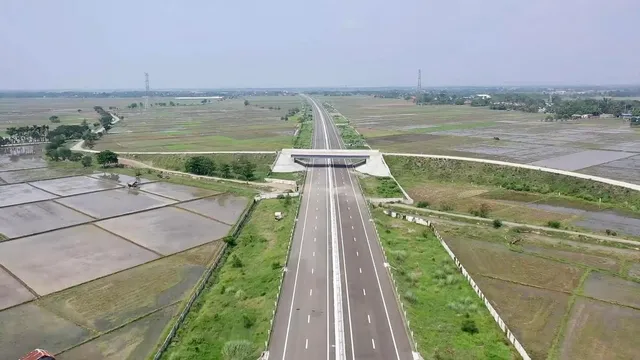
The Department of Public Works and Highways (DPWH) is inching closer to delivering the entire 30-kilometer Central Luzon Link Expressway (CLLEX) Project which is 96 percent overall complete to date.
In his report to Secretary Manuel M. Bonoan, DPWH Undersecretary for Unified Project Management Office (UPMO) Operations Emil K. Sadain said that the first 18 kilometers of CLLEX from Tarlac Interchange at the connection of Subic-Clark-Tarlac Expressway (SCTEX) and Tarlac-Pangasinan-La Union Expressway (TPLEX) in Balingcanaway, Tarlac City to Guimba-Aliaga Road in Aliaga, Nueva Ecija will be extended with additional 11 kilometers by March 2023 to include seven (7) kilometers up to San Juan Interchange and four (4) kilometers to Umangan-Julo Road at the boundary of Aliaga and Cabanatuan City before Felipe Vergara Road and Daang Maharlika Highway.
Undersecretary Sadain with DPWH UPMO-Roads Management Cluster 1 Project Director Benjamin A. Bautista inspected on Friday, July 22, 2022 the continuing works for the construction of four (4) lane expressway including interchanges, overpasses and underpasses from Aliaga Section to Cabanatuan Section whose progress were stalled in the past due to unworkable portions with problem in the acquisition of road right of way.
CLLEX is part of the Luzon Spine Expressway Network which is aimed at reducing travel time from the northernmost part of Luzon, Ilocos, to the southernmost part, Bicol.
Other than cutting travel time between Tarlac and Nueva Ecija, the partial opening in 2021 of CLLEX provided options to motorists and spread out traffic better resulting to reduce transportion costs, benefitting farmers of Central Luzon and Cagayan Valley Regions.
“The CLLEX Project will support the country’s new vision for improving agricultural productivity under the administration of President Ferdinand Bongbong Marcos Jr. Using this toll-free high standard highway, palay crops and other products from Nueva Ecija - the Philippines’ rice granary, including those coming from Region 2 can reach the market centers in Metro Manila much faster and cheaper”, added Undersecretary Sadain.
Essentially an extension of the SCTEX and TPLEX, CLLEX will form an important east-west link for the expressway network of Luzon to ensure a continuous seamless traffic flow for the motoring public from Metro Manila and vice versa passing thru North Luzon Expressway (NLEX), SCTEX, and TPLEX.
Once fully operational, the ₱11.811-Billion expressway is expected to shorten the usual travel time of 70 minutes between Tarlac City and Cabanatuan City to just 20 minutes.
With funding assistance from the Japan International Cooperation Agency (JICA), the expressway will also facilitate better access to economic hub and areas of employment in Region 3 such as Clark and Subic.
Article courtesy of The Department of Public Works and Highways
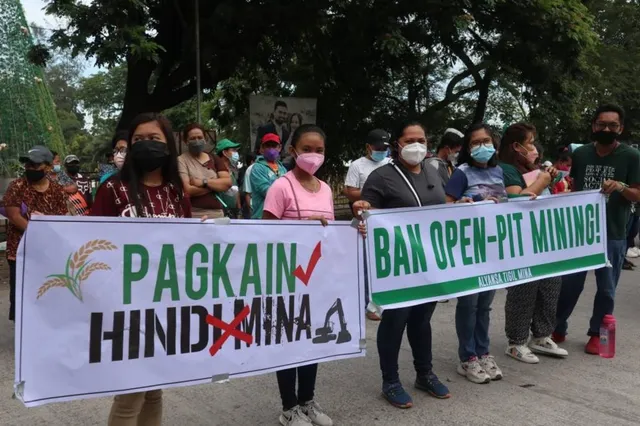
Last June 3, 2022, Gov. Tamayo announced in a public statement his decision to veto Ordinance No. 23, Series of 2022 that was passed by the Sanggunian Panlalawigan (SP) (or Provincial Board) of South Cotabato last May 16, 2022. The ordinance modified the Provincial Environmental Code of South Cotabato and lifted the ban on open-pit mining in the province. [1]
In response to this, Senator Leila M. De Lima praises Governor Tamayo Jr. for his rejection of the ordinance.
Senator Robinhood Padilla filed a resolution, urging President Ferdinand Marcos Jr. to resume bilateral talks for cooperation on oil-gas development in the West Philippine Sea.
Padilla said on Thursday Senate Resolution 9 aims to address the problems caused by the rising prices of oil due to international circumstances like the Russia-Ukraine conflict.
"Now therefore, be it resolved, as it is hereby resolved, urging President Ferdinand R. Marcos Jr. to resume the bilateral talks with the People's Republic of China for the purposes of cooperation on oil and gas development in the West Philippine Sea," SR 9 read, citing a Memorandum of Understanding (MOU) on Cooperation on Oil and Gas Development between the Philippines and China on Nov. 20, 2018.
The Philippines, SR 9 added, requires a long-term strategy to resolve its oil dependency on foreign sources as the country is vulnerable to the negative effect of the increased oil prices.
"The parties further understand that the MOU shall not be prejudicial to 'respective legal positions' which 'does not create rights or obligations under international or domestic law' and as such, there is no derogation of the Philippines' assertion of its sovereign rights in the West Philippine Sea," the resolution said.
Padilla said in the resolution that the execution of the MOU is a "valid exercise of the executive powers of the President" under Sec. 1, Art. VII of the Constitution.
Meanwhile, he said Sec. 2 Art. XII of the Constitution allows the Philippines to "directly undertake to or enter into co-production, joint venture or production-sharing agreements on petroleum and other mineral oils and all forces of potential energy."
"The new administration has the opportunity to resume the bilateral talks with the People's Republic of China (PRC) for purposes of cooperation in the WPS on gas and oil development without bargaining the sovereign rights of the Philippines on the disputed territories therein," Padilla said.
"In view of the gains obtained from the MOU where the GRP [Government of the Republic of the Philippines] and PRC cooperated on the terms provided therein on the gas and oil development in the WPS, the new administration can further explore these common interests of cooperation to resolve the country's oil dependency from foreign countries," he added.
Like Senators Grace Poe and Aquilino Pimentel III, Padilla also is amenable to the suspension of excise taxes on unleaded premium gas, regular gas, and diesel oil, to address the effects of rising oil prices.
Through Senate Bill 229, Padilla seeks to amend Section 148 of the National Internal Revenue Code, in which the excise tax for oil products will be automatically suspended if the average Dubai crude oil price based on the Mean of Platts Singapore will reach or exceed USD80 per barrel in three months. By Wilnard Bacelonia
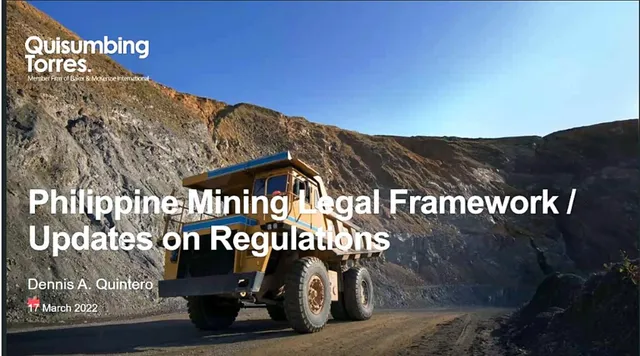
What does it take to own and operate a mining company in the Philippines? Mining is one of the industries that heavily revolves around a number of laws and regulations.
On Day 2 of the Philippine Mining Virtual Summit (17 March 2022), Atty Dennis A. Quintero of the Quisumbing Torres Law Office was one of the presenters. Atty Quintero gave a comprehensive report titled "Philippine Mining Legal Framework / Updates on Regulations".
Known as one of the top lawyers in the Philippines, Atty Quintero is also a Chairman and Trustee of the Philippines-Australia Business Council (PABC). He is a member and active advocate of the Philippine Mineral Reporting Code Committee.
Photo
Integrated energy company Semirara Mining and Power Corporation (SMPC) won four awards in the 12th Institutional Investor Corporate Awards 2022 of Hong Kong-based Alpha Southeast Asia magazine.
Based on a poll of over 500 investors and analysts across Southeast Asia, as well as United States and Europe, SMPC emerged as one of the eight best-managed companies in the Philippines for having the Most Organized Investor Relations (3rd place), Best Senior Management Investor Relations Support (2nd place), Most Consistent Dividend Policy (3rd place) and Most Improved Investor Relations (sole winner).
“We thank all those who voted for our company. These awards reflect and reaffirm our strong commitment to the investment community and investing public,” said SMPC President and COO Maria Cristina C. Gotianun.
The poll included fund managers with investment interests in Southeast Asia, large institutional investors, insurance companies, pension funds, funds of hedge funds, private banks, equity and fixed income brokers as well as buy and sell-side analysts.
According to Alpha Southeast Asia, 43 publicly-listed companies from across the region were ranked this year, representing the crème-de-la crème of best practices whether it be on corporate governance, investor relations, disclosure, transparency, financial management, integrated reporting, CSR and/or dividend policy.
Alpha Southeast Asia is a monthly magazine primarily written for institutional investors, asset and fund management companies in Hong Kong, Singapore, other parts of Asia, US, Europe and the Middle East.
As the first and only poll focused on Southeast Asia, the corporate-institutional investor poll is the leading perceptions-based poll in performance in financial management, adherence to corporate governance, integrated reporting/ corporate social responsibility and investor relations.
The Department of Environment and Natural Resources (DENR) welcomed the nomination of Ma. Antonia “Toni” Yulo-Loyzaga as its new secretary under the administration of President Ferdinand “Bongbong” Marcos Jr.
DENR OIC Secretary Ernesto D. Adobo Jr. expressed optimism over Yulo-Loyzaga’s nomination, as he envisions a more climate-resilient Philippines under her leadership.
“The DENR family looks forward to the effective and efficient implementation of the Department’s mandate under the new Secretary’s leadership. With her expertise and competence in climate and disaster resilience, I see better days ahead for the environment and for the Filipino people,” Adobo, also the DENR Undersecretary for Legal, Administration, Human Resources and Legislative Affairs, said in a news release on Sunday.
He said the previous DENR administration ended with significant achievements in its programs on solid waste management, biodiversity, rehabilitation of Boracay Island and Manila Bay, and restoration of heavily silted rivers under the Task Force Build Back Better.
“We assure the new Secretary that she has our full support. We will work with her for the effective implementation of environmental laws, programs, and projects under the new administration,” Adobo said.
Adobo pointed out that the environment is still faced with several challenges, such as disasters caused by climate change, environmental pollution, illegal wildlife activities, and various issues on land, mining, biodiversity loss and forestry.
He said these issues have to be addressed not just by the DENR with Yulo-Loyzaga as its new secretary, but by everyone being part of the solution.
Press Secretary Trixie Cruz-Angeles announced the nomination of Yulo-Loyzaga as the next DENR chief on July 12.
Known for her expertise in climate and disaster resilience, Yulo-Loyzaga has experience in leading and working with the National Resilience Council, Manila Observatory, Philippine Disaster Resilience Foundation, and the Armed Forces of the Philippines Command and General Staff College.
With the environmental expertise of Yulo-Loyzaga and support of President Marcos in prioritizing climate change issues, Adobo said he is certain that climate actions will be strengthened and that the compliance of the Philippines to the Paris Agreement on the reduction of greenhouse gas emissions will be fulfilled.
As the new DENR Secretary, Yulo-Loyzaga is tasked to uphold the Agency’s mandate that aims for the conservation, management, development, and sustainable use of the country’s ecosystems and natural resources.
Photo credit: build.gov.ph
China on Sunday said it is “negotiating” with the Philippines over the funding of some infrastructure projects after a Philippine transport official bared that these were deemed “withdrawn” due to Beijing’s inaction on funding requests by the previous administration.
The Chinese Embassy issued the clarification after Transport Undersecretary for Railways Cesar Chavez revealed that the Philippines scrapped its loan applications for three big-ticket railways— the Philippine National Railways Bicol project, Subic-Clark Railway Project, and the first phase of the Mindanao Railway Project— due to Beijing’s unresponsiveness to its loan application since 2019.
Chavez earlier said President Ferdinand "Bongbong" Marcos Jr. is looking at renegotiating the loans with Beijing or negotiating with other countries.
In a statement, the Chinese Embassy did not directly mention the funding withdrawal, but vowed to “tap its own advantage and support the Philippines to improve its infrastructure.”
“Our two sides have been negotiating technical issues and made positive progress to move the projects forward,” the embassy said.
The embassy said “China is open for technical discussions over our G-to-G [government-to-government] projects, and is ready to carry our cooperation forward, in close communication with the Philippine new administration.”
According to the embassy, China has helped the Philippines complete 17 projects while more than 20 projects are under implementation or in progress.
“Over the past two years, Covid-19 has impacted implementation of some projects, hindering the site availability, causing delays of procurement, affecting goods mobility, and so on. Despite those difficulties and challenges, our two sides have worked tirelessly to push the projects forward and yielded rich outcomes, spanning from anti-pandemic response, disaster relief to infrastructure, agriculture, and other fields,” the embassy said.
New era of friendship
The Chinese Embassy described the phone conversation between Chinese President Xi Jinping and Marcos on May 18 and recent high-level visits as having ushered in “a new era of China-Philippine friendship.”
“Governments of the two countries are dedicated to further enhancing friendship and mutual trust, adhering to good-neighborliness and deepening mutually beneficial cooperation. China’s policy towards the Philippines has always been and will continue to be consistent and stable as ever,” the embassy said.
The Chinese Embassy expressed confidence that “continuity” would be secured in relations between two countries as well as the bilateral practical cooperation.
“Looking forward, China will build on the past fruition and further our cooperation in agriculture, infrastructure, energy, people-to-people exchange, and other fields,” it added.
Chavez said China's funding commitment for the railway projects was "deemed canceled" as China has been unresponsive to the Philippine government's loan application since 2019.
He said the Chinese bank was asking for 3-percent interest on the loans, much higher than the 0.01-percent rate charged by Japan. By Azer Parrocha
President Ferdinand Marcos Jr. wants more investments in the rail transport sector as he directed the Department of Transportation (DOTr) to go back to the negotiating table to secure the loan agreements for three big-ticket railway projects, the agency said on Saturday.
“The President was referring to the Subic-Clark Railway Project; the Philippine National Railways (PNR) South Long-Haul Project and the Davao-Digos segment of the Mindanao Railway Project (MRP),” DOTr Undersecretary for Railways Cesar Chavez said.
Chavez said the three railway projects was to be funded under China’s official development assistance (ODA) through loan agreements between the governments of the Republic of the Philippines and the Peoples Republic of China.
“There was a policy discussion on three China ODA Rail Projects in last Tuesday’s Cabinet Meeting during which the President commented that as a matter of policy, we should encourage more investments in rail and that we should focus more on rail transport,” Chavez said.
Chavez explained the status for each of the three big-ticket railway projects:
Last January, the contract for the PHP142-billion PNR South Long-Haul Project -- also called the PNR Bicol Express -- was awarded to the joint venture of China Railway Group Ltd., China Railway No. 3 Engineering Group Co. Ltd., and China Railway Engineering Consulting Group Co. Ltd.
The PHP83-billion Tagum-Davao-Digos segment of the MRP, on the other hand, failed to proceed after China was unable to submit a shortlist of contractors for its design-build contract.
Meanwhile, the contract for the construction of the PHP51-billion Subic-Clark Railway Project was awarded to China Harbour Engineering Co. in December 2020.
Chavez had said the loan agreements for three railway projects are now considered “withdrawn” after the Chinese government failed to act on the funding requests by the former Duterte administration.
He said negotiations for the three projects began in 2018 and have been approved by the National Economic and Development Authority (NEDA) to receive ODA loan from China.
From 2021 to 2022, Chavez said the Department of Finance (DOF) informed China Eximbank that the submitted loan applications would only be valid until May 31, 2022, and would be automatically withdrawn if not then approved.
Former Finance Secretary Carlos Dominguez III later decided to cancel the loan applications with China in the light of the upcoming transition of government and in deference to the incoming administration.
Chavez said other funding options are also being considered for the three railway projects such as the possibility of opening it for the private sector since the government thrust is towards public-private-partnerships (PPP).
At the beginning of his term, then-President Duterte brought home USD24 billion or about PHP1.2 trillion worth of pledges in loans and grants from China as part of his “Build, Build, Build” program after chief executive’s state visit to Beijing in October 2016.
On record, the Philippines has so far received from China about PHP12.18 billion loan for Kaliwa Dam project, PHP5.9 billion grant for the Binondo-Intramuros and Estrella-Pantaleon bridges, PHP4.37 billion loan for the Chico River Pump Irrigation project, and PHP998 million grant for the Marawi City rehabilitation.
The loan agreements for three railway projects are now considered “withdrawn” after the Chinese government failed to act on the funding requests by the Duterte administration, an official of the Department of Transportation (DOTr) said Friday.
DOTr Undersecretary for Railways Cesar Chavez said negotiations for the three projects began in 2018 and have been approved by the National Economic and Development Authority (NEDA) to receive official development assistance (ODA) loan from China.
Based on “applicable executive agreements” between the Philippines and China, he said the DOTr had earlier procured and awarded contracts for the engineering, procurement, construction, and commissioning of the Subic-Clark Railway Project; the design-build of the Philippine National Railways (PNR) South Long-Haul Project; and for the project management consultant of the Mindanao Railway Project (MRP).
From 2021 to 2022, he said the Department of Finance (DOF) informed China Eximbank that the submitted loan applications would only be valid until May 31, 2022, and would be automatically withdrawn if not then approved.
"In his text message to me this mornning, former Finance Secretary Sonny Dominguez said that he 'cancelled the application instead of keeping it in suspended animation," Chavez said. “DOTr understands that this is in light of the upcoming transition of government, and in deference to the incoming administration."
With the withdrawal of the loan applications, he said the current DOTr leadership has “immediately” written and coordinated with the DOF to initiate “policy discussions” on the future of the three China-backed rail projects.
“Policy discussion on the way forward for the above three China ODA Rail Projects has also been initiated at the July 12 Cabinet Meeting, during which [President Ferdinand ‘Bongbong’ Marcos Jr.] commented that as a matter of policy, we should encourage more investment in rail and that we should focus more on rail transport,” he said.
In January, the contract for the PHP142-billion PNR South Long-Haul Project -- also called the PNR Bicol Express -- was awarded to the joint venture of China Railway Group Ltd., China Railway No. 3 Engineering Group Co. Ltd., and China Railway Engineering Consulting Group Co. Ltd.
On the other hand, the PHP83 billion Tagum-Davao-Digos segment of the MRP failed to proceed after China was unable to submit a shortlist of contractors for its design-build contract.
The contract for the construction of the PHP51 billion Subic-Clark Railway Project was awarded to China Harbour Engineering Co. in December 2020.
Follow on LinkedIn:
Philippine Resources Journal
Be the "First" to get our exclusive Digital Magazine & Weekly Newsletter.