Category:

Philippine Ducks Thrive in TVIRD’s Sulphide Dam
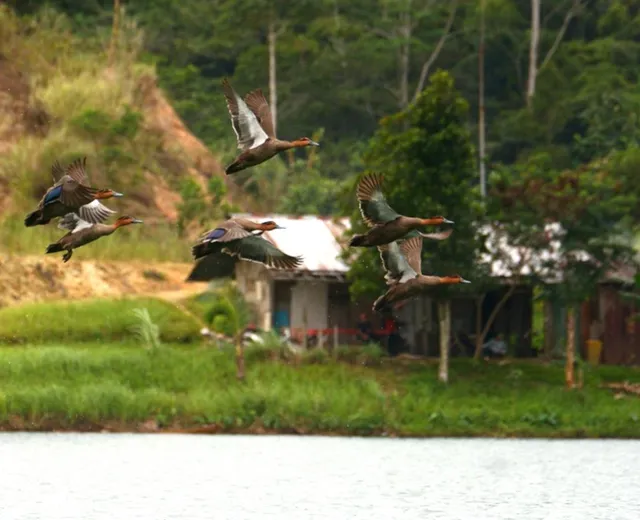
Photo: Philippine Ducks (Anas Luzonica), though not classified as “endangered,” are a vulnerable indigenous species that found sanctuary in TVIRD’s tailings dam. At its peak, close to 20 percent of these waterbirds’ total population may have been in Canatuan.
Oftentimes, the silence of TVIRD’s Sulphide Dam is broken only by the loud and successive quacking of the waterbirds that made the company’s Tailings Storage Facility (TSF) its sanctuary for the last seven years. The quacking is then followed by splashing on the calm waters – and one can only surmise that the Philippine Ducks (Anas Luzonica) are thriving!
Visitors of the company are always in awe of the dam’s size – some 34 hectares wide and120 meters deep. The TSF, which was used during the company’s copper-zinc mining operations, is a structural beauty in itself. Surrounded by lush and cool Mt. Canatuan, it looks like a lake with clear, green water. And the presence of the Philippine Ducks makes the man-made lake even more interesting.
Migratory birds
Muhammad Faz Ur Rahman J. Werble, Ecosystem Management Specialist of the DENR’s Community Environment and Natural Resources Office (CENRO) in Siocon, confirmed the presence of the Philippine Ducks at the Sulphide Dam.
“The Philippine Ducks are migratory birds and are endemic to the Philippines,” he said.
Werble has been heading a team of CENRO personnel in conducting the Annual Asian Waterbirds Census for three consecutive years now. He said the reason it is conducted annually is because of the presence of a large number of threatened endemic Philippine Ducks.
“It is possible that the ducks come from nearby areas and chose to stay there because the Sulphide Dam is protected and no hunting is allowed,” he added.
Werble also disclosed that the Philippine Ducks are dependent on wetlands for its food, shelter and breeding ground. It feeds on shrimp, fish, insects, and vegetation, which he believes are abundant in the area.
Vulnerable
According to online sources, Philippine Ducks are large dabbling ducks that “feed mainly at the surface rather than by diving.” They are classified as “vulnerable” because it has a small population and undergoing a rapid continuing decline due to extensive over-hunting and loss of habitats. As few as an estimated 5,000 remain all over the country.
“The Annual Asian Waterbird Census is done every month of January of the year by CENRO Siocon to monitor the number and migration of bird species, including the Philippine Ducks at TVIRD’s dam,” said Werble.
During the first census that he conducted in 2019, Werble said he was happy to count more than 500 Philippine Ducks at the tailings facility. In 2020, its population reached 950 but came down to around 700 in 2021 due to migration. “These birds are a migratory specie. It migrates from one place to another.”
At its peak, close to 20 percent of these waterbirds’ total population may have been in Canatuan. It is also likely that this figure will rise during the next migration.
Other inhabitants
Aside from Philippine Ducks, the TVIRD’s tailings storage facility is often visited by Kingfishers (Alcedo atthis) and Hawk Eagles (Nisaetus Cirrhatus) – which like the Philippine Ducks, also hunt for food there. Different kinds of bats, birds and snakes like the Philippine Cobra also found their home in the surrounding forest area.
Even during the copper-zinc mining operation, the Sulphide Dam is laden with freshwater fish that the Canatuan locals identified as hito (cat fish), kasili (eel) and halwan (mudfish), to name a few.
Tribal leaders in Canatuan agree on the observations of visitors that at the foot of the lush Mt. Canatuan lies a beautiful lake – a refreshing view to anyone who wants to savor the silence of the mountain and its surrounding.
A silence that can only be disturbed by the vigorous quacking sound of the Philippine Ducks that continue to thrive in its new habitat.



Epiroc’s ambitious climate targets validated as science based
Photo credit: Epiroc Philippines
Epiroc, a leading productivity and sustainability partner for the mining and infrastructure industries, has received validation by the Science Based Targets initiative (SBTi) for the company’s ambitious targets to reduce CO2 emissions.
Epiroc launched ambitious sustainability goals that include halving its CO2 emissions by 2030. The SBTi has now validated Epiroc’s climate targets as being in line with keeping global warming at a maximum 1.5° C, consistent with the latest climate science and the goal of the Paris Climate Agreement.
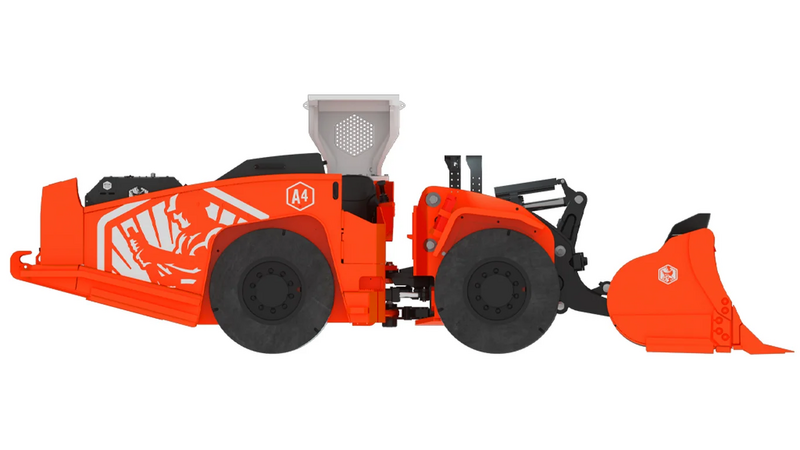
“Climate change is happening as we speak and we are working internally as well as together with our customers to reduce the impact on climate,” says Helena Hedblom, Epiroc’s President and CEO. “We are driving the industry’s transition toward a climate-friendly future, not the least with our growing offering of battery-electric equipment. Epiroc is committed to halve CO2 emissions from the use of our equipment as well as in our own production and in transport by 2030. With the approval of our goals from SBTi, our position as a sustainability leader in our industry has now been reinforced.”
In line with SBTi requirements, Epiroc commits to halve its absolute CO2 emissions in its own operations – so called Scope 1 and Scope 2 – by 2030, with 2019 as base year. However, more than 99% of Epiroc’s total CO2 emissions are other indirect emissions, with about 83% of the total coming from when customers use the products. Therefore, Epiroc has committed to halve the absolute CO2 emissions from use of sold products – so called Scope 3 – by 2030. This is industry leading and well above SBTi’s minimum requirements. The transition from diesel-powered to battery-electric machines will make a significant impact.
In addition, Epiroc’s 2030 sustainability goals also include halving CO2 emissions from transport, requiring 50% reductions of CO2 emissions from relevant suppliers, having 90% renewable energy in own operations, and offering a full range of emissions-free products, as well as ambitious targets for people. In addition to providing a growing range of battery-electric products, Epiroc’s climate actions include, among others, shifting transport from air to sea, and installing solar panels at many of its facilities.
The SBTi - a partnership among the Carbon Disclosure Project, the UN Global Compact, the World Resources Institute and the World Wide Fund for Nature – is driving ambitious, science-backed climate action in the private sector.
Epiroc presents 6th Sense, a game changer for smarter mining and infrastructure operations
There is a growing need for the mining and infrastructure industries to look to digital technologies to enhance productivity, sustainability and safety. 6th Sense is the Epiroc way to optimize customers’ processes by connecting machines, systems and people using automation, information management and system integration. With 6th Sense comes a great focus on system connectivity, using interoperability to unlock the full potential of automation for production gains at lower operating costs.
“6th Sense is a formula we have developed for getting the right solutions in place and achieving operational excellence in mining and infrastructure operations,” said Helena Hedblom, Senior Executive Vice President Mining and Infrastructure. “The name 6th Sense implies that the solution brings something extra and that is just what it does, providing a significant advantage such as track and respond to real-time working conditions and equipment needs.”
One example of Epiroc’s focus on automated and productivity-enhancing solutions comes from the Hollinger mine in Timmins, Canada. Together with long-term partner Newmont Goldcorp, Epiroc has put the world’s first fully autonomous SmartROC D65 surface drill rig in production. The operator can be positioned remotely and perform other tasks while the drill rig completes a full drill pattern autonomously. Besides increased operator safety, this boosts productivity thanks to Global Navigation Satellite System accuracy, non-stop operations and less wear and tear on drilling tools, reducing production costs and improving reliability.
Another example is the new Teleremote e-tramming option for Epiroc’s popular range of Simba long-hole underground drill rigs. The automation package includes functionalities to monitor, plan and automate drilling operations from onboard the rig or from a remote location. Not only is the tramming process faster and simpler, the e-tramming function also provides a safer work environment and reduces variability in performance.
“The 6th Sense approach is based on our customers’ needs for implementing digitalization, automation and new process integrations. We are continuously rolling out new innovative features, always with the customers’ needs in mind,”
Helena Hedblom | President