Category:




PROMISING FUTURE AWAITS DAVAO CITY AS CIVIL WORKS OF BUCANA BRIDGE PROJECT ARE ON THE ROLL
The Department of Public Works and Highways (DPWH) continues to make significant strides in the implementation of its Davao River Bridge Project also known as the Bucana Bridge which is an integral part of the Davao City Coastal Bypass Road.
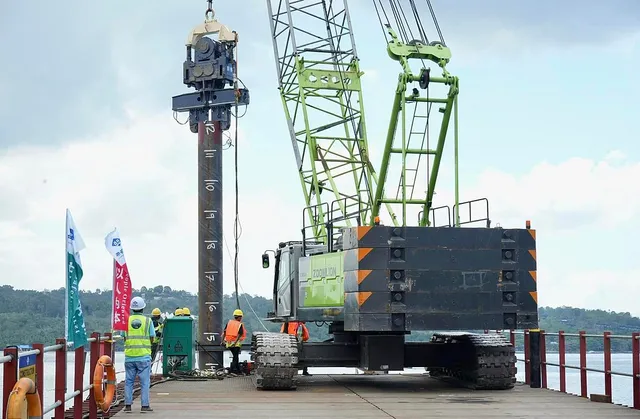
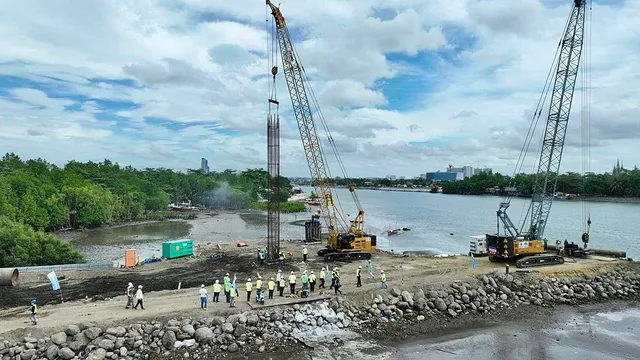
In his inspection report to DPWH Secretary Manuel M. Bonoan, Senior Undersecretary Emil K. Sadain said that the Unified Project Management Office - Bridges Management Cluster (UPMO-BMC) is working closely in the implementation of the 1.34-kilometer Bucana Bridge Project with its contractor China Road and Bridge Corporation (CRBC) pushing forward with its construction activities beginning last November 2023 and currently focused on the bored piling works.
According to Senior Undersecretary Sadain, in-charge of DPWH infrastructure flagship projects, construction of this modern bridge will be finished in 24 months and is expected to be open to traffic in the first quarter of 2026 which can approximately hold about 35,000 vehicles every day, alleviating the east-west traffic congestion in the coastal areas of Davao City.
Senior Undersecretary Sadain together with UPMO-BMC Project Director Rodrigo I. Delos Reyes inspected on Friday, April 5, 2024 the on-going construction of a four (4) lane six (6) span extradosed bridge and approach roads located at the estuary of the Davao River.
Also joining in the inspection are UPMO - Roads Management Cluster 1 (Bilateral) Project Director Benjamin A. Bautista, Stakeholders Relations Service Director Randy R. Del Rosario, and UPMO Project Manager Joweto V. Tulaylay.
The Bucana Bridge will be one of the pioneering infrastructure landmarks for the Build Better More agenda of President Ferdinand R. Marcos Jr. administration under the Bagong Pilipinas brand of governance and leadership.
The total length of the bridge is 480 meters with embankment roads of 420 meters and 440 meters and width of the bridge deck is 22.24 meters, designed for a bidirectional four (4)-lane setup.
The main bridge foundation consists of 1.5-meter diameter bored piles, with pier caps and portal piers while the height of the bridge towers is 19.5 meters, with a total of five (5) towers. The main beams are a double-hole cast-in-place hollow beam structure, with a 10-centimeter thick asphalt concrete pavement on the bridge deck and steel structure guardrails on both sides.
From the onset of its mobilization during the last quarter of 2023, the project has been underway for several months with DPWH government engineers headed by Project Manager Norifel Teddie G. Cadiang and Project Engineer John Christian T. Gaden and the contractor’s construction crews working tirelessly in attaining the present accomplishment status at 8.23%.
With a total project cost of P4.304 Billion, the project is funded by the assistance of the Government of the People’s Republic of China (GPRC) under the China Aid-Grant.
The ongoing construction project is providing local employment opportunities with about 83% of the workers involved in the project being Filipinos.
The detailed engineering design for the project was completed on April 28, 2023 by the consortium of CCCC Highway Consultant Co., Ltd. and Beijing Zhongjiao Road and Bridge Supervision Co., Ltd who are likewise providing consulting services on the construction supervision of the Bucana Bridge.
Although challenges affecting the project implementation are inevitable, DPWH has always guaranteed to provide the utmost transparency and accountability in delivering top-notch infrastructure facilities all centered on improving the lives of every Filipino.
Furthermore, the Bucana Bridge is anticipated to complement the Davao City Coastal Road serving as an alternative route to the existing urban road network in Davao that will aid in decongesting the traffic in the old route.
Once finished, the project will become an added gateway towards faster movement of economic activities, more livelihood opportunities, and the promotion of tourism across Davao City.





DPWH HOLDS BAGONG PILIPINAS TOWNHALL MEETING ON BATAAN-CAVITE INTERLINK BRIDGE PROJECT
The Department of Public Works and Highways (DPWH), together with the Asian Development Bank (ADB) and Asian Infrastructure Investment Bank (AIIB) hosted on Tuesday, March 26, 2024, another Contractor’s Outreach Program for the Bataan - Cavite Interlink Bridge (BCIB) Project.
The event held at the Philippine International Convention Center (PICC) in Pasay City was led by DPWH Senior Undersecretary Emil K. Sadain, which is also a pilot of the Department’s series of Bagong Pilipinas Townhall Meetings in line with the instruction of President Ferdinand R. Marcos Jr. to Secretary Manuel M. Bonoan and other Cabinet members to conduct series of Townhall Meetings to champion the administration's brand of governance and leadership under the “Bagong Pilipinas".
“Through this outreach initiative, we hope to further connect and promote information sharing with prospective local and foreign contractors of the upcoming BCIB Project which will be one of the world’s longest marine bridges, and strengthen partnerships in the construction industry,” said Senior Undersecretary Sadain.
Participants of the Bagong Pilipinas Townhall Meeting include major contractors from the country and around the world who are interested in joining the open competitive bidding for various stages of implementation of the inter-island bridge project that would connect Bataan and Cavite over Manila Bay.
Also present at the event are Danish Ambassador to the Philippines Franz-Michael Skjold Mellbin and Malaysian Ambassador to the Philippines Dato’ Abdul Malik Melvin Castelino; ADB Country Director Pavit Ramachadran and Country Specialist Alain Morel; DPWH Undersecretaries Eric A. Ayapana and Ador G. Canlas; Project Director Sharif Madsmo H. Hasim and Project Manager Teresita V. Bauzon of DPWH Unified Project Management Office - Roads Management Cluster 2 (Multilateral); Commercial Specialist Bebe Montesines of Embassy of the United States of America in the Philippines; Office of the President - Presidential Communications Office (PCO) Director Sheryl Mundo; and other DPWH officials.
Highlighted during the program are the detailed discussions by the experts from T.Y. Lin International working on the project’s final detailed engineering design led by its Project Manager/Team Leader and company Senior Vice President Mr. Marwan Nader on the qualification requirements from contractors for the BCIB, potential issues and concerns, as well as procurement terms and conditions.
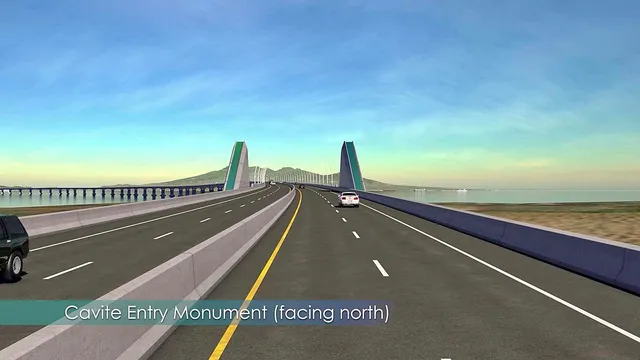
The BCIB is envisioned as a 32.15-kilometer bridge that cuts travel time between Bataan and Cavite from the current five (5) hours to just 45 minutes.
The construction of the project will be divided into seven (7) contract packages with the DPWH identifying initial on-land packages advertised for procurement on March 25, 2024 and target for award by third quarter of 2024 as the: five (5)-kilometer Bataan Land Approach under Package 1 and the 1.35-kilometer Cavite Land Approach under Package 2.
Other packages are the 20.65-kilometer Marine Viaducts in the North and South under Packages 3 and 4; and 2.15-kilometer North Channel Bridge for Package 5 and 3.15-kilometer South Channel Bridge for Package 6. The 7th package involves project-wide ancillary works with an eventual separate package 8 for the Operations and Maintenance.
The project, which is part of the Infrastructure Flagship Projects (IFPs) under the President Marcos Jr. administration’s "Build Better More" program, is estimated to cost USD 3.91 billion (about PHP 219.31 billion).
Of this amount, USD 2.11 billion (about PHP 118.32 billion) will be financed by the ADB while USD 1.14 billion (about PHP 63.71 billion) is proposed to be co-financed by the AIIB. The remaining USD 664.23 million (about PHP 37.28 billion) will be funded by the Philippine government.
The BCIB project will be financed under a multi-tranche financing facility with the first tranche of the loan amounting to USD 650 million (around PHP 36.22 billion).
Succeeding tranches will be availed of in the duration of the project, subject to securing relevant government approvals for each subsequent loan tranche.
PH SECURES FIRST TRANCHE LOAN WITH JICA FOR DALTON PASS EAST ALIGNMENT ROAD PROJECT
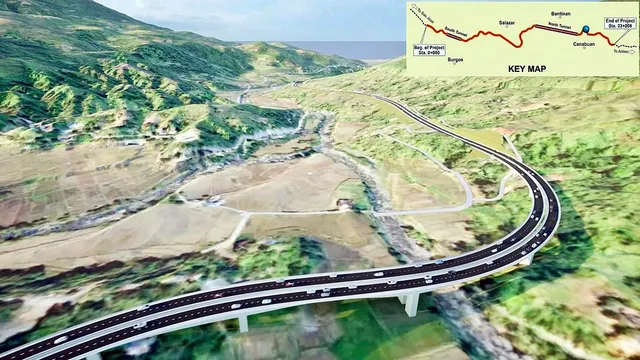
A remarkable step forward in the infrastructure development under Bagong Pilipinas following a successful loan signing agreement between the Government of the Philippines and the Japan International Cooperation Agency (JICA) for the procurement and civil works of the 23-kilometer Dalton Pass East Alignment Road Project in Cagayan Valley Region.
In a ceremony on March 26, 2024 at the JICA Philippines Office in Makati City, Department of Finance (DOF) Secretary Ralph G. Recto and the JICA-Philippines Chief Representative Takema Sakamoto signed the first of two (2) tranches of the loan agreement amounting to 100 billion Japanese yen (approximately PHP37 billion) for the consulting services and civil works of the Dalton Pass East Alignment Road Project.
The official ceremonial signing of the loan agreement was attended by DPWH Secretary Manuel M. Bonoan, Embassy of Japan Economic Affairs Minister Nihei Daisuke, JICA Senior Representative Fukui Keisuke, DPWH Senior Undersecretary Emil K. Sadain, and DPWH Unified Project Management Office (UPMO) Road Management Cluster I (Bilateral) Project Director Benjamin A. Bautista. Department of Transportation (DOTr) Secretary Jaime J. Bautista was also present for a separate loan agreement for Metro Manila Subway Project Phase 1.
DPWH Secretary Manuel M. Bonoan thanked the Government of Japan for its enduring interest and commitment in helping the Philippine Government to plan, design, build, and maintain the infrastructure developments in the country following the “Bagong Pilipinas” brand of governance and leadership through the “Build Better More” agenda of the administration of President Ferdinand R. Marcos Jr.
The continued bilateral cooperation between the Government of the Philippines and Japan through JICA, the implementing agency for technical cooperation of Japan’s official development assistance (ODA), has developed strengthened partnership and collaboration demonstrated in the Philippine infrastructure flagship projects over the years.
According to Senior Undersecretary Sadain, in-charge of DPWH infrastructure flagship projects, the Dalton Pass East Alignment Road Project is envisioned to provide fast, continuous, and safe connectivity of people, goods, and services from Cagayan Valley Region and Central Luzon, bolster economic activities as well as stimulate the agricultural, commercial, industrial, and tourism development in the entirety of Luzon.
The construction of Dalton Pass East Alignment Road Project will promote and elevate the economic and transport activities in Nueva Ecija, Nueva Vizcaya, and the rest of Cagayan Valley Region known for its rich and vast lands, thus the major producers of rice and corn in the entire country, said Senior Undersecretary Sadain.
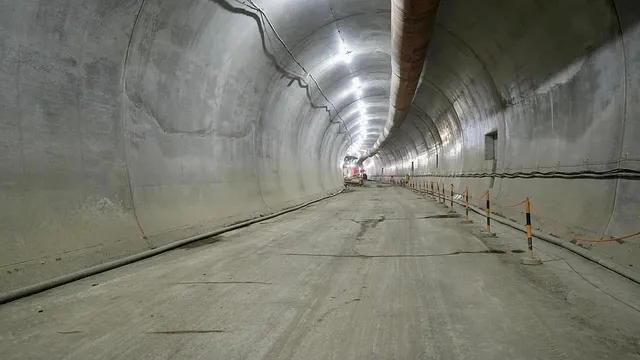
This alternative road, which outlines four (4)-lane roads or two (2) lanes per direction, will bypass the existing Dalton Pass, especially during road closures due to calamities and accidents, and to decongest the heavy traffic in the old route. The project involves the construction of 6.121-kilometer twin tube sections, with the longer sections of the northern and southern tunnels approximately measuring 4.516-kilometer and 1.605-kilometer in total length, respectively. It likewise involves the construction of 10 bridges with a total length of 5.828 kilometers and slope protection works.
Meanwhile, the four (4) components of the project include the road highway accessible to all municipalities and barangays in Nueva Vizcaya and Nueva Ecija, the north and south tunnel that will be situated in the Municipality of Santa Fe and Carrangalan, and the bridge that will traverse from the Municipality of Aritao, Santa Fe, and Carrangalan.
The project is divided into four (4) packages, namely: package 1 with a total length of 13.62-kilometer 4-lane road, a 1.6-kilometer twin-tube south tunnel, and seven (7) out of 10 bridges expanding to 1.840 kilometers; package 2 encompasses the 4.78-kilometer north tunnel, and package 3 will develop the remaining 4.61-kilometer of the four (4)-lane road and the construction of bridges 8, 9, and 10 with a length of 1.17-kilometer. Finally, package 4 will focus on the construction of a tunnel facility, operation and maintenance facility, and power line works.
In December 2023, the National Economic and Development Authority (NEDA) approved the PHP67.4-billion estimated cost of this project, which accelerated all the preparatory efforts and hard work of the DPWH Unified Project Management Office (UPMO) - Roads Management Cluster 1 (Bilateral) in realizing this breakthrough project positioned to become the economic and transportation gateway between Regions II and III.
Proper Site Investigation: A Crucial Step for Construction Projects
Site investigation holds an undeniable significance in the construction process. Cam Wylie from RDCL explores the value of a thorough site investigation and its potential to save money and create value in the long run, even with the initial investment.
Can we put a dollar figure on understanding the ground beneath what we build?
It is widely recognized that site investigation plays a pivotal role in successfully undertaking any construction venture. Countless articles, essays, and reports emphasize its criticality and the need for careful consideration. In short, conducting a comprehensive site investigation can create cost reduction for a project.
At RDCL, we regularly see construction problems stem from unforeseen ground conditions that could be pre-empted through a proper site investigation. In the Philippines we see this manifesting in large infrastructure projects like tunnels, dams, transport corridors and flood protection being a major part of nationwide growth.
The implications of these oversights can be extremely costly both short and long term. Considering the monetary cost impact is one piece of the picture. As well as this, we are also talking more broadly about the very real costs to the resilience of the people, whenua (land), and infrastructure in future risk scenarios.
Alarming, isn’t it? Despite the proven cost-effectiveness and overwhelming evidence supporting thorough site investigations, industry / geotechnical specialists we talk to in various associations across the country regularly express concerns about the insufficient quality of site investigation data they often receive.
What is site investigation?
Put simply, site investigation involves gathering essential information and data below the ground to conduct an accurate assessment of the risk. Through this, potential hazards lurking beneath the ground can be identified, allowing engineers to design foundations based on reliable data regarding the physical properties and arrangement of sub-surface materials.
The scope and design of each investigation depend on factors like anticipated geology, previous site usage, and construction proposals.
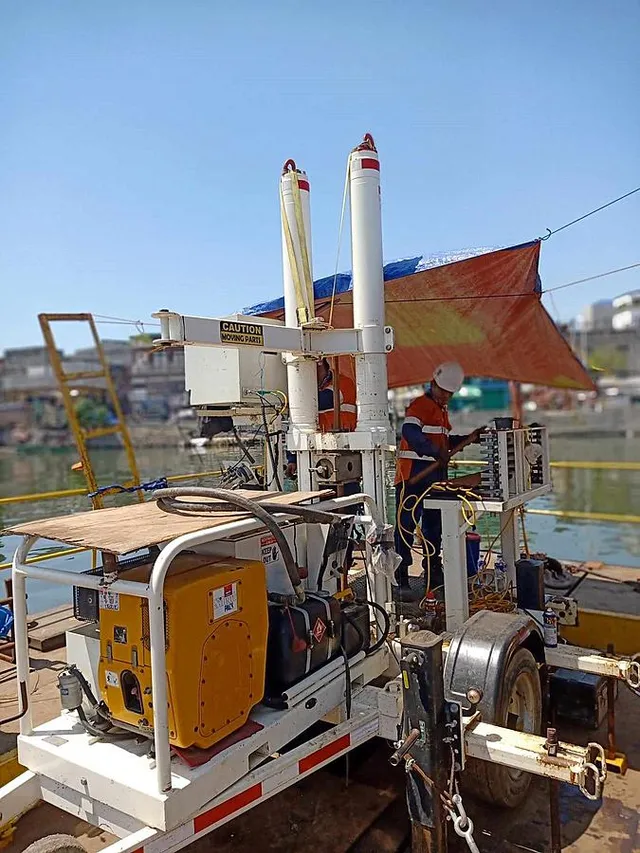
Our specialist team of Geotechnicians use a variety of solutions and tools for each project. Generally, site investigations encompass four to six stages, each serving a specific purpose.
On-site testing = better precision, better decision-making
While it's true that on-site testing during investigations is more cost-effective than laboratory testing, the latter yields significantly more precise data. Unfortunately, what we often see is the choice of techniques being driven by financial considerations, rather than aligning with the actual ground conditions. This inevitably leads to complications.
In the Philippines, where RDCL operates, recognizing the value of a thorough site investigation can make all the difference. By investing in this critical process, the construction industry can ensure efficient project execution, minimize unforeseen challenges, and achieve long-term cost savings and value.
If we want to contribute to a thriving future, we must be taking a long-term view to our projects.
The foundation of successful projects
In the realm of construction, a thorough site investigation serves as a crucial step to address uncertainties related to contamination and ground conditions. Neglecting to adequately mitigate ground risks during the initial planning stages could have substantial ramifications on the project's cost and timeline. Timely identification and mitigation of ground risks is imperative for project success.
It is often underestimated how site investigation can lead to cost savings. By investing dedicated efforts in this crucial aspect, construction projects can maximize financial efficiency.
Regardless of the approach chosen, site investigation is a pivotal step in the construction process, and a non-negotiable task that should never be skipped, hurried, or disregarded under any circumstances.
A wise investment
What is often underestimated is how site investigation can be a total game-changer when it comes to saving money. By accurately matching subsequent ground engineering work to the actual ground conditions, costly guesswork and "over-engineering" can be avoided, safeguarding projects from future unknowns.
For projects in the Philippines, every dollar counts. It is crucial for our project decision-makers to recognize the value and significance of site investigation.
So, let’s change how we look at things and see this is a prudent investment that ensures smoother construction, reduces financial burdens, and brings projects to completion on time.
Digging deeper: what is a Detailed Site Examination?
Sometimes, a preliminary site investigation doesn't paint the full picture when it comes to designing and building foundations. That's where a detailed site investigation becomes indispensable. It's like going the extra mile to make sure we've got all the facts straight.
During this phase, we uncover any potential contamination, material complexities, or conceivable risks that might have revealed themselves during the initial phase. It's all about conducting a thorough examination to ensure a solid foundation for your project.
A comprehensive site investigation involves a meticulous process that includes conducting multiple test borings to gather disturbed and undisturbed soil samples from various depths. These samples are then subjected to visual observation and laboratory tests.
The number and depth of borings will vary based on the project requirements. Typically, for most construction projects, starting with at least one boring at each corner of the planned infrastructure, and one at the centre, would be ideal.
Additional test borings may be necessary, guided by soil uniformity. It is vital to ensure that the test borings reach through unsuitable foundation materials and penetrate into the firm soil layers.
In the context of your project, this thorough site investigation approach will lay a strong foundation for successful construction, ensuring your project's integrity and longevity.
Cam Wylie, Director, RDCL
Cam Wylie is the Managing Director, CEO & Principal Engineer at RDCL Limited. With 30 years in the industry, Cam is a Chartered Professional Engineer with extensive overseas experience, working on major projects in the Philippines, Indonesia, Africa, Australia, and New Zealand. His expertise includes Project Management, Geotechnical/Dam Engineering, Mining, Roading, Infrastructure, large subdivisions, and Residential Dwellings, and he is a contributor to the Hawke’s Bay Cyclone Gabrielle Engineering Leadership Group.