March 03, 2024

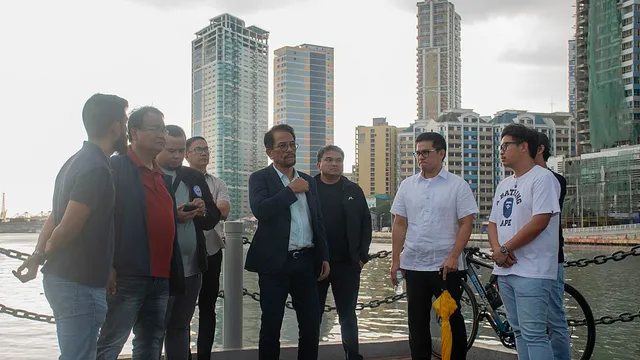
Sustained construction on the next phase of the Pasig River Urban Development Project would interconnect the showcase area at the back of the Manila Central Post Office with the walled city of Intramuros.

The 500-meter showcase area of the Pasig River rehabilitation project, dubbed the “Pasig Bigyan Buhay Muli” (PBBM), was completed on Jan. 17 with the official unveiling led by President Ferdinand R. Marcos Jr. and First Lady Liza Araneta-Marcos.

The next stage of the nine-phase rehabilitation project that stretches to the Intramuros area will be led by the Department of Human Settlements and Urban Development (DHSUD).

“This will greatly contribute to tourism in the city of Manila. Here we are also projecting that there will be commercial shops that will give opportunities to our countrymen which is the vision of President Bongbong Marcos Jr. and First Lady Liza Araneta-Marcos,” DHSUD Secretary Jose Rizalino Acuzar said in a news release.

" We at the Inter-Agency Council for the Pasig River Urban Development Project will continue to work until this project is completed," he added.

Apart from boosting tourism and maximizing the economic potentials of Pasig River, the PBBM Project also aims to promote transportation interconnectivity in Metro Manila as the waterway traverses several major cities across the capital region.

The project envisions to transform the 25-kilometer stretch of the river into people-centered and community-driven park with walk paths and bike lanes.

When completed, it will provide a seamless travel on foot or two wheels from Manila Bay to Laguna de Bay.

The revitalization project stemmed from Executive Order No. 35, issued by the President in July 2023, that created the IAC-PRUD tasked to “transform Pasig River back into historically pristine condition conducive to transport, recreation and tourism.”

The showcase area was completed and opened to the public six months after the issuance of the order.

The project has an estimated completion timeline of three to five years and will be funded solely through donations from the private sector.

Overall, the revitalization project aims to capitalize on the full potential of Pasig River and bring it to the level of other major waterways in the world such as the Thames River in London, the Chao Phraya in Bangkok and the Seine River in Paris.

March 03, 2024

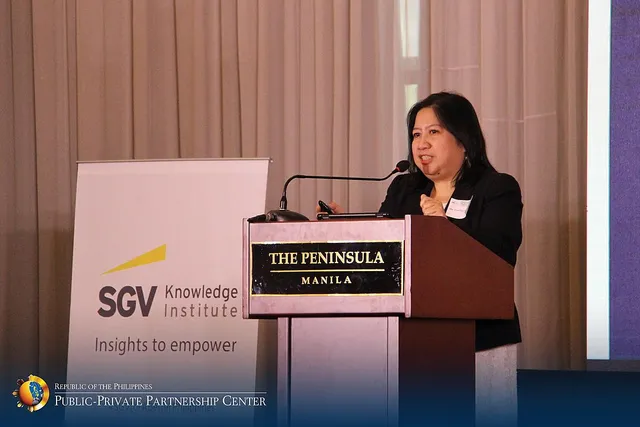
The Public-Private Partnership (PPP) Center currently has 117 projects worth PHP2.5 trillion in the pipeline for undertaking between the government and private sector.

"This is as of February 2. Particularly, we have a bulk of the projects still in the transportation sector because we are doing a lot of catching up," PPP Center Executive Director Cynthia Hernandez said in a forum in Makati City.

Hernandez said that aside from transportation, other priority sectors include solid waste management, health and water.

"Out of the 117 projects, there are 15 that are expected to be approved in 2024," she said.

Some of these projects include the operations and maintenance (O&M) of the Metro Manila Subway, North-South Commuter Rail O&M, San Ramon Newport, University of the Philippines Philippine General Hospital in Diliman, Cagayan Valley Medical Center-Hemodialysis Center, and the National Capital Region EDSA Busway Project.

Other projects include the O&M of the following projects: Cebu Bus Rapid Transit, Davao City Bypass, Metro Rail Transit-3, and Light Rail Transit-2.

Unsolicited PPP projects for approval this year also include the rehabilitation, operation, maintenance and expansion of both the Puerto Princesa International Airport and the Iloilo International Airport; upgrade, expansion and O&M of New Bohol International Airport; the Long-Term Water Resource Development for Metro Manila Project; and the operation and maintenance of the Philippine Identification System.

"For 2025, we have these projects that are currently in the early stages of development. And the preliminary studies are expected to be completed. Once completed, they can be submitted by the implementing agencies for approval by 2025," Hernandez said.

These projects include the New Cebu International Container Port, Air Navigation Services-Air Traffic Services Project, Philippine Automatic Fare Collection System, San Mateo Railway Project, Manila Bay-Pasig River-Laguna Lake Ferry Project, North Integrated Transport System, Mindanao Railway Project Phase 3, North Long Haul Inter-Regional Railway Project, and Davao City Bypass Construction Project O&M.

The Laguna Lake Road Network O&M PPP project, Department of Public Works and Highways (DPWH) Central Office Building Project, Iloilo-Capiz Aklan Expressway, and Bases Conversion and Development Authority (BCDA) Solid Waste-to-Energy project are also expected to be submitted for approval next year.

March 03, 2024

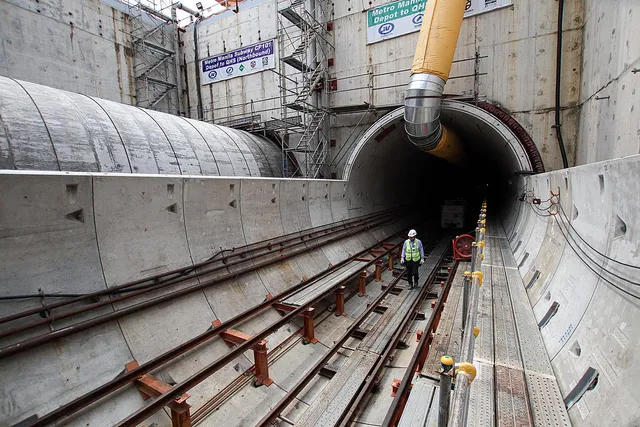
Filipinos, especially in the National Capital Region, can look forward to using a modern underground train system in five years’ time, as construction of the Metro Manila Subway Project (MMSP) Phase 1 has hit 40 percent completion and is proceeding apace.

The Department of Transportation (DOTr) shared the news during the site inspection of the MMSP in late February, led by Transportation Secretary Jaime Bautista, Finance Secretary Ralph Recto, and Japan International Cooperation Agency (JICA) Chief Representative to the Philippines Takema Sakamoto.

"We have shown to Secretary Ralph Recto the ongoing development and briefing on what the project is all about, and with the support of JICA we are implementing this project on time for completion in 2029," said Bautista.

With a budget of P488.5 billion, the underground mass transport system is expected to cut travel time from Valenzuela City in northern Metro Manila to Ninoy Aquino International Airport (NAIA) in the south from 1.5 hours to just 35 minutes, the DOF stated.

The Metro Manila subway, considered the third largest project under the Marcos administration’s Build Better More program, can accommodate 519,000 passengers each day once fully operational, the DOF added.

Recto said the subway will not only improve convenience and speed but also generate approximately P2.5 billion in daily economic benefits.

The subway's direct economic benefits, totaling P930.26 billion annually, will be a result of reduced vehicle costs, shorter travel times, and decreased carbon emissions.

Stretching across 33 kilometers, the Metro Manila subway will feature 17 stations connecting Valenzuela to Parañaque City, with a designated stop at NAIA Terminal 3.

The interest rates for both the first and second tranches of the loan are set at 0.10 percent per year for non-consulting services and 0.01 percent per year for consulting services, the DOF statement read.

Each of the loan has a maturity period of 40 years, which includes a 12-year grace period for the first tranche and a 13-year grace period for the second tranche.

The 17-station subway, running from Valenzuela to NAIA, is expected to cost about P355.6 billion and will cut travel time from one hour to 30 minutes.

Based on a JICA study, the travel congestion in Metro Manila cost the economy over P3.5 billion per day or P1.27 trillion every year.


Operations and maintenance

Bautista meanwhile told reporters they are currently working on the operations and maintenance of the Metro Manila subway.

“We are now on the process of procuring O&M for MRT-3, North-South Commuter Railway, and Metro Manila subway,” Bautista said.

“We’re working with a transaction adviser so that they can advise us on the parameters, terms and conditions that will be followed by the possible concessionaire,” he added.

The DOTr chief did not say what entities will acquire the O&M of the project but said he hopes “to have something” before the end of the year.

The MMSP is currently being financed by two active loan agreements and is expected to enter into a third tranche of loan worth ¥150 billion by March 2024.

The project includes the construction of a deport and a 33-kilometer railway line made up of 17 stations that will connect Valenzuela City to Pasay City with a spur line to Terminal 3 of Ninoy Aquino International Airport (NAIA) in Parañaque City.


Completion by 2029

Bautista said that the DOTr is currently in discussion with the National Economic and Development Authority (NEDA) and the Department of Finance (DOF) for review of draft documents pertaining to the loan deal provided by JICA and the government of Japan.

"With the support of JICA, we are implementing this project on time for completion in 2029," Bautista said.

Recto has also expressed support to ensure the project is completed on time, while the DOTr addresses the right-of-way issues.

The MMSP only resumed its actual construction in January 2023 following the right-of-way issues after some property owners refused to surrender their land to the state.

"The Department of Finance is fully committed to securing the funding for this project," said Recto. "We aim to finalize the loan agreement for the 3rd tranche of financing by March 2024."

March 03, 2024

Stronger bilateral relations between the Government of the Philippines and the Republic of Korea will be instrumental in turning the infrastructure vision for “Bagong Pilipinas” into reality.

By supporting infrastructure development, from roads and bridges to flood control structures, the Republic of Korea thru the Korea Export-Import Bank (KEXIM) contributed to the journey together towards building a brighter Philippines with vital arteries that connect communities, facilitate trade, and spur economic activity across the country.

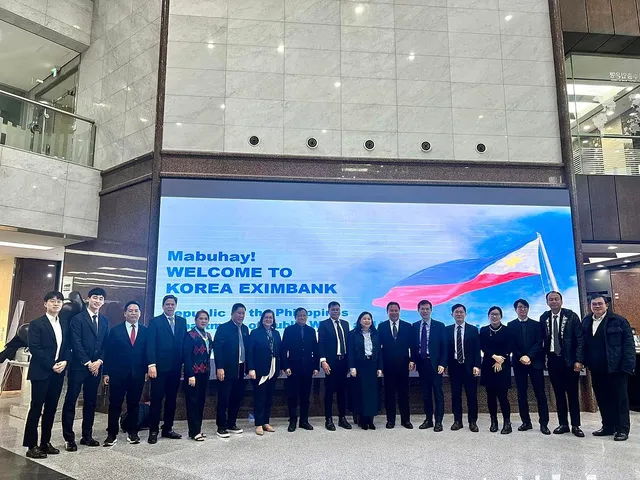
Top officials of the Department of Public Works and Highways (DPWH) led by Senior Undersecretary Emil K. Sadain held a meeting on February 26, 2024 with Vice-President Hong Soon-young of KEXIM, an official export credit agency in South Korea which provides financing for several infrastructure flagship projects in the Philippines.

On behalf of DPWH Secretary Manuel M. Bonoan, Senior Undersecretary Sadain expressed profound gratitude for the KEXIM’s steadfast support not only with the necessary financing capital but also the invaluable expertise, innovation, and best practices to infrastructure development initiatives which will undoubtedly make a leap forward to the “Build Better More” program of President Ferdinand R. Marcos Jr. administration.

Among the KEXIM-financed infrastructure flagship projects are the completed Samar Pacific Coastal Road Project (SPCR) Phase I in Northern Samar; soon to be completed Panguil Bay Bridge in Northern Mindanao and Integrated Disaster Risk Reduction and Climate Change Adaption Measures (IDRR-CCA) in the low-lying areas of Pampanga in Central Luzon; and the on-going detailed engineering design of Panay-Guimaras-Negros (PGN) Island Bridges in Western Visayas.

The engineering services of PGN Island Bridges are covered by a $56.6 Million loan agreement signed by the Department of Finance and KEXIM in 2022.

Yooshin Engineering Corporation in Joint Venture (JV) with Kyong-Ho Engineering & Architects Co., Ltd., Dohwa Engineering Co., Ltd., Soosung Engineering Co., Ltd. and Dasan Consultants Co., Ltd. are presently undertaking the engineering services for the 32.47-kilometer PGN Bridges connecting Panay Island, Guimaras Island and Negros Island.

The project has two (2) components: 13 kilometers Panay-Guimaras or Section A that will have a sea-crossing bridge length of 4.97 kilometers; and Guimaras-Negros or Section B with a total length of 19.47 kilometers including a sea-crossing bridge with length of 13.11 kilometers.

The meeting at KEXIM headquarters in Seoul was also attended by Ambassador Maria Theresa B. Dizon-De Vega and Vice Consul Reisha L. Olavario of the Embassy of the Philippines to the Republic of Korea, and the following DPWH officials who are on observation tour with Senior Undersecretary Sadain for the detailed engineering design of PGN Island Bridges Project: Undersecretaries Carlos G. Mutuc, Eugenio R. Pipo Jr., Roberto R. Bernardo, Ador G. Canlas, and Eric D. Ayapana; OIC-Undersectary Marichu A. Palafox; Assistant Secretary Joy Manginsay; Project Directors Benjamin A. Bautista, Ramon A. Arriola III, and Director Randy R. Del Rosario.

Other KEXIM Executives who participated in the meeting include Director Kim Yu-shin; Senior Loan Officers Shin Yu-Jin and Hwang Eun-ghil; and Loan Officers Song Yoo-Hwan and Kim Haeju.
March 03, 2024

The Department of Public Works and Highways (DPWH) launched a pioneering technology transfer program in South Korea to revolutionize the construction of bridges connecting land and sea such as the proposed 32.47-kilometer Panay-Guimaras-Negros Island Bridges (PGN) Project, an Infrastructure Flagship Project (IFP) under the “Build Better More” Program with funding assistance from the Export-Import Bank of Korea (KEXIM).

According to Senior Undersecretary Emil K. Sadain, in-charge of DPWH infrastructure flagship projects, the construction of inter-island connectivity like the PGN bridges now under detailed engineering design stage signals a paradigm shift in the “Bagong Pilipinas” approach to infrastructure development of President Ferdinand R. Marcos Jr. administration with the expected integration of advanced materials, digital design technologies, and streamlined construction techniques and methodologies which were applied by South Korea in its land-to-sea bridge construction.

As authorized by DPWH Secretary Manuel M. Bonoan, Senior Undersecretary Sadain together with Undersecretaries Eugenio R. Pipo Jr., Roberto R. Bernardo, Carlos G. Mutuc, Ador G. Canlas, and Eric D. Ayapana; OIC-Undersectary Marichu A. Palafox; Assistant Secretary Joy Manginsay; Project Directors Benjamin A. Bautista and Ramon A. Arriola III; and Director Randy R. Del Rosario participated at the technology exchange initiative to gain a comprehensive understanding of South Korea’s visionary approach in the development of infrastructure projects including its systematic operation and management.

The DPWH leadership believes that by embracing innovative engineering methods, collaboration and harnessing the power of smart infrastructure solutions, the Philippines will soon be at the forefront of bridge construction excellence.

Other than PGN, DPWH thru the Unified Project Management Office (UPMO) Operations will soon commence the civil works of Bataan-Cavite Interlink Bridge, a 32-kilometer-long marine bridge comprising two (2) cable-stayed bridges for the navigation channels with 24 kilometers of marine viaducts and eight (kilometers of approach roads connecting the provinces of Bataan and Cavite over Manila Bay.

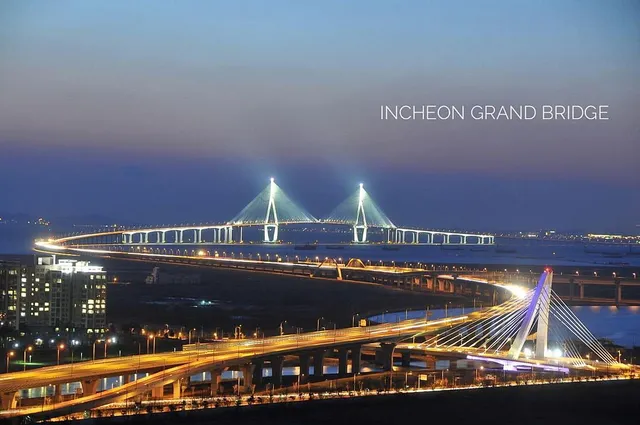
In coordination with Yooshin Engineering Corporation, a South Korean company known for its expertise in infrastructure projects and together with its joint venture partners undertaking the detailed engineering design for the PGN Project namely Kyong-Ho Engineering & Architects Co., Ltd., Dohwa Engineering Co., Ltd., Soosung Engineering Co., Ltd. and Dasan Consultants Co., Ltd., the DPWH group observed three (3) landmark bridges on February 27 to 29, 2024 in South Korea namely Gwangan Grand Bridge in Busan, and Incheon Grand Bridge and Yeongjong Bridge in Incheon City.

An iconic bridge in the vibrant coastal city of Busan, the 7,420-meter long Gwangan Grand Bridge also known as Diamond Bridge spanning the Gwanganri Coast was completed in 2002 by Yooshin Engineering Corporation.

Gwangan Grand Bridge, a state-of-the-art suspension bridge that has expanded the urban functions, is the largest double-layer bridge in South Korea that is known for its impressive architecture and stunning nighttime illumination making it no longer just a bridge but a major tourist attraction adding to the beauty of Busan's skyline.

Meanwhile, the Incheon Grand Bridge is a crucial transportation link that facilitates travel between Incheon International Airport and the mainland, as well as providing access to the island.

Completed in 2009, the Incheon Grand Bridge symbolizes South Korea's commitment to modern infrastructure and transportation excellence.

Lastly, the Yeongjong Bridge spanning the water between Incheon International Airport and Yeongjong Island contributes to the economic development and accessibility by facilitating the flow of passengers and goods to and from the airport and the island. It is regarded a marvel of South Korean engineering excellence symbolizing their resilience, creativity, and determination to overcome challenges.

March 03, 2024

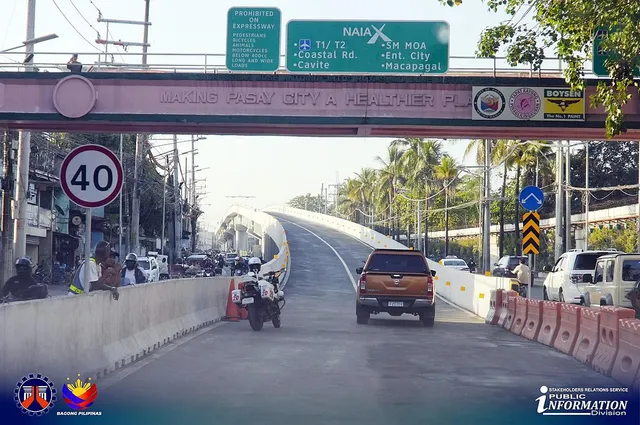
San Miguel Corporation’s (SMC) infrastructure arm officially opened the new access ramp of the NAIA Expressway (NAIAx) at Tramo in Pasay City which is expected to ease traffic in the area and provide seamless access to the country’s main international gateway and other areas.

Speaking at its ceremonial opening on Friday, SMC president and chief executive officer Ramon S. Ang underscored the importance of the 800-meter access ramp for motorists, particularly for those using EDSA southbound coming from Makati, or northbound, coming from the Entertainment City.

“This Tramo access ramp provides another option for motorists heading to the airport, and other areas in Paranaque City and Cavite province. We believe it can help relieve overall traffic congestion in the area, and improve traffic flow within the vicinity of the airport,” Ang said in a statement.

Public Works Secretary Manuel Bonoan led the inauguration of the new access ramp and credited the company for supporting the government’s efforts to build vital infrastructure to sustain the country's economic growth.

“The Tramo access ramp has been in San Miguel’s drawing board for a long, long time because they knew it would enhance the efficiency of NAIA expressway, and improve the mobility of motorists going to the airport,” Bonoan said.

Bonoan said further improvements on NAIAx are being studied by their agency, as the grantor of the concession, in partnership with SMC, to improve the flow of traffic to airport terminals, given growing demand.

“The Department of Public Works and Highways will always be there to support and implement these projects to improve traffic flow especially here in Metro Manila,” he added.

For his part, Ang remained firm in the company’s commitment to work closely with the government, as it pursues infrastructure projects that benefit Filipinos.

“San Miguel will continue to pursue these vital infrastructure projects, in close coordination with our government, because of their benefits to our people and economy. Through these projects, we also create jobs, improve the mobility of goods and services, and make our cities and regions more primed for growth. All these serve to support and sustain our growing economy,” he said.

The NAIA expressway is an 11-kilometer elevated toll road that connects the Skyway System to the three passenger terminals of NAIA, the country's main international gateway, as well as to Pasay’s Entertainment City, Macapagal Boulevard, Sucat Road in Paranaque City, and the road network to Cavite province.

March 03, 2024

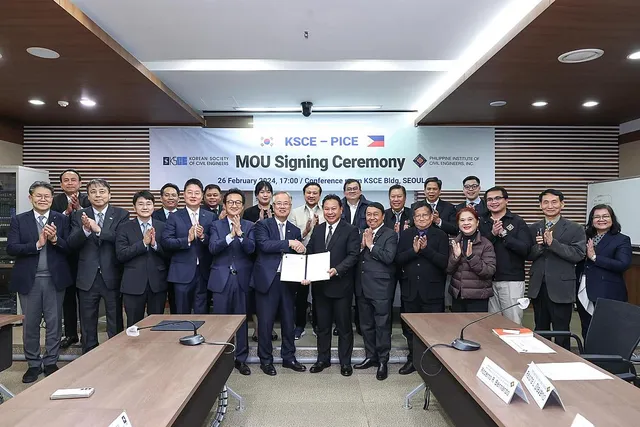
Professional organizations dedicated to advancing the field of civil engineering in the Philippines and South Korea have engaged in international collaboration to promote knowledge sharing and technical perspectives in civil engineering.

Department of Public Works and Highways (DPWH) Senior Undersecretary and Philippine Institute of Civil Engineers (PICE) National President Emil K. Sadain and Korean Society of Civil Engineers (KSCE) President Choong-Ki Chung signed on February 26, 2024 a Memorandum of Understanding (MOU) to practically trigger the collaboration between the two (2) organization in both industry and academy of civil engineering.

Under the administration of President Ferdinand R. Marcos Jr., the Philippines has lots of demand for infrastructure development and the Korean construction industries are very interested in projects, adding to the fact that they have the leading edge technology, said Senior Undersecretary Sadain after signing the MOU in the presence of KSCE Vice President for International Affairs Jae-Yeol Cho, PICE National Board Director Florencio A. Padernal, KSCE International Affairs Committee Chair Tae Sup Yun, and PICE Conventions Committee Member Benjamin A. Bautista.

The signing ceremony held at KSCE Headquarters in Seoul was also participated by Asian Civil Engineering Coordinating Council (ACECC) Chair Jae-Woo Park, KSCE Secretary General Dae-Jin Hwang, and KSCE Vice Chair of International Construction Project Committee Jeong-Hwan Kim.

DPWH officials on a technology transfer program also attended the meeting and MOU signing namely: Undersecretaries and PICE Past National Presidents Eugenio R. Pipo Jr. and Ador G. Canlas; Undersecretaries Roberto R. Bernardo, Carlos G. Mutuc, and Eric D. Ayapana; OIC-Undersectary Marichu A. Palafox; Assistant Secretary Joy Manginsay; and Project Director and PICE Convention Committee member Ramon A. Arriola III.

With the authority given by DPWH Secretary Manuel M. Bonoan, the group led by Senior Undersecretary Sadain visited South Korea’s landmark infrastructure projects specifically the Incheon Grand and Yeongjong Suspension Bridges in Incheon and Gwangan Grand Bridge in Busan to gain a comprehensive understanding of technology and best practices.

Collaboration between KSCE and PICE to bring a conference would not only strengthen ties between civil engineering professionals in South Korea and the Philippines but also foster mutual learning, innovation, and collaboration to address common challenges and opportunities in the field.

The MOU is a practical commitment and expansion of collaboration in research and education to uphold the standards and quality of works to be provided to respective countries for further improvement of the civil engineering profession.

In line with the 2024 PICE Theme “Building Global Partnerships, Bridging Boundaries and Fostering New Technologies Towards A Resilient and Sustainable Development”, the organization opens the door to partnerships with other civil engineering organizations in the upcoming Mid-Year National Convention in Manila to share expertise, foster innovation, and address global challenges in the field.

Senior Undersecretary Sadain said that the convention would provide participants with opportunities to learn about the latest developments, trends, and challenges in the field, as well as to engage in interactive discussions and knowledge sharing.

The conference program would feature a mix of technical sessions, international exhibits, workshops, and panel discussions covering a wide range of topics in civil engineering.

February 28, 2024

In the dynamic realm of automotive engineering, the pursuit of optimal performance and reliability is an enduring challenge. Choosing between Original Equipment Manufacturer (OEM) parts and aftermarket alternatives is a critical decision, and the case for OEM parts, especially those equipped with Donaldson's Ultraweb Media Technology, becomes even more compelling when we delve into the data-backed advantages.

Donaldson's Rich History: Pioneering Filtration Since 1915

Embarking on their journey in 1915, Donaldson's initial foray into air filtration for tractor engines laid the foundation for a century-long legacy of innovation. Today, Donaldson is a global leader in filtration solutions, with a commitment to pushing the boundaries of technology. This rich history is not just a chronicle of the past but a testament to the relentless pursuit of excellence.

Technological Marvel: Ultraweb Media's Data-Driven Superiority

The heart of the argument for OEM parts lies in Donaldson's cutting-edge Ultraweb Media. Looking at the data, it speaks volumes about its performance. The synthetic nanofiber layer isn't just a claim – it's an engineering marvel that showcases exceptional filtration efficiency while maintaining optimal airflow. By examining particle capture efficiency, pressure drop characteristics, and dustholding capacity, engineers and enthusiasts gain a quantitative understanding of how Ultraweb Media outperforms conventional filtration technologies. The data not only showcases Ultraweb Media's prowess but also provides a benchmark for evaluating its impact in real-world applications.

Real-World Validation: Case Studies in Reliability

To fortify our case, let's examine real-world case studies. Our longtime Donaldson coal mining customer in Charleston, West Virginia, claimed to have one of the longest-running engines in the industry – 51,000 hours of work without a rebuild or major repairs, the equivalent of almost six years of continuous work by using Donaldson Filters. This offers a tangible glimpse into the impact of Donaldson's filtration solutions on heavy-duty equipment. The data reveals not only the longevity and reliability that Ultraweb Media imparts but also its costeffectiveness over the long term. Reduced maintenance costs and increased engine lifespan are not just theoretical benefits but proven outcomes in practical scenarios

Cost vs. Quality: A Data-Backed Perspective

Critics may argue that OEM parts are costlier, but the investment is justified by the wealth of data supporting the advantages they bring. The engineering brilliance encapsulated in Donaldson's OEM parts, featuring Ultraweb Media, translates into quantifiable benefits. The total cost of ownership, including reduced maintenance expenses and prolonged engine life, often outweighs the initial cost difference.

As we navigate the intricate landscape of automotive components, the datadriven argument for Donaldson's OEM parts with Ultraweb Media becomes even more compelling. From a history rooted in tractor engine air filtration to the forefront of cutting-edge technology, Donaldson's legacy is one of relentless innovation. Engineers and enthusiasts, when it comes to your vehicle's engine – the beating heart of performance – trust in the data, trust in the century-long legacy, and choose OEM parts that embody the engineering prowess Donaldson is renowned for. It's not just about parts; it's about data-backed reliability, longevity, and a commitment to keeping your engine running at its very best.

February 26, 2024

The Chamber of Mines of the Philippines (COMP) said its 19 member-companies will fully implement the Towards Sustainable Mining (TSM) initiative, a global environmental, social, and corporate governance performance measurement standard. 

In a statement over the weekend, COMP said TSM is a set of tools and indicators to ensure that key mining risks are managed responsibly and best practices are used at members' mining facilities. 

At present, the Philippines through COMP is the only country in Asia to subscribe to TSM. 

COMP said member-companies will submit their self-assessment reports on eight TSM protocols for their 2023 performance. 

These TSM protocols include safety and health; community and Indigenous Peoples outreach and social development; crisis management and communications; tailings management; water management; biodiversity conservation management; and climate change. 

The report will be submitted via an online app called Mine Site Sustainability Audit (MSSA). 

The mines will conduct internal audits and should be able to support their self-ratings with proofs and evidence. 

COMP said 10 of the 19 mines will be subjected to independent external verification by highly qualified Verification Service Providers (VSPs) to validate the reports while the other nine will be validated next year. 

The results of all self-assessment and externally verified reports will be made public. 

“After we adopted TSM in December 2017, we embarked on a six-year preparation period that saw our members actively participate in the Filipinization of the TSM Protocols,” COMP chairperson Michael Toledo said. 

“That period also saw the formation of our multi-sector Community of Interest Advisory Panel, the training and accreditation of our VSPs, the development and cascading of the MSSA, a self-assessment dry run, and the mock external verification of three volunteer mines: Rio Tuba Nickel, OceanaGold Didipio, and Philex Padcal,” he added. 

Other COMP member-firms with operating mines include Benguet Corp., Cagdianao Mining Corp., Carmen Copper Corp., Carrascal Nickel Corp., CTP Construction and Mining Corp., Dinapigue Mining Corp., Eramen Minerals, Inc., FCF Minerals, Inc., Filminera Resources Corp., Hinatuan Mining Corp., Lepanto Consolidated Mining Co., LNL Archipelago Minerals, Inc., Platinum Group Metals Corp. and Taganito Mining Corp. By Anna Leah Gonzales


Article courtesy of the Philippine News Agency

February 19, 2024

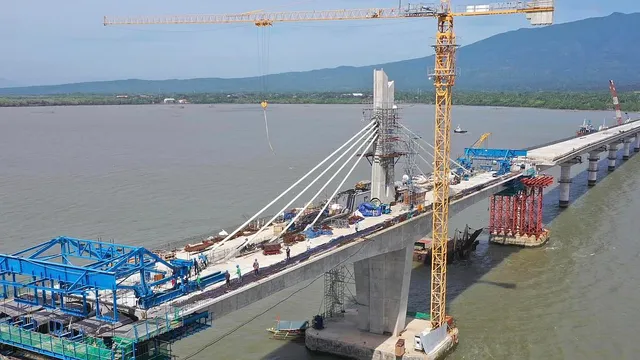
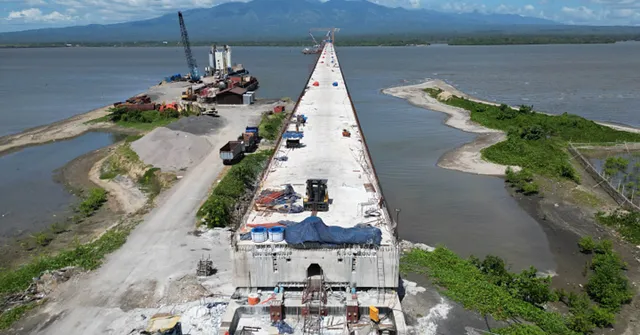
The much-awaited inter-island bridge project of the Department of Public Works and Highways (DPWH) in Northern Mindanao is on the verge of completion this year, with funding poised to play a pivotal role.

Senior Undersecretary Emil K. Sadain, in-charge of DPWH infrastructure flagship projects, said that civil works for the 3.17-kilometer Panguil Bay Bridge Project connecting Tangub City, Misamis Occidental, and Tubod, Lanao del Norte is targeted to finish this 2024 with the necessary funding remains paramount to ensure the project's full completion.

In the recent inspection of Senior Undersecretary Sadain, he noted that despite progress made in construction which is at 89 percent completion, funding challenges in the DPWH 2023 and 2024 national budget for this infrastructure flagship project threatens to prolong the project timeline.

Nonetheless, we are optimistic that the implementing office Unified Project Management Office-Roads Management Cluster II (Multilateral) together with the contractors and consultants will be able make up for the unprecedented delays brought by absence of sufficient funding and bad weather conditions in Mindanao the last several days to finish the Panguil Bay Bridge Project in a few months from now, Senior Undersecretary Sadain reported to DPWH Secretary Manuel M. Bonoan.

Also present in the project inspection are UPMO Project Directors Sharif Madsmo H. Hasim and Benjamin A. Bautista, and Project Managers Teresita V. Bauzon and Marlon V. Galerio.

DPWH is enthusiastic on its continuous efforts to deliver the Panguil Bay Bridge Project’s completion further promoting the “Build Better More” agenda under the “Bagong Pilipinas” brand of governance and leadership of the administration of President Ferdinand R. Marcos Jr.

The design and build contractor Namkwang Engineering & Construction Corporation

in joint venture with Kukdong Engineering & Construction Co., Ltd. and Gumgwang Construction Co., Ltd together with project consultant Yooshin Engineering Corporation in joint venture with Pyunghwa Engineering Consultants Ltd. and Kyong-Ho Engineering & Architects Co., Ltd. are in an all-out effort in its resource management and are maintaining a cohesive working environment.

The Panguil Bay Bridge Project consists of the main bridge (extra-dosed type) 320 meters long, a 1,920-meter-long approach bridge made of pre-stressed concrete girders, and an approach road.

With the segment closure of the main bridge at pylons 1 and 2 and the corresponding approach road underway, the people of Lanao Del Norte and Misamis Occidental including the tourists alike can look forward to easier access and enhanced connectivity with the dawn of a new era in interisland transportation.

The completion of Panguil Bay Bridge Project will mark a significant milestone in Mindanao's infrastructure development. This engineering marvel will significantly reduce travel time, boost economic growth, and enhance transportation links between provinces of Northern and Central Mindanao, and Zamboanga Peninsula.

In line with the DPWH INFRAgenda 2028 Strategic Plan, the design and build of the Panguil Bay Bridge Project is targeted to establish a seven (7)-minute inter-island connectivity with Tangub City, Misamis Occidental, and Tubod, Lanao del Norte as opposed to the current access connectivity through Roll-On, Roll-Off (RoRo) vessel which has a travel time of about two (2) hours to two and a half (2.5) hours including loading and unloading time.

February 19, 2024

The Department of Transportation (DOTr) and energy utility provider Meralco on Thursday signed an agreement to power the Metro Manila Subway --the country’s first underground railway.

During the signing of the ‘Switching Station Agreement with Deeds of Usufruct,’ Transportation Secretary Jaime Bautista said the partnership will guarantee “uninterrupted power and reliable service” for the subway system.

“I would like to thank Meralco for your support as this agreement will help the Metro Manila Subway a step closer to reality,” Bautista said.

Under the agreement, the DOTr will provide Meralco with a switching station area of 1,743 square meters for the interconnection of the Metro Manila Subway to Meralco’s distribution network.

With the land allocation, Meralco with finance, install, control, operate and maintain the required facilities within the switching station for the Metro Manila Subway interconnection.

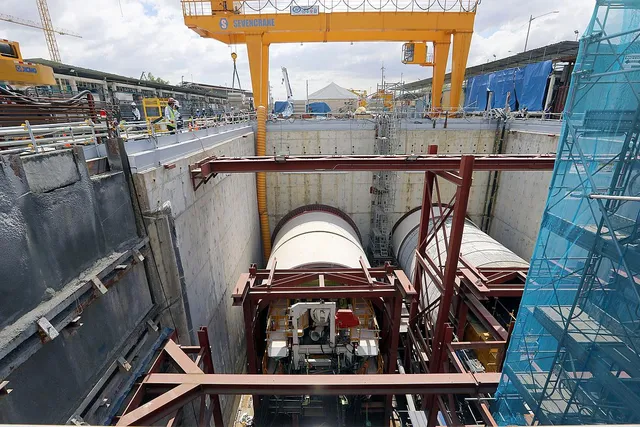
To date, construction for the subway is ongoing, with the tunnel boring machine (TBM) for the project’s contract package 104 (CP104) —Ortigas and Shaw Boulevard Stations— currently at the stockyard in Doña Julia Vargas Avenue in Pasig City after being delivered from Japan to the Port of Manila on Jan. 1.

The subway will start from Valenzuela, pass through Quezon City, Pasig City, Makati City, the Ninoy Aquino International Airport and Bicutan, as well as connections with the North-South Commuter Railway (NSCR).

It is slated for partial operation by 2028. By Raymond Carl Dela Cruz


Article courtesy of the Philippine News Agency

February 19, 2024

Expenditures of the national government for infrastructure and other capital outlays grew to P1.02 trillion from January to November 2023.

This is an 18.5 percent or P159.8 billion increase to what was recorded in the same period in 2022 at P861.8 billion.

“Government spending is vital to national growth. Thus, to help buttress robust economic growth, government agencies must continue to execute their programs and projects as authorized in the annual budget and deliver planned results in a timely manner," said Budget and Management Secretary Mina Pangandaman in a statement on Sunday.

The increase in infrastructure and other capital outlays was largely attributed to the disbursements made by the Department of Public Works and Highways (DPWH) to cover the implementation of various priority projects; and capital outlays, such as construction, rehabilitation, renovation, repair, and improvement of roads and bridges, as well as flood control structures.

The implementation of various rail transport foreign-assisted projects by the Department of Transportation (DOTr) also contributed significantly to the growth of infrastructure spending.

Meanwhile, to continue the infrastructure development through the Build, Better, More program, total infrastructure outlays have been allocated P1.510 trillion under the 2024 national budget, a P180 billion higher than the P1.330 trillion allotted for the same program in the 2023 General Appropriations Act.

"Under the guidance of President Bongbong Marcos, we will continue to provide the much-needed budget to support the Build, Better, More program. The DBM likewise commits to help ramp up infrastructure spending by urging all government agencies to disburse and utilize their infrastructure budget efficiently and promptly. Every peso in our national budget should be spent effectively for the benefit of our economy and, most importantly, the Filipino people," Pangandaman said.

The Build, Better, More program aims to expand the country’s infrastructure by developing road, rail, mass transport, and flood control infrastructure projects to allow for growth in far-flung municipalities, espoused by the President's vision of a Bagong Pilipinas.

This infrastructure allocation is equivalent to 5.5 percent of the country’s projected GDP for this year, well within the 5.0 to 6.0 percent target of the government.

This includes the Public Sector Infrastructure budget of the Department of Transportation (DOTr) and DPWH amounting to P26.580 billion and P981.999 billion, respectively.


Article courtesy of the Philippine News Agency

February 19, 2024

Weir’s Chief Strategy and Sustainability Officer Paula Cousins recently spoke at COP28 in the United Arab Emirates about the importance of harnessing innovative technologies to make mining more sustainable. 

In a panel discussion hosted by the Ministry of Economy, Trade and Industry of Japan and moderated by the World Business Council for Sustainable Development (WBCSD), Cousins talked about a recent study that highlights a significant opportunity to reduce energy use and emissions in comminution.

The study is the first to utilise the WBCSD’s Avoided Emissions Guidance to examine mining processes and the results have been independently assured by SLR Consulting Limited.

Three of Weir’s technology combinations were evaluated against a conventional comminution circuit design for an archetypal mine processing 15 million tonnes of copper ore per year in Chile.

Each circuit was based on a ‘rock to recovery’ system boundary – that’s to say, reducing rock direct from the mine to a size that enables the mineral to be recovered.    

The four configurations were:

  1. Conventional comminution circuit based on a Semi-Autogenous Grinding (SAG) mill and ball mill. 
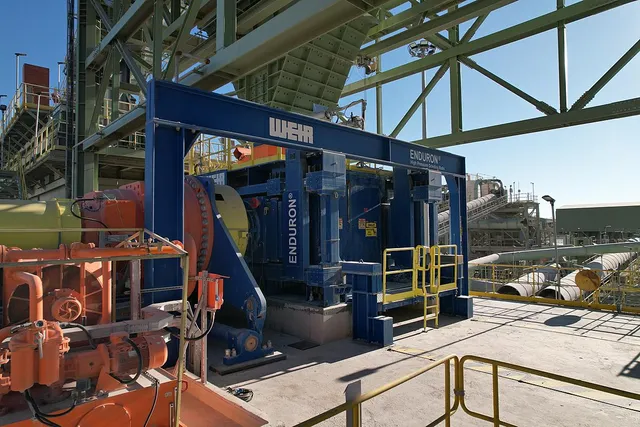
  2. Weir’s Enduron® High Pressure Grinding Rolls (HPGR) replacing the SAG mill at the initial grinding stage.
  3. Enduron® HPGR, plus Swiss Tower Mills’ (STM) vertical stirred mill replacing the ball mill.
  4. Addition of a Eriez’s HydroFloat® coarse particle flotation (CPF) unit.

The study shows that replacing conventional technology with innovative new solutions can cut energy use by 40%, while also avoiding 50% of CO2e emissions.

Close up of Enduron HPGR


The world needs more transition metals to achieve net zero, but the mining industry needs to extract these using significantly less energy and water, Cousins explained.

‘Our new, externally assured study highlights the potential for energy savings of 40% and for 50% of CO2e emissions to be avoided in comminution, the most energy intensive stage of mining processes,’ she said.

‘By adopting a systems-based approach to technology collaborations, we can help the mining industry scale up and clean up at the same time.’

The full results are published here:


Transformational Technologies

Comminution equipment doesn’t operate in a vacuum – it’s part of a wider and deeply interlinked mineral processing plant where the comminution circuit’s overall performance significantly influences mineral recovery.

Therefore, a holistic review of the overall circuit – from rock to recovery – is required.

These circuits are prone to increased feed variability, which requires the right combination of size reduction and classification equipment to minimise the fluctuation in product quality, as this enables greater efficiencies in the recovery circuit, explains Bjorn Dierx, Weir Minerals Global Product Manager Enduron® HPGR and Vertical Stirred Mills.

‘Enduron HPGRs can adapt to changing feeding conditions instantly because the roll speed and grinding force can be changed while in operation; as a result, the most effective, minimal stress-intensity force is applied to the particles to ensure they break at the given throughput rate,’ he said.

The STM mill has a vertical mill chamber, with grinding rotors (discs with castellations) installed on the central mill shaft. The mill feed is a slurry, pumped through the bottom of the mill and discharging from top. The mill chamber is filled with ceramic grinding media to approximately 60% of its volume.

The grinding media bed moves only in the horizontal plane, which ensures energy isn’t wasted. The vertical mill arrangement, combined with bottom feed entry and top discharge, ensures coarse particles don’t short-circuit the mill.

‘The grinding circuit that delivers the highest recovery and the lowest possible energy consumption is achieved by combining these two proven technologies. The Enduron HPGR prepares the feed for the two-stage STM vertical stirred mill grinding concept,’ Dierx said.

‘This grinding circuit is followed by Eriez’s HydroFloat CPF technology, which allows the use of a coarser, rougher grind size, delivering the operator additional reductions in grinding energy-requirements.’

The recovery or efficiency of conventional flotation is strongly related to the particle size of the ore.

‘Eriez’s HydroFloat CPF represents a major step forward in terms of recovery, by extending flotation efficiency over a size range that is two to three times greater than conventional flotation machines’ limit,’ Dierx said.
February 14, 2024

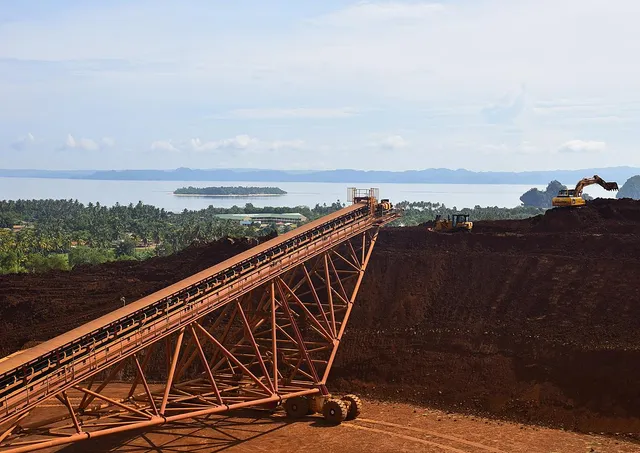
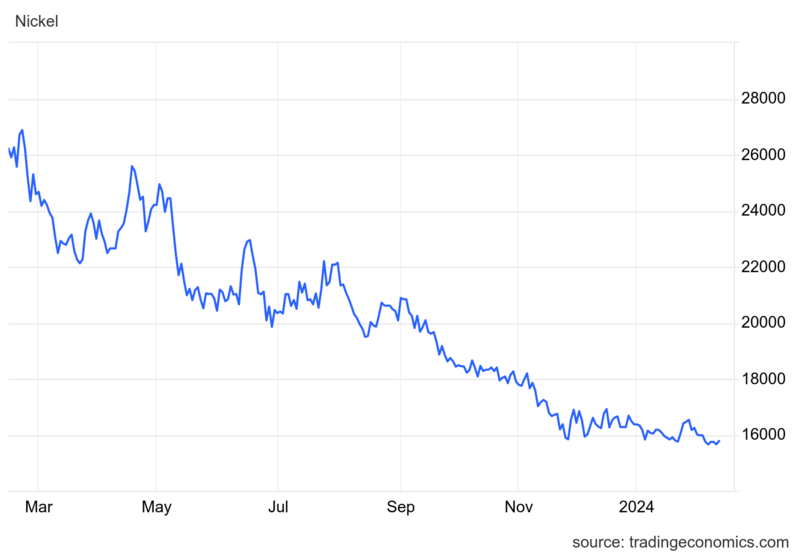
The global nickel market has recently experienced a significant downturn, marked by a sharp decline in nickel prices, plummeting by over 50% within 12 months. This unsettling trend has reverberated across nickel mines worldwide, impacting the Philippine mining industry.

As nickel prices continue their downward spiral, Philippine mines face mounting challenges, necessitating new strategies, and fortifying the industry’s resilience amidst uncertain market dynamics. What factors are driving the price of this critical metal down, and what implications does it hold for Philippine nickel mines?

Understanding the Nickel Market Dynamics

Nickel, primarily utilized in stainless steel production and recently designated as a critical mineral by the USGS, has witnessed its prices decline, due to an influx of cheap supply from Indonesia. China's substantial investments in Indonesia's Morowali Industrial Park have bolstered Indonesia's influence on global nickel supply chains.1

Consequently, China’s ownership of processing units has enabled it to control nickel production, influencing prices worldwide. This influence poses a significant challenge to global nickel mines, including those in the Philippines.

The reactions of the global nickel industry, characterized by mine closures and production halts, foreshadow potential challenges for Philippine mines if prices continue to slump without government intervention.

Canadian miner First Quantum Minerals (TSX: FM) was the first to take a hit after it announced the suspension of its Ravensthorpe nickel mine operation in Western Australia.2 Panoramic Resources (ASX: PAN), entered voluntary administration, ceasing mining activities at their Savannah nickel mine.3

Construction works at cosmos nickel operation by IGO (ASX: IGO) was halted.4 BHP also shut down its nickel processing plant in Western Australia following Wyloo Metals’ announcement to temporarily close its nickel mine.5

Finally, Glencore (LON:GLN) announced it will sell its stake in Koniambo Nickel SAS (KNS) in New Caledonia and that production at KNS's processing plant will be halted for six months while a new investor is sought for the loss-making business.6 Despite closure of these mines, nickel continues to slump, putting the entire industry in uncertainties.

Nickel Price (13 February 2024) 7

Impact on Production and Investment

The decline in nickel prices will exert pressure on mining companies operating in the Philippines. With lower prices, many mining operations will face reduced profitability, prompting some companies to balance cost and production output.

Investment in new mining ventures will also be affected by the downturn in nickel prices. Investors, cautious of uncertain returns amid price volatility, will become more selective in funding mining projects.

This cautious approach will slow down the development of new nickel mines and exploration activities in the Philippines, impacting the long-term growth prospects of the industry.

Among the nickel projects on the line are the following.

  1. Nickel Asia Corporation’s Bulanjao Mine and Manicani Mine

Last April 2023, Nickel Asia Corporation (NAC) (NIKL: PSE) The country’s largest nickel producer announced that it will bring two (2) more nickel mines in three years and assess the viability of another HPAL Plant. Nickel Asia is targeting annual nickel ore production of at least 4 million wet metric tonnes (WMT) from the Bulanjao mine, near its existing Rio Tuba mining site in the southwestern Palawan province, and at least 2 million WMT from Manicani mine in central Samar province.8

  1. Philex Mining Corporation’s Nickel Project

Philex Mining Corporation (PX: PSE) also announced in September 2023 it is looking into developing their nickel property in Zambales. Philex has been trying to raise capital for this project along with its Silangan Copper Mine in Surigao.

  1. DMCI Mining Projects

DMCI Mining also announced it would spend about P250 million to develop a nickel mining project in Zambales. It will be developed inside an existing field operated by subsidiary Zambales Diversified Metals Corp. (ZDMC) and to be run by another unit, Zambales Chromite Mining Co. (ZCMC). It is estimated to produce approximately 20 million metric tons (MT).9

Employment and Economic Implications:

The nickel mining industry is a significant contributor to employment and economic development of the country. However, the effects of low nickel prices will affect local communities and economies dependent on mining-related activities.

A decline in mining investments and production can lead to job losses and reduced income opportunities for workers in the sector and related industries. Moreover, the ripple effects of a slowdown in mining activities can be felt across supply chains, affecting businesses that provide goods and services to the mining sector. As a result, communities reliant on mining for livelihoods may experience economic hardship and social challenges.

Environmental and Social Considerations

The closure of nickel mines can have far-reaching consequences for ecosystems and local communities, underscoring the need for responsible mining practices and stakeholder engagement.

As mines grapple with economic pressures, environmental stewardship and social responsibility must remain central tenets of their operations to mitigate adverse impacts and foster sustainable development. Striking a balance between economic development and environmental sustainability remains a complex challenge for policymakers and stakeholders in the Philippine mining sector.

Outlook and Opportunities

The effects of low nickel prices on the Philippine mining industry are multifaceted, impacting production, investment, employment, and environmental sustainability. While nickel prices are influenced by global market dynamics beyond the control of domestic stakeholders, the Philippine mining sector must adapt to navigate the challenges posed by price volatility.

In response, mining companies may explore strategies for operational efficiency, cost optimization, and increased production. Policymakers on the other hand can show its support for the industry through policy support and stability, investment incentives and infrastructure development.

As the Philippine mining industry continues to evolve amidst fluctuating nickel prices and evolving regulatory frameworks, proactive measures and strategic partnerships will be crucial to ensuring the sector's long-term viability and contribution to national development.

Stay strong nickel!

References:

Bloomberg. (2022, December 15). Chinese companies are flocking to Indonesia for its nickel. https://www.bloomberg.com/news/articles/2022-12-15/chinese-companies-are-flocking-to-indonesia-for-its-nickel

ABC News. (2024, January 15). Ravensthorpe nickel mine to cut 30 per cent of workforce as mining ramps down. https://www.abc.net.au/news/2024-01-15/ravensthorpe-nickel-mine-to-cut-30-per-cent-of-workforce-as-mini/103322050

Australian Mining. (2023, December 15). Panoramic Resources enters voluntary administration. https://www.australianmining.com.au/panoramic-resources-enters-voluntary-administration/

Mining.com. (2024, January 30). IGO puts Cosmos nickel mine on care and maintenance. https://www.mining.com/web/igo-puts-cosmos-nickel-mine-on-care-and-maintenance/

Australian Mining. (2024, January 23). BHP shuts down WA nickel processing plant. https://www.australianmining.com.au/news/bhp-shuts-down-wa-nickel-processing-plant/

Reuters. (2024, February 12). Glencore to halt New Caledonia nickel plant, sell stake. https://www.reuters.com/markets/commodities/glencore-halt-new-caledonia-nickel-plant-sell-stake-2024-02-12/#:~:text=Feb%2012%20(Reuters)%20%2D%20Glencore,for%20the%20loss%2Dmaking%20business.

Trading Economics. (2024, February 13). Nickel. https://tradingeconomics.com/commodity/nickel

Reuters. (2023, April 25). Nickel Asia to open two more Philippine mines, eyes power unit IPO. https://www.reuters.com/article/nickel-asia-philippines/update-1-nickel-asia-to-open-two-more-philippine-mines-eyes-power-unit-ipo-idUSL4N2ZS1JK

Inquirer Business. (2023, September 26). DMCI Mining readies 2 new sites after breaking 2022 Record

February 12, 2024

The first phase of the Mindanao Railway Project (MRP) is set to begin with pre-construction activities in Davao City, Tagum and Digos while the search for the project’s funding continues.

During a town hall meeting on the railway sector in Davao City Tuesday, Department of Transportation (DOTr) Secretary Jaime Bautista said alternative funding sources are being sought such as official development assistance (ODA) from foreign governments and international banks.

“We decided to pursue Phase 1 of the MRP despite withdrawal of prior funding commitment from the government of China,” Bautista said.

To date, he said land acquisitions for the project are ongoing from Tagum to Digos via Davao City.

Resettlement sites have also been identified for those that will be affected by its construction.

“The Tagum train village is scheduled for turnover to its future residents in the coming months. Livelihood programs are also being prepared for affected families,” he said.

Once underway, Bautista said the Tagum-Davao-Digos line will “concretize” the master rail plan of connecting Mindanao via railway.

The MRP Phase 1 covers eight stations, spans a length of 100.2 kilometers, and has a total projected cost of PHP81.6 billion.

Once completed, it will serve 122,000 passengers daily and will reduce travel time from Tagum City to Digos City to one hour from three hours.

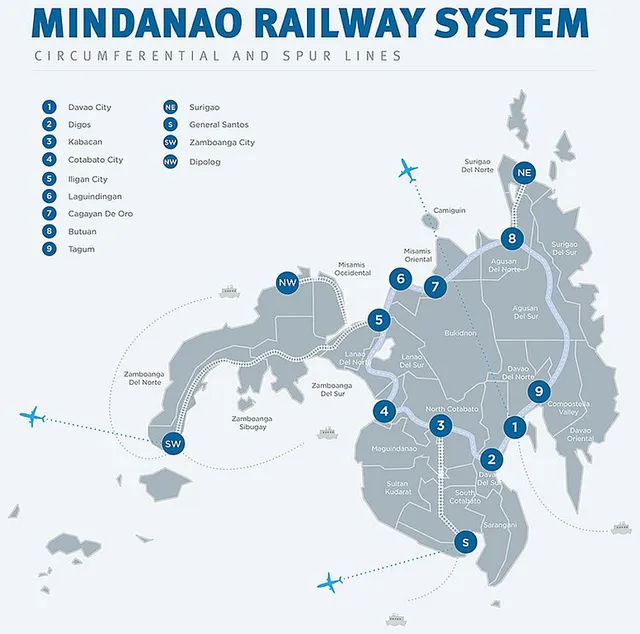
The entire MRP itself will span 1,544 kilometers and connect several areas in Mindanao including Davao, General Santos, Cagayan de Oro, Iligan, Cotabato, Zamboanga, Butuan, Surigao and Malaybalay. By Raymond Carl Dela Cruz


Article courtesy of the Philippine News Agency

February 12, 2024

Senior representatives from several key government agencies in the Philippines including the Department of Public Works and Highways (DPWH) participated on a familiarization visit in the United Kingdom per invitation of British Embassy Manila to the Department of Finance (DOF), to explore ways of financing and delivering new sustainable infrastructure projects in the country.

Senior Undersecretary Emil K. Sadain led the DPWH delegation who participated in the four (4)-day program from January 30 to February 2, 2024 in London, United Kingdom that focused on discussing and advancing strategies related to infrastructure development and project management.

Other than DPWH, the familiarization visit was participated by DOF, National Economic and Development Authority (NEDA), Department of Justice (DOJ), Department of Agriculture (DA), Department of Information and Communications Technology (DICT), Department Of Health (DOH), Department of Transportation (DoTr), Department of Energy (DOE), Public-Private Partnership (PPP) Center, Bases Conversion Development Authority (BCDA), and Clark International Airport Corporation.

Senior Undersecretary Sadain was joined by Project Directors Ramon A. Arriola III and Benjamin A. Bautista of the DPWH Unified Project Management Office (UPMO) Operations, in-charge of implementing DPWH infrastructure flagship projects under Official Development Assistance (ODA).

Part of the program is the sharing of insights and experiences of United Kingdom from their various infrastructure development projects including a mix of public and private investment strategies and approaches.

Senior Undersecretary Sadain said that investments in infrastructure have the highest impact on the economy as it creates more jobs and encourages more businesses to open.

DPWH is working with the DOF and NEDA for a mix of public funds, private investments, and partnerships to ensure a comprehensive and sustainable approach to infrastructure development in line with the “Build Better More” program.

The United Kingdom grants loans - concessional and market-rate and mobilizes strategic private sector investments, to help countries like the Philippines access resources needed for sustainable infrastructure investment to enable economic growth as well as toward achievement of the UN Sustainable Development Goals.

One of the best practices in the United Kingdom is private sector capital invested in, designing, building, and operating public infrastructure projects.

This approach fosters the development of essential infrastructure projects, combining public objectives with private sector efficiency and financial capabilities.
February 07, 2024

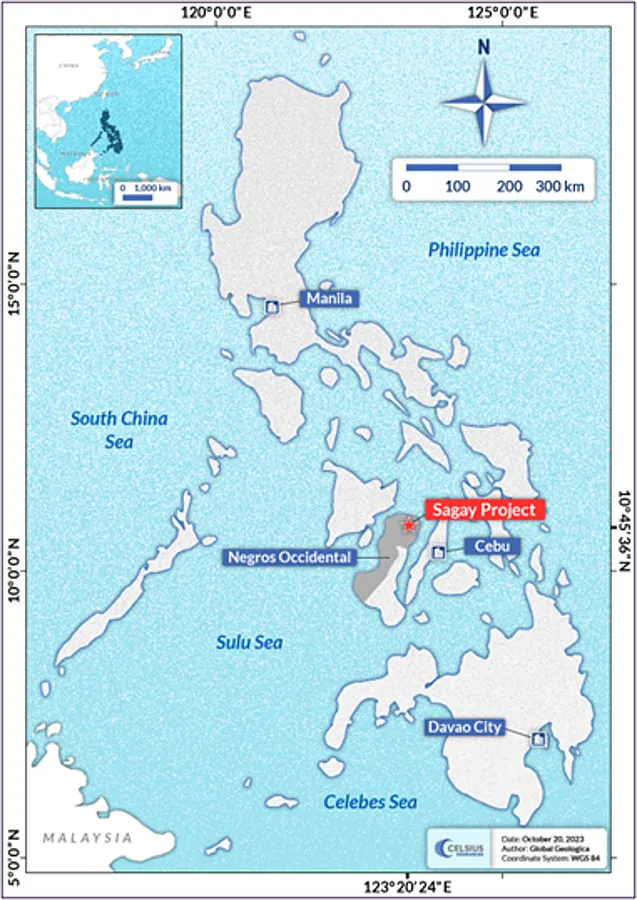
Celsius Resources Limited is pleased to announce an updated JORC compliant Mineral Resource estimate (“MRE”) for the Sagay Copper Project (“Sagay” or “Project”), held under its Philippine Subsidiary, Tambuli Mining Company, Inc (“TMCI”) and located at the Island of Negros in the Philippines.

The update to the MRE at Sagay is largely based on the results from the 2023 drilling program at a shallow copper position located ~500m to the west of the main body of mineralisation discovered to date, as announced on 17th October 2023. This shallow copper zone offers Celsius the opportunity to investigate a low cost start up opportunity via a feasibility study which has been submitted to the Philippine Government. 

Celsius Resources Managing Director, Peter Hume said:

“The greater definition of the shallow supergene copper at Sagay has increased both the Resource category and our own confidence in the ability to look at a new shallow sustainable friendly development option. The previous Mineral Resource1. only placed this area in the Inferred Category, and with this new update to the Mineral Resource, this area is now largely in the Measured and Indicated category, which allowed us to complete and submit a feasibility study to the Philippine Government2.

1 Refer to ASX/AIM announcement dated 7 November 2021 “Maiden Mineral Resource estimate (MRE) for the Sagay Project”

2 Refer to ASX/AIM announcement dated 8 January 2024 “Celsius’ Sagay Project applies for DMPF”


The Company has taken a sustainable approach to the proposed development of the Sagay Mineral Resource, similar to its flagship MCB project. Eliminating the use of a conventional tailings dam and using the tailings for environmental rehabilitation, along with processing the ore through gravity separation, therefore eliminates the use of chemicals. We are in the process of finalising the Project’s environmental impact assessment which will clearly demonstrate the Company’s commitment to environmental protection and preservation through advanced mining technologies.”

CLA Chairman, Atty. Julito R. Sarmiento added:

“The development of the Sagay Project can assist with meeting the global demand for green metals in an effort to transition to clean energy sources and achieve the global goal of net zero emissions by 2050 to stave off climate change calamity. CLA constantly takes serious efforts to develop genuinely responsible projects by tightening up our environmental managements systems and stepping up our social and environmental performance.”

THE SAGAY COPPER-GOLD PROJECT

Location

The Sagay Copper Project is in the north-eastern part of Negros Island, within the cities of Sagay and Escalante in the Province of Negros Occidental, Philippines (Figure 1).  Negros Island is part of the central group of Islands in the Philippines commonly referred to as “the Visayas”.

The MRE for the Sagay Property is located at Purok Tan-ao, Barangay Lopez Jaena (see Figure 2).
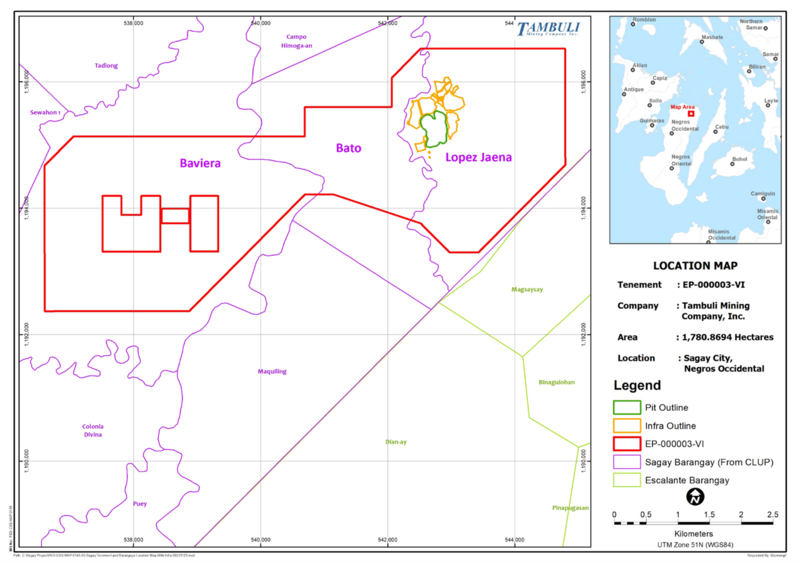
Figure 2. Location of the tenement area of the Sagay Project.


Mineral Resource Estimate

Drilling at Sagay has broadly defined a large-scale copper mineralisation which is interpreted to be a typical porphyry copper style of mineralisation, common throughout the Philippine archipelago.

The copper mineralisation for the MRE at Sagay is defined by three defined mineralised domains, two of which (namely 100LG and 100HG) relate to a main body of copper mineralisation which exists underneath a local topographic high. 

This topographic high relates to Purok Tan-ao with resistive siliceous rocks interpreted to be an eroded lithocap associated with the porphyry mineralisation.

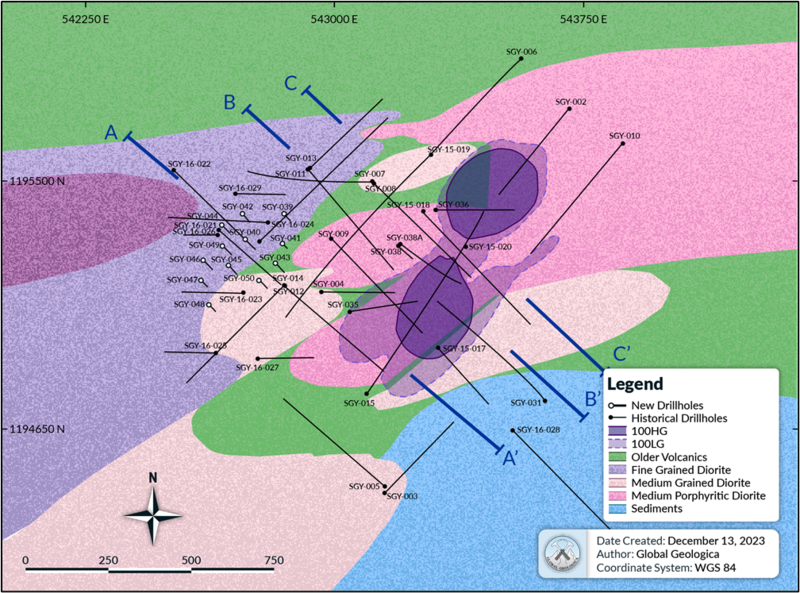
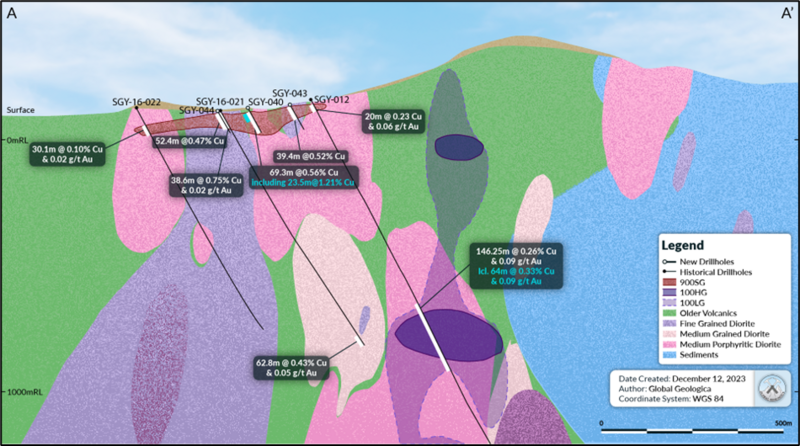
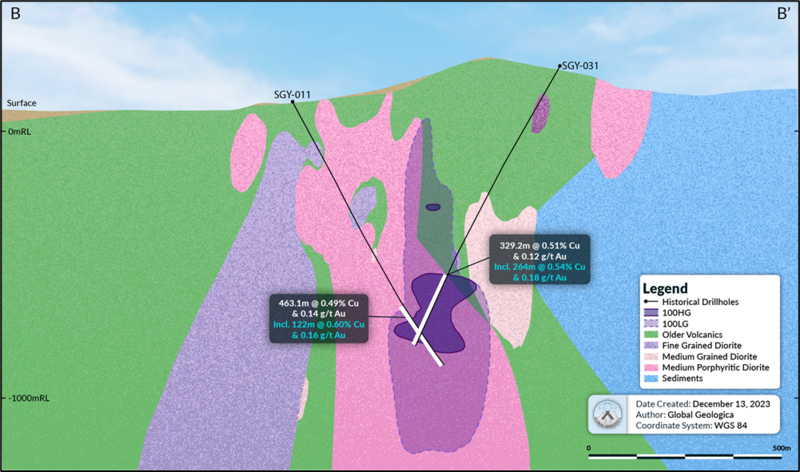
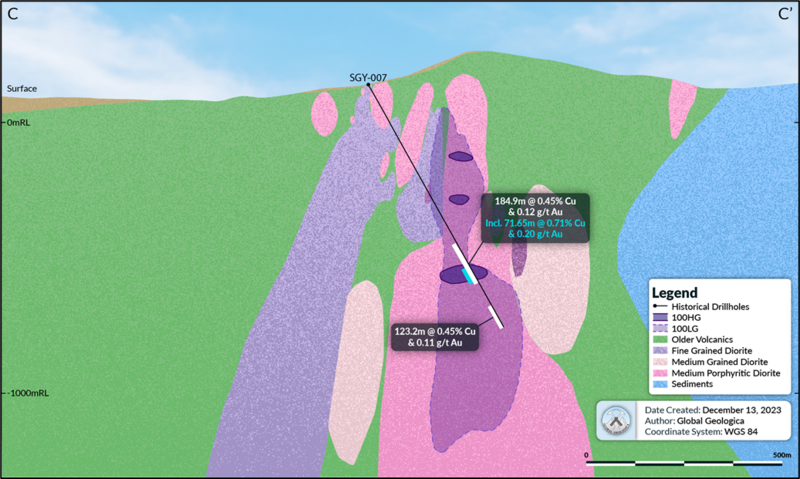
A third mineralised domain (900SG) hosts a shallow flat lying supergene copper mineralisation towards the west of the main mineralisation underneath Purok Tan-ao and is possibly related to a satellite porphyry mineralisation. Figures 3 to 7 show a plan view and cross sections of the mineralised domains relative to the host rock geology.

The copper mineralisation at Purok Tan-ao is broadly constrained by a zone of mineralisation which exceeds 0.2% copper and is trending parallel to the main alteration and related intrusive host rocks.

A lower cut-off grade of 0.2% copper was applied in the reported MRE (summarised in Table 1) which aligns broadly with the expected economic limits of the likely mining and processing options considered at Purok Tan-ao.
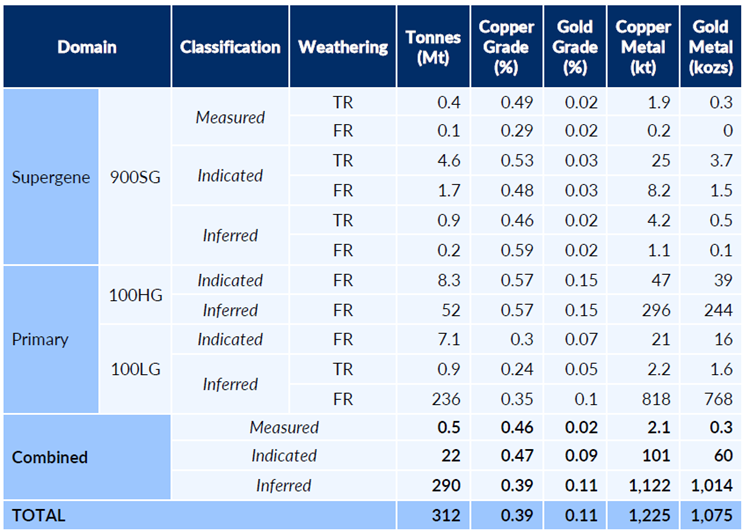
Table 1: Summary results for the Mineral Resource estimate at Purok Tan-ao at a cut-off grade of 0.20% copper.
Note for table of results: Calculations have been rounded to the nearest Mt of ore (to the nearest 100,000t where <10Mt), two significant figures for Cu and Au grade and to the nearest kt of Cu metal and kozs of Au metal (to the nearest 100t where <10kt). Some apparent errors may occur due to rounding. TR – Transition or partially oxidised Rock, FR – Fresh Rock.
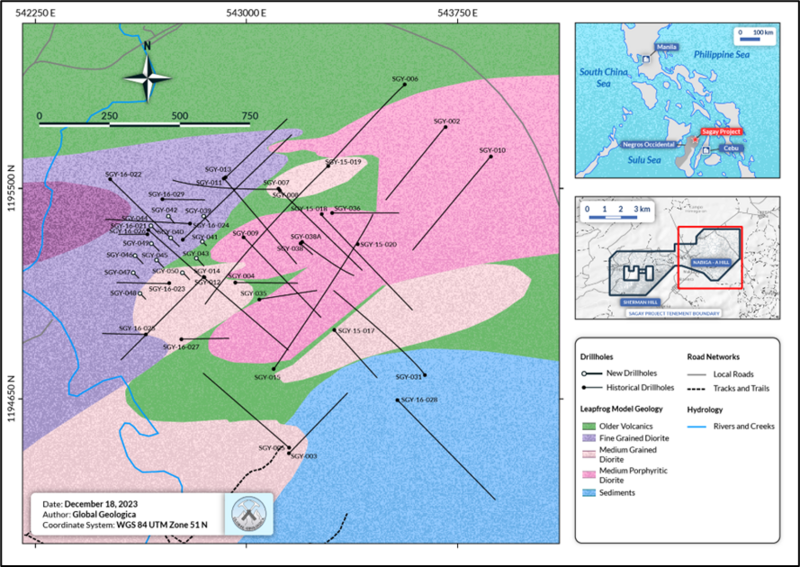
Figure 3. Drill hole locations and interpreted surface geological plan view diagram.
Figure 4. Drill hole locations and interpreted surface geological plan view diagram.
Figure 5. Oblique Cross Section A-A’ , showing the location of mineralised domain 900SG (Supergene mineralisation) and the western section of the 100LG and 100HG mineralised domains.
Figure 6. Oblique Cross Section B-B’ showing the location of the 100LG and 100HG mineralised domains.
Figure 7. Oblique Cross Section C-C’ showing the location of the 100LG and 100HG mineralised domains.

Geology and Geological Interpretation

Sagay is located at the northernmost tip of the NNE trending volcanic arc related to the eastward subduction beneath the Negros Trench in the southwest offshore of Negros Island. Several porphyry and epithermal mineralisation targets belong in this underexplored mineralisation trend along the eastern side of the island.

The major rocks identified at Purok Tan-ao are a series of intermediate igneous rocks intruding into older host rocks composed of basalts overlain by metamorphosed sedimentary rocks and felsic volcanics. These rocks are in turn overlain by Quaternary pyroclastic rocks that consist of tuff and tuff breccias. The intermediate intrusions include several diorites and andesite porphyry.

Three distinct Diorite intrusives were identified. Following the local nomenclature in Sagay Project, these are (from oldest to youngest) the (1) Equigranular Diorite (MEQ), (2) Medium-grained Porphyritic Diorite (MPOC), and the (3) Fine-grained Equigranular Diorite (FEQ). These intrusive rocks have distinct textures and visible cross cutting relationships. Widespread strong silica - clay and outer chlorite alteration is notable in the deposit. This 8km by 4km alteration zone is indicative of a large magmatic hydrothermal system.

There are multiple types of porphyry mineralisation observed within the Purok Tan-ao Deposit. The dominant type is related to early-stage porphyry quartz stockwork veins with associated potassic alteration and chalcopyrite as the dominant copper sulphide. A later-stage porphyry Cu-Mo type mineralisation has been identified and is hosted in silica – sericite – chlorite alteration.  In addition, evidence exists for a later-stage epithermal vein deposit type which exist within close proximity to the large-scale porphyry copper-gold mineralisation. 

At this stage, only the porphyry copper-gold type of deposit was defined in the MRE.

Drilling Techniques

All of the drilling data used for the Sagay MRE is based on diamond drilling information from a total of 45 diamond drill holes—with a cumulative meterage of 25,782.1m.

Initial diamond drilling was conducted between December 2012 and 2016 by Freeport-McMoRan, who completed a total of 28 drill holes at Purok Tan-ao, with an aggregate core depth of 22,516.70 metres.

From November 2021 to April 2022, Celsius has completed a total of 4 drill holes and 1 offset, for a total to 2,440 metres[1].  More recently in late 2023, Celsius completed a further 12 shallow drill holes which are the focus for this Mineral Resource update.  These shallow drill holes relate to the 900SG mineralised domain with a total meterage of 824.7m[2].

Sampling and Sub-sampling Techniques

The following sub sampling and sample preparations were followed for all the diamond drilling at Sagay.

Half core samples were collected from diamond holes drilled from the surface. All drill cores were generally sampled at 2m intervals. In cases where geological and mineralogical characteristics change, the sample length is reduced to best fit the geological contact, with a minimum observed sample size of one metre. Sampling typically commenced after the overburden horizon depth was exceeded.

Cut samples were bagged on site prior to delivery to the laboratory (Intertek) in Manila for sample preparation and analysis.

Sample Analysis Method

All samples were analysed at the Intertek, an internationally recognised and ISO/IEC 17025:2005 & ISO/IEC 17020:2004 certified independent laboratory in Manila.

Copper (Cu) values were analysed by means of multi-acid (4-acid) digest. Elements were determined by ICP-OES/MS with AAS finish. Samples were fire assayed for gold (Au) using a 50-gram charge, with a detection limit of 0.005 ppm.

Estimation Methodology

A parent cell block size of 10m x 10m x 10m was chosen based on the general dimensions of the interpreted ore domains, and the likely mining method.

Ordinary Kriging was chosen as the interpolation method for the block model which defines the MRE. 

The parameters for Ordinary Kriging were based on an analysis of the variograms for each domain in addition to some broad assumptions with regards to the direction and continuity of the copper and gold mineralisation associated with each defined mineralised domain. The variograms were located along the plane of the interpreted controlling geological trend which is striking at approximately 50 degrees at a near vertical dip.

A broad review of the statistics for each domain did not identify significant high value outliers that are considered likely to result in an overestimated either locally or globally to the grade distribution within the block model. Therefore, no top cut was applied to the MRE.

Classification Criteria

The mineralisation is constrained within boundaries which are also considered to define the limits for each domain as supported by the current drill hole information. Within these domain constraints, minimum search distances and composited drill hole information parameters determined which locations were defined as Measured, Indicated, Inferred or as further Exploration Targets.

A small portion of the 900SG was classified in the Measured category where there is tighter drill spacing (less than 50m), multiple drill holes which show continuity of mineralisation and the variogram analysis is also supporting of the relationship of the assay data between drill holes.

The Indicated category was classified based on maximum distance of 150m to the major position, 85m to the semi-major axis and 25m in the minor direction for the limits, with a minimum number of samples at 8 and maximum number of samples at 16.  A minimum of two drill holes was also applied for the Indicated category.

The Inferred Mineral Resource represents over 90% of the total MRE due to the thick and broadly spaced copper intersections as deeper levels which contain the most copper mineralisation identified to date at Purok Tan-ao.  This category was extended for twice the distances applied to the Indicated Resource pushing the limits search ellipse to 300m x 150m x 50m, with a minimum of four samples and maximum of 20 samples defined for each block. 

No restriction on the number of drill holes was applied for the Inferred Mineral Resource category.

Cut-off Grade

A preferred lower cut-off grade of 0.2% copper has been used in the reported MRE. This is considered appropriate based on the geological continuity associated with copper mineralisation above 0.2% copper in addition to a broad economic cut-off point based on a ~US$10,000/t copper price.

Dimensions

The mineralisation at Purok Tan-ao is classified as a porphyry copper-gold deposit which, at deeper levels (below 400m depth), has a broad geometry of up to 1km along strike towards the north-east (with a main trend of ~45o azimuth) and true widths of up to 280m.  At shallower levels, the copper mineralisation is broken up into multiple domains which are individually up to 600m along strike and with true widths of up to 150m.

The 900SG domain is a shallow, flat lying zone of mineralisation which has formed along the current and ancient water table at a broadly horizontal orientation.  This domain is elongated in the direction of some interpreted controlling faults and/or source porphyry copper mineralisation.  These trends appear to be both north-east and north-west in orientation.

Metallurgical and Mining Parameters
 
For the 900SG domain which is the basis of the Feasibility Study, utilised a potential surface mine approach with an interpreted costs of US$3.30/t for mining and US$4.8/t for processing.

Possible later mining development costs of US$10/t to US$7/t and processing costs of US$7/t to US$4/t respectively for a medium sized (5Mt to 10Mt per annum) underground block caving mining method and processing using floatation (to produce a copper-gold concentrate) have been assumed where applicable for the MRE. 

This cost range estimate matches closely with a broad geological cut-off grade of between 0.15% copper and 0.25% copper (at a forward-looking Copper Price of ~US$10,000/t).

Study Results

Based on the resource model, mining parameters, and metallurgical test works, a Mining Project Feasibility Study was submitted to the Philippine Mines and Geosciences Bureau on 20 December 2023 confirming the presence of minerals in the area which are recoverable by processing the ore through gravity separation which was determined to be economically sound, ensuring environmental protection and preservation methods would be implemented through the advanced mining technologies.

The study focused on the shallow supergene chalcocite deposit which is suitable for a medium-scale surface mining operation. The copper concentrate produced will have no deleterious elements which makes it highly marketable.

Technical, environmental, and social considerations were incorporated in the mine design to reduce the mine footprint to approximately 20 hectares. The process plant is engineered to enhance the ore through a gravity concentration method which is effective in extracting valuable components form the ore, thus contributing to the overall success of the ore beneficiation process.

Metallurgical test works indicated that the tails produced is non-acid generating. All tailings will be managed through dry stacking method which eliminates the need for a tailings dam, thus removing the possibility of environmental impacts (tailings spill). Other alternative disposal methods are currently being studied, including the potential use of tailings for hollow block manufacturing as a community livelihood program, road base, and landfill among others.

Next Steps

Following the submission of the DMPF, the key technical, environmental, and social plans and programs are under review by the Philippine Government. Once approved, the Company will apply for a mineral agreement with the government.
 

the full press release can be download HERE

February 05, 2024

The Didipio Gold-Copper Mine has set aside PhP 169 million for its Community Development Fund (CDF) this year, benefitting 52 barangays in the provinces of Nueva Vizcaya and Quirino. This is a 24% increase from their 2023 allocation of PhP 136 million.

“We have expanded the CDF coverage to 52 barangays in 2024 from 44 last year. This is proof of our commitment of mining gold for a better future for our communities in Nueva Vizcaya and Quirino” Atty. Joan Adaci-Cattiling, Didipio Mine President and External Affairs and Social Performance General Manager, said.

Didipio Mine’s CDF proceeds now includes the municipalities of Bambang, Bayombong, Solano, Dupax Del Sur, Bagabag and Diadi in Nueva Vizcaya, and Saguday and Nagtipunan in Quirino, in addition to their original beneficiaries in Kasibu and Dupax del Norte in Nueva Vizcaya and Aglipay, Cabarroguis, Diffun and Maddela in Quirino.

“We are grateful that the Didipio Mine has included us in their initiatives, even though we are not directly within the SDMP barangays. We eagerly look forward to exploring more partnership opportunities with the Didipio Mine,” Municipality of Solano Sangguniang Bayan Member Regie Valino-Valdez said.

To determine the projects for CDF implementation, the Didipio Mine is hosting a series of Technical Working Group (TWG) meetings with stakeholders. The TWG is chaired by the Mining and Geosciences Bureau (MGB) Region 2. Among its members are representatives from the Commission on Human Rights, National Commission on Indigenous Peoples (NCIP), and representatives from the different municipalities.

This year's proceeds are targeted to fund farm-to-market roads, road improvements and multi-purpose buildings for the barangays in the abovementioned municipalities. 

“These consultations with the communities under the guidance of the MGB, CHR, and the NCIP ensure that we are on the right track by listening to the proposals of our beneficiaries, allowing us to provide the appropriate multi-sectoral support to our communities,” Adaci-Cattiling added.

Last year, the PhP 136 million-CDF was utilized for the construction of multipurpose buildings, concrete and all-season farm-to-market roads, village roads, health centers, canals and flood river control systems, water systems, school buildings and facilities, hanging bridges and the CDF-Indigenous peoples scholarship program, among others.

The CDF was first implemented in 2022 and is considered as a “one of a kind” component of the Didipio Mine’s Financial or Technical Assistance Addendum and Renewal Agreement. Aside from the CDF, Didipio Mine also provides the following funding under its FTAA: Social Development and Management Program Fund, the Provincial Development Fund, and its Corporate Social Responsibility initiatives. The SDMP is sourced from 1.5 percent of the Mine’s Annual Operating Cost, while the CDF and PDF account for 1.5 percent of its gross mining revenues from the preceding calendar year. The CDF allocation is guided by seven pillars of benefit-sharing: Infrastructure, Enterprise Development, Socio-cultural or IP Program, Capacity Building, Disaster Response/Management and Environment, Health and Education.

February 05, 2024

The Department of Transportation (DOTr) has encouraged the private sector to invest in the government’s several transportation projects under the public-private partnership (PPP).

During his speech before the Philippine Chamber of Commerce and Industry in Makati City Thursday, DOTr Secretary Jaime Bautista said such investments are “highly investible” and would speed up the completion of government projects.

“You can discover their investment potential under the PPP scheme. Private sector investment will allow us to fast-track their completion,” he said.

Bautista said the government is open to private partners for these projects due to “public funding challenges.”

Of the 198 infrastructure flagship projects approved by the National Economic and Development Authority, he said 73 projects are assigned to the DOTr.

To date, there are 160 projects in the pipeline for the agency.

Projects in the aviation industry include the Ninoy Aquino International Airport, Mactan-Cebu International Airport, Clark International Airport, and Bohol-Panglao International Airport.

“Other airport projects are in Bukidnon, Catbalogan, Tacloban, Caticlan, Dumaguete, Siargao, Zamboanga, Masbate, Kalibo, and the New Manila International Airport in Bulacan,” he said.

For road transport, the DOTr has projects such as the Public Utility Vehicle Modernization Program, EDSA Busway, EDSA Greenways, Cebu Bus Rapid Transit, Davao Public Transport Modernization Program and the Active Transport Program.

In the rail sector, some of the big-ticket projects include the North-South Commuter Railway System, Metro Manila Subway Project, Light Rail Transit Line 1 Cavite Extension, Metro Rail Transit (MRT) Line 7, MRT-4 and South Long-Haul Railway.

Bautista also cited the Philippine Coast Guard, the Philippine Ports Authority and the Maritime Industry Authority for their roles in securing and managing the country’s waters, ports and vessels.

February 05, 2024

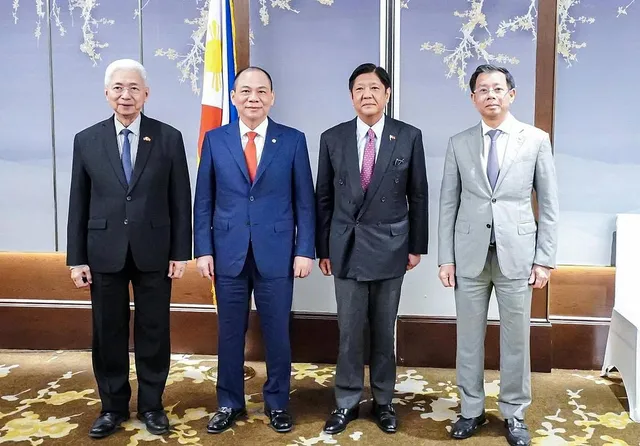
Vietnam’s largest real estate firm Vingroup has expressed interest in investing in the production of electric vehicle (EV) batteries in the Philippines, Malacañang said Tuesday.

The plan was discussed during President Ferdinand R. Marcos Jr.’s meeting with Vingroup executives on the first day of his state visit to Vietnam on Monday, Presidential Communications Operations (PCO) Secretary Cheloy Garafil said in a statement.

Garafil said Marcos is elated by the “timely” offer of Vingroup, given that the country is currently implementing the Public Utility Vehicle Modernization Program (PUVMP).

During the meeting, Marcos acknowledged the importance of Vingroup’s planned investment in the EV battery production, as he stressed that old jeepneys and tricycles will be replaced with modern units.

“I am very happy to note your interest in expanding your operations to the Philippines and you’ve just begun organizing offices there. And I think there is much that you could do,” Marcos told Vingroup’s top executives, as quoted by the PCO.

“The Vingroup is well-known in the Philippines because we are very much aligned [with] what we would like to do in the future in terms of electrical vehicle battery production,” he added.

Marcos told Vingroup officials led by chairperson Pham Nhat Vuong and vice chairperson and chief executive officer (CEO) Nguyen Viet Quang, that the Philippine government is consolidating the PUV operators and drivers into cooperatives and finalizing the vehicles’ specification.

He added that with regard to EVs, there is a proposal to leave the market open to have many suppliers to hasten the full implementation of the PUVMP.

Marcos also touted the ”young, skilled, and educated” Filipino workforce as “one of the [country’s] greatest assets,” noting that providing scholarships, upskilling and reskilling are crucial in empowering them.

“The key to taking the full advantage of that workforce is for the skills… to get them [workers] to acquire the skills that are necessary for cybersecurity, digital banking, digital transfers of money and of course AI (artificial intelligence),” he said.

In a Facebook post after his meeting with Vingroup, Marcos said the government looks forward to its future collaboration with the Vietnamese company on EV production and local mineral processing.

He also thanked the firm for the offer of about 20 scholarships aimed at making the Filipinos “competitive in this digital era.”

Garafil said the Philippines could support Vingroup’s venture, noting that the country has good reserves of nickel, cobalt, and copper.

“Although the Philippines is currently exporting minerals, it would like to increase the value in the Philippines by doing the processing in the country, Marcos said,” she said.

Vingroup is a multi-sector corporation that focuses on technology and industry, trade and services and social enterprise.

Serving as one of Vietnam's leading private enterprises, Vingroup continues to pioneer and lead consumer trends in each of its businesses and has created a respected, well-recognized Vietnamese brand.

Its subsidiary, Vinfast, is registering its subsidiary in the Philippines (Vinfast Philippines) to implement their entry into EV marketing, energy storage and nickel processing partnerships, state-run Radio Television Malacañang said in a statement posted on its official Facebook page.

For his part, Department of Trade and Industry (DTI) Secretary Alfredo Pascual urged VinFast to explore opportunities beyond opening dealership networks in the Philippines.

Pascual, who accompanied President Marcos in Vietnam, said VinFast has more opportunities in the Philippine market beyond selling its EVs through dealership business, which will open by April 2024.

He said the country becomes an attractive EV market with the issuance of Executive Order (EO) 12 which eliminates duty on completely built-up units of certain EVs.

"The Philippines welcomes investments in the EV sector as we position the country as a hub for smart and sustainability-driven manufacturing and services industries in Southeast Asia. Hence, we encourage you to explore other investment opportunities besides EV sales and dealerships," he said in a statement.

The DTI chief also presented the opportunities for the company in mineral processing in the Philippines, which is part of the EV supply chain.

Pascual also said the government provides green lane treatment for strategic investments like mineral processing.

In October 2023, VinFast representatives visited the Philippines where they met local mining companies.

Pascual similarly urged the Vingroup Joint Stock Company to look into opportunities in the tourism and healthcare sectors.

"As we work to increase our FDIs (foreign direct investments) from Vietnam and advance our economic cooperation, we hope that VinFast will make it happen in the Philippines," Pascual said.

The administration targets to be the second highest FDI destination in ASEAN by 2028.

Excluding Singapore, top FDI destinations in the region are Indonesia and Vietnam.

The Philippines net FDI inflows of USD5.88 billion in the third quarter last year already overtook Malaysia's USD4.99 billion and Thailand's USD4.44 billion.

February 05, 2024

The United States (US) government has offered its support to the Philippines in developing the country’s mineral processing and renewable energy (RE) sectors.

US Under Secretary for Economic Growth, Energy, and the Environment Jose Fernandez said in an interview here Tuesday that the US government can help the Marcos administration to engage with countries under the Mineral Security Partnership (MSP), a collaboration of 13 countries and the European Union to catalyze investments in responsible critical supply chains across the world.

Fernandez said the US government can organize video conferences with companies in MSP countries where the Philippine government can present to potential investors the kind of investments it needs for the industry.

“It’s a way for us to facilitate engagement by the Philippine government and the mining companies, mining investors out there,” the visiting US official said.

He shared that the MSP currently has “over half a dozen projects,” not only in mining but on the processing side, as well.

Fernandez said with the interest of US companies that are already here, the US government will continue working with the concerned agencies in the country to facilitate their investments here.

“We are working with the Philippines and helping them to create an enabling environment for these types of investments. A regulatory environment that is modern, and that includes the best practices out there,” he added.

Aside from processing critical minerals, Fernandez said the US government is keen to support the Philippines in increasing its RE capacity.

Fernandez had a meeting with the Department of Energy during his visit here. He conveyed that the Development Financing Corp. can be a source of funding for RE projects and infrastructure in the Philippines.

PH role in clean energy goals

The US official highlighted that the Philippines has a critical role to play in achieving clean energy goals globally, being a country with rich natural resources.

“For us to reach our clean energy goals by 2050, we’re going to need exponentially more critical minerals that we use today,” Fernandez said.

Citing data from the International Energy Agency, Fernandez said to shift to clean energy by 2050, the global market needs 42 times the amount of lithium, 20 times the amount of manganese, and 20 times the amount of cobalt.

“Those kinds of numbers mean that unless we’re able to find them, our clean energy transition will be at risk,” Fernandez added.

The Philippines is host to 5 percent of global nickel reserves and 4 percent of global cobalt reserves, the mineral resources used for producing batteries. Batteries are needed to store power from RE sources such as solar, wind, and hydro among others.

“Right now, most of these critical minerals are produced by or mined or processed by one or two countries, one of them is China… And it’s not a question of China. Something that Covid taught us is that we cannot depend on one supplier for anything,” Fernandez said.

Fernandez also discussed these sectors with the Department of Trade and Industry (DTI).

Mineral processing is one of the five priority sectors of the DTI under its Make It Happen in the Philippines campaign. By Kris Crismundo


Article courtesy of the Philippine News Agency