Category:
The Transformative Way to Reduce Risk in Resource Estimation
By: Grace Y. Tanchee
The importance of a mineral resource estimate for the long-term viability of a mine cannot be understated. Being a core basis of a mine’s feasibility study and evolving mine plans, a well-made and continuously updated resource model is essential to any mine looking to ensure profitability and sustainability. Strategizing based on an erroneous estimate can have disastrous results for a mine. As such, resource estimations must always be properly executed and well understood by the geologists, mine planners, and all other stakeholders.
THE CHALLENGE
Being crucial, resource geologists are expected to ensure that the resource estimates are accurate and compliant with standards. Geologists are also expected to update the model as new information becomes known. Time to complete and share is crucial here as updated models are used to refine the mine plan and avoid losses caused by outdated models.
There are challenges to contend with that can be the source of errors through-out each step of the estimation process, which in turn can reduce the accuracy of a resource estimate. For example, the source data could be insufficient or contain errors. Garbage in is garbage out. Improper tools and lack of information can also hamper the validation of data and thorough investigation, leading to a poor understanding of the deposit. This can affect the domaining model build, selection of the estimation method and parameters. Decentralized data and a lack of recording also heightens the risk of using incorrect data, and makes it difficult to trace and audit during the review process. Difficulties in coordinating can also increase the time crunch.
THE IMPROVEMENTS NEEDED
There are ways by we can minimize the risk of committing errors and help ensure that the resource estimate is as accurate as possible. One is by having proper and centralized data management. Just being able to store the data in one place is insufficient; data management should also include a means to record changes made to the data and why, and any important notes about the data. This will help provide context and auditability through-out the process, and help with future changes.
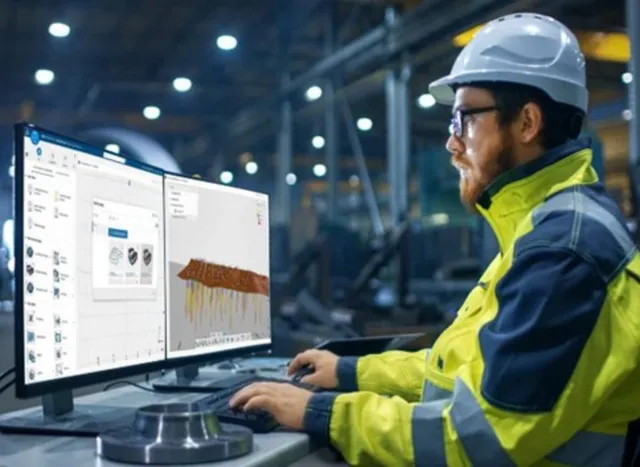
Next, the resource geologist must be able to visualize the data and have the tools for analysis and estimation. 3D Software with geology modelling tools can greatly help the geologist make sense of the data and render the model in a faster more efficient way.
Clear and traceable workflows can also be used to monitor and manage the process from start to finish, check that work is done based on best practices, and make sure that all stakeholders are fully informed and updated. Being structured, the flow of data and information between various stakeholders at each stage of the process can be made efficient.
All these can be enhanced via collaboration, facilitating knowledge sharing, feedback from fellow team members and consultants, and a collective understanding of the estimate.
THE SOLUTION
An effective way to conduct these improvements is through taking advantage of technological solutions to facilitate the changes needed. In line with this, Dassault Systemes (DS) has developed the Strategic Resource Modelling (SRM) solution. Through a combination of DS GEOVIA Surpac software and the 3DExperience platform, SRM is a comprehensive solution that links and manages processes, information, people, and tools under a single collaborative platform. Built to cover the many aspects affecting the resource estimation process, SRM is used to:
- Organize and manage geoscience data, ensure a single source of truth
- Build a unified view and understanding of the model
- Easily collaborate within and between teams
- View in 3D and share solid models via a browser, allowing for analysis anywhere anytime as long as connected
- Validate input data and generate consistent and robust resource models
- Enact based on project management principles and best practices
- Improve process efficiency, consistency, and time savings through workflows
- Utilize dashboarding and reporting capabilities to support strategic decision making
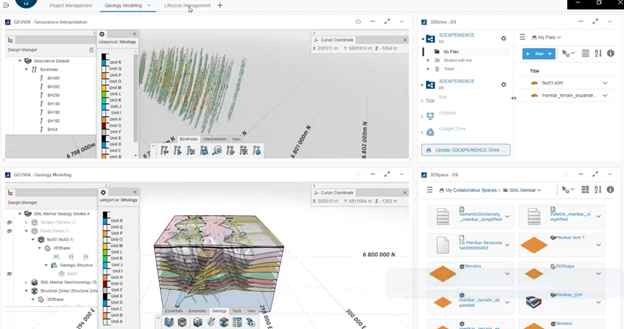
Resource estimation is the basis of multi-million investment decisions and subsequent mine plans that can make or break a mining company. If you want to know more how the DS Strategic Resource Modelling Solution can help ensure that reliable resource estimates are made, contact DS Philippine partner Paramina Earth Technologies Inc via paramina_solutions@paramina.com or reach us through www.paramina.com.
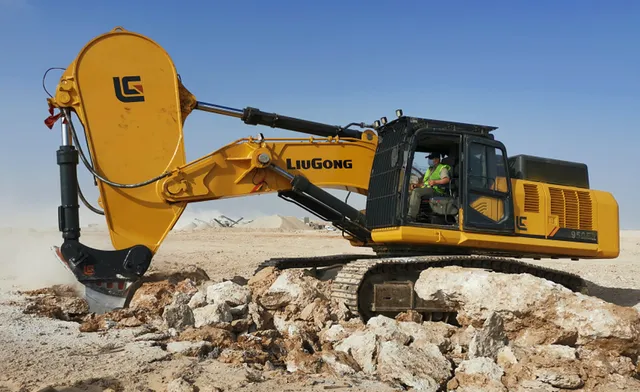

GRAYMONT HYDRATED LIME AND QUICKLIME - ESSENTIAL FOR MINING
Photo credit: Graymont
Graymont is a global leader in lime and limestone solutions. Professionally managed and family owned, the company has been in operation for over 70 years. Graymont aims to be the preferred supplier, employer, and partner of choice wherever we operate. Our products are essential in addressing today’s most pressing environmental issues while supporting vital industrial processes and agricultural needs. Uses for our products include the purification of air and water, the production of items essential to a modern economy such as steel, paper, and minerals. Graymont serves markets throughout Asia-Pacific including Philippines, Malaysia, Australia and New Zealand. Graymont is headquartered in Vancouver Canada and is also the strategic partner of Mexican-based Grupo Calidra, the largest lime producer in Latin America.
PRODUCT QUALITY
Graymont manufactures high-calcium quicklime and hydrated lime made from limestone deposits containing high available lime and low impurities. Graymont lime is suitable for most common mining applications including; pH adjustment, coagulation and thickening, flotation and hydrometallurgical processes, gas desulphurization, pyrometallurgical processes, tailings discharge management, slurry paste manufacture and soil drying.
EXPERTISE IN MINING
Graymont has expertise in working with mining customers to solve problems and develop solutions. Our trained and experienced staff have technical skills in addressing challenges raised by customers. They are available to work with customers to help determine the proper products to best meet specific needs. Upon request, Graymont can assist customers to inspect material-handling facilities to help customers to operate in an efficient and economic manner.
SERVICE AND ATTENTION TO DETAIL
Our customers are at the heart of what we do. Graymont have a dedicated sales and service team who can assist customers with service and supply. Our attention to detail is what sets us apart from other suppliers and we pride ourselves on being the supply partner of choice for our customers.
Need a reliable Hydrated Lime and Quicklime supplier? For further information see our advertisement or contact our Manila office at +63 2 7587 1250, toll-free number 1800818881, or send us a message on customersupportSEA@graymont.com.
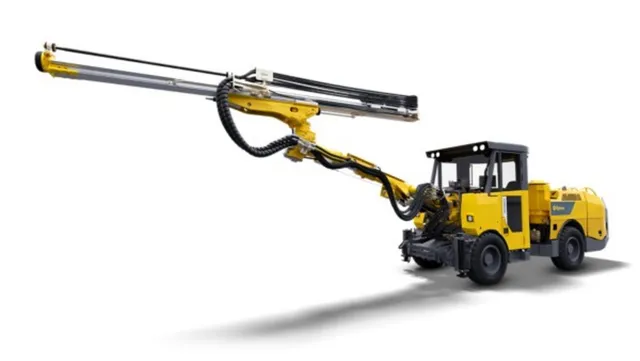
Epiroc’s new Boomer S10 S gives major leap in cost efficiency and productivity of mine development
Quality and extreme accuracy equal serious cost savings. Being the world’s first automated one-boom jumbo for the small segment, Epiroc’s new Boomer S10 S pushes the boundaries of what to expect from a face drilling rig.
The Boomer S10 S provides near surgical precision in drilling and major cost savings throughout the cycle – all thanks to being the world’s first one-boom jumbo featuring Epiroc’s Rig Control System. The consistent, repeatable, and quality-assured results are made possible by advanced automation, operator-assisting features, and digital drill plans.
“With Boomer S10 S as our latest addition, we are proud to offer a sustainable automated operation for the small segment, with a complete range of automated rigs for face drilling, production drilling and rock reinforcement underground”, said Sarah Hoffman, VP Sales & Marketing at Epiroc’s Underground division.
Quality means major cost savings
New Boomer S10 S doesn’t compromise on quality – ever. And in this case, great quality means cost savings in terms of wear and tear of rock drilling tools, spare parts, and other consumables. Compared to traditional, non-automated one-boom jumbos, Boomer S10 S decreases the consumption of consumable parts with 30 %1 while lowering maintenance costs by 12 %.
The great value of automation
Thanks to the digital drill plans and Epiroc’s Rig Control System the drill rig is perfectly aligned in the drift to optimize accuracy, providing less overbreak and underbreak, and longer pull rounds.
“The Rig Control System provides drilling accuracy way beyond what human eye measure could ever accomplish. It is high-quality production from start to finish, and a great milestone reached for mine development”, said Niklas Berggren, Global product manager face drilling equipment at Epiroc.
When applying the High Performance Development method – a way of working during the entire drill cycle –Boomer S10 S offers up to 25 % more development meters3 compared to traditional one-boom jumbos. The total cycle time is reduced thanks to better pull-length, fragmentation, and less need for scaling.
“It’s a snowball effect on productivity: accurate drilling holes means less explosives, less scaling and better tunnel profiles. In turn, a better tunnel profile means less rock reinforcement and less tear on all the machines in the drift. All this leads to significant cost reductions while increasing productivity and safety for everyone involved”, Niklas Berggren explains.
Taking operator ergonomics to new heights
Designed for great ergonomics with lower vibration and sound levels (<75 dbA), the Boomer S10 S is a pure joy to use for the operator. Apart from offering better visibility and a multi-functional joystick, Boomer S10 S grants higher comfort and a significant reduction of live work.
Epiroc’s Rig Control System
Epiroc’s Rig Control System, RCS, was first implemented in 1998. The system is used for controlling several vital functions in Epiroc’s machines. It is also an enabler for several productivity-increasing, efficiency-boosting and cost-saving automation features.
Visit the Boomer S10 S website to learn more: https://www.epiroc.com/en-ph/products/drill-rigs/face-drill-rigs/boomer-s10-s
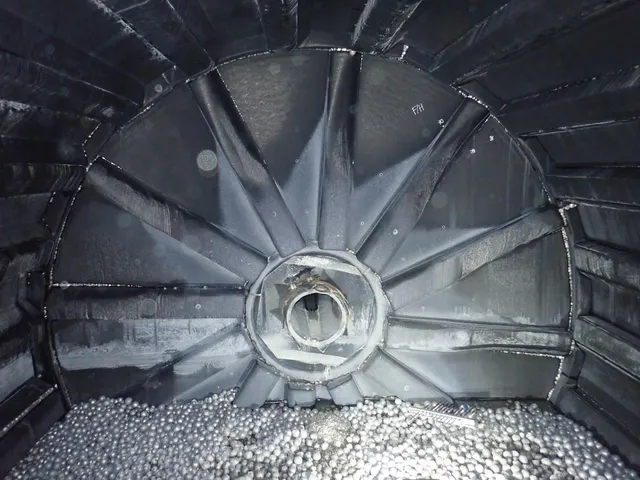
Vulco® mill lining system doubles wear life and increases output by up to 44% at James Hardie Philippines
Photo: Vulco® R63 mill liners installed in the JHP ball mill processing silica
Weir Minerals has developed a custom-engineered mill lining system with Vulco® R63 rubber liners for James Hardie Philippines (JHP), a regional manufacturing hub of the global leader in fibre cement production, James Hardie™.
Due to a substantial increase in demand for their product and in order to increase overall throughput of the site, JHP wanted to increase the output of their ball mill which was processing a mixture of coarse and fine silica. The incumbent rubber mill liners were only lasting between six and nine months and contributed to a 25% drop in output after just six months in operation.
Weir Minerals mill lining specialists, renowned for their expertise in mill lining systems and wear materials, conducted extensive testing and modelling scenarios to evaluate how optimisation of the ball mill charge volume and trajectories would result in an increased mill throughput.
Using state-of-the-art simulation technology and drawing on decades of expert knowledge, Weir Minerals specialists designed a customised mill lining system with Vulco® R63 rubber mill liners. The custom-engineered shell liner design ensured correct lifter face-angle to facilitate optimum performance while also increasing the service life of the Vulco® mill liners. To complete the ball mill overhaul, Weir Minerals experts also recommended to increase the charge height, significantly improving the grinding process.
Exceptional wear life and results
The custom-designed solution resulted in increased production and increased mill availability at JHP. The Vulco® R63 mill liners improved wear life by up to 200%, from six to 18 months, more than halving the reline time and associated maintenance costs. As a result of the ball mill overhaul -designed and executed by Weir Minerals experts in partnership with JHP, the throughput was increased by up to 44%.
Vulco Mill Lining Systems
The innovative designs of Vulco® mill liners are tailored specifically for every customer and are manufactured to the highest industry standards for autogenous (AG) and semi-autogenous (SAG) mills, primary, secondary, and re-grind ball and rod mills. The inherent characteristics of elasticity, high tensile strength and corrosion resistance found in the Vulco® elastomer compounds position them as the preferred mill lining material over steel in many applications.
Key features and benefits:
- Lighter than conventional steel linings for increased handling safety
- Reduced noise due to rubber’s sound dampening effect
- Facilitate increased power draw due to reduction in lining weight, increasing filling volume
- Increased safety and decreased lining installation hours due to reduced component and lining mass
- Faster manufacturing lead times than metal liners
Weir Minerals
Weir Minerals deliver market-leading Vulco® mill liners, combining state-of-the-art technology and innovative design with unparalleled service to all our customers across the world. If you would like to know more about Vulco® mill liners please visit: https://www.global.weir/products/product-catalogue/vulco-mill-liners/

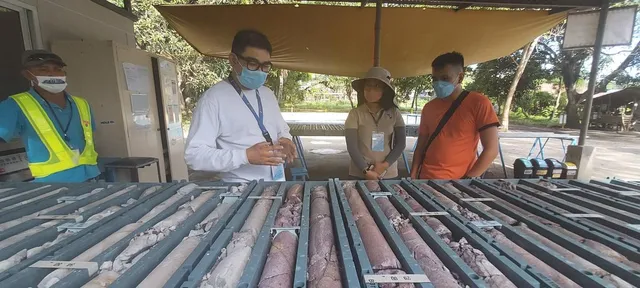
Celsius confirms copper near surface at Sagay Project
Photo credit: Celsius Resources
Celsius Resources is pleased to announce it has received results from 3 drill holes confirming shallow extensions to the large-scale copper mineralisation previously discovered at its Sagay Project held under its Philippine subsidiary Tambuli Mining Company, Inc.
“The copper mineralisation covers a huge area at Sagay at depth, and we are now proving this up at shallower levels. This round of drilling has confirmed that the mineralisation now extends up close to the surface, extending up from the earlier discoveries which has intersected copper mineralisation from around 100 meters to over 1,000 metres depth.” Celsius Executive Chairman, Martin Buckingham.
The results identified extensive geological alteration and other features which are interpreted to be linked to the porphyry copper mineralisation at Sagay.
Broad zones of low grade copper mineralisation were also intersected in all three drill holes, including 44.3m @ 0.27% copper from 139.2m in SGY-036, 112.2m @ 0.16% copper from 197m in hole SGY-038A and 247m @ 0.14% copper from 113m (to the end of the drill hole).
“The discovery of key geological features and copper mineralisation near the surface is an important stepping stone, with further follow-up now required to define the higher grade core to this system also at shallow levels. This is extremely encouraging as it also allows us to consider lower cost bulk mining methods as part of our next phase of studies at the Nabagia-a Hill Project area.”
Article courtesy of Celsius Resources. Full press release can be found HERE

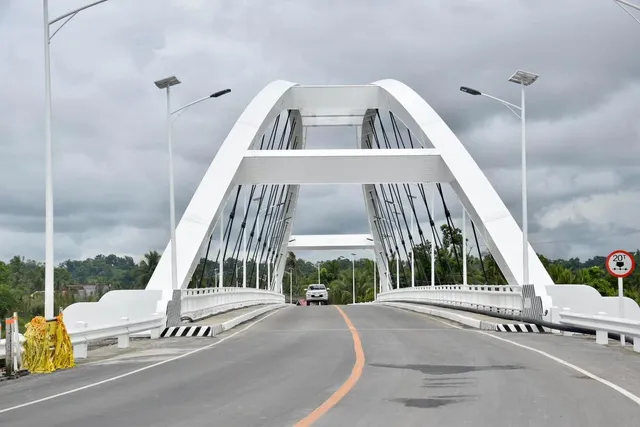
BOHOL’S NEW RESILIENT BRIDGE NOW FULLY OPEN TO VEHICULAR TRAFFIC
Photo credit: Department of Public Works and Highways
The countdown to the long-awaited day for the full opening to vehicular traffic of the newly built iconic bridge in Loay, Bohol has come to an end.
In his report to Department of Public Works and Highways (DPWH) Acting Secretary Roger G. Mercado, Undersecretary and Build Build Build Program Chief Implementer Emil K. Sadain said that the new Clarin Bridge across Loboc River designed as a nielsen arch superstructure spanning 104 meters has been fully opened for both traffic direction to the motoring public effective Tuesday, June 21, 2022.
Undersecretary Sadain, in-charge of DPWH Unified Project Management Office (UPMO) Operations together with Consulate General of Japan in Cebu Hideki Yamaji; Japan International Cooperation Agency (JICA) Senior Representative Kenji Kuronuma; Bohol Governor Arthur C. Yap; Bohol 3rd District Representative Congresswoman Kristine Alexie Besas-Tutor; and Loay Mayor Hilario L. Ayuban led the ceremonial unveiling of marker of the new resilient bridge under the JICA-assisted Road Upgrading/Improvement Component of the Road Upgrading and Preservation Project (RUPP).
Other key personalities that participated at the inauguration ceremony are DPWH Undersecretary Maximo L. Carvajal; Assistant Secretary Wilfredo S. Mallari; Project Director Benjamin A. Bautista and Project Manager Franscisco Sawali of UPMO - Roads Management Cluster I (UPMO-RMC 1); Bureau of Design Director Edwin Matanguihan; Bureau of Construction Director Aristarco Doroy; Region 7 Director Edgar Tabacon and Assistant Director Mario Montejo; Project Manager Luis Paredes; Project Engineer Bernardo Austria; Bohol District Engineers Magiting A. Cruz, Vicente R. Valle Jr., and Godofredo R. Laga Jr.; and other local government officials of Bohol.
Costing ₱501.87-million, Clarin Bridge is part of the Bohol Circumferential Road and will serve an important role in the mobility of goods and people and provide greater access to the tourism sites of Bohol Province.
Economic development in the area will surely surge from improved transport of goods and services and more local and foreign tourists visiting the wonders of Bohol.
The bridge has an approach road at Abutment “A” of 209 meters and at Abutment “B” of 217 meters with enhancement of landscape and protection work to be done near the bank of Loboc River, one of Bohol’s major tourism destination.
Undersecretary Sadain said the new bridge is another thread of friendship linking Philippines and Japan steady and long-term development of meaningful bilateral cooperation.
For over decades, the time-tested cooperation of the Philippines and Japan has brought so much development in the country.
On behalf of Secretary Mercado, allow me to extend my heartfelt gratitude to the representatives of the Government of Japan led by the Consul – General Yamaji and JICA Philippines Senior Representative Kenji Kuronuma for letting your presence grace this ceremonial groundbreaking, added Undersecretary Sadain.
Although challenged by a global pandemic that hampered project progress in general, the completion of new Clarin Bridge is a timely response to address the urgent need for a safer and sturdier replacement for decades-old structure especially those affected by recent calamities.
Construction of Clarin Bridge consist of 12 pieces bored piles 1,200-millimeter diameter each abutment in a new alignment; reinforced concrete deck slab with asphalt concrete pavement overlay and reinforced concrete sidewalk with metal railings at bridge; and miscellaneous structures and lighting works.
The approach road was laid with bituminous asphalt concrete pavement with installed metal beam guardrail on reinforced concrete posts; and provision of service roads no. 1 and 2 with 230-millimeter-thick portland concrete cement pavement.
Implemented by DPWH UPMO-RMC1, the project was undertaken by joint venture contractor Vicente T. Lao Construction and PT Wijaya Karya TBK.
Article courtesy of Department of Public Works and Highways

Metals, engineering industry crucial in PH recovery: DOST exec
The metals and engineering industry has contributed much to the country's recovery efforts, an official of the Department of Science and Technology (DOST) said Wednesday.
"We can never disregard the contribution of the industry. We owe it to the metals industry to celebrate milestones and special accomplishments for without you, upstream industries will weaken," said DOST Undersecretary Rowena Guevara during the 1st National Metals and Engineering Conference held in Bicutan, Taguig City.
The metals industry has played a huge role in helping the country rise from the effects of the Covid-19 pandemic, she pointed out.
Guevara cited as an example the mass production and distribution of face shields for front-liners at the onset of the pandemic. The Metals Industry Research and Development Center (MIRDC) did this through the plastic injection molding technology.
"The face shields, which were too costly because there was not enough supply at that time, were distributed all over the country through this MIRDC initiative," she said.
Another contribution was the use of the Hybrid Electric Road Train (HERT) to ferry front-liners to and from work in Cauayan, Isabela, for free.
HERT is an alternative mass transportation designed and developed by the MIRDC. It was already turned over to the city of Cauayan. Currently, present, Cauayan and Ilagan cities have plans to fabricate new HERT units to be used as mass transportation alternatives. (Read: Ilagan City to fabricate hybrid road train)
Last year, the DOST launched two facilities at the MIRDC: the Advanced Manufacturing Center (AMCen) and the Advanced Mechatronics, Robotics, and Industrial Automation Laboratory (AMERIAL). Both facilities feature industry 4.0 technologies.
"Through the AMCen and the AMERIAL, we are already able to serve MSMEs (micro, small and medium enterprises) and the academe. We started to encourage the establishment of partnerships that advocate R&D (research and development)," Guevara said.
The agency, according to her, has been providing an enabling environment to let researchers access modern technologies and unleash their innovative ideas.
Guevara called on researchers to o continuously engage in R&D, scientific paper writing, and research presentations.
"We can be like highly developed countries through R&D," she said as she emphasized that R&D is a powerful driver behind a successful metals industry.
Meanwhile, Philippine Council for Industry, Energy, Emerging Technology Research and Development (PCIEERD) executive director Enrico Paringit said the industry must also consider harnessing emerging technologies to make the industry more competitive.
Artificial intelligence (AI) and robotics are among the emerging technologies, aside from additive manufacturing, sensors, quantum computing, virtual reality, etc.
The DOST targets to broaden the curriculum on AI and conduct training programs to upskill the workforce on AI, he said.
Article courtesy of the Philippine News Agency
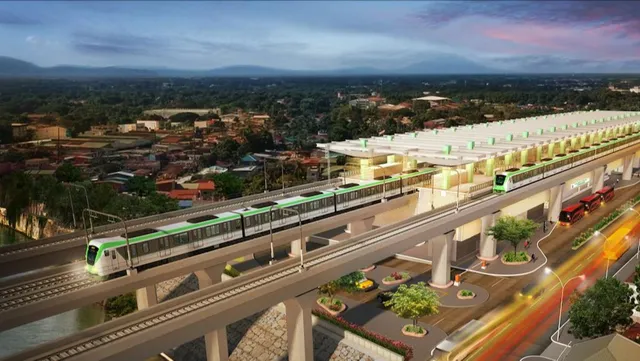
ADB Approves Project Financing for South Commuter Railway Project in the Philippines
The Asian Development Bank (ADB) has approved up to $4.3 billion to help finance the construction of nearly 55 kilometers (km) of modern suburban railway line connecting Metro Manila with the city of Calamba in the Philippines. The investment in the South Commuter Railway Project, which is part of the North–South Commuter Railway (NSCR) network, is ADB’s largest infrastructure financing in the Asia and Pacific region to date.
Once completed, the South Commuter Railway will offer commuters fast public transport, help to ease road traffic congestion, and contribute to a reduction in greenhouse gas emissions in line with the Philippines’ climate change agenda. The project follows ADB’s financing of the Malolos–Clark Railway line north of the capital, for which construction is ongoing.
“The South Commuter Railway Project will provide affordable, safe, reliable, and fast public transport for commuters,” said ADB Vice-President for East Asia, Southeast Asia, and the Pacific Ahmed M. Saeed. “This project represents ADB’s biggest infrastructure investment and reflects our commitment to helping the Philippines attain its goals of reducing poverty, improving the lives of Filipinos, and achieving green, resilient, and high economic growth.”
The project includes the construction of 18 stations designed to provide safe access for all, including the elderly, women, children, and people with disabilities; and a connecting tunnel to allow the operation of direct trains from Calamba to stations on the future Metro Manila Subway system. All infrastructure will be designed to be disaster-resilient and able to withstand typhoons and earthquakes. The project will reduce travel time between Manila and Calamba by over half, from 2.5 hours currently by road.
The NSCR will further strengthen the Philippines’ economic recovery from the devastating impact of the COVID-19 pandemic as it is expected to create more than 35,500 jobs during construction and over 3,200 permanent jobs during operation. It will create a substantial growth multiplier effect in the economy through supplier contracts and new opportunities opened with better connectivity in the region. It will improve access to an average of more than 300,000 jobs within any 1-hour commute for residents along the project, according to an ADB study.
ADB’s Infrastructure Preparation and Innovation Facility supported the Department of Transportation (DOTr) in preparing the project. The loan will further support the capacity development and institutional strengthening of DOTr, the implementing agency. The railway will be elevated to avoid flooding and reduce the impact and disruption to communities along the railway route. A technical assistance grant will support affected communities.
The South Commuter Railway Project will be financed under a multitranche financing facility, with the first tranche of $1.75 billion to be made available starting this year. The release of the second and third tranches is expected in 2024 and 2026, respectively. ADB will finance civil works for the railway viaduct, stations, bridges, tunnels, and depot buildings. The Japan International Cooperation Agency is funding the rolling stock and railway systems.
The project is one of the Philippines’ infrastructure flagship projects (IFP) and is part of the government’s “Build, Build, Build” infrastructure development program. Other IFPs financed by ADB include the Metro Manila Bridges Project in 2021, the EDSA Greenways Project in 2020, the Angat Water Transmission Improvement Project in 2016 and additional financing in 2020, the Malolos Clark Railway Project in 2019, and the Improving Growth Corridors in Mindanao Road Sector Project in 2017.
ADB is committed to achieving a prosperous, inclusive, resilient, and sustainable Asia and the Pacific, while sustaining its efforts to eradicate extreme poverty. Established in 1966, it is owned by 68 members—49 from the region.
Article courtesy of the ADB
PH GETS LOAN FROM CHINA FOR SAMAL ISLAND - DAVAO CITY CONNECTOR BRIDGE
Photo credit: Department of Public Works and Highways
A new era of ties between Philippines-China relations ushered with the Chinese government providing Official Development Assistance (ODA) for the Samal Island - Davao City Connector (SIDC) Bridge Project in Davao Region.
The Government of the Republic of the Philippines (GPH), through Department of Finance (DOF) Secretary Carlos G. Dominguez III, and Government of the People's Republic of China (GPRC) through Embassy of the People's Republic of China in the Philippines Ambassador Huan Xilian exchanged on Monday, June 13, 2022 the Framework Agreement on the provision of concessional loans to the Philippines for the design and build of SIDC Project under China Government Financing Facility.
A long-awaited dream project over decades, Samal Island - Davao City Connector Project is one of the key G-to-G cooperation projects between China and the Philippines and a flagship project under the "Build, Build, Build" program.
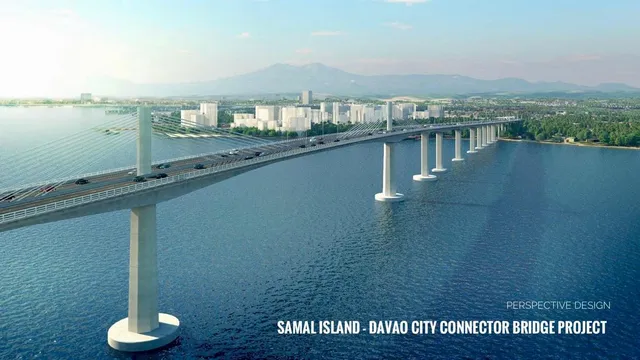
DOF Secretary Dominguez also exchanged with Ambassador Xilian, witnessed virtually by the officials of Export-Import Bank of China (China Eximbank) the loan document that provides financing for the construction of SIDC Project, a toll-free two-way four-lane extradosed bridge to be implemented by the Department of Public Works and Highways - Unified Project Management Office (DPWH-UPMO) Operations headed by Undersecretary and Build Build Build Chief Implementer Emil K. Sadain.
The ceremonial event held at DOF Building was also attended by Chinese Embassy Minister Counselor Yang Guoliang; DPWH Undersecretary Sadain representing Acting Secretary Roger G. Mercado; DOF Undersecretaries Maria Edita Z. Tan and Mark Dennis Y.C. Joven; DOF Assistant Secretary Neil Adrian S. Cabiles; UPMO Project Director Sharif Madsmo H. Hasim; and Project Managers Soledad R. Florencio and Lilibeth B. Rico.
The loan will cover 90 percent of the project’s ₱23.039-billion price tag.
The bridge is envisioned as a modern bridge that will connect the Samal Circumferential Road in Barangay Limao, Island Garden City of Samal to Davao City in between R. Castillo-Daang Maharlika junction.
With a total length of 3.98 kilometers including Davao ramps and at grade road and roundabout in Samal, the bridge has a width of 24 meters and a vertical navigational clearance up to 47 meters. The bridge crossing over Pakiputan Strait will also be supported by two (2) pylons with a height of 73 meters.
In line with the Chinese loan procedures and arrangements, the DPWH commenced the procurement process and undertook limited competitive bidding among Chinese contractors provided by GPRC.
China Road and Bridge Corporation has been selected as the contractor for the project.
On January 14, 2021, DPWH and China Road and Bridge Corporation entered into a contract amounting ₱19.32-billion for the design and build of Samal Island-Davao City Connector Project to head start the negotiation process and support the loan application.
According to Undersecretary Sadain, the project is expected to break ground in July 2022 and the construction duration is estimated to last 60 months.
Once completed, the bridge will provide a resilient and reliable transportation link between Metro Davao and Samal Island, reducing travel time from 26 to 30 minutes via roll on roll off or ferry operations to only 5 minutes, and enhancing internal mobility and external linkage to support the economic and tourist growth potential of the local region, said Undersecretary Sadain.
It will also increase the economic activities and improve the livelihoods of the local people who have long dreamed of having such a bridge, added Undersecretary Sadain.
Article courtesy of Department of Public Works and Highways
DPWH FAST TRACKING FLAGSHIP BYPASS ROAD PROJECT IN DAVAO CITY, WORKING SIMULTANEOUSLY ON BOTH ENDS OF 2.3-KM ROAD MOUNTAIN TUNNEL
Photo credit: Department of Public Works and Highways
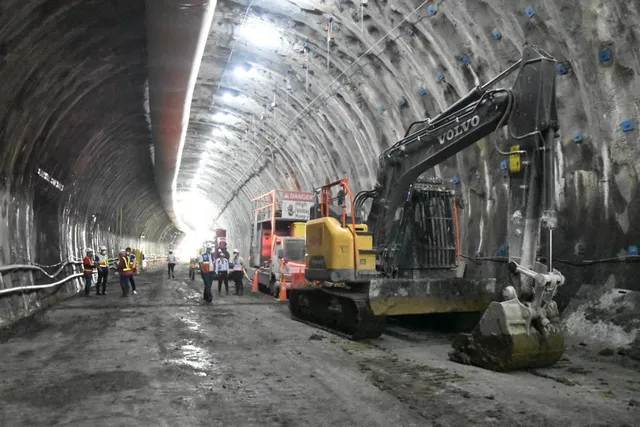
A new milestone was reached by the Department of Public Works and Highways (DPWH) in the Davao City Bypass Construction Project with excavation works for the 2.3-kilometer twin tube road mountain tunnel now conducted at four (4) areas north and south portals.
DPWH Undersecretary and Build Build Build Chief Implementer Emil K. Sadain together with Embassy of Japan in the Philippines Economic Affairs Minister Masahiro Nakata and Japan International Cooperation Agency (JICA) Chief Representative Takema Sakamoto led on June 9, 2022 the ceremonial kick-off of excavation activities for south portal tunnel southbound direction.
Undersecretary Sadain, in-charge of Unified Project Management Office (UPMO) Operations, explained that the road tunnel construction works using cutting-edge equipment and technologies were earlier started at north portal on November 19, 2021 for southbound direction and December 10, 2021 for northbound direction while excavation activities from opposite end at south portal northbound direction commenced last May 12, 2022.
Simultaneous tunnel portal construction activities on both ends will fast-track the completion of the soon to be first-ever long distance road mountain tunnel in the Philippines, Undersecretary Sadain said.
Based on the report of Undersecretary Sadain to DPWH Acting Secretary Roger G. Mercado, construction of road tunnel at north portal has reached 202 meters at southbound and 91 meters at northbound.
The construction of road tunnel involves excavation of tunnel portal areas using the conventional "New Austrian Tunneling Method”, mucking or removal of soil from tunnel interior, initial shotcrete to protect from risk of fall materials and to prevent loosening during shotcrete application, steel ribs installation to provide effective structural protection, second shotcrete with wire mesh to secure stability, and rock bolt installation to provide bearing force and become a part of tunnel support system.
The kick-off ceremony, following Filipino and Japanese traditions, at Barangay Matina Biao, Davao City was also attended by Councilor Edgar P. Ibuyan Jr. representing Davao City Mayor-elect Sebastian Z. Duterte; DPWH UPMO Roads Management Cluster 1 (Bilateral) Project Director Benjamin A. Bautista; Embassy of Japan 1st Secretary Jumpei Tachikawa; JICA Representative Ochi Kaoru; Davao City District Engineer Richard Ragasa; Project Managers Joselito Reyes and Joweto V. Tulaylay; Engrs. Juan M. Diña Jr. and Earl Nicholas F. Rada; and officers of the consultants Nippon Koei Ltd., Katahira & Engineers International, Nippon Engineering Consultants Co., and PhilKoei International Inc.
The 45.5-kilometer Davao City Bypass Construction Project is divided into six (6) contract packages (CP) with the on-going CP 1-1 covering a 10.7 kilometers of 4-lane highway and 18.9 kilometers CP 1-2 and CP 1-3 under procurement stage financed by Official Development Assistance (ODA) from JICA thru the Special Terms for Economic Partnership (STEP) Loan Agreement Nos. PH-P261 and PH-P273. While for funding by the Government of the Philippines are CP 2-1, CP 2-2 and CP 2-3 with a total length of 15.9 kilometers.
The opening of new road networks through the Davao City Bypass Construction Project is expected to usher more development opportunities as it will greatly improve Davao City's accessibility and traffic condition.
“On behalf of DPWH, I would like to thank the Government of Japan thru JICA together with other development partners Asian Development Bank, World Bank, Export Import Bank of Korea, and Export-Import Bank of China for taking a great part in bolstering the Philippines’ stride to reach the peak of infrastructure development through the “Build, Build, Build” Program that will elevate living condition and benefit every Filipino”, added Undersecretary Sadain.
Other than the tunnel, CP 1-1 awarded to Shimizu – Ulticon - Takenaka joint venture involves construction of four (4)-lane road with a length of 7.9 kilometers; three (3) pairs of bridges with total length of 500 meters including the Davao River Bridge; two (2) underpasses and two (2) overpasses; 12 waterways culverts; and four (4) at-grade intersection.
Starting from Davao-Digos section of the Pan-Philippine Highway in Brgy Sirawan, Davao City going to Davao-Panabo section of the Pan-Philippine Highway in Brgy J.P. Laurel, Panabo City, the project is expected to ease traffic situations along the areas.
The completion of the entire bypass road project will slash travel time to under 49 minutes from the usual 1 hour and 44 minutes.
Article courtesy of Department of Public Works and Highways
DPWH STARTS CONSTRUCTION OF 2 BRIDGES CONNECTING TAWI-TAWI ISLANDS
Photo credit: Department of Public Works and Highways
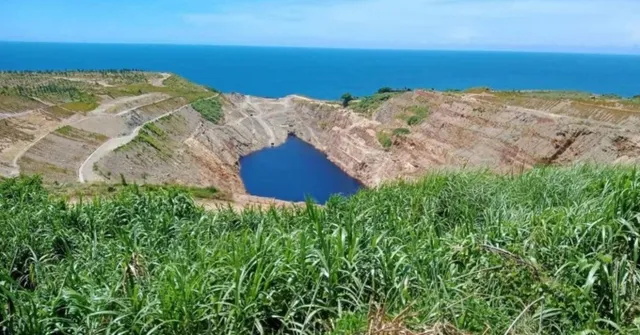
After years of planning and preparation, the Department of Public Works and Highways (DPWH) has officially launched the construction of two (2) bridges aim to provide a direct route between the existing major growth center of Bongao, Tawi-Tawi Province with Sanga-Sanga Island and future growth center in Panglima Sugala.
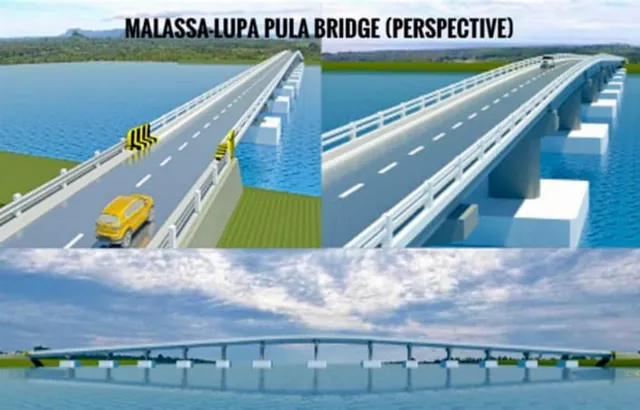
DPWH Acting Secretary Roger G. Mercado together with Tawi-Tawi Governor Yshmael L. Sali, Undersecretary and Build Build Build Chief Implementer Emil K. Sadain, and Asian Development Bank (ADB) Country Director Representative Alain X. Morel led on Friday, June 3, 2022 the ceremonial groundbreaking at Provincial Capitol for the two (2) years construction of Nalil-Sikkiat Bridge over Bongao Channel and Malassa-Lupa Pula Bridge over Manalik Channel to mainland Tawi-Tawi island.
The two (2) bridges costing ₱2.14 Billion which aims to decongest Bongao, the capital of Tawi Tawi, by bringing the development in the mainland thru an improved connectivity between islands/municipalities of the province are part of the ADB-funded Improving Growth Corridors in Mindanao Road Sector Project.
“The team of Undersecretary Sadain and Project Director Sharif Madsmo H. Hasim have been working really hard for these projects for years now from the conduct of feasibility studies, loan agreement, detailed engineering design, and procurement for civil works contractor and consultant”, Acting Secretary Mercado said.
Others present at the project groundbreaking are Undersecretary for Mindanao Operations Eugenio R. Pipo Jr.; Assistant Secretaries Ador G. Canlas, Antonio V. Molano Jr., Wilfredo S. Mallari, Mel John I. Verzosa and Rolito D. Manalo; DPWH Unified Project Management Office (UPMO) Roads Management Cluster 2 (Multilateral) Project Director Hasim; Region 9 Director Cayamombao D. Dia; Bureau of Construction OIC-Director Aristarco M. Doroy; Bureau of Design OIC-Director Edwin C. Matanguihan; OIC Project Director Najib D. Dilangalen; Project Managers Soledad Florecio and Emmanuel Supe; and other public works and local government officials.
With less than a month left before the term of President Rodrigo Duterte ends, the DPWH is committed to push forward the implementation of high-impact infrastructure flagship projects under the Build Build Build Program that will bring long-term benefits to the Filipino people in the countryside, said Undersecretary Sadain.
According to Undersecretary Sadain, the construction of Nalil-Sikkiat and Malassa-Lupa Pula Bridges including the proposed Tongsinah Paniongan Bridge over Sanga-Sanga Channel connecting to Papahag Island under DPWH procurement stage and also part of the Improving Growth Corridors in Mindanao Road Sector Project will open up potential in the tourism and fishing industry for Tawi-Tawi.
There is also a proposed port development which is the Malassa International Port because of the economic potential for the island province as it is in the path of international shipping containers, added Undersecretary Sadain, in-charge of DPWH UPMO Operations.
DPWH Project Director Hasim said that the 541-meter Nalil-Sikkiat Bridge, 681-meter Malassa-Lupa Pula Bridge, and 569-meter Tongsinah-Paniongan Bridge were a product of years of research and consultation undertaken.
Undersecretary Sadain disclosed that the bridges were among the infrastructure projects long before recommended to DPWH and the Office of the President by Tawi-Tawi Congressman Rashidin H. Matba to spur the economic activities that would boost the economy of Tawi-Tawi and further enhance the quality of life of its people.
Located in the Bangsamoro Autonomous Region in Muslim Mindanao occupying the southwestern part of Sulu archipelago and considered the largest seaweed producing province in the Philippines, Tawi-Tawi is a hidden treasure waiting to be discovered. It remains an uncharted territory for many because of its geographical location sitting at the southernmost part of the country.
With the construction of new bridges, local and foreign tourist will soon get to see the wonders of the island province – the pristine beaches, historical and religious sites, sanctuaries and marine biodiversity.
Article courtesy of the Department of Public Works and Highways