






January 06, 2025

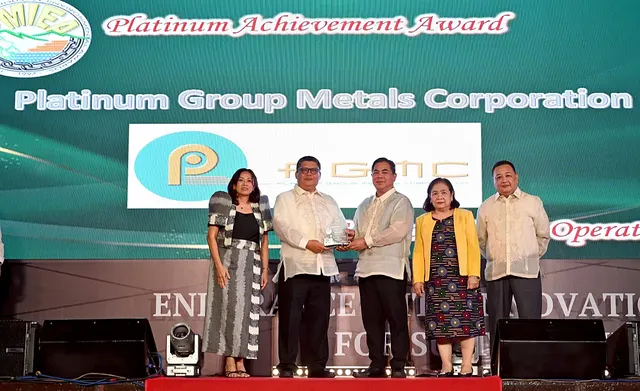
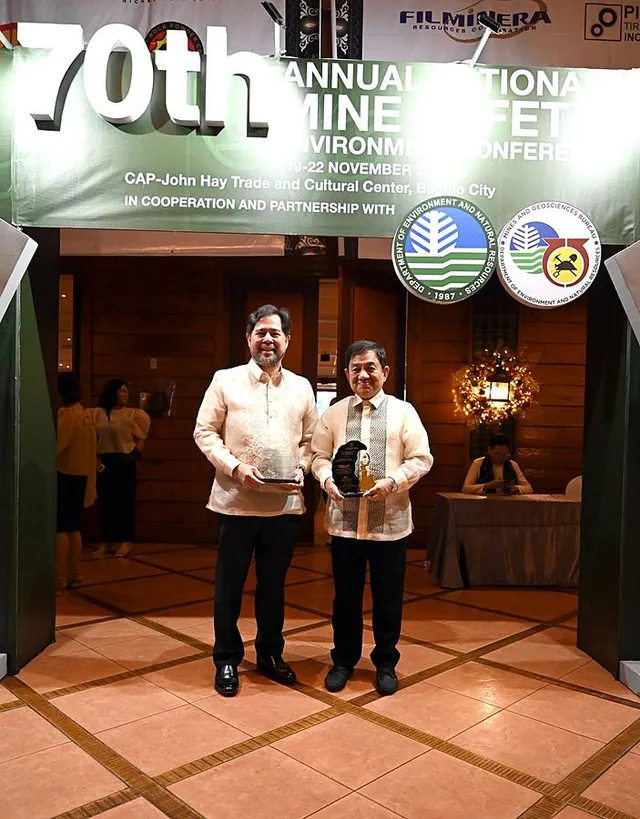
Platinum Group Metals Corporation (PGMC), the operating arm in Surigao del Norte of conglomerate Global Ferronickel Holdings, Inc. (FNI), received the Presidential Mineral Industry Environmental Award (PMIEA) Platinum Achievement Award – Surface Mining Operation Category and was voted 1st Runner-Up in the Best Mining Forest Contest – Metallic Category at the 70th Annual Mine Safety and Environment Conference in Baguio City. Established under Executive Order No. 399 (1997), the PMIEA honors the “exemplary efforts of the mining groups and companies in the country in achieving environmentally and socially responsible mining operations.”

“These awards reflect our strong commitment to align our operations with the highest standards of environmental protection, social inclusivity, and workplace safety,” said FNI President Dante R. Bravo.

PGMC strictly adheres to best practices and works closely with regulators to ensure compliance with all legal and environmental requirements. It holds an Environmental Compliance Certificate with an approved Environmental Protection and Enhancement Program (EPEP), Final Mine Rehabilitation and/or Decommissioning Plan (FMR/DP), Annual EPEP, 5-Year Social Development and Management Program (SDMP), Annual SDMP, and Safety and Health Program (SHP), among others.

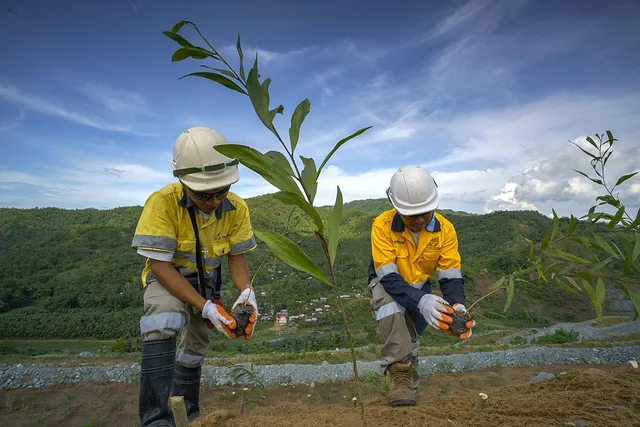
PGMC mitigates its impact on the land ecosystem through various initiatives. These include progressive rehabilitation wherein 29.57 hectares have been reconstructed and planted with indigenous flora. As a major supporter of the Mining Forest Program and the National Greening Program, PGMC has planted as of June 30, 2024 nearly four million trees with a 92.26% survival rate across 1,400.38 hectares within and outside its contract area. To support the reforestation efforts, it has produced 1,242,652 seedlings of forest and fruit-bearing trees. Additionally, 208 hectares of untouched areas within the tenement have been identified as biodiversity conservation areas and supported by the regular conduct of biodiversity assessments.

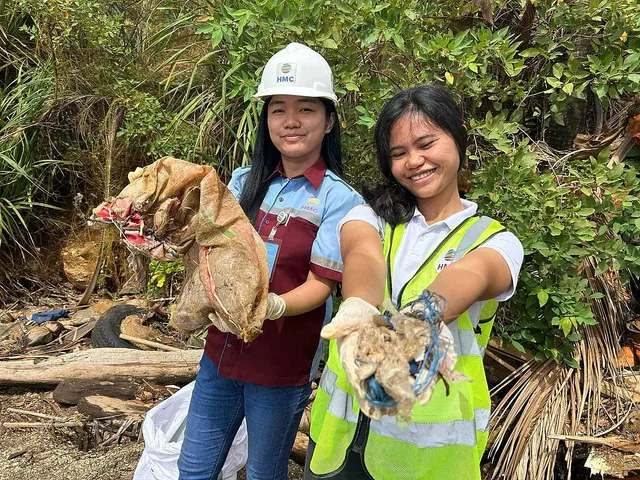
To safeguard water resources, PGMC constructs sedimentation ponds to prevent river siltation.  It regularly spearheads river cleanup drives that have so far removed 13,971 cu.m. of sediments in the Kinalablaban river. Other environmental protection and enhancement efforts include proper waste management, dust suppression, and the implementation of conservation initiatives notable of which are the adoption of the Lambason marine sanctuary and active participation in the government’s Rivers-for-Life Program.

“We will continue to strive for excellence because we understand that mining, if done responsibly, can help uplift the lives of many Filipinos and contribute to nation-building while safeguarding the environment,” said Mr. Bravo.

December 16, 2024

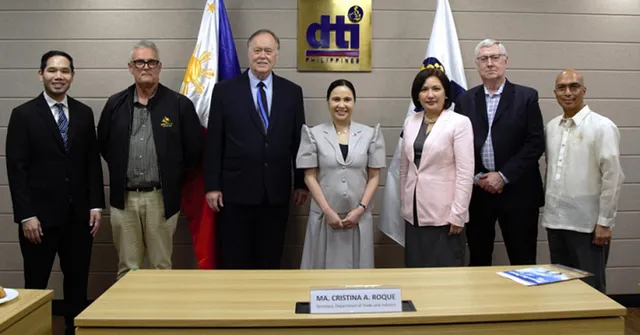
Canadian mining firm B2Gold Corp. has affirmed its investment plans in the Philippines in a courtesy visit to Department of Trade and Industry (DTI) Secretary Ma. Cristina Roque.

Philippine Trade and Investment (PTIC) Toronto Trade Commissioner Mario Tani said in a Viber message Thursday that B2Gold will open its exploration office in the Philippines next year.

“The mine site is about to reach its end of life. So in mining, for you to determine if you can continue mining and expand or look for additional sites to mine you need to have extensive research and analysis,” Tani said.

“Usually it entails a lot of hiring of local geologists and spending to study,” he added.

B2Gold operates the Masbate Gold Project in Aroroy, Masbate, which is expected to produce 175,000 to 195,000 ounces of gold this year.

B2Gold is part of the over 200 Canadian companies that visited Manila last week for a trade mission.

“B2Gold’s decision to expand its operations here reflects the confidence that global investors have in the robust policies, strategic reforms, and highly skilled workforce championed under the leadership of President Ferdinand R. Marcos Jr.,” Roque said.

B2Gold vice president Neil Reeder, B2Gold senior vice president engineering and project evaluations Dennis Stansbury, Australia-Asia exploration manager Tony Field, and its local partner, Filminera Resources Corp. president Cris Acosta met the DTI chief last week to discuss the company’s expansion plan in the country.

The executives were accompanied by Tani and the Philippine Ambassador to Canada Maria Andrelita Austria. 

December 16, 2024

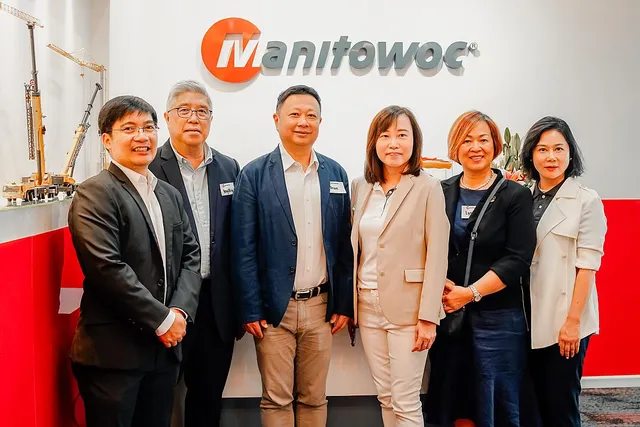
Manitowoc Crane Group, Inc. has officially inaugurated its new office located in the heart of Muntinlupa City, a strategic move aimed at enhancing customer support and expanding service capabilities. The inauguration ceremony was led by Mr. Zurich Fernandez, General Manager, alongside Mr. Brian Wang, Senior Vice President, and Hon. Rufino “Ruffy” Biazon, Mayor of Muntinlupa City. This relocation signifies a significant step in Manitowoc’s ongoing commitment to providing exceptional service and support to its clients.

The new office, situated at One Trium Tower, Alabang, Muntinlupa City, boasts a larger footprint that allows for a more collaborative and efficient work environment. With modern facilities and work-friendly environment, this new space is designed to foster innovation and improve workflow among employees, ultimately benefiting customers who require timely and effective support.

During the inauguration, Mr. Zurich Fernandez expressed his enthusiasm about the relocation, stating, “This new office is not just a change of scenery; it represents our commitment to better serving our clients and enhancing our operational capabilities. With this larger space, we can expand our team and improve our service delivery to meet the demands of our growing customer base.”

The upgraded location is strategically chosen to provide better accessibility for clients and partners, ensuring that Manitowoc Crane Group remains at the forefront of the industry. The office’s proximity to major transportation hubs makes it easier for customers to visit and interact with the support team, facilitating a more engaging customer experience. This accessibility is expected to strengthen relationships and foster collaboration between the company and its clients.

Mr. Brian Wang, Senior Vice President, also highlighted the importance of the new office in relation to the company’s vision. “Our goal has always been to provide the highest level of service in the crane industry. This new facility allows us to not only support our existing customers more effectively but also to attract new clients by showcasing our commitment to quality and service excellence.”

The inauguration was marked by a ceremonial ribbon-cutting attended by key customers and industry partners, emphasizing the significance of this transition for both Manitowoc and the Muntinlupa community. Hon. Ruffy Biazon, the Mayor of Muntinlupa City, expressed his support for the company’s new endeavor, stating, “We are thrilled to welcome Manitowoc Crane Group to our city. Their commitment to enhancing customer service and expanding their operations reflects positively on our local economy and workforce.”

The new office is equipped with advanced meeting spaces, allowing for enhanced collaboration among team members and more effective communication with clients. These improvements will enable Manitowoc to conduct meetings, training sessions, and workshops, ensuring that their staff is well-prepared to meet the diverse needs of their customers.

As Manitowoc Crane Group settles into its new home, the focus will remain on delivering exceptional customer support and service capabilities. The company is committed to fostering a culture of innovation and responsiveness, which is essential for maintaining its competitive edge in the industry.

In conclusion, the relocation of Manitowoc Crane Group, Inc. to a larger and more strategically located office marks a pivotal moment in its journey to enhance customer service and support. With strong leadership and a dedicated team, Manitowoc is poised to continue its legacy of excellence in the crane industry, ensuring that customer satisfaction remains a top priority. The future looks bright as they embark on this new chapter in Muntinlupa City.

December 16, 2024

The Department of Public Works and Highways (DPWH) is steadfast in its commitment to maintaining the integrity and enhancing the appeal of the Panguil Bay Bridge in Northern Mindanao.

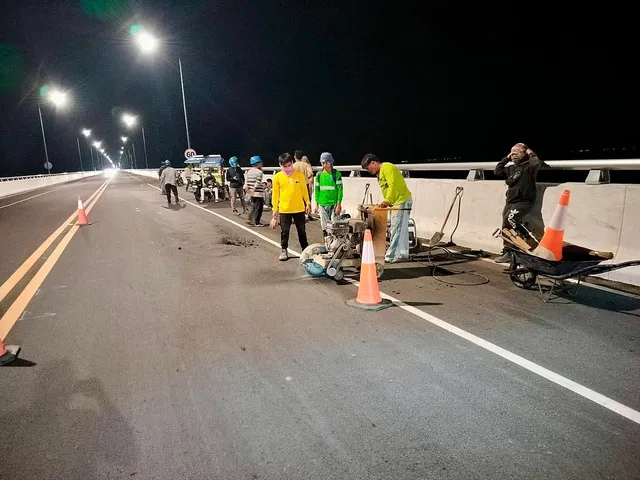
DPWH Senior Undersecretary Emil K. Sadain led the inspection on December 14, 2024 of rectification activities for the bridge’s asphalt layer and thermoplastic pavement markings, underscoring the agency’s dedication to safety and quality standards.

In a report to Secretary Manuel M. Bonoan, Senior Undersecretary Sadain confirmed that the contractor, Namkwang-Kukdong-Gumgwang Joint Venture (NKG JV), has completed the emergency replacement of damaged asphalt pavement at no additional cost to the government. This decision reaffirms the DPWH’s strong stance on contractor accountability in public infrastructure projects.

Joining Senior Undersecretary Sadain during the inspection were Unified Project Management Office (UPMO) Project Directors Teresita V. Bauzon, Soledad R. Florencio, and Benjamin A. Bautista; Misamis Occidental 2nd District Engineer Carol Lyn C. Abinales; and Lanao del Norte 1st District Engineer Aly Khan U. Ali.

To prevent future issues like asphalt pavement deformation and potholes, the DPWH has intensified its anti-overloading operations.

Portable weighing stations, now operating 24/7 at both ends of the bridge in Tangub City and Tubod, are managed by the Misamis Occidental 2nd and Lanao del Norte 1st District Engineering Offices. These efforts aim to protect the longevity of the bridge and ensure its structural integrity.

The DPWH has also required the contractor to submit comprehensive asphalt pavement upgrading plan including a revised asphalt mix design and waterproofing measures for the full replacement and upgrading of the asphalt layer scheduled for early 2025.

Also on December 14, 2024, the DPWH conducted a trial demonstration of the Panguil Bay Bridge’s new aesthetic lighting system.

Featuring energy-efficient LED lights, the system enhances the architectural beauty of Mindanao’s longest sea-crossing bridge while symbolizing progress and connectivity.

“The aesthetic lighting will transform the 3.17-kilometer Panguil Bay Bridge into not just an engineering marvel but also a visual icon, symbolizing unity and development. This initiative will foster tourism and economic growth in Northern Mindanao,” said Senior Undersecretary Sadain.

The lighting system is set to elevate the bridge’s status as both a functional infrastructure and a cultural landmark, inspiring regional pride and attracting more visitors to the area.

Since its opening in September 2024, the Panguil Bay Bridge has dramatically improved connectivity in Mindanao. It has reduced travel time between Tangub City in Misamis Occidental and Tubod in Lanao del Norte from over two hours by ferry to just seven minutes.

The bridge has boosted socio-economic activities, strengthened trade, and enhanced mobility across the region.

Financed through the Korean Economic Development Cooperation Fund (EDCF) via the Export-Import Bank of Korea, the Panguil Bay Bridge exemplifies the government’s commitment to delivering world-class infrastructure under the Build Better More program.

December 09, 2024

Philex Mining Corporation is one of the oldest and largest gold and copper producers in the Southeast Asia. Padcal Mine has been in operation for more than six decades and still has a remaining ore resource that can be mined depending on global metal price forecasts. Based on a completed study after recalibrating the mining plan, the life of the Padcal Mine is extended for another year from December 2027 to December 2028. Additional tonnage will be coming from the mining of pillars at 760-ML Production Level as it will contribute good grades. There are tonnages also from previously developed draw points beyond one hundred percent extraction that provided good grades that we continue to mine. These are on top of the mineable reserves that we declared in the 2027 projected end of mine life. Price sensitivity analyses were applied on the remaining reserves which further confirmed the economic viability of extending the mine life.

The operating data and parameters used in determining the updated remaining mineable reserves were as of October 31, 2024 resulting to a remaining mineable reserves estimate of 30.25 Million tonnes with an average gold and copper grades of 0.20 grams per tonne (g/t) and 0.18%, respectively. The total recoverable Gold is estimated to be 137,600 ounces while the total recoverable Copper is estimated to be 93.20 million pounds. The new estimate includes remaining reserves from the previously declared mineable reserves as of December 31, 2023 aggregating to 33.90 Million tonnes with an average gold and copper grades of 0.21 g/t and 0.17%, respectively.

The latest mineable reserves estimate was prepared by Engr. Julius A. Bayogan and Engr. Ricardo S. Dolipas II, both Competent Persons under the definition of the Philippine Mineral Reporting Code (PMRC). Engr. Bayogan’s accreditation number is EM-ACP-152-0002566 while Engr. Dolipas’ accreditation number is EMACP-021-0002513.

The newly declared remaining mineable reserves estimate was based on the previously disclosed mineral resource estimate as of December 31, 2023 that remained the same at 190.8 Million tonnes with an average grade of 0.3 g/t and 0.18% for Gold and Copper, respectively. The mineral resource estimate was prepared by Mr. Noel C. Oliveros, an accredited Competent Person for Exploration and Mineral Resource Estimation under the definition of the PMRC. He is a Professional Geologist with PRC License No. 1285 and accreditation number Geology ACP-07-08-07.

The new extension of the life of Padcal Mine from December 31, 2027 to December 31, 2028 will provide the continuous employment of 1,879 Padcal employees as well as sustain the necessary assistance given to the social development of the host and neighboring communities. The extension of the Padcal Mine life to December 31, 2028 will also allow a smooth transition to the start of the commercial operation of the Silangan project estimated to commence in early 2026 in response to the global demand for green metals and the government’s call for mineral resources development to be a driver for national growth and economic recovery.

December 09, 2024

The Consunji Group announced Tuesday that it now owns nearly 90 percent of cement manufacturer CEMEX Holdings Philippines (CHP) after closing the deal on Dec. 2.

Through its companies DMCI Holdings, Semirara Mining and Power Corp. (SMPC), and Dacon Corp., the Consjunji Group completed the acquisition of Cemex Asian South East Corp. (Casec)—CHP’s parent company—at USD272 million.

At the financial close, DMCI secured a 51-percent effective stake in CHP, while SMPC and Dacon accounted for 10 percent and approximately 29 percent, respectively.

“We are excited to welcome CEMEX Holdings Philippines into the DMCI group,” said DMCI, SMPC, and CHP chair Isidro Consunji.

“This acquisition aligns with our core expertise in engineering and construction and dedication to contributing to the infrastructure development of the Philippines,” Consunji added.

Earlier, Consunji said the company eyes a financial rebound of CHP’s operational and financial performance next year with the completion of Solid Cement Corp. in Antipolo, Rizal.

The plant will boost CHP’s production capacity to 7.2 million tons from the current 5.7 million tons from cement factories of APO Cement and Solid Cement, which are wholly owned by CHP.

DMCI board advisor, executive vice president, and chief finance officer Herbert Consunji has been appointed as CHP president and chief executive officer.

“Our priorities are to enhance the logistics network, optimize the product mix, manage production and operating costs, and leverage on potential operating synergies within the DMCI ecosystem,” the new CHP chief said.  By Kris Crismundo


Article courtesy of the Philippine News Agency 

December 09, 2024

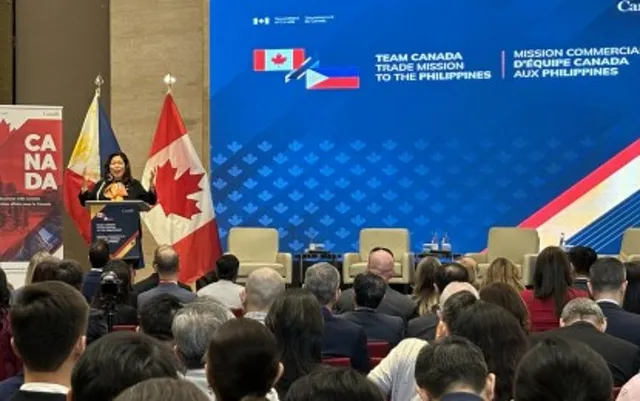
The Canadian and Philippine governments are expected to launch an exploratory dialogue on a bilateral free trade agreement (FTA) in early 2025.

Canadian Minister of Export Promotion, International Trade and Economic Development Mary Ng made the announcement during a plenary session in Taguig City for the visiting Canadian trade mission to the Philippines on Dec. 5.

“Our businesses that are here in the region, here in the Philippines in particular, the businesses always say that they want predictability, they want certainty, and they want that through FTAs, free trade agreements,” she said.

“(Trade) Secretary (Maria Cristina) Roque and I, we are going to begin exploratory discussions for a Canada- Philippines FTA,” she disclosed.

Ng said the two states are set to meet at the beginning of 2025 for the initial talks.

The minister noted that Canadian businesses are already well-positioned in the country, an indication that interest in the Philippines is there.

“A lot of the times, you negotiate an FTA so that you can begin to create the conditions for businesses to come— here, the businesses are already here. You’re always seeing the interest in the Philippines and that already will give us a lot of momentum for FTA discussions,” she said.

Ng is leading the Canadian Trade Mission to Manila from Dec. 4 to 6, which brings more than 300 Canadian exporters, innovators, and Canadian officials to meet with Filipino counterparts.

At the plenary, Ng also announced some landmark achievements during the visit, including the contract signing between the Canadian firm FreeBalance and the Department of Budget and Management to enhance the latter’s financial management systems.

In addition, Canada is also set to sign an administrative agreement under its nuclear cooperation deal with the Philippines.

“This will build on our work in the region through the trade gateway for nuclear development for the Indo-Pacific. And, as a tier one nuclear nation Canada is positioned to support Philippines' energy security goals with their expertise across the nuclear supply chain,” she said.

She also announced that Canadian information company OpenText will locate its first global innovation center in the Philippines.

More and more firms, she said, are also looking at Manila as its hub in the region, including Ostrom Climate Solutions. By Joyce Ann L. Rocamora


Article courtesy of the Philippine News Agency

December 09, 2024

The Department of Public Works and Highways (DPWH) has addressed concerns regarding damaged asphalt pavement of the Panguil Bay Bridge in Northern Mindanao.

DPWH assured that the asphalt layer that serves to enhance the bridge’s long-term durability is being rectified to high standards and that the box girders and main structural components of the bridge remain unaffected.

In her report to Secretary Manuel M. Bonoan and Senior Undersecretary Emil K. Sadain, DPWH Unified Project Management Office - Roads Management Cluster 2 (UPMO-RMC 2) Project Director Teresita V. Bauzon said that the defects are confined to the asphalt pavement on some section and do not affect the structural integrity of the 3.17-kilometer long bridge. She added that the contractor, Namkwang-Kukdong-Gumgwang joint venture (NKG JV), has been directed to replace the damaged asphalt pavement at no additional cost, as the completion certificate for the project has not yet been issued.

According to an in-depth assessment of DPWH and the project consultant, Yooshin-Pyunghwa-Kyongho JV, the defects were caused by overloading trucks exceeding the 30-ton design capacity of the bridge.

Following the Panguil Bay Bridge’s opening on September 27, 2024, some surface damage appeared on the asphalt pavement due to overloaded vehicles crossing the bridge before controls were enforced.

Torrential rains then worsened the damage, as rainwater lead to widespread pavement deformation and the expansion of potholes in affected areas.

To prevent further damage, portable weighing scales were installed at both ends of the bridge in Tangub City managed by Misamis Occidental 2nd District Engineering Office and Tubod under Lanao del Norte 1st District Engineering Office. However, 24/7 monitoring has been limited due to funding constraints to sustain the payment of wages of assigned personnel at night.

Senior Undersecretary Sadain emphasized that strict enforcement of the anti-overloading policy under Republic Act 8794 is crucial to prevent damage to the bridge’s pavement surface. By restricting overloaded vehicles from entering the bridge, the policy encourages compliance among truck and trailer operators to adhere to the prescribed gross vehicle weight and axle load limit of 13.5 tons, helping to prevent early deterioration of roads and bridges caused by overloading.

The DPWH UPMO - RMC 2 is coordinating with the DPWH Regional Office 10 to fully operationalize weighing facilities day and night at both ends in Tangub City, Misamis Occidental and Tubod, Lanao Del Norte.

Meanwhile, the contractor has started the emergency repair works on the Tangub City to Tubod direction on December 1, 2024, and this side is expected to be passable by 7:00 AM on December 2, 2024. The swift action addresses public concerns raised on social media regarding issues such as potholes, depressions, rutting, and shoving.

In the meantime, the Tubod to Tangub City direction has been temporarily opened to two-way traffic, with round-the-clock repairs being conducted to minimize disruptions. Once the Tangub City to Tubod emergency repairs are completed, repairs on the Tubod to Tangub direction will commence at 7:00 AM on December 2, 2024, and are targeted for completion by 7:00 AM on December 3, 2024.

All motorists are advised to keep moving at steady pace and not to stop on the bridge to keep traffic flowing smoothly and safely.

To ensure long-term quality, the DPWH has directed the contractor to prepare and submit a comprehensive repair plan. This plan includes a revised asphalt mix design and waterproofing measures to support the full end-to-end full upgrading of the asphalt pavement.

Panguil Bay Bridge, connecting Tangub City, Misamis Occidental, and Tubod, Lanao del Norte, is a vital infrastructure project expected to boost regional connectivity and economic growth.

DPWH remains dedicated to addressing any concerns to deliver a safe and durable structure for the public.

December 09, 2024

The Philippines and Japan reaffirmed their strong partnership in advancing infrastructure development and exchanging expertise in innovative road and tunnel technologies during the 3rd Workshop on Technical and Business Cooperation for Road Construction and the Operation & Maintenance (O&M) of Road Tunnels and Related Facilities.

Department of Public Works and Highways (DPWH) Senior Undersecretary Emil K. Sadain, together with Ministry of Land, Infrastructure, Transport and Tourism (MLIT) Assistant Vice Minister Hashimoto Masamichi, Japan Ambassador to the Philippines Endo Kazuya, and Japan International Cooperation Agency (JICA) Philippines Office Chief Representative Sakamoto Takema, spearheaded the workshop on December 6, 2024 at the Diamond Hotel, Manila aimed at advancing infrastructure resilience, safety, and sustainability in the Philippines.

Senior Undersecretary Sadain emphasized the workshop’s significance in enhancing technical expertise and applying best practices to ensure that the Philippine infrastructure remains functional and resilient for generations.

“Through continuous collaboration, Japan has significantly contributed to Philippine infrastructure development. Our Japanese partners’ expertise ensures that future projects adhere to the highest standards of quality and sustainability,” said Sadain.

Resource speakers included prominent experts such as Public-Private Partnership Center Deputy Executive Director Jeffrey Manalo; JICA Road Planning and Management Expert Eiji Ochiai; NEXCO Central Deputy Director Hiroyuki Tokieda; Tunnel Maintenance Specialist Wako Noto; Honshu-Shikoku Bridge Expressway Company Ltd. Deputy Senior Director Taku Hanai; Metropolitan Expressway Company International Projects Division Deputy Manager Omura Takashi; and MLIT Road Bureau Deputy Director Yoshihiro Taketa.

Key attendees included DPWH Assistant Secretary Constante A. Llanes, Jr.; JICA Philippines Office Senior Representative Fukui Keisuke; UPMO-Roads Management Cluster I (Bilateral) Project Director Benjamin A. Bautista; UPMO-Buildings and Special Projects Management Cluster Project Director Soledad R. Florencio; Procurement Service Director Maria Victoria S. Gregorio; Planning Service Director Alex G. Bote; Stakeholders Relations Service Director Randy R. Del Rosario; and representatives from UPMO, Public-Private Partnership Service, private contractors, expressway concessionaires, and other stakeholders.

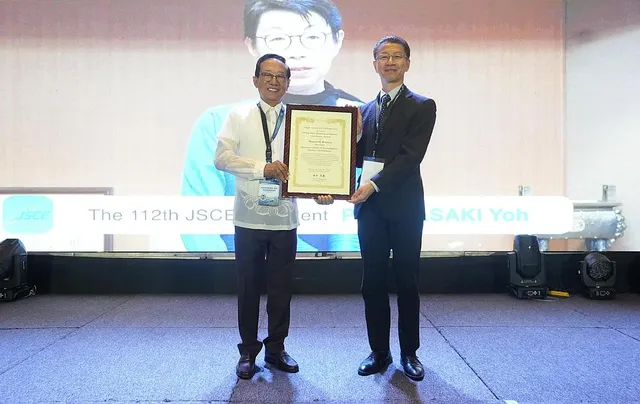
The event also marked a historic moment for DPWH, as Secretary Manuel M. Bonoan received from MLIT Assistant Vice Minister Hashimoto the FY2023 International Lifetime Contribution Award from the Japan Society of Civil Engineers (JSCE).

Secretary Bonoan is the first Filipino and sole non-Japanese recipient of this prestigious award, which celebrates his exceptional leadership and contributions to fostering Philippine-Japan technical cooperation.

The award, presented during the sidelines of the workshop, included a medal featuring a crystal bird in flight, symbolizing the recipient’s remarkable achievements in civil engineering.

JSCE 112th President Professor Sasaki Yoh, in a recorded video message, acknowledged Secretary Bonoan’s vital role in strengthening bilateral ties, emphasizing the importance of international cooperation in civil engineering for building stronger and more resilient nations.

In his acceptance speech, Secretary Bonoan said that the recognition highlights the growing prominence of the Philippines in the global civil engineering community. It also inspires our engineers and public servants to strive for excellence in building a more resilient nation.

JSCE and its Philippine counterpart, the Philippine Institute of Civil Engineers, Inc. (PICE), had earlier strengthened their partnership through an Agreement of Cooperation (AOC) signed by JSCE President Shigeyoshi Tanaka and Senior Undersecretary Emil K. Sadain, serving as the 2024 PICE National President. This collaboration fosters innovation and shared expertise to advance the successful realization of the Philippines’ ambitious infrastructure goals.

By leveraging the convergence of technical expertise, the Philippines is poised to develop stronger, more resilient infrastructure, paving the way for sustained economic growth and stability.

The 3rd workshop presented Japan’s cutting-edge technologies, global engineering practices, and innovative solutions for the construction, operation, and maintenance of roads, expressways, tunnels.

It also covered topics on maintaining long-span bridges, large-scale repairs, and renewals of expressways, emphasizing their importance in combating climate challenges and ensuring public safety.

DPWH and MLIT reaffirmed their commitment to advancing infrastructure development, with MLIT Assistant Vice Minister Hashimoto and Ambassador Endo pledging continued technical cooperation and funding support for Philippine projects.

December 02, 2024

Spectro Scientific's FieldLab 58C is a cutting-edge, portable oil analysis system designed for use in industries such as mining and upstream oil extraction. It provides immediate, comprehensive data on oil condition and wear debris, enabling real-time equipment monitoring. This system is key for companies aiming to avoid costly machinery failures and optimize their maintenance schedules.

The FieldLab 58C is not only innovative but also user-friendly, requiring minimal technical expertise from operators. It combines four key technologies—an X-Ray Fluorescence (XRF) spectrometer, a Filter Particle Quantifier (FPQ), an infrared (IR) spectrometer, and a kinematic viscometer—into one compact, portable unit. The system performs four crucial tests within just 10 minutes, offering up to 20 essential oil analysis parameters. These tests cover critical areas such as particle count, elemental concentrations, fluid chemistry, and viscosity using just 12 milliliters of oil. The results help operators quickly assess machine wear, contamination, and lubricant condition, empowering them to make fast, informed decisions.

Why Choose the FieldLab 58C?

In industries like mining and upstream oil extraction, the smooth operation of large, complex machinery such as generators, gearboxes, and hydraulic pumps is critical. The FieldLab 58C provides a mobile, efficient solution for monitoring these machines' health by detecting abnormal wear debris from iron and nonferrous metal components. Spectro Scientific’s advanced technology allows for easy identification of contaminants like water, glycol, soot, and other particles larger than 4 microns, ensuring that machinery continues to function smoothly and reliably.

The FieldLab 58C's rugged design makes it well-suited for the harsh conditions often found in mining environments. Its battery-powered operation, solvent-free design, and intuitive touchscreen interface streamline the oil analysis process, making it simple and fast. Furthermore, its smart diagnostics feature allows users to customize alarm limits and operational parameters, enhancing the system's adaptability to different needs.

FieldLab 58C and Mining Applications

In mining and other heavy industries, equipment failures can result in massive downtime and financial losses. Lubricant and wear debris analysis, such as that provided by the FieldLab 58C, can predict potential breakdowns and extend machinery lifespan. The system generates easy-to-read reports with diagnostics and recommended actions based on factory or user-defined alarm settings, minimizing human error and ensuring accurate results.

The FieldLab 58C is also ASTM-compliant, offering users confidence in the reliability of its results. Spectro Scientific’s TruVu 360 Fluid Intelligence Software further boosts efficiency by helping operators manage their fleets more effectively. Maintenance teams can monitor key performance indicators (KPIs), assess asset readiness, and track cost savings from oil analysis programs through its management dashboards.

QES Technology Philippines, Inc.: Authorized Distributor of Spectro Scientific

In the Philippines, QES Technology Philippines, Inc. serves as the authorized distributor of Spectro Scientific products, including the FieldLab 58C. QES Technology is dedicated to providing world-class oil analysis and condition monitoring solutions tailored to the needs of industries like mining.

With its head office in Manila and additional locations in Pampanga, Cebu, and Surigao City, QES Technology ensures that companies throughout the Philippines have access to the latest oil analysis technologies and expert support, regardless of their location.

For inquiries or quotations about the FieldLab 58C or other Spectro Scientific products, customers can reach QES Technology Philippines, Inc. by phone at +632 771 1248 or via email at qtpmarketing@qesnet.com. Their team is prepared to assist with all oil analysis and condition monitoring needs.

By adopting the FieldLab 58C, companies in the mining sector can significantly improve their maintenance strategies, minimize equipment downtime, and ensure long-term reliability—all while protecting their bottom line.

December 02, 2024

At least 43 landowners in Pampanga have agreed to share their property to the government for the construction of the Subic-Clark-Manila-Batangas (SCMB) railway project, the Bases Conversion and Development Authority (BCDA) said.

In a statement over the weekend, BCDA said 68 Transfer Certificate of Titles (TCTs) were recently distributed to the landowners from the towns of Porac and Floridablanca whose properties would be affected by the railway project.

Due to the right-of-way requirements, landowners with affected properties had a reduction in the size of their land.

The TCTs that were issued correspond to the portions of land retained by the landowners, with the affected areas being transferred to the BCDA.

During the turnover ceremony, BCDA officer in charge Senior Vice President Richard Brian Cepe said the cooperation of affected landowners would help in the speedy completion of the project.

“One of the biggest challenges faced by the government is securing what we call the right-of-way, so your willingness to make sacrifices and cooperate has been a tremendous help in ensuring the swift completion of this project,” Cepe addressed the landowners in Filipino.

BCDA said the landowners were already paid under negotiation and not through expropriation.

The SCMB, a cargo railway connecting Subic, Zambales, and Batangas provinces, is a flagship project of the Luzon Economic Corridor (LEC).

LEC is a brainchild of the trilateral meeting of the Philippines, United States, and Japan last April in Washington D.C.

Projects under the LEC will be funded by the USD600-billion Partnership for Global Infrastructure and Investment (PGII) of the G7 countries, which include US and Japan.

December 02, 2024

The PHP19.3 billion Samal Island-Davao City Connector (SIDC) project is expected to be completed by September 2028, according to the Department of Public Works and Highways (DPWH) 11 (Davao).

Dean Ortiz, DPWH-11 spokesperson, said in a press briefing Wednesday that as of Nov. 25, the overall project accomplishment stands at 6.45 percent.

The civil works are 3.51 percent completed, while the detailed engineering design (DED) is 97.97 percent finished.

“All the remaining DED plans have been approved as of Nov. 5, 2024,” Ortiz said.

Bored piling works, which began on May 1 this year, have made significant progress.

On the Samal Island side, 100 percent (74 out of 74) of the bored piles for the land viaduct are complete. On the Davao City side, 46.36 percent (51 out of 110) of the bored piles are finished. Pile cap construction on the Davao City side commenced on Sept. 12, 2024.

Ortiz reported that 15.38 percent (four out of 26) of the land viaduct substructure has been completed. In Samal, road-right-of-way issues in Barangay Limao have been resolved, with all 10 affected properties settled and expropriated.

On the Davao City side, negotiations are ongoing for 52 properties -- 36 have been paid, while 16 are under processing.

Ortiz said the DPWH aims to finalize these claims by the first quarter of 2025.

The SIDC bridge, a 3.9-km., four-lane cable-stayed structure, will link Davao City and the Island Garden City of Samal (IGACOS) over the Pakiputan Strait. It will feature a vertical navigational clearance of 47 meters, landing points at the R. Castillo-Daang Maharlika junction in Davao City, and the Samal Circumferential Road in Barangay Limao.

Once operational, the bridge is expected to serve up to 25,000 vehicles daily, cutting travel time between Davao City and Samal from 30 minutes via ferry to just five minutes.

December 02, 2024

The Philippines and the United Arab Emirates (UAE) have signed a Memorandum of Understanding (MOU) to deepen energy transition cooperation.

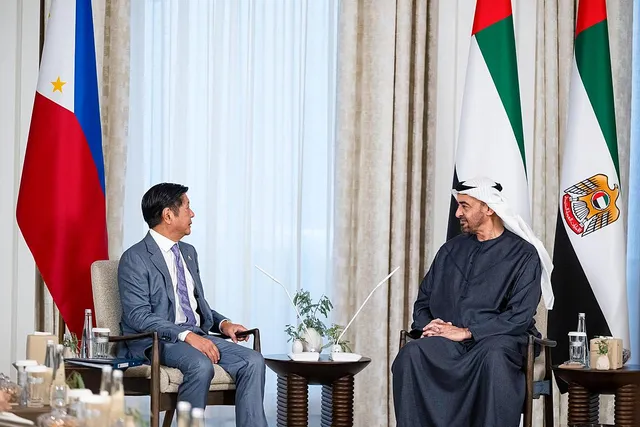
The MOU was one of the key agreements reached at the meeting between President Ferdinand R. Marcos Jr. and UAE President Mohammed bin Zayed Al Nahyan during Marcos' working visit to the Gulf state last Nov.26.

In a statement over the weekend, Department of Energy (DOE) Secretary Raphael Lotilla said the MOU includes several areas of cooperation particularly in renewable energy; liquefied natural gas as a transition fuel; power generation, transmission, and distribution system; nuclear energy; energy efficiency and conservation; and alternative fuels and emerging technologies.

“By combining the UAE’s leadership in innovative energy solutions with the Philippines’ ambitious drive for energy security and sustainability, this initiative has the potential to transform not only industries but also the lives of millions of Filipinos,” Lotilla said.

He added that the partnership has the potential to support the development of the country’s energy landscape by attracting investments, creating jobs, and promoting the transfer of cutting-edge technology to strengthen local expertise.

The agreement was formalized following discussions between Lotilla and UAE Minister of Energy and Infrastructure Suhail Mohamed Faraj Al Mazrouei in Abu Dhabi.

“Our dialogue emphasized fostering meaningful business collaborations and positioning the Philippines as a prime destination for Emirati investments in critical energy sectors, including developing robust energy infrastructure and advancing renewable energy projects,” Lotilla said.

“We are committed to advancing our energy goals, and the UAE's leadership in innovative energy solutions presents a unique opportunity for the Philippines to accelerate its transition to a cleaner, more sustainable energy future."

An Implementation Agreement with a UAE state-owned company is expected to be signed by January 2025, he said.

In October of this year, Lotilla signed an MOU with Saudi Arabia, strengthening the country’s bilateral ties in the energy sector with the Middle Eastern countries. By Kris Crismundo


Article courtesy of the Philippine News Agency

December 02, 2024

Two mining companies operating in Masbate province have accomplished a milestone of six years, or 2,192 days, without a lost time injury (LTI) involving their workers, employees and contractors as of this November.

In an interview on Friday, Marionne Ruiz, spokesperson for Filminera Resources Corp. (FRC), said the achievement to secure the safety of more than 2,051 individuals is the result of collaborative efforts with Phil. Gold Processing and Refining Corp. (Phil. Gold).

FRC and Phil. Gold both operate at the Masbate Gold Project site in Aroroy town.

"Both companies have implemented effective procedures to ensure the safety and well-being of every employee after each shift and work rotation," Ruiz explained.

She credited the six-year success to a strong commitment to “zero harm" policy.

"This policy is underpinned by a culture of injury prevention, where employees and contractors are encouraged to prioritize their own safety and the safety of others. Robust occupational health, safety, social and environmental management systems have been crucial in achieving these outcomes," she added.

She said Filminera trained an emergency response team in both basic and advanced techniques for hazardous materials spill response, vehicle extrication, rope access and rescue, firefighting, fire truck operation, and the use of self-contained breathing apparatus.

Employees also undergo annual physical examinations and laboratory tests, which include blood counts, stool examinations, urinalysis and chest X-rays, among others.

Health awareness programs focused on illness prevention are likewise being conducted on-site by occupational health staff.

These programs include free vaccinations for hepatitis, typhoid, pneumococcal disease, rabies, and tetanus for employees, respirable dust monitoring, zero-alcohol and drug level tests, and other relevant programs from the Department of Labor and Employment (DOLE) and the Department of Health.

In a statement, Phil. Gold president Ryan Rusk highlighted a collaborative approach to safety, emphasizing the teamwork of leadership, employees, and contractors in identifying and mitigating hazards.

“I believe we have fostered a safety culture that extends beyond the project site. Workers in the mine and the mill, including our contractors, have embraced safety consciousness and awareness, influencing their families and neighbors as well," Rusk said.

Filminera president Cris Acosta stressed the importance of vigilance in safety practices.

"The continuous effort to maintain our safety performance requires a commitment that transcends individual job functions. This achievement is fragile and we must celebrate it with a promise to keep working towards maintaining it," Acosta said.

Phil. Gold received the national silver award in the 13th Gawad Kaligtasan at Kalusugan from the DOLE Occupational Safety and Health Center in 2022.

Filminera earned the Platinum prize in the Philippine Mineral Industry Excellence Award at the Annual National Mine Safety and Environment Conference in the same year. 

Earlier this week, the firm gained recognition as a top performing employer in the private sector from the Philippine Health Insurance Corporation in Bicol. 

November 26, 2024

PNIA members bagged a total of 19 major PMIEA awards.

The Philippine Nickel Industry Association (PNIA), the largest group of nickel miners in the country, proudly announces that 9 of its member companies have received multiple prestigious awards at the 2024 Presidential Mineral Industry Environmental Award (PMIEA) ceremony, held during the 70th Annual National Mine Safety and Environment Conference (ANMSEC) in Baguio City. This recognition underscores the leadership and commitment of PNIA members to responsible mining practices, environmental stewardship, and safety of operations.

The PMIEA is the mining industry’s most prestigious awarding ceremony, conferred by the national government and the industry’s regulatory bodies. The awards recognize outstanding dedication, initiatives, and innovations in environmental protection and safety and health management. These accolades carry significant weight as they are conferred by the very agencies that regulate the mining industry, setting the standards for safety, environmental protection, and corporate responsibility.

PNIA members achieved significant recognition at this year’s PMIEA, winning a total of 19 major awards across 8 categories, affirming their commitment to the highest standards of mining excellence. These accolades highlight the companies’ dedication not only to compliance but also to initiatives that go beyond regulatory requirements, advancing sustainability, and fostering social responsibility.

6 of the 7 Presidential Mineral Industry Environmental Awards were presented to 6 PNIA members: Cagdianao Mining Corporation, Carrascal Nickel Corporation, CTP Construction and Mining Corporation, Hinatuan Mining Corporation, and Taganito Mining Corporation.

The PMIEA Selection Committee Platinum Achievement Award went to Platinum Group Metals Corporation, Rio Tuba Nickel Mining Corporation and Zambales Diversified Metals Corporation, while Dinapigue Mining Corporation received the Titanium Achievement Award and Most Improved Safety Performance.

PNIA members bagged all of the awards under the Mining Forest Program’s Best Mining Forest Contest as Cagdianao Mining Corporation claimed the top award for Best Mining Forest, with Platinum Group Metals Corporation as 1st Runner-Up, Taganito Mining Corporation as 2nd Runner-Up and Carrascal Nickel Corporation as 3rd Runner-Up. This distinction emphasizes PNIA members’ commitment to environmental stewardship, land rehabilitation, and biodiversity conservation through sustainable reforestation efforts.

Awards in safety were also given to PNIA through Cagdianao Mining’s Best Mine / Plant Supervisor award, Hinatuan Mining’s Best Miner / Operator Award, Rio Tuba Nickel Mining’s Best Safety Inspector Award, Dinapigue Mining’s Most Improved Safety Performance Award, and Carrascal Nickel Corporation’s Award for Runner-Up in Safest Surface Mining Operations.

PNIA President Atty. Dante R. Bravo said, “PNIA members winning awards for safety, environmental stewardship, and operational excellence highlights our commitment to responsible mining and sustainability. In the face of increasing climate-related risks and challenges, it’s vital to remember that responsible mining practices contribute to resilient communities through effective social development, risk management, progressive rehabilitation, early disaster response, and sustainable land use practices that help communities adapt to the changing environment.”

“Our success as an industry is built on strong partnerships with our employees, host community, technical partners, local government units, national government stakeholders, and other stakeholders. These collaborations are essential for ensuring that mining not only adheres to the highest environmental, operational, and safety standards but also creates tangible benefits for communities through job creation, infrastructure development, and economic growth,” Atty. Bravo added.

Meanwhile, PNIA Chairman Antonio Co said, “As a vital sector of the Philippine economy, the mining industry must be seen not only for its economic contributions but also for its role in achieving national development goals. We stand firmly in our commitment to responsible mining practices that contribute to sustainable livelihoods and environmental conservation. By prioritizing both environmental and social impacts, we aim to be a model for industries across the country, showing that responsible practices can drive long-term growth while contributing to national prosperity."

Co further underscored the importance of excellence in environmental stewardship towards reaching global sustainability goals. “This is a long-standing commitment of nickel miners and the mining industry for our communities and for our country; to promote the practices of Philippine nickel miners of being dedicated stewards of the environment”.

November 25, 2024

The Philippines and New Zealand signed a joint declaration and areas of cooperation on climate change on November 19 as a demonstration of the two countries’ commitment to the goals of the Paris Agreement and the transition to a low-emissions economy.

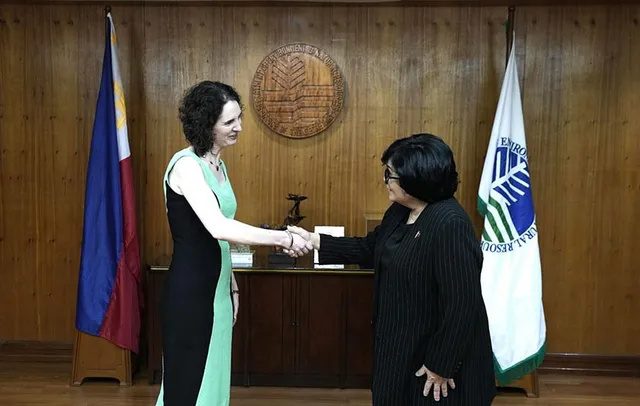
Department of Environment and Natural Resources (DENR) Secretary Maria Antonia Yulo Loyzaga and New Zealand Minister of Climate Change Simon Watts signed in parallel the joint declaration at the DENR Central Office in Quezon City and at the ongoing COP29 in Baku, Azerbaijan, respectively.

“Our government and the New Zealand’s are united by a common purpose: to build climate-resilient communities while accelerating the transition to a low-emissions economy,” said Secretary Loyzaga. Given the Philippines’ vulnerability to the impact of climate change, our focus really is to navigate the complexities of driving economic recovery and inclusive growth, balancing the immediate needs of our people with long-term sustainability goals.”

The declaration sets an 18-month timetable to formalize the framework for enhancing the partnership on climate change, focusing on innovation, cooperation and sustainable development in pursuing job creation, investment opportunities, and economic growth.

Reaffirming their commitment to fully implement the Paris Agreement, the two countries acknowledged the importance of aligning financial flows with low-emission and climate-resilient development.

“Aligning our actions with the goals set in the Paris Agreement helped us recognize that transitioning to a low-emissions economy is not merely a policy objective but a moral imperative, which is why in this cooperation, we aim to build a model of inclusive growth that responds to both the urgency of the present and the promise of a sustainable future,” Secretary Loyzaga said.

The joint declaration states a “common aim to reduce the impacts of climate change and prepare for its future impact, through the transition to a net-zero greenhouse gas emissions economy that is cost-effective, using evidence-based policies, while enabling private investment and partnerships, access to the best available science and technology, international engagement and knowledge sharing and competitive markets.

It also affirms that cooperation between governments can enable the sharing of best practices and support the development of innovative and effective solutions to avoid and reduce greenhouse gas emissions and adapt to the impacts of climate change.

The declaration emphasized the importance of carbon pricing and the elimination of harmful subsidies as critical tools for reducing greenhouse gas emissions to limit global average temperature rise to 1.5°C.

The bilateral engagement served as a critical follow-through on the official visit of New Zealand Prime Minister Christopher Luxon to Manila in April 2024 when he met with President Ferdinand Marcos, Jr., and more recently, the technical discussions conducted by climate change officials in October 2024 in Manila.

November 25, 2024

The government is highlighting the need for the mining sector to adopt sustainable practices to make it competitive while being environment-friendly.

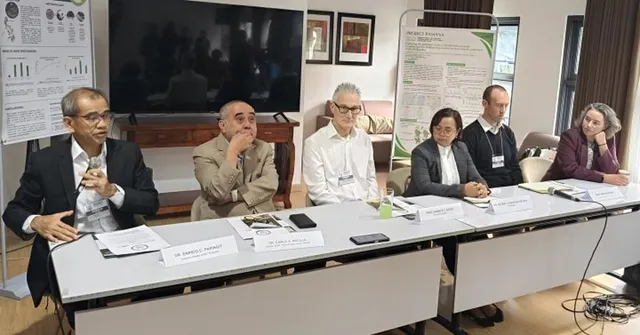
The Department of Science and Technology (DOST) has funded a three-year study that will help make the mining industry more sustainable and results of which will be presented to stakeholders who will attend the annual Philippine Mine Safety and Environment Association (PMSEA) conference in this city from Nov. 20-22, 2024. 

“It came out of the realization that we need to support the mining and mineral sector to become more sustainable and for the industry to be competitive while we look out for the environment as well,” said Dr. Enrico Paringit, Executive Director of the DOST- Philippine Council for Industry, Energy and Emerging Technology Research Development (PCIEERD) in a press conference here Monday.

Paringit said the study, dubbed Project PAMANA (Philippine Mining at the National to Catchment Scale; From Legacy Impacts to Sustainable Futures), is a joint effort led by the University of Glasgow and the University of the Philippines-Los Banos.

The PHP15 million study, funded by the UK Natural Environment Research Council and the DOST-PCIEERD, aims to address environmental issues in abandoned mines in 10 critical river basins in the Philippines.

A counterpart project - Philippines Remediation of Mine Tailings (PROMT) worth PHP17 million, in turn, is aimed at working on new ways to handle and clean up mine wastes that will help recover additional metal to generate revenue for both mining companies and the government, and improve tailings management to lower operational expenses and the reuse of land from old mining sites to reduce long-term liabilities of mining companies.

“Mining has a large contribution to our economy as a whole - - a lot of impact that we need to look out for the environment. We are excited to see what and where the links, and how to address it and their impact because we need to put out not only solid science but also a way to make it greener,” Paringit said. 

Kathryn Goonenough, representative of the UKRI-RC, said their country supports initiatives on sustainable mining.

“We have been funding these kinds of programs. We have another with Canada on the same topic. We are also holding workshops to look at possible partnerships on these topics which are potential for funding,” she added.

Dr. Carlo Arcilla, Director of the DOST- Philippine Nuclear Research Institute (PNRI) and the project leader of PROMT said: ‘Mining companies themselves are interested in the result and potentially want to fund.”

“It is their own self-interest and sustainability,” he added.

November 22, 2024

Celsius Resources (ASX/AIM: CLA) is pleased to announce that its Philippine affiliate, Makilala Mining Company, Inc. (MMCI), has secured a six-month extension to fulfil funding requirements for its Maalinao-Caigutan-Biyog (MCB) Copper-Gold Project.

Granted by the Philippine Department of Environment and Natural Resources (DENR) and the Mines and Geosciences Bureau (MGB), the extension is strategically significant for MMCI and its prospective investor, Maharlika Investment Corporation (MIC).

The decision enables both parties to work towards demonstrating the financial capability mandated by their mineral production sharing agreement (MPSA).

The additional six-month period, effective until March 13, 2025, provides MMCI and MIC the necessary time to complete due diligence and regulatory approvals essential to finalising an investment agreement.

Established as a sovereign wealth fund by the Philippine government in 2023, Maharlika has approximately USD $5 billion at its disposal with the aim to catalyse economic growth in the Philippines, through strategic investments in critical sectors, including natural resources, energy, infrastructure, and agriculture.

MIC’s potential involvement in the MCB Project signifies confidence in the project’s economic potential and aligns with its goals to boost sustainable development.

“Since the issuance of the MCB Project’s mining permit, investor interest has been robust, both from within the Philippines and internationally,” said Celsius Resources Executive Chairman Julito R. Sarmiento.

“An investment from Maharlika would be transformational, not just for the MCB copper project which will be mined through sustainable practices, but for the entire Province of Kalinga providing employment, infrastructure and economic sustainable growth.”

Situated in the Cordillera Administrative Region, the MCB Project boasts promising copper and gold reserves.

A JORC-compliant resource estimate from 2022 indicated 338 million tonnes at 0.47% copper, underscoring the project’s significant potential.

Celsius Resources is primarily focused on advancing multiple copper-gold assets in the Philippines including the Botilao Prospect and Sagay Copper-Gold Project, in addition to the MCB Copper-Gold Project.

November 18, 2024

Apex Mining Co., Inc.’s consolidated net income for the third quarter of 2024 was P1.31 billion, up 27% over its net income in the same period of 2023, which was P1.03 billion. For the three quarters of 2024, Apex Mining’s consolidated net income reached P3.07 billion or was 33% (P762.49 million) higher versus the P2.31 billion consolidated net income in the same period in 2023. Apex Mining’s consolidated income pertains to Apex Mining and its subsidiaries.

Apex Mining’s Maco Mine site alone generated P1.26 billion in net income, bringing its net income in the three quarters of 2024 to P2.97 billion.

According to Luis R. Sarmiento, President and CEO of Apex Mining, “Our High Performing team focused on driving efficiency and productivity despite operational challenges. “ He credited higher tonnes milled and the surge in gold prices are the main drivers of this period’s good performance.

Meanwhile, the consolidated gross revenues earned from the sale of gold and silver in the three quarters of 2024 amounted to P10.84 billion — 24 % higher (equivalent to P2.11 billion) than the gross revenues recorded in the same period in 2023 (pegged at P8.73 billion). These revenues were generated by Apex Mining and its subsidiary , Itogon-Suyoc Resources, Inc.

Apex Mining’s strong performance was again driven by higher realized gold prizes, both during the three quarters of 2024 and the just-concluded third quarter, alone. In the three quarters of 2024, Apex Mining’s Maco Mine site in Davao de Oro and ISRI’s Sangilo Mine site in Benguet collectively sold 78,105 ounces of gold at a realized price of USD 2,359 per ounce. The volume sold in 2024 was up one percent versus the same period in 2023 (77,652 ounces sold at USD 1,939 per ounce). In the third quarter alone, Apex Mining sold 25,112 ounces of gold at a realized price of USD 2,545 per ounce.

In the three quarters of 2024, Maco Mine milled 657,975 tonnes of ore — 10% more than the 597,443 tonnes milled in the same period in 2023. Both gold recovery rate and gold grades slightly dipped, though, with the former at 85.20% and the latter at 3.58 grams per tonne.

Sarmiento is optimistic about their performance for the rest of 2024, barring any more natural calamities that will adversely affect operations. “Cliché as it may sound, our good numbers redound to wins for our host communities, too,” says Sarmiento. He cites that IP surface rights royalty and IP royalty and taxes, licenses and permits paid already reflected a 21% increase versus last year’s P26.94 million. “These royalties are spent by our host IPs in projects that support their economic growth.”

The company’s consolidated excise taxes in the three quarters of 2024 also grew to P423.08 million (from ₱336.78 million in the same period in 2023), fueled by higher ounces sold at a higher price.

In Maco, Apex Mining is already a hall of famer as a top taxpayer in the Municipality of Maco (Davao de Oro). ISRI also recently earned the Gong Awards in Business Achievement and Yield (GABAY) as the top seven taxpayer in the Province of Benguet. Meanwhile, Apex Mining’s subsidiary, Asia Alliance, is on track with its drilling and exploration works in its Amacan and Hijo projects in Davao de Oro. These two projects were acquired thru an agreement with the PMDC (Philippine Mine Development Corporation), the govt arm tasked to develop idle mining assets.

November 18, 2024

Listed natural resources development company Nickel Asia Corporation (NAC) announced recently its unaudited financial and operating results for the nine-month period ended Sept. 30, 2024, with an attributable net income (net of minority interest) of P2.55 billion, lower than the P3.65 billion reported during the same period last year.

Earnings before interest, taxes, depreciation, and amortization (EBITDA) amounted to P6.64 billion against P8.83 billion in the prior year.

Revenues from ore sales declined by 12 percent year-on-year to P14.99 billion from P16.96 billion due to lower ore prices resulting from the oversupply in the nickel market. Meanwhile, the Company’s operating mines sold a combined 13.57 million wet metric tons (WMT) of nickel ore during the period, higher by 4.3 percent than last year’s 13.01 million WMT.

The weighted average nickel ore sales price during the period decreased by 18 percent to $19.09 per WMT against $23.24 per WMT in the same period last year. The Company realized P57.22 per US dollar on its nickel ore sales – a 2.8 percent increase from P55.64 last year.

Breaking down the ore sales, the Company exported 8.07 million WMT of saprolite and limonite ore at an average price of $24.74 per WMT during the period from 7.29 million WMT at $29.15 per WMT in the same period last year.

Likewise, the Company delivered 5.49 million WMT of limonite ore to the Coral Bay and Taganito high-pressure acid leach (HPAL) plants and realized an average price of $7.78 per pound of payable nickel equivalent to 8.99 percent of LME. This compares to last year’s 5.72 million WMT at $10.53 per pound equivalent to 9.87 percent of LME.

NAC recognized losses from its combined equity share in investments in the two HPAL plants in the amount of P665.25 million against losses in the prior year at P379.23 million.

Renewable Energy

For the nine-month period, Emerging Power Inc.’s (EPI) subsidiary, Jobin-SQM Inc. (JSI), increased generation at its Mt. Sta. Rita solar plant in Subic Freeport by 58 percent to 167,730-megawatt hours; this was due to the energization of an additional 72-MWp in February, expanding the plant’s capacity to 172-MWp.

EBITDA margins remained positive at 85 percent. With the increased capacity, it was able to log a 68-percent increase in EBITDA to P742 million.

EPI expansion continues

Construction of the 145-MWp Cawag solar project is expected to begin soon. For the first phase of the project (70 MWp), the construction permit has been secured and the Notice to Proceed (NTP) was issued in September. Detailed engineering design and site clearing are ongoing. The first phase of the project is targeted to be completed by the fourth quarter of 2025.

Likewise, Greenlight Renewables Holdings, Inc., EPI’s joint venture with Shell Overseas Investments B.V., is constructing its solar project in Leyte with an initial 120-MWp slated to be completed by the second quarter of 2025.

Pre-development activities for a 45-MWp solar project in Botolan, Zambales, is ongoing while the NTP is expected to be issued by the first half of next year.

“This year, we achieved our objective of operating Manicani in Eastern Samar and Bulanjao in Palawan. We are optimistic that these new nickel mines will drive volume and revenue growth in the coming years. We also completed infrastructure enhancements in Dinapigue, Isabela, paving the way for higher production,” NAC President and CEO Martin Antonio G. Zamora said.

“For EPI, our first solar project site, JSI, is now operating at a total capacity of 172-MWp since the energization of additional capacity last Feb. 28. By second quarter of next year, Greenlight Renewables Holdings, Inc., our joint venture with Shell Overseas Investments B.V., will complete construction of the first phase of its solar project in Leyte, with an initial capacity of 120-MWp. And by fourth quarter of 2025, the operations for first phase of CAWAG solar project in Subic, Zambales, with an initial capacity of 70- MWp. These developments are aligned with our objectives of increasing our nickel production and achieving a renewable energy capacity of 1 GW attributable to NAC by 2028,” he added.

November 16, 2024

The recent October monthly meeting of the Philippine Mining and Exploration Association (PMEA) was filled to capacity as industry players eagerly awaited the keynote of newly appointed Department of Environment and Natural Resources (DENR) Assistant Secretary (ASec.) for Mining Concerns and concurrent OIC Director of the Mines & Geosciences Bureau (MGB) Michael Cabalda.

In his prepared speech, ASec. Cabalda highlighted a number of initiatives including: (1) pushing a proposed Department Administrative (DAO) order articulating a policy framework that would allow the country to gain from our mineral wealth; (2) streamlining the permitting process to reduce the time to 11 months or shorter; and (3) reviewing the Small Scale Mining Act to formalize small scale miners and increase their contributions.  These initiatives envision a mining industry that is not only an ore supplier but a critical player in mineral processing and downstream manufacturing.

The more spirited portion of the program was the Q&A where it was apparent that the audience was keen to hear directly from Assistant Secretary Cabalda in his first engagement with industry since his appointment.

Asked how soon the MGB will be able to implement the above policy changes, particularly the reduction of the processing period for permits, Assistant Secretary Cabalda credited DENR Secretary Maria Antonia Yulo Loyzaga for leading these initiatives, foremost of which is giving the MGB Director the authority to sign documents that previously needed to be cleared.  He also spoke about a more active MGB with respect to the pricing of nickel, statistics on safety and environment, among others.

Most encouraging was his assurance “Help me out and I’ll try to deliver and give you what you need.”  He added that the “MGB is your partner.  We will be with you when you do your work.”  His warning “and we will punish you when you don’t” drew laughter from the crowd.

A recurring theme was the need for communication between the government and the private sector and institutionalizing a mechanism for government to address problems raised by industry.  A suggestion to hold regular dialogs with industry was well received.

In addition, Asec. Cabalda expressed the need to touch base with his ‘council of elders’ or the MGB old-timers who possess the institutional knowledge and experience to be applied to (not-so-new) issues.  This is expected to promote consistency in the MGB’s interpretation and application of issuances across the different regional offices.  He likewise reiterated that he intends to build on what MGB, and the regional directors have done.

Another key strategy is to digitize all records and information to eliminate the current antiquated paper-based system.  With information being available online and available in real time, there will be greater transparency, as well as identification of where the bottlenecks are.

As Asec. Cabalda discussed the need for coordination with other government agencies, particularly the National Commission on Indigenous Peoples and the Department of Interior and Local Government, I recalled his comments (prior to his appointment) during the May 2024 “Mining Summit” where he said that there is no need to reinvent the wheel as there is an existing and comprehensive Minerals Action Plan prepared by the Minerals Development Council back in 2004, with specific and detailed items to address the identified challenges. Even 19 years later, it is replete with implementable action items.

It bodes well that our new MGB Director is approaching his role with openness and candor.  The industry can do no less by responding in kind.

***

Postscript: Due to family commitments, I missed the Chamber of Mines’ “Digging Deeper” Policy Forum and will also miss, for the first time in recent years, PMSEA’s Annual National Mine Safety and Environment Conference (ANMSEC). 

The ANMSEC has always been an opportunity for Diwata-Women in Resource Development to contribute to the discussion of important mining issues, as well inviting the participation of the ambassadors of countries which are developed mining jurisdictions.

One particularly memorable event for me was our 2012 forum featuring the Deputy Mineral Resources Minister of South Africa, Godfrey Oliphant.  He was a fiery and outspoken advocate for mining, despite his once being a member of South Africa’s Communist Party.  His story of how he came to realize the important role that mining played in South Africa’s economy was the perfect counterpoint to the student activists who had met him in UP Baguio.

November 16, 2024

(Part One of Two)

Written by Noel B. Lazaro, Eveart Grace P. Claro, Judd Yonder L. Reyes, and Marielle D. Marbella

In the foothills of Brooke’s Point, Palawan, the air is thick with purpose as workers press seedlings into the earth, each one a small promise for a greener future. Two years into its operation, the Ipilan Nickel Project has planted nearly three million seedlings. Yet, while the commitment to reforestation is clear, the challenge lies not in the availability of seedlings or the manpower to plant them, but in securing suitable land for these young trees to thrive within the municipality’s 85,064.90 hectares. Afforestation of previously scorched mountainsides and agroforestry initiatives are underway.

By May 2024, mining companies had planted over 55 million seedlings in more than 50,000 mined-out areas, expecting a survival rate near 90 percent. Tree planting can help local communities, but it is not a complete answer.

Mining drives the world’s economy, providing raw materials vital for industries. The World Economic Forum notes that half of global GDP relies on natural resources. But mining comes with heavy costs. A 2020 McKinsey report estimates that mining produces 1.9 to 5.1 gigatons of carbon emissions yearly, largely from coal-bed methane and energy use. In 2022, the Deloitte Economics Institute warned that climate change could lead to global losses of $178 trillion from 2021 to 2070. In the Philippines, the Nationally Determined Contributions (NDC) indicates that the mineral industry will continue to be a major greenhouse gas (GHG) emitter through 2030.

This article examines the challenges and opportunities for decarbonization in the Philippine mining sector.

GREEN (EV)OLUTION

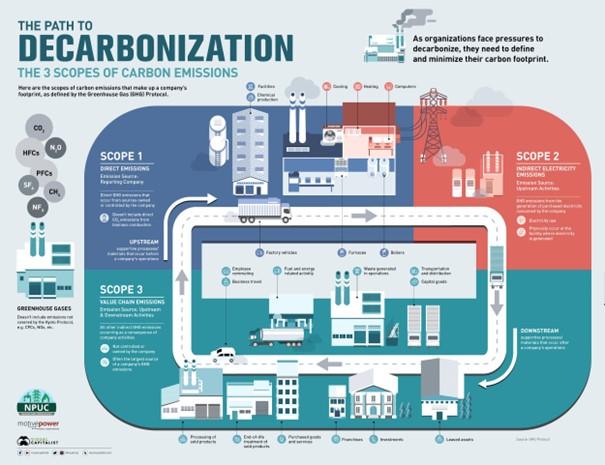
Decarbonization is essential for mitigating climate change by reducing or eliminating carbon dioxide (CO2) and other GHGs. It involves transitioning to cleaner energy sources and adopting sustainable practices to lower pollution. The ultimate goal is achieving "net-zero" emissions, where the amount of GHG released is balanced by the amount removed. Emission control can be achieved through natural methods like tree planting or watershed restoration, and the costlier technological solutions such as direct air capture and storage.

Source: Visual Capitalist (https://www.visualcapitalist.com/)


As the global community grapples with the urgent need for sustainable practices under the 2015 Paris Agreement, the Department of Environment and Natural Resources (DENR) has launched a "green transition" initiative. Secretary Maria Antonia Yulo-Loyzaga frames the transition as a “whole-of-society” effort, advocating for science and technology investments alongside social and ecological considerations. Her emphasis on promoting biodiversity, carbon footprint reduction, and effective waste management practices is a step in the right direction.

At the Nordic-Philippine Climate Executive Dialogue held on June 18, she advocated for “nature-based solutions” for carbon reduction, suggesting a preference for simpler, less costly strategies over more complex carbon capture technologies. However, nature-based solutions, while essential, must be part of a broader strategy that includes robust carbon and efficient regulatory frameworks and tech advancements to genuinely meet the country’s pledge to reduce GHG emissions by 75 percent by 2030.

The secretary highlighted the Philippine Ecosystem and Natural Capital Accounting System (PENCAS), which aims to quantify the value of natural resources, including minerals, to socio-economic development and includes addressing the impacts on ecosystems by adopting the mitigation hierarchy in mining operations, which follows the steps of avoidance, minimization, restoration, and offsetting compensation for affected communities. On the other hand, the DENR's recent release of the Implementing Rules and Regulations for the Extended Producer Responsibility Act of 2022, which mandates large companies to manage plastic waste, is a positive development.

The drive for modern infrastructure—encompassing electrification, renewable energy, automated systems, and AI-powered monitoring—represents a critical yet challenging evolution. In this context, electric vehicles (EVs) offer cleaner alternatives that reduce reliance on diesel machinery, which, according to a 2023 Mining Technology report, emits high levels of nitrogen oxides (NOx) and sulfur dioxide (SO₂). EVs are also safer and quieter, contributing to lower fire risks.

However, such transformations often require substantial investments that can be prohibitively high. Thus, the call for effective incentives is crucial, but details remain vague. For Atty. Dante R. Bravo, president of Global Ferronickel Holdings, Inc. (FNI) and Philippine Nickel Industry Association, Inc. (PNIA), the industry “needs clarity in terms of incentives for mineral processing” and “competitiveness given the size of investments required.”

The dialogue around margin-based royalties and windfall profit taxes is envisioned to help build a more equitable arrangement.

IN THE PIT OF CHANGE

The Chamber of Mines of the Philippines (COMP) has made a significant stride by launching the first phase of its Towards Sustainable Mining (TSM) initiative among its 19 members. This global standard for environmental, social, and governance (ESG) performance provides mining companies with essential tools to manage risks responsibly and adopt best practices. As the only ASEAN nation to adopt TSM, the Philippines sets a noteworthy precedent in the region.

The initiative focuses on vital areas such as health and safety, outreach to Indigenous Peoples, crisis management, tailings and water management, biodiversity conservation, and climate change. During the “Mining Philippines: Digging Deeper 2024” conference on October 17, four of eight randomly selected companies received the highest ratings across five key TSM protocols.

However, concerns remain regarding the scalability of these practices across the 56 large-scale metallic and 59 non-metallic mines, along with over 3,000 small quarries in operation. The voluntary nature of TSM and its reliance on self-assessment raise doubts about its effectiveness. Inconsistent adherence, particularly among non-members, could diminish the initiative’s overall impact.

This situation underscores the need for a more structured approach that transcends self-regulation. Regulators and legislators should take cues from TSM to develop a governance framework beyond existing mining laws and ISO benchmarks, potentially incorporating training and resource access.

TSM raises the compliance bar, but its success depends on overcoming limitations and fostering inclusivity.

CARBON CREDIT CARD

Investing in carbon rights is touted to be a more ingenious approach to offset carbon emissions. Generating a new source of income helps to meet financial objectives while also advancing global carbon reduction goals.

The proposed Low Carbon Economy Investment Act (House Bill 7705) aims to advance the Philippines' transition to a low-carbon economy. This legislation requires major GHG emitters to formulate decarbonization plans limiting global temperature increases to below 2°C. It also introduces a carbon pricing mechanism that imposes costs on emissions exceeding set thresholds, thereby creating a decarbonization fund. This fund is intended to be reinvested in sustainable, low-carbon initiatives, offering considerable opportunities for businesses and investors committed to sustainable development.

Concurrently, the Carbon Rights Act (House Bill 10635) is envisioned to overcome obstacles to investing in carbon forestry and related projects. This legislation clarifies ownership of carbon rights and establishes processes for their transfer, thus enabling better integration into global carbon markets. For investors, particularly those focused on nature-based solutions, this act opens new avenues for investment in essential carbon projects intended to achieve global emission reduction goals.

Carbon trading involves the exchange of emission rights and credits that permit organizations to emit specific volumes of CO2. Companies can purchase credits to increase emissions or sell them to reduce emissions. This system allows mining companies to support biodiversity and restore ecosystems while generating revenue.

Atty. Analiza Rebuelta-Teh, DENR Undersecretary for Finance, Information Systems and Climate Change, recently disclosed that the Department of Finance is creating a framework for carbon finance while the DENR is working on the rules for carbon credits.

These legislative initiatives signify notable progress, yet substantial challenges loom. The effectiveness of the Low Carbon Economy Investment Act hinges on precise baseline emissions data, rigorous enforcement, and vigilant monitoring; without these, companies may underreport emissions or sidestep decarbonization commitments. In addition, the viability of the carbon pricing mechanism depends on businesses' capacity to adapt, requiring time to develop essential infrastructure and mitigate oversupply issues that have plagued other markets. Public backing for carbon pricing presents difficulties, particularly if it results in higher consumer costs; thus, clear communication of its benefits is essential. Furthermore, while the Carbon Rights Act aims to attract investment into carbon projects, potential investors may confront legal ambiguities, bureaucratic hurdles, and a lack of transparency. Ultimately, the Philippines must compete with other nations for carbon project investments, necessitating demonstrable benefits, a stable regulatory framework, and proactive policies to avoid the pitfalls faced by early carbon markets in the European Union.

Addressing these hurdles will be crucial for their successful implementation and maximizing the benefits of a transition to sustainable practices.


(To be continued…)


Noel B. Lazaro is a director and general counsel at Global Ferronickel Holdings, Inc. His practice spans diverse fields, including environmental litigation. He was an associate at SyCip Salazar Hernandez & Gatmaitan and a partner at Siguion Reyna, Montecillo & Ongsiako. A UP College of Law graduate, he teaches evidence, special proceedings, and special writs at law schools.

Eveart Grace Pomarin-Claro is the Corporate Secretary of Global Ferronickel Holdings, Inc. and the Executive Legal Officer at Platinum Group Metals Corporation. A University of St. La Salle College of Law graduate, she specializes in securities and capital markets, taxation, project finance, and mergers and acquisitions.

Judd Yonder L. Reyes is a research associate and paralegal at Platinum Group Metals Corporation. A Bachelor of Arts in Communication graduate (Magna Cum Laude) from Pamantasan ng Lungsod ng Maynila, she completed the 29th Foundation Course of the Paralegal Training Program of the University of the Philippines - Law Center.

Marielle Marbella is a research associate and paralegal at Platinum Group Metals Corporation. A Bachelor of Science in Life Sciences-Communication Track graduate (Magna Cum Laude) from Ateneo de Manila University, she has a background in journalism and supports the group’s sustainability programs.

November 16, 2024

​

It has been almost four decades since I have worked in the resources and energy industry. My career history can be set against the backdrop of the ups and downs of the industry starting from the time I began working as a government petroleum geologist up to the present where I am both a government regulator and a private law practitioner.

I witnessed the paradigm shift in the industry when environmental protection became the norm in the 80s and indigenous peoples' rights were given legal recognition in the 90s. The millennium saw how green energy transition and digital transformation drove companies to adhere to the ESG framework extending sustainability beyond environmental issues to  encompass climate change, human rights, monitored revenues, and strict adherence to laws.

I embarked on a geology course upon the persuasion of my parents who wanted me to have a stable and relatively high-paying job. A relative was gainfully employed as a structural geologist in a government corporation and my parents believed that the profession offered numerous opportunities for career advancement.

So, there I was, a wide-eyed high school graduate from a small parochial school, enrolled in UP in a freshman block composed of 15 geology and 15 engineering majors. The group was a merry mix-up of kids from both exclusive and public schools, and uber-smart guys from Xavier School and Philippine Science High School who ate advanced calculus for breakfast. Our block president became active in university politics and was elected as University Student Council Chair, a prelude to his eventual rise as senator of the republic. Many in our freshmen block pursued their PhDs in geology while surprisingly, a good number became lawyers like me.

Amidst the political turbulence and economic chaos brought about by the assassination of Benigno “Ninoy” Aquino, I obtained my geology degree. Little did I realize that graduation from the university was just the beginning of the real challenge. Employment in the geoscience field depended highly on the price of commodities, particularly metals and oil. We entered the job market when metal and oil prices in the eighties were depressed. Qualifying for a geoscience job in the resources industry was difficult. The options were either being employed as a contractual worker in government or staying in the university as a research assistant while pursuing graduate studies. Private companies were not hiring and in fact retrenching their technical people.

In the 1970s, copper prices trended upward and peaked. The country’s copper production continued and boomed until 1980 when output recorded its highest production. Meanwhile, the 1973 energy crisis, also known as the Oil Shock of 1973–74, was a period of skyrocketing energy prices and fuel shortages resulting from an embargo by Arab oil-producing nations in response to U.S. support for Israel during the Yom Kippur War. These periods saw the initial boom and increase in demand for geologists.

However, in 1986, Saudi Arabia grew tired of attempts to stabilize the oil glut in the market by curbing its output and increasing oil production from two to five million barrels of crude oil per day. Between August 1985 and August 1986, crude oil prices plummeted from $28 per barrel to $8 per barrel before stabilizing at $18 per barrel.

During the oil price decline, copper prices also recorded low prices brought about a decline in demand for the metal. The world recession in 1982 – 1984 also pulled down copper prices further dampening demand, which fell more steeply than crude oil.

In the 1980s, the Philippine mining sector started its decline with the closure of several mining companies due to the financial crisis and the occurrence of several mining accidents. Inflation brought about by the debt moratorium crisis in 1983 and unstable political environment, devalued the Philippine peso effecting an increase in the costs of mining production, materials and equipment. Aggravating the situation were the economic crisis and political unrest in the Philippines in the mid-eighties. There were basically limited employment opportunities for new geology graduates at that time.

As a twenty-year-old and fresh from the university, I was practically forced to accept any technical job offered to me. My family was concerned that I would just be bumming around the house after graduation, so I accepted a job as a contractual cartographer at the Bureau of Energy Development (BED) under the then Ministry of Energy. Friends and classmates chided me as overqualified for the job and described my work as nothing but a glorified draftsman.

Beggars can’t be choosers because there were no permanent positions for new geology graduates who have not even hurdled the board examinations. Thankfully, BED management gave us, the new graduates, leeway to review for the board exams. The senior geologists also provided us with a collection of review materials and past examinations for our guidance. However, human resources cautioned us that we would lose our jobs if we fail the board exams. So, we used our allocated time in the afternoon to study and attended review classes in the evening.

In August of that year, a few months after graduating and getting employed in April, I took the board exams. After passing the licensure exams and becoming a registered geologist, I was regularized and became a permanent government employee with the title junior science research specialist.

Fortunately, when I entered the BED, there was an existing World Bank-funded project called “Petroleum Exploration Promotion Project”. The Project aimed to rekindle the interest of petroleum companies in exploring for oil and gas in the Philippines by undertaking a nationwide evaluation of the petroleum potential of the country’s fifteen (15) onshore and offshore sedimentary basins. Aeromagnetic and offshore seismic surveys were undertaken and the information generated was integrated with comprehensive regional basin evaluation studies. The more prospective Northwest Palawan and Reed (Recto) Bank areas in the West Philippine Sea were subsequently included in the study. Complementing the Project was a grant from Petro-Canada International Assistance Corporation, which acquired additional seismic data in selected offshore areas.

The Project also aimed to strengthen the exploration knowhow and technical capabilities of the government implementing entities - the BED and the Philippine National Oil Company Exploration Corporation (PNOC-EC). It was an effective mechanism of training the Filipino technical staff involved in the Project and I was a beneficiary of the knowledge transfer. My colleagues and I were mostly young geologists and geophysicists with very little exploration experience when we joined the BED.

It was in the Project where I initially learned the ropes of petroleum exploration. I was exposed to several aspects of exploration from seismic data acquisition, processing, and  interpretation when I was assigned to the geophysics section. It was an effective on the job training for me as I was under the supervision of World Bank foreign consultants and Filipino senior geoscience professionals seconded to the BED from PNOC-EC.

During the marine seismic survey conducted by Petro-Canada, I was sent aboard the research vessel to familiarize myself with the seismic data acquisition process. Marine data acquisition was conducted by using seismic vessels outfitted with sources and streamers that are towed behind the ship. I was seasick for the first few days and was advised to stay in the cabin. When I recovered from motion sickness, my job was to assist in the lay-out and design of the survey lines. I also helped in the quality control of the initial data generated.

It was a spectacular feeling of being out in the open sea. The rhythm of the waves and the wind can help clear the mind and make one feel more connected with nature. I also experienced the sight of so many marine life like dolphins, sharks, flying fish, box jellyfish, and sea birds.

The raw seismic data were then sent to the data processing center. The recorded seismic signals were analyzed to filter unwarranted noise to create an image of the subsurface and enable geological interpretation and identify structures for petroleum accumulation. Under the Project, PNOC-EC set up their own seismic processing center funded by their own loan from the World Bank. Part of my training as a geophysicist was my assignment to PNOC-EC’s Data Processing Center to understand how seismic data are prepared for analysis and interpretation. Seismic data were stored in magnetic tapes and once processed were printed on paper sections.

Seismic interpretation was the last stage in seismic exploration and used to infer the geology at certain depths from the ocean bottom. In the 1980s, data were first reproduced from sepia films using ammonia-based blue printing machines. Seismic interpretation was still done manually on paper sections of two-dimension data using colored pencils. At that time, we pressed our face sideways against the paper seismic sections spread across a long table. By looking sideways, we were able to trace subsurface horizons and large structural traps that could hold oil and gas deposits. We also encoded data and made structural contour maps manually without the aid of modern computer workstations and basin modeling software. The structural maps generated are then incorporated with other geoscience data to create drilling prospects. The exploration geologist would then have to convince higher management that the mapped prospects contained petroleum in commercial quantities.

In addition to mentoring us in the basics in seismic exploration, BED management also allowed us to attend short in-house advanced training courses organized by the World Bank. Foreign experts were engaged and flown to the Philippines to conduct these one-week training courses. The classroom seminars and workshops allowed us to fully understand the theoretical and analytical concepts behind petroleum exploration.

With the change of government after February 1986, and the marked improvement and stabilization of oil prices towards the end of the year, things began to pick up for the upstream petroleum industry. The results of the assessment of the petroleum prospects were assembled in the form of a promotional package contained in 70 sets of a 12-volume report which consisted of a project summary, six volumes of texts and appendices, four atlas volumes and one supplement. The promotion of the Project was finally implemented in 1987 with roadshows conducted by senior government energy officials in major cities in the world to entice foreign oil companies to explore in the Philippines.
 

Following the conclusion of the World Bank project, management decided to send me abroad to attend a graduate diploma course on petroleum exploration and production. I was sent to Europe for further technical studies at the Norwegian Institute of Technology located in the university city of Trondheim, north of Oslo. Norway is a major petroleum producing and exporting country tapping the vast marine wealth of the North Sea, one of the busiest but treacherous bodies of water. It has an international assistance program for developing countries like the Philippines, which funded the studies and training of young professionals in different technical fields.

Norway also boasts to have the world’s largest sovereign wealth fund, a government-run investment fund that invests in assets such as stocks, real estate, and bonds. The aim of the fund is to ensure a long-term management of revenue from its oil and gas resources, so that this wealth benefits both current and future generations. Investments are spread across most markets, countries, industries, and currencies to achieve a broad exposure to global growth and value creation and ensure good risk diversification.

Selected geologists from around the world were provided scholarships to study specialized subjects in petroleum exploration and production by the Norwegian aid agency. For ten months I was back at the university, imbibing highly technical subjects together with other international students. I studied with inquisitive mainland Chinese whose country was then starting to liberalize their economy and super competitive Indians who have to pass a battery of government examinations to win the scholarship. There were also other Asians, Africans, South Americans, and Europeans with different levels of experience.

A small Filipino community existed in Trondheim composed of nurses and their families, and Filipinas who were married to Norwegians. They took good care of Pinoy scholars, and certainly made life bearable in a far and cold country. At that time, the world was not that globalized yet and Norwegians in a small town have very limited encounters with Asians. Except for a few Vietnamese “boat people” refugees who sought political asylum in Norway from their communist government, Norwegians have but a few interactions with young, dark-haired East Asians like me. On several occasions inside the public bus and train, I noticed blonde, blue-eyed descendants of Norsemen staring and smiling at me. Perhaps my “exotic” looks back then were the precursor of the present K-pop phenomena. If you dare to ask me whether I have had a Scandinavian girlfriend, that is best left narrated in another article.

When I returned to the Philippines after my scholarship, it was the time when the Philippines began to reap the fruits of the success of the World Bank Project. During the late eighties to early nineties, the country was on the radar of large petroleum exploration companies like Exxon, Shell, British Petroleum, Chevron, Atlantic Richfield, Occidental, and other majors. The release of the Report coincided with the discovery of the Camago-Malampaya natural gas field by Occidental and Shell, and the start of oil production from the West Linapacan by Alcorn Petroleum.

It was a bullish era for the upstream petroleum industry. The BED now renamed as the Office of Energy Affairs, following the reorganization and downgrade of the Ministry of Energy by President Corazon Aquino, was busy managing petroleum service contracts and applications. It was then the opportune time to harness my newly acquired technical knowledge. But the irony in government service is that the moment one begins to climb the career ladder, more administrative work is assigned to the individual. In my case, I was charged with more compliance review work addressing the technical and financial qualifications of applicants for production sharing agreements and service contracts.

They say that if you want to see the world, then be a geologist. While there are certainly numerous opportunities for graduate studies and employment abroad for geologists, the profession also has inherent occupational and personal security risks. Field geologists often work in remote, harsh, and unpredictable environments, where they may encounter natural hazards, wildlife, accidents, or even violence. They explore frontier areas rampant in banditry, insurgency, and lawlessness.

My best friend in college who entered the BED with me at the same time, met a tragic accident off the waters of Tablas Island in Romblon province during fieldwork. He was a good swimmer, but he lost his young life trying to save another friend and colleague from drowning when their speedboat capsized in choppy waters. Both died in the accident, and it was such a terrible reminder to the office not to take safety precautions lightly. It was truly heart breaking on my part to inform his parents about his death. A sad day indeed when I was also tasked by the office to retrieve his remains from Romblon and bring him home through a chartered eight-seater plane arranged by the government.

Another blockmate from UP who has a PhD also perished in a helicopter crash together with a nationally renowned volcanologist while doing aerial survey work in the Sierra Madre for the Philippine Institute of Volcanology and Seismology. Geology is indeed a fascinating and rewarding field of study, but it also comes with many risks and challenges. Geologists also face pressures, such as long hours, deadlines, and numerous travel which take them away from their family and friends.

Why did I pursue a career in law?

(To be continued)


Fernando “Ronnie” S. Penarroyo specializes in Energy and Resources Law, Project Finance and Business Development. He is also currently the Chair of the Professional Regulatory Board og Geology, the government agency mandated under law to regulate and develop the geology profession. Atty. Penarroyo was recently awarded the 2024 Distinguished Alumnus Award for Geosciences by the UP Alumni Association. For any matters or inquiries in relation to the Philippine resources industry and suggested topics for commentaries, he may be contacted at fspenarroyo@penpalaw.com. Atty. Penarroyo’s commentaries are also archived at his professional blogsite at www.penarroyo.com


Reference:

The World Bank, Report No. 8891 “Project Completion Report: Philippines Petroleum Exploration Promotion Project (Loan 2201-PHL)”, 29 June 1990, https://documents1.worldbank.org/curated/en/422601468333040235/pdf/multi-page.pdf

​