Category:

GOVERNMENT AIMS FOR NOVEMBER 2023 APPROVAL OF LOAN FOR BATAAN-CAVITE INTERLINK BRIDGE PROJECT
Photo credit: The Department of Public Works and Highways
The Department of Public Works and Highways (DPWH) concluded its two (2) weeks discussion with the Asian Development Bank (ADB) Fact-Finding Mission with the aim of obtaining loan approval for the Bataan-Cavite Interlink Bridge (BCIB) Project by this November 2023.
In his report to Secretary Manuel M. Bonoan, Senior Undersecretary Emil K. Sadain said that the meetings from June 16 to July 5, 2023 between the ADB Mission and the DPWH through the Unified Project Management Office - Roads Management Cluster II (UPMO-RMC II) headed by Project Director Sharif Madsmo H. Hasim and Project Manager Teresita V. Bauzon were geared towards appraising overall project readiness prior to the preparation of loan agreement for the 32-kilometer BCIB Project.
Other than the DPWH, the meetings were participated by the detailed engineering design (DED) consultant TY Lin International, Ltd. in joint venture with Pyungwha Engineering & Consulting Co., Ltd. hired by the government for preparation of the project.
In the wrap-up meeting on Wednesday, July 5, 2023, Senior Undersecretary Sadain expressed appreciation for the active engagement of ADB officials headed by Mr. Witoon Tawisok, Ms. Hiet Thi Hong, Ms. Gengwen Zho, and Ms. Myra Evelyn Ravelo; and the participation of relevant offices including the Department of Finance (DOF) during the Fact-Finding Mission.
ADB together with Asian Infrastructure Investment Bank (AIIB) has earlier committed to co-finance the civil works construction of Bataan-Cavite Interlink Bridge Project targeted to start by 2024.
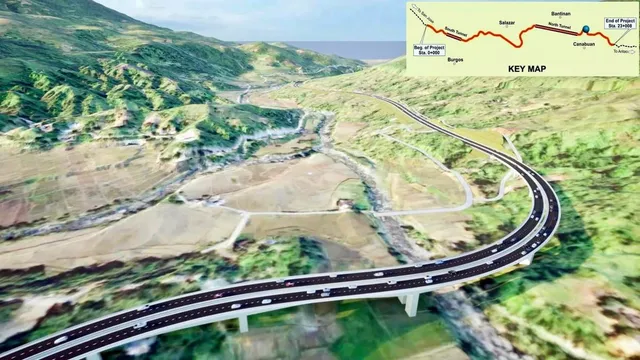
The BCIB project will be divided into seven (7) contract packages with the construction to begin first in the two (2) on-land packages, package 1 which is the five (5) kilometer Bataan Land Approach and package 2 which is the 1.35 kilometer Cavite Land Approach.
Packages 3 and 4 are Marine Viaducts in the North and South with a total length of 20.65 kilometers.
Meanwhile, packages 5 and 6 are the North Channel and South Channel Bridges with a length of 2.15 and 3.15 kilometers, respectively. The 7th package involves a project-wide ancillary works.
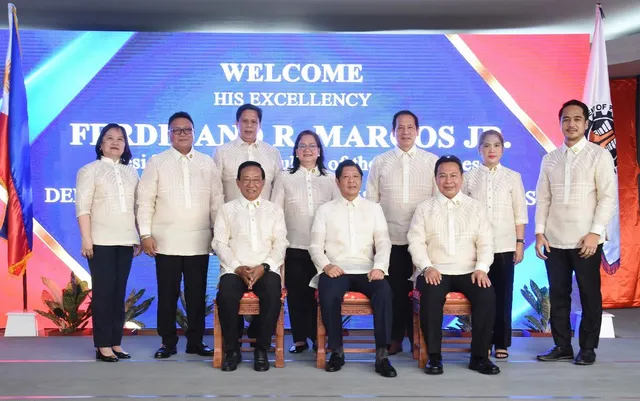
No less than President Ferdinand R. Marcos Jr. led on March 31, 2023 a milestone ceremony for the Detailed Engineering Design (DED) of Bataan-Cavite Interlink Bridge Project at the Maritime Academy of Asia and the Pacific in Mariveles, Bataan.
The DED has taken into consideration various technical challenges such as the severe seismic loads and wind speed in the project area, need for navigation channels to accommodate large cargo vessels, seabed depth of approximately 50 meters for placing the caisson foundation, extreme climate condition and seawater rise due to climate change, etc.
As a result, the final design has included a long cable-stayed bridge at the south channel (between Cavite and Corregidor Island) with the tower height of 380 meters from the sea level.
To ensure strength, serviceability, and durability of the key structural elements, the DPWH construction supervision team will be supported by a project management consultant and engineering/design support consultant.
The feasibility study for the BCIB Project was completed under the ADBs Infrastructure Preparation and Innovation Facility (IPIF) in 2019, in which the preliminary architectural and engineering design has been prepared.
Once this bridge is completed, travel time between the provinces of Bataan and Cavite will be reduced from the current 5 1⁄2 hours to just about 45 minutes, saving more than 4 hours travel time and benefitting thousands of commuters.
Article courtesy of The Department of Public Works and Highways

Porphyry Copper Deposits: Portable X-Ray Analysis of Clay Minerals Provides Clues for Mining
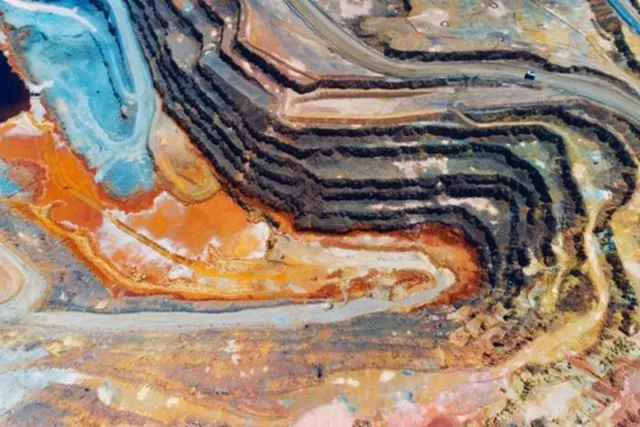
Porphyry copper deposits are an important resource for copper and other valuable metals or minerals. They are typically mined using large-scale, mechanized open-pit methods because of their large reserve, low grade, and shallow burial depth. Porphyry copper deposits are a type of hydrothermal deposit. Characteristics of porphyry copper deposits include:
- Their mineralization is temporally and spatially related to neutral-to-acidic porphyry bodies.
- Their formation is somewhat intrinsically related to volcanic-intrusive activities.
- They are characterized by certain alteration and mineralization zonation.
- Their ore is in disseminated veins.
As contemporaneous and post-period products of porphyry copper ore formation, clay minerals are important guides to discover, explore, and extract copper ore deposits.
Testing the Clay Minerals with Handheld XRF
The XRF test was conducted using the Vanta™ C Series analyzer (VCA model) equipped with a silver (Ag) target X-ray tube. Designed to operate in harsh field conditions, the rugged analyzer is IP55 rated and is built to pass the drop test required by the US Department of Defense standard (MIL-STD-810G). The built-in silicon drift detector (SDD) combined with Olympus’ proprietary Axon Technology™ enables ultra-high-speed detection and lower limits of detection (LODs).
Another advantage of using the Vanta analyzer is that the sample can be analyzed immediately without any special processing. In fact, qualitative and quantitative information about the sample’s elemental composition can be obtained within 20 seconds.
Testing the Clay Minerals with Portable XRD Analysis
The XRD test was performed using the TERRA™ II portable XRD analyzer equipped with a cobalt (Co) target X-ray tube. The analyzer’s XRD testing capabilities combine proprietary technologies from both Olympus and the National Aeronautics and Space Administration (NASA).
The TERRA II analyzer features a unique sample loading system. It requires only about 15 mg of 100-mesh-sieve (<150 μm) powdered sample to collect both structural (mineralogical/crystallographic) information and approximate elemental (chemical) information in less than 10 minutes.
- The amounts of clay minerals (mainly illite and montmorillonite) in the three samples increased from low clay to high clay.
- The amounts of quartz, alunite, and pyrite decreased from low clay to high clay.
Portable X-Ray Analysis Methods for Testing Clay Minerals


The discovery of pyrophyllite formed by special alteration is also important for exploring and extracting porphyry copper ores. The elemental data (e.g., Ca, Fe, etc.) from the XRF analyzer and the mineral composition data from the XRD analyzer could corroborate each other, helping to confirm accurate analysis results on this batch of samples.
Learn more: https://www.olympus-ims.com/en/insight/porphyry-copper-deposits-clues/
Revolutionary Handheld Analyzers: The Power of SciAps Handheld Analyzers in Mining Operations
Handheld analyzers have revolutionized the mining industry by providing a compact and efficient solution for on-site analysis. These portable devices offer real-time data and analysis capabilities, enabling mining professionals to make informed decisions quickly and accurately.
From mineral identification to environmental monitoring, handheld analyzers have become indispensable tools, enhancing productivity in mining operations. In this article, we will explore the key applications of SciAps X-series and Z-series handheld XRF and LIBS analyzers in the mining industry and the benefits they bring to the table.
SciAps Handheld XRF Analyzers: Setting a New Standard for Performance
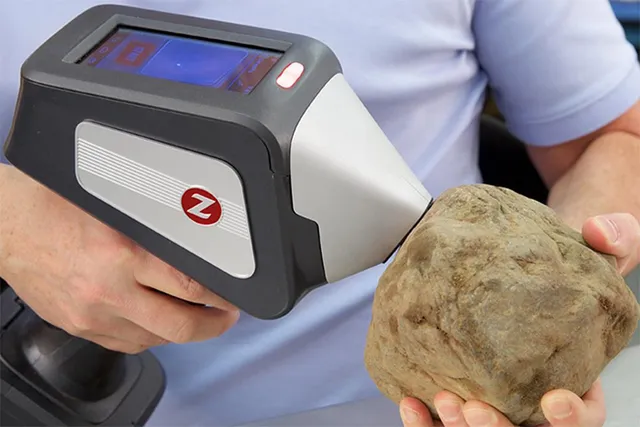
Experience the cutting-edge SciAps X Series, a handheld XRF analyzer designed specifically for the mining industry. Weighing less than three pounds, this aerospace-grade aluminum device offers unparalleled intuitiveness and capability. With faster data collection and interpretation, increased sample processing capacity, and the ability to make critical decisions confidently, the X-5 Series takes your mining operations to new heights.
Tailored for core analysis and high-volume manual testing, this analyzer seamlessly integrates with third-party data visualization packages like IoGAS and Leapfrog. Its Android-based platform ensures global connectivity and is equipped with an onboard camera, Wi-Fi, GPS, and Bluetooth functionalities.
Detect and analyze a wide range of elements crucial to mining operations, including low-atomic number elements such as Mg, Al, Si, P, S, K, and Ca. Identify transition/pathfinder elements like Ti, V, Cr, Mn, Fe, Co, Ni, Cu, Zn, As, Se, Sr, Rb, Zr, Nb, Mo, Te, Ag, Cd, Sn, Sb, and Ba. Additionally, the X-5 Series can accurately measure heavy metals such as Ta, W, Au, Hg, Tl, Pb, Bi, and U.
Stay ahead of the curve with the handheld XRF analyzer that delivers superior performance, reliability, and efficiency. Experience the future of mining technology with the SciAps X-Series.
With the growing industry of mining, QES Technology Philippines, Inc. has been a long-established partner of these mines on complete mining solutions from: [I] Geological Exploration SciAps handheld XRF and analyzers. [II] Sample Preparation crushers, pulverizers, presses, fusion machines, grinding machines, milling machines, drying ovens, etc. [III] Laboratory Solutions Spectro XEPOS/Cube benchtop XRF, KF moisture analyzer, Auto-Titrator, lab consumables, and furniture/fixtures. [IV] Environmental Monitoring for Compliance on sales of air quality and water quality monitoring systems.
To assure continuous growth with its partners, QES organizes related technical seminars and webinars. You may scan below to visit or join their official Facebook group to keep updated on their upcoming webinars. Its demonstration room is located at Unit 507, Page 1 Building, Acacia Avenue, Madrigal Business Park, Ayala Alabang, Muntinlupa, 1780 Metro Manila, Philippines.
For inquiries and consultations, you may directly message: qtpmarketing@qesnet.com or visit www.qesnet.com
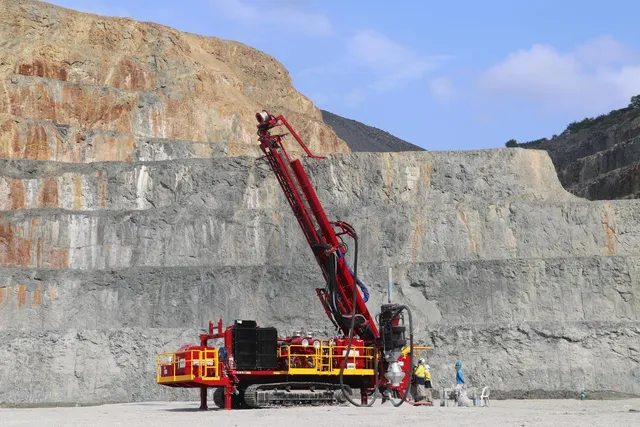
Drilling Smarter Through Innovations with QED’s 100th Drill Rig
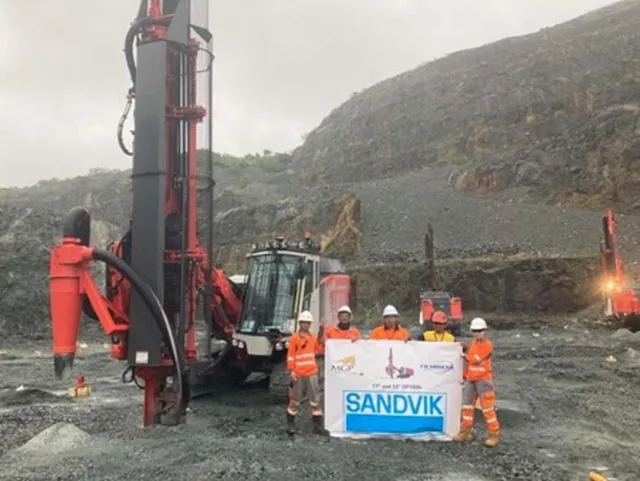
Quest Exploration Drilling (QED) continues to demonstrate its commitment to innovation with the recent addition of the SCHRAMM T450 Crawler Rig to its fleet. Serving as the 100th drill in their line-up, the rig is fittingly designed for reverse circulation grade control drilling, showcasing QED's dedication to providing cutting-edge solutions.
In March 2023, QED successfully commissioned rig D100, a custom-built creation by the renowned Schramm Inc. team in Perth, Australia. This milestone achievement signifies QED's longstanding presence and success within the Philippine mining industry. It is worth noting that this rig is the first of its kind, tailored to meet the specific requirements of one of QED's valued clients in the Philippines.
Having been established in the Philippines in 2000, QED initially started as a modest operation following the acquisition of Orica's drilling division. Over time, the company has evolved into a reputable industry leader, offering a comprehensive range of drilling services including exploration, resource definition, geotechnical assessment, and water management. QED has further expanded its operations across Papua New Guinea and Central Asia, solidifying its position in the market.
Reflecting on the company's humble beginnings, Alan Blackley, Chairman and founding member of QED, recalls the initial fleet upgrade, which involved acquiring a second-hand rig named D1 from the Benguet-Dizon Mine. He explains, “We had drilled the discovery hole in the Boyongan and Bayugo copper-gold porphyry mineral deposits discovered by Anglo American and needed to provide more productive and suitable rigs for that project.” This project necessitated the deployment of more efficient and productive rigs." Consequently, additional drills were swiftly procured, setting the stage for QED's remarkable journey.
The SCHRAMM T450 Crawler RC Rig, unique to QED, is equipped with state-of-the-art hydraulic systems to ensure peak performance. This crawler-mounted drill boasts a 30,000lb lattice mast, facilitating easy mobility across various mine sites. With its top drive rotation and efficient pipe handling system, the T450 demonstrates exceptional versatility, significantly enhancing productivity on the job site.

Under the hood, the drill is powered by a Caterpillar C15 deck-mounted diesel engine, delivering a robust 580 bhp power at 1,800 rpm. This power is coupled with a Sullair compressor rated at 900 cfm @ 500 psi. The C15 engine not only provides reliable power to the air and hydraulic systems but also minimises emissions. Combined with the higher-pressure air, the increased power of the C15 engine allows the drill to effortlessly penetrate faulted zones, while ensuring the collection of high-quality samples. This crucial geological information can then be efficiently analysed to develop accurate resource and reserve models for exploration and grade control drilling.
The T450's carousel-style rod handler eliminates manual handling risks, substantially improving safety, reliability, and production. Additionally, its power break-out system enables hands-free breaking and making rod connections, enabling efficient rod handling with minimal effort and risk.
QED's strong commitment to safety is further evident in the rig's hydraulically operated passenger-side walkway and rotation guard. The inclusion of a service bulkhead for remote greasing and fluid drain significantly reduces spillages and potential contamination.
Wayne Smith, QED's Operations Manager, expresses his excitement about the new machine, stating, "We are thrilled to surpass targets and meet deadlines across a wide range of applications, whether in grade control drilling, RC drilling, or deep well drilling. We have already witnessed increased productivity, and we anticipate consistent gains in machine reliability as we move forward."
QED's formidable combination of highly skilled teams, experienced managers, comprehensive training programs, and acquiring the latest powerful rig establishes them as the ideal partner for your next project.
More information on QED’s services can be found at http://www.qedrill.com/.
References:
(n.d.). T450 Rig Series. Schramm Inc. Retrieved April 18, 2023, from https://schramminc.com/
Alan Blackley, personal communication, April 03, 2023
Wayne Smith, personal communication, April 13, 2023
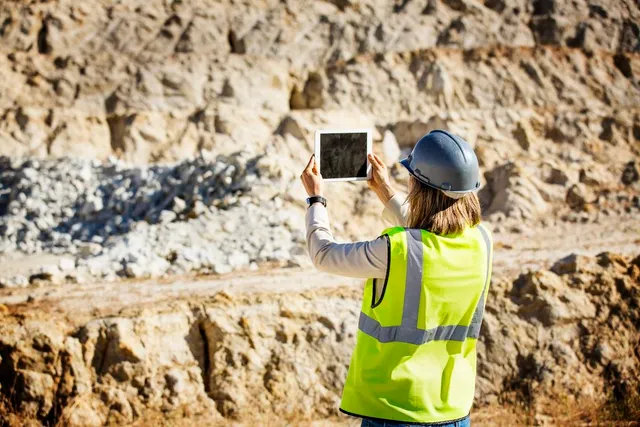
Navigating Global Mining Opportunities: A Guide for Filipino Resource Professionals
Introduction: The global mining industry is currently facing a severe worker shortage, creating a remarkable opportunity for Filipino professionals to excel in this field. Countries like Australia and Canada are witnessing a surge in mining investments. In the resource extraction and processing space, Filipino mining engineers, geologists, and metallurgists possess the necessary qualifications to capitalize on these prospects.
On the business side of mining, there is an increasing demand for Filipino accountants, lawyers, business analysts, and human resources. In trades, mechanical fitters and truck and jumbo operators dominate the demand. But how does the Filipino resource professional navigate through and take full advantage of the mining industry worker shortage, enabling them to become globally competent?
The Mining Industry Worker Shortage
The mining industry's worker shortage is primarily attributed to several factors:
- Retirement of the Baby Boomer Generation: The retirement of experienced mining professionals from the baby boomer generation has created a void of expertise that a new generation of skilled workers must fill.
- Lack of New Talent: Attracting and retaining new talent has been a challenge for the mining industry due to misconceptions about the sector. Environmental concerns have discouraged members of Generation Z from pursuing careers in mining according to a report by labor hire agency Techforce Personnel 1.
Additionally, the UK Mining Education Forum (UKMEF) claimed that the British mining sector needs over 60 mining graduates every year, yet not a single student has enrolled in mining engineering and minerals processing courses since 2019 2.
CSG published a mining engineer shortage report in 2020 and adds that even though remuneration levels are high, fewer young people have wanted to study mining engineering, despite the excellent salary that companies are offering 4.
In a recent report by the Australian Tax Office (ATO), it revealed that mining engineers are among the top 10 highest-paid Australian jobs, on par with medical professionals.6 - Global Mining Expansion: The rise in mining activities worldwide has led to an increased demand for skilled workers, intensifying the existing shortage. A report by The Guardian says skills shortage could hamper new mining developments in North Queensland, Australia 3.
BHP, Rio Tinto, and other coal mining companies have since been stressing that skills shortages could potentially affect production and hopes that foreign labor can help 5.
How Can Filipino Resource Professionals Participate?
To become globally competent, Filipino resource professionals could look at the following areas:
- Education: A strong educational background is essential to enter the mining industry. While pursuing a master's degree may not be feasible for everyone, additional certifications can still enhance qualifications. Consider the following programs. Professional Certificate in Foundations of Modern Mining. This program is sponsored by the Minerals Council of Australia, which provides an opportunity to update knowledge and gain recognition in the field. This program is jointly offered by The University of Queensland and Curtin University-Western Australia School of Mines offered through the edX learning platform. Executive Microdiploma in Economic Leadership for Mining. This program is a non-credit program offered by the Bradshaw Research Initiative for Minerals and Mining (BRIMM) at the University of British Columbia. This online program is composed of four different streams: mineral processing, sustainability, finance, and exploration economics.
- Practical Experience: Gaining practical experience is crucial for honing skills specific to the mining industry. Seek graduate positions if you are a fresh graduate and target international mining companies or contractors operating in the Philippines. Additionally, virtual work programs, such as those offered by Forage, can provide valuable experience to showcase your abilities.
- Networking: Building a strong professional network is essential for career advancement. Leverage platforms like LinkedIn to connect with industry professionals, join relevant industry associations, and attend mining events to expand your network. Engaging with recruiters and industry experts increases your chances of being noticed and considered for job opportunities.
- Work Visa: Investing in obtaining a work visa for your desired country of employment is crucial. Rarely do companies sponsor employment, so having a valid work visa gives you a competitive advantage in the hiring process.
- Membership: Consider becoming a member of professional organizations such as the Australasian Institute of Mining and Metallurgy (AusIMM). Membership offers networking opportunities, and access to professional development courses, and enhances your professional credibility.
- Software Proficiency: Proficiency in software used in the mining industry is highly valuable. Invest time in learning and mastering relevant software tools, as they play a crucial role in various mining tasks.
- Volunteer Work: Volunteering for organizations related to mining and resource development can provide valuable experience and networking opportunities. Consider joining volunteer initiatives focusing on environmental stewardship or community engagement in the mining sector.
Conclusion
The current worker shortage in the mining industry presents a significant opportunity for Filipino resource professionals to excel on a global scale. With quality education, technical expertise, strong work ethic, and adaptability, Filipinos are well-suited to meet the growing demand for skilled workers in the mining sector.
By continuously developing their skills, networking within the industry, and seizing international job opportunities, Filipino professionals can contribute to the success of the global mining industry while advancing their own careers. Embracing these strategies and taking advantage of the available resources will position Filipino resource professionals for success in the global mining arena.
References:
- Techforce Personnel. October 30, 2022. Australia's Mining Sector Facing Critical Worker Shortage. Retrieved from: https://www.globenewswire.com/en/news-release/2022/10/30/2544259/0/en/Australia-s-Mining-Sector-Facing-Critical-Worker-Shortage.html
- UK Mining Education Forum. July 10, 2022. The Mining Sector’s Strategic Need for UK Mining Engineering and Mineral Processing Graduates. Retrieved from: https://irp.cdn-website.com/7bd9b7ac/files/uploaded/220812%20UKMEF%20Report%20on%20Strategic%20Need%20for%20Mining%20Graduates%20corrected%20for%20Deloitte%20%28PDF_4%29.pdf
- The Guardian. ND. Skills shortage could hamper new mining developments in North Queensland, industry says. Retrieved from: https://www.theguardian.com/australia-news/2022/dec/01/skills-shortage-could-hamper-new-mining-developments-in-north-queensland-industry-
- Taylor, Jon. 12 November 2020. Australian Mining Engineer Skill Shortage 2020. https://www.csgtalent.com/emea/insights/download/australian-mining-engineer-skill-shortage-2020--report--8/
- Ker, Peter. 19 October 2022. Miners hope foreign labour can help as skills shortage hits production. Financial Review. https://www.afr.com/companies/mining/miners-hope-foreign-labour-can-help-as-skills-shortage-hits-production-20221019-p5br1m
- Bavin, Eliza. 08 June 2023. Yahoo Finance.ATO reveals the top 10 highest paid jobs in Australia. https://au.finance.yahoo.com/news/ato-reveals-the-top-10-highest-paid-jobs-in-australia-050612973.html
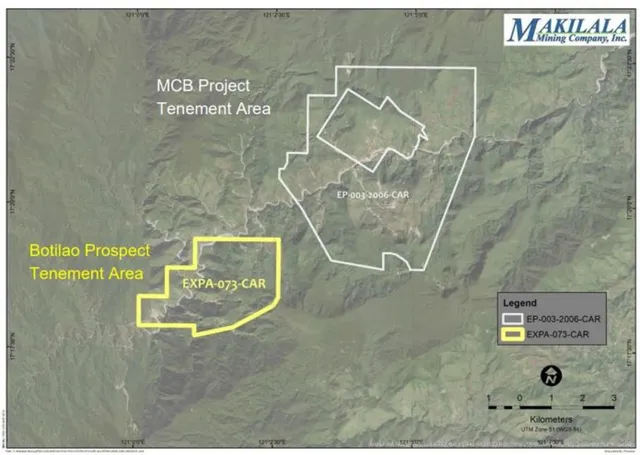

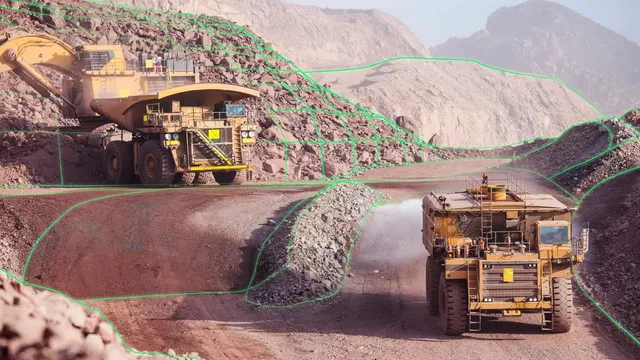
The Philippines Still Waiting for Mining’s Turnaround
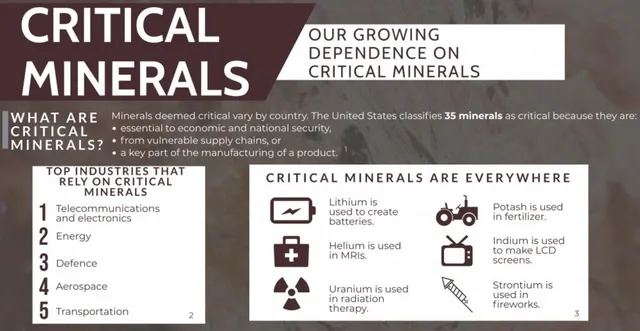
There were reasons to be optimistic about the mining industry in the past two years. It started with the the lifting of the ban on open pit mining and moratorium on new mining projects, and the renewal of the Financial and Technical Assistance Agreement (“FTAA”) of Oceana Gold in 2021. Last year, the Philippines also rejoined the Extractive Industries Transparency Initiative (EITI) after clearing misunderstandings with the policy institute’s alleged bias in assessing the country’s compliance with EITI’s standards. The Marcos administration also affirmed support for mining as it seeks the industry’s help in the country’s post-pandemic recovery. The deployment of clean technologies leading to an increase in demand for critical minerals abundant in the Philippines as well as the global demand for mineral products that will help address climate change are positive developments on which the country can revitalize its mining industry.
The exponential growth needed in mining as a result of the booming demand from the energy transition will inevitably bring greater awareness of the industry by the broader public. The question remains, is the country on the verge of the much-awaited turnaround? We examine the industry as the present administration concludes its first year of office and how the industry is coping with the recent developments.
PMRC 2020
To expedite the evaluation and development of mining projects and implement globally-accepted standards in the reporting processes related to mineral exploration and reserve calculation, the Philippine Mineral Reporting Code (“PMRC”) has been updated from PMRC 2007 to the PMRC 2020 and will be implemented after a transition period of two (2) years on 20 September 2023. PMRC was compatible with the Australasian Joint Ore Reserves Committee (“JORC”) Code of 2004 and the Committee for Mineral Reserves International Reporting Standards (“CRIRSCO") International Reporting Template of 2006. Since the CRIRSCO Template and the JORC Code have been upgraded in 2019 and 2012, there is a need to make the PMRC compatible with the code and present template.
The revision of the PMRC to its 2020 edition was undertaken by the PMRC Committee, whose members come from the different professional organization which include the Geological Society of the Philippines, the Philippine Society of Mining Engineers, Society of Metallurgical Engineers of the Philippines along with industry-related organizations and bodies, such as the Philippine Stock Exchange (“PSE”), the Chamber of Mines of the Philippines, the Philippine Mining and Exploration Association, the Philippines-Australia Business Council, and the Philippine Chamber of Coal Mines.
With the Securities and Exchange Commission (“SEC”) approval of PMRC 2020 in September 2021, PMRC was cited for having made strong progress in being a true National Reporting Organization in CRIRSCO's Annual General Meeting held in Johannesburg, South Africa last 20 October 2022. Acceptance to CRIRSCO is currently being deliberated by its Executive Committee and the Philippines hopes that it will be accepted as the 15th Member in the third quarter of this year.
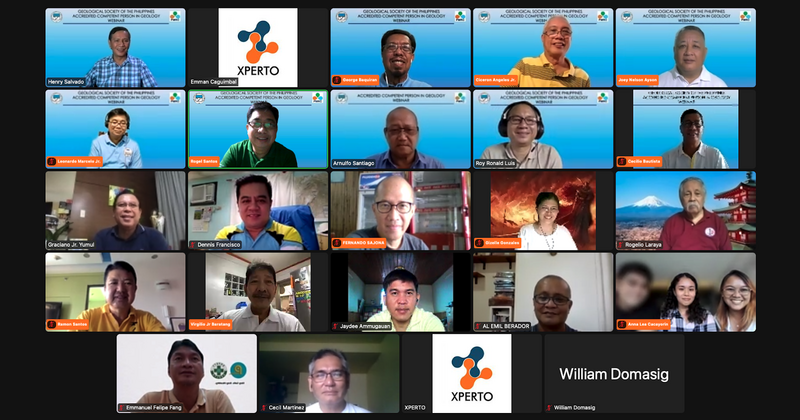
Upon PMRC 2020 taking effect, the PSE will only accept reports from listed mining/exploration companies if they are compliant with the revised version. On the other hand, the DENR recently adapted PMRC 2020 as embodied in DENR Administrative Order (“DAO”) No. 2023-05, which amended DAO 2010-09.
Under the revised reporting process, an expanded and detailed checklist of assessment criteria must be considered by an accredited competent person (“ACP”) in preparing reports on exploration results, mineral resources, or mineral reserves. It also includes an “if not, why not” criteria which requires that should any item in the checklist is not discussed, the ACP must explain the reason for such exclusion. Other important revisions include the required reporting of metal equivalents, as well as non-technical aspects of reporting of parameters, notably commodity pricing and marketing, permitting, legal requirements and sustainability considerations.
Meanwhile, the PMRC Standards Sub-Committee is continuing the drafting of the Implementing Rules and Regulations (“IRR”). The PMRC Committee expects the finalization of the draft IRR by September for submission to the PSE for endorsement. The PMRC Committee will then hold a public consultation and comment period for the PSE to further fine tune the IRR, and submit to the SEC for final approval. The PMRC Committee will also continue to work with the Department of Energy to implement PMRC-compliant coal reporting procedures following the lead adapted by the MGB in mineral reporting.
National Unified IEC
To encourage transparency in mining operations and address the negative perception of mining, the MGB in cooperation with the industry initiated the National Unified Information Education Communication Program utilizing funds from the information, education and consultation (“IEC”) budgets under the Social Development Management Program (“SDMP”) of operating projects. The initiative has selected EON, a public relations agency, to help in the national IEC of the Chamber of Mines of the Philippines. For 2022, the MGB, as the oversight body, collected Php 116.4 million out of the Php 141.9 million budget, representing 35% of IEC and 20% of the Development of Mining Technology and Geosciences allocations from the mining companies’ SDMP. The Annual Report for 2022 has been submitted to MGB as a requirement for the collection and release of the 2023 funds. There are numerous calls for the SDMP to be aligned with environment, social, and government, a framework used to assess the industry's business practices and performance on various sustainability and ethical issues. For this reason, some protocols may need to be revised to allow the NUIEC to prove its worth as it is being funded by mining companies’ SDMP.
Critical Minerals
The rush for critical minerals, which are essential to the lithium-ion batteries that power electric vehicles (EVs) and other green technology has escalated geopolitical tension between the US and China. By 2050, clean energy technology could require billions of tons of these minerals as inputs, according to the World Bank.
Decades of investments have allowed China to dominate the processing and refining of key critical minerals. China overwhelmingly commands these minerals’ processing and refining markets and controls some seventy-seven percent (77%) of the world’s EV battery manufacturing capacity. According to a report by the Australian Strategic Policy Institute, China also leads the world in 37 out of 44 critical technologies.
U.S. lawmakers are setting-up policies to weaken China’s grip on the critical mineral supply chains. The Biden administration passed the Inflation Reduction Act, a climate, health, and tax law designed to accelerate the shift from fossil fuels. The act offers tax credits if a sizable proportion of the EV batteries’ mineral inputs are sourced from the United States or its free trade partner. Desperate to lessen its reliance on China, the US has been joining forces with its allies to secure new supplies by forging new trade agreements based on geopolitical alliances.
Meanwhile, the Philippines, the world's second-largest nickel supplier, is increasingly playing a greater role in the critical minerals market in Asia-Pacific. President Biden and President Marcos advanced an ambitious agenda for the U.S.-Philippines alliance particularly in the development of these minerals. The US government announced that the US Agency for International Development will invest $5 million to support increased production of processed minerals and expand downstream mineral industries in the Philippines, such as the production of EV components and information and communications technologies while improving governance standards in the mining industry.
In addition, the U.S. Department of the Interior and the Philippine DENR intend to partner on the identification and classification of mineral commodity resources, and capacity-building on minerals governance. Finally, the US will establish technical cooperation with the Philippines to develop the country’s nickel and copper resources in a manner that promotes sustained economic growth and social benefit. This builds on ongoing work to support the development of environmentally sustainable nickel processing facilities in the Philippines.
For its part, the Philippines released a national EV roadmap this year to encourage investments in high-pressure acid leaching to transform laterite ores for battery production. Regulators hope to limit raw nickel ore exports by providing sufficient manufacturing incentives. The country expressed willingness to work with the US in its Inflation Reduction Act by helping with the sourcing and processing of battery materials.
Mining Issues Still to be Addressed
The DENR’s permitting process for mining permit applications and ECCs is still the main issue for investors in the industry. Add the permits from the local government units and NCIP and it will be the ultimate recipe for bureaucratic inefficiency. On the other hand, some Filipino companies and individuals with existing mining permits usually ask unconscionable upfront payments from serious investors in order to put money into moribund and inactive tenements resulting in unexplored greenfield areas.
To address the permitting issue the DENR announced hat it has signed an Memorandum of Understanding (MoU) with Isla Lipana & Co. (PwC Philippines), an auditing firm to assess the systems and processes of the MGB and the Environmental Management Bureau (“EMB”). The MoU seeks to review the existing policies of the MGB and EMB to pinpoint the major gaps in their processes and functions. According to DENR Secretary Maria Antonia Yulo-Loyzaga, the project shall conduct comprehensive assessment using appropriate governance, risk management, and compliance tools to review and assess risks in the existing systems and processes of the MGB and EMB.
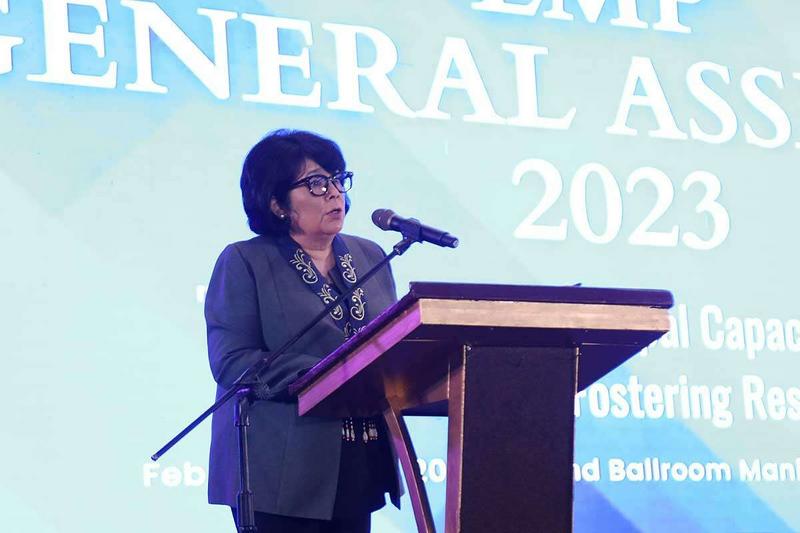
Under the MoU, PwC will develop a five-year transformation roadmap with corresponding action plans and recommendations for improvement to fortify the DENR towards a better organizational performance. At the end of the project, PwC shall submit a Completion Report with the results of organizational/process diagnosis and assessment; observations and areas for improvement, and indicative five-year transformation roadmap.
Meanwhile, while there are numerous pending bills in Congress to amend the RA 7942 or the “Mining Act of 1995”, the MGB has initiated proposed amendments to the law which after review by its Policy Technical Working Group would be for submission to the DENR. It has been the consistent position of the industry that nothing is wrong with the Mining Act and if there are any perceived defects in the law, they can be remedied by amending the IRR or issuing DAOs.
There is still the ongoing review of the mining fiscal regime following strong opposition to the passage in September of a House Bill that would have rendered the country’s mining tax structure even more onerous than that currently being levied on FTAAs. Mining companies make long term financial investment commitments. To generate certainty about the costs, the government can use the model of the South Africa Royalty Act which authorizes the Minister of Finance to conclude binding “fiscal stability agreements” with developers. Fiscal stability agreements guarantee the terms and conditions that will apply to the mineral resource rights (for as long as the developer holds the rights) and to all participating interests subsequently held by the developer in respect of the right. Such agreements protect the developer from increases in the mining royalty rate.
Another issue that the industry has to deal with is legal artisanal or small-scale mining. There is a growing perception if not realization by the public that illegal mining has caused the contamination of river systems and endangered the lives of miners. The MGB is reportedly looking into the amendment of Small Scale Mining Act in cooperation with the planetGOLD program, which works in partnership with governments, the private sector, and artisanal and small-scale gold mining communities to significantly improve the production practices and work environment of artisanal and small-scale miners.
Mining took another blow when the DENR issued a cease-and-desist order to Altai Philippines Mining’s Sibuyan operations following widespread protests from locals. Residents held protests and demanded the company to show barangay clearance, municipal business permit, foreshore lease contract from the DENR, and a permit from Philippine Ports Authority to construct a private port. The news generated further scrutiny and opposition to mining as miners and the government seem unable to counter these negative narratives effectively. There is a general perception that mining is a technical discipline and mining people are not very good at communicating with the public.
Amidst the negative news on mining, the DENR said that it has no time to attend to these as it has other priorities which are more important. Issues like climate change and water resource management seem to be on top of the priority list of the DENR. This seem to be a cop-out because rather than addressing the pressing issues on mining heads on, regulators prefer to ignore opposition because of the fear that they may be perceived as pro-mining if they say anything good about the industry.
Conclusion
The protracted and debilitating permitting process and bureaucracy are the most important problems faced by the industry. Applicants have become increasingly frustrated by the continued hindrances and hesitation of regulatory authorities to approve mining projects. Permitting delays from numerous overlapping agencies have caused opportunity cost and investment losses. The government must work to streamline the process and avoid duplication of work by numerous regulatory agencies. In the race to fast track the energy transition through the deployment of critical minerals, there seem to be a lot of concern over regulatory delays. Governments would definitely want to avoid their critical minerals supply chain heavily reliant on less friendly nations similar to what had transpired during the energy crisis in Europe following the invasion of Ukraine by Russia. Needless to say, the industry needs to work and develop under a stable policy and fiscal regime. No matter how hard the government tries to drumbeat the industry to investors, only for them to be mired in the country’s bureaucracy, and the confusing and often-changing tax system, the much-anticipated mining turnaround seems to be a far-fetched idea.
Fernando “Ronnie” S. Penarroyo specializes in Energy and Resources Law, Project Finance and Business Development. He is also currently the Chair of the Professional Regulatory Board of Geology. He may be contacted at fspenarroyo@penpalaw.com for any matters or inquiries in relation to the Philippine resources industry and suggested topics for commentaries. Atty. Penarroyo’s commentaries are also archived at his professional blogsite at www.penarroyo.com
References
Al Jazeera, China Beating West in Race for Critical Technologies, Report Says, 03 Mar 2023, https://www.aljazeera.com/economy/2023/3/3/china-beating-west-in-race-for-critical-technologies-report-says
Ho, Joseph, Philippines Wants to Leverage on its Critical Minerals, Argus, 05 May 2023, https://www.argusmedia.com/en/news/2446301-philippines-wants-to-leverage-on-its-critical-minerals
Investing in the Special Friendship and Alliance Between the United States and the Philippines, 01 May 2023, https://www.whitehouse.gov/briefing-room/statements-releases/2023/05/01/fact-sheet-investing-in-the-special-friendship-and-alliance-between-the-united-states-and-the-philippines/
Lu, Christina, The Critical Minerals Club, 14 April 2023 https://foreignpolicy.com/2023/04/14/us-china-critical-mineral-security-europe-rare-earth-energy-transition/
Santos, Jel, DENR Taps Private Auditing Firm to Review Processes of 2 Bureaus, Manila Bulletin, 09 June 2023, https://mb.com.ph/2023/6/9/denr-taps-private-auditing-firm-to-review-processes-of-2-bureaus
Strydom, Betsie, Fiscal Stability Agreements Offer Protection Against Increases in Mining Royalties, https://bowmanslaw.com/article-documents/Fiscalstabilityagreementsofferprotectionagainstincreasesinminingroyalties.pdf
MCB Project receives Environmental Compliance Certificate
Photo credit: Celsius Resources
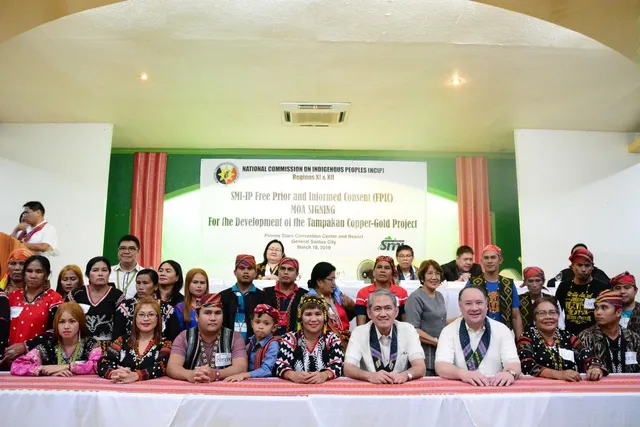
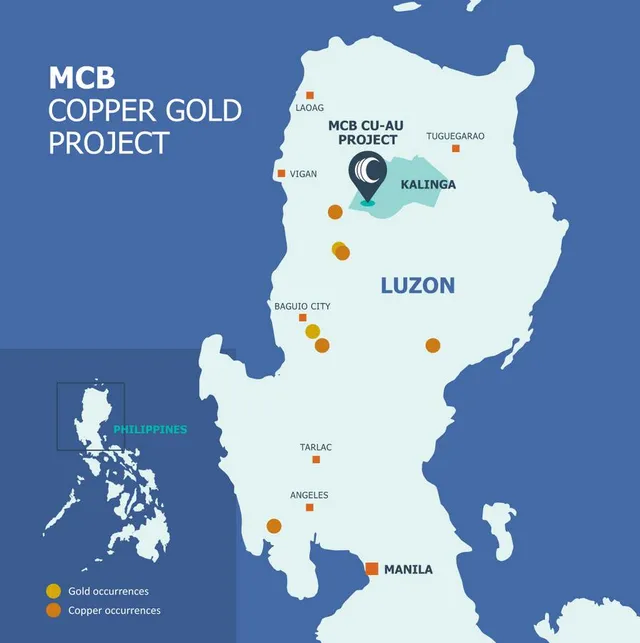
Celsius Resources is pleased to announce that its Philippine subsidiary, Makilala Mining Company, Inc. (MMCI), has been issued an Environmental Compliance Certificate (ECC) for the development of its flagship Maalinao-Caigutan-Biyog (MCB) Copper-Gold Project in the Philippines.
The issuance of the ECC signifies that MMCI has completed its Environmental Impact Assessment and certifies that the Company is committed to implement a national government-approved environmental management plan aimed to protect and mitigate the MCB Project’s anticipated social, cultural, and environmental impacts in all phases and aspects of the MCB Project.
Celsius Executive Chairman Atty. Julito R. Sarmiento said: “The grant of the ECC is the most significant milestone for MMCI in our quest to showcase the MCB Project in line with the strong policy under the Administration of President Ferdinand R. Marcos, Jr. for a more sustainable, inclusive, and transformative mining industry in the Philippines. Environmental protection has always been one of the primary considerations in the MCB Project’s mine design.
“This is not only in strict adherence to the Environmental, Social and Governance standards1, but also as a firm commitment to our stakeholders and shareholders for the MCB Project to become a model for ‘Beyond Responsible Mining2‘ in close partnership with the Department of Environment and Natural Resources under the stewardship of Secretary Maria Antonia Yulo-Loyzaga, a globally renowned climate change and disaster resilience expert.”
The issuance of the ECC enables the Company to move forward with obtaining a Mineral Production Sharing Agreement with the Philippine Government which would allow the Company to develop and operate the MCB Project.
Read the full announcement including information regarding Listing Rule 5.19 and 5.23 Disclosure here.