




August 14, 2023

The construction of the Tacloban causeway project that will provide a shorter route from the city’s downtown to the airport will commence soon after the Department of Public Works and Highways (DPWH) secured the approval of the city council here, an official said on Thursday.

DPWH Eastern Visayas regional director Edgar Tabacon said the city council lifted its earlier resolution holding the project in abeyance after the agency was able to address the concerns raised by environmental groups by including enhancements to project designs.

“The project will start soon after the city council lifted their earlier resolution holding the project in abeyance. We hope this will be completed within the term of President (Ferdinand) Marcos (Jr.) in time for the opening of the new airport terminal building,” Tabacon told reporters.

He said that from the original 180-meter bridge, the enhancement will double the length of the bridge. Also, several box culverts with three meters in width and height will be added to allow free-water flow.

“With these enhancements, the project will now cost about PHP4 billion from the original PHP3.4 billion. The obligated fund of PHP800 million is just for the first phase,” he added.

Actual civil works were delayed despite the awarding of the contract earlier this year, when some groups and local government officials expressed apprehension over the project citing environmental issues.

The central government approved under the 2022 allocation the release of PHP800 million outlay for the initial implementation of the project. The budget will cover the construction of a 600-meter causeway.

Despite fund availability, the city council committee on the environment recommended last May to put the project on hold as it will affect the water quality of Cancabato Bay as raised by some local environmental groups.

The city council raised concerns almost one year after it passed a resolution on June 8, 2022, expressing support for the project.

In a social media post, Save Kankabatok Advocacy said a reduction in water flow will heavily impact the water quality, with low diversity and disturbed biotic communities.

The first of its kind in Eastern Visayas, the causeway will serve as an alternate route for motorists from the city’s commercial district going to the airport, reducing distance, travel time and vehicle operating costs.

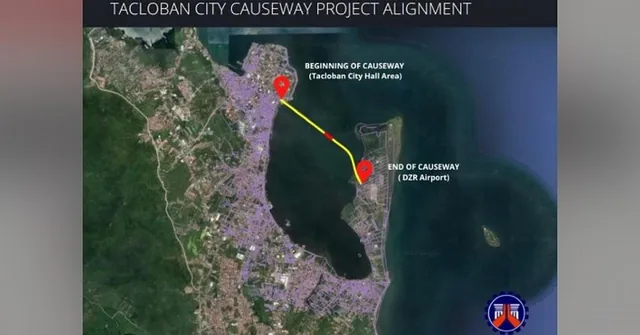
This project involves the construction of a four-lane road embankment that spans about 2.55 kilometers with a bridge at the center. It will also feature separate bike lanes, concrete canals, sidewalks, as well as wave deflectors on both sides.

The causeway will cross Cancabato Bay starting at the city hall complex on Magsaysay Boulevard up to the Kataisan point of the Tacloban Airport in the city’s San Jose District. Travel time will be reduced to only 10 minutes from the current 45 minutes.

The structure will complement the future new airport terminal building designed to accommodate international flights.

Aside from being an alternative highway, the causeway will also shield communities from destructive waves.

The original plan was to build a tide embankment structure, but it was discontinued due to strong opposition by several property owners in the city’s populated coastal communities. By Sarwell Meniano


Article courtesy of the Philippine News Agency

August 14, 2023

The company responsible for delivering 3,500 wet metric tons of dolomite to Manila Bay in 2020 has lost its mining production sharing agreement (MPSA).

Gov. Gwendolyn Garcia announced Wednesday that she ordered the revocation of the MPSA of Dolomite Mining Corp. (DMC), a mining firm producing dolomite sand in Alcoy, some 101 kilometers south of this capital city.

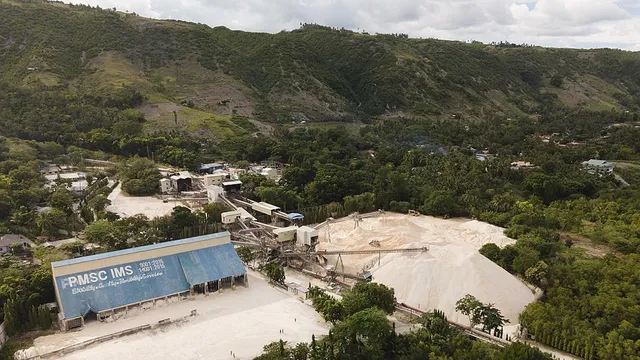
The governor, along with the provincial legal officer and provincial treasurer, met the executives and a lawyer of DMC, pointing out the company’s alleged act of disregarding the ordinance stopping the operations by continuing to supply raw materials to the Philippine Mining Service Corporation (PMSC).

DMC, a Filipino-Japanese-owned firm and mining leaseholder in Alcoy, has an agreement with the provincial government to mine dolomite for 25 years or until 2030 in Cebu, known to be rich in mineable deposits of dolomite.

In October 2020, Garcia issued an order stopping PMSC’s operation in Barangay Pugalo following the firm’s failure to pay taxes to the provincial government based on an ordinance.

Although DMC was able to settle its taxes covering 15 years, the governor questioned its continued supply to PMSC.

Garcia cited PMSC’s defiance to pay its dues while mining local resources, saying that such has been disadvantageous to Cebu province.

In February this year, the governor issued an order reiterating its prior call for PMSC to stop processing, selling and transporting dolomite, associated mineral deposits and other quarry resources, citing the company’s unpaid tax and environmental violations.

The statement from the capitol said that based on data from the Mines and Geosciences Bureau, PMSC defied the order and bought 2.5 metric tons of mineral resources extracted by DMC from September 2020 to December 2022.

DMC and PMSC have yet to issue their respective statements regarding the governor’s decision. By John Rey Saavedra


Article courtesy of the Philippine News Agency

August 07, 2023

Listed natural resources development firm Nickel Asia Corp. (NAC) (PSE: NIKL) announced its unaudited financial and operating results for the six-month period ended June 30, 2023.

During the period, the Company recorded an attributable net income (net of minority interest) of P1.7 billion, down 55 percent from P3.8 billion year-on-year.

Excluding the company’s equity interest in the Coral Bay and Taganito high-pressure acid leach (HPAL) projects, NAC’s attributable net-income (net of minority interest) of P1.8 billion is down 33 percent from P2.7 billion year-on-year on the back of lower nickel ore prices due to the growth in Indonesian nickel production and the slowdown in the Chinese economy. The combined losses incurred by the HPAL plants were due to lower metal prices of nickel and cobalt year-on-year.

Likewise, revenues declined by 8 percent to P10.9 billion from P11.8 billion in the same period last year. Operating mines sold a combined 7.52 million wet metric tons (WMT) of nickel ore, an improvement of 8 percent compared to the same period the year prior.

The Company exported 3.66 million WMT of saprolite and limonite ore at the average price of $28.22/WMT during the period against 3.12 million WMT at $42.05/WMT from the previous year.

Additionally, the Company delivered 3.86 million WMT of limonite ore to the Coral Bay and Taganito HPAL plants, realizing an average price of $10.13 per pound of payable nickel for the first six months of the year. This compares to 3.83 million WMT at $12.52 per pound of payable nickel in the same period of the previous year.

As a result, the weighted average nickel ore sales price during the period decreased by 26 percent to $22.32/WMT from $30.03/WMT last year. The Company realized P55.33 per US dollar from nickel ore sales, a 5-percent increase from P52.56 year-on-year.

The group’s consolidated Earnings before interest, taxes, depreciation, and amortization (EBITDA) totaled P4.79 billion, a 25.7-percent decline from the same period last year. NAC registered a loss from its combined equity interests in the two HPAL plants in the amount of P77.4 million against a profit of P1.1 billion the year prior.

“We may have already seen the bottom of nickel ore prices for this year in the second quarter. The recent pledges from China to bolster their economy will provide a boost to their economic situation and will contribute to drive the demand for Indonesia's incremental nickel supply. The bright spot remains to be the positive electric vehicle (EV) adoption trend, which has remained strong. Furthermore, government policies globally are supportive of the EV industry, which is why we think the nickel sector will be well supported over the longterm,” said Martin Antonio G. Zamora, President and CEO.

August 07, 2023

The United States Embassy in Manila raised concerns over the possible environmental impact and the "ties" of a Chinese firm to the ongoing Manila Bay reclamation projects in the capital.

In a statement sent to reporters Wednesday, the US Embassy in Manila said they are concerned that the projects have ties to the China Communications Construction Co. (CCCC) “which has been added to the US Department of Commerce’s Entity List for its role in helping the Chinese military construct and militarize artificial islands in the South China Sea”.

US Embassy spokesperson Kanishka Gangopadhyay said the company “has also been cited by the World Bank and the Asian Development Bank for engaging in fraudulent business practices”.

He said the US Embassy is in regular discussions with the Philippine government regarding the reclamation, including how it could potentially bring “negative long-term and irreversible impacts to the environment, the resilience to natural hazards of Manila and nearby areas, and to commerce”.

“We continue to support high quality, sustainable, and transparent investments to benefit the Filipino people and will continue to engage with the appropriate authorities on this matter,” he said.

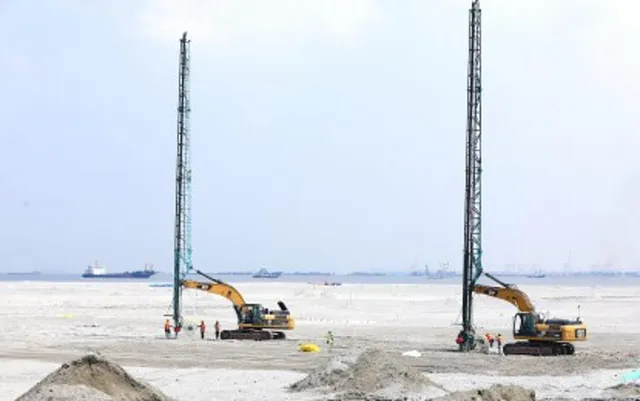
In its official website, CCCC said its subsidiary China Harbour Engineering Company Ltd. is currently undertaking the reclamation development project at Manila Bay in Pasay City, about five kilometers from downtown Manila and Ninoy Aquino International Airport.

The main construction of the project includes backfilling to form three artificial islands and related supporting revetment structures, and foundation treatment.

The amount of backfilling is about 97.11 million cubic meters, and the amount of the dredging is about 15 million cubic meters.

August 07, 2023

Sagittarius Mines Inc. (SMI), the developer of the Tampakan copper-gold project in Mindanao, said it is ready to start construction in the fourth quarter of the year.

"SMI had secured all major approvals to develop and operate the Tampakan copper-gold project. We are ready to start construction in 2023 and produce our first copper concentrate in 2026," SMI external affairs and communications manager Roy Antonio said in a statement on Wednesday.

Antonio said SMI already commenced with early works which include land acquisition and access roads.

"These are pre-construction activities," he said.

Antonio said that for the first 10 years of its operations, Tampakan project is expected to contribute a total of PHP76.6 billion in national taxes, PHP4.8 billion in local taxes, and PHP6.6 billion in royalty for the Blaan indigenous people.

The project is also expected to employ around 2,500 workers during the three-year construction period and 1,000 employees during operations in over 40 years of mine life.

The proposed mine site covers an area of about 10,000 hectares and is located between the towns of Tampakan, South Cotabato and Kiblawan, Davao del Sur in southern Mindanao.

The Tampakan mine would be the largest in the Philippines and among the largest copper mines in the world.

"SMI has invested around PHP31 billion in developing the Tampakan copper-gold project and provided (even if not operating) PHP2.582 billion in national taxes, PHP38.780 million in local taxes and PHP1.4 billion in community and social development programs and activities," Antonio said.

Meanwhile, SMI announced that it recently obtained its 2023 business permit from the municipality of Tampakan.

In a separate statement, the mining firm said the business permit was issued after paying PHP24,579 in regulatory and other fees.

The Court of Tax Appeals earlier suspended the implementation of an order issued by the Regional Trial Court (RTC) of Koronadal City, South Cotabato, which upheld the bid of the municipality of Tampakan, South Cotabato to collect over PHP400 million alleged deficiency taxes from SMI. 

July 31, 2023

APEX MINING PUSHES FOR MORE RESEARCH TO STRENGTHEN MINING’S SUSTAINABILITY PRACTICES

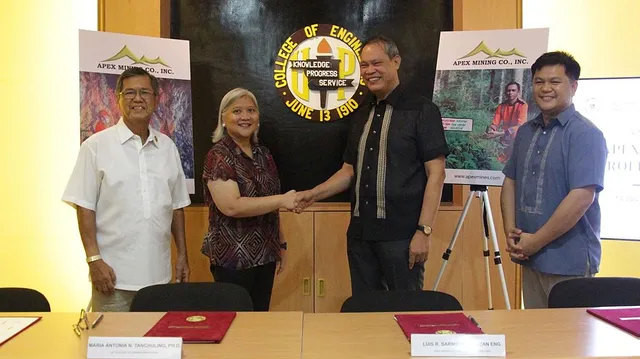
Apex Mining has formalized the Apex Mining Professorial Chair — one each in Mining Engineering and Metallurgical Engineering — through the UP Engineering Research and Development Foundation, Inc. (UPERDFI).

According to Luis R. Sarmiento, ASEAN Eng., Apex Mining’s president and CEO, “The Apex Mining professorial chairs not only help boost our professors’ track

records; they also provide new learnings or validate past discoveries. More importantly, the researches that will be done through these professorial chairs will

enrich and grow our country’s body of knowledge about mining and related sciences, which we can also share with the mining industries in different parts of the world.”

Apex Mining, with its mine sites in Maco, Davao de Oro and Itogon, Benguet, has always subscribed to research-driven solutions to ensure that its operations are aligned with sustainability principles.

One of its current initiatives is to reduce its greenhouse gas emissions by improving energy efficiency and adopting low-carbon emission technologies. Toward this end, the company is largely guided by the GHGs reduction and management plan derived from the results of the study undertaken by University of Southeastern Philippines.

And in stabilizing their underground tunnels, they enhanced the shotcrete technique by developing their own mix of concrete, formulated through their own research and based on the conditions unique to the Maco Mine site’s underground.  

The Apex Mining Professorial Chairs are among the many ways that UPERDFI pushes its mission to generate science for the people.

July 31, 2023

The Mines and Geosciences Bureau in the Caraga Region (MGB-13) has collected PHP2.14 billion in revenues from different mining companies operating in the region last year.

The revenues in the form of fees, charges, and royalties were indicated in the 2022 Caraga Mineral Profile provided by MGB-13 to the Philippine News Agency here Wednesday.

The data specified that PHP123.4 million was generated by the different local government units in the region that hosts the mining companies through local fees during the period.

“In 2022, the mining companies were able to contribute 9 percent share to the Gross Regional Domestic Products in the region in the amount of PHP27.36 billion,” MGB-13 said.

In terms of metallic and non-metallic mines, the total production value of the mining firms in the region last year was estimated at PHP85.2 billion.

The mining companies are operating in 1,310 barangays in 67 municipalities and six cities in Caraga's five provinces.

“These mining companies covered around 50,130.93 hectares or 2.33 percent of the 2,145,835 hectares of total land area in the Caraga Region,” MGB-13 said.

Of the total number of mining companies, 19 are engaged in metallic mining project operations; four are in mineral processing plant operations; three in industrial sand and gravel; one in a joint operating agreement; and another in a special mines permit.

Eight of the mining companies are operating in Dinagat Islands, six in Agusan del Norte, five in Surigao del Norte, five in Surigao del Sur, and four in Agusan del Sur.

The mining firms also allocated a PHP608.2 million budget for community development programs and services last year, especially for livelihood and education.

Some 10,108 scholars from the different communities in the region directly benefited from the community development allocations in 2022, the agency said.

The data also pointed out that PHP2.85 billion in funding was released by the mining companies for environment protection programs and services.

Around 18 million seedlings were also planted last year, covering some 10,584.08 hectares of reforestation sites in the region. By Alexander Lopez


Article courtesy of the Philippine News Agency

July 31, 2023

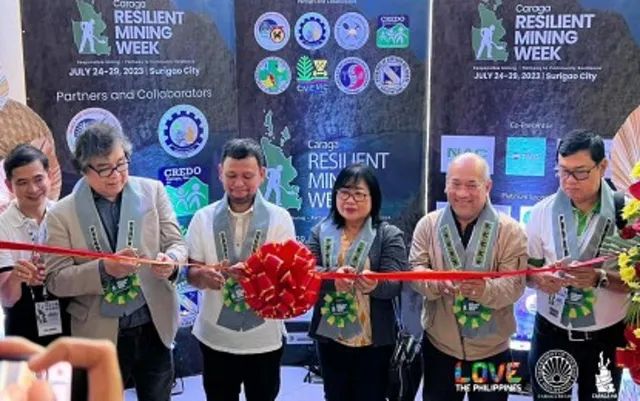
The mining industry in the Caraga Region will work jointly with the different government agencies, the local government units (LGUs) and other stakeholders to strengthen the resilience of communities against the threats of natural disasters.

The move is among the agenda of the weeklong Caraga Resilient Mining Week (CRMW) activity which formally opened on Monday (July 24) in Surigao City and was graced Assistant Secretary Nonita Caguioa of the Department of Environment and Natural Resources (DENR).

The CRMW was organized by the Mines and Geosciences Bureau in the Caraga Region (MGB-13) of the DENR in partnership with the Chamber of Mines of the Philippines and the Philippine Society of Mining Engineers.

“The weeklong activity will bring together nearly 30 stakeholders in the mining industry in the region, including government agencies, mining companies, industry organizations, youth groups, and LGUs working together towards a common goal,” MGB-13 Director Larry Heradez said in a statement Monday.

The gathering, Heradez said, aims to address challenges posed by disasters and climate change by joining forces of all the stakeholders in the mining industry by developing programs to reduce risks and enhance community resilience.

"This is an important moment for Caraga Region and the mining industry as a whole. With the Caraga Resilient Mining Week, we are taking proactive steps towards responsible mining practices, community well-being, and environmental sustainability," Heradez added.

Anchored on the theme “Responsible Mining – Pathway to Community Resilience,” the event will run until July 30.

Heradez said the CRMW seeks to present diverse programs to equip the participants with knowledge and tools to build a more resilient and sustainable community through knowledge-sharing sessions on disaster prevention and recovery.

“Focus discussions on promoting responsible mining investments and the prudent use of the nation's mineral resources are also part of the activity,” Heradez said.

Promotion of Caraga’s mineral wealth

In a separate statement on Monday, the Department of Tourism in the Caraga Region (DOT-13) lauded the MGB-13 and the other stakeholders in the mining industry for incorporating the promotion of the region’s tourism industries and local products.

“Exhibitors from all over Caraga, during the weeklong event, will showcase their exceptional local products ranging from intricately crafted indigenous handicrafts to delectable culinary delights that reflect the rich cultural diversity of the region,” DOT-13 said.

It added that the respective booths of the exhibitors will also serve as interactive information centers which will provide insights into the region’s abundant tourist attractions to the guests and visitors of the event. By Alexander Lopez


Article courtesy of the Philippine News Agency

July 31, 2023

The country bagged USD50-million worth of funding for renewable energy (RE) projects during the state visit of President Ferdinand R. Marcos Jr. to Malaysia this week.

In a statement Sunday, Philippine-based private equity investor New Wave Strategic Holdings, Inc. and its partner, Emissary Capital Partners Sdn Bhd, said their investments here could generate additional 1,000 megawatts (MW) of RE capacity for the country.

Emissary Capital is a Malaysian investment firm with funds backed by the government.

The USD50-million fund aims to finance companies investing in the Philippines in the RE sector, electric vehicle industry, as well as clean energy and smart grid.

“New Wave and Emissary Capital have identified the early stages of renewable energy projects as the most challenging for companies to raise capital due to the perceived risks,” they said.

The companies said initial projects supported by the funding include solar and wind farms in northern Luzon.

“It is important that the Philippines develops a more mature eco-system with capital providers across various stages of the investment cycle. With Emissary’s entry into the Philippines, we are providing more founders and entrepreneurs access to growth capital as well as a regional network that can help them expand across SEA (Southeast Asia),” New Wave director Enrique Gonzalez said.

The parties added the available funding for the RE sector will help the government achieve its goal of 35 percent RE sources in the energy mix by 2030 and up to 50 percent by 2040.

In 2022, RE accounted for 22.8 percent of the country’s energy mix.

Emissary Capital partner Erman Akinci said the Philippines presents the “most exciting” RE market in the region for the next five to 10 years since the government allowed 100 percent foreign ownership in RE projects last year.

“Clean energy is both a local and regional commitment amongst ASEAN neighbors. We believe cross-border investment and trade will ultimately benefit the entire region and help ASEAN meet its collective goals. We hope our fund can contribute to this goal as well as generate healthy returns,” Akinci said.

Prior to this partnership, the two investment firms tied up to launch a USD50 million fund for tech startups in ASEAN member states.

Earlier, Malacañang said Marcos received USD285 million worth of investment pledges during his July 25 to 27 official trip to Kuala Lumpur. By Kris Crismundo


Article courtesy of the Philippine News Agency

July 31, 2023

The Department of Public Works and Highways (DPWH) was able to carry-out massive infrastructure development nationwide under the” Build Better More” Program in the first full year of President Ferdinand R. Marcos Jr.

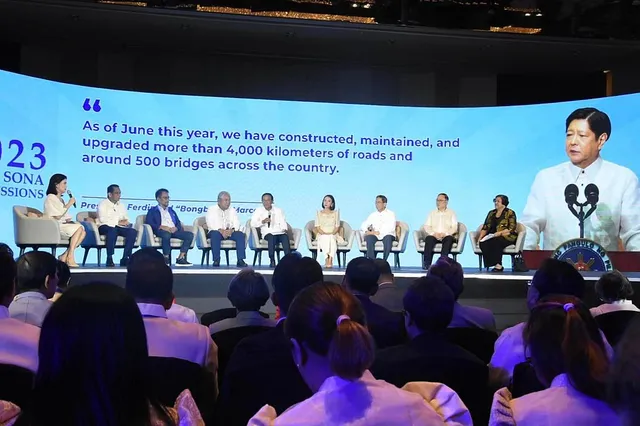
DPWH Secretary Manuel M. Bonoan discussed the administration’s infrastructure accomplishments at the Post-State of the Nation (SONA) Discussions held Tuesday, July 25, 2023 at the Hilton Hotel, Newport Boulevard, Pasay City.

From July 2022 to May 2023, a total of 4,082 kilometers of roads were constructed, maintained, widened, upgraded and rehabilitated; 497 bridges were constructed, widened, upgraded, rehabilitated and strengthened; 2,103 flood-control projects were completed; 4,038 classrooms were constructed; 216 kilometers of farm-to-market and 8 kilometers farm-to-mill roads were completed; 55 evacuation centers were built; and 6,002 rainwater collectors were installed.

In the same period, DPWH also completed the implementation of 138 kilometers of roads leading to tourism destinations under the Tourism Road Infrastructure Program (TRIP) in convergence with the Department of Tourism; 81 kilometers of roads under the Roads Leveraging Linkages of Industry and Trade (ROLL-IT) Program with the Department of Trade and Industry; and 18 kilometers of roads under the KAlsada TUngo sa Paliparan, Riles at daungAN (KATUPARAN) Program in collaboration with the Department of Transportation.

Among the completed projects are: the 22.4-kilometer Pangasinan-Nueva Vizcaya Road; 511-meter Abusag Bridge along Baybayog-Baggao-Dalin-Sta Margarita Road, Baggao, Cagayan; 24.03-kilometer Alicia – Malangas Road in Zamboanga Sibugay; 15.35-kilometer Tampilisan – Sandayong Road in Zamboanga del Norte; 29.7-kilometer Lutiman – Guicam - Olutanga Road, Province of Zamboanga Sibugay; 11.6-kilometer Samar Pacific Coastal Road Project phase 1; and the Flood Risk Management Project Contract Package 2 along Cagayan De Oro River.

Moreover, Secretary Bonoan said that DPWH’s fund utilization has improved going from a disbursement rate of P668.3 Billion for the entire year of 2021 to P784.6 Billion in 2022 or an increase of P116.3 Billion or 17 percent.

In the same period this year, the disbursement rate increased by 15 percent as compared to the first semester of 2022. It increased by P55.3 Billion or from P358.6 Billion in 2022 to P413.9 Billion in 2023.

Moving forward, DPWH Secretary Bonoan said that President Marcos’ administration, recognizing the role of infrastructure development in the country’s economy, will continue to hasten the rollout of high-impact projects.

Philippine High Standard Highway Network Program:

Under the Build Better More Program, DPWH aims to increase the country’s High Standard Highways / Expressway from 523 kilometers to 1,963 kilometers. One of the priority projects in Mindanao is the on-going Davao City Bypass Construction Project which involves the construction of 2 – 2.3 kilometer mountain tunnels. While, the 8.02 kilometer - Segment A: Bago Aplaya-Times Beach (Talomo-Matina) Section of Davao City Coastal Road was inaugurated by the President last July 1, 2023.

Luzon Spine Expressway Network (LSEN) Program:

The Luzon Spine Expressway Network (LSEN) Program, which involves the construction of 1,073 kilometers of Expressways/High Standard Highways in Luzon, aims to reduce travel time from Ilocos to Bicol from 20 hours to just 9 hours.

One of the priority projects under the LSEN Program is the NLEX-SLEX Connector Road wherein the completion of Section 1, C3, Caloocan to España, Manila reduced travel time from Manila to NLEX from 45 minutes to 5 minutes. While the remaining 2.55 kilometer section is targeted to be completed in December 2023.

Another completed project is the 1.6 kilometer - E. Rodriguez to Merville Section of the C-5 South Link Expressway which was opened to traffic last August 14, 2022.

While, The Aliaga Interchange to San Juan Interchange Section of the Central Luzon Link Expressway and Subsection 4 –Silang (Aguinaldo) to Silang East Interchange of the Cavite-Laguna Expressway are targeted to be completed this year.

Another priority LSEN project is the extension of the Tarlac-Pangasinan-La Union Expressway (TPLEx) from Rosario to San Juan, La Union which was already approved by the Government last June 2023. The project aims to reduce travel time from Rosario La, Union to San Juan, La Union from 1 hour and 38 minutes to only 40 minutes

Metro Manila Logistics Improvement Program:

The Metro Manila Logistics Improvement Program involves the construction / improvement of 11 bridges (8,825 lineal meters) crossing Pasig river, Marikina river, and Manggahan floodway. Two (2) Design & Build Contracts for the construction of 3 new bridges crossing Pasig River and Manggahan floodway (North & South Harbor Bridge, Eastbank-Westbank Bridge 2 and Palanca-Villegas Bridge) started last April and May 2023.

Inter-Island Linkage Bridge Program:

The Inter-Island Linkage Bridge Program will provide seamless and inclusive connectivity thru the construction of 12 - short and long span bridges with an aggregate length of 90 kilometers.

The Government aims to obtain by November 2023 the loan approval for the civil works construction of the 32.15 kilometer - Bataan-Cavite Interlink Bridge. The completion of this mega bridge project will reduce travel time between Bataan and Cavite from 5 hours to less than 45 minutes.

The procurement of the Consulting Services for Detailed Engineering Design (DED) and Tender Assistance (TA) for the 32.47 kilometer - Panay-Guimaras-Negros Island Bridges Project is ongoing. Travel time from Panay Island to Negros Island will be shortened from the current 3-4 hours to about1 hour via the interlink bridges.

The 4.01 kilometer - Samal Island-Davao City Connector Bridge was broke ground last October 27, 2022. The project aims to reduce travel time from 55 minutes via RORO/ferry to 5 minutes.

The construction of Panguil Bay Bridge is targeted to be completed next year. Once completed, travel time between Tubod Municipality in Lanao Del Norte and Tangub City in Misamis Occidental will be reduced from 2.5 hours to just 7 minutes using the bridge.

Daang Maharlika (N1) and Nautical Highway Network Improvement Program:

DPWH will further improve and upgrade the main transportation artery of the country - the 3,082 kilometer - Daang Maharlika Highway (N1) which pays a vital role in disaster response and relief efforts, as it provides a primary means of transportation for emergency personnel, supplies, and evacuees during natural disasters.

Also, the widening, reconstruction, rehabilitation and upgrading of road sections and bridges along the 2,925 km. Nautical Highway Network is also being prioritized to improve inter-regional and inter-provincial connectivity.

Through the Build Better More program of the government, DPWH will continue and expand infrastructure development that will address the connectivity gap in the country and go beyond just building by incorporating sustainability, resiliency and advanced technology in infrastructure facilities.


Article courtesy of The Department of Public Works and Highways

July 31, 2023

Philex Mining Corporation, is one of the oldest and largest gold and copper producers in Southeast Asia, and a leader in right and principled mining. The Company generated an additional of Php314 million in core net income for 2Q2023, reporting a 1H2023 core net income of Php702 million. EBITDA of Php553 million for 2Q2023 increased 1H2023 EBITDA to Php1.188 billion.

Lower tonnage milled for 2Q2023 when compared to 2Q2022 levels resulted in the contraction of gold and copper output by 21% and 13%, respectively. Slight improvement in gold prices continue to mitigate the negative impact of the softening copper prices when compared to the same period in 2022. The combined negative effect of the lower metal production and softening of the copper prices was mitigated by the slight improvement in gold prices resulted to operating revenues of Php2.051 billion in 2Q2023, 17% lower than the Php2.485 billion for the same period in 2022 and 3% lower than the Php2.105 billion in 1Q2023. Realized gold price at US$1,937 per ounce in the second quarter was higher by 6% when compared to 2Q2022, while realized copper price at US$3.82 per pound was 7% lower when compared to 2Q2022. Prices for gold and copper for the first half of the year averaged at US$1,924 per ounce and US$3.91 per pound, respectively. Operating costs and expenses for 2Q2023 slightly increased by 2% to Php1.701 billion from Php1.663 billion in 2Q2022.

PRODUCTION

The Company milled a total of 1.825 million tonnes during 2Q2023, 7% higher than the 1.706 million tonnes milled in 1Q2023, but 2% lower than the 1.859 million tonnes in 2Q2022. Total tonnage milled for 1H2023 was at 3.531 million tonnes, lower by 4% than the 3.681 million tonnes in the same period last year, as the Company continues to address the unscheduled breakdowns of the ageing equipment at the mill plant. Ore grades for gold and copper for 2Q2023 declined by 14% and 7%, respectively, when compared to the same period in 2Q2022. Gold output for 2Q2023 was 10,300 ounces, higher by 2% than the 10,062 ounces of 1Q2023, but lower by 21% against the 13,116 ounces in 2Q2022. On the other hand, copper output for 2Q2023 at 5.642 million pounds was higher by 2% than the 5.531 million pounds of 1Q2023, but lower by 13% versus 6.461 million pounds in 2Q2022.

Total gold output for 1H2023 stood at 20,361 ounces while copper output was at 11.173 million pounds, lower by 19% and 12%, respectively when compared to the same period in 2022.

OPERATING EXPENSES

Operating costs and expenses for 2Q2023 at Php1.701 billion was higher than the same period in 2Q2022 at Php1.663 billion, despite lower tonnage milled. The continued implementation of efficiency measures in operations offset the increases in the purchase costs of the materials and supplies as well as equipment parts and repairs. Higher power costs, however, continued to increase operating costs and expenses despite lower production level.

Total operating costs and expenses for 1H2023 at Php3.338 billion was almost the same as the Php3.318 billion in 1H2022.

SILANGAN PROJECT

Despite the current challenges in Padcal mine operations, the Company is still on track with development works on the Silangan Project in Surigao del Norte. The construction of the east decline portal has been completed and the arrival of tunnelling equipment, such as low profile loaders, jumbo drill and accessories allowed for the commencement of tunnelling works as programmed. The ongoing tunnelling works is on its second month and is necessary for the development of the mine production levels as well as ventilation openings. The preparatory works, including permitting works for the tailings storage facility (“TSF”) is simultaneously being undertaken. More recently and in line with the project timelines, the tender documents for the construction of the process plant had been issued to potential contractors.

The Company is in the final stage of negotiation and documentation of the syndicated debt facility to complete the funding requirement of the Silangan project. The debt syndication is spearheaded by BDO Capital and Investment Corporation and targets to raise a minimum of US$100 million. This new credit facility completes the full funding requirement for the Silangan Project after the stock rights offering (SRO) last year and the capital infusion from the Company out of its cash reserves.

OUTLOOK

“Cautious optimism is still the name of the game,” according to Philex President and CEO Eulalio B. Austin Jr. “The first half of the year was challenging, no doubt, but we are still confident that, with the Silangan Project and other prospects in the pipeline, the situation would improve. We are all geared up for mining opportunities moving forward.”

July 21, 2023

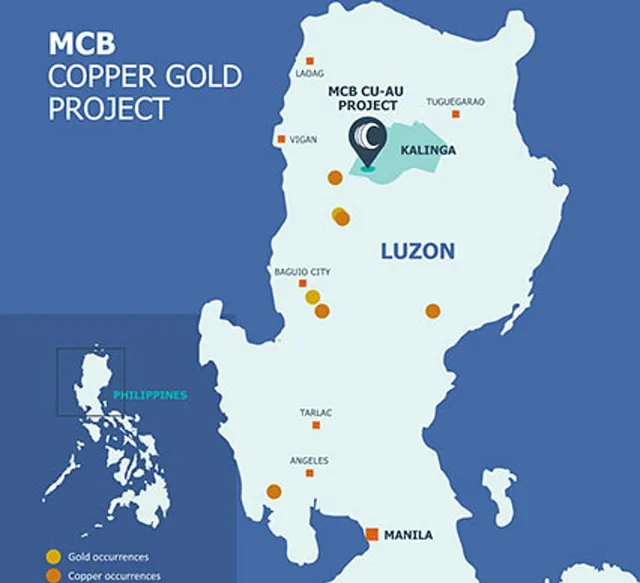
Celsius Resources is pleased to announce that our Philippine subsidiary, Makilala Mining Company, Inc. (“MMCI or “the Company”), has been issued a Certificate of Approval for its Environmental Protection and Enhancement Program (“EPEP”) and Final Mine Rehabilitation and/or Decommissioning Plan (“FMRDP”) for its flagship Maalinao-Caigutan-Biyog Copper-Gold Project (“MCB” or “the Project”).

The issuance of the Certificate of Approval indicates that the Company has instituted the necessary environmental measures pursuant to the Philippine Mining Act of 1995 (“Philippine Mining Act”), and its Implementing Rules and Regulations or the Department of Environment and Natural Resources (DENR) Administrative Order No. 2010-2.

The issuance of the Certificate of Approval indicates the Company has instituted these environmental measures prior to the commencement of construction and mining operations, and that the Company has committed to environmental protection for the life of the mine.

Among the terms and conditions of the said certificate, is the establishment of a guarantee funding mechanism, collectively known as the Contingent Liability and Rehabilitation Fund, to ensure satisfactory compliance with the commitments and performance of the activities stipulated in the EPEP-FMRDP.

Under the Philippine Mining Act, applications for a mining permit shall be supported by an EPEP-FMRDP.

The EPEP is a comprehensive and strategic environmental management plan that serves as an operational link between the environmental management provisions of the Philippine Mining Act’s Implementing Rules and Regulations and the conditions stated in the Environmental Compliance
Certificate issued to the MCB project.

It contains contingency and emergency preparedness as well as environmental monitoring and implementation costs, while the FMRDP considers mine closure scenarios and remediation process, for returning the mine sites and affected area to viable and self-sustaining ecosystems, including cost estimates for its implementation.

Celsius Executive Chairman Atty. Julito R. Sarmiento, said: “We are grateful for the Philippine government regulatory bodies in the prompt review and approval of our environmental permitting requirements. In turn, we reiterate our firm adherence to and commitment to go beyond compliance with environmental laws in the development of the MCB Project.”

The approval of the EPEP-FMRDP is another step closer in the mine permitting process of obtaining a Mineral Production Sharing Agreement (MPSA) with the Philippine Government which the Company envisages receiving by the end of August 2023.

July 21, 2023

Nickel demand is expected to further increase, driven by the shift to smart cities and clean energy, but additional investments are needed to help the Philippine nickel industry take advantage of the global demand, the Philippine Nickel Industry Association (PNIA) said.

In a statement, the PNIA said raw nickel ore is not only a critical component of electric vehicle (EV) batteries but is also processed to create stainless steel, which is used in the development of megacities and renewable energy technology.

“Clean energy and smart cities cannot be realized without nickel as nickel has cross-cutting use in the development and manufacturing of various clean energy technologies, such as electric vehicles (EVs), solar panels, power grid systems, wind turbines, and new technologies, such as hydrogen-based energy,” PNIA president Dante Bravo said.

The total current value of investments in the global EV industry alone already amounts to USD300 billion and might even reach as high as USD1 trillion within the next five years, he said.

Demand for nickel will mainly be driven by China, he said, adding that the rollout of an infrastructure investment plan in the country would further boost demand for stainless steel.

Bravo, however, said to take advantage of this growing global demand, the Philippines needs to attract additional investments that would enable the exploration, processing, and further development of the country’s nickel reserves.

At present, the Philippines and Indonesia have substantial reserves to meet this global nickel demand.

“Currently, we only have 34 nickel mines, and production is typically influenced by global nickel supply and price. Production in 2022 is at 29.2 million dry metric tons. Meanwhile, Q1 (first quarter) 2023 production is at 3.9 million dry metric tons," he said. "We can expect significant growth in production if we start to attract investments in mining exploration and there is a clear viable track towards value-added processing.”

Bravo said the Philippines only has two successfully operating nickel processing plants.

To be considered viable, he said, a processing plant needs at least 100 million tons of raw nickel ore, hence, the need to further conduct exploration and feasibility research to determine nickel reserves.

“The industry needs a lot of support from the government, be more open to exploration, and make it easy for foreign investors to come in. We need to map out what we have and what we don’t have. Currently, we have the capability to mine nickel, but there is a whole value chain in value-added processing leading to the manufacturing of battery that needs to be enabled, guided by the right government policies and programs," Bravo said.

To accelerate the growth of mining and to shift towards value-added processing, PNIA is currently hosting policy discussions with government counterparts and stakeholders under its Nickel Initiative program.

Bravo said PNIA has so far conducted three roundtable discussions with different government agencies to make the local mining industry more competitive, attract more investments, and promote responsible mining.

“The discussions have been productive so far and we look forward to zooming in on action points that raise the competitiveness of the Philippine nickel mining sector and make it a veritable driver of responsible mining and inclusive economic development,” he said.

The roundtable discussions are set to be completed in August during the conduct of the Nickel Initiative 2023 Business Conference, which will be attended by government, private sector, and other non-government nickel industry stakeholders.

July 21, 2023

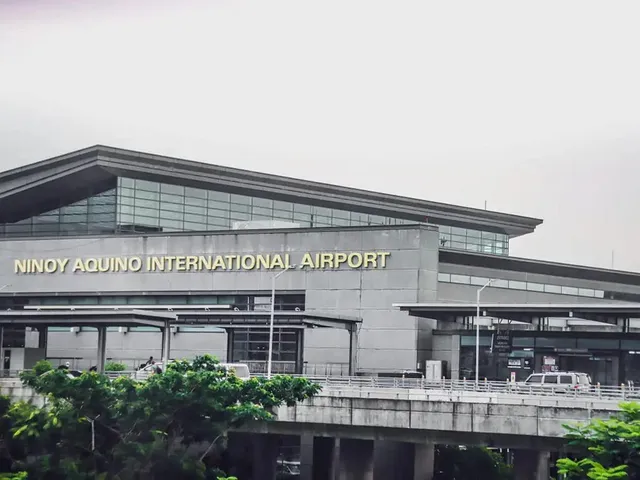
The National Economic and Development Authority (NEDA) Board chaired by President Ferdinand R. Marcos Jr. approved on Wednesday the solicited proposal to rehabilitate and expand the Ninoy Aquino International Airport (NAIA) Public-Private Partnership (PPP) Project.

In a briefing, NEDA Secretary Arsenio Balisacan said the PHP170.6-billion Solicited NAIA PPP Project is one of the three projects approved during a meeting with the President at Malacañan Palace.

Balisacan said the Solicited NAIA PPP Project is under the Department of Transportation and the Manila International Airport Authority.

He said the project aims to address "long-standing issues at NAIA, such as the inadequate capacity of passenger terminal buildings and restricted aircraft movement," and would help make NAIA be at par with the airports of neighboring countries.

"It aims to increase the current annual airport capacity from 35 million to at least 62 million passengers. The NAIA PPP Project also aims to increase air traffic movement from 40 to 48 per hour," Balisacan said.

"The project is also expected to improve the overall passenger experience and service quality to prevent long queues, lengthy waiting times, and other passenger inconveniences.”

Balisacan said NEDA expects to have the winning bidder within the year. 

He said the project would start as early as next year.

Aside from the NAIA rehabilitation project, the NEDA Board also approved the PHP7.48 billion Samar Pacific Coastal Road 2 Project and the PHP12.75 billion unsolicited proposal for the upgrade, expansion, operation, and maintenance of the Laguindingan International Airport Project.

Balisacan said the Samar Pacific Coastal Road 2 Project involves the construction of the Laoang 2 Bridge and Calomotan Bridge, and the improvement of existing roads between Laoang Island and mainland Samar Island with a total length of 15 km.

On the other hand, the unsolicited Laguindingan Airport PPP Project in Misamis Oriental aims to integrate concepts of “green” and “connected” airports into its design and operation and use digital technologies to enhance the passenger experience.

Balisacan said the NEDA Board also approved requests for reasonable changes in scope, cost, design, and or loan validity of four ongoing infrastructure projects.

These are the loan validity extension and implementation period extension of the PHP7.5-billion Integrated Disaster Risk Reduction and Climate Change Adaptation or IDRR-CCA Measures in Low-Lying Areas of Pampanga Bay Project; extension of implementation period, loan validity, increase in cost, reallocation of loan proceeds, and change in scope and design of the PHP19.6-billion Jalaur River Multipurpose Project Stage 2 project; change in the project scope, decrease in cost, and extension of the implementation period for the PHP5.1-billion Malitubog-Maridagao Irrigation Project Stage 2; and the Cebu Bus Rapid Transit loan validity extension until Dec. 31, 2025.

Balisacan said the NEDA Board also confirmed the proposed adoption of a National Policy on Infrastructure Sector Master Plans.

"The policy aims to harmonize and rationalize the formulation of master plans for the infrastructure sector across the government. This is to ensure that the master plans are coordinated, synergistic, responsive to the emerging issues, and consistent with the sector’s priority development strategies," he said.

Balisacan said an executive order would be issued to strengthen its implementation nationwide.

July 21, 2023

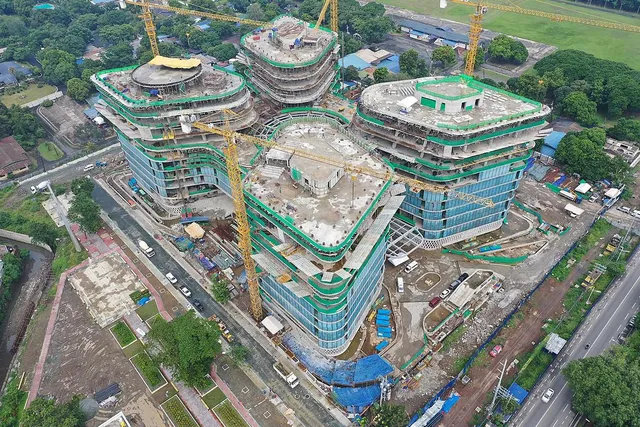
Senate President Juan Miguel F. Zubiri, together with Department of Public Works and Highways (DPWH) Secretary Manuel M. Bonoan on Thursday, July 20, 2023 led the topping off ceremony of the new Senate Building Project being built inside Navy Village, Fort Bonifacio, Taguig City.

Also present during the topping off ceremony to commemorate the completion of building structure were Senators Loren Legarda, Nancy Binay, Cynthia Villar, Joel Villanueva, Joseph Victor “JV” Ejercito, Ralph Recto, Christopher Lawrence “Bong” Go, Ronald dela Rosa, and former Senate President Vicente “Tito” Sotto III; as well as DPWH Senior Undersecretary Emil K. Sadain; former Undersecretary Antonio Molano Jr.; Project Directors Soledad Florencio, Benjamin Bautista, Rodrigo delos Reyes; Finance Service Director Genevieve Cuaresma; and Project Manager Jose Aguinaldo.

According to Secretary Bonoan, the ceremony represents a key milestone since the highest structural component of the building has finally been installed midway through construction.

“Today's ceremony signifies the nearing completion of this iconic new Senate Building that will provide a conducive work environment and bolster the productivity of our lawmakers and their staff,” said Secretary Bonoan.

The building is a representation of the Senate's vision, "Bagong Senado sa Ika-Dalawang Siglo”, which eyes a green, secure, practical and iconic workplace for the next generations of Senators and their staff.

With an allocation of P8.6 billion, the new Senate Building Project under the supervision of the DPWH Unified Project Management Office – Buildings Management Cluster, is being built within an area of 18,320 square meters.

When completed, the building will have four (4) towers with eleven (11) floors each and three (3) basements with a minimum of 1,200 parking spaces that can accommodate the required functions and operation of the Senate and its constituents.

The state-of-the-art design of the building incorporates Barong Tagalog to herald the Philippines iconic symbol for honor and Filipino culture.

DPWH aims to complete civil works on the new Senate Building by end of 2024.

July 10, 2023

A key and long-awaited road project of the Department of Public Works and Highways (DPWH) in Zamboanga Sibugay Province has now contributed to the development of agribusiness, ecotourism, and logistics in the island of Olutanga and the town of Alicia.

According to Senior Undersecretary Emil K. Sadain, in-charge of DPWH infrastructure flagship projects under “Build Better More” program, the once terrible and horrible travel experienced about decades ago because of deep muddy road is already a thing of the past with the concrete paving of a highway known as Lutiman-Guicam-Olutanga Road.

The 29.7-kilometer Lutiman-Guicam-Olutanga Road, one (1) of the three (3) core road projects under the Asian Development Bank (ADB)-assited Improving Growth Corridors in Mindanao Road Sector Project (IGCMRSP) implemented and completed by DPWH thru its Unified Project Management Office (UPMO) - Roads Management Cluster II (Multilateral), is a game changer for the socio-economic growth and development of Alicia and Olutanga Island.

In his report to Secretary Manuel M. Bonoan following an occular inspection on July 7-8, 2023, Senior Undersecretary Sadain said that the construction of an inter-island Guicam Bridge which is a separate non-core component of IGCMRSP connected with the Lutiman-Guicam-Olutanga Road is 43% completed to date and target for completion by 2024.

With an entire project length of 1.21 kilometer, the bridge project to link Barangay Guicam, Alicia to Barangay Hula-Hula, Mabuhay crossing the Canaliso Strait will serve as transport and economic connector between the three (3) municipalities of the Olutanga Island which include Olutanga, Talusan, and Mabuhay and mainland municipality of Alicia toward other towns of Zamboanga Sibugay.

The long-term impact of the project will contribute to sustaining peace and security in the Island, as well as harness the socio-economic opportunities and growth of the communities.

Oluntanga Island has a vast tourism and agro-fishery potential with its long coastline of beaches, snorkeling and diving sites, production of high value aqua and fisheries products especially the fish cage farming of "Lapulapu", dried fish-making, and seaweed industry.

The P25.257 Billion IGCMRSP finance with a loan amounting P19.080 Billion by the Asian Development Bank and P6.117 Billion to be funded by the Government of the Philippines, is composed of eight ( 8 ) sub-projects with portland concrete cement paving of roads of about 151.05 kilometers and construction of 31 bridges with a total length 2,132.62 meters all located in Zamboanga Peninsula, and three (3) bridges with a total gross length of 1,790 lineal meters located in island province of Tawi-Tawi.

Also inspected by Senior Undersecretary with UPMO Project Directors Sharif Madsmo H. Hasim and Benjamin A. Bautista, Stakeholders Relations Service Director Randy R. Del Rosario, and Project Manager Emmanuel M. Supe are the completed 24-kilometer Alicia-Malangas Road with eight ( 8 ) bridges and 17.93-kilometer Siay-Gapol Road with two (2) on-going bridges located in Zamboanga Sibugay Province and the on-going 24.52-kilometer R.T. Lim-Siocon Road with eight ( 8 ) bridges connecting provinces of Zamboanga Sibugay and Zamboanga del Norte.

The DPWH UPMO - Roads Management Cluster II (Multilateral) headed by Project Director Hasim has already completed 122.07 kilometers of paved roads equivalent to 81% and 11 out of 34 bridges.

By end of December 2023, DPWH is targeting to reach the total paved roads into 143.12 kilometers and complete additional eight ( 8 ) bridges.
July 10, 2023

Photo credit: Department of Public Works and Highways


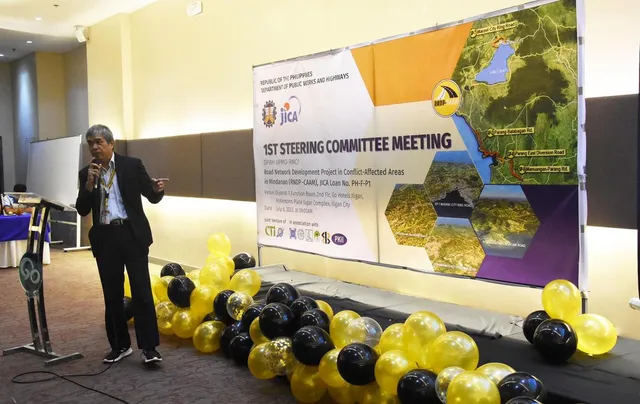
The Department of Public Works and Highways (DPWH), in the first ever steering committee meeting, has engaged the project stakeholders to ensure effective and coordinated implementation of detailed design and construction of the Road Network Development Project in Conflict Affected Areas in Mindanao (RNDP-CAAM).

DPWH Senior Undersecretary Emil K. Sadain, designated by Secretary Manuel M. Bonoan as chairperson of the created steering committee for the implementation of Japan International Cooperation Agency (JICA)-assisted RNDP-CAAM, led the meeting in Iligan City on Thursday, July 6, 2023 with leaders of Bangsamoro Autonomous Region in Muslim Mindanao (BARMM); the local chief executives and technical personnel of the various municipalities in Lanao Del Sur, Maguindanao and North Cotabato; and other relevant agencies including military with a view to getting buy-in for the road project.

“The calibre of participants here today from the Bangsamoro Region is a strong testament of the commitment to join hands, take ownership, and surmount the challenges of the road infrastructure to be constructed in areas known as war zone in past to transform into an economic zone of the future”, said Senior Undersecretary Sadain.

The meeting presents an opportunity to tackle anticipated issues and concerns as early as now.

As leaders of people living in the project area are appropriately consulted and informed of the various activities along with potential impacts, the stakeholders will have the opportunity to participate and willingly collaborate to make a success of the project, added Senior Undersecretary Sadain.

Envisioned to strengthen connectivity between BARMM and other Regions, the RNDP-CAAM involves the construction and improvement of about 174.50 kilometers of access roads.

The meeting organized by the DPWH Unified Project Management Office - Roads Management Cluster I (Bilateral) headed by Project Director Benjamin A. Bautista includes agenda on the ongoing consultation and detailed engineering design of the 35.3-kilometer Parang-Balabagan Road, 19.8-kilometer Marawi City Ring Road, 7-kilometer Parang East Diversion Road, and 16.8-kilometer Manuangan-Parang Road.

While appreciating the unflinching support of JICA to the Philippine infrastructure development, the DPWH official also reminded stakeholders that the ultimate goal of the meeting was not just to build roads but to build a better future for Mindanao.

RNDP-CAAM is one of the many efforts of the government thru DPWH to ensure that Mindanao, the land of promise with limitless potential, will further rise as a prosperous island region through infrastructure facilities that will open more opportunities.

The project was proposed with the end in mind of promoting peace and stimulating economic development, especially in vulnerable, far-flung areas.

July 10, 2023

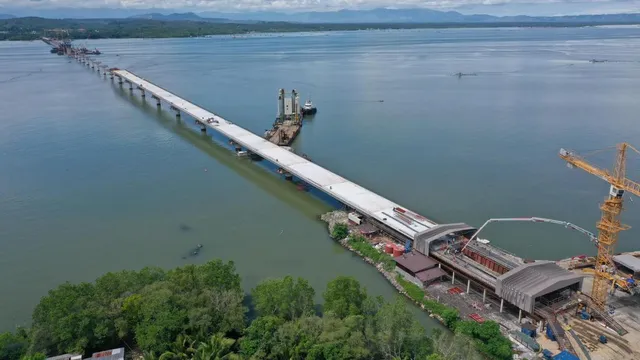
The 3.17-kilometer Panguil Bay Bridge Project of the Department of Public Works and Highways (DPWH) in Northern Mindanao is nearing the next phase of both approaches from Tangub City, Misamis Occidental and Tubod, Lanao del Norte meeting in the extra-dosed type center main bridge.

In his inspection, DPWH Senior Undersecretary Emil K. Sadain reported to Secretary Manuel M. Bonoan that the two (2)-lane inter-island bridge project across Panguil Bay is already more than 73 percent completed.

“With the project target to achieve 86 percent toward end of this year 2023 and full completion by first half of year 2024, over 400 manpower are deployed on-site working round the clock 24/7”, said Senior Undersecretary Sadain.

Others present at the project inspection are Unified Project Management Office (UPMO) Project Directors Sharif Madsmo H. Hasim and Benjamin A. Bautista; Stakeholders Relations Service Director Randy R. Del Rosario; and Project Managers Marlon B. Galerio, Reyderick Siozon, and Samuel Bayot.

A DPWH flagship infrastructure project, the construction of Panguil Bay Bridge is being implemented by UPMO - Roads Management Cluster II (Multilateral) headed by Project Director Hasim and direct project supervision of Project Manager Teresita V. Bauzon.

Costing ₱7.37 Billion, the bridge project made of pre-stressed concrete girders and an approach road is funded by a loan agreement between Government of the Philippines (GOP) and Export-Import Bank of Korea (Korea Eximbank).

Supportive of the DPWH INFRAgenda 2028 Strategic Plan of reducing travel time, the design and build of Panguil Bay Bridge will enhance transportation capacity and efficiency in contributing to Mindanao socio-economic development.

The project aims to have a seven (7)-minute inter-island connectivity with Tubod, Lanao del Norte and Tangub, Misamis Occidental as opposed to the present connectivity between Ozamiz City/ Tangub City and Tubod through Roll-On, Roll-Off (RoRo) vessel which has a travel time of about two (2) hours to two and a half (2.5) hours including loading and unloading time.

On the otherhand, the current land travel traffic over a distance of 100 kilometers is at two (2) hours to 2.5 hours.

Started on February 2020, the project is under the joint venture group of contractors composed of Namkwang Engineering & Construction Corp together with Gumgwang Construction Co., Ltd and Kukdong Engineering & Construction Co., Ltd.

The project engineering consultants are Yooshin Engineering Corporation, Kyong-Ho Engineering & Architects Co., Ltd, and Pyunghwa Engineering Consultants Ltd.