March 16, 2023

Photo credit: The Department of Public Works and Highways

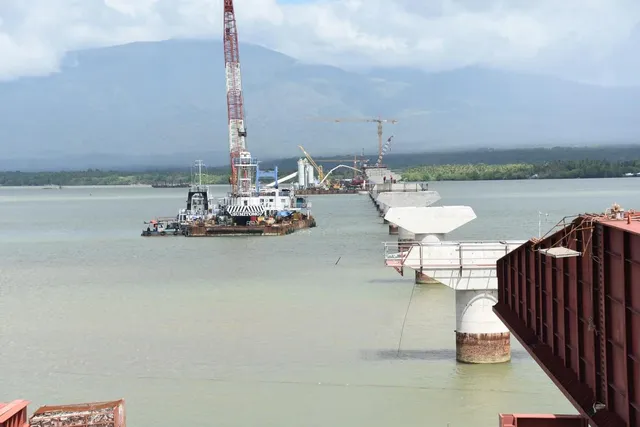
Progress of the Panguil Bay Bridge Project, the longest water-spanning bridge in Northern Mindanao, is now more visible at 63 percent complete as the Department of Public Works and Highways (DPWH) has started constructing the bridge top slab on both ends in Tangub, Misamis Occidental and Tubod, Lanao del Norte.

DPWH Senior Undersecretary Emil K. Sadain in his report to Secretary Manuel M. Bonoan said that bored piling works on the seabed for the 32 pylon, a structure that provides support for the 3.17-kilometer bridge across Panguil Bay, are all completed and a lot of machinery for bridge construction are in full gear working forward to the main bridge pylons 1 and 2.

“By working round-the-clock and further improve the formulated measures to catch up the delays brought by previous suspension of activities due to COVID-19 pandemic from March 16 - July 2020, we will be able to finish the project toward the goal of having first traffic cross the bridge by first half of 2024”, said Senior Undersecretary Sadain.

Senior Undersecretary Sadain in his inspection on Thursday, March 9, 2023 has instructed anew the contractor Namkwang Engineering & Construction Corporation in Joint Venture with Kukdong Engineering & Construction Co., Ltd. and Gumgwang Construction Co., Ltd. as well as engineering consultant Yooshin Engineering Corporation in joint venture with Pyunghwa Engineering Consultants Ltd. and Kyong-Ho Engineering & Architects Co., Ltd to complete the work at an accelerated pace.

A flagship infrastructure project, the two-way two-lane Panguil Bay Bridge will connect Tangub, Misamis Occidental and Tubod, Lanao del Norte to just 7 minutes.

Present connectivity between Ozamis City/Tangub City and Tubod through Roll-On, Roll Off (RoRo) vessel is about one (1) and a half hour to two (2) and a half hour including loading and unloading time while land travel over a distance of 100 kilometer is at two (2) to two (2) and a half hour.

Senior Undersecretary Sadain was joined in the project visit by DPWH Unified Project Management Office (UPMO) Roads Management Cluster 2 (Multilateral) Project Director Sharif Madsmo H. Hasim; Project Managers Teresita V. Bauzon, Marlon B. Galerio, and Norman I. Puy; and District Engineer Maria B. David.

Costing ₱7.37 Billion and funded by a loan agreement between Government of the Philippines (GOP) and Korean Export-Import Bank (Korea Eximbank), the project will enhance transportation capacity and efficiency in contributing to Mindanao socio-economic development.

The design and build of Panguil Bay Bridge, being implemented by the DPWH UPMO Operations is included in the DPWH program for integrated and seamless transport system to enhance inter-island connectivity through the construction of short and long-span bridges.

The program also involves the improvement of the logistics infrastructure network in Mindanao and develop a transport system that have significant impact on plan of action to boost tourism, agriculture and industrial sectors by the administration of President Ferdinand R. Marcos Jr.

Other DPWH UPMO Operation’s long-span bridge projects are the 3.9 kilometer Samal Island - Davao Bridge, the 32 kilometer Bataan-Cavite Interlink Bridge, construction of 32 kilometer bridges that will connect Panay, Guimaras and Negros, and 3.3 kilometer Cebu-Mactan 4th Bridge.


Article courtesy of The Department of Public Works and Highways

March 16, 2023

Photo credit: DPWH

The construction of the PHP175.7-billion Bataan-Cavite Interlink Bridge Project will start towards the latter part of the year, the Department of Public Works and Highways (DPWH) said Tuesday.
In a Palace press briefing, DPWH Secretary Manuel Bonoan said the 32-kilometer project, which was initially expected to begin construction in the first quarter of 2024, will break ground earlier than expected.

“Detailed engineering [design] is now ongoing—it’s about 70 percent complete and we told the President it will be ready within the year to ground break the implementation of this very significant bridge,” he told reporters following his meeting with President Ferdinand R. Marcos Jr. at Malacañan Palace.

He said the DPWH aims to finish the project before the end of the President’s term.

“We intend to start construction towards the latter part of this year 'siguro' (perhaps). If we are able to procure the civil works then it will take maybe about anywhere between five years…We’ll try to have this completed before the term of the President,” he added.

Bonoan said the project is expected to significantly improve economic development not only in Luzon but the entire country.

“No less than the Asian Development Bank (ADB) has indicated that the economic rate of return of this bridge is more than 25 percent and that’s big,” he said.

The Bataan-Cavite Interlink Bridge Project is a cable-stayed bridge to be built over Manila Bay to reduce the travel time between the provinces of Bataan and Cavite from five hours to 20 to 30 minutes.

Its starting point will be in Barangay Alas-asin in Mariveles town, Bataan, crossing Manila Bay, and ending in Naic town, Cavite.

It is being developed with funding from the ADB.

More projects

Meanwhile, Bonoan also bared that the DPWH is going to implement more than 70,000 major and local projects all over the country with a budget allocation of about PHP890 billion.

He said the agency will also prioritize the construction of more classrooms, farm-to-market roads, roads leading to tourist destinations and production areas, among others.

Bonoan likewise expressed hope that there would be minimal delays to the construction of the projects.

“We cannot discount the fact that the Philippines is vulnerable to calamities. The Philippines is visited by about 20 typhoons a year, so we just hope that it will not significantly affect the implementation period of these projects,” he said.

“Some of these projects will require acquisition of right of way and actually inuunahan na namin yung pag acquire ng right of way so that hindi tayo maantala doon sa pag-iimplement (we prioritized the acquisition of right of way so that there would be no delays in the implementation) when civil works start,” he added.

He is also hopeful the DPWH will get “good contractors” that could speed up the implementation of projects.

From July to December last year, the DPWH implemented, maintained, constructed and improved about 1,500 kms of national roads and local roads all over the country.

The DPWH has also undertaken the construction of 161 bridges along national and local roads as well as 851 flood control projects during the past six months.

In a Facebook post, Marcos welcomed the DPWH report that more roads and bridges are being constructed across the country.

“Ipinagmamalaki nating ibahagi ang magandang simula ng ating pamahalaan sa pagpapabuti ng mga daan at tulay sa iba’t ibang parte ng Pilipinas! Layunin nating siguruhin na konektado at sama-samang umuunlad ang ating mga lalawigan (We are proud to share the good start of our government in improving roads and bridges in different parts of the Philippines! Our goal is to ensure that our provinces are connected and develop together)!” he said.


Article courtesy of the Philippine News Agency

March 16, 2023

Photo credit: Taganito Mining

Natural resources development company Nickel Asia Corporation logged an attributable net income (net of minority interest) of P7.93 billion for 2022, an increase of 1.5 percent from the P7.81 billion it reported in 2021, based on its audited financial and operating results.

Earnings before interest, tax, depreciation, and amortization (EBITDA) amounted to P14.31 billion against P14.42 billion in the prior year.

“Despite the inclement weather that affected our nickel mining business, 2022 remained a good year for NAC with prices for the metal buoyed by high demand. Our renewable energy business also made strides as it was able to increase its generational capacity and forge a partnership with an international player, Shell Investments B.V.,” said Martin Antonio Zamora, NAC President and CEO.

“The gains we made in 2022 show that we remain committed to our ambitious 2025 target of becoming the premier ESG investment in the country and top 25 in market capitalization of the listed companies in the Philippine Stock Exchange. This year will be no different as we continue to build a strong foundation to achieve our goals," he added.

Nickel Mining

The Company’s five operating mines – Cagdianao, Dinapigue, Hinatuan, Rio Tuba, and Taganito – sold a combined 15.94 million wet metric tons (WMT) of nickel ore during the year, a decrease of 11 percent from the 2021 level of 17.94 million WMT.

Despite the lower sales volume during the period, the higher nickel ore prices and favorable exchange rates raised the Company’s revenues by 2 percent to P28.03 billion from P27.40 billion in 2021.

The drop in sales volume was almost in direct proportion to unrealized workable days caused by unfavorable weather that adversely affected the Company’s mining operations during the period.

The weighted average nickel ore sales price during the period slightly increased to $29.17 per WMT against $29.13 per WMT in the same period last year. The Company realized P54.90 per US dollar from these nickel ore sales, an 11-percent increase from P49.48 last year.

Breaking down the ore sales, the Company exported 8.15 million WMT of saprolite and limonite ore at the average price of $39.39 per WMT during the year from 10.79 million WMT at $40.40 per WMT last year.

Likewise, the Company delivered 7.79 million WMT of limonite ore to the Coral Bay and Taganito high pressure acid leach (HPAL) plants, the prices of which are linked to the London Metal Exchange (LME) and realized an average price of $11.64 per pound of payable nickel.

This compares to 7.14 million WMT at $8.35 per pound of payable nickel in 2021. Expressed in US dollar per WMT, the average price for the deliveries to the HPAL plants were $18.72 and $12.03 in 2022 and 2021, respectively.

Owing to the higher LME nickel price during the period, NAC also recognized gains from its equity share in investments in the two HPAL plants in the combined amount of P942.1 million against P557.9 million the prior year.

Pujada Nickel Project

On Feb. 17, NAC disclosed that Hallmark Mining Corp. and Austral-Asia Link Mining Corp. accepted its Letter of Intent (LOI) to become the sole and exclusive contractor for two mine properties located in Davao Oriental.

NAC’s commitments under the LOI are subject to its conduct of due diligence and exploration activities, as well as the execution of definitive agreements among the parties.

Under the LOI, NAC or its wholly owned subsidiary will be the contractor for Hallmark’s mineral production sharing agreement (MPSA) that covers 4,999.71 hectares (ha) in Mati and San Isidro, Davao Oriental, and Austral-Asia’s MPSA covering another 5,000 ha in Mati and Gov. Generoso, Davao Oriental.

It also permits the conduct of a feasibility study to determine the economic and technical viability for the Company to establish an HPAL plant or an equivalent mineral processing plant within the MPSA areas.

Renewable Energy

Last June 2022, EPI successfully expanded Jobin-SQM Inc. (JSI) by another 38-megawatt peak (MWp), bringing the Sta. Rita, Subic site’s total solar generation capacity to 100 MWp.

For 2022, JSI increased generation by 56 percent to 114,824-megawatt hours and revenues by 79 percent to P609.52 million. Higher revenues and effective cost management kept EBITDA margin at 86 percent and resulted in a 756-percent increase in net income to P146.03 million. As of November 2022, JSI was ranked for three consecutive quarters first among large-utility solar generators in Luzon in terms of compliance with the Forecast Accuracy Standards of the Wholesale Electricity Spot Market (WESM).

In September 2022, JSI began developing and constructing an additional 72-MWp farm in Sta. Rita, Subic, which is scheduled to go online by 4Q 2023.

Moreover, EPI secured another long-term lease agreement with the Subic Bay Metropolitan Authority (SBMA), where it plans to build a 130-MWp plant. Pre-development activities started this year, with construction expected to begin in early 2024.

In July 2022, EPI also entered into a 60/40 investment and development agreement with Shell Overseas Investments B.V. to build 1 GW of onshore solar, onshore wind, and battery storage capacity by 2028, and potentially 3 GW thereafter. This new company, named Greenlight Renewables Holdings Inc., is slated to launch its first project of 240-MWp in 2023.

Sustainability

Based on the latest assessment of its external ESG rating partner Sustainalytics, NAC was able to improve its Environmental, Social, and Governance (ESG) performance after earning an ESG risk score of 33.6 – an improvement on its previous rating of 43.7.

NAC improved its risk score by 10.1 points, and now ranks 54th out of 210 firms assessed by Sustainalytics under the Diversified Metals category and 37th out of 174 firms under the Diversified Metals Mining sub-industry.

This also puts NAC under the “High Risk” category from a “Severe Risk” category. A “High Risk” rating is garnered by a company with risk scores between 30 and 40 while a “Severe Risk” rating is for firms with risk scores of 40 above.

Regular Cash Dividend

The NAC Board of Directors approved the declaration of a regular cash dividend of P0.17 per common share payable on April 12, 2023, to shareholders of record on March 29, 2023.


Article courtesy of the Philippine Stock Exchange

March 15, 2023

Photo: Participants from MGB Central and Regional Offices, JOGMEC, and JMEC capping off the seminar

The Mines and Geosciences Bureau (MGB) and Japan Organization for Metals and Energy Security (JOGMEC) organized a Seminar on Environmental Cooperation last February 23, 2023 at Park Inn Radisson Hotel North EDSA, Quezon City.

The seminar, which was attended by personnel from the MGB Central and Regional Offices, JOGMEC, and Japan Mining Engineering and Training Center (JMEC), aimed to strengthen the partnership between MGB and JOGMEC in undertaking measures to protect the environment and rehabilitate the areas affected by mining operations.

Atty. Danilo U. Uykieng, Officer-in-Charge (OIC), Office of the Director, MGB, opened the program by recognizing the importance of the collaboration between the Philippines and Japan towards environmental management and sustainable development.

“Throughout the seminar, you will have the opportunity to engage with industry experts and practitioners, share your experiences, and explore new strategies to tackle the challenges of mine pollution prevention and control,” Atty. Uykieng said.

The seminar provided platform to JOGMEC and MGB key personnel to discuss mine pollution controls, overview of on-the-job trainings, and case studies and best practices of mining companies in mitigating mine pollution. Engr. Marcial H. Mateo, Chief, Mine Safety, Environment and Social Development Division (MSESDD), delivered the closing message and highlighted the key takeaways during the seminar, ways forward, and future collaborations of MGB and JOGMEC.

It may be recalled that MGB and JOGMEC entered a Memorandum of Understanding on mine rehabilitation and mine pollution control last August 16, 2019. This is in relation to the Memorandum of Cooperation signed by and between the Department of Environment and Natural Resources and Ministry of Economy, Trade and Industry of Japan.


Article courtesy of the MGB

March 15, 2023

Photo credit: The Department of Public Works and Highways

The Department of Public Works and Highways (DPWH) announced that preparatory survey of the proposed Dalton Pass East Alternative Road Project is on-going and target for completion by third quarter of 2023.
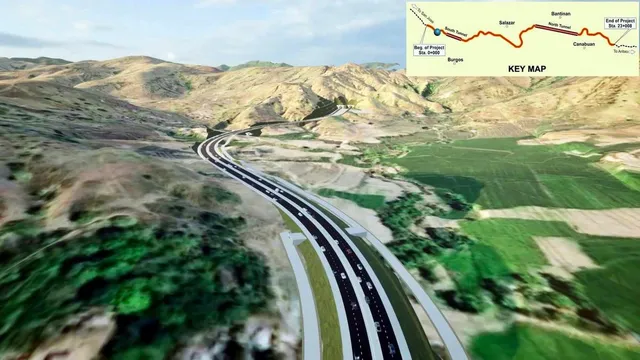
A kick-off meeting between DPWH Secretary Manuel M. Bonoan with Senior Undersecretary Emil K. Sadain and the Fact Finding Mission of the Japan International Cooperation Agency (JICA) led by JICA Headquarters South East Asia Division Senior Deputy Director Yosuke Nishii and JICA Philippines Senior Representative Kenji Kuronoma was held Monday, March 13, 2023 at the DPWH Head Office in Port Area, Manila.

The purpose of the Fact Finding Mission is to obtain information on the relevance, efficiency, effectiveness and sustainability of the project, which will facilitate JICA's review of the proposed Official Development Assistance (ODA) loan financing and will serve as the basis or preparation for the upcoming Appraisal Mission.

The Japanese government through JICA has provided the Philippines over the years, with assistance in planning, construction, and maintenance of crucial infrastructure.

“On behalf of the Filipino nation, allow me take this opportunity to express our sincerest gratitude for JICA’s unwavering dedication to help the Government of the Philippines achieve robust infrastructure development”, Secretary Bonoan said.

According to Senior Undersecretary Sadain, the Department will closely-coordinate and provide necessary assistance to the JICA team until the preparatory phase is complete.

“This is among the flagship projects of the Department under the administration of President Ferdinand R. Marcos Jr. which will not only address safety and connectivity concerns of the existing Dalton Pass, but will also boost economic activity along its route,” added Senior Undersecretary Sadain.

The Dalton Pass East Alternative Road Project is a proposed 23-kilometer road that will decongest the existing Dalton Pass by providing an alternative road connecting Tayabo, San Jose, Nueva Ecija to Aritao, Nueva Vizcaya and vice versa.

Dalton Pass East Alternative Road Project will address the constant dilemma of frequent closure of the existing Dalton Pass due to natural disasters faced by travellers between Nueva Ecija and Nueva Vizcaya to the Cagayan Valley Region

The proposed project as an alternative road will not only prevent isolation of the provinces of Region 2 but will also improve transport and mobility and ensure support for farmers with the Cagayan Valley Region largely an agricultural economy with vast land dedicated to agriculture production for rice and corn.

During the meeting which was also attended by DPWH Unified Project Management Office Roads Management Cluster I Director Benjamin A. Bautista and other DPWH officials, the JICA Study Team presented the scope of the Preparatory Survey as well as target timeline or project implementation schedule.

Upon completion of the 12-month Preparatory Survey, the 15-month Detailed Design and Procurement will be conducted by the DPWH and its 5-year civil works is targeted to commence by 2025.


Article courtesy of The Department of Public Works and Highways

March 14, 2023

Before the year ended, the Philippine Mining and Exploration Association (PMEA) invited Retired Lieutenant General Roy O. Deveraturda as the keynote speaker for the November PMEA Monthly Membership Meeting. As the newly appointed president of Sagittarius Mines, Inc. he reported some updates on the Tampakan Project”.

 Mr Roy Deveraturda is a former lieutenant general of the Armed Forces of the Philippines (AFP). He started as an aviation cadet in 1978. Then, he was commissioned in the Philippine Air Force in 1980. With his Military Pilot Badge after graduating from the Aviation Cadet Program of the Philippine Air Force Flying School, he later became an attack pilot of the 15th Strike Wing. He had more than 50 combat missions. General Deveraturda held the highest aircrew qualifications as Test Pilot, Flight Commander, Instructor Pilot, and Flight Examiner for AT-28D Trojan “Tora Tora” and the OV-10A Bronco. [1]

He retired as a Lieutenant General in Philippine Air Force on August 17, 2014, after having commanded the AFP's entire Visayas area and then the Western Philippine Area, including the West Philippine Sea. He was one of AFP's most decorated officers. More notably, he was in charge of the humanitarian assistance and disaster relief for the Bohol earthquake and Typhoon Yolanda in 2013. Gen. Deveraturda became the Department of National Defense Assistant Secretary for the Plans and Programs in 2015. He joined the mining industry in 2018 when he was recruited to be the President of Carmen Copper Corp.

From there he now moved and have been appointed in May 2022 as President of Sagittarius Mines Inc. to bring the Tampakan Copper-Gold Project towards construction and development at the soonest possible time.

March 13, 2023

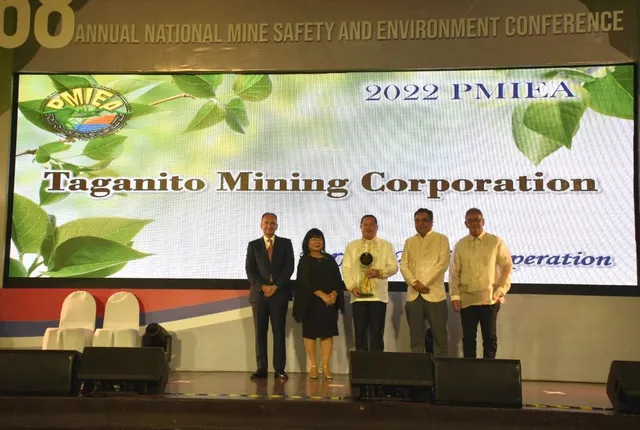
Taganito Mining Corporation (TMC), a subsidiary of natural resources development firm Nickel Asia Corp. (NAC), once again demonstrated its adherence to ESG (Environment, Social, and Governance) compliance by winning the major awards during the 68th Annual National Mine, Safety, and Environment Conference on Nov. 18, 2022. 

TMC bagged the Presidential Mineral Industry Environmental Award (PMIEA) – considered as the highest industry accolade for social, environment, health, and safety excellence – for the second year in a row. 

Further demonstrating its commitment to establishing land use values equal to or better than those existing before mining activities, TMC also won this year’s Best Mining Forest Award under the Metallic Category. 

In addition, TMC proved its deeply entrenched culture of safety in its operations after being declared as having the "Most Improved Safety Performance" under the Safest Mines Award. 

The subsidiary is engaged in mining and exporting nickel ore in barangays Hayanggabon, Urbiztondo, Taganito and Cagdianao in the municipality of Claver, Surigao del Norte. 

"These awards are a testament of the continuing commitment of NAC to uphold the highest standards of Responsible Mining," said NAC Chairman Gerard H. Brimo during the award's acceptance speech, in which three other NAC affiliates also won major awards.   

Brimo also recognized the community stakeholders who "keep us on our toes, and who inspire us to constantly strive beyond compliance." 

He also lauded the work of "managers, supervisors, and rank-and-file [employees]" who ensured that NAC's operating firms uphold the tenets of Responsible Mining. 

These awards come at a crucial time as TMC, together with the other subsidiaries of NAC, is formalizing its ESG processes. 

This is in line with the Company’s twin goals of becoming the premier ESG investment in the country and becoming among the top 25 companies listed in the Philippine Stock Exchange in terms of market capitalization by 2025. 

“This year's Presidential Award is the fifth for TMC, and the fourth for Best Mining Forest, since PMIEA was launched in 1997. With this milestone, we are humbled and more excited to move further with our thrust on ESG and responsible mining operations,” said Engr. Artemio Valeroso, the Resident Mine Manager of TMC. 

Established through Executive Order No. 399, the PMIEA is conferred annually by the Department of Environment and Natural Resources (DENR) and the Mines and Geosciences Bureau (MGB) to promote the responsible and sustainable use of the country's minerals in all stages of mining operation.

For the current fiscal year, TMC spent Php 90.81 million for health, education, livelihood, public utilities and services, sociocultural preservation, information campaign, and mining technology, and another Php 154.2 million for environmental programs involving land, water, and air quality management; rehabilitation and reforestation; and various ecotourism projects. 

Another Php 18.9 million was spent for the relief and recovery operations following the onslaught of Super typhoon Odette. 

Some 753,781 seedlings were also planted in 111.87 hectares of mining and non-mining areas within the period. 

Moreover, TMC also spent Php 51.38 million for holistic programs aimed at ensuring the safety, health, and well-being of employees from 2021 to the third quarter of 2022. 

A total of 7.8 million safe man-hours without lost time accident was also achieved by TMC during the period.

March 12, 2023

Mining operations use a combination of metallurgical processes for mineral extraction. This often involves flotation to produce a mineral concentrate followed by smelting or leaching to recover the final product(s). Knowing the quantitative mineralogy at each of these stages is important to optimizing the effective and efficient recovery of a valuable mineral deposit. Quantitative mineralogy enables more productive process strategies (e.g. blending) and ongoing process optimization. Metallurgists and geologists typically use chemical assay data to estimate quantitative mineralogy, but due to inherent mineralogical complexity, these estimates can be misleading. Olympus portable X-ray diffraction (pXRD) analyzers can provide the metallurgist with reliable quantitative mineralogy onsite, in near real-time, which would otherwise take days or weeks to obtain.

  1. Flotation: Flotation is a common process used to concentrate a variety of base and precious metal ores. During flotation, the ore is treated with reagents (chemicals) to encourage the valuable sulfide minerals to float and suppress the non- valuable minerals.
  2. Leaching: Metals cannot be leached from all ore-bearing minerals, and ore minerals that can be leached have different leaching potential/leaching rates. Estimate recoverable metal, Select the most approximate leaching method to optimize value, Understand acid consumption, a key cost
  3. Pyrometallurgy (Smelting and Roasting): The mineralogical composition of concentrates has a large impact on subsequent pyrometallurgical processes that can involve smelting and or roasting the mineral concentrate product.
  4. Rapid Quantitative Mineralogy - A Valuable Metallurgical Tool: Quantifying minerals that are problematic for metallurgical processes can be far more important than recognizing problematic minerals. These problematic gangue minerals often have minimal or manageable adverse effects at or below certain thresholds. For this reason, it is important for the metallurgist to have ready access to accurate quantitative mineralogical data so they can optimize their process accordingly or develop more appropriate blending strategies.

Benefits of Olympus pXRD

The benefits of Olympus’ innovative pXRD analyzers include:

  • Small sample: requires only 15 mg of material.
  • Easy sample preparation: instrument operation and data acquisition do not require a skilled technician.
  • Fast acquisition time: obtain results in few minutes.
  • Portability: rugged design with no moving parts.
  • No ongoing servicing requirements: XRD can be performed regularly with minimal downtime and in remote locations.

March 12, 2023

The practice of in-service oil analysis or used oil analysis started over a century ago on locomotive engines. Now it is one of the most important components of condition based maintenance (CBM), a practice of assessing a machine’s condition by periodically gathering data on key machine health indicators to determine maintenance schedules. Billions of dollars are spent every year replacing machinery components that have worn out due to insufficient lubricant performance. Knowing how to interpret changing lubricant properties can increase both the uptime and the life of mission critical assets. The existence or amount of debris and particles from wearing parts, erosion and contamination provide insights about the issues affecting performance and reliability.

Lubricants, fuels and other key fluids analyses provide critical early warning information indicative of machine failure. By analyzing and trending data, one can schedule maintenance before a critical failure occurs. The results are higher equipment availability and productivity, lower maintenance costs, lower total cost of ownership (TCO), fewer outages, optimal equipment performance and a greener operation.

What is In-service Oil Analysis?

Lubricating oil is the life blood of oil wetted machinery. In-service oil analysis can provide information about machine wear condition, lubricant contamination as well as lubricant condition (Figure 1). Reliability engineers and maintenance professionals can make maintenance decisions based on diagnoses of oil analysis results.

Machine wear analysis is essentially the analysis of particles in the oil. Machine wear can be classified into adhesive (sliding) wear, abrasive (cutting) wear, fatigue wear, and corrosive wear. A full suite of wear particle analyses includes measure of particle count and distribution, particle shape and morphology, wear metal and alloy elements and the presence of large ferrous particles. Over the years different techniques and instruments have been deployed in the field or in commercial laboratories but essentially they all provide the information mentioned above. Even though all wear particle analysis techniques can be applied to different types of assets, specific issues are different for industrial rotating machines than from rotating engines. Reciprocal engines tend to generate fine wear particles and engine oils can be dark due to soot (nano-sized carbon particles as combustion byproduct). Elemental analysis is primary or sometimes the only analysis performed in a commercial oil lab that assesses engine wear conditions because concentrations of different wear metal elements indicate wear severity of moving parts in an engine. Slower moving rotating machines, such as gearboxes, tend to generate larger wear particles. As most of them are made of steel, large ferrous particle analysis is fairly common and easy to perform on oils from these assets.

Contaminants in oil can be in solid or liquid form. Solid contaminants such as sand and dirt are commonly monitored by particle counting and sizing techniques. Liquid contaminant for industrial rotating machines is mostly water. For diesel or gas engines, however, it can be water, coolant or fuel. A fairly common fluid contaminant across all asset types is the accidental or purposeful use of an incorrect lubricant when topping off old oil. All contaminants can significantly reduce the useful life of the oil and increase machine wear. They need to be prevented proactively with proper seals and filtration systems and they need to be monitored regularly.

Monitoring lubricant degradation helps one decide if the oil is no long fit for use and if it needs to be changed. One key oil property is viscosity. The viscosity is typically measured at 40C for rotating machines and at 100C for engines. For oil in rotating machines, oxidation and acidity of the oil (Total Acid Number or TAN) are monitored to determine if the oil is still fit for use and to prevent corrosion. For engine oils, oxidation, nitration, sulfation and total alkaline additive reserve in oil (Total Base Number or TBN) are monitored. For natural gas engine oils, TAN is monitored along with other engine oil parameters.

Benefits of In-Service Oil Analysis

The key benefits of in-service oil analysis are maintenance cost savings and productivity increases from increasing the uptime of running machines. Machines run longer if the right oils are used and if the oils are dry, clean and fit for use.

Oil mix up is one of the most common lubrication problems contributing to machine failure. Putting the right lubricating oil in a machine is a simple task that can improve machine reliability. Checking the viscosity, brand and grade of incoming oil and checking for contamination of alien fluids help to reduce the chances of oil mix up and keep the machines running at optimal efficiency.

In order to keep the oil dry, clean and free of contaminants, seals and filtration systems need to work properly and oils should be checked regularly. Sand and dirt in oil cause the generation of abrasive wear. Moisture in oil causes corrosion. Fuel or coolant in engine oil changes viscosity and causes the generation of adhesive wear. It is necessary to keep the lubricating oil clean and dry at all times.

To keep oil fit for use, oil conditions are to be monitored regularly to make sure the oil is used within its performance specification. A well balanced oil analysis program shall monitor machine wear condition, oil contamination and oil degradation. Key parameters are measured regularly and their trends are closely monitored. If one or more parameters exceed the alarm limits or a change in the trending rate is detected, reliability engineers are alerted and maintenance actions may be needed to resolve potential problems.

The cost savings from a well-executed oil analysis program come from reducing production loss from unplanned down time due to catastrophic failure as well as decreasing repair costs and eliminating unnecessary oil changes. In a power plant or paper mill, the cost savings mainly come from reduced machine down time and repairs. In a mining site with hundreds of hauling trucks, the cost savings mainly come from eliminating potential engine failures. For a municipal transportation fleet, however, the cost savings from oil analysis are due to reduced material, labor and recycling by extending the oil drain intervals.

The Spectro Scientific Minilab series meets your requirement for comprehensive in-service oil analysis needs, simple test protocol, fast and easy to operate.


For inquiries, please contact : (1) Joey Guyo email: joey@qesnet.com, hp: 09175855395 (2) Odra Ocampo email: odrazen@qesnet.com, hp: 09177053842. QES will have its 2nd technical seminar on “Eliminating Downtime Through Machine Condition Analysis”, this Q2’23, it is FREE of charge, kindly contact us for details. Spectro Scientific is distributed by QES Technology Philippines, Inc., email: qtpmarketing@qesnet.com

March 07, 2023

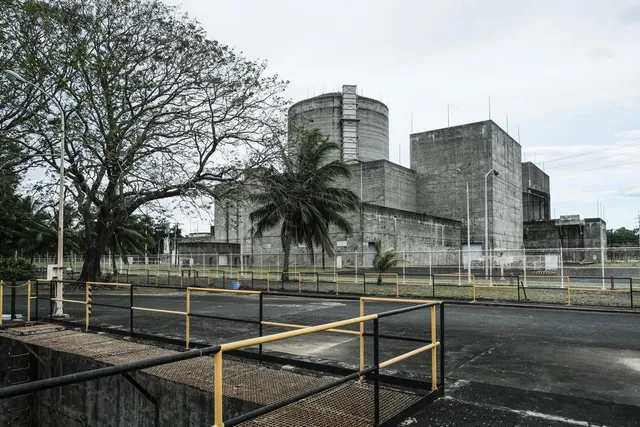
Photo: Bataan nuclear power plant - Credit: JAY DIRECTO, AFP/GETTY IMAGES

The House Special Committee on Nuclear Energy on Tuesday adopted a resolution calling on the Department of Energy (DOE) to create a Nuclear Energy Division within its organization.

During the hearing, the panel, chaired by Pangasinan Representative Mark Cojuangco, adopted House Resolution 387, which is in line with the Marcos administration's push to incorporate nuclear power in the Philippines' energy mix.

APEC Party-list Rep. Sergio Dagooc, one of the authors of HR 387, said the DOE does not currently have an office dedicated to dealing with nuclear energy-related issues.

Dagooc said the new division within DOE should be in-charge of developing the framework of the nation in utilizing and managing nuclear energy in the country.

The proposed division, he said, should also further advance the plans to utilize nuclear energy to combat the rising prices and the lack of supply of electricity in the country.

"Seriously exploring nuclear energy as an additional source for the generation of electricity may solve the above cited problems," he said.

He said the DOE should also work with the Philippine Nuclear Research Institute (PNRI) and other concerned government agencies to establish and implement a strategic plan and policies for the utilization of nuclear energy as a source of generating electricity in the country.

In his first State of the Nation Address (SONA), President Ferdinand R. Marcos Jr. said it was “time to re-examine” the country’s strategy toward building nuclear power plants in the Philippines.

“We must build new power plants. We must take advantage of all the best technology that is now available, especially in the areas of renewable energy,” Marcos said.

March 07, 2023

Photo credit: Paul Putong/The United States Embassy for the photos 

The Philippines is acknowledged to be the fifth most mineralized country in the world, with an estimated USD1 trillion in untapped reserves of copper, gold, nickel, zinc and silver. Recent statistics from the Mines and Geosciences Bureau (MGB) indicate that there are only 49 operating metallic mines, employing around 196,000 workers. In the first semester of 2022, total exports of minerals amounted to almost USD3.851 billion, with the Department of Environment and Natural Resources (DENR) placing the gross production value for large-scale metallic mining at PHP101.1 billion.

The mining industry has been characterized by a number of starts and stops, recognized as a growth driver, but also stymied by policy shifts that frustrate investors, particularly in the last decades.  The pervading negative perception against mining among the general public, exacerbated by disinformation or outright “false news” has not helped.

The current administration has sent positive signals, particularly with strong statements in support of the mining industry, including from Finance Secretary Benjamin Diokno who has said that Finance Secretary Benjamin Diokno said that the “mining industry holds the greatest potential to be a key driver in our economic recovery and long-term growth, especially now that world metal prices are high. The Philippines, after all, is one of the world’s most richly endowed countries in terms of mineral resources.”

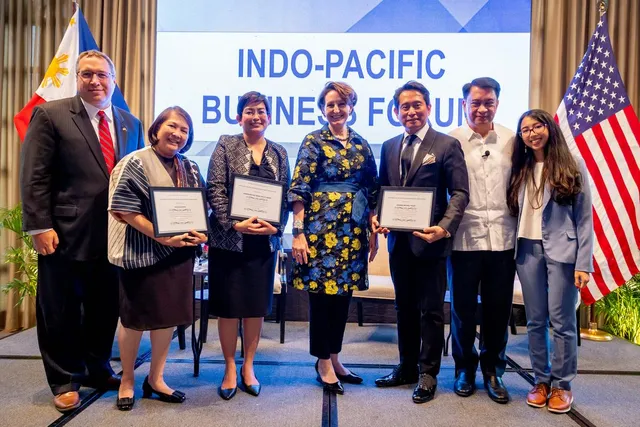
At the recent Indo-Pacific Business Forum on January 12 sponsored by the United States Embassy, I had the privilege of moderating a panel on “Supporting Critical Mineral Supply Chains for a Just Transition”.  Indeed, coming on the heels on COP 27 [2022 United Nations Climate Change Conference or Conference of the Parties of the 27th United Nations Climate Change Conference], there is a renewed commitment across the globe to cutting greenhouse gas emissions and adapting to the impacts of climate change.

With critical minerals [such as lithium, nickel, cobalt, manganese, graphite, copper and aluminium] being essential inputs for clean energy technology and battery storage, manufacturers and investors are seeking to diversify their supply chains in the face of rising demand.   Countries like the Philippines, with significant but largely untapped mineral reserves of copper and nickel, therefore have the potential to become key markets supporting diversified, reliable supply chains.

Joining me as panelists were Cielo Magno, Undersecretary of the Department of Finance and former Philippines-Extractive Industry Transparency Initiative Civil Society Representative; Michael Toledo, Chairman of the Chamber of Mines Philippines; and JB Baylon, Chief Risk Officer and Chief Sustainability Officer at Nickel Asia Corporation (NAC).

Our panel explored, among others, the Philippines’ plans for developing our downstream industries and encouraging the processing of minerals locally rather than exporting raw mineral ore.  Certainly, there are lessons to be learned from our neighbor Indonesia, whose approach to banning mineral exports may not necessarily work in the Philippines as well as properly incentivizing domestic processing.

From the private sector, we looked at the Chamber of Mines’ adoption of Canada’s Towards Sustainable Mining (TSM) Initiative, which requires mining companies to assess their performance certain key areas such as tailings management, community outreach, safety and health, biodiversity conservation, crisis management, and energy use and greenhouse gas emissions management.

NAC’s multi-awarded programs were also of interest as the company has always set itself apart in dealing with its stakeholders, particularly indigenous peoples and women.

Over at the Department of Energy, notwithstanding that the Philippines remains dependent on fossil fuels for electricity generation, there is a clear call to shift to renewable energy sources, which would not only alleviate future electricity shortages but also address the soaring cost of electricity in the Philippines.

Any shift to renewable energy sources by the Philippines is expected to result in an increase in the requirements for minerals. Solar photovoltaic (PV) plants, wind farms and electric vehicles (EVs) generally require more minerals to build than their fossil fuel-based counterparts. According to the International Energy Agency, an onshore wind plant requires nine times more mineral resources than a gas-fired plant. Since 2010, the average amount of minerals needed for a new unit of power generation capacity has increased by 50% as the development of renewable facilities has accelerated.

The types of mineral resources used vary by technology. Lithium, nickel, cobalt, manganese and graphite are crucial to battery performance, longevity and energy density. Rare earth elements are essential for permanent magnets that are vital for wind turbines and EV motors. Electricity networks need a large amount of copper and aluminium, with copper being a cornerstone for all electricity-related technologies.

If the Philippines is serious about this shift to renewable energy, the Philippine energy sector will need to delve deep into the mineral markets. With the Philippines’ significant but largely untapped mineral reserves, the country has the potential to become a key market, both for the local demand and for foreign requirements.


Patricia A. O. Bunye is a Senior Partner at Cruz Marcelo & Tenefrancia where she heads its Mining & Natural Resources Department and Energy practice group. She is also the Founding President of Diwata-Women in Resource Development, Inc., a non-government organization advocating the responsible development of the Philippines’ wealth in resources, principally through industries such as mining, oil and gas, quarrying, and other mineral resources from the earth for processing.

March 07, 2023

The year 2022 saw a myriad of challenges as the Russian war on Ukraine, inflation, market volatility, food shortages, rising energy prices, and lingering pandemic impacts continue to shape global markets. The early part of last year was a robust period for the metals and mining sector. The industry was buoyed by record high prices for some commodities, supply chain constraints, and energy transition-related demand for some minerals.

However, macroeconomic conditions deteriorated going into midyear and expected to persist into early 2023. This led to weakening near-term demand expectations and a downside risk to the metals and mining sector as many commodity prices slide and equity market support weakens.

The Russia-Ukraine conflict and the souring relationship between the U.S. and China headline geopolitical and trade tensions which will have effects on the global markets throughout the coming year. The Russia-Ukraine war resulted in higher energy prices driving inflation and subdued demand for industrial metals particularly in Europe.

China, the world’s second largest economy and a steady force in global trade, reopened its economy with Xi Jinping’s reversal of zero-COVID restrictions. China’s reopening will unleash a flood of household spending and consumption, which will also impact the economies of its trading partners. However, tensions in the South China Sea and Taiwan Strait will hound US-China relations. A brewing conflict in the region can cause instability, which will spook investors in the mining and energy industry.

While many experts are projecting inflation to ease off this year as the pandemic weakens, S&P Global Ratings downgraded its GDP growth forecasts for its global growth expectations. Global inflation is expected to fall in 2023 and 2024 but will still be above pre-pandemic levels. The U.S. Federal Reserve implemented aggressive interest-rate hikes to tame inflation. The support lent to the U.S. dollar weakened other currencies causing high dollar-denominated commodity prices.

The threat of a global recession driven by supply chain issues arising from the COVID-19 pandemic will be the challenge in 2023. The world economy saw record-high inflation as the top concern last year. The broad sentiment among financial experts is that recession in 2023 is inevitable as higher prices due to inflation will give way to an economic downturn. However, a few analysts now feel that the U.S.—and possibly Europe—could narrowly avoid recession as inflation pressures started to abate. The rise in central bank rates to fight inflation and Russia’s war in Ukraine will continue to affect economic activity. Hopefully, as 2023 progresses, central banks will be able to rein in on inflation.

Global Mining Sector Outlook

The outlook for the global mining sector has turned negative due to slowing economic growth, says  Moody’s Investors Service. The rating agency said it revised its global outlook for the mining sector from stable to negative, citing expectations that cash flows and profits will decline in 2023 due to weak demand for metals and mining commodities arising from slowing economic growth.

Inflation is also expected to pressure the metals markets and industrial commodities. S&P Global said that with inflation creeping up, metals prices have corrected from their recent highs and expected to fall further into 2023. Softening demand, stronger supply and weaker sentiment will further contribute to the downward pressure.

The construction sector and disrupted property markets will be a drag on global demand for copper, iron ore, steel and base metals. U.S. real estate data show a downward trend in new construction and a general downturn in the housing market while the Chinese real estate market remain sluggish despite various government infrastructure initiatives.

Meanwhile, supplies of copper, aluminium, lead, zinc, iron ore and steel, among others will post higher growth rates than in 2022. For precious metals, Moody’s noted that gold and silver prices are both declining “as higher interest rates and a stronger U.S. dollar” have curbed their appeal as safe haven investments. However, inflationary pressures and supply-chain constraints are showing signs of easing which could mean that global economic slowdown is less severe than expected.

Decarbonization, Clean Energy Transition, and Net Zero Goals

Concerned on climate-related risks have slowed down as the world grapples from the outcome of the Russia-Ukraine war which resulted in high energy prices and inflation. However, last year saw a number of mining companies announcing investments and joint ventures into large scale renewable projects involving the installation of solar and wind facilities, upgrade of transmission networks, and installation of large-scale battery storage.

Global mining leaders are also calling for the acceleration of the production of minerals needed to help reduce carbon footprint and meet net zero targets for carbon emissions. According to the latest global report from KPMG, “Sustainability on the horizon – the prospects of a net-zero future for metals and mining companies”, metals and mining companies are vital if the world is to reduce its reliance on fossil fuels.

Nevertheless, miners face a number of obstacles to reach their net zero goals, the largest of which are the difficulty in measuring progress and lack of resources to bring them about. Also, achieving these net-zero ambitions will require a more realistic and balanced strategy.

The KPMG report also states that the current transition away from fossil fuels will require a rapid increase in the number of electric vehicles (EV), thus considerable critical minerals will be needed. The production of battery materials – nickel, cobalt and lithium – will continue to forge ahead, following double digit-growth in 2022. KPMG estimates that more than 2 billion EVs will be needed to be manufactured to accommodate world demand and fully transition away from internal combustion engine vehicles by 2050. Energy transition efforts will also drive up demand for iron ore, zinc and copper. A recovery in the automotive sector and in low-carbon energy could help offset some of the demand weakness in other consumer-led segments. However, battery component supply pipelines will struggle to keep up with such a demand.

Green technologies require critical minerals which are often challenged by geopolitical constraints.  Given that the price of critical minerals has surged in 2022, the incentive to invest further in their production and circularity remains very high. Mining companies are investing in and developing new technologies to support decarbonization plans and increase productivity.

Two technologies are expected to be of wide use in 2023 - drones and blockchain. Drones will be increasingly used to support exploration, surveying, mapping, monitoring site safety, stockpile management, blast analysis and reviewing tailing dams. At the same time, blockchain technologies will continue to support the traceability and accountability of supply chains.

ESG

Ernst and Young reported that environmental, social and governance (ESG) remains the top risk and opportunity for mining and metals companies in 2023. While ESG is expected to have broadening scope and complexity, it is now firmly integrated within corporate strategies due to its impact on almost every aspect of mining operations. Some of the areas for ESG improvement — improving diversity, equity and inclusion, are not new and remain to be major challenges. On the other hand, the issues of mine closures and rehabilitation will require a longer-term and more strategic view. ESG’s scope is broadening and pressure is growing to improve reporting and transparency. Even governments are increasing their energy transition efforts and addressing ESG concerns.

Exploration

The exploration industry is greatly influenced by metals prices and financing conditions. As capital costs and energy prices are expected to rise, miners are left with lower excess cash reserves to spend on exploration. Difficult financing conditions amid recession fears will also impact exploration according to a report of S&P Global. Global inflation, geopolitical instability, and fears of recession are taking their toll on commodities. Metal prices have fallen off their highs and markets have trended downward resulting in investors turning away from the mining sector.

Interest in energy transition metals, however, will support exploration budgets for copper, nickel and lithium, although decreases for copper and nickel are expected. With the increasing uncertainty in the global marketplace, exploration budget will continue to focus more at mine sites and advanced projects than in grassroots projects, which may result in a notable decline in new major discoveries.

Energy

Energy was the S&P 500’s top performing sector two years in a row and many experts feel that more growth is on the horizon. Wood Mackenzie is forecasting a brisk return to oil demand growth next year, driven by the easing of COVID-19 restrictions in China and the rising use of petrochemical feedstocks. Meanwhile, there will be a slowdown in LNG contract signings despite a busy 2022 for LNG contracting. In 2023, LNG contracting activity will slow down even as Chinese companies continue to buy and US independent upstream and midstream players secure deals to access global LNG markets. Europe will also continue to diversify its energy imports away from Russia and source liquefied natural gas from the U.S. to help fill in the demand.

Meanwhile On the Homefront

In their numerous roadshows abroad, the economic managers of the current government have affirmed support for mining as part of the country’s growth agenda. At the same ttime, Department of Environment and Natural Resources (DENR) Secretary Ma. Antonia Yulo-Loyzaga said her agency will undertake a comprehensive review of mining laws, its existing legal framework and current policies and practices that to her are “somewhat dated”. Sec. Yulo-Loyzaga further said that the DENR is eyeing to “build the technical capacities to support that direction and make sure that the social and physical advances in science and tech, as well as our current context developmentally are now adequately perfected in an updated policy and legal system.” Sec. Yulo-Loyzaga has also been quoted as suggesting “a range of actions including a progressive look at taxing exports” of raw nickel. Policy statements indicating another review of mining laws and imposition of more taxes will certainly be sending the wrong signals to investors.

Conclusion

The metals and mining sector will be facing the global economy in 2023 cautiously, fully aware of the risks if the pressures of inflation, global conflicts, and high energy prices of last year will continue to persist. The positive news is that clean energy transition - rising electric vehicles sales, the shift towards renewable energy technologies, and related transmission and distribution requirements will expand market demand. This growing demand will however be tempered if mineral-endowed countries like the Philippines fall prey to resource nationalism. On the other hand, the industry must strictly adhere to responsible mining and strike a balance in their ESG responsibilities of environment protection, uplifting local communities, and dealing transparently with the government and other stakeholders. The industry is precariously looking forward to a 2023 that brings more stability, and less economic and political upheavals.

Fernando “Ronnie” S. Penarroyo specializes in Energy and Resources Law, Project Finance and Business Development. He is also currently the Chair of the Professional Regulatory Board of Geology. He may be contacted at fspenarroyo@penpalaw.com for any matters or inquiries in relation to the Philippine resources industry and suggested topics for commentaries. Atty. Penarroyo’s commentaries are also archived at his professional blogsite at www.penarroyo.com


References:

Aluminum International Today, Metals and Mining industry pessimistic about global growth, with over half more pessimistic than CRU forecasts, https://aluminiumtoday.com/news/metals-and-mining-industry-pessimistic-about-global-growth-with-over-half-more-pessimistic-than-cru-forecasts

Bird and Bird, Energy Outlook 2023: Mining & Minerals, https://www.twobirds.com/en/insights/2023/global/energy-outlook-2023-mining-and-minerals

Crooks, Ed, Ten Predictions for 2023, 16 December 2022, https://www.woodmac.com/news/opinion/ten-predictions-for-2023/

Freele, Elizabeth and Dekker, Rachel, Mining’s top ten ‘S’ trends in ESG for 2023, 17 January 2023, https://www.mining.com/minings-top-ten-s-trends-in-esg-for-2023/

KPMG Mining Outlook 2023: Prospects of a net-zero future for metals and mining companies,  30 November 2022 https://kpmg.com/au/en/home/media/press-releases/2022/11/brighter-prospects-mining-sector-transforms-towards-net-zero-30-november-2022.html

Langton, James, Global mining sector outlook turns negative: Moody’s, 22 September 2022, https://www.investmentexecutive.com/news/research-and-markets/global-mining-sector-outlook-turns-negative-moodys/

Mitchell, Paul, Top 10 business risks and opportunities for mining and metals in 2023, 26 September 2022, https://www.ey.com/en_gl/mining-metals/risks-opportunities

Rivera, Danessa, DENR to Visit Mining Laws, Philippine Star, 08 December 2022,  https://www.philstar.com/business/2022/12/08/2229235/denr-revisit-mining-laws

Routley, Nick, Prediction Consensus: What the Experts See Coming in 2023, 11 January 2023, https://www.visualcapitalist.com/predictions-2023/

S&P Global Market Intelligence, The Big Picture - 2023 Metals and Mining Industry Outlook, 10 November 2022, https://www.spglobal.com/marketintelligence/en/news-insights/research/the-big-picture-2023-outlook-for-metals-and-minin

March 07, 2023

Commentary by: Mr. Francisco “Jun” Delfin

Mr. Francisco “Jun” Delfin is Vice President & COO of PetroGreen Energy Corp. (PGEC) and President of Maibarara Geothermal Inc. (MGI), subsidiaries of publicly-listed and Yuchengco Group of Companies (YGC) affiliate PetroEnergy Resources Corp.  He is a geologist with a PhD in public administration from the University of Southern California (USC).  His work experience spans private industry as YGC executive since 2008, professional geological practice with PNOC-EDC, government service as DOE Asst. Secretary and Undersecretary during the Arroyo administration, academia as Asst. Professor at UP National College of Public Administration & Governance and non-profit as past President of the Geological Society of the Philippines in 2009.

Introduction

Over the past 2-3 years, we have seen dramatic disruptions in global energy markets brought among others by the Covid-19 pandemic, Russia’s invasion of Ukraine, and deepening concerns about fossil fuels’ impact on the earth’s climate. Such challenges have caused escalating energy costs, power supply shortfalls, rejection of fossil fuels especially coal, sustained shift to renewables and even a renewed focus on nuclear energy in many countries. The collective transition to a more sustainable, low-carbon energy future has led countries and organizations to adopt net zero policies, committing by different target years to reduce their greenhouse gas emissions to as close to zero as possible.

Offshore wind development benefits from these sweeping changes in the global energy landscape. In 2021, a record 21.1 GW of offshore wind capacity was installed, bringing cumulative global offshore wind capacity to 56 GW according to the Global Wind Energy Council (GWEC). Europe and Asia are the leading regional market with 50.4% and 49.5% of the world’s total installations, respectively. Moreover, annual offshore wind energy growth is forecast to rise significantly to 8.4% in 2025-2030 from a modest 1.7% growth in 2020-2024. In Asia, high growth are expected in the following countries: China with 60-70 GW of capacity by 2030, Japan with 10GW by 2030 and 30-45 GW by 2040, Taiwan with 5.5 GW by 2025 and 20 GW by 2035, South Korea with 12 GW by 2030, and Vietnam with 9 GW by 2035 and 15 GW by 2040.

Given its geographic setting, the Philippines should harness this fastgrowing clean energy resource not only for much needed power supply but also for the benefits it will confer on the country’s S&T and industrial sectors.

Offshore Wind Development in Philippines

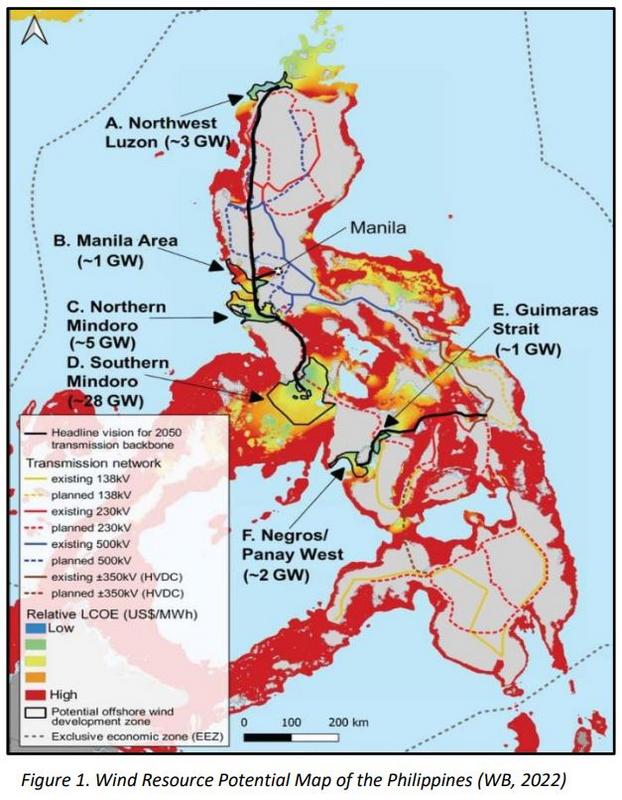
The offshore wind (OSW) industry is in a nascent stage and can be said to officially begun in the country in April 2022 when the World Bank and the DOE completed and launched the Offshore Wind Road Map for the Philippines. This study is groundbreaking because it documented the country’s 178 GW OSW technical potential, identified six (6) high priority zones for development (Fig. 1), outlined two growth scenarios for the OSW industry, and specified recommendations to overcome challenges to such growth.

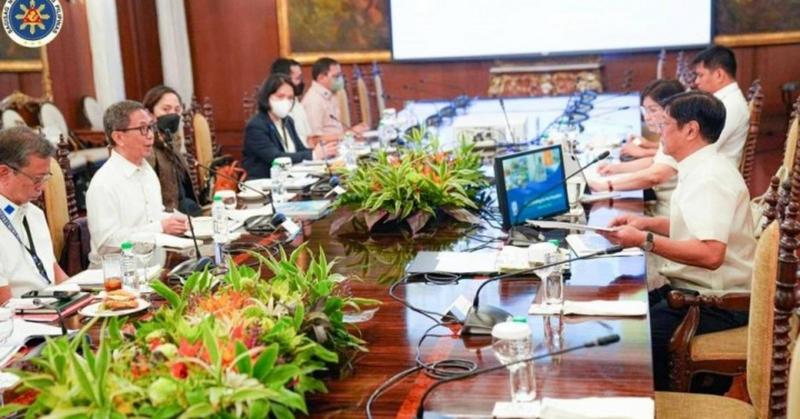
This fledgling industry got a tremendous policy boost in the new Marcos, Jr.’s administration with the country’s top two energy officials – President Ferdinand Marcos, Jr. and DOE Secretary Raphael P.M. Lotilla – being staunch advocates of indigenous renewable energy development in general and wind power in particular. Several major policy decisions in quick succession demonstrated the government’s commitment to renewable energy and offshore wind and thus laid the groundwork for necessary private investments in the industry. In September 2022, the Department of Justice (DOJ) issued an opinion that the foreign equity cap on certain natural resources does not apply to wind, solar, and tidal energy resources. In November 2022, the President approved the DOE’s proposed offshore wind program and directed the agency, among others, to lead and harmonize the permitting process to expedite development and utilization of offshore wind (Figure 2). In December 2022, the DOE amended the implementing rules and regulations (IRR) of the 2008 RE Law, allowing 100% foreign ownership in wind, solar, and tidal energy resources.

But even before the World Bank study and the onset of the new government a few local companies and their foreign partners have quietly moved into offshore wind. Two such early venturers were Triconti ECC Renewables and PetroGreen Energy Corp. (PGEC). The latter, a member of the Yuchengco Group of Companies (YGC), partnered with Danish firm Copenhagen Energy to acquire three service contract blocs in Northern Luzon, Northern Mindoro, and East Panay. Admittedly, decisive policy actions by the new administration spurred more private sector interest in OSW. Thus, by end 2022, the DOE had awarded forty-three (43) OSW service contracts to twenty (20) individual companies with an aggregate target capacity of 33 GW. Even if only a fraction of these blocs is eventually developed, the medium- and long-term benefits for the country would be enormous.

Figure 2. Pres. Marcos, Jr meeting with DOE Secretary Lotilla in Malacanang in November 2022 when the President approved DOE’s offshore wind development program.

OSW Benefits: Payoff for Science & Technology (S&T)

Clearly, the country’s power sector will be the primary beneficiary of OSW development. It can help achieve the DOE’s goal of increasing RE’s share in the generation mix from the current ~20% to 35% by 2030 and 50% by 2040. Such aspiration requires additional RE capacities of 22 GW by 2030 and by another 52 GW by 2040 under the clean energy scenario in the DOE’s 2020-2040 Philippine Energy Plan. OSW can help provide these additions even if only a modest fraction of OSW’s 178 GW technical potential is harnessed. Also, with its ideally large capacity of >300-500 MW for a single wind farm combined with its high capacity factors (35-45%), OSW is arguably the best among RE options to replace coal generation in the country.

But while advantages of OSW are obvious for the country’s power supply, less recognized is the significant positive spill-over benefits that OSW can contribute to the country’s science and technology (S&T) sector. The first immediate S&T beneficiaries of large-scale OSW development are our applied geological and environmental sciences and professions. There are three interrelated facets of OSW development where geological and environmental sciences will be employed and knowledge enhanced.First, a multi-agency marine spatial planning is necessary to minimize conflicts among competing uses of the marine environment. Whether government- or academe-led, marine spatial planning involves the collection not only of primary geoscientific and environmental data but also of social and cultural data over prospective or identified zones of OSW development. These data and their objective and professional analyses would be the foundation from which prospective OSW and pre-existing activities could be coordinated, integrated, and regulated and thus help avoid or reduce disputes among legitimate uses.

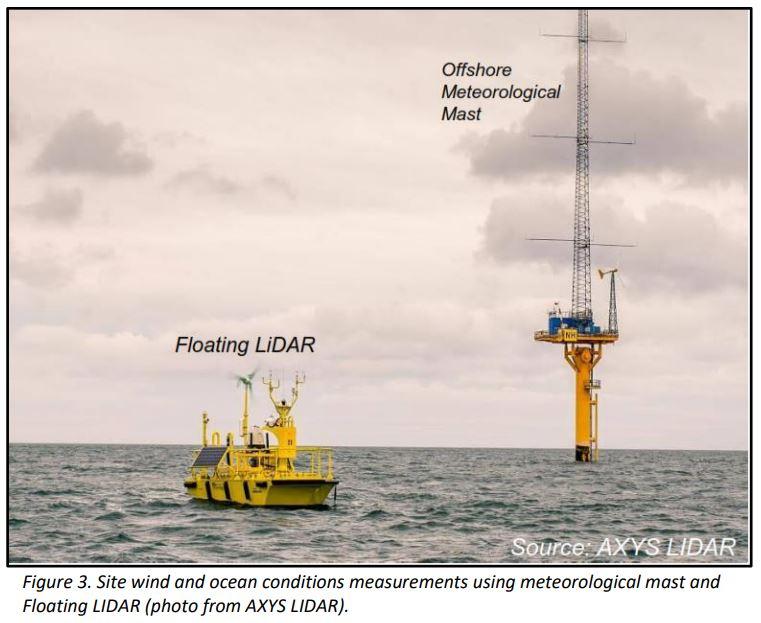
During the feasibility study and development of the OSW projects, geological, atmospheric, and environmental sciences will be critical tools by which private developers can validate their block’s energy yield, establish the area’s average and extreme wind and ocean current conditions, characterize the bathymetry and bedrock geology of the prospective site, and evaluate the most appropriate foundations and mooring for their offshore wind turbines. Considerable primary scientific data will be gathered by such survey methodologies as floating LIDAR (Fig. 3), multi-beam echo sounding, side-scan sonar, magnetomery, shallow seismic survey, seabed coring, and many others.

Environmental impact and geo-hazards risk assessments are the third facet of OSW development where environmental and geological knowledge will be enhanced and employed. Characterization of the baseline marine environment, including aquatic life and cultural artifacts, is necessary in assessing potential transient- and long-term environmental effects of OSW development. Among these possible consequences are seabed disturbance and noise, under-sea electromagnetic fields, marine habitat and livelihood loss. Similarly, geo-hazards investigation and monitoring would play critical role in ensuring the safe operations of the wind farms from extreme events such as super-typhoons, earthquake-induced tsunamis and landslides, ground shaking, and liquefaction.

Apart from the positive externalities to applied geological and environmental sciences, OSW utilization can also bring about large-scale commercial green hydrogen production in the Philippines. This technological payoff will have many industrial and commercial applications a few decades from now, including energy medium for hard-to-abate sectors such as land transportation, aviation, and shipping, fuel for industrial heating, and chemical feedstock for refining, ammonia, and fertilizers.

How is OSW going to birth a green hydrogen industry in the Philippines? Globally, hydrogen is already in use especially in chemical and petroleum refining. But the hydrogen used is one derived from hydrocarbons and the process emits significant CO2. Large capacity OSW power plants in the future can provide the potentially cheaper power source by which “green” hydrogen can be produced through electrolysis of water more economically and without any carbon involvement either in the raw material or in the process by-product.

OSW Benefits: Payoff for the Supply Chain Sector

Building the country’s capacity to deliver the components and services to build, operate, and maintain offshore wind farms is a major challenge but can also be a boon for our supply chain industries. To be sure, foreign suppliers and service providers will play an important role in the process but a sustainable and competitive OSW industry will inevitably require national capacities nurtured by public investments and private resources.

Setting aside those related to our power transmission infrastructures, among the key services, sectors, and professions in the country that can benefit immensely from an OSW industry are vessels, ports and harbors, storage and warehousing facilities, logistics companies, manufacturing, construction including crane services, survey companies, environmental and geological professionals, civil, mechanical, and electrical engineering, and educational institutions.

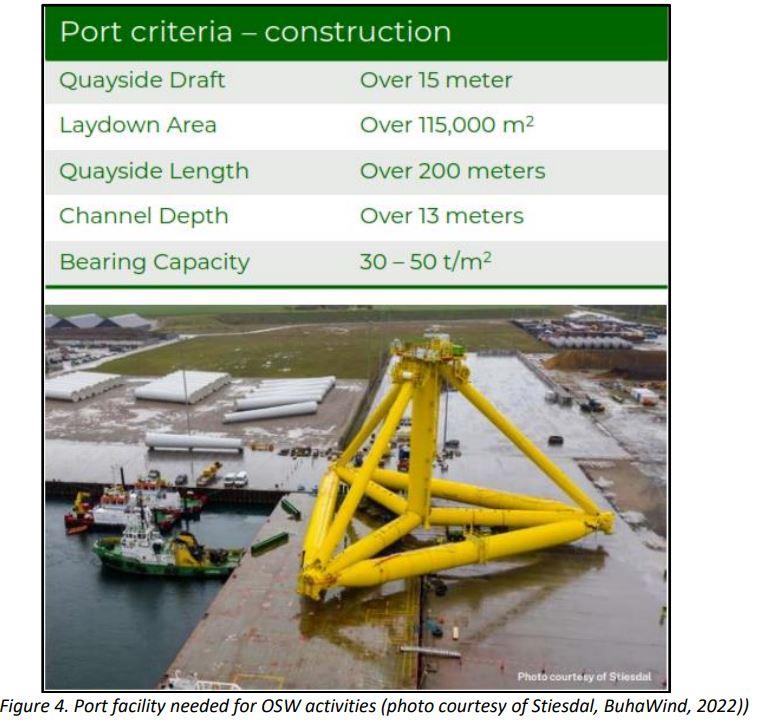
In the Philippines, perhaps the supply chain sector in most in need of early and focused government action are ports and harbors. During development of OSW farms, ports near the site with sufficient depths and large lateral areas are needed for delivery, laydown and storage of large components imported from overseas suppliers. Assembly of wind turbines will be done quayside and with hardstand suitable for heavy lift cranes as the turbines will be towed fully assembled from the port to their final installation site at sea. And during the operations and maintenance phases of OSW farms, the port will serve as warehouse, office, and housing facilities for staff and contractors transiting out to the wind power site.

Hence, existing Philippine ports have to be expanded or new ones close to the sites constructed. Key parameters for OSW ports are given in Figure 4. In should be stressed that though port improvements for OSW can be costly, such large facilities can generate not only employment during construction but can serve non-OSW related economic activities such as fisheries, inter-island shipping, cruise ships and tourism, and even educational facilities.

It is not hard to imagine that creating a national OSW supply chain can generate thousands of skilled and non-skilled jobs in the Philippines. Such commitment, efforts, and funds for building a viable delivery system, however, would only payoff in terms of employment generated, CO2 emissions avoided, gross value added to the economy, and of course power generated if the target OSW capacity is relatively large. If the goal is only 3GW of OSW capacity by 2040, as in the World Bank’s low-growth scenario, the costs of building a national supply chain system to service a small OSW industry may not make economic sense.

Closing Remarks: Challenges to OSW Development and Utilization

Even as the energy, environmental, scientific, technological, and commercial imperatives of large-scale OSW development are clear and compelling, we must be realistic that significant obstacles exist that can prevent the country from achieving those benefits. At the most optimistic scenario, the earliest the country can see OSW power generation would be around 2030. If the Marcos Jr administration hopes to compress this timeline to around 2028, then much work and hard decisions must be done now.

Challenges come in two broad arenas: policy alignment and infrastructure development. Building on the welcome lifting of foreign equity restrictions on renewables, realignment of differing or conflicting policies among executive agencies involved in maritime resources and grid connection is absolutely crucial. Perennial but so far wishful recommendation on a “one-stop shop facility” for energy permitting must be replaced by the hard but inescapable need for the DOE to be in charge of all permits on behalf of other government units, if the permitting process will not become the quicksand in which OSW development will sink and vanish. In other words, private developers should only face the DOE in securing national government approvals; in turn, the DOE should be vested with procedural rights, through an Executive Order, to issue all permits on behalf of other agencies so long as the latters’ substantive rules on offshore wind are respected by the DOE. Obviously, this is easier said than done but piloting such a simplified permitting process for one advanced OSW project maybe the way to go initially. Implementation of such system to all OSW projects can then done subsequently once kinks have been ironed out.

Though there are many supporting infrastructures, broadly defined, that will be crucial in birthing a viable OSW industry, three fields are especially critical. These are high-voltage transmission connection, ports and harbors, and an offtake mechanism for power generated. Discussions about grid enhancements are too detailed and beyond the scope of this brief paper. Suffice it to say, however, that NGCP and TRANSCO have the resources and access to internal and external expertise needed to build and enhance our existing grid facilities and protocol to allow utilization of large-scale OSW if given clear mandate from the political leadership. But for ports and harbors, much more planning, investments, and hard infrastructures are needed now for maritime agencies of the Department of Transportation, namely the Philippine Ports Authority (PPA), the Philippine Coast Guard (PCG) and the Maritime Industry Administration (MARINA). The third “supportive infrastructure” relates to an offtake mechanism and the DOE and the Energy Regulatory Commissions (ERC) must by this time study an offtake auction mechanism exclusive to OSW. For the government, this is a way to kick-start development by structuring auction to realize early capacity at the lowest possible cost. For private developers and lenders, offtake security via auction enhances commitment to mobilize risk money and motivates efficiency and innovation. Admittedly, it will take a while for such an auction mechanism to be fashioned but even a general early statement from the government that such mechanism is under consideration will send a strong positive signal to investors.

In closing, it should be stressed that while many sectors will benefit from large-scale OSW development, the ultimate goal of such investments and efforts should be to lower retail electricity costs to consumers. An abundant, indigenous, and clean power source less immune to global fuel prices and foreign exchange disruptions can help eventually bring down power rates while transitioning to a low-carbon society. Offshore wind energy provides that opportunity.


References: 

  1. UN. 2023. For a livable planet: Net-zero commitments must be backed by credible action. Available at https://www.un.org/en/climatechange/net-zero-coalition?gclid=EAIaIQobChMIh6-Ptq3- _AIVEjUrCh2e3wdYEAAYBCAAEgKLpfD_BwE.
  2. GWEC. 2022. Global Offshore Wind Report 2022. Available at https://gwec.net/wpcontent/uploads/2022/06/GWEC-Global-Offshore-Wind-Report-2022.pdf.
  3. World Bank Group. 2022. Offshore Wind Road Map for the Philippines. Washington, DC: International Bank for Reconstruction and Development/The World Bank Group.
  4. See for example: CNN Philippines Staff. 2022. DOJ: Renewable energy sector excluded from foreign investment cap. https://www.cnnphilippines.com/business/2022/10/2/DOJ-renewable-energy-sector-excluded-from-foreigninvestment-cap.html.; DOE. 2022. Media Releases dated Nov. 11, Nov. 17, and Nov. 22. Available at https://www.facebook.com/DOEgovph/. and https://www.doe.gov.ph/content/press%20releases?withshield=1.
  5. DOE. 2022. Philippine Energy Plan 2020-2040. Taguig City: Department of Energy.
  6. Delfin, Jr. F.G., Vasquez, A.A., Olivar, M.V.M. and Ventura, Y.V. 2022. Offshore Wind Energy: The Next Frontier in Renewable Energy Development and Applied Geosciences in the Philippines. Plenary Presentation at the 2022 Geocon. Geological Society of the Philippines.
  7. DNV. 2022. Hydrogen Forecast to 2050. Energy Transition Outlook 2022. Available at https://www.dnv.com/focus-areas/hydrogen/forecast-to-2050.html.
  8. Carbon Trust. 2021. ASEAN Low Carbon Energy Programme: Offshore Wind Delivery Framework (Part 2). Webinar Presentation, 18 June 2021
  9. BuhaWind Energy. 2022. Initial View on Infrastructure. Internal BuhaWind Report, Nov. 8, 2022.

March 06, 2023

Photo credit: The Department of Public Works and Highways
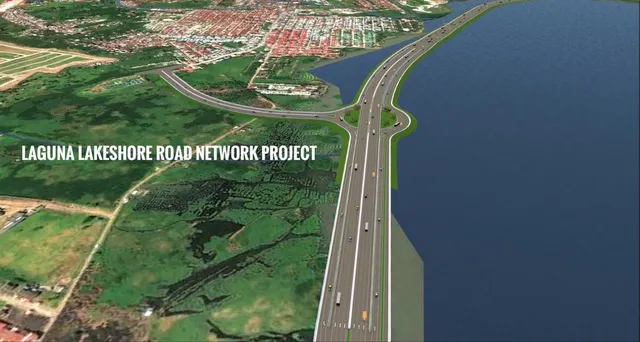
The Department of Public Works and Highways (DPWH) met anew with the Asian Development Bank (ADB) mission to plan and assess the way forward for the realization of Laguna Lakeshore Road Network (LLRN) Project – Phase 1 after the detailed engineering design.
DPWH Secretary Manuel M. Bonoan, Senior Undersecretary and LLRN Team Head Emil K. Sadain, Asian Development Bank (ADB) Country Director Kelly Bird, Asian Infrastructure Investment Bank (AIIB) Transport Sector Leader Andres Pizarro, DPWH Project Director Sharif Madsmo H. Hasim of the Unified Project Management Office (UPMO) Roads Management Cluster 2 (Multilateral), and Project Manager Zenaida B. Mauhay headed the three (3)-day reconnaissance mission workshop held on February 27 to March 1, 2023 to present strategic plans and financial assessment for the 37.4-kilometer road network and viaduct south of Metro Manila.

“With 85.1% of the detailed engineering design (DED) for LLRN already complete, DPWH has started negotiations to gather support from possible financing institutions crucial in the realization of this flagship infrastructure project,” said Secretary Bonoan.

According to Senior Undersecretary Sadain, the construction of LLRN Project Phase 1 to connect the southern province of Laguna to Metro Manila via Laguna Lake along the western coastline will provide a safer, faster alternative, and reliable transportation link.

The proposed third highway going south will ease the traffic congestion especially during rush hour at the Manila South Road and South Luzon Expressway to support economic development and growth potential of the provinces of Laguna, Batangas, Quezon and Rizal in the Southern Tagalog Region, said Senior Undersecretary Sadain.

The Laguna Lakeshore Road Network-Phase 1 involves construction of 21.5-kilometer viaduct and 15.9-kilometer embankment along the west shoreline of Laguna Lake, starting from Barangay Lower Bicutan in Taguig to Calamba City in Laguna.

It will also cover construction of eight (😎 interchanges proposed to connect municipal boundaries to the nearest public road along Lower Bicutan, Sucat, Alabang, Tunasan, San Pedro/Biñan, Santa Rosa, Cabuyao, and Calamba, for a total project cost of P175.3-billion.

The reconnaissance mission was the right venue to layout the groundworks in preparation to the fact-finding mission which is an important milestone in the processing and approval of the proposed financing for LLRN.

Discussions focused on funding schemes and loan application process, construction method, preparation of resettlement plan, gender action plan, and environmental impact assessment towards support economic development of the areas in the vicinity of Laguna de Bay.

With the assistance of the experts from ADB and in collaboration with the consultants, we will be able to analyze possible construction and implementation issues, possible project concerns, and plan way ahead the solutions and mitigation measures, added Senior Undersecretary Sadain.

Meanwhile, Feasibility Study for LLRN Phase 2 in the northern to southern coastline via an eastern route is almost complete and the detailed engineering design will be included in the civil works loan for LLRN Phase 1.

DPWH has already submitted the proposed LLRN Project to National Economic and Development Authority (NEDA) for project approval and endorsement to Department of Finance (DOF) for loan application.

The DPWH is proposing a Multi-Tranche Financing Facility for LLRN Phase 1 civil works in which the budget program for the whole project will be made in three (3) tranches.


Article courtesy of The Department of Public Works and Highways
March 02, 2023

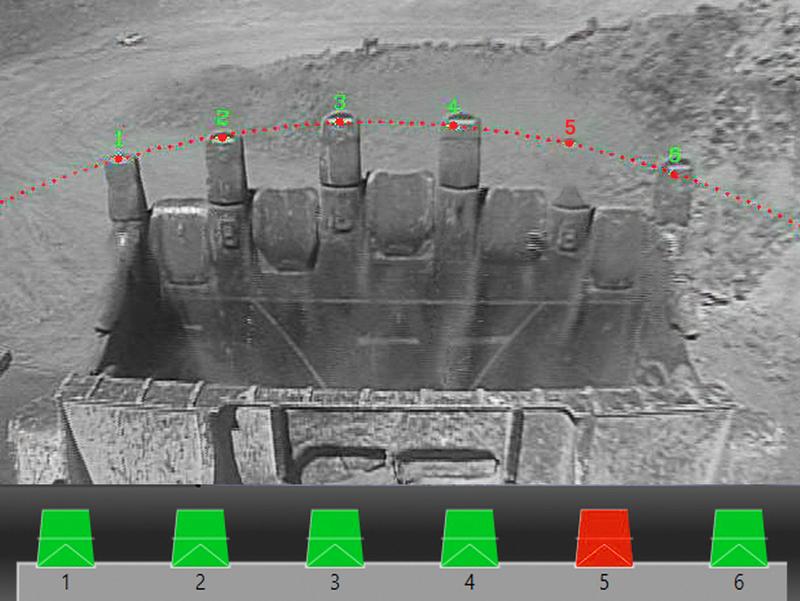
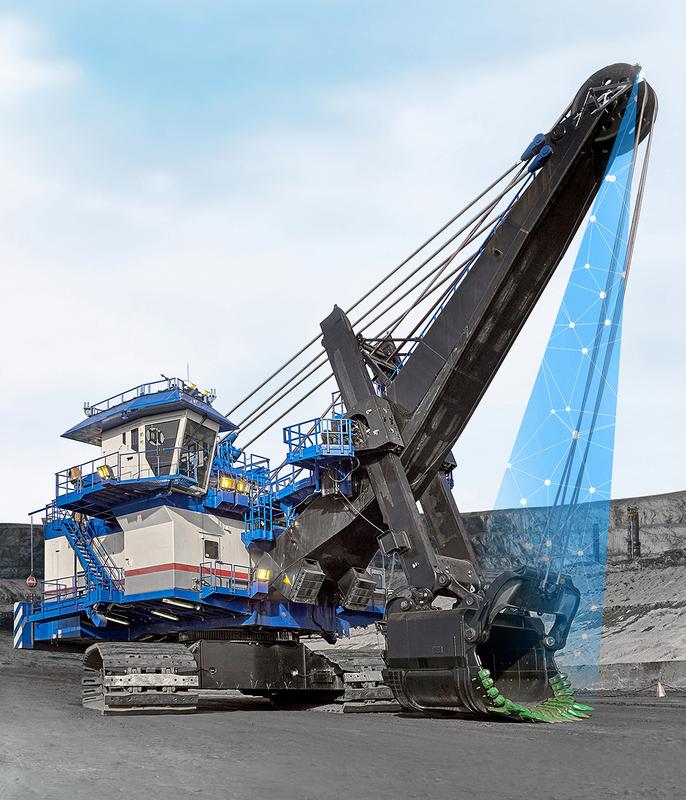
ESCO® mining buckets and tooth systems together with ShovelMetrics can increase mine site productivity. ShovelMetrics Gen 3, the most advanced shovel monitoring service on the market, uses artificial intelligence (AI) and computer vision to provide industry-leading bucket G.E.T., rock and shovel monitoring. Providing 3D imaging technology and support for all excavators, backhoes and shovels. Our flagship shovel monitoring solution is a fully managed service that includes accurate and reliable missing tooth and lip shroud detection. These features mitigate the risk of crusher obstructions in order to safeguard your employees and prevent hundreds of thousands of dollars in lost production. ShovelMetrics pays for itself by increasing productivity and reducing operational downtime.

In order to detect missing teeth, the ShovelMetrics™ Gen 3 bucket camera needs a clear view of the shovel or excavator bucket. This can be difficult at mines in extreme latitudes where mines receive very little sunlight during the winter, or at mines where sticky material can obscure the bucket teeth. To overcome these challenges, our engineers have developed a rugged stereoscopic 3D camera system with powerful LED lighting, capable of capturing high-resolution image data in all operating conditions.

Mining shovel teeth wear down unevenly over time, causing reduced digging efficiency, increased cutting forces and fill times as well as potential bucket damage and tooth breakage. Conventional tooth wear monitoring requires personnel to manually measure each bucket tooth, which is time-consuming and requires shovel downtime. Sensor-based systems are prone to failure as the sensors are damaged, lost, or improperly installed. ShovelMetrics continuous monitoring using a rugged shovel-mounted camera and AI based image processing optimizes the change-out procedure and reduces crusher jam incidents while achieving or exceeding conventional levels of accuracy.

Through bucket camera video frame processing and AI algorithms, clear images of the bucket are sent to secure cloud servers where tooth length, wear rate, wear patterns, and change-out predictions are computed – eliminating the need for periodic visits or visual inspection of the shovel teeth. The status of each tooth is logged regularly, and change-outs can be predicted and planned ahead of time. When downtime is scheduled, maintenance tasks can be performed simultaneously to reduce overall downtime.

To monitor the wear rate of each tooth, we use an image-based technique to calculate tooth length at regular intervals; these measurements are expressed in pixels and must be converted via reference to a known measurable object, (such as bucket width), in the image to find the physical length of the tooth. We define the length of a tooth from the tooth tip to a landmark on the tooth or bucket that does not wear out; this landmark can be a tooth lip (lip shroud), lifting eyes, cast lip, or bucket line.

Like all Motion Metrics products, ShovelMetrics interfaces with our centralized data analysis platform, MetricsManager Pro. Users with authorized credentials can receive automated SMS and email event notifications, in-depth performance reports, equipment activity logs, and particle size data from anywhere.

March 01, 2023

Photo credit: The Department of Public Works and Highways
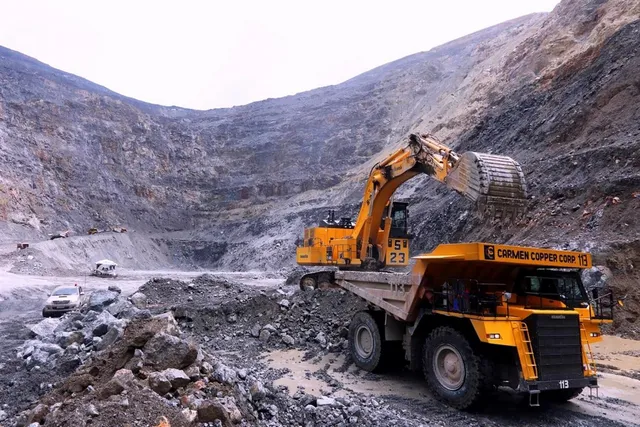
Motorists may soon enjoy seamless access from North Luzon Expressway (NLEX) to España Boulevard in Manila City with the completion of the Section 1 of NLEX-SLEX Connector Road.

Department of Public Works and Highways (DPWH) Secretary Manuel M. Bonoan and Department of Transportation (DOTr) Secretary Jaime J. Bautista, together with NLEX Corporation President and General Manager Jose Luigi L. Bautista and Metro Pacific Tollways Corporation President Rodrigo Franco, inspected on Wednesday, March 1, 2023 the first 5.15-kilometer section of the four (4) lane NLEX-SLEX Connector Road extending from the end of NLEX Segment 10 in C3 Road, Caloocan City to the España Interchange along España Boulevard in Manila City.
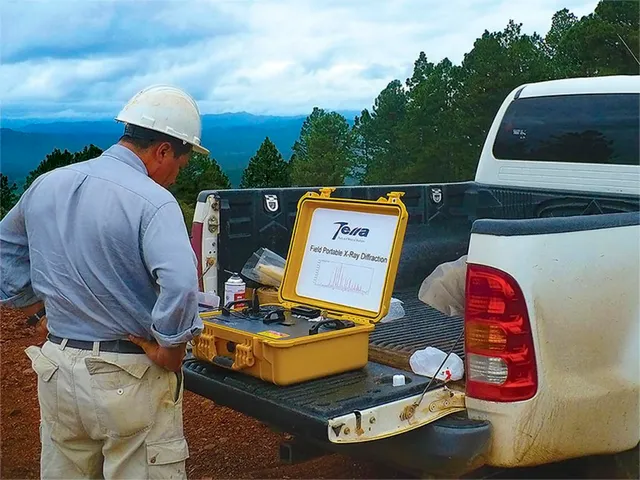
“We are targeting to open the España Section before Holy Week to help decongest vehicular traffic in Metro Manila especially to and from the Caloocan, Malabon, Navotas, and Valenzuela (Camanava) area,” said Secretary Bonoan.

When completed, the four (4) lane NLEX-SLEX Connector Road will connect NLEX Segment 10 to the end of Metro Manila Skyway Stage 3 at the Polytechnic University of the Philippines (PUP) in Sta. Mesa, greatly reducing travel time from SLEX-Alabang to NLEX-Balintawak from two (2) hours to just 20 minutes.

The P23.2-billion NLEX-SLEX Connector Road is a joint implementation project by the Philippine Government thru DPWH and Manila North Tollways Corporation (MNTC) under the Public-Private Partnership (PPP) Program.

The project alignment has mostly utilized portions of the Philippine National Railways (PNR) road right-of-way.

“Construction of the second section stretching from España Boulevard to Polytechnic University of the Philippines - Sta Mesa is being fast-track to provide trucks with an alternative route from the ports to the south and improve connectivity between Ninoy Aquino International Airport (NAIA) and Clark International Airport,” added Secretary Bonoan.

Also present during the inspection were DPWH Undersecretary Maria Catalina Cabral, DOTr Undersecretary for Legal Affairs Reinier Paul Yebra, DPWH PPP Service OIC Director Pelita V. Galvez, DPWH Planning Service Director Alex G. Bote, Toll Regulatory Board Executive Director Alvin Carullo, DMCI President and CEO Jorge A. Consunji, and officials and representatives of MPTC and NLEX Corporation.


Article courtesy of The Department of Public Works and Highways
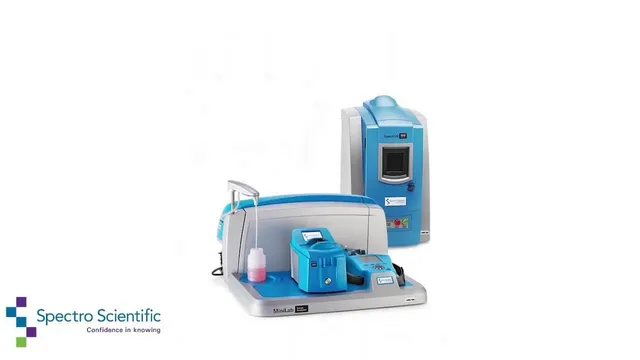
March 01, 2023

Photo: NLEX-SLEX Connector Road Project

The Department of Public Works and Highways (DPWH) will receive over PHP495 million for the acquisition of right-of-way for the NLEX-SLEX Connector Road Project (NSCRP), the Department of Budget and Management (DBM) announced Tuesday.
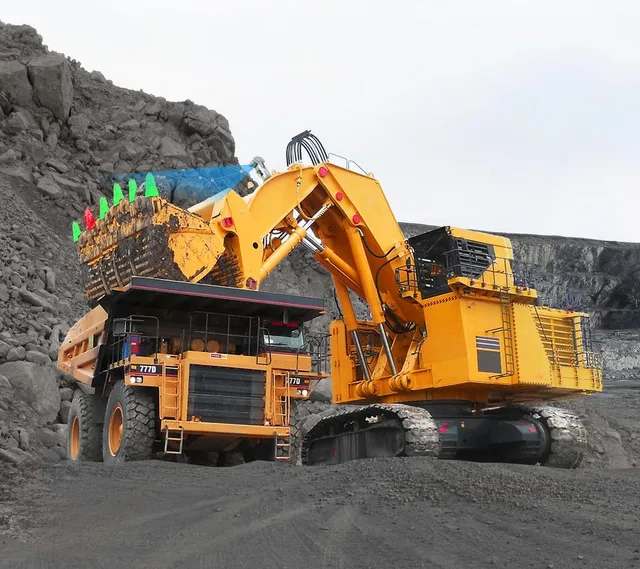
This, after DBM Secretary Amenah Pangandaman approved the Special Allotment Release Order (SARO) amounting to PHP495,129,744 to the DPWH.

“This (SARO) is to cover the payment of right-of-way for properties affected by the NLEX-SLEX Connector Road Project,” the DBM said in a statement.

Pangandaman acknowledged that acquiring ROW is crucial in implementing the NSCRP.

“That’s why securing the payment for all affected properties is very important. And we also thank our kababayan (countrymen) for their solidarity and cooperation. Importante po ‘yun para umusad ang proyekto (That’s important for the project to push through),” she said.

The DBM said the fund would be charged against the program, activity, or project under the DPWH’s 2023 budget approved for release by Pangandaman on Feb. 22.

Pangandaman said the fund release would further boost the Marcos administration’s “Build, Better, More” infrastructure development program.

“As we continue the timely release of funds under the 2023 General Appropriations Act, the DBM also ensures that priority projects and programs of the Marcos Jr. administration will be provided with the needed budget at the soonest possible time,” she said.

“The budget for the right-of-way payments for the NSCRP will definitely boost our Build, Better, More program,” Pangandaman added.

In January, DPWH Secretary Manuel Bonoan said civil works for the NSCRP is 69 percent complete, while the ROW acquisition is 94 percent complete.

The construction of the PHP12.20-billion NSCRP began in May 2019.

Targeted to be completed in December 2023, the NSCRP is approximately an eight-kilometer, four-lane elevated toll expressway extending the NLEX southward from the end of Segment 10 in C3 Road, Caloocan City to PUP Sta. Mesa, Manila and connecting to the Skyway Stage 3, and mostly traversing along the PNR rail track.

Upon completion, the travel time from SLEX to NLEX will be reduced from two hours to just 20 minutes. It is projected to benefit 35,000 motorists per day.

The project seeks to help decongest traffic in Metro Manila, as well as stimulate development in Manila, Caloocan, Malabon, Navotas and other surrounding areas.


Article courtesy of the Philippine News Agency

March 01, 2023

Delfin Lorenzana, chairperson of the Bases Conversion and Development Authority delivers his message during the BCDA Fellowship for Central Luzon Media at Hilton Clark Sun Valley Resort in Clark, Pampanga province on Tuesday (Feb. 28, 2023). Lorenzana calls on all sectors to unite for the progress and development of New Clark City as well as nearby areas in Central Luzon. (Photo by Marna Del Rosario)

The Bases Conversion and Development Authority (BCDA) is seeking to harness the potential of the New Clark City into a smart, sustainable and inclusive one that could help in accelerating growth in Central Luzon.

This is anchored on the economic agenda and the Build Better More program of the Marcos administration.

BCDA president and chief executive officer Aileen R. Zosa said on Tuesday the new BCDA leadership fully supports the administration’s eight-point socio-economic agenda as reflected in the Philippine Development Plan 2023-2028 and its mission to propel economic and social transformation in the country in order to provide more jobs and lift more Filipinos from poverty

“New Clark City is BCDA’s answer to reach this goal. Through the development of New Clark City, we not only strive to decongest Metro Manila, but we will also provide a catalyst to spread growth in Central Luzon and other provinces,” Zosa said in a statement.

To realize this goal, the BCDA has lined up several high-impact projects and programs in New Clark City, particularly in the fields of sustainable development, renewable energy, information and communication technology (ICT), estate management, transportation, tourism and smart city technologies, among others.

Once fully developed, New Clark City is projected to become the home of about one million residents, and provide job opportunities to around 600,000 Filipinos.

Zosa cited the importance of building strong partnerships with other government agencies, the private sector, and foreign allies to accelerate the development of New Clark City.

“New Clark City is a massive undertaking that the BCDA cannot do alone. We need the support of our partners in the public and private sectors to implement our programs and projects and ensure that Filipinos will really get the world-class metropolis they deserve,” she said.

Meanwhile, BCDA Chairman Delfin Lorenzana underscored the importance of synergy to attain sustainable development goals.

“Synergy means to unite all the areas here such as Bulacan, Tarlac, Pampanga, Subic and Bataan. Hindi tayo magkakakompetensya (We are not competitors). Let us join forces together to develop these areas. This is the natural expansion of Metro Manila. So, expect more developers to come here not only here in Clark but also in other nearby areas,” Lorenza said in his message during the BCDA Fellowship for Central Luzon Media at Hilton Clark Sun Valley Resort on Tuesday.

As of end-2022, investments committed by private and government locators in New Clark City have reached PHP95.51 billion while actual investments infused have already hit PHP14.59 billion.


Article courtesy of the Philippine News Agency

March 01, 2023

Photo credit: Celsius Resources

Highlights

  • Assay results from three additional drill holes have all confirmed further extensions to the shallow, high-grade copper mineralisation at MCB.
     
  • Assay result highlights include:
    • 51.3m @ 0.93% copper and 0.06g/t gold from 7.7m in drill hole MCB-042
       
    • 101.5m @ 0.90% copper and 0.18g/t gold from 9m in drill hole MCB-043
       
    • 131.1m @ 0.93% copper and 0.23g/t gold from 11m in drill hole MCB-044
       
  • The favourable results from the drilling campaign enhances confidence in the updated 2022 Mineral Resource estimate for MCB.

Celsius Resources is pleased to announce it has received further shallow and high-grade copper assay results from the company’s drilling program at its flagship MCB Copper-Gold Project, held under its Philippine subsidiary Makilala Mining Company, Inc. (“MMCI”). 

The results continue to identify new positions of shallow mineralisation in line with previous drilling results from holes completed at MCB over the last two years, and historical drilling information completed earlier by Freeport McMoRan.

Celsius Executive Director and MMCI Country Operations Director, Peter Hume said:

“We continue to see higher-grade sections defined over a broad area now at shallow levels. The earlier success we had in 2022 defining new shallow higher grade copper mineralisation is continuing into 2023.

We still have further tests to carry out on the possible extensions to these higher-grade copper zones which we believe will continue to improve the proposed production schedule, specifically during the early years, as part of our Feasibility Studies.

MCB is a unique copper-gold mine opportunity in the Philippines, with a Memorandum of Agreement forged with the Balatoc Community and is now in the process of securing a mining agreement with the Philippine Government, paving the way to successfully developing the MCB Project and mutually benefitting our shareholders and local stakeholders alike.”  


To read the full announcement, please click here.

March 01, 2023

Photo credit: Bilyonaryo

Integrated energy company Semirara Mining and Power Corporation (SMPC) ended 2022 with a consolidated net income of P39.9 billion, more than double (146%) its previous-year all-time high of P16.2 billion.

Robust domestic coal shipments and higher spot electricity sales, along with elevated market prices account for the record-breaking results.

Domestic coal sales jumped by 33 percent from 5.8 million metric tons (MT) to a historic high of 7.7 million MT while exports slumped by 24 percent from 9.4 million MT to 7.1 million MT.

“Last year, we focused on the Philippine, South Korean and other ASEAN markets to lessen our dependency on China, which had been importing heavily discounted Russian coal,” explained SMPC president and COO Maria Cristina C. Gotianun.

“Diversifying our market focus allowed us to get the best price for our inventory,” she added.

Average selling price (ASP) of Semirara coal spiked by 91 percent from P2,695 to a record level of P5,136 on the back of soaring index prices and higher-grade coal sold.

Meanwhile, combined spot electricity sales from SMPC subsidiaries SEM-Calaca Power Corporation (SCPC) and Southwest Luzon Power Generation Corporation surged by 83 percent from 1,028 gigawatt hours (GWh) to 1,881 GWh.

Spot electricity ASP expanded by 35 percent from P5.51 per kilowatt hour (KWh) to P7.46/KWh because of thin supply-demand margins and higher fuel costs.

For the fourth quarter alone, SMPC recorded a 34-percent drop in consolidated net income from P5.9 billion to P3.9 billion mainly due to higher stripping costs, lower average foreign exchange rate and an income tax and related expense of P1 billion in relation to the deferral of the Molave mine income tax holiday for the year 2020. This move will effectively extend the company’s tax break until 2023.

Coal sales from October to December rose by 20 percent from 2.5 million MT to 3 million MT, largely driven by a 73-percent rebound in domestic shipments from 1.1 million MT to 1.9 million MT.

During the same period, average selling price of Semirara coal grew by 9 percent from P4,452 to P4,861 due to the combined effect of elevated market prices and 242-percent increase in lowergrade coal sales from 212,431 MT to 736,674 MT.

The power segment reported a 38-percent decline in spot sales from 538 GWh to 335 GWh because of the 86-day maintenance outage of SCPC Unit 1 and 42-day unplanned outage of SCPC Unit 2.

Spot electricity ASP expanded by 42 percent from P5.69/KWh to P8.06/KWh owing to supplydemand imbalances and elevated fuel costs.


Article courtesy of the Philippine Stock Exchange

March 01, 2023

Photo credit: Bilyonaryo - Philex Mining Corporation 

Philex Mining Corporation, one of the oldest and largest gold and copper producers in Southeast Asia, and an advocate of right and principled mining, announced the completion of its financial results for Y2022.

The Company added Php190 million Core Net Income in 4Q2022 to the Php1.543 billion core net income for the first nine months ended September 30, 2022, which resulted to a full year core net income at Php1.733 billion as realized Gold and Copper prices recovered from its decline during 3Q2022, while the Peso to US$ exchange rate appreciated by 3%.

Favorable metal prices and foreign exchange rate kept operating revenues and core net income within safe levels. Operating revenues slightly declined by 5.4% to Php9.262 billion in 2022 from Php9.797 billion in 2021. Operating revenues in 4Q2022 at Php2.203 billion was lower compared to Php2.576 billion in 4Q2021. Revenues during the first half of the year cushioned the impact of the lower revenues in 4Q2022 to the total revenues for the year 2022. Realized Gold prices were also in the highest levels during 1H2022 reaching $1,897 per ounce in 1Q2022, while Copper reached $4.58 per pound.

PRODUCTION

Tonnage milled for 4Q2022 was at 1.878 million tonnes, slightly higher than the 1.873 million tonnes in 3Q2022, but lower than the 1.972 million tonnes of 4Q2021. The total tonnage milled in 2022 reached 7.432 million tonnes, 6.5% lower than the 7.946 million tonnes for 2021. Gold ore grades declined by 5.6% while Copper ore grades improved by 2.1%. Gold output in 4Q2022 reached 11,211 ounces adding to the 37,356 ounces for the three quarters ended September 2022, ending the year with 48,567 ounces, lower by 12% than the 55,149 ounces gold output for 2021. Copper output for 4Q2022 was 6.061 million pounds adding to the 19.025 million pounds produced for the first three quarters of 2022 and ending the full year Copper output at 25.086 million pounds, slightly lower than the 26.200 million pounds 2021 output.

OPERATING COSTS AND EXPENSES AND EBITDA

Operating cost and expenses were slightly up by almost 8% at Php7.120 billion for 2022 compared to the Php6.598 billion for 2021.This was largely attributable to the increases in operating costs that started during 3Q2022 due to the increase in the cost of materials and supplies and logistics expenses influenced by inflationary pressures and depreciation of the Peso against US$ during 2022.The increasing trend in coal prices in the global market directly impacted and increased the operating costs of the Company’s power provider that resulted to higher power costs charged to the Company beginning 4Q2022. The 4Q2022 operating costs and expenses increased by 11% to Php2.002 billion compared to Php1.800 billion in 3Q2022 and higher by 14% when compared to the same period in 2021 at Php1.755 billion.

The higher operating cost and expenses in 2022 negatively impacted EBITDA level for 2022 reaching to only Php3.524 billion compared to Php4.317 billion in 2021.This is the combined effect of 5.4% lower revenues and 8% increase in operating cost and expenses.

With our performance in 2022, the Board declared a cash dividend of 2 centavos (Php0.02) per common share aggregating to Php116 million, to shareholders on record as of March 13, 2023, which will be paid on March 24, 2023, as Philex preserves cash surplus as part of the initial capital for the development of Silangan Project.

OUTLOOK

The change in administration brought about by the 2022 national and local elections and, with it, government pronouncement on support for the mining industry somehow tempered the impact of the continued threat of COVID-19, the disruption to global supply chain with the unprovoked Russian invasion of Ukraine, and the spectre of a global recession.

The volatility of the copper and gold prices and the fluctuation in the foreign exchange rate likewise alleviated the situation. This was also the year that the company continuously implemented maintenance and repairs of its ageing mill equipment, thus, allowing the company to prepare for any eventuality. Resilience was really the name of the game.

Towards the end of the year, the results of confirmatory drilling and technical studies identified additional mineable reserves that can be mined up to December 31, 2027, thus extending the life of mine of Padcal up to 2027.

For 2023, the Company will continue to pursue relentless improvements to sustain this possible mine life extension and will also look for other business opportunities particularly near Padcal mine. The Company will likewise explore more participation in the “green metals space” particularly with nickel and its importance to global energy transition.

At the start of this year, a term sheet was signed between the Company and Macawiwili Gold Mining and Development Co., Inc. (“MGMDCI”) that outlined the parties’ clear intentions to explore commercial, financial, and technical avenues in preparation for possible shares acquisition by the 4 Company in MGMDCI primarily focusing on MGMDCI’s properties adjacent to the existing Padcal mine.

MGMDCI has over 800 hectares of contract area under its Mineral Production Sharing Agreement (“MPSA”) located adjacent to the Company’s existing Padcal mine.

In 3Q2022, the Company completed the stock rights offering as part of the funding plan for the financing of the Silangan project. On the other hand, wholly owned subsidiary, Silangan Mindanao Mining Co. Inc. (“SMMCI”) is in the final stages of the debt syndication process to raise additional funding to complete the funding requirement of the Silangan project. Further, the development works in the Silangan project is in full swing and the decline portal will be completed by the end of March and its completion will pave the way for the start of the ground woks on the access decline to the ore body. The tunnel driving will commence in the beginning of 2Q2023 and will trigger the start of the mine development.

“We went into 2022 knowing fully well what we were up against,” says Eulalio B. Austin, Jr., Philex president and CEO. “We did not expect the global uncertainty to wane, but we were cautiously optimistic that 2022 would be another good year for Philex. There had been operational challenges, coupled with the high levels of global inflation, the volatility of currencies and of metal prices, but with careful planning and adaptation to the changes in business conditions, we were able to achieve our targets.”

Austin adds that “the untiring efforts and cooperation of the women and men of Philex were greatly appreciated, and we expect the same coming into 2023. The lines were drawn and our agility to adapt to the changing situations will spell the difference. We can change our directions, but never our destination.”

“As I keep telling our employees,” Austin emphasized, “the best is yet to come for Philex Mining.”

“The consensus is that global growth would slow down in 2023,” according to Philex chairman, Manuel V. Pangilinan. “This is undoubtedly an impact still of the war in Ukraine and the collateral adverse inflationary effect on food, power, and fuel. Our country will not be spared from this deceleration, but perhaps lesser than other economies. The main hurdles would be inflation and interest rates.”

“That being said, we still expect Philex Mining to grow in 2023. The recent signing of the term sheet with MGMDCI coupled with the completed confirmatory drillings that successfully identified additional mineable reserves that extended the Padcal mine life from 2024 to 2027 are both good starts to what looks like a promising year. Add to this the expected developmental milestones in our ongoing Silangan project and the continued government support and it will be an exciting year for all of us.”

“We continue to pool our efforts together, do things the right way to the best of our abilities, and keep believing in ourselves and in the Almighty.”


Article courtesy of the Philippine Stock Exchange