February 28, 2023

Philippine Resources Journal welcomes a new contributor to our editorial team, Engr. Edison Mating.

Based in Baguio City, Edison is a mining engineer specializing in mine planning and mining studies. He also promotes global mining education as a volunteer in various academic institutions.

He has worked with some of the biggest mining companies in the country, mostly with Lepanto Consolidated Mining in Benguet and with TVI Resource Development in Zamboanga del Sur.

Edison has 5 years of practical experience in underground cut-and-fill mining, open cut/open pit mining focused on mine planning, design and scheduling, backfill engineering, and mine studies.

He has also worked with international mining consultants involving backfill systems, mine-to-mill reconciliation, and drilling and blasting studies.

Edison holds a Bachelor of Science Degree in Mining Engineering from Saint Louis University (SLU), an Executive Micro-diploma in Economic Leadership for Mining from The University of British Columbia, and a Professional Certificate in Foundations of Modern Mining from Curtin University and The University of Queensland.

A past president of the SLU Mining Engineering Society, Edison is also a member of the Philippine Society of Mining Engineers and the Young Mining Professionals based in Brisbane, Australia.

Edison also writes for NewsMiner and his own Minding Mining blog. He may be contacted at edison.mating@yahoo.com.
February 28, 2023

Photo credit: OceanaGold

OceanaGold Corporation reported its financial and operational results for the three months and full year ended December 31, 2022. 

Gerard Bond, President and CEO of OceanaGold said, "2022 was a successful year on multiple fronts for OceanaGold. We achieved record low safety outcomes, outperformed at Haile, returned Didipio to full production ahead of schedule, delivered on group guidance and generated strong free cash flow, which allowed us to reduce net debt by nearly $70 million. We also successfully progressed our organic growth projects, notably the completion of the permitting process for the Haile underground expansion and delivered some exciting exploration results."

"Looking ahead to 2023 and beyond, our focus is to deliver on our near-mine, lower risk, organic growth profile, notably the Haile expansion project. Our three-year outlook is for production growth to over 600,000 ounces of gold by 2025, with a projected improvement in margins and declining capital spending leading to a significant increase in projected free cash flow in that period. Additionally, we will continue to invest in the exciting exploration opportunities across the business, with a focus on near-mine high return targets at Didipio, Haile and Wharekirauponga."

"This strong operational and financial performance in 2022, strengthened balance sheet and the confidence we have in our outlook has resulted in the Board determining to reinstate the Company's dividend policy and pay a  $0.01 per share semi-annual dividend payable in April 2023." 

Full-Year 2022 Highlights

  • Achieved a record low full year recordable injury frequency rate of 2.3 per million hours worked.
  • Achieved consolidated full year guidance with gold production of 472,201 ounces at All-In Sustaining Costs ("AISC") of $1,407 per ounce on gold sales of 469,045 ounces.
  • Fourth quarter consolidated gold production of 120,918 ounces at AISC of $1,602 per ounce on gold sales of 118,667 ounces.
  • Full year revenue of $967.4 million, EBITDA of $382.1 million and Net Profit of $132.6 million.
  • Fourth quarter revenue of $238.4 million, EBITDA of $109.3 million and Net Profit of $41.0 million.
  • Full year adjusted earnings of $0.21 per share and operating cash flow of $0.54 per share, including $0.04 and $0.12 cents per share respectively in the fourth quarter.
  • Generated full year free cash flow of $57.7 million, including $2.7 million in the fourth quarter.
  • Repaid $100 million of the Company's revolving credit facility, reducing drawn bank debt to $150 million.
  • Net debt of $170.2 million as at December 31, 2022, at a leverage ratio of 0.45 times.
  • Haile SEIS Record of Decision and Mine Operating Permit received, completing the permitting process for the expansion.
  • Dividends reinstated, with a semi-annual dividend of $0.01 approved and payable in April 2023.

2023 Guidance and Multi-Year Outlook

  • Consolidated 2023 gold production guidance of 460,000 to 510,000 ounces and 12,000 to 14,000 tonnes of copper.
  • Consolidated 2023 AISC guidance of $1,425 to $1,525 per ounce sold including cash costs of $800 to $900 per ounce sold, both on a by-product basis.
  • Multi-year consolidated gold production and AISC outlook of:
    • 550,000 to 600,000 ounces of gold and 12,000 to 14,000 tonnes of copper at an AISC of $1,300 to $1,450 per ounce sold in 2024; and
    • 580,000 to 630,000 ounces of gold and 12,000 to 14,000 tonnes of copper at an AISC of $1,100 to $1,250 per ounce sold in 2025.
  • Three-year gold production growth rate of approximately 9% per year from 2022 at a decreasing AISC.


Article courtesy of Oceangold. The full press release can be found HERE

February 27, 2023

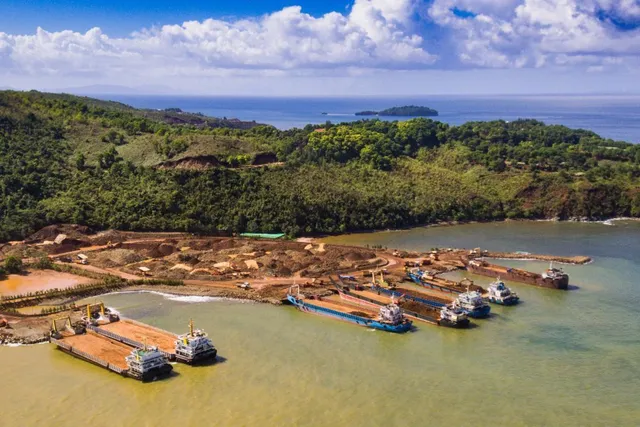
Photo credit: TVI-Agata's nickel DSO process

To paraphrase a popular mining saying, “They are making a ton of money and the Philippines is not getting a nickel.” The Philippines needs to maximize revenue from its nickel mining operations. Further up, the mining value chain presents more opportunities for the country to realize the contribution of mining. The US Geological Survey (USGS) lists nickel, cobalt, lithium, and rare earth metals as critical minerals. Stainless steel production, super alloys, and rechargeable batteries all use nickel. It is one of the world’s most important metal markets at $20 billion in size. The World Economic Forum reports that the world’s battery capacity must grow 40 times larger than it is today, and electric vehicles will require 80% of that future capacity. A Tesla car battery would require up to 50 kilograms of nickel.

In addition, many major countries vowing to stop gas and diesel vehicles are driving further the global boom in electric vehicles (EVs). As the world’s second top nickel ore producer, it is time for the Philippines to advance further up the nickel mining value chain. But is the country ready or is it too late?

Photo credit: Tesla 

The Mining Value Chain

The mining value chain starts with the first stage of the mine life cycle, exploration and analysis. Value steadily rises with new information that is favorable to the project. Each bit of knowledge brings it closer to the project construction and commissioning stage, known as the development stage. The value of a mine rises sharply in this stage as it closes to the production stage. Value remains steady in the production stage and declines as it approaches closure and rehabilitation. If we magnify into the production stage and look further into the sale and marketing of metals, we will realize that the most significant value added is in the final product. While this might be as simple as it looks in precious metals such as gold, the process is complex in critical minerals like nickel.

Current Position in the Value Chain

According to the Observatory of Economic Complexity (OEC), nickel is the 9th most exported product in the Philippines. The product comes from 32 operating nickel mines and 2 processing facilities. It is classified as direct-shipping ore (DSO), as most nickel operations in the Philippines directly ship nickel laterites to China without further processing to increase its value. However, this is suitable for high-pressure acid leach (HPAL) ores. The Philippines, Indonesia, Cuba, and New Caledonia contribute nickel laterites to the world market.

In 2022, the Philippines was the world’s largest nickel producer, producing 370,000 metric tonnes or 10% of the global mined nickel output. S&P reports that the Philippines' nickel ore exports to China amounted to $2.67 billion in 2022, according to data from China's General Administration of Customs. That is 96.5% of the Philippines' nickel ore exports according to the Philippine Statistics Authority.[1]

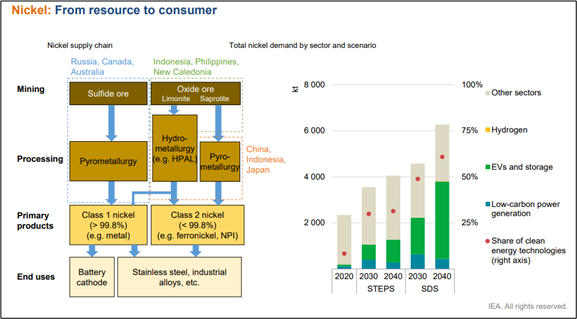
Nickel laterites or nickel oxides are low-grade, high-tonnage ore that accounts for 62.4% of the global supply. Chinese steel uses the typical products of nickel laterites such as nickel pig iron and ferronickel. The remaining 37.5% nickel supply is nickel sulfide, which is high-grade but rare nickel found in countries like Canada, Australia, China, Russia, and Greenland. Their products are typically nickel metal and sulfate, primarily used in electroplating and lithium-ion cathode material. Less than 10% of that supply is in sulfate form; not all are battery grade. [2]

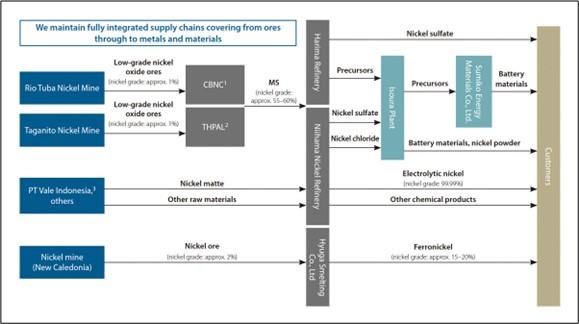
Of the nickel mines operating in the country, only Nickel Asia Corporation (NAC), the country’s top producer of nickel, processes its nickel laterite ores. Coral Bay Nickel Corporation and Taganito HPAL operate a hydrometallurgical processing plant that uses the High-Pressure Acid Leach (HPAL) process. HPAL can effectively and efficiently convert low-grade nickel lateritic ores from 1.14%-1.44% nickel to 55 to 60% nickel, also known as mixed sulfides (MS).

Mixed sulfides, a mixture of cobalt and nickel sulfides and an intermediate product, are refined further in Japan at the Niihama Nickel Refinery and Harima Refinery. They produce electrolytic nickel and cobalt, nickel chloride, and nickel sulfate. These are further processed at the Isoura Plant to produce either battery-grade nickel or ferronickel. Battery grade nickel or Class 1 nickel is typically >99.8% Ni. Nickel pig iron (NPI) or ferronickel used for stainless steel and alloy is class 2 nickel or <99.7% Ni.

 Source: Sumitomo Metal Mining. HPAL Technology for Nickel Recovery. [3]

Value increases as the products are refined up to their final form in the supply chain. More value is added to battery production, and eventually electric vehicle production. Thus, the Philippines needs to get added value and opportunities along the production line, at least for the primary products. Countries like China, Indonesia, and Japan get this added value in the processed product stream.

The Philippines, from its current standing, needs to move further up the value stream at least to the primary products. Additionally, it might be best if it can go to battery cathode or stainless-steel production, as most nickel ore is suitable for this.

Source: International Energy Agency (IEA). The Role of Critical Minerals in Clean Energy Transitions. [4]

Recharging the Philippine Nickel Mining Industry

The Philippines, through the Department of Trade and Industry (DTI) participated in the Indo-Pacific Economic Framework for Prosperity (IPEF) Ministerial Meeting in Los Angeles, U.S.A last September 2022. The meeting highlighted that the U.S. Government will extend a grant for the Philippines’ nickel ore processing for the manufacture of batteries through a partnership with an American firm. [5]

In December 2022, a study grant was awarded to Eramen Minerals Inc. (EMI) to evaluate the technical and economic viability of developing a nickel processing facility at the site of EMI’s mine in Zambales province. The plant is expected to use EMI’s nickel ore to produce refined nickel and cobalt products for sale as battery precursor materials. The study will help define the technical specifications for the facility and promote alignment with high environmental, social, and governance standards. [6]

Last January, Chinese investors pledged to invest US$7.32 billion in the electric vehicle and mineral processing sectors in the Philippines during President Ferdinand Marcos Jr.'s first state visit to China on January 05, 2023. [7] Last February, Global Ferronickel Holdings Inc. coordinated with a potential technology partner for its plan to build a $100-million steel plant in Bataan. The plant aims to capture around 10% of the market for imported steel. [8]

These are exciting opportunities for the nickel mining space, but policy changes especially on taxes must be balanced as the country needs to maintain a healthy business environment favorable to foreign investors, the government, and its citizens.

Balancing Interests

The government is planning to impose up to 10% tax on nickel ore exports in what the Department of Environment and Natural Resources (DENR) Secretary Antonia Yulo Loyzaga describes as moving out of the supply chain to the value chain. Inspired by the success of nickel’s high-value production in Indonesia, DTI is initiating the government’s industrial policy study to determine whether it will impose an export tax or nickel ban. Another statement from Trade Secretary Alfredo E. Pascual encourages investment in local processing to produce higher-value export products and not resource-based exports. However, following the footsteps of Indonesia is not as easy as it seems for several reasons.

  1. Depleting Reserves. The Philippines' class A nickel reserves dropped by 4.8% to 474.49 million tonnes in 2021, according to The Philippine Statistics Authority. [9] While the Philippines remains among the top countries with nickel ore reserves, there is a huge difference compared to the ore reserves of Australia, Brazil, and Indonesia. Favorable circumstances could quickly shift investors into moving into these countries in the long term. By the time nickel peaks, the Philippines might no longer have that impact on global production. In addition, a future tax on nickel would be meaningless and only discourage smaller mining projects. Dante Bravo, president of the Philippine Nickel Industry Association (PNIA), said the comparison to Indonesia is flawed because it has more reserves to support investments in local mineral processing.
  2. Capital Requirement. A processing facility is a capital-intensive infrastructure, and many small nickel mining operations need to satisfy processing capacities to operate. A more attractive investment solution would be a centralized nickel processing facility for mining operations near each other.
  3. Energy Requirement and Environmental Concerns. Lateritic nickel ores of the Philippines are amendable to high-pressure acid leach (HPAL) requiring substantial energy input. Processing low-grade nickel ores require high volumes of water, resulting in expensive water treatment and disposal. Lateritic ore mining also warrants high tonnage, thus, a larger environmental footprint.
  4. Policy Shifts. The Philippines has an unstable political climate where policies, especially in mining, change every time a new administration takes over. The industry is always at risk. The deposit is not the only focus of mining investment. It also means investment in the national and local government, the community, and the environment. Thus, changing policies is a significant concern for foreign investors.

Overall, the environmental and social costs are the most significant reason for the Philippines to maximize value from mining. Processing facilities abroad do not assume that cost because they just buy into the product after mining, while we struggle to defend the industry and what is left after mining. The Philippines’ nickel mines will not be here forever and not for a very long time. Decisions need to be guided by facts and science for the interest of the common good.


Reference:

[1] Chen. A. (2023, February 02). Philippines seeks to follow in Indonesia’s footsteps with Nickel Export Ban. S&P Global Market Intelligence. https://www.spglobal.com/marketintelligence/en/news-insights/latest-news-headlines/philippines-seeks-to-follow-in-indonesia-s-footsteps-with-nickel-export-ban-74109353

[2] Desjardins, J. (2017, October 30). Nickel: The Secret Driver of the Battery Revolution. Visual Capitalist. https://www.visualcapitalist.com/nickel-secret-driver-battery-revolution/

[3] Sumitomo Metal Mining. (n.d). HPAL Technology for Nickel Recovery. https://www.smm.co.jp/en/sustainability/activity_highlights/article_12/

[4] International Energy Association. (2022, March). The Role of Critical Minerals in Clean Energy Transitions. https://iea.blob.core.windows.net/assets/ffd2a83b-8c30-4e9d-980a-52b6d9a86fdc/TheRoleofCriticalMineralsinCleanEnergyTransitions.pdf

[5] Magkilat, B. (2022, September 15). US vows grant for PH nickel ore processing — DTI. Manila Bulletin. https://mb.com.ph/2022/09/15/us-vows-grant-for-ph-nickel-ore-processing-dti/

[6] Eramen Minerals gets US trade grant. (2022, December 14). Philstar Global

[7] Magkilat, B. (2023, February 06). Chinese firms to invest $7.32 B in nickel, EV, steel, electronics ventures in PH. Manila Bulletin. https://mb.com.ph/2023/01/06/chinese-firms-to-invest-7-32-b-in-nickel-ev-steel-electronics-ventures-in-ph/

[8] Philippine Nickel Industry Associations (PNIA). (2023, February 09). Global Ferronickel in Talks With Potential Partner For $100m Steel Plant. https://www.philippinenickel.org/news-and-updates/mining-news/philippines-proposed-tax-on-nickel-ore-exports-could-kill-industry-group-head/

[9] Philippine Statistics Authority. (2022, June 02). Philippines’ Class A Nickel, Gold, Copper, and Chromite Resources Valued at Php378.04 Billion in 2021 (Press Release). https://psa.gov.ph/content/philippines%E2%80%99-class-nickel-gold-copper-and-chromite-resources-valued-php-37804-billion-2021

February 27, 2023

Photo credit: Global Ferronickel Holdings

The Mines and Geosciences Bureau (MGB) has clarified that the Mineral Production Sharing Agreement (MPSA No. 017-93-IV) between the Philippine government and Ipilan Nickel Corporation (INC) remains in force and valid until 10 April 2025. This allows INC, a subsidiary of diversified conglomerate Global Ferronickel Holdings, Inc., to maintain its exclusive right to conduct responsible mining operations in the Municipality of Brooke's Point, Palawan, covering 2,835 hectares, with 260 hectares already partially declared as a mining area.

Engr. Glen Marcelo C. Noble, Regional Director for MGB-MIMAROPA Region, issued the clarification in a letter dated 21 February 2023 to Brooke’s Point Vice Mayor Mary Jean D. Feliciano in response to a resolution by the Sangguniang Bayan of Brooke’s Point. The resolution sought to investigate the operations of INC following claims that the alleged renewal of its MPSA in 2018 was without the endorsement of the Municipality of Brooke’s Point and that it is operating without a Certificate Precondition (CP) from the National Commission of Indigenous Peoples (NCIP) and a Protected Area Management Board (PAMB) clearance. Director Noble explains that the MPSA did not expire on 05 August 2018 as MPSA No. 017-93-IV was amended on 10 April 2000 to conform to RA 7942, otherwise known as the Philippine Mining Act of 1995. To resolve the issue on the effective date of the MPSA, the DENR has issued the Order dated 21 December 2021 confirming that the effective date of the same MPSA shall be reckoned from the date of the execution of the amended MPSA

Director Noble further clarifies that INC does not need to secure a CP as this requirement only applies to applications filed after RA 8371, or the Indigenous Peoples Rights Act of 1997, was enacted. He cites a letter by the NCIP dated 31 March 2006 stating that INC is no longer covered as it was already awarded an MPSA four years prior on 05 August 1993. INC, on the other hand, has concluded the process of securing a CP in preparation for the renewal of its MPSA in 2025. During a series of community consultations last June 2022 to August 2022 under the guidance of the NCIP, an overwhelming number of indigenous peoples (IPs) voted for the continued operations of INC. In total, 3,739 IPs from Barangays Aribungos and Calasaguen voted in favor of INC versus only 614 dissenters from Barangay Aribungos. In Barangay Calasaguen, 100 percent of the eligible voters were in favor of responsible mining. This led the IPs from Barangay’s Barong-Barong, Ipilan, Mambalot and Maasin to concede in favor of INC.

There is also no need to secure a PAMB Clearance as the MPSA predates the proposed Final Boundary of the Mt. Mantalingahan Protected Landscape (MMPL). It is protected under the pertinent provision of Presidential Proclamation No. 1815, creating the MMPL while recognizing prior or vested rights.

“We are awaiting the renewal of our Mayor’s Permit as we have already submitted the necessary documents and complied with all laws and regulations,” said Alex Arabis, Resident Mine Manager of Ipilan Nickel Corporation.

INC employs over 1,500 people, wherein 90% are residents of Brooke’s Point. The IPs are also well-represented as they make up 28% of the total workforce. To date, INC has spent close to P53.3 million to fund various projects to improve the quality of life in Brooke’s Point and nearby areas.


Article courtesy of the Philippine Stock Exchange

February 27, 2023

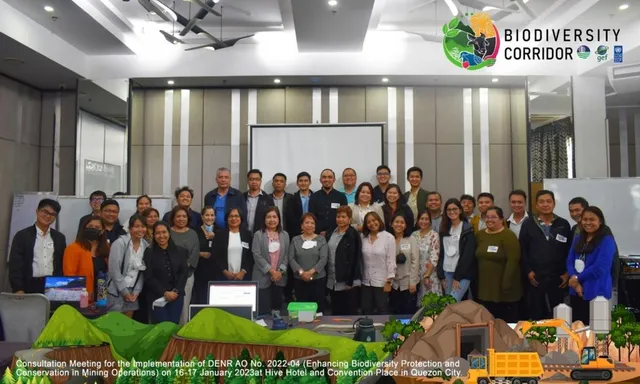
Photo: Participants of the Consultation Meeting for the Implementation of DAO No. 2022-04

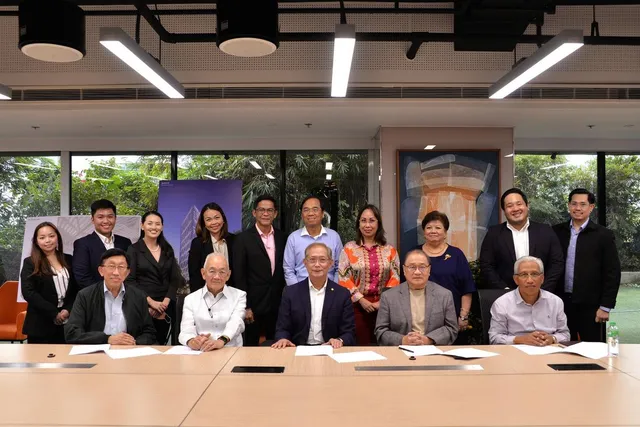
The Mines and Geosciences Bureau (MGB) and the Biodiversity Management Bureau (BMB) of the Department of Environment and Natural Resources (DENR), together with the DENR Global Environment Facility / United Nations Development Program Biodiversity (UNDP-BD) Corridor Project, conducted a Consultation Meeting for the implementation of DENR Administrative Order (DAO) No. 2022-04 re: “Enhancing Biodiversity Protection and Conservation in Mining Operations” on January 16-17, 2023 in Hive Hotel, Quezon City.

This consultation, which is part of the agreements made during the December 22, 2022 meeting with MGB, BMB, and the BD Corridor Project, aims to provide a venue for more in-depth discussion on the issues and concerns that needs to be addressed for the implementation of the DAO on the basis of the recommendations gathered from the previous roll-out of the said policy, and to develop an initial draft DAO 2022-04 Implementation Plan.

A total of 48 participants from the BMB, MGB Central Office and Regional Office Nos. XI and XIII, Forest Management Bureau, Environmental Management Bureau, Ecosystems Research and Development Bureau, Foreign-Assisted and

Special Projects Service, Policy and Planning Service, and the National Project Management Unit and Country Program Management Unit of the UNDP-BD Corridor Project attended the said consultation meeting.

The participants were welcomed by Engr. Teodorico A. Sandoval, OIC, Assistant Director of MGB, and the opening message was delivered by Dir. Natividad Y. Bernardino, OIC Director of BMB. After which, a series of presentations and lectures on best mining rehabilitation and biodiversity conservation practices were delivered by various personnel of MGB, BMB, and ERDB. An open forum was then conducted to clarify all concerns and questions related to the delivered presentations.

On the second day of the learning event, a lecture on the proposed guidelines for the valuation of biodiversity and ecosystem services was conducted for the development of the DAO 2022-04 Implementation Plan. The participants also reviewed and enhanced the DENR Special Order on the Creation of Technical Working Group.

The results of the conducted two-day consultation meeting will then be presented during the remaining leg of orientations on DAO No. 2022-04 for DENR Luzon Cluster (Regions CAR, I, II, III, IV-A) and Visayas Cluster (Regions IV-B, V, VI, VII, VIII) which  will be held this CY 2023.

February 21, 2023

The Department of Public Works and Highways in Central Luzon (DPWH-3) said on Monday it will implement a total of 2,452 infrastructure projects this year.

DPWH-3 Regional Director Roseller A. Tolentino said some PHP98.47 billion was allocated for the implementation of various projects in the region.

Tolentino said Central Luzon received a 35.24 percent increase in this year's budget compared to the PHP72.3 billion released last year.

“Our big-ticket connectivity projects have been given appropriate funding to ensure that these access and bypass roads are fully operational at the earliest,” he said in a statement.

He particularly cited the construction of the Lubao-Guagua-Minalin-Sto. Tomas (LGMST) Road and the Palihan-Mabiga-SBMA Access Road which is now in full swing.

Other big-ticket connectivity projects, he said are the San Ildefonso-San Rafael-San Miguel Bypass Road and Capas-Botolan Road which are set for completion by 2025 and the 68.04-kilometer Dingalan-Doña Remedios Trinidad Road which already started construction.

“We are bent on improving connectivity within the industrial areas of the region so, we have proposed to the Regional Development Council the construction of a four-lane road that will link via an east-west lateral alignment the towns of Lubao and Arayat in Pampanga,” Tolentino said.

Likewise, he said the proposed Sto. Tomas-Arayat Bypass Road will start from the planned Sto. Tomas Interchange of the North Luzon Expressway (NLEX) which is part of the LGMST Road.

Meanwhile, Tolentino also said that of their total budget, some PHP1.3 billion will be spent for the development of important public structures under their jurisdiction.

“Aside from the implementation of projects under our mandate such as the replacement of weak bridges along national roads, and the construction of bypass roads, multipurpose facilities and flood mitigation structures, we are also set to begin the rehabilitation of existing traffic signals at major intersections along Manila North Road (MNR) and Jose Abad Santos Avenue (JASA),” he added. 


Article courtesy of the Philippine News Agency

February 21, 2023

Photo: Bacolod City Mayor Alfredo Abelardo Benitez (right) with officials of China-based Jiangsu Fengchuen New Energy Power Technology Co. Ltd., who arrived in the city earlier this month. On Monday (Feb. 20, 2023), Benitez said they are studying the firm's formal proposal to establish an electric-vehicle manufacturing plant in the city. (Video grab from Albee Benitez Facebook page)

A Chinese firm has submitted a formal proposal to the city government to establish an electric (e)-vehicle manufacturing plant in a still undisclosed area here.

"This is an offshoot of our trip to China," said Mayor Alfredo Abelardo Benitez in a press briefing on Monday.

Benitez, who first met with the investors when he joined President Ferdinand Marcos Jr.'s state visit to Beijing in January, said they have received a draft copy of a memorandum of understanding from Jiangsu Fengchuen New Energy Power Technology Co. Ltd., which is eyeing to invest USD200 million for the proposed project.

"We are reviewing their proposal. They are very serious. There's a document that they submitted (to us), a formal proposal. In fact, I might be meeting with them tonight to expand on this proposal," he added.

Benitez said the company needs assistance for the establishment of e-vehicle charging stations.

"They are planning to enter first our public transportation system. In China, public transportation is mostly, if not a hundred percent, electric vehicles now, in response to the quest for a sustainable and renewable industry," he added.

The mayor said that Jiangsu Fengchuen New Energy Power Technology Co. Ltd. will bring in test units to the city.

"We have to see first-hand if what they said in the presentation is what will really happen. If that happens, we can probably promote the conversion into e-vehicle," he added.

For the vehicle's look or design, the firm has proposed to preserve the cultural identity of Filipino public transport as such the e-vehicle will resemble the Philippines' iconic "Sarao" jeepney.

"These are all proposals. The City Council is studying the formal proposal. Aside from this, I would like to see a proof of concept. Once proven beneficial to our stakeholders, especially to our operators, then we can probably consider helping out into making the program a reality," Benitez said.

The firm's officials arrived in the city earlier this month to hold their first meeting with Benitez.


Article courtesy of the Philippine News Agency

February 16, 2023

Photo credit: The Department of Public Works and Highways

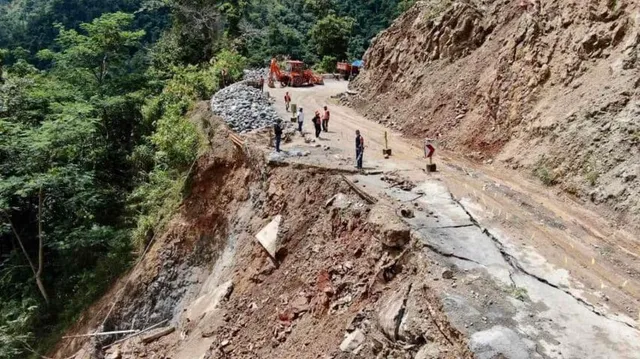
The Department of Public Works and Highways (DPWH) once again met with Japan International Cooperation Agency (JICA) on the implementation of the JICA-grant – Technical Cooperation Project (TCP) on Road Disaster Preventions and Other Countermeasures on Mountainous Roads in the Philippines.

Held on Tuesday, February 14, 2023 at the DPWH Head Office in Port Area, Manila, the meeting was headed by DPWH Senior Undersecretary and JICA-TCP Chairman Emil K. Sadain; Mr. Kuronoma Kenji, Senior Representative of JICA Philippines; DPWH Assistant Secretary and JICA-TCP Project Manager Constante A. Llanes, Jr.; Japan Embassy Representative Matsubra Tomohiro, as well as the representatives and officials of implementing offices.

“This is a timely assembly of experts as the country further strengthens measures that will ensure public safety in case of the “Big One”, and learning from the recent earthquake devastation in Turkey and Syria,” said Senior Undersecretary Sadain.

According to Senior Undersecretary Sadain, the second joint coordinating meeting is a progress assessment of the ongoing implementation of the project in pilot areas of Cordillera Administrative Region (CAR), Regions 7 and 11.

Pilot regions are expected to accomplish the following outputs in the span of two (2) years or until 2025: Output No. 1: Countermeasure Works, Output No. 2: Emergency Response; and Output No. 3: Hazard Mapping while the JICA counterpart shall have Output No. 4: Road Disaster Information Management.

In all pilot regions, topographic survey and geographical survey under Output 1 or Countermeasure Works were either carried out, or is expected to begin within the first quarter. All regions also implemented various slope protection works and currently formulating an emergency response manual, and conducting various workshops and trainings for Emergency Response or Output 2. Pilot road sections were also identified for making hazard maps under Output 3.


Article courtesy of The Department of Public Works and Highways
February 16, 2023

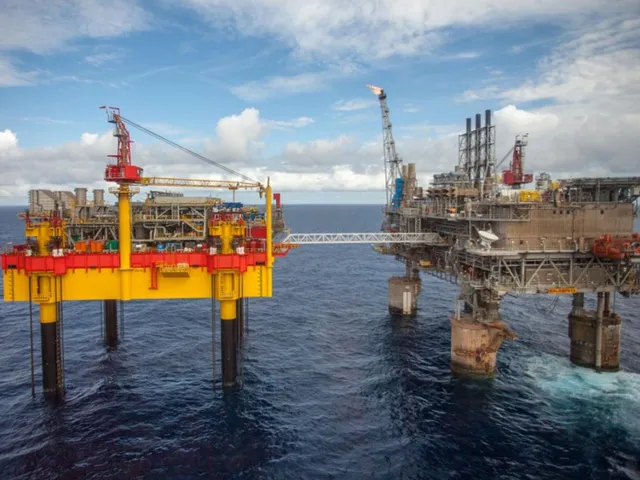
Photo credit: Malampaya gas field 

Fitch Solutions said the Philippines’ gas consumption outlook remains bullish but the administration’s aggressive push for renewable energy (RE) poses downside risks to natural gas consumption in the power sector.

In a commentary released to the media on Wednesday, Fitch Solutions said the country’s gas consumption between 2010 and 2021 averaged 3.5 billion cubic feet (bcf) to 4.4 bcf.

“The outlook for gas consumption remains bullish both reference and clean energy scenarios (CES),” it said.

Under the Philippine Energy Plan 2022-2040, the government aims to expand the gas-fired power-generating capacity to 24.3 gigawatts (GW) in the reference scenario and to 18.9 GW in CES from the current capacity of 3.45 GW.

It added that with the Department of Energy’s (DOE) approval of seven gas-fired power plants with a combined capacity of 7.1 GW, the country’s demand for liquefied natural gas (LNG) from the power sector could go up to 6 million tons per year.

The demand excludes requirements from the existing five power plants that source gas from the Malampaya gas field project.

Also, 10 proposed gas-fired power projects have yet to be approved. They have a total capacity of 8.8 GW.

With the expected depletion of the Malampaya gas field next year, Fitch Solutions said the Philippines will become reliant on LNG imports for power generation starting in 2025.

This year, some LNG import terminals will start their operation to supply the gas demand.

However, Fitch Solutions said the administration’s ongoing energy policy that favors renewable sources could pose significant downside risks to natural gas consumption in the power sector.

“Overall, the outlook for LNG imports remains bullish, but the future role of LNG in the power sector could be at risk if the incumbent Marcos government, which views natural gas as a transition fuel, invokes a change in current energy plans,” it said.

In the long-term energy plan, the government aims to expand renewable power capacity from 7.6 GW in 2022 up to 53.2 GW in the reference scenario and 81.5 GW in the CES.

Several reforms were also made in the first six months of the Marcos administration to lure investments in the RE sector. By Kris Crismundo


Article courtesy of the Philippine News Agency

February 14, 2023

Photo credit: Department of Public Works and Highways
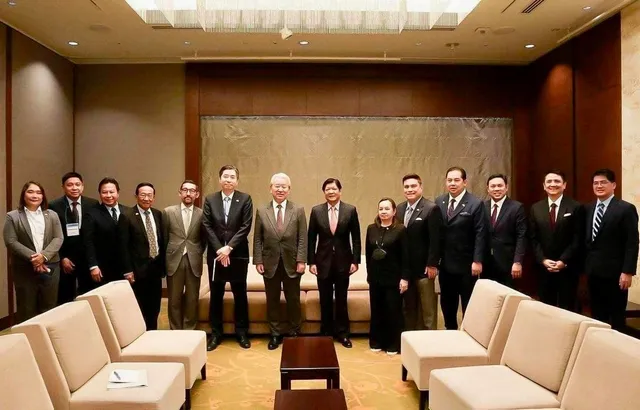
The Japan International Cooperation Agency (JICA), the agency in charge of administering Government of Japan's Official Development Assistance (ODA), is committed to support the Philippines wide ranging infrastructure program focused on socio-economic development.

President Ferdinand R. Marcos Jr. met with JICA President Dr. Tanaka Akihiko wherein the bilateral agency leader reaffirmed commitment to facilitate the steady implementation of ongoing and future economic cooperation projects in the Philippines as one of the top beneficiaries of ODA from Japan.

On his five-day official visit in Tokyo, Japan upon the invitation of Japanese Prime Minister Fumio Kishida, President Marcos was joined in the February 10, 2023 meeting with the JICA Head by members of his official party including former President Gloria Macapagal Arroyo; Senate President Juan Miguel F. Zubiri; House Speaker Ferdinand Martin G. Romualdez; Senator Mark A. Villar; and Secretary Manuel M. Bonoan and Senior Undersecretary Emil K. Sadain of the Department of Public Works and Highways (DPWH).
In light of the “Build Better More” program, the administration of President Marcos intends to maintain strong ties with Japan to provide game changing infrastructure projects designed to better the lives of the Filipino people.

Meanwhile, President Marcos reported at the Philippine Business Opportunities Forum at the Palace Hotel Tokyo a promising Philippine economic performance and wooed top Japanese business leaders to seize emerging investment opportunities in the country.

The Philippine economic team of Department of Finance Secretary Benjamin E. Diokno; Bangko Sentral ng Pilipinas Governor Felipe M. Medalla; Department of Budget and Management Secretary Amenah F. Pangandaman; National Economic and Development Authority Secretary Arsenio M. Balisacan earlier discussed the Philippine economic performance and outlook at the Philippine Business Opportunities Forum.

In a panel discussion on the topic infrastructure and industry at the forum, DPWH Secretary Bonoan together with Department of Trade and Industry (DTI) Secretary Alfredo E. Pascual, Department of Tourism (DOT) Secretary Maria Esperanza Christina Garcia Frasco, and Department of Transportation Secretary Jaime J. Bautista explained some of Philippines massive infrastructure development initiatives taking off from “Build Build Build” program efforts of the previous administration and continued and expanded into “Build Better More” agenda under the President Marcos administration.

President Marcos and Prime Minister Kishida in their meeting concurred on working toward early loan provision for the construction of the Dalton Pass East Alignment Alternative Road, the Central Mindanao High-Standard Highway, and the Second San Juanico Bridge which have available completed feasibility studies under JICA grant.

The leaders also affirmed the viability of utilizing the private-public partnership (PPP) scheme in future cooperation for the construction or operation and maintenance of roads; and long-span tunnels & bridges in the Philippines, given the opportunities to leverage the technical expertise of Japanese companies. Both President Marcos and Prime Minister Kishida expressed hope for further implementation of the Memorandum of Cooperation (MOC) of October 2022 for the construction and operation and maintenance of tunnels and related facilities.

On resilience-building against natural disasters and adaptation to climate change, Japan is committed to further support works for the Pasig–Marikina River, preparation of the Parañaque Spillway, and formulation of new projects based on a prospective Davao Flood Control Master Plan to address the issue of frequent floods.

At present, some of the Philippines' biggest infrastructure projects supported by JICA under DPWH portfolio and implemented by the Unified Project Management Office (UPMO) operations headed by Senior Undersecretary Sadain are the widening of 23-kilometer Arterial Road (Plaridel) Bypass Project Phase 3 in the Province of Bulacan; improvement and maintenance of about 1,184-kilometer of arterial national roads under Road Upgrading and Preservation Project (RUPP); 30-kilometer Central Luzon Link Expressway (CLLEX) Project from the connection of Subic-Clark-Tarlac Expressway (SCTEX) and Tarlac-Pangasinan-La Union Expressway (TPLEX) in Balingcanaway, Tarlac City and ends at the Daang Maharlika Highway in Cabanatuan City; construction of a four lane – 45.5-kilometer Davao City Bypass Construction Project including twin tube road mountain tunnel project that will be the longest in the Philippines at 2.3 kilometers.

The Islamic City of Marawi has benefited from a 2-billion yen grant for the design and build of 18.97-kilometer Marawi Transcentral Road Phase 1 under the Programme for the Support to Rehabilitation and Reconstruction of Marawi City.

In support of the government's peace-building initiatives, JICA is also financing the Road Network Development Project in Conflict-Affected Areas in Mindanao (RNDP-CAAM) involving the development, construction, and improvement of about 174.50-kilometer access roads connecting Bangsamoro Autonomous Region in Muslim Mindanao (BARMM) and other regions in Mindanao including another 18.78-kilometer Marawi Transcentral Road Phase 3.

Japan thru JICA has also committed to support the construction of Cebu-Mactan Bridge and Coastal Road Construction Project, which is now under detailed engineering design stage.

To protect flood-prone areas and strengthen the resilience to climate change, four sub-projects were completed under the Flood Risk Management Project for Cagayan River, Tagoloan River, and Imus River.

On-going flood control projects are the channel improvement works for Middle Marikina River including the construction of Manggahan Control Gate Structure and construction of Cainta Floodgate and Taytay Sluicegate at the joining sections of Cainta and Taytay rivers to Mangahan Floodway under the Pasig-Marikina River Channel Improvement Project Phase IV; Flood Risk Management Project for Cagayan De Oro River; and Cavite Industrial Area Flood Management Project.

The Japanese government is also extending financial support for the construction of interchanges on major intersection in Quezon City under the Metro Manila Interchange Construction Project, Phase VI (MMICP-VI) and the Metro Manila Priority Bridges Seismic Improvement Project to strengthen the resiliency of transport network in Metro Manila by improving the durability and safety of Guadalupe and Lambingan Bridges against large scale earthquake.

The proposal to conduct feasibility studies for Liloan Bridge and Butuan Bridge to comprise the Phase II of Urgent Bridges Construction Program for Rural Development (UBCPRD II) has also been submitted for JICA’s consideration.


Article courtesy of the Department of Public Works and Highways
February 14, 2023

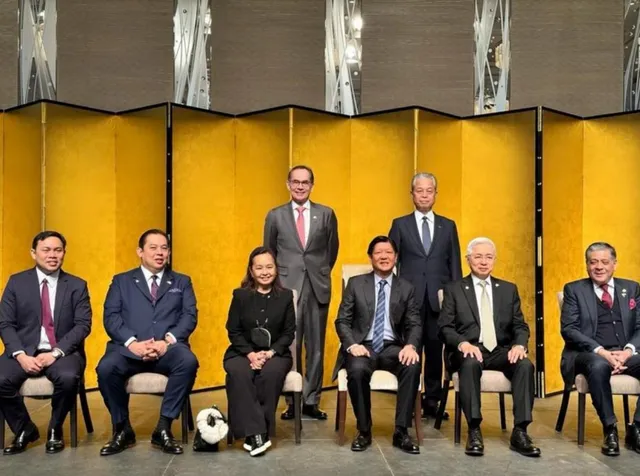
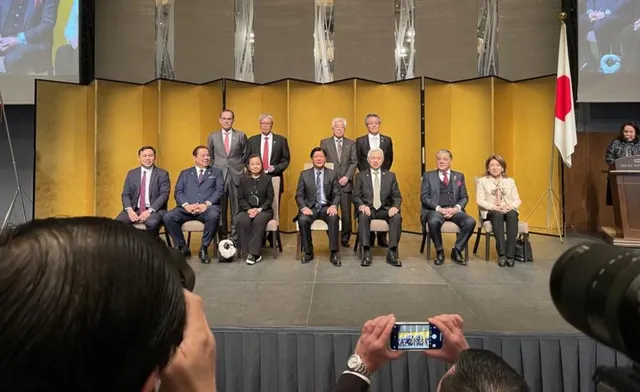
Photo: (seated from left) Senator Mark Villar, House Speaker Martin Romualdez, Former President Gloria Macapagal-Arroyo, Philippine President Ferdinand R. Marcos Jr., Department of Trade and Industry Secretary Alfredo Pascual, Special Assistant to the President Antonio Lagdameo Jr., together with AboitizPower Chairman Sabin Aboitiz and JERA President Satoshi Onoda (standing).

On Friday, February 10, Aboitiz Power Corporation (AboitizPower), the holding company of power-related investments of the Aboitiz Group, signed a memorandum of understanding (MOU) with JERA Co., Inc. (JERA), Japan’s largest power generation company, to jointly assess the potential for greener fuels. The MOU signing was done in the presence of President Ferdinand “Bongbong” R. Marcos Jr. together with key officials from the Philippine Government.

Under the MOU, AboitizPower and JERA commit to collaborative efforts in assessing the feasibility of ammonia co-fired power generation and further development of the ammonia and hydrogen value chains in the Philippines. This will support the decarbonization efforts of AboitizPower and the Philippines, with long-lasting effects that will benefit the entire world.

The MOU was signed by AboitizPower Chairman Sabin Aboitiz and JERA President Satoshi Onoda.

Together with its partners, AboitizPower is the Philippines’ largest owner and operator of renewable energy (RE) based on installed capacity. Through this recent undertaking, AboitizPower continues to lead the country’s transition to a sustainable future with its commitment to the research and generation of renewable energy. Its impact will be felt beyond energy stability and emission reduction, as the collaboration brings about the potential of developing the Philippines as a hub and leader in the region for greener fuels.

“By joining forces in the pursuit of greener fuels, our two companies are not only advancing the cause of sustainability, but also paving the way for a cleaner and more vibrant future. Ammonia offers a compelling solution for decarbonizing the power sector, and by looking into it, we are taking a step towards developing the infrastructure needed to support the ammonia and hydrogen value chains,” said AboitizPower Chairman Sabin Aboitiz.

JERA operates in more than 10 countries with a total portfolio of 80 gigawatts (GW), achieved through its expertise in RE and zero-emission thermal power generation using ammonia and hydrogen. This recent MOU leverages JERA’s wealth of knowledge and experience to effectively fuel the decarbonization and sustainability efforts of AboitizPower and the Philippines. This is in line with JERA’s mission to provide cutting-edge solutions to the world’s energy issues and its vision of being a global leader in LNG and renewables to spark the transition to a clean energy economy.

Around the world, there have been increasing developments in the use of large-scale hydrogen production projects for renewable energy and natural gas. Similar to hydrogen, ammonia is an alternative fuel that does not emit any carbon dioxide when it is burned. As it is easier to handle than liquified hydrogen, it is expected to be used as a hydrogen energy carrier. Through research and development between AboitizPower and JERA, there may be a significant reduction in costs in clean power generation by promoting industrial utilization and building a large-scale value chain.

“JERA is focused on providing cutting-edge solutions to the world’s energy issues and strengthening the value chains for greener fuels such as ammonia and hydrogen. Through this collaboration, we will support Aboitiz's power decarbonization efforts while also considering additional opportunities for advancing technology development in the Philippines. This MOU allows JERA to leverage its experience and capabilities to support both Aboitiz power and the Philippines to reach their emissions targets. We are going to share the Realization of a Low-Carbon Society as a Global Leader Laying the Foundation for the Future of Energy,” said JERA President Satoshi Onoda.

If the technology is applied to existing coal-fired power plants, where appropriate, carbon dioxide emissions may be reduced by up to 50 percent. There will also be a significant economic impact on the Philippine economy with the introduction of these technologies, from the construction of import terminals, storage facilities, power station retrofits, and the like.

As the Aboitiz Group undergoes its Great Transformation to become the Philippines’ first Techglomerate, it is investing in innovation and technology aligned with its sustainability vision.

JERA has been a strategic partner of AboitizPower since 2021, when the Japanese firm fully acquired a 27 percent stake in AboitizPower (which included a 1.99% stake from the Aboitiz family’s privately held parent company, Aboitiz & Company), unlocking international capabilities and expertise. Their partnership is focused on the exploration of new-generation technologies, helping AboitizPower achieve its 10-year renewable energy expansion to increase its capacity by 3,700 megawatts (MW) of renewable energy by 2030.


Article courtesy of the Philippine Stock Exchange

February 14, 2023

Photo: (Seated, L-R) Senator Mark Villar, House Speaker Martin Romualdez, Senior Deputy Speaker and Former President Gloria Macapagal-Arroyo, Philippine President Ferdinand R. Marcos Jr., Department of Trade and Industry Secretary Alfredo Pascual, Special Assistant to the President Antonio Lagdameo Jr., and Philippine Ambassador-designate to Japan Mylene Garcia-Albano, together with (standing, L-R) AboitizPower Chairman Sabin Aboitiz, Amber Kinetics Chief Executive Officer Edgar Chua, IKS Co. Ltd. President Takashi Imai, and Kawasaki Heavy Industries’ Senior Managing Executive Officer and President of Energy Solution and Marine Engineering Tatsuya Watanabe.

As the country needs all forms of energy to fuel its growth aspirations while transitioning to an affordable and sustainable energy future, Aboitiz Power Corporation (AboitizPower), the holding company of power-related investments of the Aboitiz Group, has signed a memorandum of understanding (MOU) to lead a Philippines-Japan Consortium that will explore the development of technology and an integrated system for potential projects in the field of renewable energy.

On Friday, February 10, the MOU was signed by AboitizPower, represented by its Chairman of the Board Sabin Aboitiz, Kawasaki Heavy Industries, Ltd., represented by its Senior Managing Executive Officer and President of Energy Solution and Marine Engineering Tatsuya Watanabe, IKS Co. Ltd. (IKS), represented by its President Takashi Imai, and Amber Kinetics, represented by its Chief Executive Officer (CEO) Edgar Chua.

Under the MOU, the parties will leverage their respective new-generation technologies and expertise to optimize renewable energy development in the Philippines while contributing to energy cost savings and grid stability. This may lead to further exploration and expansion beyond the Philippines to ASEAN, Japan, and Australia.

“With this consortium, the Philippines and Japan can make a significant impact on our transition towards a more sustainable future. Our partnerships represent a powerful alliance that will drive technological innovation and harness the power of renewable energy to create a brighter future for generations to come,” said Mr. Aboitiz

The consortium also expressed optimism in exploring opportunities and making a positive impact on the local and regional energy landscape.

“Ten years ago, Kawasaki started up the iVSG project in expectation of the recent energy trend. Now, we must be faced with a large amount of renewable energy penetration to a power system and a sharp increase in fossil fuel prices,” Watanabe narrated.

“I trust Virtual Synchronous Method will be a breakthrough solution to the problem. We are excited to work with Amber Kinetics, IKS and Aboitiz Group, and look forward to working together to deliver advanced technologies that would help the Philippines transition to more renewable energy,” Watanabe added.

Meanwhile, Imai said, “We are pleased with our contribution to stabilize the energy supply in the Philippines with IKS’s technology joining this partnership.”

AboitizPower is currently in the process of a 10-year renewable energy expansion to increase its renewable energy capacity by 3,700 megawatts (MW) by 2030. As renewable energy sources become more prominent in the power generation and distribution systems, grid stability issues become more pronounced and must be addressed. The issues are not, however, insurmountable.

As the Aboitiz Group undergoes its Great Transformation to become the Philippines’ first Techglomerate, it is investing in innovation and technology aligned with its sustainability vision. To address the grid stability issues caused by the greater prominence of renewable energy in the energy mix, AboitizPower is partnering with pioneering firms Kawasaki Heavy Industries, IKS, and Amber Kinetics under the Philippines-Japan consortium to develop technology-enabled solutions.

Kawasaki Heavy Industries channels its engineering prowess into trustworthy solutions for the future, including the use of virtual synchronous generator (VSG) technology. VSGs mimic the operation characteristics of traditional synchronous generators but with the former resulting in a more stabilized grid frequency.

The company plans to engage in businesses with inverters, Flywheel Energy Storage System (FESS), and power generating and distribution companies. In doing so, it will establish an integrated system that will enable ancillary services applications that provide grid stability working in consonance with renewable energies, power generation, and turbines as a distributed energy resource and by cooperating with other parties in micro-grids.

Kawasaki Heavy Industries will be joined by fellow Japanese firm IKS with its cutting-edge power control system (PCS), I_DENCON technology inverters. IKS aims to co-develop an integrated system that will easily allow other devices to connect and function seamlessly

Alongside them will be Amber Kinetics, a Silicon Valley firm that has developed long-duration FESS technology, which converts electricity into kinetic energy stored in the mass of spinning flywheels. It wants to further develop integrated energy solutions for its applications.

The MOU provides a platform for the consortium to work together with their proprietary technologies on projects that have the potential to transform the renewable energy landscape and drive sustainable economic growth in the Philippines, and throughout the region.


Article courtesy of the Philippine Stock Exchange

February 14, 2023

Photo credit: South East Asia Infra

The Metro Manila Subway Project (MMSP) is expected to improve living standards, including the riding public, and propel the country’s economic rebound, Transportation Secretary Bautista said Monday.

At the groundbreaking ceremony for the MMSP’s Contract Package 103, Bautista said the big-ticket railway project has far-reaching benefits such as comfort and convenience for commuters, creation of employment opportunities and the Philippines’ economic development.

“Today is another critical step towards that aspiration towards the convenience and comfort of Filipino commuters towards a transport infrastructure that catalyzes economic rebound,” Bautista said.

“The socio-economic benefits of the MMSP even exceeds our expectations." The project is part of President Ferdinand R. Marcos Jr.’s Build, Better, More infrastructure development program.

Bautista vowed an elevated and global standard public transportation for Filipinos.

“We promised President Bongbong Marcos a global-standard transport system,” he said.

Bautista also expressed his gratitude to the Japanese government and the Department of National Defense for supporting the country’s first-ever underground railway. 

“This groundbreaking inside a military camp depicts the overlapping multi-sectoral support for the MMSP. The Secretary of Defense is accompanied by the AFP Chief of Staff and the local chief executive of Quezon City to express their support,” he added.

The Contract Package 103 involves two underground stations and tunnels, including the Anonas and Camp Aguinaldo stations.

Support

Meanwhile, Armed Forces of the Philippines (AFP) chief of staff Gen. Andres Centino said the military strongly supports the project that would greatly boost government efforts to minimize traffic congestion and carbon emissions.

"It is without a doubt that our soldiers, together with the rest of our fellow Filipinos, look forward to the opportunities and the possibilities that come with the completion of this project," he said in a statement Monday.

Meanwhile, Department of National Defense (DND) officer in charge Undersecretary Carlito Galvez Jr. lauded the DOTr for the progress of the MMSP.

"It is a significant milestone for our country that brings the Filipino people closer towards realizing our longtime collective dream and aspiration of having an accessible, affordable, comfortable, and safe mass public transport system," he added.

Billed as the Philippines’ “crown jewel” of mass transit system, the Japan-funded Metro Manila Subway will cut across eight cities that will stretch from Valenzuela City in the northern part of Metro Manila to FTI-Bicutan in Parañaque City in the south with a spur line to NAIA Terminal 3 in Pasay City.

With a total of 33-kilometer route length and 17 stations, the country’s first underground railway system aims to cut travel time between Quezon City and Ninoy Aquino International Airport in Pasay City to just 45 minutes.

Once operational, the railway system can service up to 519,000 passengers daily. (with report from Priam Nepomuceno/PNA)


Article courtesy of the Philippine News Agency

February 14, 2023

Photo credit: Ratio Petroleum

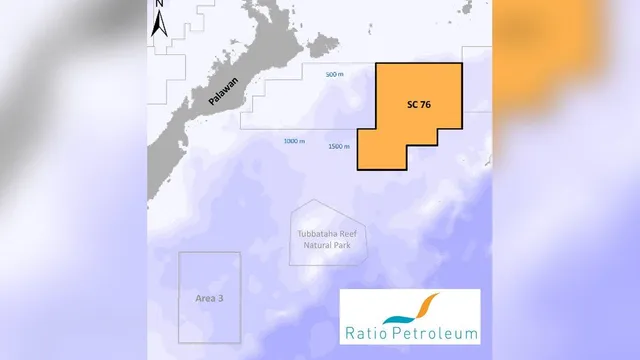
The Department of Energy (DOE) bared Thursday that Israeli firm Ratio Petroleum, the operator of Service Contract (SC) 76, has found prospective oil and gas deposits in the north part of East Palawan Basin as a result of its exploration within the block.

“Ratio Petroleum, the operator of SC No. 76, has identified two possible petroleum plays with over 20 leads delineated within their contract block following the completion of the first phase of their work program in October 2020,” DOE said in a statement.

A play pertains to a group of oil fields while a lead is a subsurface with the potential to have entrapped oil or natural gas.

“Ratio Petroleum’s initial work program has resulted in the identification of numerous leads that emphasize the prospectiveness of the basin. Several leads show clear anomalies, which supports the concept of the basin being gas-prone,” DOE Undersecretary Alessandro Sales said.

The DOE awarded SC 76 to the Israeli petroleum exploration and development firm in October 2018, with an initial investment of USD34.35 million for its studies, data gathering and drilling within its seven-year contract.

Ratio Petroleum’s work program in the SC 76 will be in three phases, which include the acquisition of 2D seismic data, the acquisition of 3D seismic data and drilling of one of the wells.

“As the company is seeking a partner to participate in unlocking the basin’s potential at the early stages of exploration, this would be an opportunity for interested parties to take part in the next phase of planning and acquiring 3D seismic data, which will further define the full potential of SC 76,” Sales said.

He said that with the depleting gas reserves in Malampaya natural gas field, the country should reinvigorate petroleum exploration activities.

“While it is capital-intensive to carry out exploration programs, with the depletion of the Malampaya reservoir and the continuing volatility of fossil fuel prices in the past years, we need an aggressive push to explore for new oil and gas fields for the furtherance of our energy security,” he added. 


Article courtesy of the Philippine News Agency

February 14, 2023

As the government turns aggressive in luring renewable energy investments, Citicore Renewable Energy Corp. (CREC) is ramping up its solar energy targets for the next five years.

The firm plans to launch 5,000 megawatts (MW) of solar power projects in the next five years from its initial target of 1,500 MV for the same period because of the country’s growing power requirement.

“We are upgrading our pipeline projects from originally 1.5 gigawatts, or 1,500 MW, and the target is to break ground 1 GW of new projects this year. So, meaning, by early next year, we will have almost 1.25 GW of installed capacity,” CREC president and chief executive officer Oliver Tan said in an interview over the weekend.

He said the projects will generate between PHP7 billion and PHP8 billion on the company’s top line.

Tan added that CREC is allocating USD800 million in capital expenditure (capex) this year to fund the new projects, which are expected to be completed by early 2024.

Majority of the capex this year will be spent on its 600-MW solar project in Batangas, he added.

Aside from expanding its solar power portfolio, Tan said CREC is also investing in battery energy storage system this year.

He added that investments in energy storage system are critical to accelerate and smoothen the transmission of output coming from renewable energy projects.

“We have a good policy in supporting our renewable energy,” Tan said. “What the government needs to support will be the development of energy storage technology.”

With its new targets for the medium term, CREC is expected to invest USD4 billion to fund its 5,000-MW solar power projects in five years.

To fund these projects, CREC will go public this year but Tan declined to divulge other details yet.

February 09, 2023

Global professional services company GHD has appointed Simon Terry as Regional General Manager - Philippines. 

Operating in the Philippines since 1998, GHD employs about 900 people across its offices in Makati, Cebu and Quezon City. The company has been providing design and technical advice for the landmark Novaliches-Balara Aqueduct 4, which will secure water supplies for more than 7 million people in the east of Metro Manila. 

Simon is a civil engineer with more than 27 years of experience in the Philippines, Australia and South East Asia. He was previously Global Operations Manager of the company’s GHD Advisory business. 

“When I lived and worked in the Philippines 20 years ago, GHD was new to the country. Today our Philippines business has grown to be a mature, vibrant, and critical part of the GHD enterprise globally. My vision is to continue growing our services for local and international clients, and collaboration between our teams in the Philippines and around the world,” Simon says. 

Van Tang, Executive General Manager – New Zealand Asia Pacific, “We have a very exciting vision for our business in the Philippines as the country progresses towards a more prosperous, inclusive, and resilient future. We continue to grow our team, building on our long-term presence in this country, to expand our support for local and global clients and communities.”

Simon succeeds Darren Shrives who is taking on a new challenge as Regional General Manager – UAE. 

February 05, 2023

Ormoc City Mayor Lucy Torres-Gomez, the chairperson of Eastern Visayas Regional Development Council. (Photo by Ormoc city government)

The Regional Development Council (RDC) will form a task force to prepare a concept note for the Eastern Visayas railway system eyed more than 20 years ago.

RDC chair and Ormoc City Mayor Lucy Torres-Gomez said the region’s highest policy-making body agreed in its special meeting on Jan. 31 to form the task force composed of various national government agencies and local government units.

The proposed body will include members from the Department of Transportation, legislative district offices, the Department of Public Works and Highways, Land Transportation Franchising Regulatory Board, Department of Environment and Natural Resources, National Economic and Development Authority, six provincial government, seven cities, and private sector representatives.

“We need a concept note to get funding for the feasibility study. It is a brief outline of the project we have in mind. This is a requirement to get funding for the feasibility study,” Gomez said.

The official admitted that coming up with a master plan will take years. She, however, expressed optimism that the planning stage will be completed during the first three years of the Marcos administration.

“Nobody can even say where the routes are since the direction depends on the output of the feasibility study. In terms of the station and which phase will be developed first, that is for the study to say,” Gomez added.

A simple version of the concept note will include an introduction, a background, proposed objectives and results and a budget overview.

“The project is ambitious and very expensive, but it will ease transport and experience better mobility. The social and economic impact will be very good. The project has been on the bucket list since 1999 and we hope its time has come,” she told reporters.

Currently, the country has three operational commuter lines operated by the Philippine National Railways (PNR). These are the PNR Metro Commuter Line, located in Metro Manila, the PNR Inter-Provincial Commuter between Laguna and Quezon and the PNR Bicol Commuter Line located in the Bicol Region.


Article courtesy of the Philippine News Agency

February 05, 2023

Photo credit: The Department of Public Works and Highways
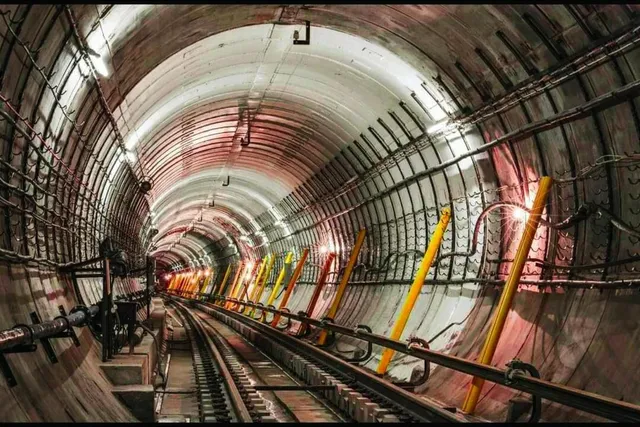
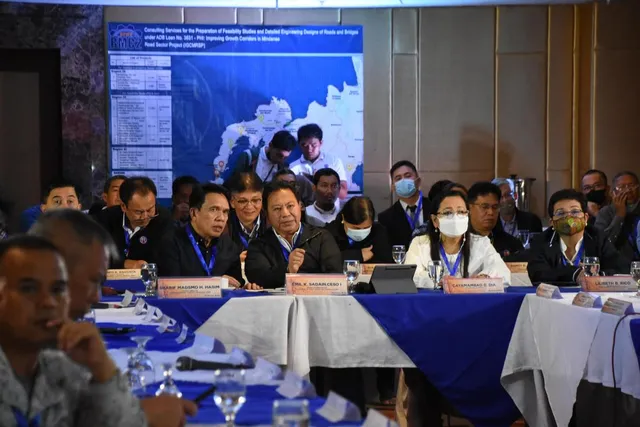
The Department of Public Works and Highways (DPWH) convened a public forum as it continue to engage project stakeholders in the efforts of intensifying infrastructure development in Mindanao towards better economic productivity and boost the sectors of tourism, agriculture and trade to achieve high, inclusive and sustainable growth.
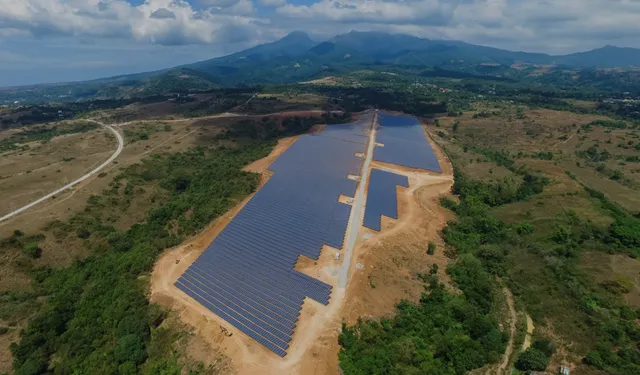
DPWH Senior Undersecretary Emil K. Sadain spearheaded the meeting on February 3, 2023 in Zamboanga City with concerned stakeholders for proper coordination of the proposed 300-kilometer new road development project under Improving Growth Corridors in Mindanao Road Sector Project - Phase 2 funded by Asian Development Bank (ADB) in Zamboanga Peninsula including provinces of Basilan, Sulu and Tawi-Tawi, and Davao City.

According to Senior Undersecretary Sadain, the forum was an opportunity for relevant interested parties to include representatives of government agencies like DBM, NEDA, DENR, NCIP, DAR, DA, DoTR, BFAR, AFP, and PNP; utility service providers; and local government units to learn more about the upcoming road network projects to improve travel and connectivity in Western Mindanao and in Davao City.

Phase 1 of Improving Growth Corridors in Mindanao Road Sector Project, a flagship project of the national government in partnership with ADB covering 151.9-kilometer in Zamboanga Peninsula, was started under President Rodrigo R. Duterte administration and continued and expanded to Phase 2 to support the economic growth through resilient road infrastructure development under the “Build Better More” infrastructure agenda of President Ferdinand R. Marcos Jr.

The meeting has encouraged discussion and exchange of ideas and allowed the public to express any concerns about the proposed scope and component while the project is under feasibility study and detailed engineering design (DED) stage.

Organized by DPWH Unified Project Management Office (UPMO) - Roads Management Cluster 2 (Multilateral) under the auspieces of Project Director Sharif Madsmo H. Hasim and Project Manager Lilibeth B. Rico, the stakeholders meeting was also attended by DPWH Region 9 Director Cayamombao D. Dia; UPMO Project Directors Benjamin A. Bautista, Rodrigo I. Delos Reyes, and Soledad R. Florencio; Stakeholders Relations Service Director Randy R. Del Rosario; OIC-Project Director Najib D. Dilangalen of DPWH BARMM Regional Project Management Office; and Project Managers Emmanuel M. Supe, Olivia M. Baguio, and Evangeline L. Carabal.

Senior Undersecretary Sadain, in behalf of Secretary Manuel M. Bonoan, used the opportunity to thank ADBs consistent assistance in the realization of major infrastructure projects in Mindanao and the stakeholders for their assurance of support in any way possible.

Project consulting firm Oriental Consultants Global presented the overview of project coverage for the Improving Growth Corridors in Mindanao Road Sector Project - Phase 2.

Under DED stage are the 13.6-kilometer Zamboanga City East Diversion Road (with viaduct structure) in Zamboanga City and 2.9-kilometer Isabela City-Malamawi Island Bridge (with approach road) in Basilan Province.

A site visit of the initial alignment identified by the project management team of UPMO Roads Management Cluster 2 and consultants was conducted on February 4, 2023 by Senior Undersecretary Sadain at the Zamboanga City East Diversion Road and viaduct structure.

Meanwhile, projects under feasibility study and detailed engineering design includes 32.6-kilometer rehabilitation/improvement of Zamboanga City – Ipil National Road, Zamboanga City Boundary Section (with exceptions) in Zamboanga City; 90.1-kilometer construction of bypass and diversion road at Jct. Sindangan-Siayan-Dumingag-Mahayag Road to Jct. Liloy-Ipil Road (Molave-Midsalip-Siayan-Tampilisan Section) in Zamboanga Del Norte and Zamboanga Del Sur; construction of 5.7-kilometer Boulevard along Ipil Coastline in Ipil, Zamboanga Sibugay Province; 20-kilometer construction of Mauboh, Patikul-Tanjung, Indanan Diversion Road in Jolo, Sulu; and construction/rehabilitation/improvement of 100-kilometer Sulu Circumferential Road (with exceptions) in Sulu Province.

The feasibility study and DED also covers the 44-kilometer Jct Davao-Bukidnon Road (Calinan Section) – Wangan- Subasta-Tagakpan-Tungkalan-Tagurano-Bayabas-Catigan-Baracatan-Sibulan-Tibolo-Kapatagan Road (viaduct) in Davao City.


Article courtesy of The Department of Public Works and Highways
February 05, 2023

Photo credit: Department of Public Works and Highways

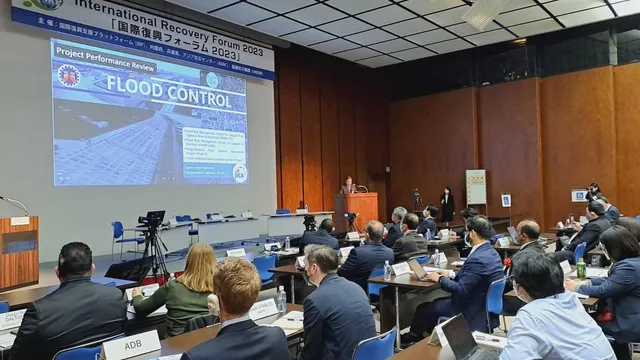
A top official from the Department of Public Works and Highways (DPWH) discussed Philippines’ experiences and learnings and build back better approach from the impact of natural disasters and calamities at an international forum intended to promote collaboration and cooperation among global and regional partners in recovery, rehabilitation and reconstruction.

Addressing attendees at the International Recovery Forum (IRF) 2023 held in Kobe, Hyogo, Japan as keynote speaker and panelist, DPWH Senior Undersecretary Emil K. Sadain said that holistic preparedness is needed in building back better and increase the resilience as we emerge from the pandemic crises by integrating disaster risk reduction measures in the restoration of physical infrastructure, and into the revitalization of livelihoods, economies and the environment.

According to Senior Undersecretary Sadain, the Philippine national government together with the local government units instituted a ‘whole-of-government-approach’ of its plans and programs in the implementation of the Build Better More infrastructure development agenda including projects to enhanced capability for disaster preparedness.

The Philippines is a steady partner of the Government of Japan in adopting the Sendai Framework of ‘Building Back Better’ for reducing human and economic loss as a direct result of disasters.

It can be recalled that during the pandemic years of 2020-2021, at least three (3) major flood disaster occurred in the Philippines brought by extremely powerful tropical cyclone that made landfall as a category 5 equivalent Super Typhoon Typhoon Rolly in November 2020 affecting Bicol Region; a powerful and deadly category 4 Typhoon Ulysses also in November 2020 that hardly hit the heart of Central Luzon and triggers massive flooding in the areas of National Capital Region; and Super Typhoon Odette in December 2021 ravaging islands and coastal communities in the Visayas and Mindanao and flooding towns and cities across the country.

The disastrous impact caused by these typhoons to an estimated total of 16 million people in seven regions in the country highlighted the need to continue building resilient infrastructures in the country, added Senior Undersecretary Sadain.

As session panelist on topic “Learning from Experience: Long-Run Recovery from Large Scale Disasters”, the DPWH Senior Undersecretary who formerly served as Chief Implementer of the Build Build Build Program of the President Rodrigo Roa Duterte administration reported that infrastructure development has been a priority of the past two (2) administrations to increase the productive capacity of the economy, create jobs, increase incomes and strengthen the investment climate leading to sustained exclusive growth.

He enumerated some of the pre-disaster investment projects for risk reduction such as the Japan International Cooperation Agency (JICA)-assisted Pasig Marikina River Channel Improvement Project, now on its fourth phase of implementation and with the Mangahan Floodway and the river channel improvement for a length of 31 kilometers that significantly reduced the inundation and economic damage of Typhoon Ulysses in the Metro Manila Area.

At present, a total of 13 DPWH-implemented Infrastructure Flagship Projects are under Official Development Assistance (ODA) financed by the Government of Japan thru JICA namely Flood Risk Management Project for Cagayan River, Tagoloan River and Imus River (FRIMP-CTI); Flood Risk Management Project for Cagayan de Oro River (FRIMP-CDOR), Pasig Marikina River Channel Improvement Project, Phase 4; Cavite Industrial Area Flood Management Project (FRIMP-CIA); Arterial Road Bypass Project, Phase III (Plaridel Bypass); Road Upgrading and Preservation Project (RUPP); Central Luzon Link Expressway (CLLEX) Project, Phase I; Road Network Development Project in Conflict-Affected Areas in Mindanao; Davao City Bypass Construction Project; Program for the Support to Rehabilitation and Reconstruction of Marawi City and its Surrounding Areas; Cebu-Mactan 4th Bridge and Coastal Construction Project; Metro Manila Interchange Construction Project, Phase 6 (MMICP-VI); and Metro Manila Priority Bridges Seismic Improvement Project (Guadalupe Bridge and Lambingan Bridge).

The annual International Recovery Forum event with this year theme: ‘Building Back Better and Long-Term Recovery Outcomes: Aspirations for a Resilient and Sustainable Future’ was also participated by Project Director Ramon A. Arriola III and Project Manager Jerry A. Fano of the DPWH Unified Project Management Office – Flood Control Management Cluster.

Meanwhile, the DPWH officials efficiently maximize time in Japan with knowledge exchange, and exposure on the utilization of technology by visiting the following projects in Osaka: Osaka Prefecture where retarding basin similar to the Imus Retarding Basin in Cavite and river channel improvement projects are implemented as countermeasures against flooding; and the underground river flow channels and comprehensive flood control measures for the Neya River Basin known as Neyagawa Underground River Project which is similar to the proposed underground structure of Parañaque Spillway to connect Laguna Lake to Manila Bay and avoid spilling of lake water into low-lying communities;

The official Philippine delegation to Japan also gained know-how on water resources management, dam operation, facilities and safety management system with an assessment visit at Amagase Dam in Kyoto which was the very first dam built in 1964 on biggest rivers of Yamatogawa and Yodogawa in west Japan primarily for flood control, water supply and hydroelectric generating power.

This is particularly important as the DPWH will be planning complimentary flood control retarding basin in the upper Marikina gorges that will regulate the storing inflow water of the ongoing Upper Wawa Dam reservoir, said Senior Undersecretary Sadain.


Article courtesy of the Philippine News Agency

February 02, 2023

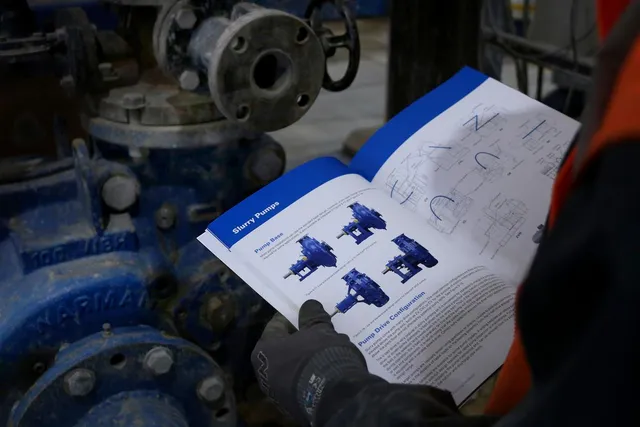
Photo: The Warman Slurry Pumping Handbook is the definitive guide for most slurry pumping applications.

Weir Minerals, manufacturer of the industry-leading Warman®  slurry pump, has released the latest edition of their coveted Warman® Slurry Pumping Handbook. The 6th edition, compiled by the most trusted name in slurry pumps, features detailed engineering data required for most slurry pumping applications.

Drawing on decades of Weir Minerals’ inhouse expertise in innovative engineering and slurry pumping technology, the new handbook has updated reference material based on new learnings, improved understanding and technological developments within the mining industry.

With customers always in mind, the handbook aims to empower engineers to achieve optimal performance from their Warman® slurry pumps. An increased global focus on the environment, energy consumption and water conservation will influence slurry pump design and considerations – making this latest handbook an essential tool for all current and future pump engineers.

“Pumping slurry has many challenges and I’m excited to publish our latest handbook, packed with fundamental theory, application advice, standard practices and latest Warman learnings from the field; all aimed to help our customers, present and future, deliver with excellence.” Marcus Lane, Director, Slurry Pumping Technology Group

Weir Minerals are continually striving to shape the next generation of smart, efficient and sustainable solutions with cutting-edge science and innovation. The comprehensive handbook includes over 140 pages of detailed information, including performance charts, impeller design, part configuration, assembly and slurry considerations – fully supported by accurate technical renders and specifications.

“The high quality of the reference material in this essential resource reflects the leading status of the Warman slurry pumps. As the industry leader, we have a responsibility to develop our future engineers; we will make the latest version of the Warman Slurry Pumping Handbook available not only to our customers, but also to the leading schools worldwide, so they can learn from the best in the industry.” John McNulty, Vice President Global Engineering & Technology.

As part of Weir Minerals’ commitment to investing in STEM education and developing the next generation of engineers, copies of this essential resource will be gifted to the leading mining and engineering educational facilities around the world, including the winner of the 2022 Warman Design & Build competition, Deakin University in Australia.

February 01, 2023

Photo credit: The Department of Public Works and Highways
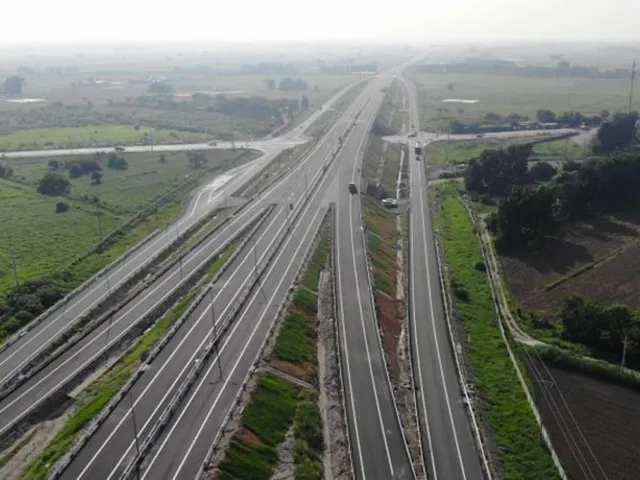
The Department of Public Works and Highways (DPWH) on Monday said three major projects under the Luzon Spine Expressway Network (LSEN) Program are set to be completed this year.
During the Philippine Development Plan (PDP) 2023 - 2028 Forum held at the Philippine International Convention Center (PICC) in Pasay City, DPWH Secretary Manuel Bonoan said these are the NLEX-SLEX Connector Road, Cavite-Laguna Expressway and Central Luzon Link Expressway, Phase I.

Of the soon-to-be-completed undertakings, the PHP14.94-billion Central Luzon Link Expressway Phase I is set to be finished in March as the project is 97 percent complete.

Once the 30-kilometer, four-lane expressway from Tarlac City to Cabanatuan City, Nueva Ecija is completed, the travel time between Tarlac City and Cabanatuan City will be reduced from 70 minutes to 20 minutes and is projected to benefit around 11,200 motorists per day.

The whole project was funded under the Japan International Cooperation Agency (JICA) amounting to PHP249 billion. The construction started in March 2016.

On the other hand, the NLEX-SLEX Connector Road worth PHP12.20 billion funded under Public-Private Partnership (PPP) Program target completion is December 2023.

He said civil works is 69 percent complete, the right of way (ROW) acquisition is 94 percent complete while Section 1 (Caloocan – Espana) is targeted to be completed in April 2023.

The project is an eight-kilometer, four-lane elevated expressway extending the NLEX southward from the end of Segment 10 in C3 Road, Caloocan City to PUP Sta. Mesa, Manila and connecting to the Skyway Stage 3, and mostly traversing along the PNR rail track.

Upon completion, the travel time from SLEX to NLEX will be reduced from 2 hours to just 20 minutes. It is projected to benefit 35,000 motorists per day.

The construction of the project began in May 2019.

Another project that is set to be finished before the end of the year is the Cavite-Laguna Expressway, a 44.58-kilometer expressway connecting the CAVITEX in Kawit, Cavite province and SLEX- Mamplasan interchange in Biñan City, Laguna province.

The project’s civil works is 59 percent complete while the ROW acquisition for the Laguna and Cavite side are at 99.8 percent and 65.07 percent completed, respectively. It started construction in July 2017.

Bonoan added that the PHP35.74-billion project is also funded via the PPP.

Upon its completion, it will reduce travel time between CAVITEX and SLEX from 1 hour and 30 minutes to just 45 minutes, and spur economic growth in the provinces of Cavite and Laguna.

The LSEN program involves the construction of 1,213 kilometers of expressways/high standard highways in Luzon.

Once these projects are completed, the travel time between Ilocos region and Bicol region will be reduced from 20 hours to just nine hours.


Article courtesy of the Philippine News Agency

January 30, 2023

In photo at the signing of the term sheet between PMC and MGMDCI were: (seated, left to right) Felicisimo A. Feria, Jose Ma. S. Lopez, and Michael L. Escaler, all representing MGMDCI; Manuel V. Pangilinan, Philex Chairman; and Eulalio B. Austin Jr., Philex President and CEO; (standing, left to right) Atty. Katrina Janine Sta. Ana, Associate, Migallos & Luna Law Offices; Atty. Bryan George Manzano, Associate, Migallos & Luna Law Offices; Atty. Michelle Carisse Balois, Partner, Feria Tantoco Daos Law Offices; Atty. Daneia Isabelle Palad, Partner, Migallos & Luna Law Offices; Atty. Winston Cruz, Vice-President and General Counsel, Philex Mining Corporation; Romeo B. Bachoco, Senior Vice-President and Chief Finance Officer, Philex Mining Corporation; Atty. Marilyn A. Victorio-Aquino, Director, Philex Mining Corporation; Atty. Barbara Anne C. Migallos, Director and Corporate Secretary, Philex Mining Corporation and Partner, Migallos & Luna Law Offices; Atty. Raymond Francis Jamora, Associate, Feria Tantoco Daos Law Offices; and Atty. Michael John Tantoco, Jr., Associate, Feria Tantoco Daos Law Offices. (PMC photo)

Philex Mining Corporation, one of the oldest and largest copper and gold producers in Southeast Asia, recently set into motion its plans for expansion with the signing of a Term Sheet with Macawiwili Gold Mining and Development Co., Inc. (“MGMDCI”) in simple ceremonies in Makati City.

Macawiwili Gold Mining and Development Co., Inc. is a 90-year old company engaged in mineral exploration and production in Itogon, Benguet. With over 800 hectares of contract area under its Mineral Production Sharing Agreement, the Company has been exploring various mineral deposits, including gold and copper, for several decades.

The Term Sheet outlines the parties’ clear intentions to explore commercial, financial, and technical avenues in preparation for possible shares acquisition by the Company in MGMDCI. Activities to kick off this partnership will include conduct of due diligence and scout drilling activities on the property of MGMDCI covered by Mineral Production Sharing Agreement (MPSA) in Itogon, Benguet Province., located adjacent to the existing Padcal Mine of the Company.

Signing the Term Sheet on behalf of the Company were Manuel V. Pangilinan, Chairman, and Eulalio B. Austin Jr., President and CEO; while representing the shareholders of MGMDCI were Michael G. Escaler, Jose Ma. S. Lopez, and Felicisimo A. Feria. The signing was also witnessed by directors and officers of the Company as well as counsel for both parties.

“Our interest to pursue investments in the Macawiwili property” according to Eulalio B. Austin, Jr., President and CEO, “is part of our business direction for this year to broaden interest in ‘green metals’ through mergers and acquisitions.”

“We need to hit the ground with this at the soonest possible time,” Austin adds, “considering that this property is adjacent to our Padcal mine and would go a long way in fulfilling company plans for expansion and extension of the life-of-mine of Padcal.

“This is a good addition or extension to the Padcal Mine,” according to Manuel V. Pangilinan, Philex Chairman. “I hope that this is the start of something good and that it would ride the wave of higher metal prices in gold and copper.”

Pangilinan emphasized that “any addition, expansion, or extension to the Padcal Mine would greatly benefit not just our employees and their families, but also our host and neighboring communities, and our nation as a whole.”


Article courtesy of the Philippine Stock Exchange

January 30, 2023

Photo caption (left to right): SMPC Corporate Governance and Compliance Manager Joseph D. Susa, DMCI Holdings Board Advisor and SMPC Independent Director Honorio O. Reyes-Lao and SMPC SVP, Chief Risk, Compliance and Performance Officer Junalina S. Tabor.

Diversified engineering conglomerate DMCI Holdings and its energy subsidiary Semirara Mining and Power Corporation (SMPC) were among the Philippine listed companies recognized for their corporate governance performance by the Institute of Corporate Directors (ICD).

DMCI Holdings received the 2 Golden Arrow recognition while SMPC was awarded the 3 Golden Arrow recognition.

Both have been ASEAN Corporate Governance Scorecard (ACGS) Golden Arrow awardees since 2019.

The awards were conferred after the two companies exhibited observable conformance with the Philippine Code of Corporate Governance and internationally recommended corporate governance practices as espoused by the ACGS.

The ACGS measures the performance of the companies in the areas of facilitating the rights and the equitable treatment of shareholders, how they relate to their different stakeholders, ensuring transparency and accountability through timely disclosure of material information, and how the board guides the company strategically, monitors the management, and ensures the board’s accountability to the company and the shareholders.

Over 80 Philippine listed companies were feted during the in-person awarding ceremony in Sheraton Manila Hotel last January 20.


Article courtesy of the Philippine Stock Exchange

January 30, 2023

Photo credit: DOTr

The Department of Transportation (DOTr) will work closely with the contractor of the Philippine National Railways (PNR) Clark Phase 2 project to ensure that issues are addressed after its projected completion date was delayed by eight months.

In a statement on Monday, the DOTr said the project, initially slated for completion in June 2024, has been delayed until June 2025 due to the delay in the turnover of the land to project contractor POSCO Engineering & Construction.

“Before the 36-hectare site was turned over by the government to POSCO, several fruit-bearing trees were cut down, causing the delay,” it said.

About 48 buildings and facilities are expected to be built by POSCO at the project site, meant to be the Clark Depot of the North-South Commuter Railway (NSCR).

“As of December 31, 2022, more than 33% of the planned construction has been completed,” it said.

In addition to buildings and facilities, the Clark Depot will have 33 stabling tracks to serve as the parking areas for the trains and 12 other tracks to access maintenance facilities.

During a site visit at the project site, DOTr Secretary Jaime Bautista said the Clark Depot is where the operations control center will be located which will serve as the “heart of operations” of the rail service.

“It is important that we complete this as planned and on time. I know that there are issues that need to be resolved. The DOTr will work closely with [the contractor], so we can fix problems and address issues,” Bautista said.

The 53-kilometer PNR Clark Phase 2 is the second leg of the NSCR and will link multiple cities and municipalities in Central Luzon with Metro Manila.

Funded by the Asian Development Bank, the project is seen to cut travel time between Malolos City in Bulacan province and Clark, Pampanga province from 1.5 hours to 30 minutes.

This part of the NSCR also includes the Airport Railway Express Service that will connect Makati to the Clark International Airport through a 55-minute train ride.


Article courtesy of the Philippine News Agency