December 17, 2021

Photo credit: Department of Public Works and Highways

Government agencies under the Build Build Build (BBB) program commit to push forward the implementation of high-impact infrastructure flagship projects (IFPs) that will bring long-term benefits to the Filipino people.

Department of Public Works and Highways (DPWH) Acting Secretary Roger "Oging" Mercado, in his message during the 1st BBB Inter Agency Forum organized by Undersecretary Emil K. Sadain, expressed confidence towards sustainability and continuity of priority flagship projects which will be the foundation of economic recovery from COVID-19 pandemic.

As the designated Chief Implementer of Flagship Projects under BBB Program by President Rodrigo Duterte, Undersecretary Sadain spearheaded the review on the progress of various IFPs in order to ensure the expeditious execution and timely completion of flagship projects implemented by the Department of Transportation, Department of Health, National Irrigation Administration, Metropolitan Waterworks Sewerage System, Local Water Utilities Administration, Department of the Interior and Local Govt., Department of Information Communication Technology, Toll Regulatory Board, and Philippine Statistics Authority.

As we gear up for a better approach in sustaining the implementation of infrastructure flagship projects, we seek to identify and address implementation and capacity gaps particularly in challenging environments as these holds the key to realizing the great vision of President Duterte for the BBB Program, said Undersecretary Sadain.

In order to establish proper coordination and practical collaboration among agencies, the forum held on December 14-15, 2021 was also participated by Department of Budget and Management (DBM) Undersecretary Rolando U. Toledo; National Economic and Development Authority (NEDA) Assistant Secretary Roderick M. Planta with his staff; DPWH Undersecretary Emerson L. Benitez; and DPWH Project Directors Benjamin A. Bautista, Sharif Masdmo H. Hasim, Rodrigo Delos Reyes, Ramon P. Arriola III and Johnson Domingo.

The forum was a significant step for the designated BBB Chief Implementer to come up with a comprehensive report of the accomplishments for IFPs under BBB as well as the scale-up plans on infrastructure development for the remainder of the term of President Duterte and forward looking in 2022 to the upcoming change of administration.

The event is also a very fitting opportunity for every agency to share its best practices and implementation journey, key issues/concerns and challenges, and provide plans and resolutions that can be applied to pipeline projects.

Other than the COVID-19 pandemic and adverse weather condition as among the drawbacks in project implementation, other bumps identified/mentioned/discussed at the forum include regulatory environment issues, delayed procurement, difficulty in acquiring right of way, insufficient funds, and delayed financing approval.


Article courtesy of Department of Public Works and Highways
December 17, 2021

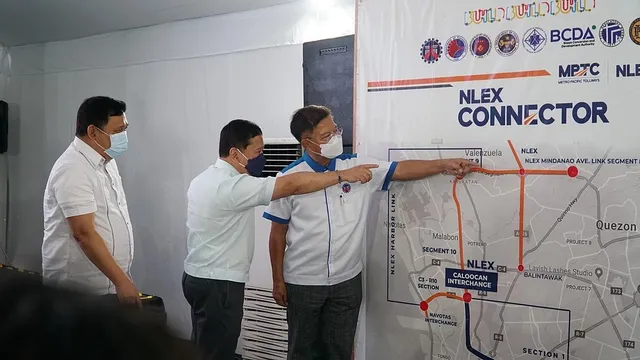
It’s all systems go for the Sta. Mesa Section of the North Luzon Expressway (NLEX) - South Luzon Expressway (SLEX) Connector Road Project seen to cut to just 20 minutes the two (2) hours travel time between the two (2) expressways.

Public Works Secretary Roger "Oging" Mercado, together with Metro Pacific Tollways Corporation President and CEO Rodrigo Franco, NLEX Corporation President and General Manager Luigi Bautista, China Road and Bridges Corporation (CRBC) Branch General Manager Ren Xiaopeng led on Tuesday, December 14, 2021 the ceremonial groundbreaking of the 2.75km Section 2 of the elevated expressway spanning España, Manila to the Polytechnic University of the Philippines (PUP) in Sta. Mesa, Manila.

“This section will pave the way to connect NLEX and SLEX through the Metro Manila Skyway Stage 3, benefitting at least 35,000 motorists per day and boosting economic activities in Manila, Caloocan, Malabon, Navotas, and the surrounding areas in the North and South”, announced Secretary Mercado.

Secretary Mercado added that the 5-km Manila Section of the NLEX-SLEX Connector, which started in May 2019, is now 54.27% complete and is expected to be completed by the second half of 2022 while the Sta. Mesa Section will open by early 2023.

NLEX Corporation, which operates NLEx and Subic Clark Tarlac Expressway, earlier signed an agreement with CRBC for the civil works contract of the elevated road that traverses portions of the Philippine National Railways right-of-way to provide a viable 24/7 route for truckers and an alternate route between NAIA and Clark airports.

For its part, NLEX Corp President Luigi Bautista maintained their commitment to participate in the infrastructure development that supports jobs and business opportunities as well as pave the way for better services through the ‘Build, Build, Build’ Program.

The groundbreaking and contract signing ceremony was also participated by DPWH Senior Undersecretary Rafael C. Yabut; DPWH Undersecretary for Planning, PPP and Information Management Service Maria Catalina E. Cabral; DPWH Public-Private Partnership Service Director Alex Bote; PNR General Manager Junn Magno and Assistant General Manager Celeste Lauta; Toll Regulatory Board Executive Director Alvin Caraullo; CRBC Marketing Manager Haiyan Mo; and NLEX Corp Vice President for Tollway Development and Engineering Nemesio Castillo and Chief Finance Officer Maria Theresa Wells.

December 17, 2021

Photo credit: Philippine News Agency

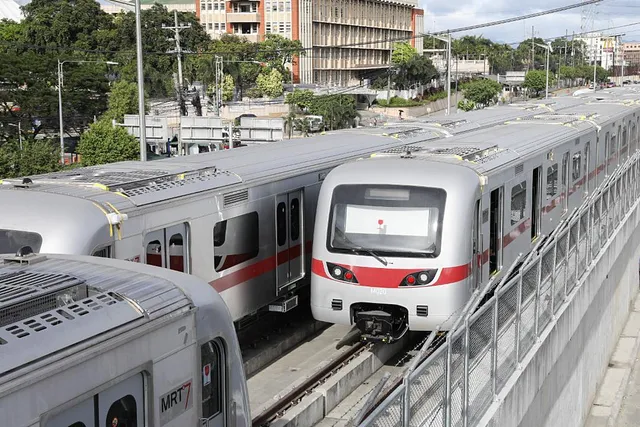
The national government will ensure that the Metro Rail Transit Line 7 (MRT-7) will be “partially operational” by the fourth quarter of 2022, President Rodrigo Duterte said on Thursday.

Duterte made this remark during a ceremony to unveil the new MRT-7 train sets along Commonwealth Avenue in Diliman, Quezon City.

“We can proudly say that this new metric rail transit system which spans more than 24 km from North Avenue in Quezon City to San Jose del Monte in Bulacan is a world-class mode of transportation for the benefit of the people. The project is more than 60 percent complete and we are committed to make it partially operational by [the] 4th quarter of 2022,” he said in his speech.

He noted that the MRT project will provide the public with a “fast, efficient, convenient, safe, and reliable” transportation system that would result to the increased productivity of workers and businesses in Metro Manila and its nearby provinces.

Duterte said he is also pleased that the MRT-7 is expected to be a pollution-free mode of mass transit for commuters.

“It is also good to know that this new train system will help minimize air pollution as it is a greener and more energy efficient means of transportation,” he added.

He said the MRT-7 project is proof of his administration’s commitment to delivering long-lasting infrastructure development in the country amid the prevailing health crisis.

"The arrival of the trains and the significant progress made on MRT-7 project confirm this administration’s strong commitment to pursue critical infrastructure projects even amidst the challenges of Covid-19 pandemic,” he said.

Meanwhile, Duterte enjoined all government agencies to ensure the prompt implementation and completion of significant government projects while still upholding the transparency, integrity, and accountability in its operation.

“Let us fulfil our promise and commitment to the entire nation to accomplish sustainable projects that will continuously improve the lives of Filipinos even beyond the term of the president,” he said.

He also thanked workers of the officials and workers of the Department of Transportation (DOTr), San Miguel Corp. (SMC), and other partners for their role in making a new milestone possible.

The SMC is the concession-holder for the project and is fully-funding construction of the 24-kilometer mass transit system that links up with the existing MRT-3 and Light Rail Transit Line 1 (LRT-1) via a common station in North Avenue.

The MRT 7 is a PHP77-billion project that started construction in April 2016. Currently, the project stands at 62 percent overall progress rate.

A total number of 108 rail cars or 36 train sets were acquired from South Korea that will traverse 14 stations.

It is expected to serve around 300,000 passengers in its first year of operations and will reach up to 850,000 passengers daily on its 12th year.

The MRT-7 is a modern train system that also involves the construction of electric power systems, computer and communications system, signaling systems, and automatic fare systems, among others.

Once completed, the MRT-7 will significantly cut travel time between North Avenue in Quezon City to San Jose del Monte, Bulacan from two to three hours to just 35 minutes and will eventually contribute to the reduction of traffic in Metro Manila.

The project also aims to decongest Metro Manila and make the commuting experience of passengers coming in and out of the Metro more convenient and comfortable. By Azer Parrocha


Article courtesy of the Philippine News Agency 

December 10, 2021

BYPASS BRIDGE. The proposed bypass bridge in Maasin City, Southern Leyte. It is four major infrastructure projects in Eastern Visayas that will be implemented by the Department of Public Works and Highways (DPWH) in the next two to five years. (Photo courtesy of DPWH)

The Department of Public Works and Highways (DPWH) has identified four major infrastructure projects in Eastern Visayas that will be implemented in the next two to five years.

Long-term projects are the 15-kilometer (km) Samar Pacific Coastal Road (SPCR) project phase 2, construction of 700-meter Iconic Liloan Bridge, construction of 1.1 km Iconic Maasin Coastal Bypass Bridge, and the building of 23-km Bohol - Leyte Link Bridge.

In a report released by the DPWH on Wednesday, the SPCR include two long-span bridges with a total length of 1.4 km. The feasibility study is already completed and the project proposal is now under preparation for submission to the National Economic and Development Authority.

SPCR project phase 2 will complement the ongoing 11.60-km SPCR phase 1 connecting the pacific towns from the Simora Junction in Laoang town, traverses to the remote villages of Laoang and Palapag towns. At 59 percent completed, the first phase 1 also covers the construction of three bridges.

Meanwhile, the concept paper is now being prepared for Liloan Bridge while the Maasin Coastal Bypass Bridge is up for discussion with the Export-Import Bank of Korea.

For the Bohol - Leyte Link Bridge, officials will revisit the Asian Development Bank-funded pre-feasibility study.

The government has yet to come up with cost estimates for these four long-term projects.

DPWH Acting Secretary Roger Mercado said in a statement that he has tapped the Unified Project Management Office (UPMO) Operations headed by Undersecretary Emil Sadain to assist the regional office in preparing the construction of a stronger regional road network.

“In my inspection, I saw the need for a significant upgrade of roads and bridges to improve connectivity and address problem of isolation especially in far-flung areas of the region," Mercado said.

Mercado, who hails from Southern Leyte, identified the insufficient infrastructure as a major constraint to the economic growth and poverty reduction particularly in Southern Leyte and Northern Samar. By Sarwell Meniano

December 10, 2021

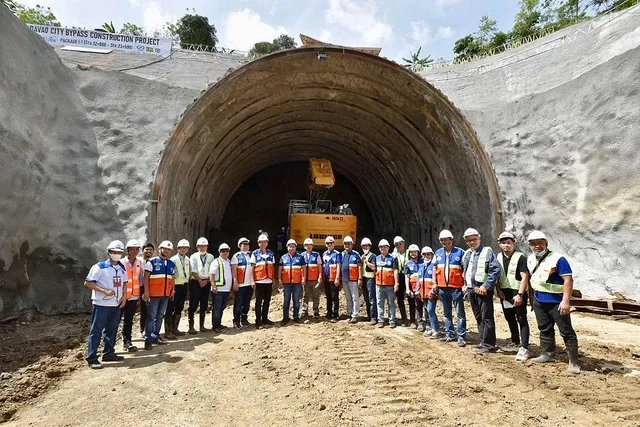
Photo credit: Department of Public Works and Highways

One year into the 37-month schedule, the on-going 10.7 kilometer Contract Package (CP) 1-1 of the Davao City Bypass Road Construction Project is heating up making significant progress.

In his report to Department of Public Works and Highways (DPWH) Secretary Roger "Oging" Mercado, Undersecretary and Build Build Build (BBB) Chief Implementer Emil K. Sadain said that recent project site visit showed a workable area of about eight (😎 kilometers including the tunnel segment.

The tunnel is an important construction component of the 45.5 kilometer Davao City Bypass Road Project.

It is undeniable that implementation of most flagship infrastructure projects has been enormously interrupted by the Covid-19 pandemic restrictions, adverse weather condition, and among others.

“I am glad that since the tunnelling works was launched and witnessed by no less than Secretary Mercado and Japanese Ambassador to the Philippines Kazuhiko Koshikawa last third week of November 2021, the excavated length for the north portal is already at 10 meters, complete with efficient and safe ground control elements of steel ribs support, rock bolts, wire mesh and pneumatically applied large-aggregate concrete or shotcrete”, added Undersecretary Sadain, in-charge of the DPWH Unified Project Management Office (UPMO) Operations.

Others who joined the project visit includes UPMO Projects Director Benjamin A. Bautista, Roads Management Cluster 1; Sharif Madsmo H. Hasim, Roads Management Cluster 2; Ramon A. Arriola III, Flood Control Management Cluster; Rodrigo I. Delos Reyes, Bridges Management Cluster; and Johnson V. Domingo, Buildings and Special Projects Management Cluster; and Bureau of Construction OIC-Director Aristarco M. Doroy.

The construction of two (2)-tube mountain tunnel will be the longest road tunnel in the Philippines at 2.3 kilometer.

Expected to provide considerable employment opportunities, Davao City Bypass Road Project will apply modern construction technique using some of the biggest pieces of construction machinery to build the twin mountain tunnels.

Other than the tunnel, CP 1-1 awarded to Shimizu – Ulticon - Takenaka joint venture involves the construction of 4-lane road with a length of 7.9 km; 3 bridges including the 200 meters Davao River Bridge with on-going foundation works; 2 underpasses and overpasses; 12 waterways culverts; and 4 at-grade intersection.

This contract package costing ₱13.230 Billion has an estimated completion date of January 2024.

Davao City Bypass Road Project is divided into six (6) CPs namely the on-going CP 1-1, and CP 1-2 and CP 1-3 under procurement stage being financed by loan agreement with the Japan International Cooperation Agency (JICA) while CP 2-1, CP 2-2 and CP 2-3 are to be funded by Government of the Philippines.

The bypass road will slash travel time between Toril, Davao City and the northern Panabo City, Davao Del Norte to under 49 minutes from the usual travel time of 1 hour and 44 minutes via Maharlika Highway.

Overall on-site construction supervision of the Davao City Bypass Project is under DPWH Project Manager Joselito B. Reyes and Engrs. Juan M. Diña Jr. and Earl Nicholas F. Rada with Nippon Koei – Katahira - Nippon Engineering - Philkoei as engineering consultants.


Article courtesy of the Department of Public Works and Highways

December 07, 2021

Photo: A close-up on life after mining. Agata’s Bae Lawanen Garden features breath-taking and photogenic sunsets every day from its newly installed view deck that is shaped like a marine vessel.

Agata continues to implement effective and sustainable rehabilitation programs that highlight its “Mining and Ecotourism” concept through the successful conversion of its mined-out areas into eco-tourism sites.

Agata may not be the biggest nickel project in the country. But whatever it lacks in size is compensated through innovations, environmental programs, and socio-cultural projects replicated by other companies.

Reforestation and rehabilitation

Agata designed its rehabilitation programs to give equal importance to replanting mined-out areas and protecting existing forests to conserve its natural environment.  The balance between production and protection is essential in sustaining the community’s livelihood and protecting local resources.

Since 2020, Agata has planted about 423,807 seedlings of forest and fruit-bearing trees as well as endemic plant species.  Since the time it commenced exploration, Agata’s reforestation activities have covered a total area of over 440 hectares.  The careful selection of trees and plants was curated by the company as a means to ensure the community’s livelihood at the end of Agata’s mine life.

Nurseries were constructed to house and propagate endemic and bird-feeding tree species as part of the company’s Land Resource Management Program to increase the productivity of mined-out areas.  Its Ligaya Central Nursery has a capacity of 600,000 seedlings, while its satellite nursery has a capacity of 25,000 seedlings and is maintained by its partner community, the Lawigan Farmers and Fisher-folks Association (LAFFA).

Agata also planted some 2,948 Giant Bamboo trees (Kawayan Kiling species) across seven hectares as part of its final rehabilitation and reforestation.  Agata Forester Jesnar Villareal said that bamboo absorbs more carbon dioxide than trees, generates a vast amount of oxygen, and can strongly root itself in the ground – which makes the soil more stable.

Thematic landscapes

Achieving a sustainable environment after mining is the focus of Agata’s vision for the future.  It was the first mining company to adapt thematic landscaping, which is a method of land use management where rehabilitation or revegetation is designed to beautify the area.   

These “Instagrammable” landscapes also showcase the company’s best practices on solid waste management as the ornaments used are made from recycled materials.  One such photo hotspot is the Bae Lawanen Garden found within the admin camp, which has been frequented by visitors prior to the pandemic.

Green innovations

Agata produces its own organic soil fertilizers by using livestock wastes from the company’s own Mabakas Techno Demo Farm.  These organic fertilizers – mixed with kitchen food waste from the company’s mess hall – are recognized as a “soil builder” because of its property to improve soil quality.   Agata also trained local farmers on the production of the organic fertilizers for their own use. 

In addition, the company implements a strong solid waste recycling program that has reprocessed 60% of all collected solid wastes this year alone.  It also created its own rain-fed irrigation system using plastic water bottles as rain catchment and storage, to keep a steady supply of water for its growing plants and trees.

These environmental projects not only reduce the company’s carbon footprint but also help in its reduction of ecological waste.

With the collective support across its ranks and host barangays, Agata cultivates a better and healthier environment for its communities; an enduring testament that – beyond a doubt – there is life after mining.

December 07, 2021

Olympus’ X-ray fluorescence (XRF) analyzers provide high-performance, real-time geochemical data for rapid multielement characterization of soil, rocks, and ores.

Recent advances in XRF technology have increased the number of elements measured, improved the limits of detection, and reduced analysis test times.

Vanta™ XRF analyzers provide convenient and rapid measurement of many types of samples associated with Au exploration, within Au mines, Au mine labs, and refined Au products.

Benefits

  • Rapid indication of potential Au mineralization through XRF analysis of pathfinder elements in soil, drill cuttings, and drill cores
  • Priority sample selection, maximization of analytical budgets, and improved drill target generation by prescreening samples with XRF
  • Improved ore deposit understanding, modelling, and vectoring with less dilution and better Au recovery via XRF mapping of structural features and identification of mineralized and altered zones
  • Inexpensive and rapid rock typing by using XRF for lithogeochemistry
Associated Geochemical Signature of Au Deposits
Source: Reflex Geochemistry

Pathfinder and Alteration Geochemistry

Most Au deposits have an associated geochemical signature (as shown in the table above). The XRF analyzer can detect these geochemical signatures, enabling geologists to better understand the geological system in which they are working. Typical Au pathfinder elements include As, Cu, Pb, Zn, Sb, Bi, Ag, and W.

Typical XRF LODs for Common Au Pathfinder Elements with Vanta VMR GeoChem Model

*120 s test time per beam, interference free SiO2 matrix; refer to Olympus LOD documents for further discussion on lower limits of detection (LODs)

XRF Analyzer for the Detection of Gold

It is common knowledge that handheld XRF analyzers do not support direct low level measurement of Au in geological samples (e.g., low ppm and ppb). The lab-based fire assay technique is commonly recognized as the method of choice for Au analysis. Au L-level X-ray lines are located in a very crowded area of the X-ray fluorescence energy spectrum. In this part of the spectrum, interference from other elements (e.g., As, Zn, W, and Se) can yield a false-positive Au determination.

Direct measurement of Au by XRF can be achieved in specific cases such as high-grade (> 5 ppm) quartz vein environments (relatively interference free) or within refined Au products (where Au is present in very high concentrations).

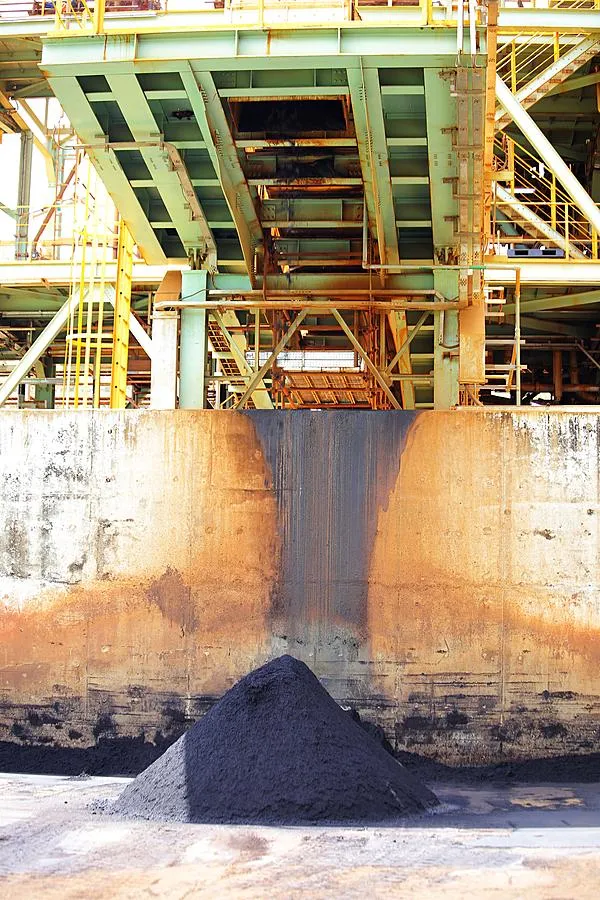
An increasing number of Au onsite mining laboratories are using XRF in place of, and as a supplement to, fire assays methods. Please refer to the Olympus Application Note “Use of Handheld XRF in Au Mine Laboratories.” Mines are also using Olympus handheld XRF analyzers for measuring Au in activated carbon. Please refer to the Olympus application note, "Measuring Gold in Activated Carbon."

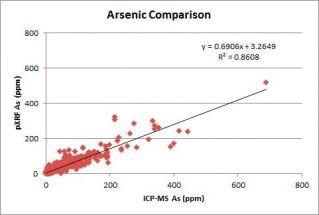
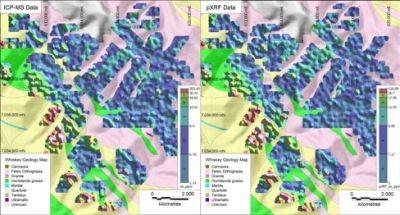
Images taken from: Arne et al. (2014) – The use of property-scale pXRF data in gold exploration – advantages and limitations, Geochemistry: Exploration, Environment, Analysis.
Contor plots of As, Cu, and Pb in surface soil using field XRF compared with ICP analysis from Au exploration project in Canada.


December 07, 2021

Taganito HPAL Nickel Corporation (THPAL), a mineral processing plant and a subsidiary of Sumitomo Metal Mining Co., Ltd (SMM), officially started its commercial operation of chromite last March 2021 to produce chromite concentrate.

The company decided to commercially extract chromite to be used primarily as a raw material for stainless steel. With the Chromite Recovery Plant of the company, THPAL can now recover chromite simultaneously during the production process of nickel and cobalt mixed sulfides, the first intermediate product of the company.

Chromite has brownish to black-colored mineral and is refined and processed into the intermediate product ferrochrome, widely used as a raw material for stainless steel and other special steels. This can also be used as paint pigment to produce Chrome Yellow for the textile industry, where large amounts of chromium compound as chemical to fix a dye are commonly used.

According to Engr. Rey Prado, head of THPAL Chromite Recovery Plant, “It has been shown that there is an increase of the worldwide demand for chromite from November 2018 and the market is still growing. With this, the company’s target is to produce high quality chromite for quarterly shipment on demand of the customer.”

By efficiently recovering not only nickel and cobalt but also its by-products such as scandium and chromite in THPAL, it will increase the cost competitiveness of its HPAL technology. This will likewise provide new materials for the stainless-steel industry, which is the backbone of the nickel business.

By doing so, SMM’s presence in the global nickel industry through its subsidiary companies will push the realization of its vision of “Becoming the World Leader in the Non-Ferrous Metals Industry” by 2030. This will likewise add value to the low grade ores and increase the contribution of the company to employment generation and to the coffers of the government.

Brief Description of THPAL

Taganito HPAL Nickel Corporation (THPAL) is a mineral processing plant located at Taganito Special Economic Zone, Barangay Taganito, Claver in the province of Surigao del Norte, which employs the highly efficient High Pressure Acid Leaching (HPAL) technology to turn low-grade nickel ore into a manufactured intermediate product of high commercial value.

With its estimated cost of 1.6 billion US Dollars, it became one of the largest foreign direct investment projects in the Philippines.

THPAL’s plant is designed to have an annual production of 30,000 metric tons of Nickel and 2,640 metric tons of Cobalt in the form of Ni-Co Mixed Sulfide. This Ni-Co Mixed Sulfide will be exported to Nihama Nickel Refinery in Ehime Prefecture, Japan.

THPAL is likewise the country’s sole producer of scandium – the rarest mineral on earth -- and on April 2021 THPAL started the commercial operation of its Chromite Recovery Plant to produce chromite concentrate.

December 07, 2021

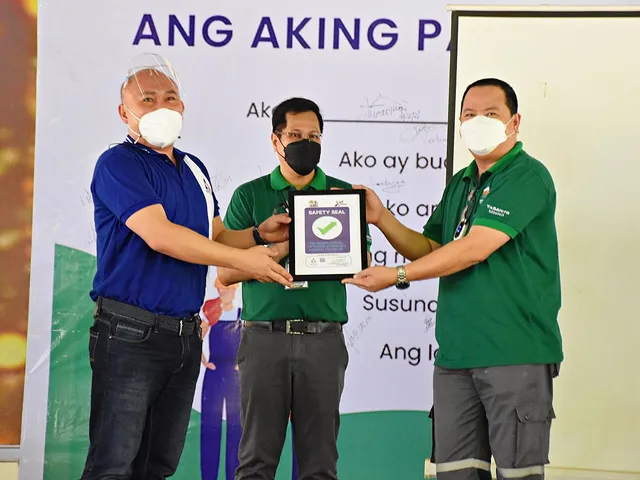
Photo: Engr. Valeroso receives the Safety Seal Certificate from DOLE Caraga RD Suyao

Taganito Mining Corp. (TMC), subsidiary of Nickel Asia Corp. (NAC), has been awarded the government's safety seal certification, the first company to be bestowed the recognition in the province.

The certification came after a validation and technical inspection by the team from the Department of Labor and Employment (DOLE) regional and provincial offices on September 2-3, 2021.

Led by DOLE-Caraga Director Atty. Joffrey Suyao, the team determined that TMC has complied with the minimum public health standards related to the coronavirus (COVID-19) pandemic.

"I want to emphasize the importance of observing our safety and health protocols among our companies, because as long as we operate, the health of our employees depends on it," Atty. Suyao said in the dialect. "If the workers are not healthy, the productivity would surely be affected."

According to Suyao, the safety seal certification is a tripartite effort on the part of the workers, the management, and the government "that must all work together for us to achieve a safe and healthy working environment."

Suyao said he was impressed upon entering TMC's premises, which involved a series of stringent health protocols for visitors.

"We had to go through the safety protocols here, observe proper hand washing, temperature checking, checklist, etcetera. I was really impressed because these are the very things that our government requires," the DOLE-Caraga chief said.

Meanwhile, TMC Resident Mine Manager Artemio Valeroso said the certification was "a testament of what we are doing in this establishment. There is a secret why TMC has been operating for a long time: TMC is always taking care of the people, of the community, and of course our employees."

"Maintaining a good harmonious relationship with our stakeholders is important to us.

Thank you to all of you for supporting TMC, sa ating mga contractors, managers, mining service providers, labor union, and all employees. Kung wala kayo, hindi din magiging ganito si Taganito Mining. We are all partners and we will do it as a team," Engr. Valeroso added.

Valeroso vowed that with TMC being granted with the safety seal, "we have to sustain this and continue improving our programs and measures to ensure the safety and well-being of our employees and we all stay safe, healthy and always bida."

The Safety Seal Certification is a voluntary certification scheme that affirms that an establishment is compliant with the minimum public health standards set by the government and uses or integrates its contact tracing with StaySafe.ph (or the SDN contact tracing app).

The DOLE issues the Safety Seal for the manufacturing, construction sites, utilities (electric, water, gas, air conditioning supply, sewerage, waste management) information and communication companies (private publication, news, movie production, TV and radio companies), and warehouses.

TMC applied for the safety certification as part of the company's commitment to comply beyond the regulatory standards mandated by the government.

Among the measures employed by the company include mandatory wearing of face mask and shield, routine temperature checking, installation of foot baths, setup of handwashing facilities and alcohol stations, observance of social distancing and other minimum health protocols.

December 07, 2021

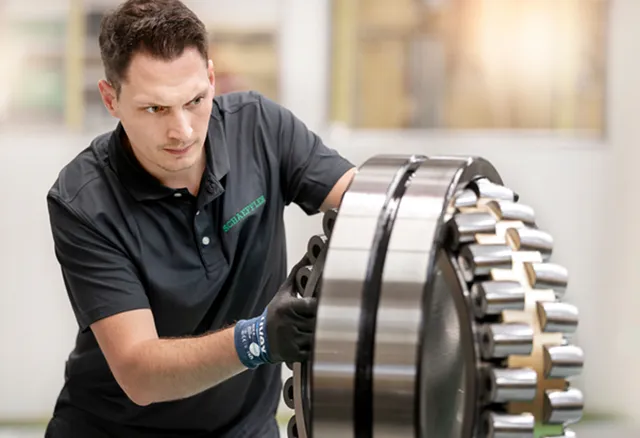
Photo credit: Schaeffler

As one of the largest rolling bearing manufacturers worldwide, Schaeffler is a partner to all leading manufacturers and companies involved in the mining and processing industry.

Our bearing solutions and services increase the functional reliability and performance of machines and processes. We help our customers reduce their overall costs with our expert technical support and a global distribution network.

In mining and processing, rolling bearings are essential contributors to technological progress. Rough operating and environmental conditions require extremely robust bearings.

More than 100 years of experience in the rolling bearing business and strong customer focus make Schaeffler an excellent choice as a partner.

With our extensive product range, over 225,000 industrial products -- one of the largest in the rolling bearing industry -- together with systems for condition monitoring, mounting services as well as maintenance tools, Schaeffler is able to offer a complete solution to our customers, including applications in the mining and processing industry.

Intensive research and development, as well as constant collaboration with manufacturers and operators, result in high levels of operational reliability for all of our bearing solutions, thereby increasing efficiency.

Schaeffler’s product offerings for the mining and processing industry include spherical roller bearings used for bucket wheel excavators in open pit mining, draglines, dump trucks, conveyor systems, crushers, ball mills, and vibrating screens; tapered roller bearings used in the tunnel boring machines, vertical mills and spherical thrust roller bearings used in shaft drillings, as well as customized bearings for pallet plants, to bearings used in small electric motors and pumps.

Coupled with our state-of-the-art technology, such as condition monitoring solutions, SmartCheck, ProLink, OPTIME and automatic lubricators, we are able to provide a holistic bearing solution, focusing on high reliability in even the toughest ambient conditions, catered to our customer’s demands and requirements.

December 07, 2021

Photo credit: Sandvik

Combining advanced sensing capabilities, sustainable battery-electric technology and artificial intelligence, the AutoMine Concept vehicle is Sandvik’s future vision for autonomous mining equipment. And it’s already operating in Sandvik’s test mine in Tampere, Finland.

Jussi Puura, digitalization lead at Sandvik Mining and Rock Solutions, is excited about the AutoMine Concept vehicle, and no wonder. “This is essentially the way to the future and Sandvik’s roadmap to get there,” he says. “This shows what a typical piece of mining equipment could look like in 10 or 20 years. And more than that, it’s not just a vision in a slide deck presentation. It’s an existing, physical vehicle actually working down in our test mine.”

His enthusiasm is understandable. In addition to being a cutting-edge battery-electric loader, the AutoMine Concept ve-hicle packs advanced surroundings perception in 3D, mapping technology and artificial intelligence to enable it to adapt and plan its own routes to find the most suitable paths, even in continuously changing environments. Ultimately, it repre-sents a big step towards comprehensively autonomous mining operations.

This shows what a typical piece of mining equipment could look like in 10 or 20 years. It’s an existing, physical vehicle actually working down in our test mine.

The AutoMine Concept vehicle is also a major milestone in Sandvik’s development of the AutoMine and OptiMine so-lutions. Since 2004, these digital systems have supported automated mining operations. The marketplace initially was hesitant to adopt such revolutionary solutions, but the last several years have seen a marked increase in demand. The cur-rent growth rate is strong, including in developing markets such as Africa, India, China and Latin America.

The capabilities of the AutoMine systems have also seen a marked improvement over the years. However, more recently it has become increasingly clear that the next generation of mine automation is coming, and upgrades to the existing plat-form help unlock new, even greater capabilities. This developmental leap could be compared with recent developments in autonomous road vehicles, including innovations such as the Google car, Tesla and others. Also, developing markets and challenging mining conditions in particular require maximum reliability and robustness.

Riku Pulli, president of the Rock Drills and Technologies division at Sandvik Mining and Rock Solutions, reveals more about the breakthrough technologies in the AutoMine Concept vehicle.

“First of all, this vehicle is designed and engineered for automation from the outset,” he says. “The design philosophy of existing fleets is based on a conventional loader, which always includes a cabin, joysticks, pedals and so on.”

The AutoMine Concept vehicle is designed exclusively for automated and remote operation.

The AutoMine Concept vehicle is designed exclusively for automated and remote operation. There is no cabin at all, which means cost savings and the elimination of  unnecessary limitations, enabling more efficient and reliable overall design because there is no need for duplicated steering systems and controls, one for the human operator and one for the computer control system.

Another major innovation is the tremendous expansion of sensing capabilities. Existing mining equipment is limited in this respect. It can essentially sense where the sidewalls of the tunnel are, for example, but not much more. The AutoMine Concept vehicle creates a true 3D view of its entire surroundings, including the vertical direction.

“This opens up really significant possibilities compared with existing mine automation systems, which are restricted to gated areas separated from people and other equipment, much like security gates around robots used in manufacturing,” Pulli explains.

The existing AutoMine safety system is based on isolation barriers that enable automated equipment to operate in des-ignated, barricaded areas, and stops equipment immediately if a safety barrier is tripped. The all-around sensing capability of the AutoMine Concept vehicle is designed to make isolation of automated operations unnecessary. The vehicle can stop or move around any obstacle on its route.

“This is a huge improvement because it eliminates a host of limitations linked to mine automation,” Pulli says. “It has until now been necessary to separate automated mining operations from conventional manual operations. The new platform will increase operational flexibility tremendously because the isolation of automated operations becomes unnecessary. Work can go on around and among the automated vehicles simultaneously.”

Why is it, then, that the concept vehicle is specifically a battery-electric loader? According to Pulli, Sandvik wanted to demonstrate that future mining equipment will be not only autonomous but also emission-free. Another reason is linked with the AutoMine platform. Most of the equipment controlled with this system consists of loaders, and what sets loaders apart from other mining equipment is their relatively high speeds, demanding performance requirements and round-the-clock operation at a high utilization rate in extremely cramped conditions.

Sandvik wanted to set a benchmark: if the company was able to pull this off, it could be confident of its capability to transfer the technology to other types of mining equipment, such as drill rigs, where the requirements are typically less stringent.

What will the next steps be? The capability to further scale the technology to other types of mining equipment is an early goal that should be met soon. Another focus area will be the technology mix, which now includes several types of scanner technologies and, for the first time in mining equipment, artificial intelligence. Some of these components will be imported to the existing AutoMine system in 2021.

Automine concept vehicle:

  • High-performance battery-electric loader  
  • Surroundings perception thanks to 3D online mapping capabilities
  • Adaptive capability to find the optimal route even in continuously changing mine environments  
  • Instant obstacle detection and real-time reactions for collision avoidance

Advantages:

  • Safety: reliable collision detection and emergency stops  
  • Flexibility: possibility to operate both conventional and autonomous vehicles in the same area  
  • Productivity: unlimited potential for automated mining operations  
  • Sustainability: battery-electric, emission-free vehicle

December 07, 2021

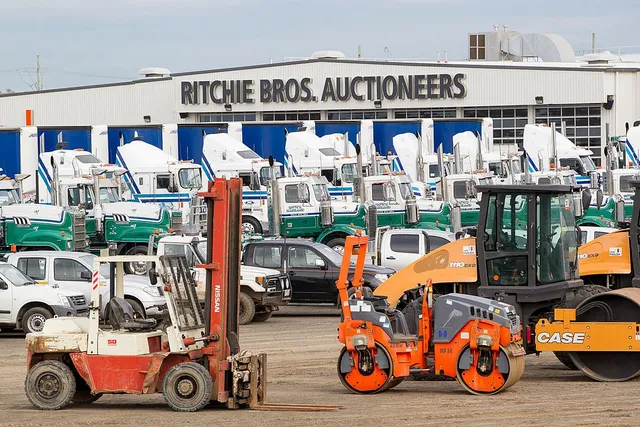
When it’s time to upgrade your fleet, it’s not always easy to maximize the value of your redundant assets. Most equipment owners lack the resources or knowledge of how to properly remarket assets and market them to national, regional, and global markets.

The key to remarketing your equipment is understanding current local and global market trends, identifying key attributes that create value for your assets, and reaching motivated buyers through targeted marketing campaigns.

To accomplish these goals and ensure you get the most return for your machines, you need to partner with a company that has the experience, market knowledge, and marketing reach to ensure a successful sale.

Ritchie Bros. has multiple sales channels to match the right channel with the customers’ needs and requirements.

  • Ritchie Bros. Unreserved Online Auctions
  • Ritchie Bros. IronPlanet Online Reserved Auctions
  • Marketplace E – 24/7 Global Marketplace
  • Ritchie Bros. Private Treaty – negotiation and sale of your equipment for cash.

Chris Edwards, Philippines Sales Manager, is based in Manila and can assist sellers through the entire process, from evaluation, assessment of assets, providing recommendations, and ensuring global marketing campaigns are reaching the most motivated buyers.

Combining your assets with Ritchie Bros. expertise and experience is a solution for success. For more information about how to partner with Ritchie Bros. in the Philippines, visit www.ritchiebros.com or contact Chris Edwards, Philippines Sales Manager, at +64 917 149 8545 or cedwards@ritchiebros.com

December 07, 2021

Photo credit: RDCL

In-situ measures of seismic data is one of the key inputs in many infrastructure projects across Philippines.

Understanding a project site’s seismic response is key to designing and engineering above ground structures, without it, you are guessing and often overengineering.

There are many ways to gather seismic data, such as Vp and Vs (compressional and shear wave velocities). Surface techniques are commonly deployed as they require no drillholes. However, surface wave data can produce poor results if a site is “noisy” and are highly variable through different collection techniques and processing.

A more direct measure of Vs and Vp is from in-ground, with drill holes. The most utilized method is downhole seismic, which generates a seismic source at surface and receivers are placed in the drill hole to record. This method should have grouted and PVC boreholes, and the holes need to be vertical. Extra drilling time means extra costs.

A PS suspension logger allows for in-ground measures of Vs and Vp conducted from an open drillhole. This allows for rapid data collection immediately after a drillhole is completed. There is no requirement for grouted PVC holes. A PS logger can also work in marine environments allowing data from nearshore and offshore projects like wharfs and reclaimed land developments.

A PS Logger is a robust, reliable, and repeatable seismic tool, which allows data from drillholes, without grouted PVC holes and has a high degree of accuracy producing better results for client’s engineering projects.

Precision Data on Soil and Rock Physical Properties

The PS Logger probe measures P (compression) and S (shear) wave velocities in a single borehole without the need for external energy sources, making it simple and quick to deploy and therefore cost effective, especially when compared to alternative methods.

When combined with bulk density values (from a density log or from core sample tests) small strain moduli (Young’s, Shear and Bulk) can be calculated using simple formulae.

How the PS Logger Works

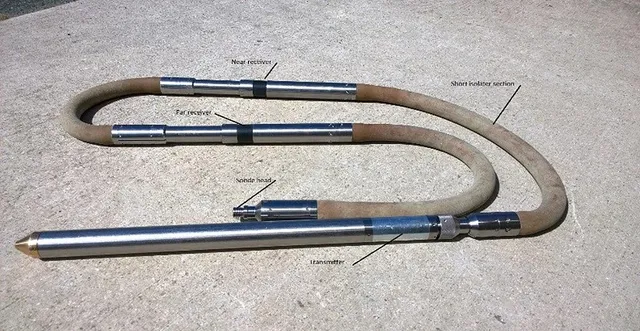
The PS Logger is a full waveform acoustic probe, designed to measure compressional and shear wave velocities in soils and rock formations. It operates using indirect excitation rather than mode conversion as in a conventional sonic. It can acquire high-resolution P and S wave data in borehole depths of up to 600m. It contains a unique design of powerful hammer source and two receivers, separated by acoustic damping tubes.

To acquire data, the probe is stopped at the required depth and the source is fired under surface command. Firing causes a solenoid-operated shuttle aligned across the borehole axis to strike plates on opposite sides of the probe in turn, setting up a pressure doublet in the surrounding fluid. The resultant fluid motion produces a tube wave at the borehole wall with velocity close to the shear velocity of the formation together with a compressional wave.

As the waves propagate parallel to the borehole axis, they set up corresponding fluid movements that are detected by the two-receiver combination (neutral-buoyancy 3D hydrophone for P waves and horizontally aligned geophone for S waves), allowing the wave velocities to be directly measured. The facility to stack multiple shots and filter the data as in normal seismic data acquisition is included in the operating software.

Key Benefits

The PS Logger works in a single fluid filled borehole, in contrast to cross-hole methods that usually require two or more specially prepared boreholes. The method works in open or grouted plastic cased boreholes and borehole muds generally do not need to be flushed prior to logging, without compromising borehole stability.

The PS Logger is largely unaffected by path affects, which can be problematic for cross-hole methods.

With an integral powerful source, energy delivery is constant throughout the extent of the borehole, independent of borehole depth, giving reliable velocity measurement in hard rock and the slowest of formations. The high vertical resolution (0.5m typical) allows for measurement of thin layers and is not affected by high velocity layers above low velocity layers.

As no external source is required, this makes the system ideal for working offshore on barges, jack-up platforms, and drill ships. As the probe is suspended in the borehole, no clamping to the borehole wall is required, allowing faster acquisition.

The PS logging can be conducted at the end of the drilling alongside any of the full range of conventional logging probes that Robertson Geo offers. The propagated waves are measured in the vertical plane providing the most useful information in anisotropic formations.

When combined with bulk density values, the PS Logger provides a continuous strength profile, especially important when hard layers are encountered and CPT methods "refuse.” The relatively high frequency of the source, when compared to other methods, means that good data can usually be obtained in very noisy environments.

On drill ships where engines, DP thrusters, generators and ancillary equipment contribute to the ambient noise, this is very important. The reversed polarity shear wave measurements provide unambiguous identification of shear wave arrivals.

Drilling Matters

Borehole conditions play a big part in data quality and that is where the drilling personnel should be involved. Rotary drilled boreholes always provide the best data (low rugosity).

The PS Logger can produce good data in boreholes from 65mm to 400mm with the optimum range being from 75mm to 200mm. Inclined boreholes can also be logged providing the tilt is no more than 30⁰ from vertical. Where borehole stability is an issue, the logging is often split into separate runs whereby the drill string is retrieved in stages.

To minimize possible loss of data, close liaison with the drillers, geologists and geotechnical personnel is required to confirm where the potentially unstable layers are (e.g. gravel beds). A shooting plan can then be made whereby the drill string can be withdrawn in stages to provide some open borehole while providing protection for the problematic zones.

Due to the PS Logger’s tolerance to borehole muds, there is little or no preparation required on the borehole. Polymer or Bentonite-based muds can be extremely viscous with the limiting factor being the buoyancy of the probe. Where the use of thick mud fails to provide sufficient borehole stability the borehole can be plastic lined and grouted.

Processing

Full waveforms are recorded digitally at acquisition time across 6 channels (P wave, S wave left & S wave right at the near and far receivers) at a predetermined sample rate as low as 2.5μsec. The sample rate is carefully selected to be as small as possible to provide the best resolution but high enough to capture the arrivals within the listening window. Low pass filters can be applied at acquisition time and digital filters can be applied during or post acquisition.

Using the acquisition software, the waveforms can be displayed, scaled, and filtered to allow for the picking of the first arrivals at each receiver. Automated picking is available but in most cases the arrivals are picked manually by experienced engineers.

While the P wave arrivals are generally simple to pick, the S waves with their typically slow onset and possible superposition over the decaying P waves benefit from an experienced eye to avoid "cycle skipping.” From the receiver separation (1 meter) and the arrival times the velocities are automatically calculated.

Once the arrival times and velocities have been determined, the data is opened in a second program (also supplied with all PS logger systems) that creates and manipulates logs of the data. If a bulk density profile by depth is available, it can be combined with velocities to give the small strain moduli, Young’s, Shear and Bulk and Poisson’s ratio. Finally, all data can be outputted in industry standard LAS format.

From unconsolidated soils to the hardest of rocks, the PS logger gives proven results

Simplicity of deployment combined with a minimum of borehole preparation and the ability to obtain high quality velocity data in unconsolidated formations and hard rocks make the PS Logger a sound economic choice for Geotechnical and Civil Engineers investigating rock strength.

December 07, 2021

​

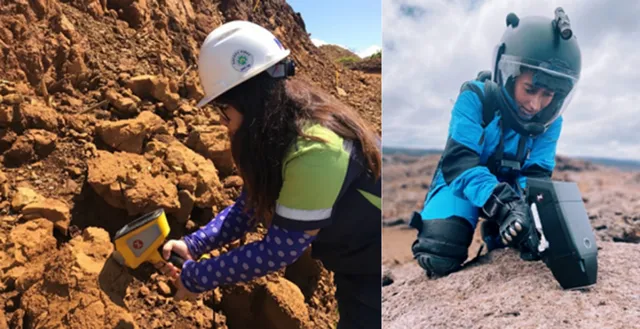
Photo: SciAps XRF X-200 for mining site exploration (Philippines) and SciAps LIBS used by NASA for Mars exploration

The year 2021 has been the transition from the pandemic-stricken year 2020 towards economic recovery and full adaptation on the ‘new normal’, as the mining industry successfully sustained and continues to move forward with the country’s mineral riches. [1] In line with this, QES Technology Philippines Inc. offered its technical support to private mining sectors and government bodies, for assistance on X-ray Fluorescence (XRF) analyzers. QES catered both sales and services of handheld and benchtop ED-XRF.

On August 2021, QES completed their newly renovated Demo Room which houses demo units for benchtop ED XRF (SPECTRO CUBE), Arc Spark OES (SPECTRO MaxX), handheld XRF (SciAps X300 and X200), handheld LIBS (SciAps Z200C+) and other equipment/instrumentations. These are available for demo from Monday-Friday office hours at their head office in Page 1 Bldg., Acacia Ave., Madrigal Business Park, Muntinlupa City, still in compliance with standard health protocols.

QES Technology Philippines, Inc. Demo Room at Page 1 Bldg., Acacia Ave., Madrigal Business Park, Muntinlupa City

In partnership with Southgreen, QES assisted Mines and Geosciences Bureau (MGB) in pioneering the first regional installations of handheld XRF analyzer for Region VI and Region IX. A 3-day SciAps XRF X-200 virtual product training was conducted for the first time and ended successfully in coordination with MGB Central Office. The SciAps handheld LIBS Z-200 C+ was also purchased by a private sector used for Research and Development also catering the C requirement in alloy and geological samples. This is also the equipment used by NASA for the Mars exploration project. The use of “XRF guns” as termed by geologists, have dramatically improved the method of exploration so this is now a must-have tool for site projects exploration and face sample evaluation.

This year’s milestone, also a solid indication that the Philippine Mining Sector is thriving, is QES’s record breaking sales of fifteen (15) and still counting units of benchtop ED-XRF analyzer Spectro XEPOS. QES has established and continuously dominates the sales, service, and calibration of ED-XRF analyzers in the Mining Industry from Isabela to Tawi-Tawi, through the Spectro XEPOS which has always benchmarked the ED-XRF analyzers in the mining industry known for its simple, accurate, and efficient analysis.

One of the major strengths of QTP is the availability of regional technical support. Two engineers are based in Cebu, one in Clark, three in Manila and one in Surigao to fulfill the response time promised to customers. Along with that is the digitalization of equipment maintenance and repair tracking, QR code sticker is now a standard to new equipment installations and being rolled out to existing ones. The end-users can now conveniently scan the QR code using their phone or tablet and it will present the maintenance history of the equipment. The end user can also take photo of the QR code send it to their purchasing department so they can verify the parts are already installed to close the related transaction with ease.

To assure continuous growth and learning, QES joins the 2021 ANMSEC and organizes webinars on Nickel Ore Mining particularly on exploration, sample preparation, calibration (for end users), and complete mining solution. You may scan below to visit/join their official Facebook group to keep update on their incoming webinars.

[1] Conoza, Adrian (Jul. 9, 2021). “Sustaining the Philippine mining industry under balanced interests”, Retrieved from https://www.bworldonline.com/sustaining-the-philippine-mining-industry-under-balanced-interests/

​

December 07, 2021

The construction industry is today the second least digitised industry in the world. This lack of digitisation costs the industry as much as US$500 billion a year, in rework alone. Companies in the ASEAN region are starting to realise the benefits of going digital and those who are succeeding understand how imperative it is.

In an increasingly competitive and challenging industry, leveraging technology and the data it gleans makes the difference between those who win and those who lose. Two companies that have embarked on such a digital transformation are Makati Development Corporation (MDC) in the Philippines and Precise Development Pte Ltd in Singapore.

Makati Development Corporation sees improved productivity and huge savings

Ms Ginaflor C. Oris, Chief Financial Officer of MDC, defined the company’s digitisation goals as to “build a data-driven culture to ensure that digitisation becomes an important component of our bigger strategy of industrialising construction. And we wanted to reap significant and quantifiable improvements in our safety, quality, timely delivery, cost efficiency and sustainability operating metrics.”

Before adopting Procore, MDC already had some digital platforms and was using various software. But the company faced difficulties in gathering data directly from the field and in generating reports real time or close to real time. This did not allow management to have better insights, leading to agile decision making – data was residing in separate silos. Procore’s integrated platform changed all that. The results for MDC were clear.

“By implementing Procore in our construction projects, we saved over 2,500 man-hours from faster turnaround times. We significantly reduced some costs, and more importantly, improved visibility of information on the status of our projects for all stakeholders,” said Oris.

“Last year we were able to successfully shift our budgeting process using digital collaboration – and we saved over 26,500 man-hours. I can't imagine our project teams going back to our manual way of doing things.”

Precise Development drives better cost control and collaboration with technology

In Singapore, Precise Development turned to automated construction technology to streamline their workflow and quality assurance outcomes. This was a goal made more urgent by the global health crisis. Ongoing site lockdowns meant Precise had to counter increasing costs in materials and labour with significant workforce and administration time savings.

Precise Development was an early adopter of Procore Project Management and Quality and Safety. The goal was to improve the flow within design and build projects initially. However, Procore's ability to generate time and resource savings for Precise Development paid off as the company faced the challenges and disruptions brought upon by COVID-19.

The transparent collaboration and multiple-party communication process significantly improved project management tasks for all stakeholders.

“As we specialise in design and build projects, we are often still finalising a lot of design while building. Tracking and managing these elements, plus material and labour costs – and Singapore is very expensive in both – in this environment via Procore is key,” said Mr. Kelvin Lim, Architectural Manager of Precise Development. 

“Everyone can rely on the data to help us replace site visits and face-to-face discussions with a safe way to communicate. With Procore, we have a transparent quality process. This places more emphasis on building right the first time and creating an accountability roadmap. It helps us track defects if we need to and remediate those with the right parties.”

In addition, as Singapore’s Building and Construction Authority (BCA) is pushing for an industry-wide digital transformation, Precise Development is able to position itself as a construction technology innovator and compliance leader. 

Lim said: “The BCA’s implementation of the ISO19650 standard is a crucial part of planning, designing and managing building projects more efficiently.  Our smart Procore construction technology ensures we meet the requirement to have a digital platform in place to streamline our workflow.”

Procore improves collaboration throughout the construction lifecycle

More companies within ASEAN are selecting Procore as their construction management platform of choice. 

“ASEAN is a high-growth market, and we are looking forward to partnering with the industry to uplift its digital capability and provide value to all stakeholders in construction. We are here to enable the construction leaders to better manage the construction lifecycle with a construction management platform” said Tom Karemacher, Vice President, APAC of Procore.

Learn how MDC has successfully kickstarted their digital transformation journey in this on-demand webinar on www.procore.com.

December 07, 2021

by Engr. Jeffrey Q. Geronimo

Mining remains an essential industry in the COVID-19 pandemic even though it has experienced devastating impacts. According to S&P Global Market Intelligence, this pandemic disrupted 275 mining operations across 36 countries. Not only that, over $8.8 billion in total revenue is continually at risk. Therefore, the strategic importance of proper planning to ensure long-term mining viability cannot be underemphasized.

In response to this urgency, a flexible strategic mining solution was tested by a global leader in mining technologies. They evaluated 23 mining pits from various mining companies. In a span of just 15 hours, it produced a staggering 1,600 directional alternatives in their nested pits.

These alternatives were then narrowed down to three of the best pushback directions based on the company’s KPIs. The best option was then selected to be the most optimal and feasible design implementation to yield the maximum performance for the final mine pit over a long duration of time.

The result? An astonishing increase of 5% net present value (NPV) delivered to these mines even at the onset of the COVID-19 pandemic.

This is all made possible by Dassault Systèmes GEOVIA’s new Strategic Mine Planning (SMP) solution. It allows mining operations to update their planning and modelling quickly by assessing all options available to ensure long-term viability.

“Planning plays a fundamental role in the evaluation of any mining operation, from the initial resource estimate to the project feasibility stage. Such planning also has to be inherently flexible, taking into account the viability of a resource, whether or not it is economically feasible to extract, how long this will take and the best sequencing of such extraction. What’s more, all of this has to be analyzed over the entire life of mine, which could be anything from 30 to 40 years or longer,” commented Andy Mulholland, the Business Consulting Director of GEOVIA who conducted the SMP solution.

Guiding Investment Decisions

Making assumptions in mining costs are greatly dependent on the mining method selected. Caving, for instance, is a very effective mass-mining method. However, choosing this is an upfront decision that locks you into this approach.

Alternatively, other underground and surface mining methods give the operator more control through the life of the mine. The mining direction can also be altered over the life of mine to track the ore body more accurately.

The new SMP solution is critical in guiding investment decisions during the exploration or feasibility stage. It can be used to update precious resource and reserve models. It makes it easier to understand what is viable to extract, in addition to the grade and value in the light of fluctuating commodity prices. This enables us to realize an updated life-of-mine estimate. From here, procurement decisions in terms of capital equipment can then be optimized.

“Hence, it is essential for mining companies to be able to run as many different scenarios as possible to generate multiple options for dealing with a range of contingencies. This underscores the true value of a mine in relation to its costs in real-time, to drive investment decisions in as smart and as proactive a manner as possible given the current volatile market conditions. The advantage of the SMP solution is that it does not merely generate a myriad of potential outcomes,” elaborates Mulholland.

Photo credit: Paramina

Increasing Robustness and Improved Decision Making

Dassault Systèmes has the necessary up-to-date tools to be able to isolate options that are least sensitive to the variables under consideration for added robustness and improved decision-making. Say for instance, a plan with a slightly lower net present value for a mining operation may be far more robust and less susceptible to uncertainty.

When blended with pit design, a robust production plan must consider several strategic questions, such as the estimated life of mine, the mining rate and subsequent processing rate, the location of the dump piles, and the critical infrastructure required.

In this instance, Dassault Systèmes ran 9,680 sequences with different cut-off grades, prices and production capabilities and capex, generating a so-called ‘hill of value’ in under 24 hours.

“Hence, production becomes more manageable, stable and sustainable. An efficient mine with an optimal production plan guarantees surety of a mining project in the long term, whilst minimizing risk,” concludes Mulholland.

Through Paramina Earth Technologies, Inc., the premier mining software solutions provider in the Philippines, mining companies can now gain access to SMP in order to generate as many scenarios as needed.

Comprehensive training on how to fully utilize and maximize the potential of SMP may also be conducted by request. Contact paramina_solutions@paramina.com or www.paramina.com for more information.

STRATEGIC MINE PLANNING (SMP) FOR OPEN PIT, UNDERGROUND & CAVING SOLUTION CAPABILITIES:

  • Aggregate input data, assumptions and constraints into a central location
  • Leverage historical data to correctly define mining parameters
  • Determine trends and correlations between historical data
  • Incorporate mine status, geotechnical constraints and operational risk
  • Couple the geotechnical domain with mine extraction to model interactions (e.g. cave back propagation to material flow to cave draw points)
  • Run thousands of scenarios in a design of experiments to ensure the most robust plan is selected
  • Project lifecycle governance with approval traceability and version management

REFERENCE: Dassault Systèmes. (2021). Strategic Mine Planning is Essential to Ensure Long-term Viability in Changing Times.

December 07, 2021

Photo: Semi-Mobile Sizer Stations leverage the flexibility of truck haulage with the efficiency of conveyor haulage.

Mining is an industry that requires investing wisely and looking at all available options when considering the setup of a new plant or attempting to reduce costs in a brownfield operation. Many considerations focus around the lifecycle of a mine; how much product is in the ground? How long will it take to extract? If it’s a short lifespan, is it a worthwhile investment? These issues all arise before equipment selection comes into play, but when answering these questions, it is vital to get right mine plan from the outset. Selecting the best mining methods and equipment in the first instance ensures a more efficient and profitable long-term future for the site. Traditionally a large proportion of mines used long haul truck and shovel systems, feeding fixed crushing plants. But in many cases, more cost-effective options are available. MMD’s Semi-Mobile Sizer Stations have the same functionality as fixed plants, but with additional advantages and lower setup costs.  

Semi-Mobile Sizer Stations for IPSC

Semi-Mobile Sizer Stations leverage the flexibility of truck haulage together with the efficiency of conveyor haulage. This provides an ideal solution for many mining scenarios where flexibility is vital, such as selective mining (blending), heavily faulted seams or irregular shaped ore bodies. Constructed in easy-to-assemble modules, Semi-Mobile Stations are relocated as the mine develops to minimise truck haulage distances, and take advantage of conveyor efficiencies. Semi-Mobile units can be relocated large distances in a matter of days using the MMD Atlas Transporter. By reducing truck haulage distances, operating costs decrease whilst also reducing carbon emissions.

Skid mounted Semi-Mobile Sizer Station.

There are also some less obvious environmental advantages to Semi-Mobile Sizers Stations. Due to the Sizer’s unique features of compact dimensions and high throughput rates, a Semi-Mobile Sizer Station is significantly smaller than fixed systems, leaving less of a carbon footprint. This applies to the amount of material used as well as the time and energy used during construction.

Peripheral structures such as a concrete bunker, or RE wall and heavy duty foundations required for fixed plants are commonly not required for Semi-Mobile Sizer Stations. Semi-Mobile Stations are supported on simple pontoon-type bases. The likes of a concrete wall and foundations comes with associated labour, materials, plant and fuel costs in both the initial construction and eventual deconstruction once the mine closes. State laws often require mine owners to return the site to its original condition (or as close as possible). These often-overlooked costs can run into tens of millions of dollars. Therefore, using Semi-Mobile or mobile equipment offers a huge benefit over the life-of-mine, as there is no requirement for walls, roads and services to be removed and earth landscaped. This extra work not only costs more money, but also places an extra, unnecessary burden on the environment.  

Over the last few years, we’ve seen increased interest in In-Pit Sizing and Conveying (IPSC) systems as mines seek ways to streamline operations and achieve emissions targets. Our history of delivering Semi-Mobile Sizing Stations into Southeast Asia dates back to 1993. And more recently, in 2015 we were commissioned to provide nine primary Sizing Stations to Hongsa Power based in Laos. 2018 saw the completion of three stations at EGAT’s Mae Moh mine in Northern Thailand, alongside a 400 tonne Atlas Transporter to facilitate quick and efficient relocation of the Sizer modules. With all three Semi-Mobiles operating to the satisfaction of the customer, this project is just part of the continuation of MMD’s involvement with the Mae Moh mine. We recently upgraded the mine’s Sizer Stations, previously installed in 2001, as well as providing a further Semi-Mobile Station and Transporter for the next phase of the mine’s expansion. This brings the total to eight MMD Semi-Mobiles currently operating at Mae Moh mine. In both cases, high throughputs and short relocation times make these Sizing Stations a key part of the mine’s future. MMD’s solution has lowered the operating cost of moving overburden.

The MMD Atlas Transporter relocates Sizer Stations closer to the mine face in a few days.

With MMD Sizers becoming more and more proficient in hard rock applications, there is an ever-increasing number of materials in which Sizers have proven to be successful. To date, we process over 80 different minerals including the likes of copper, cobalt, nickel, iron ore and gold. But with ore grades declining, it is becoming increasingly important to maximise ore recovery in the most cost-effective manner possible.

What’s next for IPSC

Efficient transportation and processing of ore plays a pivotal role in a mine’s economic and environmental strategy. Bulk Ore Sorting is the process of separating valuable ore from waste, and is an area in which gains can be made.

By separating ore from waste earlier in the mining process, only valuable material is hauled from pit to plant. Besides the obvious savings in haulage costs, efficiencies are made through less energy and water usage in downstream equipment. Ore sensor technology is already widely used in processing plants, however, MMD’s Bulk Ore Sorting systems have revolutionised the separating of ore from waste by enabling the deployment of sensor-based sorting in the pit and close to the mine face. By utilising the latest material scanners, with near real-time ore sampling, mines can expect an ore grade uplift of up to 20%. This results in a potential for lower grade cut-offs and increased ore recovery.

Bulk Ore Sorting operation.

Utilising an MMD Sizer over other forms of crusher delivers some clear advantages when it comes to ore sorting. Sizers can process any combination of wet, dry, sticky or hard material through the same machine, which is ideal for processing raw material directly from the mine face. The product size is controlled in all three dimensions, whilst keeping fines to a minimum. By creating a cubical product with very little dust, the reliability and accuracy of the ore sensing equipment improves dramatically. Furthermore, by being compact and lightweight, Sizers require very little supporting structure and offer unrivalled installation flexibility – making them the ideal choice for Semi-Mobile equipment dispatched close to the mine face.

MMD have three Bulk Ore Sorting systems currently in operation, working with a variety of materials from soft and sticky nickel ore, to copper ore, and hard platinum ore. MMD's ore sorting technology is scalable can be applied using a wide range of IPSC systems. Whether it be a Fully Mobile or Semi-Mobile installation, our systems are tailored to match the throughput, material, sensors, grades and relocation methods required by each individual application.

December 07, 2021

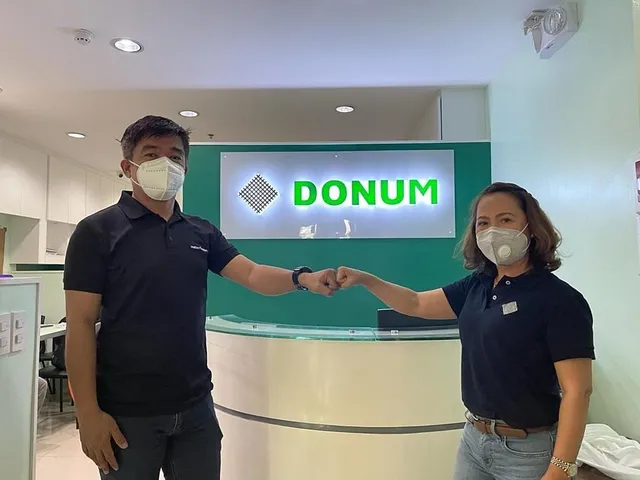
Metso Outotec and Donum Industrial Corporation have signed a distribution contract concerning aggregate crushing and screening solutions in the Philippines.

The contract covers Metso Outotec’s track-mounted Lokotrack® and Nordtrack™ equipment, the Nordberg® NW Series wheel-mounted equipment, Metso Outotec crusher wear and spare parts and Trellex® screening media.

Donum will also provide related commissioning and aftermarket services including technical support and service contracts, as the contract came into effect in July 2021.

“The contract with Donum improves the availability of our equipment, crusher wears and spare parts via local inventory and experts,” says Shaun Fanning, VP, Distribution Asia Pacific at Metso Outotec.

He continues: “Donum is locally recognized as one of the reputable and reliable suppliers and service providers. Their presence will help us to attain new quarrying and construction clients, and to support the customers throughout the solution lifecycle with dedicated local resources.”

“We are very proud to be the exclusive distributor of Metso Outotec’s mobile crushing and screening solutions for the aggregates industry in the Philippines,” comments Arlene Abata, President, Donum Industrial Corporation.

“Customers value our expertise, the ability to transact locally and to have local support on day-to-day business. We believe that the partnership enables us to grow the business further through an expanded product offering.”

Donum Industrial Corporation serves a versatile clientele including aggregate industry through its head office in Taytay, Rizal, and three fabrication sites with 62 employees currently. Read more at: https://donumcorp.com.ph

December 06, 2021

Construction of the 19 stations of the Philippine National Railways (PNR) Calamba is set to begin in 2022.

During a site visit at the PNR Balagtas Station, Department of Transportation Undersecretary for Railways Timothy John "TJ" Batan said construction works are set to begin as bidding for all nine contracts of the project is "almost complete."

"The first six contracts are already undergoing Asian Development Bank's (ADB) review for concurrence, following which the contracts will be awarded and signed, and construction will very soon be mobilized," Batan said.

The PNR Calamba is a 57-kilometer railway project and is the third and southernmost leg of the North South Commuter Railway (NSCR)--a big-ticket project under the Duterte administration's Build, Build, Build program.

In total, he said the NSCR would be composed of 35 stations from Clark, Pampanga passing through the province of Bulacan and the National Capital Region (NCR) to Calamba, Laguna.

By June 2022, he said the number of operational train stations in the country will increase from 61 to 87, while 92 stations will be under construction or have signed contracts.

"The 179 railway stations operational, contracted, and ongoing construction by 2022 is a critical component of the DOTr's railway network expansion program because it is at stations that a railway becomes more accessible to the people," Batan said.

In July, the DOTr said it received a "record-breaking" number of bids for the PNR Calamba both from local and international contractors.

Once underway, the project is expected to provide around 10,000 direct jobs. By Raymond Carl Dela Cruz


Article courtesy of the Philippine News Agency 

December 06, 2021

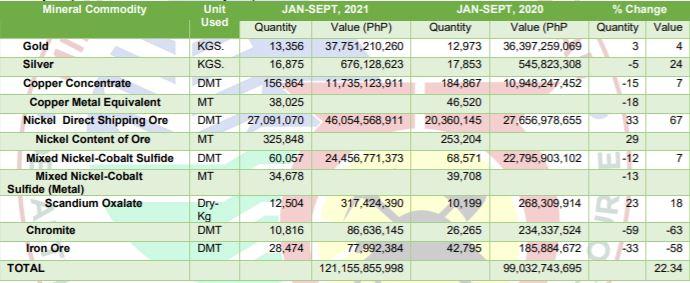
Metallic mineral production value sustained growth at 22.34% from PhP99.03 billion in January to September 2020 to PhP121.16 billion in January to September 2021, a difference of PhP22.12 billion.

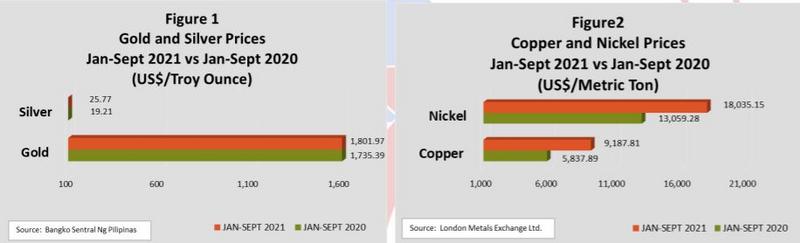
The strong metal price coupled with the better mine production of nickel ore during the review period was the vital factor for this development. Prices of leading metals gold, silver, copper, and nickel remained bullish, year-on-year. Precious metals gold and silver reported an average price of US$1,801.97 per troy ounce and US$25.77 per troy ounce from US$1,735.39 per troy ounce and US$19.21 per troy ounce, year-on-year, up by almost US$67 and US$7, respectively. In addition, the nine-month averages for copper and nickel stood tall at US$9,187.81 per metric ton and US$18,035.15 per metric ton, respectively. Copper price went up by 57% from US$5,837.89 per metric ton, while nickel enjoyed a 38% increase from US$13, 059.28 per metric ton.

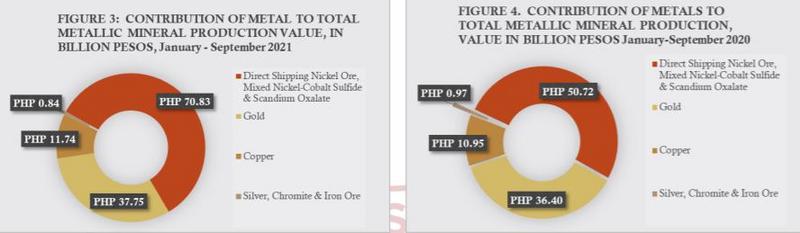
In terms of percentage contribution to the country’s total production value, nickel with the aid of the other nickel by-products, mixed nickel-cobalt sulfide (MNCS) and scandium oxalate (ScOx) continued to outperform the others accounting for more than 58% or PhP70.83 billion. Lagging behind was gold with 31% or PhP37.75 billion, on its tail was copper with almost 10% or PhP11.74 billion. Finally, silver, chromite, and iron ore rounded up less than 1% or PhP0.84 billion. Over the recent years, with the advent of the production of nickel products (MNCS and ScOx) from the operations of Hydrometallurgical Processing Plants Coral Bay Nickel Corporation and Taganito HPAL Corporation, the gap in the contribution between gold and nickel ore with nickel products continued to widen. It was in 2018 when nickel ore & nickel by-products first exceeded gold as the prime contributor in overall, metallic production value.

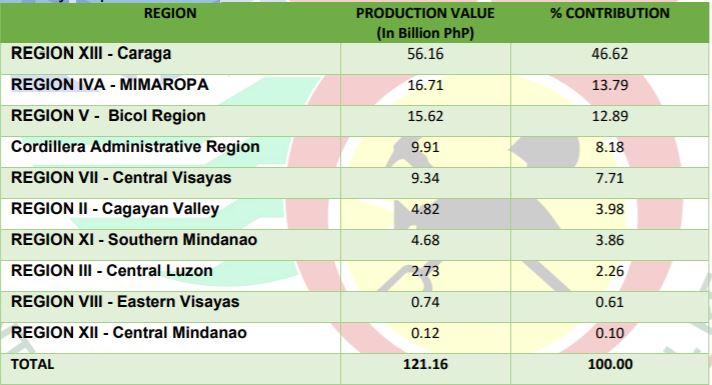
In terms of distribution of Regional production value, Caraga Region had the lion's share with 46.62%, followed by MIMAROPA with 13.79%, and in third was Bicol Region with 12.89%. In terms of the number of operating metallic mines in the Regions. Caraga headed the pack, with two gold mines, one chromite mine, 18 nickel mines, one hydrometallurgical processing plant, and one gold processing plant.

Table 1. Distribution of Metallic Production-Value by Region By Pesos & Percentage January-September 2021

Nickel direct shipping ore together with its by-products MNCS and scandium oxalate remained true to form, as it displayed dominance over other metals. Production value went up from PhP50.72 billion to PhP70.83 billion, an almost 40% or PhP20.11 billion increase. Production volume and value of nickel direct shipping ore recorded 29% and 67%, respectively from 253,204 metric tons with an estimated value of PhP27.66 billion to 325,848 metric tons with an estimated value of PhP46.05 billion year-on-year. Breaking it down further, in terms of mine regional production Caraga Region the nickel capital hub of the Philippines accounted for 76% with 248,001 metric tons, followed by MIMAROPA with 17% or 54,936 metric tons while Regions III and VIII accounted for 6% or 18,939 metric tons and 1% or 3,971 metric tons, respectively. Emir Mineral Resources Corporation located at Guiuan, Eastern Samar is the latest addition to the roster of producing nickel mines in the country. Moreover, the production volume and value of ScOx, a by-product in the operation of Taganito THPAL recorded a production volume and value of 12,504 dry-kilograms with an estimated value of PhP0.32 billion, a 23% and 18% growth from its previous 10,199 dry-kilograms with an estimated value of PhP0.27 billion, year-on-year. On the other hand, MNCS performance was diverse as production volume declined by 13% from 39,708 metric tons to 34,678 metric tons, year-on-year. Production value, however, rose by 7% from PhP22.80 billion to PhP24.46 billion.

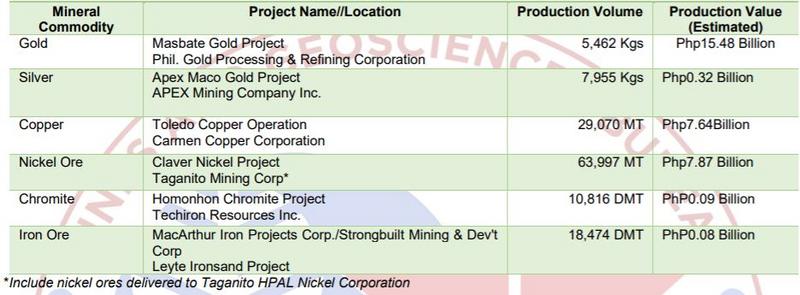
Performance of the yellow metal remained consistent with production volume and value demonstrating positive movement from 12,973 kilograms with an estimated value of PhP36.40 billion to 13,356 kilograms with an estimated value of PhP37.75 billion, up by 384 kilograms and PhP1.35 billion, respectively. In terms of mine output, Bicol Region held the rein with 40.89% or 5,462 kilograms of the country’s gold production. Philippine Gold Processing and Refining Corporation and Joshon Mining Corporation are the current gold mines in the region. Cordillera Administrative Region was in far second accounting for 15.10% or 2,017 kilograms. Said region has three gold mines, Lepanto Consolidated Mining Corporation, Benguet Corporation –Acupan Contract Mining Project, ItogonSuyoc Mines, Inc., and 10 approved Minahang Bayan. Out of the 10 MB only Loacan Itogon Pocket Miners Association reported production. CAR was closely followed by Caraga with 14.91% or 1,991 kilograms. Said Region has two gold mines, Philsaga Mining Corporation (PMC) and Greenstone Resources Corporation (GRC). Only PMC recorded production, GRC is still under Care & Maintenance status. Other regions with gold mines include II, XI, VII, and XII.

Overall silver production volume, dip by 5% from 17,853 kilograms to 16,875 kilograms year-on-year. While production value grew by 24% from PhP0.54 billion to PhP0.68 billion. The substantial PhP0.13 billion rise in value despite the 978 kilograms shortfall in volume was due to the upbeat silver price from US$19.21 per troy ounce to US$25.77 per troy ounce year-on-year, up by US$6.55.

For copper production, we saw copper volume slip by 18% from 46,520 metric tons to 38,025 metric tons, down by 8,945 metric tons both Philex Mining Corporation and Carmen Copper Corporation incurred deficit. The production value on the other hand enjoyed a 7% increase from PhP10.95 billion to PhP11.74 billion, year-on-year, up by PhP0.79 billion. The bullish metal price during the period made this possible. Another optimistic development is the renewal of the Financial or Technical Assistance Agreement of OceanaGold (Phils) Inc. last July 2021, its re-entry to the production stream will naturally boost not only copper but also gold and silver output. Noteworthy, in August 2021 OGPI reported a total sales for gold and silver amounting to PhP105.86 million bound to Australia. The ore sold came from their inventory.

On the iron ore production, only Leyte Ironsand Project of MacArthur Iron Projects Corp/Strongbuilt Mining & Development Corp. reported production with 28,474 dry metric tons with an estimated value of PhP77.99 million. Same period last year Atro Mining Vitali Iron Inc. was the sole producer.

On chromite production, volume and value went down by 59% and 63% from 26,265 dry metric tons with an estimated value of PhP234.34 million to 10,816 dry metric tons with an estimated value of PhP86.64 million year-on-year. Only Techiron Resources Inc. reported production.

For each commodity, the frontrunners in terms of mine production were:

On the local front, the passage of critical and long overdue policies has created an optimistic buzz in the minerals sector. Such policies include:

  • DAO 2021-12 (Guidelines for the Automatic Renewal of the Exploration Period and the Timely Filing of Declaration of Mining Project Feasibility Under the Exploration Permit, MPSA, FTAA, and Similar Mining Tenements);
  • EO 130 (Amending Section 4 of Executive No. 79, S. 2012, Institutionalizing and Implementing Reforms in the Philippine Mining Sector, Providing Policies and Guidelines to Ensure Environmental Protection and Responsible Mining in the Utilization of Mineral Resources);
  • DAO 2021-25 (Implementing Rules and Regulations of Executive Order No. 130, Amending Section 4 of EO No. 79, S. 2012). Major features of the DAO include: (1) Lifting of the moratorium in the acceptance of applications for Mineral Agreement pursuant to DAO No. 2010-21; (2) Approved DMPF under the EP may now mature into Mineral Agreement subject to compliance with certain requirements; and (3) Paved way for the review of the pro-forma MPSA and renegotiation of existing ones.; and
  • DAO 2021-29 (Extended Application Period for the Disposition of Residual Stockpiles) the application period for the disposition of residual stockpiles sourced from small-scale mining operation previously covered by valid mining permits is extended until 31 December 2022.


It is important to highlight that out of the total land area of the Philippines of 30 million hectares, the total area covered by mining tenements as of 31 October 2021 is only 745,685.48 hectares or 2.48%. This only pertains to the permits issued by the national government and does not include the permits issued by the local government. Moreover, with the EO 130, the government can now approve Mineral Agreements. To date, there are 313 approved Mineral Production Sharing Agreements with a total land area of about 576,482.65 hectares. It should be emphasized that said area is still subject to the mandatory relinquishment by contractors as provided by law.

In addition, the MGB is working diligently on the formalization and declaration of the new Minahang Bayan. At this time, 43 MB was already been declared all over the country with 170 pending applications. Among the declared Minahang Bayan, there are 13 under the Luzon area, 3 in Visayas, and 27 in Mindanao. For metallic minerals, commodities will be limited only to gold, silver, and chromite and shall have a term of two years, renewable for like periods but not to exceed a total term of six years. With MB very much in the scene, we are optimistic that gold, silver, and chromite production will rise.

Table 2. Philippines Metallic Mineral Production January-September 2021 vs January-September 2020


Article courtesy of the Mines and Geosciences Bureau

December 01, 2021

Photo credit: Hinatuan Mining

A grand slam win for a mining company simply means being the best in class in its responsible conduct of business; in its forest management and environment enhancement and protection; its social responsibility programs and in providing safety in the workplace and the communities.

Hinatuan Mining Corp. (HMC), a subsidiary of Nickel Asia Corp. (NAC) sweeps major honors this year from the country’s most prestigious award-giving body in the mining industry – the Presidential Mineral Industry Environmental Award (PMIEA).

“It’s our first time and it’s a grand slam! We still can’t believe it but that these awards were accorded to us during this most difficult time of the pandemic, makes this moment doubly exulting, everyone was emotional when the news first broke, this is the reason for our existence, says Engr. Francis Arañes, HMC’s Resident Mine Manager.

HMC, with operations in Hinatuan Island, Tagana-an, Surigao del Norte, takes home the Presidential award for surface mining operations; the Best Mining Forest in the Metallic category; the winner of the Safest Surface Mining Operations; and the winner of the Safest Mining Operation; plus, the individual awards of Best Surface Safety Inspector and Best Surface Miner accorded to HMC’s employees, Aldrin L. Resullar and Jennifer Q. Inting, respectively.

The PMIEA is the highest accolade awarded to a mining company.  The evaluation and assessment for this year’s awardees encountered extra challenges with the threats of COVID-19 in the backdrop where movements were limited, the economy threatened, operations delayed, and bringing services to the communities were among the biggest challenge to the company’s community workers.

HMC had set its eyes on these awards for years.

The company remains steadfast, focusing on specific goals that the award giving body monitors and measures, such as the actual number of hectares to be rehabilitated as mandated by the Mines and Geosciences Bureau (MGB), even going outside of their areas of responsibility in supporting the Philippine National Greening Program (NGP); building a robust forest within the mine site, highlighting eco-tourism programs; setting up its host and neighboring communities to sustainable economic development programs; among other things.  And to ensure that compliance is above and beyond its mandate, HMC underscores the efficiency of reporting, of transparency, giving importance to its Information, Education and Communication (IEC) programs.

“The bar in honoring mining companies has been set even higher, what with the added focus on the principles of ESG – Environment, Social and Governance – in the midst of ongoing debates about climate change,” says Engr. Aloysius C. Diaz, NAC SVP and Head of Production.

Diaz says the miners, HMC in particular, are now even more cognizant of peer reviews because the world has become more critical in holding the industry accountable for a greener, healthier, and safer future.

PMIEA evaluates all facets of a mining company’s responsible and sustainable business practices, keenly focusing on environmental protection and management; and ensuring the health and safety of employees and the total wellbeing of the people in the communities that they serve.

The Hinatuan mine site, also known as the “Tagana-an Nickel Project”, is located in Hinatuan Island, Barangay Talavera, municipality of Tagana-an, province of Surigao del Norte. Its area of operations is within the Surigao Mineral Reservation.

December 01, 2021

Photo: Bataan nuclear power plant

Senator Sherwin Gatchalian is considering nuclear and solar energy as a possible alternative or additional sources of energy in the country.

Gatchalian, Senate energy committee chairman, said he favors “in principle” smaller nuclear reactors instead of the bigger ones for flexibility and safety.

“Small ones are more flexible and safer. Safer in the sense that it is smaller, deployable, and has the technology that can use nuclear wastes. Of course, it is still in the development stage,” he said in a radio interview on Monday.

He said small nuclear reactors can produce energy from 10 to 150 megawatts.

Gatchalian, however, does not consider reviving the Bataan nuclear power plant as it will be too risky and too costly to rehabilitate the facility.

He said many are also using solar energy with some big companies putting up solar power plants.

“I believe it could be part of the energy transition because nuclear is emission-free but the risk is where to put the wastes and if it encounters a problem, the cost is too high. Solar deployment is still a challenge because it is still quite expensive,” he added.

Gatchalian said he will file a bill on energy transition following the Department of Energy’s (DOE) move last year banning new coal power plants to accelerate the country’s shift to cleaner energy.

“We cannot hasten the energy transition because we will have no source of energy… The energy transition can be 10 years or longer but the important thing is it’s a scientific process to determine how we can transition out of fossil fuel into renewable safely, reliably, and securely,” he said.

He added that right now, the country’s energy needs are still good with fossil fuel but it is imperative to jumpstart the transition due to the increasing population and industries.

Gatchalian was here on Sunday to turn over his donation of 5,000 sets of personal protective equipment and 50 sacks of slippers to the Region 1 Medical Center. By Hilda Austria


Article courtesy of the Philippine News Agency 

December 01, 2021

Photo credit: Inkl

The chair of the House Strategic Intelligence Committee on Tuesday said oil drilling activities in Recto Bank must proceed as scheduled amid rising tensions with China.

Surigao del Sur Rep. Johnny Pimentel said the Sampaguita gas field could yield up to USD18.2 billion, or around PHP910 billion, in future royalties for the government, based on a 60 percent net share.

“We have no choice but to carry on with the drilling activities because the Sampaguita gas discovery in Recto Bank has the potential to energize the entire national grid – not just Luzon – for the next 20 to 30 years,” Pimentel said.

Pimentel said Sampaguita is “an untapped value-changing asset” that would be valuable to the country’s future energy security with up to 4.6 trillion cubic feet of gas, while Malampaya, which has been producing gas for the last 20 years, has only 1.6 trillion cubic feet of residual gas at best.

“There is even one study suggesting that the entire Recto Bank has up to 20 trillion cubic feet of potential gas in place,” Pimentel said.

The Permanent Court of Arbitration in the Hague ruled in July 2016 that Recto Bank is within the Philippines’ exclusive economic zone, as defined under the 1982 United Nations Convention on the Law of Sea.

By virtue of the ruling, Pimentel said the Philippines enjoys absolute rights to exploit all resources in the seamount.


Article courtesy of the Philippine News Agency

December 01, 2021

Photo credit: Department of Public Works and Highways
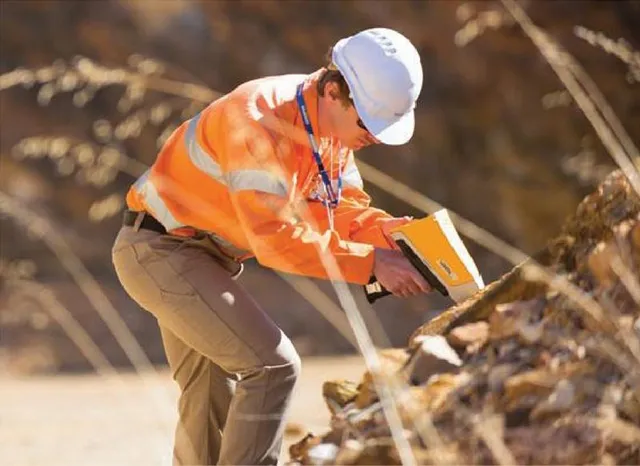
The Department of Public Works and Highways (DPWH) has received from the JICA - Japan International Cooperation Agency latest masterplan for the development of High Standard Highway (HSH) in the Philippines.

This is in support of the country’s effort to invest in high-quality infrastructure for improved national connectivity and accessibility.

DPWH Acting Secretary Roger "Oging" Mercado, in his opening speech delivered by Senior Undersecretary Rafael C. Yabut, thanked the Government of Japan thru Emabassy of Japan to the Philippines Ambassador Koshikawa Kazuhiko, and JICA Philippines Representative Eigo Azukizawa for the staunch support it has extended for the completion of the HSH Network Development Master Plan - Phase 2.

The turnover ceremony of the masterplan at the DPWH Central held November 29, 2021 was participated by Undersecretary for Information Management, Planning and PPP Services Maria Catalina E. Cabral; Undersecretary for Unified Project Management Office (UPMO) Operations and Build Build Build Chief Implementer Emil K. Sadain; Undersecretary for Regional Operations in Luzon Roberto R. Bernardo; Undersecretary for Regional Operations in NCR, Region IV-B and the Visayas Maximo L. Carvajal; Assistant Secretary Ador G. Canlas for Regional Operations in Mindanao; and Planning Service Director Constante A. Llanes Jr. Economic Minister Masahiro Nakata of the Embassy of Japan in the Philippines virtually joined the turnover ceremony of the masterplan.

“We are grateful for JICA’s technical capacity and expertise in world class infrastructure for it is crucial not just in decongesting highly urbanized areas but also in achieving the 2040 National Development Plan of making the Philippines a prosperous country by investing in high quality infrastructure,” Secretary Mercado said in his read speech.

Mr. Ryuichi Ueno, JICA Study Team Leader, presented the findings on the masterplan HSH Network Development Phase 2 aimed at expanding and updating the 2010 HSH masterplan conducted within the 200-km radius of Metro Manila, Metro Cebu, and Metro Davao.

The masterplan proposes the construction of 4,400 kilometers of HSH Class 1 composed of 406 km existing, 265 km under construction, and 3,279 km new highways to be implemented along major transport corridors across the archipelago; while about 4,600-km of HSH Class-2 (regional high standard highway) will branch off from the HSH Class-1 to provide connection to sub-regional centers, important ports and airports not covered by HSH Class-1.

These projects were categorized into long-term, medium-term and short-term projects based on its implementation importance.

Aside from the masterplan, JICA’s development assistance also covers the pre-feasibility study of four (4) important road and bridge namely Agusan Del Norte - Butuan City Logistical Highway in Region 13; Cebu Circumferential Road in Region 7; Central Mindanao Highway, Cagayan de Oro-Malaybalay Section in Region 10; and 2nd San Juanico Bridge in Region 8.

With the completion of the master plan and feasibility studies, the Philippines is one step closer to building faster, safer, resilient, and environmentally friendly road transport network which support national goals of rapid, inclusive and sustained economic growth.


Article courtesy of The Department of Public Works and Highways