November 30, 2021

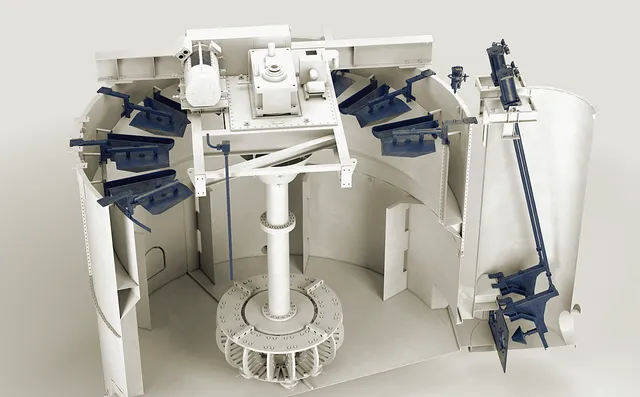
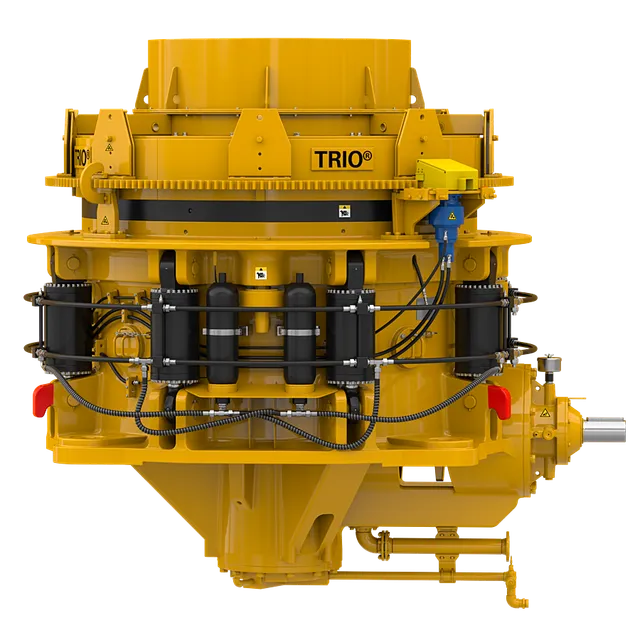
Weir Minerals has upgraded its range of Trio® TC live-shaft cone crushers. The Trio® TC84XR features all the robust design elements that have made live-shaft crushers a fixture of the mining and sand and aggregate industries for generations, while also incorporating the latest technology to ensure it remains integral to flowsheets long into the future.

‘The Trio TC cone crushers’ live-shaft design has been proven to perform in heavy-duty secondary and tertiary crushing applications. We wanted to build on this strong foundation. My team followed a comprehensive design process – we’ve reviewed and tested every inch of this crusher. While the TC84XR may seem familiar on the outside, we’ve upgraded its design and control functionality. The motor is larger and it has a much higher crushing capacity compared to equivalent sized crushers,’ Mark Utecht, Weir Minerals’ Director of Comminution Engineering said.

‘The result: we now have an incredibly robust, powerful and technologically advanced crusher that is easy to operate, has a low wear rate and uses less energy, which ultimately lowers operating costs,’ he said.

While many OEMs have made the decision to discontinue their live-shaft cone crushers, Weir Minerals has resisted this trend, believing that – because every mining and sand and aggregate operation is different – there can’t be a one-size-fits all approach.

Instead, Weir Minerals partners with its customers and empowers them to choose the machine best suited to their crushing needs.

There are some applications and situations where pedestal (fixed-shaft) style crushers may be the more appropriate solution, which is why Weir Minerals continues to manufacture the premium Trio® TP pedestal style machine.

Weir Minerals is the only global equipment manufacturer that offers both the TC live shaft and TP fixed shaft style machines.

‘The combination of the Trio TP and TC fixed and live-shaft cone crushers ensures that Weir Minerals continue to offer their customers the right technology, regardless of their site structure, operating conditions or application,’ Mark Utecht, Weir Minerals’ Director of Comminution Engineering said.

Trio® live- and fixed-shaft cone crushers are made for modern mines and quarries with advanced hydraulics, wear resistant material and the latest technology.

‘This is really exciting for our customers, as they now have a real choice. The combination of our TC and TP series allows us to have an honest conversation with our customers on the options available to them and make a technological recommendation which truly meets their needs,’ Ekkhart Matthies, Weir Minerals’ Global Application Director said.

Replacing existing live-shaft style machines on site with the Trio® TC84XR crusher is now a straightforward process because it has very similar dimensions and is a comparable weight to its live-shaft predecessors. And because it produces the same product, downstream changes aren’t required, which isn’t the case when replacing a live-shaft style machine with a fixed-shaft style machine.

In other words, there is no need to re-design existing circuits.

Technology upgrades

The recent technology upgrades in the Trio® TC84XR crusher have improved its safety, functionality and reliability.

‘At Weir Minerals, we understand and appreciate the important role live-shaft cone crushers play in today’s challenging crushing applications. Combining decades of experience and first-hand customer feedback with innovative designs, the highest quality materials and latest in control technology we believe that our new Trio TC84XR cone crusher is the most reliable and robust live-shaft cone in the market today’ Ekkhart Matthies, Weir Minerals Global Application Director said.

Engineered to perform in the most extreme applications, the Trio® TC84XR crusher is robust and easy to maintain and operate. It reliably delivers high crushing force and high horsepower in primary, crushed ore and quarry rock applications.

The ability of the TC84XR crusher to handle variable feed and crush pebbles is also partly a result of its large motor; it’s been designed with higher power capability than comparable cone crushers. Ultimately, this translates to a higher potential crushing force and therefore increase in production.

Another feature that allows it to handle variable feed, as well as deal with tramp material safely, is the fully-automated tramp-release and setting recovery system. The tramp release hydraulics can also be used to safely clear the crushing chamber should a sudden disruption in plant power cause a shut-down of the cone crusher.

The socket assembly has been redesigned to improve sealing, which has optimised functionality and manufacturability by reducing the machining setups of the socket and seal rings. The Weir Minerals comminution team has also redesigned the countershaft assembly to remove welding and machining, while simultaneously improving venting and the dust seal.

The Trio® TC84XR crusher, like the range of TP series cone crushers, can be fitted with ESCO® wear parts, designed with superior ESCO® alloys, they can be custom designed based on your specific requirements. With over 100 years of casting expertise and in-house engineering and metallurgy, ESCO transforms what was already a robust machine into one that, in the toughest conditions, is unsurpassed.

All Trio® equipment is supported by the Weir Minerals unmatched global service centre network – with over 160 facilities worldwide. Further information can be found at https://info.global.weir/trio

November 28, 2021

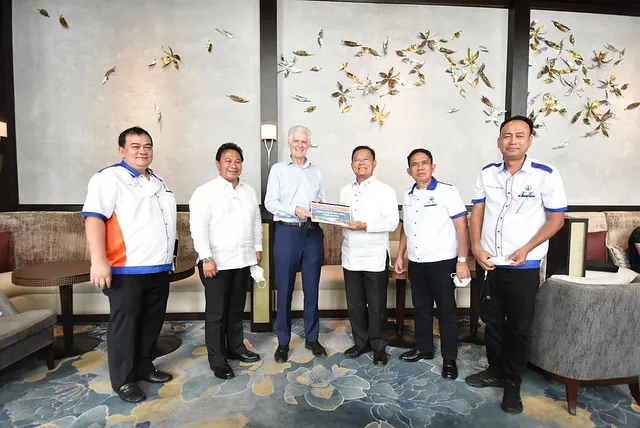
Phil. Gold Processing & Refining Corp. and the Provincial Government of Masbate through its Masbate Tourism Office, the Department of Agriculture (DA) and the Cooperative Development Authority (CDA) have forged a partnership to prime up two key development projects: organizing 10 cooperatives in the Municipality of Batuan and the full research and documentation of tourism sites of the whole Masbate province.

These projects are part of the Provincial Government's people-driven approach to development. 

The establishment of the ten cooperatives in Batuan came from a collective of the Agriculture Department's farmers’ organizations.

The farm-based micro-industries started creating basic goods and services through the enabling mechanisms of the CDA, and increased livelihood and employment opportunities for the people in Masbate.

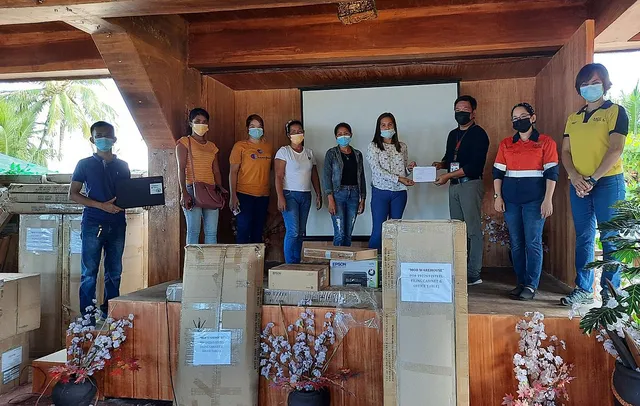
Phil. Gold provided the cooperatives with office equipment such as laptops, projector with screen, steel cabinets and office desk. 

A series of training programs, development inputs and broader partnerships will be held among the key stakeholders in the province to help the cooperatives become self-sustainable.

The initiatives to create a tourist-appealing Masbate will include visual and auditory snippets of unique cultural narratives to make the province well-appreciated by vacationers.

Phil. Gold donated photography and videography equipment such as cameras with accessories, computers and a drone to fully document the tourism sites of Masbate. 

“I am very much thankful, and we really appreciate the efforts of Phil.  Gold to assist its host province to improve its services to the rest of the Masbatenos, not just their host communities,” says Provincial Administrator Rino Revalo, representing the Provincial Governor.

This private-public partnership between Phil.  Gold and the Provincial Government of Masbate aims to spur development in the countryside, and is expected to enhance locals' livelihood and increase business activity in the region.

Phil. Gold has created campaigns and educational programs that engage stakeholders by giving them a peek into Phil. Gold's operations, showing them how the company has provided jobs to the people in Aroroy, and has served as a catalyst for increased economic activities in Masbate.

November 28, 2021

Graduation and Distribution of Starter Toolkits and turn-over of Desktop Computers to Cantugas Cultural National High School

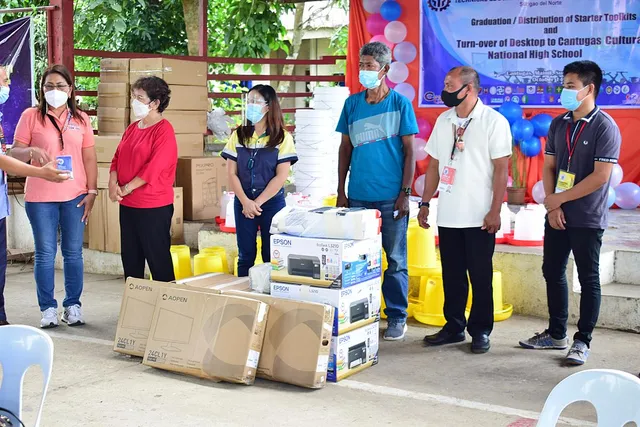
Hinatuan Mining Corp. (HMC), a subsidiary of Nickel Asia Corp. (NAC), has turned over 3 computer desktops and printers to Cantugas Cultural National High School during the Graduation and Distribution of Starter Toolkits at Cantugas Gym, Mainit, Surigao del Norte.

The graduation ceremony was for the students of Technical Education and Skills Development Authority (TESDA), who completed the Animal Production (Poultry Chicken) NC II course.

The activity was attended by TESDA Caraga Regional Director Tarhata S. Mapandi, Provincial Director Catalina O. Tacubao, Supervising TESD Specialist Buenafe G. Enaya, and Surigao del Norte College of Agriculture and Technology (SNCAT) College Administrator Abegail B. Eupeña.

Municipal Mayor Crisanta O. Mondano and Mainit Sangguniang Bayan Members, Brigadier General George L. Banzon of the 901st Infantry Brigade, Lt. Col. Ryan Callanta of the 30th Infantry Brigade, Dr. Ma. Teresa M. Real Superintendent of DepEd Surigao del Norte, and the Indigenous People (IPs) of Cantugas with their Brgy. Captain Hon. Perfecto G. Galvez also attended.

On behalf of Engr. Francisco J.  Arañes, Jr., Resident Mine Manager; Michelle V. Baliña, Surigao Liaison Office (SLO) Manager, represented HMC during the graduation and turnover ceremony.

The activity was conducted in line with the mantra “TESDA, Abot Lahat” of Secretary Isidro S. Lapeña, Caraga Cares of RD Mapandi, President Rodrigo Duterte’s Legacy on Barangyanihan Caravan, and implementation of Executive Order (EO) 70 programs carried out through Poverty Reduction, Livelihood and Employment Cluster (PRLEC) chaired by TESDA.

EO 70 or the “Institutionalizing the Whole of Nation Approach in Attaining Inclusive and Sustainable Peace and Creating the National Task Force to End Local Communist Armed Conflict (NTF-ELCAC)” was signed last November 2018 to institutionalize 12 Lines of Effort to address the different aspects of the local communist armed conflict.

One of the 12 Lines under the NTF-ELCAC is the Poverty Reduction, Livelihood and Employment Cluster (PRLEC) being led by TESDA. It aims to develop self-reliant, productive, resilient, and sustainable communities through harmonized and culturally responsive development programs, including Indigenous Peoples in far-flung areas of the country.

Brig. Gen. George L. Banzon of the 901st Infantry Brigade in Surigao del Norte expressed his gratitude and appreciation to the government agencies and private organizations that made the event possible.

“Thank you very much HMC for the support your company has provided. Everything needed was already provided by HMC, they did not only send desktop computers, they also included the Operating System (OS) of the computers and also 3 printers,” said Brig. Gen. Banzon.

He also reminded everyone about the importance of working together.

“In anything we do, a helping hand is always appreciated. Tasks can be accomplished faster if we have someone to work with. Like what happened today, we worked together with various government agencies and private companies. There is nothing we cannot do if we work together. Thank you again HMC for answering the call of those in need.”

TESDA Provincial Director Catalina O. Tacubao also expressed her gratitude to HMC.

“We are grateful for the support HMC has provided. Indeed, we can achieve anything as long as we work together for a common goal,” she said.

November 28, 2021

Froth Recovery Upgrade package

The flotation process can be divided into two stages: formation of the bubble-particle aggregates in the slurry and recovery of these aggregates in the froth. Historically, most attention – both from the theoretical and practical point of view – has been given to the first part of this process.

But due to a newly developed instrumentation package, optimising froth recovery rates is now set to deliver real dividends.

“It is probably no exaggeration to say that the potential from augmenting froth recovery rates – in terms of what more efficient control of the level, residence time in froth and pulling rates could deliver – was only recognized a few years ago by the industry,” commented Dr. Dariusz Lelinski, Global Product Manager for Flotation, FLSmidth.

“This is because it was assumed that there are no losses during transport from slurry to the launder. It was only a few years ago it was measured that the loses are typically 50% and can reach as high as 90% for coarse particles. What it means is that 50% (averaging over all sizes) of particles must be captured again after detachment in froth phase.”

“Our goal was to increase the probability of recovery of particles in the froth phase, especially coarse ones. There is no simple way to achieve it, because of it we came up with combination of instruments and devices flexible enough to achieve our goal in majority of flotation applications,” explains Lelinski.

Equally applicable to sites operating with either self-aerating WEMCO® flotation cells or externally aerated nextSTEP™ machine, the newly developed froth-recovery instrumentation package could be a game-changer in flotation recovery.

The solution comes from the recognition that the combination of exact slurry level measurement, accurate control of flow using redesigned dart valves and new Festo actuators (designed specifically for FLSmidth) allows for superior control of the froth phase. This in turn results in quicker reactions to flow and slurry density changes, which will dramatically improve performance of flotation machines.

The conventional way to influence froth recovery is a combination of changes to froth height (improved by new actuators and dart valves), froth crowding (in the middle of the cell without the possibility of adjustment after installation and not influencing the most active part of the froth surface), and number of radial launders.

“All these changes are still possible while using FLSmidth froth recovery package,” says Lelinski. “The most difficult part is froth recovery at the end of the row; there is not enough of hydrophobic particles to form stable, deep froth and a large percentage of these particles is left unrecovered.”

“Our package allows not only to recover these particles, but to control required balance between recovery and grade in this part of flotation circuit. So overall, you get better results, but it also gives you another degree of process control, not only during difficulties of froth formation, but during normal operation allowing to more flexibility in selecting grade-recovery relationship.”

Adjustable Radial Froth Crowders (ARFC)

Central to the froth recovery package are Adjustable Radial Froth Crowders (ARFC) that were recently developed in-house by FLSmidth. The ARFCs are mechanical devices enabling increase of either recovery or grade regardless of amount of froth formed at the top of the machine. They allow for much higher pulling rates (recovery) or much deeper froth (grade) which is currently hindered by top of the flotation machine geometry.

Froth Camera

Froth cameras are a flotation instrument of central importance, as they allow precise monitoring of the froth phase. Our froth camera systems utilize a combination of Model Predictive Control (MPC), fuzzy logic, and the newest technology in froth vision systems to provide optimised set point selection in real-time.

This system combines Deep Neural Networks (DNN) technology and object detection with traditional froth measurements such as velocity and stability to create a cutting-edge system which will optimize each individual flotation cell with the most comprehensive information available.

Multisense level sensor (left) and Festo actuator (right)

Alongside these elements are improved and redesigned actuators, developed in cooperation with Festo, and a new and improved level sensor, which monitors both the slurry and froth positions with the MultiSense probe, provided in cooperation with HyControl.

The final piece of the package are redesigned dart valves (typically in a hinged dart valve configuration), which are the result of an in-house, value engineering project.

“We are excited to deliver this complete package to our customers. All the elements working together in combination with radial froth crowders, means this package will deliver better recovery at the same grade or increased grade at the same recovery, making this package better that the sum of all parts.”

November 28, 2021

DMT Consulting Limited, United Kingdom

Globalisation of economies and technological advancements as well as the increased level of communication between the investors and project owners around the world has intensified the race to bring many existing and mining projects into the market place. 

Prior to the 2008 financial crisis, the financing of the mining projects was less formal than today.  However, the financial crisis has made Lenders and Financial institutions more alert to the perceived risks especially for complex mining projects.

Since the Lenders are not technical experts in mineral extraction, they leave the technical aspects and technical evaluation of the projects to reputable consulting engineers in the field. 

However, anyone who may be interested in investing in a mining project should be aware of three fundamental questions (Arden & Lewis, 2014):

  • Is the quantity and quality/grade of the raw commodity there in the ground?
  • Can it be extractable?
  • Is it worth extracting?

These questions seem to be very simple, but the underlying proof for the answers that will be sought in a bankable feasibility study by a large technical team made up of a number of engineers and technical experts in different disciplines, is painstakingly complex, expensive, long, and tedious and requires a level of expertise and accreditation that is not always available from the local market. 

Once all these questions are answered positively in principle, then the fundamentals of the project can be said to be in place.  When the project is proven to be technically and financially viable i.e. due diligence has been performed, it comes to the stage of financing/syndication.

It is possible that a number of lenders may decide to finance the project to reduce the risk exposure.  It is up to these lenders and the borrower to negotiate the best deal for the project amongst themselves.

Although a bankable feasibility study may determine the project details to an acceptable accuracy level and establish the fundamentals and foundations of the project, the uncertainties and risks associated in winning the raw commodity as well as any deviation from the expected results defined at feasibility stage can still be influential in determining the final outcome.

It is also a well-known fact that the selection of contractors and suppliers for the project construction phase will have a huge impact on the project’s fate. 

For these reasons alone, the Lenders will seek the assistance of the technical experts to ensure that the finance provided for the project will be utilised according to the protocol agreed with the Borrower.  This is to assure that the project will reach the production stage from the beginning to the end as agreed between the interested parties.

Therefore, it is common place for Lenders (Commercial as well as Development banks and other funding agencies) to require Independent Lenders Engineers (ILE) to oversee the execution of Technical, Environmental and Social aspects of a project in order to provide security of the loans to reduce the risk exposure.

November 28, 2021

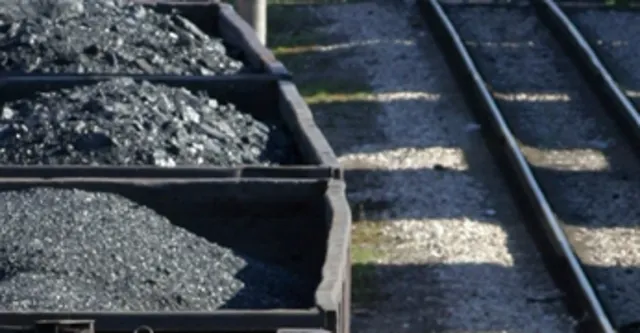
Coal trading is a very competitive landscape. While end customers buy the quality of coal based on what is compatible with their boilers and furnaces, the traders need to be vigilant in sourcing and supplying right grades. Buyers impose price discounts if the coal’s calorific value and other key parameters fall short of expected values. To secure the contracted revenue and avoid any discounts, exporters typically tend to supply higher grades than necessary. This in turn eats into their profit and erodes margins.

Price penalties are also put in place if exports exceed the specific amount of moisture in the coal, since the moisture adds to transportation costs. Not to mention that since exports are typically global and long distance, breach of moisture limits can pose stability issues to the ships. In the worst-case scenario, such shipments at the port could even be rejected.

In this article we share the idea about how coal mining companies, traders, and end-customers can achieve a "happy buyer-happy seller" agreement.

Benefits

Coal Mining:

  • Ash, ash composition, Sulphur, total moisture, and calorific value are critical information to decide value of the coal
  • Avoid penalties by meeting the contractual specifications of the coal
  • Bring down the production cost and improve yield
  • Grade-wise stockpiling of the coal and
  • Perfect blending in accordance with end customer specifications

Coal Plant:

  • Incoming check of grades to verify specifications
  • Verification of consistency or intrinsic deviation of the whole lot of material
  • Optimization of coal yard management
  • Blending of coal to target quality
  • Optimize waste by safe use of low cost / low quality coal
  • Bunker feed control in power plants
  • Optimization of combustion parameters for boilers
  • Assurance of optimal running conditions of boilers
  • Minimize slagging and clinkerisation of ash in the boilers
  • Reduced maintenance costs through minimal derating and boiler outages


About CNA Coal

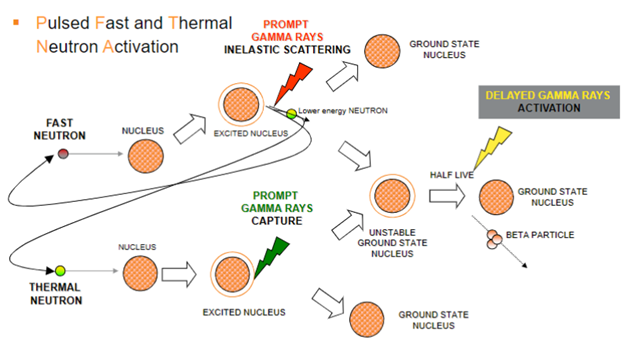
CNA Coal has been designed for tough environments of mines, featuring the cutting-edge Sodern neutron technology with unmatched lifetime and stable neutron output (D-T PFTNA).

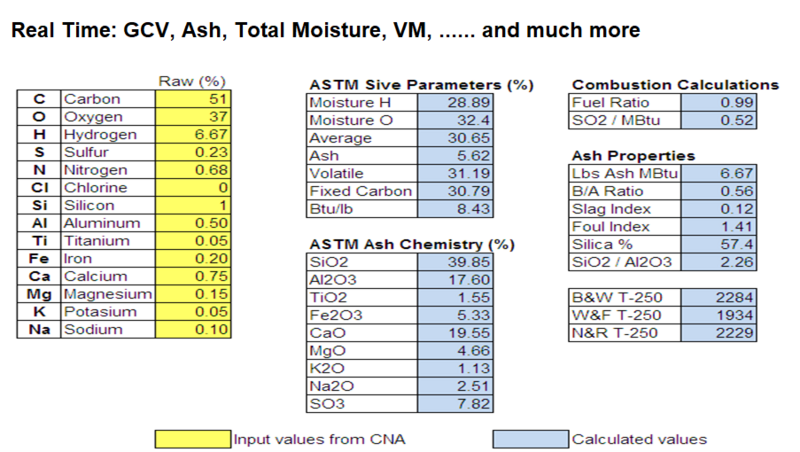
Coal is an important industrial mineral both as a fuel and feedstock. Coal quality can vary greatly depending on the source. Hence the usage and price are highly dependent on the composition. Whether located directly at a mine, a coal processing plant, a metallurgical plant, power plant or other usage point, the CNA can provide reliable real-time information on the coal composition, calorific value, ash content, volatile matter, and total moisture. The CNA with unique neutron generator technology enables measurement of a wide range of elements, including C and O.

Features/Benefits

  • Get Real-time Analysis
  • Proven On-Off electric neutron source
  • Achieve High Intensity and performance on results
  • Analyze all the elements of your interest, including C and O
  • Enjoy Up-time and Savings with Long Term Availability of Neutron Source
  • No need for frequent re-calibrations
  • Automatic radiation protection system (ARPS) for unrivaled safety during operation and maintenance
  • Fits wide ranging belt dimensions starting 600mm to 2200mm and beyond


Examples of Analysis in Coal

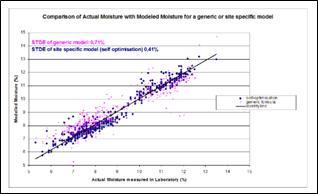
Moisture

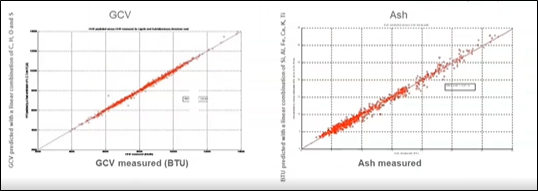
Ash and GCV

Conclusion

CNA Coal provides a powerful online monitoring tool using the D-T Pulsed Fast Thermal Neutron Activation (PFTNA). This makes it the only tool to provide ultimate and proximate analysis of coal in real time. The CNA helps provide coal of specific ash, calorific value, moisture; not more, not less…. exact!

CNA real time analyzers with unique D-T PFTNA technique are also available for elemental analysis of other ores and minerals viz. nickel, iron, bauxite, copper and lime.

November 28, 2021

The journey of CBMM/Keepmining® started in the mining and quarry domain as a trader, and transitioned to a distributor with over 15 years of resounding customer success stories.

Our success lies in identifying specific customer irritants and pain points, and solving them through disruptive design and engineering with our crack team of accomplished industry veterans and technical experts.

CBMM/Keepmining® is a global MNC, based out of Singapore and provide mining solutions for OTR tyres, mining equipment(s), crushers, washing solutions, tailings management, conveying solutions, customised drilling solutions and customised IOT & automation solutions.

Crushing, Screening and Washing

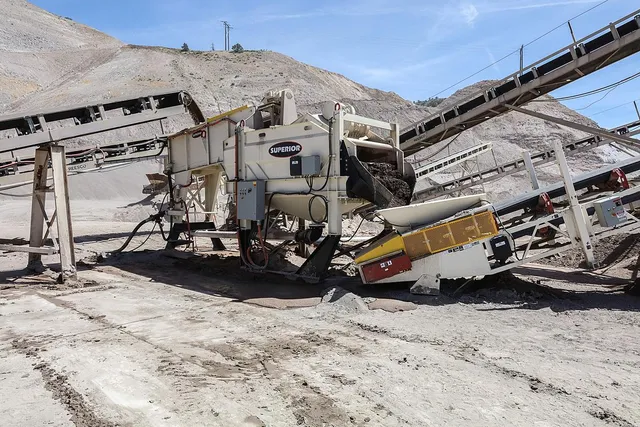
In the Philippines, we are well positioned to help our customers through our wide range of solutions in the mining and quarrying domains through our partnership with Superior Industries USA. We provide crushing and screening plants, washing systems and conveying systems that are made in America.

Superior is a renowned brand for their expertise in crushing, screening and washing equipment like Liberty® jaw crushers, Patriot® cone crushers, Spirit® washing equipment. Their expertise attained through rigours research in the field of conveying, crushing, screening and washing helps us to be a technology leader in mining & quarry domains.

Superiors Alliance® washing system is unique in its design as it allows for the customer to feed dry sand into the washing system and get quality manufactured sand. This is done by using a scrubbing system followed by dewatering screen coupled with an optional cyclone to get the best quality sand output while using half the water consumption of traditional washing systems.

Superior offers industry leading warranty on their equipment and have proven many times that their customer excellence approach leads to success for all stakeholders.

Conveyors and Conveyor Accessories

Superior Industries is a leader in the conveying systems space with solutions like Telestacker®, Trailblazer®, Zipline Modular conveyors and Razertail®.

Their expertise in conveying solutions is long and tested over the decades since 1950. Their use of in-house engineering and self-manufactured components make them uniquely positioned to offer the best solutions for the mines and quarries of Philippines.

Superior solutions for Telestacker® telescopic conveyors are well known to be the best, and able to handle large capacities for stacking products as well as in heap leach stacking applications in relatively small conveyor footprint.

The same telescopic conveyors can be used by mines who are working with global clientele to load ships directly from conveyors or from trucks by pairing with a Razertail® truck unloader. Many of these conveying and truck unloading systems are portable and can be transported with quick turnaround times.

The quality and longevity of their conveyor components are well regarded globally and there are multiple clients who swear by their products for conveyors accessories. They have a wide range of rollers, conveyor pulleys, idlers, belt scrapers, impact beds etc. which are known to provide great value to the exacting mining user of Philippines who need the best value and reliability of their conveying components.

Tailings Management

A mineral processing plant in the modern mining scenario is usually incomplete without a tailings management and water treatment solution. This is keeping in mind the various environmental effects of the traditional tailings dams and the probable failure of the dams leading to catastrophe.

Keepmining® brings to Philippines Matec Italia, a global technology leader in the water management space for mines and quarries.

Matec provides complete dry tailings management solutions for any mine or quarry in order to help save time and operating costs for the end user. Matec thickeners and filter presses are available for any size of quarry or mine.

Matec “Cube” modular solution is ideal for small or mid-size mines. The modularity of the Cube allows Matec to deliver quality results with a reliable delivery period in capacities to suit the customer requirements.

The Cube is a modular solution containing a set of mini-thickeners, filter presses, flocculant dosing. The fresh water and dry tailings are collected in standard containers.

Apart from water management offering, Matec is the company behind the brand “Alfa Pompe” pumps made in Italy for mines and quarries.

A New Beginning

In 2021, Keepmining® started another leg of the journey towards becoming a single point solutions provider for mines and quarries around the world.

Keepmining® has invested in ADET as a wholly owned subsidiary based in India with a view to provide solutions to reduce unplanned downtime and inconsistent output.

ADET operates with the theme ONTIME – Always.  ADETs disruptive products and plant designs with unique 'know-why' approach, application specific Engineering, and Intelli-service, backed with industry leading warranties, help to achieve the promise of “On-Time Always', enabling higher stakeholder profits and ease of business.

Our motto is to provide simple solutions to complex user problems by using our cutting edge to get to the core of the issue.

ADET products and solutions cater to specific requirements in mining and aggregates industry. ADET has built solutions for coal crushing, sand washing and reliable crushing and screening solutions for customers looking for the best value and reliability.

ADETs in-house team has looked at the “know-why” of existing paradigms of equipment or solutions and worked to add modern techniques and understanding of manufacturing and design to bring in disruptive solutions to the market.

ADET believes in providing value through simplicity in design and ease of use. ADET implements the honeycomb structure in their designs to provide great strength to weight ratio. In addition, the focus on safety and maintenance provides improved cost of ownership to the user.

Our team of industry veterans, field service technicians, consultants and specialists ensure that our end users improve their productivity by providing the right solution that addresses the core of their problems.

Our understanding of the Philippines systems, people, culture and procedures complement our working methods and ensure that our customers in Philippines needs are addressed comprehensively, leaving no stone unturned and in turn leading to a long-lasting and mutually rewarding relationship.

November 28, 2021

The infrastructure program anchored on the Build Build Build (BBB) initiative still remain among the top economic priorities of the government.

With the Department of Public Works and Highways (DPWH) as one of lead implementing agencies of the BBB Program, Acting Secretary Roger "Oging" Mercado highlighted at the 2021 Philippine Economic Briefing with Foreign Chambers of Commerce held on November 26, 2021 that investments on infrastructure will be the key drivers in bolstering economic development to build a better post-pandemic economy.

Under the leadership of Secretary Mercado, DPWH is committed to further accelerate the implementation of more projects to immediately create jobs, encourage business opportunities for local suppliers and contractors, and increase economic activity.

“We will pursue equitable regional development by pouring investments for better connectivity roads and bridges in the rural areas”, said Secretary Mercado.

During the virtual briefing, Undersecretary and Chief Implementer of the Build Build Build Program Emil K. Sadain provided greater insight of the DPWH flagship projects that are currently moving on the ground or in the pipeline of implementation nationwide, stressing the importance of these game-changing projects to steer and drive economic recovery and key facilitators to balanced development nationwide.

Considering the multiplier effects of infrastructure to primarily fuel and be the cornerstone for growth recovery, local budget appropriations and foreign direct investments in the form of Official Development Assistance from multilateral financial institutions like Asian Development Bank, JICA - Japan International Cooperation Agency, World Bank, and Export-Import Bank of Korea and China aggressively provided support to the priority big-ticket projects with Investment Coordination Committee - Cabinet Committee and National Economic and Development Authority (NEDA) Board approval, said Undersecretary Sadain.

Among the flagship projects are the 30 kilometer (km) Central Luzon Link Expressway (CLLEX) Project - Phase I; widening of 24.61 km Arterial (Plaridel) Bypass Road; improvement and maintenance of 1,088.23 km of arterial national roads under the Road Upgrading and Preservation Project; 45.5 km Davao City Bypass Construction Project including a 2.3 km 2-tube mountain tunnel; Marawi Transcentral Road with completed 18.78 km and on-going 18.97 km; 3.3 km Cebu-Mactan 4th Bridge with 4.9 km Mandaue Coastal Road; 37.60 km Laguna Lakeshore Road Network Project; Improving Growth Corridors in Mindanao Road Sector Project with a total length of 230.22 km including the 540 meter Guicam Bridge in Zamboanga Peninsula and three (3) other bridges with a total length of 1.790 km in the Island Province of Tawi-Tawi; Emergency Assistance for Reconstruction and Recovery of Marawi covering 21.87 km of road including 1.6 km Malabang Viaduct, construction of three (3) bridges along Rorogagus Road, and five (5) other projects; 18.65 km Samar Pacific Coastal Road Project; 1.481 km BGC-Ortigas Center Link Road Project; 21 km Boracay Circumferential Road; 17.35 km Davao City Coastal Road; 2 bridges under Metro Manila Priority Bridges Seismic Improvement Project; 32 km Bataan - Cavite Interlink Bridge; 3 priority bridges with a total length of 2.99 km crossing Marikina River; 3.17 km Panguil Bay Bridge that will reduce travel time between Tubod in Lanao Del Norte and Tangub City in Misamis Occidental from 2.5 hours to just 7 minutes; 32.47 km Panay-Guimaras-Negros Island Bridges Project; 3.98 km Samal Island to Davao City Connector (SIDC) Project; 506 meter Estrella Pantaleon Bridge connecting Makati and Mandaluyong; and Pasig-Marikina River Channel Improvement Project Phase 4.

Flagship infrastructure projects that are vital and have huge impact will see their continued implementation towards the next administration with advanced feasibility studies and other pre-investment activities, detailed engineering designs, government-to-government financing arrangement, and bidding process preparation, added Undersecretary Sadain.

As the country’s engineering and construction arm and despite the challenging circumstance faced with the Covid-19 pandemic, DPWH kept its commitment in the development and implementation of projects with a July 2016 to September 2021 accomplishments all over the country of 31,977 km of roads constructed, maintained, widened, upgraded, and rehabilitated; 6,333 bridges widened, upgraded, rehabilitated, and strengthened; and 12,394 flood mitigation structures.

The Philippine Economic Briefing with the theme, "Reset, Regain, Revitalize: The Philippines' Resurgence as an ASEAN Economic Powerhouse,” aims to update members of foreign chambers on the government’s initiatives to navigate the recovery.

Other speakers who discussed the Philippine economic highlights and their respective agency programs and priorities are Department of Finance (DOF) Secretary Carlos S. Dominguez, Bangko Sentral ng Pilipinas (BSP) Governor Banjamin Diokno, NEDA Secretary Karl Kendrick T. Chua, DTI Philippines Secretary Ramon Lopez, Department of Agriculture - Philippines (DA) Secretary William Dar, and Department of Transportation - Philippines Secretary Arthur Tugade.

November 26, 2021

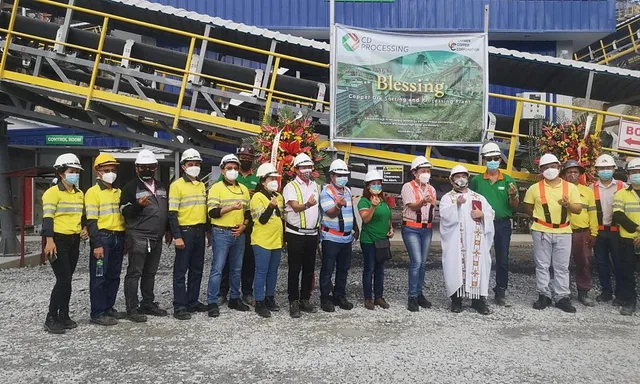
Photograph courtesy of Aboitiz Construction

The Cebu-based construction firm Aboitiz Construction on Thursday said it has finished the construction work on the British firm’s CD Processing (CDP) Ltd. copper ore sorting and processing plant in Carmen Copper Corporation’s operations center in Toledo City.

To manage mining wastes, the plant is seen to boost an environmentally-inclusive economy, with an aim to generate more jobs for the local residents.

“In line with our commitment to building a better future, we will continue to help other businesses to thrive and contribute to responsible operations which will lead to the provision of job opportunities and contribution to the economy’s growth,” said Alex Garciano, Aboitiz Construction vice president for construction operations, in a statement.

The new facility will help manage mining wastes efficiently through the reclamation of valuable copper-bearing ores from low-grade materials discarded by copper mines, thus, decreasing wastes.

The company said the project has provided employment opportunities to about 200 individuals, nearly 80 percent of whom were locally hired.

The CDP plant is a state-of-the-art ore sorting plant that uses the latest magnetic resonance analyzer technology, which will contribute to a safer, more sustainable, and cutting-edge working environment and operations.

The British firm has invested PHP583 million in its ore sortation facility in Cebu, a pioneer project approved by the Board of Investment (BOI). By Carlo Lorenciana


Article courtesy of the Philippine News Agency

November 23, 2021

The Department of Public Works and Highways (DPWH) announced the start this December 2021 of the detailed engineering design (D.E.D.) for the proposed Laguna Lakeshore Road Network Project (LLRN).

This after DPWH Acting Secretary Roger "Oging" Mercado with Undersecretary for Unified Project Management Office (UPMO) Operations Emil K. Sadain; UPMO Roads Management Cluster 2 Project Director Sharif Madsmo H. Hasim; and Department Chief Accountant Mary Antoinette Z. Puno signed on November 22, 2021 the Consultant’s Services Contract for the D.E.D. of LLRN Project - Phase 1, a new road network at the western side of the Laguna Lake connecting Lower Bicutan, Taguig City and Calamba City, Laguna with a main alignment of 37.60 kilometers.

This early, the millions of Filipinos are excited to witness and see how this new road project will change lives, said Secretary Mercado.

The parties to the contract agreement to conduct the D.E.D. are Dr. Jovito Santos of Lead Consultant CTI Engineering International (CTII) Co., Ltd.; Junichiro Minobe of Chodai Co., Ltd.; Takashi Sato of Oriental Consultants Global Co., Ltd.; and Tenkoh Yoshida of Nippon Engineering Consultants Co., Ltd with CTII President & CEO Takahiro Mishina and DPWH UPMO Overall Project Manager for Asian Development Bank (ADB) Projects Soledad R. Florencio as witnesses. These companies are first ranked joint venture firm in the procurement on August 25, 2021 of Consultancy Services for the D.E.D..

The ceremonial signing of Consultancy Contract was also attended by Country Director for the Philippines Mr. Kelly Bird and Southeast Asia Project Officer Mr. Shuji Kimura of ADB; LLRN Team Leader Project Manager Zenaida B. Mauhay; Project Manager Sol Abasa; and other officer of Associate Firms Angel Lazaro and Associates International, DCCD Engineering Corporation, TCGI Engineers, and KRC Environmental Services.

According to Undersecretary Sadain - President Rodrigo Roa Duterte’s designated Chief Implementer of Build Build Build (BBB) Program, the start of LLRN D.E.D. is another significant development in one (1) of the Department’s flagship infrastructure projects.

The LLRN Project will strengthen road transport efficiency towards Metro Manila and neighboring regions and will provide added opportunities to stakeholders - more jobs will be created; traffic will be decongested; movement of goods and services will be a lot easier; and so much more benefits, said Undersecretary Sadain.

Under the contract agreement amounting ₱135.485 Million, the D.E.D. will be carried out for 15 months between December 2021 to February 2023.

The D.E.D. will be funded by an additional financing of the ADB’s Infrastructure Preparation and Innovation Facility (IPIF) under loan number 3886-PHI.

Upon strong representation of DPWH-UPMO, LLRN Project was approved by the NEDA ICC - Technical Board on March 17, 2021, and by the NEDA ICC - Cabinet Committee on September 27, 2021. The project was approved by the NEDA Board through an Ad Referendum on October 18, 2021.

The Laguna Lakeshore Road Network Project - Phase I with a main alignment of 37.60 kilometer includes eight (😎 interchanges in Sucat, Alabang, Tunasan, San Pedro/Binan, Santa Rosa, Cabuyao, and Calamba.

This two-lane primary road consists of 11.80 km viaduct from Lower Bicutan to Muntinlupa, and 25.80 km combination of onshore viaduct and embankment from Muntinlupa to Calamba.

The project will also consider the

planned developments introduced by various local government units along its proposed alignment.

It will feature an additional one (1) lane in each direction from Sucat, Muntinlupa to Sta. Rosa, Laguna; a cycling track and promenade from Tunasan, Muntinlupa to San Pedro, Laguna.
November 23, 2021

In recent years, ESG - environmental, social and governance – has become a major concern in corporate boardrooms: criteria by which strategy is developed and risks are assessed.  While the term may be relatively new [having been coined as late as 2005 in a study of the International Finance Corporation (IFC) entitled “Who Cares Wins”],  it has always been top of mind in the mining industry even if it has not always used the same terminology.  Responsible mining companies have always been concerned about sustainability, care of the environment and working with their host communities towards achieving these goals.  ESG now brings together these in a comprehensive framework that can help a mining company navigate and balance the benefits to the planet, people and profit successfully.

ESG is now front and center in the discussion of many boards, even those whose businesses do not generally deal with the environment, as investors are increasingly paying attention to environmental, social and governance-related matters and data.  As Forbes Magazine notes, “many investors recognize that ESG information about corporations is vital to understand corporate purpose, strategy and management quality of companies.”  Increasingly, transactions are done with an eye on ESG issues.  A company’s track record on ESG would certainly influence how it is able to raise funds and attract investments.  In this regard, in their quest to improve diversity and broaden their representation, many boards are electing directors whose expertise and experience encompass ESG.

Of course, not all boards have embraced the importance of the ESG framework in their decision-making. In a study conducted by the Harvard Business Review, they classified board attitudes towards ESG into four: “The Deniers”, “The Hardheaded”, “The Superficial”, “The Complacent” and “The True Believers”.

“The Deniers” are those who see sustainability as nothing more than a buzzword or a fad, i.e., sustainability is (at most) a page in the annual report. For “The Hardheaded”, sustainability is a factor affecting their business, but reduce it to strategic reasoning (e.g.  how can costs be minimized? are there market opportunities?). “The Superficial” have a shallow understanding of the need for sustainability, including those who implicitly promote greenwashing. “The Complacent” may be early adopters of initiatives like CSR reports, green product lines, or responsible supply chains, but have not kept up-to-date with the latest developments in sustainability, or use past sustainability triumphs to shut down the conversation about sustainability.

Hopefully, responsible mining companies fall into the category of “The True Believers”,  for whom  the long-term economic viability of their organization is closely linked to, and dependent on, social and environmental responsibility. True believers undertake careful analysis of business benefits and disadvantages with a long-term approach to governance.

With this backdrop, a mining company’s  ESG agenda would now include, among many others:

  • Environment: biodiversity, ecosystem services, water management, mine waste/tailings, air, noise, energy, climate change (carbon footprint, greenhouse gas), hazardous substances, mine closure
  • Social: human rights, land use, resettlement, indigenous people, gender/diversity, labor practices, worker/community health & safety, security, small-scale miners
  • Governance: legal & regulatory compliance, ethics, anti-bribery and corruption, transparency.

[Incidentally, at his presentation at the Philippine Mining Club on November 12, Mines & Geosciences Bureau Director Wilfredo G. Moncano announced a forthcoming Department Administrative Order on enhancing biodiversity.]

Many mining companies are already taking steps to assess and improve their ESG performance.  Certainly,  for companies in the Philippines, there is a long list of laws and regulations to be complied with that would tick all the ESG boxes.   However, experts says that the real benefits come when companies move beyond mere compliance and into maximizing the opportunities arising from ESG.

Mining companies also are being encouraged to improve their ESG records by aligning with internationally recognized frameworks (and seeking certification from the relevant body, if applicable):

  • UN Guiding Principles on Business and Human Rights
  • UN Guiding Principles Reporting Framework
  • International Council on Mining and Metals’ 10 Sustainable Development Principles
  • Towards Sustainable Mining (championed by the Chamber of Mines of the Philippines)
  • Responsible Gold Mining Principles

It is worth noting that in EY’s list of Top 10 Business Risks and Opportunities for mining and metals in 2022, ESG emerged as number one.  More than 200 global mining executives were surveyed and named ESG, decarbonization and license to operate as the top three risks/opportunities facing their businesses over the next 12 months.

With ESG at the top of the global business agenda and the intense scrutiny faced by the mining industry in particular, the challenges never cease for mining companies.

November 23, 2021

New mining projects faces relative difficulty in attracting investments because of opposition by host communities and local governments brought about by potential mine accidents, transparency issues, and operations infringing on ancestral and agricultural lands. Regulators often impose huge taxes and environmental users’ fees on new projects, in addition to stiff penalties on erring mining companies involved in violation of safety and environmental laws and regulations.

The industry is currently benefitting from the global objective of lowering carbon emissions to keep the rise in mean temperatures to below 2°C above pre-industrial levels in accordance with the 2015 Paris Agreement and 17 Sustainable Development Goals, which requires the deployment of renewable energy and efficient battery storage. The unprecedented demand for green metals like copper, nickel, lithium, and cobalt needed for energy transition and digital transformation has also paved the way for sustainable investments in mineral projects.

To address these developments, mining companies are now including environmental, social and governance (ESG) and sustainability issues as part of their strategy to improve the reputation of the industry, acquire the consent of stakeholders to operate, and at the same time realize profits from their operations.

According to the Ernst and Young 2022 Report on the Top 10 Business Risks and Opportunities for Mining and Metals, ESG tops the list of risks/opportunities facing mining companies over the next 12 months. The study indicates that shareholder expectations are impacted by numerous challenges, including the mining industry’s contribution to communities, economies, protection of heritage sites, and engagement with indigenous communities.

Shareholders are also concerned with the industry’s role in prioritizing ethical supply chains, with diversity and inclusion also in the spotlight. Lenders and investors are also focusing on mining projects especially those that are vital to the energy transition but these projects need to have a good ESG strategy to become bankable.

The formalization of the requirement for ESG criteria to be incorporated into the financial evaluations of companies started in August 2005 in a conference hosted by The United Nations Global Compact in Switzerland. The financial industry’s recommendations were compiled into a report entitled "Who Cares Wins.”

The report came out with a conclusion that the "endorsing institutions are convinced that a better consideration of environmental, social and governance factors will ultimately contribute to stronger and more resilient investment markets, as well as contribute to the sustainable development of societies.”

In the report, the financial industry called on all sectors of society and business to integrate ESG into their core activities, and investors should "reward well-managed companies" that embrace ESG.

In 2006, a group of large institutional investors under the auspices of the United Nations, collaborated on a process to develop what has become the Principles for Responsible Investment (PRI). Developed "by investors, for investors," the six PRIs aim to contribute to a more sustainable global financial system and in the long term, the interests of the environment and society as a whole. Signatories to the PRI have grown to over 3,000 since its launching.

The World Economic Forum (WEF) also published the Davos Manifesto, which set out a common code of ethics for business leaders. The manifesto was updated at the WEF's Annual Meeting in 2020, which built on the concept of 'stakeholder capitalism' first introduced in the initial manifesto. Stakeholder capitalism recognizes that long-term business value is only created when the interests of all stakeholders -- employees, shareholders, governments, the environment, and society as a whole, are served simultaneously.

What is ESG?

ESG is a set of standards or criteria for a company’s operations that investors now use to screen potential investments. While ESG is spoken about as a single concept, it is an amalgamation of three distinct but clearly overlapping disciplines -- environmental, social, and governance, each with their own knowledge base, areas of focus, and methodologies for approaching problems and solutions.

Environmental criteria consider how a company performs as a steward of nature. The criteria can also be used in evaluating any environmental risks a company might face and how the company is managing those risks. They include a company’s energy use, waste, pollution, hazardous substances, mine waste/tailings, mine closure, natural resource conservation, treatment of animals, biodiversity, ecosystem services, water management, climate change, carbon footprint, and greenhouse gas emission.

Social criteria, on the other hand, examine how a company manages business relationships with employees, suppliers, and customers. Social criteria also look at how the company deals with the communities where it operates and include human rights, land use, resettlement, vulnerable people, gender, diversity, labor practices, worker/community health and safety, security, artisanal miners, and mine closure/after use.

Lastly, governance criteria deal with a company’s leadership, executive pay, audits, accounting systems, internal controls, and shareholder rights. It also includes legal compliance, ethics, anti-bribery and corruption, anti-money laundering, transparency, corporate governance, ethics, compliance, diversity, lobbying, and approach to taxation. Governance also covers how stockholders are allowed to vote on important issues. Investors want assurances that companies avoid conflicts of interest in their choice of board members and don't use political contributions to obtain unduly favorable treatment.

ESG investing is also referred to as sustainable (or responsible) investing, impact investing, or socially responsible investing. Sustainable investing incorporates ESG criteria in the investment decisions of investors in companies, organizations, or funds. These decisions are based on the investor’s real or perceived understanding of the environmental and/or social impacts that will result from their investments in parallel with the expected financial returns. The purpose of directing funds towards investments that are seen as sustainable is to generate measurable environmental and social impacts in addition to financial returns.

Governments and regulators are obviously supportive of ESG criteria. It is for this reason that ESG investing was identified as an investment megatrend. The Covid-19 pandemic also proved to be a positive catalyst for many investment managers to place their money in the accelerating global trend in sustainable investment. This emerging, new normal investment strategy is gaining momentum and the use of ESG criteria is set to be the standard in sustainable investments.

Aside from proposing new standards and frameworks against which investments should be measured using ESG criteria, institutional investors and fund managers have also created investment products that enable investors to put their money into products that meet their ESG performance requirements.

ESG-based investments can offer quick returns. Investors, notably millennials who are the major beneficiaries of the largest intergenerational transfer of an estimated wealth of $30 trillion, have shown interests in putting their money in EGS.

ESG in Mining

Mining has never been regarded as a “green” or sustainable investment, and this stigma has been the main reason for the difficulty in financing large-scale operations. Investor appetite has gone beyond balance sheets and now dwells in the realm of addressing the urgent need to preserve resources for future use of the coming generations. To responsible investors, mining may not be on the top of the list when considering an investment based on their ESG criteria.

Recently, ESG has provided the opportunity for the industry to address the sustainability challenges by laying down a comprehensive framework that stakeholders can use as metrics when considering their involvement in a mining project.

Before risking capital in a project, investors are now looking to consider the ethics, competitive advantage and culture of a mining organization to determine how the company can balance profits and the benefits to the environment. Mining finance transactions have evolved in recent years to integrate ESG and sustainability considerations.

Now, investors, lenders and other stakeholders in the financial industry look into the ESG credentials of mining companies and very few transactions are done without conducting a due diligence of of ESG issues. Failure to address these issues will ultimately reduce access to funding while good ESG equates to more and cheaper funding.

Mining investors, shareholders, as well as financiers across the spectrum —export credit agencies, development finance institutions and commercial lenders — are making sure that borrowers have the appropriate ESG strategy in place for full implementation.

Investors are no longer passive in their sustainability due diligence of mining projects and exerting efforts to obtain more information from other available sources in addition to mandatory disclosures made under existing regulations and codes. Aside from traditional environmental and social reporting covenants, enhanced ESG and sustainability reporting are becoming standard provisions in loan documentation.

Some investors and lenders are requiring that borrowers comply with the lenders’ own internal ESG policy and sustainability reporting requirements. Some mining finance transactions may also require the appointment of a lender to take on an ESG or sustainability coordinator role for the project.

One particular organization, the World Gold Council, is lobbying for insurance providers to become more involved in the ESG movement by requiring mining companies to uphold ESG principles in order to be eligible for insurance policies. In some large mining initial public offerings, investor roadshows have become venues for investors to grill companies of their ESG initiatives in relation to relevant laws and internal reporting.

On the demand side, cautious buying of mineral commodities is now a reality, as socially-responsible customers want to be kept informed about ESG issues of the supplier. End-users not only look into to the ethical production of minerals but also to the supply chain as well.

Stakeholders like government and financial regulators, ESG rating agencies, civil society and advocacy groups, employees, and host communities are increasingly demanding transparency and performance on ESG issues more than ever. ESG factors have also led to a rise in shareholder activism, where existing investors use their shareholding to influence the mining company’s ESG performance.

Non-compliance with ESG regulations and best practices will result in activist shareholder protests and class action suits against the parent companies of global mining groups particularly those operating in developing countries where environmental laws and governance rules are not properly implemented.

ESG Strategy, Mineral Reporting Standards, and Sustainability Reporting Frameworks

As pressure mounts from capital markets and the public, investments with a well-defined ESG strategy are outperforming their peers in the market and experiencing lower levels of volatility. According to a review of companies listed in the S&P 500 undertaken in 2019 by NASDAQ, companies that received high sustainability ratings "exhibited both higher returns and less risk.” On the other hand, companies with poor ESG ratings "showed the opposite results.”

It is thus imperative if not good business practice for mining companies to engage in the preparation and implementation of a clear ESG strategy that will help address investor concerns and promote additional investments. The strategy containing the company’s corporate values and ESG priorities must fully explain how the company complies with both mandatory and voluntary obligations set out in the ESG company policy.

The ESG strategy must also outline the company’s management plans and how it will assist in meeting its key performance indicators in relation to its sustainability goals. Lenders are also prescribing ESG principles to companies for them to receive green loans and sustainability-linked investment facilities, and incentivize the borrower to meet predetermined sustainability targets. Examples of predetermined sustainability targets for mining companies are increased energy efficiency and improved working or social conditions.

Foremost among the inevitable risks that come with poor ESG management record is the loss of the social license to operate. Dissatisfied government and host communities will post obstacles to mine start or expansion by imposing onerous taxation regimes and regulatory obstacles to erring companies.

Examples of ESG management failure range from repeated environmental violations to outright mining disasters resulting from failed tailings disposal systems and environmental pollution. Violation of land access agreements with local governments, landowners, indigenous peoples, and artisanal miners often lead to cancellation of consents and expose the mining companies to additional civil and criminal liability.

Human rights violations, militarization, and poor workplace health and safety conditions will lead to disruption to operations brought about by labor unrest and even heightened insurgency in the mine area. Wasteful utilization of water and energy resources will not only diminish the company’s bottom line but will cause civil unrest in the communities because wastage will disrupt their livelihood.

On the other hand, a well-managed and transparent ESG compliance system will bolster strong relationship with the stakeholders, easy access to financing, good customer relationship, and better management of scarce resources and raw materials, which will enhance the profitability of the mine operations.

Good labor, health, and safety practices and human resources development also minimize employment turnover and enhance company loyalty. There are so many benefits and opportunities for companies with a strong ESG track record that in the long term will enable the company to operate in other mineralized sites because of good social and political risk management.

Even in national mineral reporting codes that set the minimum public reporting standards of exploration results, mineral resources, and mineral reserves, the inclusion of ESG reporting has been gaining traction. Investors rely on these reporting codes before they proceed with their investment decisions.

Prepared for the purpose of informing potential investors and their advisors on the mineral assets of a reporting company, these reporting codes are now including ESG issues as important contributors to modifying factors which can influence the commercial declaration of mineral reserves.

ESG criteria play an important role in determining whether the mineral resources can be capable of being extracted economically. The investors are looking for evidence of how companies integrate ESG considerations into their businesses and this evidence needs to impact all aspects of the business, including geological processes and mining activities.

Sustainability reporting is largely undertaken voluntarily by companies, regardless of their listing status on a stock exchange. Investors obtain ESG information about companies directly through engagement with companies or via information generated by ESG ratings agencies.

The increasing influence of these rating agencies has resulted in ESG becoming a key factor in raising funds from capital markets. Rating agencies base their ratings from aggregated information directly obtained from the mining companies and rely solely on their review of publicly available information.

However, there remain some questions on the ratings given by these agencies because of transparency issues on what they do with the information obtained and how they generate the ratings.

In response to the growing desire to report on their ESG performance, companies have developed a number of reporting frameworks, the objective of which is to provide guidance and metrics to companies who wish to disclose their sustainability performance. Some of the more commonly used frameworks include the Global Reporting Initiative, Sustainability Accounting Standards Board, Carbon Disclosures Project, and Task Force on Climate-related Financial Disclosures.

Critics of sustainability reporting suggest that these reports have done little to improve the actual management of sustainability issues and instead are utilizing company resources that could be better spent managing sustainability issues on the ground. Gaps also remain between society's expectations of mining companies and their performance in respect of ESG issues.

Companies need to be realistic about what they can deliver and build an ESG strategy that can manage stakeholders’ expectation. There is also a call by industry and investors to standardize sustainability reporting metrics.

Conclusion

To achieve a sustainable future, the global economy will rely to a great extent on resources and raw materials to be provided by the mining industry. To achieve this, companies need to take into account ESG and sustainability practices to attract risk capital and make mining projects bankable.

The industry needs to apply ESG criteria from project inception to mine decommissioning, and throughout the supply chain to make its operations efficient, cleaner, and socially responsible. To preserve their license to operate and achieve sustainability, mining companies must also ensure that they have an ESG strategy in place to adhere to relevant laws, comply with regulatory codes, and satisfy all stakeholders.

Fernando “Ronnie” S. Penarroyo specializes in Energy and Resources Law, Project Finance and Business Development. He may be contacted at fspenarroyo@penpalaw.com for any matters or inquiries in relation to the Philippine resources industry and suggested topics for commentaries. Atty. Penarroyo’s commentaries are also archived at his professional blogsite at www.penarroyo.com


References

Environmental, Social, and Governance (ESG) Criteria, 05 March 2021, https://www.investopedia.com/terms/e/environmental-social-and-governance-esg-criteria.asp

ESG Investing Will Speed-up the Energy Transition, 27 July 2021, https://foresightdk.com/esg-investing-will-speed-up-the-energy-transition/

Holman, Chris, ESG Investments in Mining, Azure Capital, 11 March 2021, https://apac.cib.natixis.com/m-a-pulse-in-apac-articles/focus-on/articles/esg-investments-in-mining

Introduction to Environmental, Social and Governance (ESG) Considerations for the Mining Sector: Reporting Obligations and Investor Expectations, Baker Mckenzie,

Sankaran, Aparna, ESG with a Heightened Focus on Environment and Social Issues, Emerges as the Top Risk/Opportunity for the Mining Sector, https://www.ey.com/en_gl/news/2021/10/esg-with-a-heightened-focus-on-environment-and-social-issues-emerges-as-the-top-risk-opportunity-for-the-mining-sector

Steele-Schober, Teresa, The Importance of ESG for Mineral Reporting, http://www.scielo.org.za/scielo.php?script=sci_arttext&pid=S2225-62532021000600003

Taking ESG Seriously: The Crucial Role of Mining investors in the Energy Transition, White and Case, https://www.jdsupra.com/legalnews/taking-esg-seriously-the-crucial-role-2066231/

Walker, David, ESG Insights: What does ESG mean for the Mining industry? https://www.slrconsulting.com/news-and-insights/insights/esg-insights-what-does-esg-mean-mining-industry
November 23, 2021

The strategic plan to develop Bamboo has been in the portfolio of the Department of Trade and Industry (DTI) many years back. As a chief raw material source for the flourishing Philippine handicraft industry, the demand for Bamboo increased further over the years because of its emerging uses in construction, agriculture, and fisheries.

Bamboo development was mentioned in several Physical Framework Plans that the National Economic and Development Authority (NEDA) mandated Local Government Units (LGUs) to prepare. At the national level, the most comprehensive among these plans is the Philippine Bamboo Industry Development Roadmap (PBIDR) crafted by the Board of Investments in 2016.

The PBIDR has called Bamboo as the ideal renewable resource that can thrive easily. If managed well, it could provide sustainable raw materials for myriad uses -- house and kitchen utensils, farm implements, furniture and handicrafts, house décor, raw material for construction, banana props, fish pens, banca outriggers, and fuel in the form of charcoal and charcoal briquettes.

Bamboo also emerged as the source of pulp and paper, textiles and clothing, and renewable energy resource in the form of chips and pellets. Lately, beer and energy drinks have also been manufactured from Bamboo.

In an article published by the Philippine News Agency in 2018, DTI Secretary Ramon Lopez said he will work closely with DENR Secretary Roy Cimatu to “work out a sustainable mining development plan through planting Bamboos for rehabilitation.”

Bamboo in Didipio mine’s FMRDP

The PRJ interviewed the environment manager of OceanaGold’s Didipio mine operations, Engr. Jason Magdaong, to inquire how the company considered Bamboo in their Final Mine Rehabilitation and Decommissioning Plan (FMRDP). He confirmed the extensive use of Bamboo in their mine rehabilitation and reforestation efforts. The FMRDP is the blueprint of how the mine would become after decommissioning. It is a requirement for operating mines mandated by Republic Act 7942, otherwise known as the 1995 Mining Act.

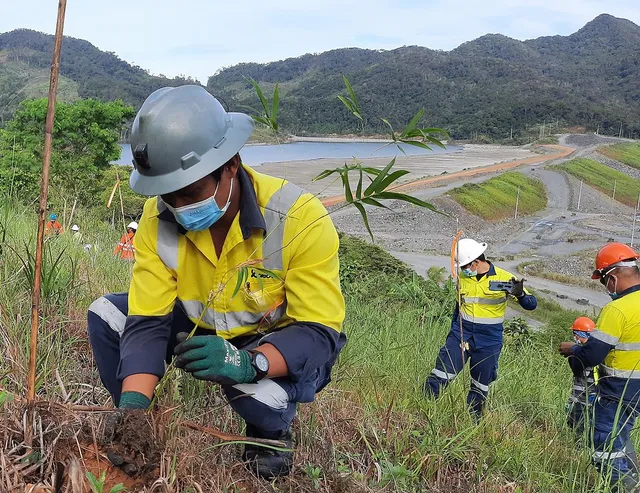
“We’ve considered Bamboo as a rehabilitation and plantation species because it fits well our mine. It is fast growing. Also, it has a very good performance in soil erosion control, and works best in rehabilitating disturbed slopes and riverbanks,” Magdaong explained.

Bamboo also has strong carbon absorption capacity and good properties in absorbing heavy metals in normal conditions, that is why generally recommended for most mines, although Didipio does not have pressing concerns on these aspects.

Magdaong said that their Didipio nursery has started producing Bamboo propagules two years ago in response to DENR’s call to support the development roadmap. Bamboo has been planted in Didipio’s waste rock dumps which are already topped with soil.

“The performance of Bamboo as a rehabilitation species is generally good,” Magdaong affirmed.

Initially, OceanaGold used the kawayang tinik (Bambusa blomeana) and bayog (Bambusa merrilliana) which are locally abundant around the Didipio mine site.

“When we heard of the giant Bamboo, we thought of using it because of the promising livelihood opportunities it can offer,” Magdaong added.

The giant Bamboo (Dendrocalamus asper) has thicker flesh and grows taller than local species like the kawayang tinik, bulo (Gigantochloa levis), buho (Schizostachyum lumampao), and bayog (Bambusa merrilliana).

The giant Bamboo is preferred by manufacturers of engineered Bamboo (such as floor tiles, boards, and blocks) because of its superior properties.

Magdaong believes that leaving behind a Bamboo Forest along rehabilitated areas and targeted reforestation sites elsewhere could create a flourishing industry for Didipio folks.

“The power lines that would be left behind after the mine closes are already three-phase configured, just the kind of electrical power connection needed in establishing industries,” Magdaong explained.

Bamboo offers a two-pronged solution according to Magdaong: it mitigates environmental impacts, and at the same time, it offers a supply of resources for a budding industry that would address the social and economic displacement of workers and local folks affected by the eventual mine closure.

“Our strong adherence to regulatory requirements and consistent advance towards achieving our goals … allow us the opportunity to nurture the value of our skills, our safety, and our responsibility for the environment, and for the communities to which we belong,” OceanaGold (Philippines) President, Atty. Joan D. Adaci-Cattiling said.

As the Didipio FTAA contractor, OceanaGold (Philippines) has committed beyond adherence to responsible mining principles in achieving its goals, do more for Didipio for it is the community that they belong to.

Bamboo and Environmental Remediation

There is an established claim that Bamboo can produce more oxygen and absorb more carbon dioxide than trees. This makes it perfect for restoring disturbed ecosystems and for remediation of greenhouse gas emission. Because of this, Bamboo is also widely used in urban forestry and landscaping.

The Wildlife and Countryside Act 1981 did not identify Bamboo as an invasive species. There are currently no restrictions on planting it. In fact, the Ecosystems Research and Development Bureau of the DENR has been producing Bamboo planting materials for the National Greening Program several years back.

Thick Bamboo clumps provide excellent shelter for wildlife. Monitor lizards, locally known as bayawak, are frequently seen along dense clusters of Bamboo by folks gathering young shoots or labong, a local delicacy. The deep roots of Bamboo usually form spacious crevices that are ideal shelter of many species of reptiles and amphibians. Small birds are also found to nest in the thorny branches of Bamboo culms.

“We are also planting other species alongside Bamboo to create a condition for a restored biodiversity. Bamboo is compatible with other species, and one thing good is it blends well with all other species we are planting,” Magdaong explained.

Economic Potentials of Bamboo

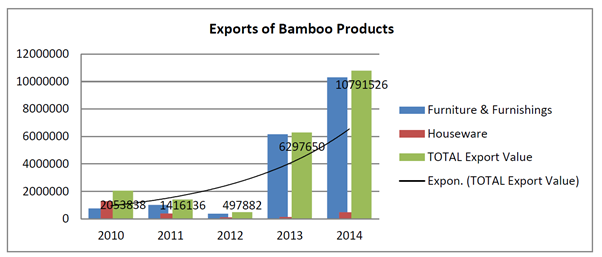
The PBIDR cited that Bamboo products exported increased significantly from 2010 to 2014, growing from US$2,053,838 to US$10,791,526 annually. The roadmap also estimated the demand for Bamboo culms by current industries and sub-sectors would amount to 21,250,874 culms annually. If pulp and paper production and Bamboo chips for fuel would attract more investments, the total demand could climb up to 107,058,770 culms per year.

(Source: Export Marketing Bureau, DTI)

The PIBR also recognized Bamboo as a US$11.21 billion industry worldwide as of 2009. In 2015, China has been the top exporter of Bamboo products valued at US$1.398 billion and the Philippines was ranked 5th worldwide with exports valued at US$54 million, according to the International Bamboo and Rattan Organization.

Stakeholders in the Bamboo industry involve Bamboo clump/plantation owners, gatherers, traders, sawali and basket weavers, and furniture and handicraft producers. They own or work in small, unregistered shops, thus, considered as part of the informal sectors.

Sources from the furniture industry estimated around 190,000 or 10% of the total workers in the furniture and handicraft sectors work in Bamboo-related handicraft. Pangasinan, particularly in the towns of San Carlos, Binmaley and Urbiztondo, is the country’s Bamboocraft centre. But since Bamboo is found all throughout the country, bamboocraft-making are also be found in all the provinces.

As Bamboo gained the spotlight in the rehabilitation of the Cagayan River, the inter-agency Task Force Build Back Better has laid up a complete plan beyond using the species for riverbank stabilization. They mobilized the Technical Education Skills and Development Authority (TESDA) to train laborers from local communities on seedling propagation and Bamboocraft. Paid by the Department of Labour and Employment (DOLE) under the Tupad Program, locals were mobilized to plant Bamboo in the riverbanks The move has set in motion a strategic Bamboo supply development in the region.

Opportunities and Challenges

The popularity of Bamboo could be seen in online markets, where varied products such as blinds, steamers, sticks, fence, sala sets, tumblers, mugs, pens, etc. are offered for sale. Giant Bamboo cuttings are also sold online by Bamboo nurseries at P58.50 a piece, excluding delivery cost.

The PBIDR has identified key production areas in Batangas (Euro Integrated Farms & Supply, Inc.), Pangasinan (CS First Green Agri-Industrial Development, Inc), Negros Oriental (Philippine Bamboo Foundation, Inc.), and Antipolo City (Carolina Bamboo Farm). These serve as primary sources of planting materials needed to produce enough supply of Bamboo culms in the country.

The production of toothpicks and barbeque sticks alone has gone a long way in the Bamboo industry. A small enterprise in Iloilo has grown over the years and now producing large volume of quality toothpicks and barbeque sticks using mechanized equipment.

However, as revealed in the PBIDR document, Chinese exports are much cheaper than locally produced Bamboo products. Processing machines are imported because there are no local fabricators yet. There is also a need to set the specifications for Bamboo construction materials so that it will be used in high-level construction sites. These are the ways forward for the Bamboo industry stakeholders to work on.

November 22, 2021

Photo credit: Masbate Gold Project

The Department of Environment and Natural Resources - Mines and Geosciences Bureau (DENR-MGB) is proposing the implementation of a policy that allows only one operator per mining tenement in the country.

Implementing such policy will help improve the execution of mining agreements and promote the holistic, harmonious, and systematic conduct of mining operations, MGB Mining Tenements Management Division chief Danilo Deleña said Friday during Day 2 of a virtual mining stakeholders' forum.

Deleña said the MGB drafted the policy due to "persistent disputes and issues among contractors and multiple operators, which compromise the conduct of mining operations within mining tenements.”

“That's why there's (a) need to limit the operator under a mining tenement," he said.

He said the MGB has proposed the policy to Environment Secretary Roy Cimatu for review and approval.

If approved, the DENR would issue an administrative order institutionalizing the policy, Deleña said, adding that the MGB is hoping the department would issue the order soon.

The proposed policy covers all mineral production sharing agreements (MPSAs) and financial or technical assistance agreements (FTAAs), according to the MGB.

The bureau defines the MPSA as a mineral agreement in which the "government shares in the production of the contractor, whether in kind or in value, as owner of the minerals," while the contractor "shall provide the necessary financing, technology, management, and personnel for the mining project."

On the other hand, the FTAA is an agreement that "may be entered into between a contractor and the government for the large-scale exploration, development, and utilization of gold, copper, nickel, chromite, lead, zinc and other minerals except for cement raw materials, marble, granite, sand and gravel and construction aggregates.”

Deleña said the proposed policy requires mining tenement operators to meet certain qualifications.

He said under DENR Memorandum Order 99-10, an operator must have satisfactory environmental management and community relations in previous mineral resource use ventures and must possess technical competence and financial capability to conduct mining operation within the area covered by the MPSA or FTAA concerned.

The proposed policy likewise identified grounds for either suspending the mining operations of contractors authorized to undertake these or canceling MPSAs and FTAAs concerned, Deleña said.

"Failure of the operator to conduct mining operations in the contract area under the MPSA or FTAA for more than one year from authorization therein shall cause withdrawal of the said authority," he said.

Deleña said the proposed policy has a transitory provision covering existing multiple operators under either MPSAs or FTAAs.

He said under that provision, operators "shall continue to be authorized until (the) expiration of the term of their respective operating agreement, memorandum of agreement, and other similar forms of agreement."

"The authorization of multiple operators shall cease upon expiration of the term of their respective agreements and the contractor shall elect which operator shall remain to conduct mining operation" under the mining agreement concerned, he added.


Article courtesy of the Philippine News Agency

November 22, 2021

Photo credit: Department of Public Works and Highways 

The Department of Public Works and Highways (DPWH) is working with the Asian Development Bank (ADB) on a goal of achieving sustainable infrastructure development in the Philippines.

DPWH Acting Secretary Roger "Oging" Mercado said that talks with ADB Country Director for the Philippines Mr. Kelly Bird has confirmed the bank’s commitment to provide continuing support to infrastructure development program and help facilitate the economy rebounds from the pandemic by accelerating job generation.

The various on-going and proposals with high-impact potential for possible Official Development Assistance (ODA) in the Philippines were also discussed with the ADB executive by DPWH Undersecretary for Unified Project Management Office (UPMO) Operations Emil K. Sadain also joined at the recent meeting by UPMO Project Directors Sharif Madsmo H. Hasim, Benjamin A. Bautista, and Ramon A. Arriola III.

According to Undersecretary Sadain, President Rodrigo R. Duterte’s designated Chief Implementer of Flagship Projects under Build Build Build (BBB) Program, ADB has been a partner for the BBB initiative including the climate change and disaster risk reduction efforts.

As a host country of its headquarters since it was set up in 1966, ADB remains committed to support the Philippines return to high economic growth this pandemic by ramping up investments in public infrastructure.

On-going projects funded by ADB include the civil works for the P25.26 Billion Improving Growth Corridors in Mindanao Road Sector Project that covers the construction of seven (7) road sub-projects with a total length of 230.22 kilometers including the 540-meter Guicam Bridge in Zamboanga Peninsula and three (3) other bridges with a total length of 1.790 km in the Island Province of Tawi-Tawi.

Under detailed engineering design (D.E.D.) and procurement stages is the ₱6.835 Billion Emergency Assistance for Reconstruction and Recovery of Marawi geared towards inclusive economic growth for Marawi City and its peripheral areas.

The project components are the rehabilitation of existing 5.53 km Transcentral Roads and 4.71 km Mindanao State University Roads; construction of 6.86 km new Transcentral Roads with drainage; construction of 2.4 km Malabang Viaduct and 300 meter Rorogagus Bridge; replacement of three (3) bridges with a total length of 657 meters; three (3) main drainage channels with a total length of 3.49 km; and rehabilitation and slope protection on Marawi Bito Road.

Under D.E.D. stage is the ₱12.028 Billion construction of three (3) priority bridges crossing Marikina River in Metro Manila.

These are the Marcos Highway-St. Mary Bridge (formerly J.P Rizal-St. Mary Bridge), a new 2-lane pre-stressed concrete box girder bridge with a total length of 1,582.6 meters including the main bridge length of 325 meters; Homeowners Drive-A. Bonifacio Ave. Bridge (formerly J.P, Rizal-Lopez Jaena Bridge), a new 2-lane pre-stressed concrete box girder bridge with a total length of 691 meters including the main bridge length of 461,5 meters; and Kabayani-Matandang Balara Bridge (formerly Marikina-Vista Real Bridge), a new 4-lane pre-stressed concrete extradosed bridge with a total length of 723.2 meters including the main bridge length of 364 meters.

ADB has also provided technical assistance for the Infrastructure Preparation and Innovation Facility (IPIF) to deliver more effective and more innovative infrastructure projects. With a completed Feasibility Study under IPIF, D.E.D. is on-going for the proposed ₱175.656 Billion Bataan-Cavite Interlink Bridge connecting Mariveles, Bataan to Naic, Cavite with a total length of 32.15 km.

Other pipeline projects with completed Feasibility Studies financed by ADB include the proposed ₱175.696 Billion Laguna Lakeshore Road Network Project, a 51 km road network along Laguna Lakeshore connecting Lower Bicutan, Taguig City and Calamba City, Laguna; and ₱54 Billion flood risk management for the six (6) major river basins of Apayao-Abulug, Abra, Jalaur, Tagum-Libuganon, Buayan-Malungon, and Agus.


Article courtesy of the Department of Public Works and Highways 
November 22, 2021

Photo credit: Department of Public Works and Highways
The Department of Public Works and Highways (DPWH) is ramping up efforts to improve the transport logistics and mitigate vehicular traffic congestion in Davao City with the construction of a 2.3 kilometer two (2)-tube mountain tunnel.
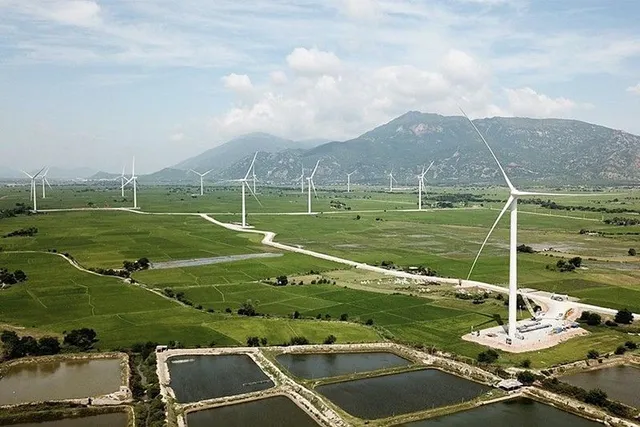
A symbolic blast on Friday, November 19, 2021 officially started work on the road tunnel which is part of the 10.7 kilometers Contract Package I-1 of the Davao City Bypass Construction Project (DCBCP) implemented by DPWH Unified Project Management Office (UPMO) Operations.

The actual commencement of tunnel excavation works was witnessed by DPWH Acting Secretary Roger "Oging" Mercado, Japanese Ambassador to the Philippines Kazuhiko Koshikawa, DPWH Undersecretary for UPMO Operations and Chief Implementer of Flagship Projects under Build Build Build(BBB) Program Emil K. Sadain, and Japan International Cooperation Agency (JICA) Chief Representative Eigo Azukizawa.

The short program, carried out under strict compliance to health policies, was also attended by Undersecretary Eugenio R. Pipo Jr. and Assistant Secretary Ador G. Canlas of DPWH Regional Operations in Mindanao, Embassy of Japan in the Philippines Second Secretary Matsubara Tomohiro, DPWH Region 11 Director Rey Peter Gille, Project Director Benjamin A. Bautista of UPMO Roads Management Cluster 1, former Project Director Virgilio C. Castillo, Mr. Fidel Arcenas of the Office of DPWH Secretary, and other Japan Embassy and JICA officials.

According to Undersecretary Sadain, the tunnel project which will soon be the first-ever long-distance mountain tunnel in the Philippines was designed by Japanese experts to have better seismic resiliency.

To support the underground development, equipment that includes horizontal boring machine for geotechnical investigation, twin header tunnel excavator and drill jumbo are deployed to work at the north and south portal. Additional equipment on the ground also includes erecter with shotcrete machine, tunnel ventilation and dust collector, side dump payloader, and articulated dump truck.

The civil work contract for the construction of the tunnel was awarded to Shimizu – Ulticon - Takenaka joint venture with Nippon Koei – Katahira - Nippon Engineering - Philkoei as engineering consultant under the overall project construction supervision of UPMO-RMC 1 Project Manager Joselito B. Reyes and Engr. Earl Nicholas F. Rada.

This contract package costing ₱13.230 Billion has an estimated completion date of January 2024.

While construction of the tunnel is the centerpiece of this project contract package, there are other significant portions of the work as well. The contract includes the construction of a 7.9 km 4-lane road, 3 pairs of Bridges with a total length of 500 meters, 2 underpasses, 2 overpasses, 12 box culverts (waterways), and 4 at-grade Intersection.

The 45.5 kilometer bypass road that will begin in Barangay Sirawan, Toril, Davao City and will end at Barangay J.P. Laurel, Panabo City will cut the usual travel time of 1 hour and 44 minutes via Maharlika Highway to just 49 minutes.

Together with rapid population growth and economic development in recent years, DCBCP will provide job creation during construction, and economic benefits through reduced travel time savings across the city, said Undersecretary Sadain.

The entire DCBCP is divided into six (6) contract packages with packages I-1, I-2 and I-3 being financed by JICA Loan Agreement Nos. PH-P261 and PH-P273 while packages II-1, II-2 and II-3 are funded by the Government of the Philippines.


Article courtesy of DPWH

November 15, 2021

Isla Norte Energy Corporation (INEC) inaugurates its first power plant in Bantayan Island on Nov.10, 2021. The diesel-powered plant has a total capacity of 23.3 megawatts. (Photo courtesy of INEC)

The Isla Norte Energy Corp. (INEC) inaugurated Wednesday the 23.3-megawatt (MW) diesel power plant in Bantayan Island, Cebu, providing additional power supply in the emerging tourist destination.

In a press conference, INEC president and chief executive officer Emil Andre Garcia said the increasing power supply in Bantayan opens greater opportunities for the island, especially for investments in the tourism sector.

“The beaches here are really beautiful. Once tourists come here, aside from the beaches, they want (a) steady supply of power, for the internet, aircon, etc. We’re hoping that with the steady supply, we can see that boom in the economy,” Garcia said.

The Energy Regulatory Commission (ERC) recently issued to INEC a Provisional Authority to Operate its first power plant in Bantayan.

INEC is a joint venture of Vivant Integrated Diesel Corp. and Gigawatt Power Inc.

“We eagerly anticipate the granting of provisional authority by the ERC, and look forward to powering the success of our partners,” Garcia said.

INEC will be supplying its output to Bantayan Electric Cooperative Inc. (BANELCO).

Of the total capacity, the Bantayan power plant guarantees 15 MW dependable capacity, enough to supply the peak demand in the island.

Some 7.27 MW will be reserved supply. Meanwhile, Garcia, who is also an executive at Vivant Corp., said Vivant is supporting the government’s push for renewable energy (RE) as the company eyes to build RE facilities in the future.

“We want to have at least 30 percent of our portfolio on RE. So over the next couple of years, we want to build over 300 megawatts of renewable plants,” he said. By Kris Crismundo


Article courtesy of the Philippine News Agency

November 15, 2021

Photo credit: PhilStar

The Philippines' proposed National Renewable Energy Program (NREP) 2020-2040 is setting a target of 35 percent share of renewable energy (RE) in the power generation mix by 2030 and 50 percent share by 2040.

This was bared by Director Mylene C. Capongcol, OIC of the Department of Energy’s (DOE) Renewable Energy Management Bureau, who in a recent online presentation acknowledged that instead of growing, the share of RE in the power generation mix has actually declined.

She noted that in 2008, the year the Renewable Energy Act was passed, the share of RE was about 34 percent. Now it is down to 21 percent, or 21,609 gigawatt-hours (GWh), out of a total 101,756 GWh of power generated.

The government is looking to revert the share of RE to 35 percent by 2030 and 50 percent by 2040 under the updated NREP, Capongcol said.

The NREP sets the roadmap for achieving the country's RE goals as required by the Renewable Energy Act of 2008.

Republic Act No. 9513, or the Renewable Energy Act, provides the framework for the development, utilization, and commercialization of RE sources, defined as resources that can be replenished regularly and are available indefinitely. These include biomass, solar, wind, geothermal, ocean energy, hydropower, and other emerging RE technologies.

The Act affirms the government’s commitment to accelerate the utilization of RE resources in the country to reduce harmful emissions and achieve economic development while protecting the health and environment.

The transition to RE from carbon-intensive energies has become even more urgent in light of the massive destruction being wrought by climate change and uncontrolled greenhouse gas emissions not just in the country but on a global scale.

Capongcol, during the webinar, said the proposed NREP will be released soon. The updated plan seeks to help attain energy security, contribute to sustainable development, counter climate change, provide capability building, and secure inclusive growth for the country.

To achieve the targets under the updated NREP 2020-2040, she said that while there have been a number of policies, initiatives, and programs that were developed and issued since 2011, “this is not enough.”

“There are still a lot of improvements, a lot of new policies, emerging ones, that will support renewable energy development” to enable the country to meet its goals of self-sufficiency and cleaner energy," she said.

She added that the DOE currently has innovative programs that are looking at the potentials of hydrogen, fusion, offshore wind, tidal energy, and other technologies.

The DOE is also working on an expanded solar rooftop program and the improvement of solid waste management, while at the same time drafting a policy on geothermal energy development.

Meanwhile, Jay Layug, president of Developers of Renewable Energy for Advancement, sought further improvements in the sector, citing the need in particular to upgrade the power infrastructure for RE such as building more power plants and improving transmission lines and distribution facilities.

“Demand for power continues to grow and in the meantime supply is a problem,” he said, pointing out that many power plants in the country are at least 15 years old and starting to deteriorate.

To solve these issues, Layug said the national government and local government units must address the challenges to private sector investment, including restrictive government regulations, rigid process for offtake agreements, numerous requirements for permits and licenses, and a lack of integration in government support.

He also pressed for the pursuit of policy reform, particularly by declaring renewables as the preferred energy resource, to reduce the importation of fossil fuel and vulnerability to price volatility.

His other recommendations included strengthening public-private partnerships; creating a one-stop-shop for RE; simplifying the rules for deployment of personnel, vessels, machinery, equipment spare parts and materials; and resolving inter-agency coordination issues.

In the same webinar by the Liveable Cities Challenge Philippines, British Ambassador to the Philippines Laure Beaufils, in her message highlighted the importance of utilizing RE in the country.

“The transition to clean and renewable energy sources, such as geothermal, hydro, wind and solar, which are already abundant in the Philippines, will help end the dependence on expensive imported fuel and lower electricity costs especially for lower-income, climate-vulnerable Filipino families,” Beaufils said.


Article courtesy of the Philippine News Agency

November 15, 2021

The pre-construction works for the Metro Manila Subway Project (MMSP) at Camp Aguinaldo have officially begun on Thursday through a groundbreaking ceremony.

During the event, Department of Transportation Assistant Secretary Fidel Igmedio Cruz Jr. said the ceremony marked the beginning of the construction of 192 housing units, repair and rehabilitation of Warehouse No. 1 and supply unit, general headquarters and headquarters service command, and construction of the medical gas and manifold vacuum plant housing at Camp Aguinaldo.

These structures and facilities are part of the MMSP’s Advanced Works Package 2 and are meant to replace or improve those affected by Metro Manila Subway in Camp Aguinaldo—where the MMSP’s Katipunan Station will be located.

“This advanced works package will replicate and improve affected DND-AFP structures and facilities with similar specific purposes and functions employing modern design, technology, and materials,” Cruz said.

The project package, he said, was awarded to and will be built by a local contractor, Specified Contractor and Development Incorporated.

“'Yung packages MMSP 102 and 103 are about to complete procurement. That's why ito po 'yung advanced package para ma-clear 'yung right-of-way nung madadaanan ng train (MMSP packages 102 and 103 are about to complete procurement. That’s why this advanced package has commenced so that we can clear the right-of-way for the train service),” Cruz said.

To date, he said the detailed designs for the MMSP are at 60 percent complete while the replication and improvement of affected facilities at the Veterans Memorial Golf Club—where the MMSP’s North Avenue Station will be located—is at 45 percent complete.

In total, he said five DND-AFP properties would be developed to create “convenient access points and multi-modal transport plazas” for five subway stations.

Some stations of the Metro Manila Subway System will rise on government properties, such as Camp Aguinaldo, to ensure that it is accessible to the riding public.

In December last year, DOTr Secretary Arthur Tugade and Defense Secretary Delfin Lorenzana signed a right-of-way usage agreement for the MMSP.

The MMSP is a 33.103-kilometer underground rail system traversing Ugong Valenzuela to the Ninoy Aquino International Airport Terminal 3 and aims to accommodate up to 370,000 passengers per day by its first year of operation. 
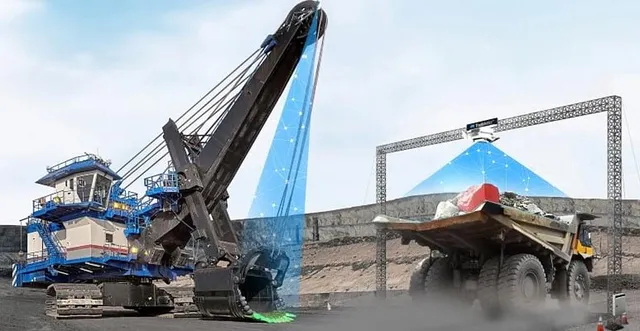
November 08, 2021

The Weir Group has agreed to acquire Motion Metrics, a leading Canada-based global mining technology business, for an initial consideration of £89m1 payable in cash upon completion, subject to customary net debt and working capital adjustments.

Motion Metrics is the market leading developer of innovative Artificial Intelligence (AI) and 3D rugged Machine Vision Technology used in mines worldwide.  Its technology helps miners increase safety, efficiency and sustainability of their operations.  As part of the agreement, Motion Metrics Vancouver headquarters will become Weir’s global centre for excellence in AI and Machine Vision technology.

Motion Metrics applications are highly complementary to Weir’s product portfolio.  It will join the ESCO division reflecting the early adoption of its technology in ground engaging tools (GET) where ESCO is an established global leader.  Motion Metrics AI and Machine Vision capabilities are expected to be leveraged across the whole mining value chain served by the Weir Group. 

Transaction highlights

  • Strengthens Weir’s industry leadership in making mining more sustainable and efficient
  • Significantly increases the Group’s capability in critical AI and Machine Vision Technologies
  • Fully aligned to ESCO’s ambitious growth strategy through further digitisation of its portfolio 
  • Enables rapid globalisation of Motion Metrics technology through Weir’s global network
  • Highly complementary to Weir’s aftermarket-focused business model

In 2021, Motion Metrics generated revenues of £9m1 and was modestly profitable.  Initial integration efforts will focus on leveraging Weir’s global sales network and the ESCO division’s large installed base to rapidly expand adoption of this value enhancing technology by our mining customers thereby driving significant revenue growth.    Motion Metrics is expected to be accretive to ESCO’s margins by 2023 with returns expected to exceed the Group’s cost of capital by 2024 in line with Weir’s capital allocation policy.  Up to a further £59m1 will be payable in cash by Weir at the end of 2024, depending on revenue and profit performance.  The transaction will be funded through cash and existing banking facilities.  Over the next two years integration costs are expected to total £3m.

Jon Stanton, Weir Group CEO said:

“The combination of Weir and Motion Metrics will be extremely powerful and reflects our ambition to play a leading role in mining’s technology transformation.  Motion Metrics not only provides access to innovative and highly relevant technology that will accelerate growth in our ESCO division, but it also brings world-class expertise in AI, rugged 3D Machine Vision technology and data science that is applicable across the Group.  This acquisition is fully aligned with our strategy and our commitment to grow ahead of our markets, expand our margins and significantly reduce our customers’ environmental footprint.”   

A leading mining technology business specialising in AI and Machine Vision applications

Miners are increasingly focused on improving the safety, efficiency and sustainability of their operations.  Motion Metrics has developed proprietary products and solutions that supports these critical ambitions leveraging innovative Machine Vision, distributed AI and machine learning. 

Motion Metrics produces smart, rugged cameras that monitor and provide valuable and timely data on equipment performance, faults, payloads and rock fragmentation.  This data is then analysed using embedded and cloud-based machine learning to provide real-time feedback to the mining operation.  This enables immediate identification of potential issues that could impact safety and cause expensive unplanned downtime.  This includes boulder and foreign body detection to dislodged ground engaging tools that can critically damage crushing equipment if undetected.  It also provides information that can be used to optimise asset efficiency, supporting better decision making as miners seek to increase productivity while reducing energy consumption, particularly in areas such as comminution (crushing, screening and grinding), one of the most energy-intensive processes in mining.

These technologies were initially developed for GET applications but have recently been extended into a suite of products and solutions that can be applied from drill and blast through to primary processing.  Motion Metrics technology is currently used on more than 80 mine sites and its customers include some of the world’s largest mining companies.   Its revenues are generated from the initial sale of equipment and subsequent recurring aftermarket revenues including subscriptions to its cloud computing platform, services and spare parts; a model that is highly complementary to Weir’s aftermarket-based business model.

Motion Metrics was founded in 1999 by Dr. Shahram Tafazoli.  In addition to its headquarters in Vancouver, Canada, Motion Metrics has offices in Chile, Australia, Brazil, Russia and South Africa.  The business employs c.125 people focused largely on research and development, alongside sales and field support.  Dr. Tafazoli will continue to lead the business when it joins the Weir Group, overseeing the new Weir centre for excellence in AI and Machine Vision technology.  Weir’s existing Canadian operations employ c.600 people and include manufacturing facilities as well as sales and service centres. 

Motion Metrics Founder, Dr. Tafazoli said:

“Motion Metrics was established to harness the power of AI and Machine Vision to help the global mining industry make its essential transition to safer, more productive and sustainable operations. Having proven our technology and grown rapidly over recent years, the time is right for us to accelerate our development as part of the Weir Group, which brings access to every major mining region in the world, from pit to plant.  I am also excited to establish in Canada a global centre of excellence for AI and Machine Vision for mining applications, reflecting Canada's domain expertise in both mining and machine intelligence.”

Motion Metrics will become part of Weir’s ESCO division, with its extensive team of researchers, data scientists and engineers also supporting the increased digitisation of the broader Weir product portfolio. 

Accelerating ESCO’s growth strategy following its successful integration into the Group

ESCO was acquired in July 2018 and the business has been successfully integrated into the Weir Group over the past 3-years.  Cost synergies in excess of US$30m were realised ahead of schedule and the business is on track to surpass its acquisition margin targets.  Despite the impact of the COVID pandemic on market conditions over the past 18-months, returns on capital employed will exceed the Group’s cost of capital in 2021, in line with the Group’s capital allocation policy. 

Moving forward, ESCO’s focus is on accelerating growth through geographic expansion and the continued extension of its market leading front-of-shovel offering, creating new solutions to support customers’ safety, efficiency and sustainability goals. Motion Metrics is fully aligned to this strategy, including the early realisation of the digitally instrumented smart bucket concept which provides information on bucket and GET health alongside payload and ore fragmentation analysis. Combining ESCO’s deep knowledge of mining operations with the data-led insights from Motion Metrics’ AI capabilities will enable the business to create new solutions that integrate and extend the technological differentiation of its best-in-class offerings across the mine. 

Andrew Neilson, Division President of Weir ESCO commented:

“This is a perfect partnership.  Our customers want more digital solutions to help them improve safety, efficiency and sustainability and providing these is a key part of our growth strategy.  Motion Metrics brings patent-protected technology that reduces expensive downtime in GET applications, helping improve ESCO’s differentiated technology offering even further.  The additional capability in AI and Machine Vision will also accelerate our expansion into adjacent markets including developing smart eco-system offerings encompassing the load and haul operations of our customers.”

The acquisition is expected to complete in the fourth quarter of 2021.

November 08, 2021

Ritchie Bros. will conduct its largest auction of the year in Japan, selling more than 200+ vehicles, equipment items and trucks at its site in Narita on November 24-25. The Japan National IronPlanet Auction is set to be the largest of the year, with more inventory to be added daily. Day one of the auction (November 24) dedicated to over 140 passenger vehicles while day two (November 25) will focus on trucks and equipment.

“Our Japan auction is a great opportunity for customers in the Philippines to source high quality Japanese equipment from the most trusted name in the equipment business,” said Chris Edwards, Ritchie Bros. Senior Territory Sales Manager for the Philippines. “Day one of the auction will feature 140 vehicles including passenger vans, sedans and utility trucks, and on day two a huge selection of excavators, dozers, and wheel loaders, and dump trucks will go under the hammer.”

"We've seen a steady growth of buyers from the Philippines attending our online auctions in Japan over the last two years, and we expect that trend to continue," said Mr. Edwards. "The majority of used equipment imported into the Philippines comes from Japan because of its convenient proximity and reputation for quality assets. Buyers in the Philippines choose Ritchie Bros. to source their used equipment due to our longstanding reputation in the Philippines as the trusted global marketplace and our commitment to fairness and transparency.”

Specific equipment highlights in the Japan auction include a 2007 Cat 320D, a 2009 & 2008 Cat 311DRR, a 2003 Cat 740 Art Dump Truck, a 2001 Sakai TS160-7 Pneumatic Roller, and a 2011 Kubota R430Z Wheel Loader. Bids can be made online in real time at ironplanet.com. The auction will begin promptly at 8:30 a.m. local Narita time on November 24, 2021.

Chris Edwards, who is based in Manila, was appointed at the beginning of 2021 to accommodate rising demand in the Philippines. “We have returned to the Philippines as the global market appetite for used equipment and machinery has burgeoned over the last two years with no sign of demand slowing down.”

Ritchie Bros. sold more equipment and machinery in 2020 than any other auction company. The Covid-19 pandemic has continued to accelerate acceptance of large-scale online equipment sales and purchases. Since shifting to exclusively online auctions, the market leader has continued to see record-breaking bidder participation, strong buyer demand, and outstanding results for buyers and sellers.

Ritchie Bros. will be conducting the auction through its online auction platform IronPlanet and will be the final auction in Japan for 2021. This is an ideal sale for Philippine buyers to acquire quality used equipment from Japan before the new year. For more information, head to www.ironplanet.com.

For support with registration and bidding, contact Chris Edwards on +63.917.149.8545 or cedwards@ritchiebros.com