
Category:




Estrella Pantaleon Bridge Nears Completion
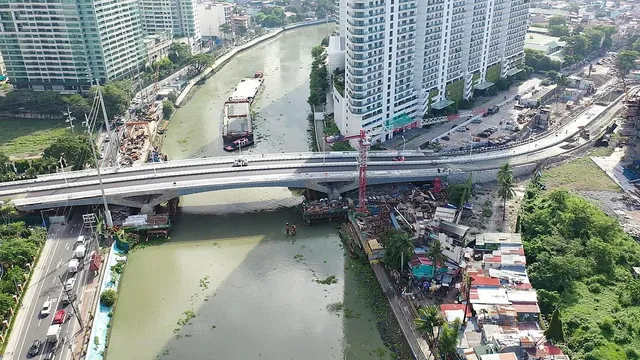
Finishing works of the Department of Public Works and Highways (DPWH) for the Estrella Pantaleon Bridge Project across Pasig River are in full swing and set to be completed towards the end of July.
Public Works and Highways Secretary Mark Villar said that although the Covid-19 pandemic has impacted construction activity of various flagship infrastructure projects like Estrella Pantaleon Bridge, the DPWH-Unified Project Management Office (UPMO) Team geared up to take up this challenge by keeping focus on the importance of delivering completion and opening this bridge project this early month of the third quarter.
In his report to Secretary Villar, Undersecretary for UPMO Operations Emil K. Sadain said that complete layers of asphalt concrete base, binder and wearing course on the 146 meters main bridge and 66 meters Makati approach bridge are almost done.
Installed successively on main and approach bridge using paving and compaction equipment, the wearing course or the uppermost layer will provide an even profile for the comfort of motorists while providing enough texture to ensure minimum and safe skid resistance, explained Undersecretary Sadain.
Having put up the upper layer, bridge expansion joints are now being installed to allow for continuous traffic between the bridge and the interconnecting abutment structures.
This expansion joints is designed to adjust the bridge length accommodating movement or deformation by external loads, shrinkage, or temperature variations
Among the completed ancillary works for the bridge project with V-shape piers includes protective barriers and railings along both sides of the bridge, storm water drainage structure, and lightings.
Meanwhile, Project Director Benjamin A. Bautista and Project Manager Melchor Kabiling of the UPMO Roads Management Cluster are keeping an eye on the on-going paving works for the 50.5 meters approach road on Estrella Street, Makati City and 243.96 meters approach road at Barangka Drive connected to Pantaleon Street in Mandaluyong City which are being accelerated by successively placing complete layer packages.
The layers of approach road are consists of base course or the foundation made of different aggregate rocks to support the top layers of the pavement; cement-treated base or mixture of aggregates with amounts of portland cement that hardens after compaction and curing to form a strong, durable, frost-resistant paving material; asphalt concrete base or asphalt treated base that acts as waterproof barrier to prevent fines infiltration into the subgrade and pavement structure; finally the binder and wearing course.
The P1.46-billion bridge project will have four lanes and will be a 506.46-meter pre-stressed concrete rigid frame bridge with corrugated steel webs, replacing the temporary two-lane box truss bridge made of modular steel components dismantled in 2019.
The bridge project is one of two grant bridges from China — the other one is Binondo-Intramuros Bridge.
Central Luzon Link Expressway to Open this Week
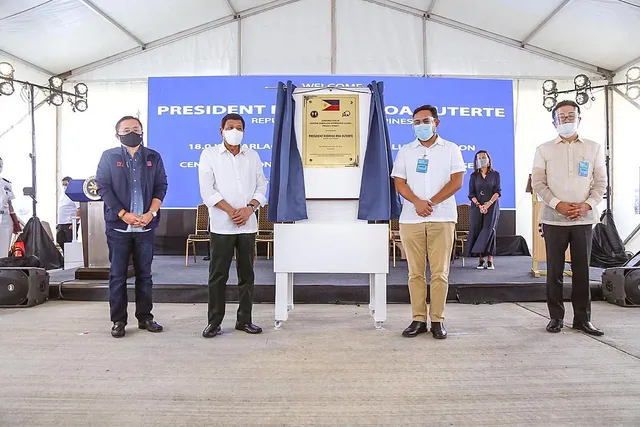
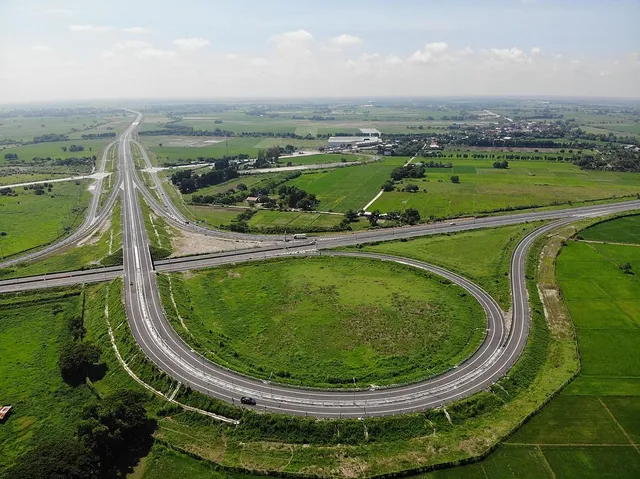
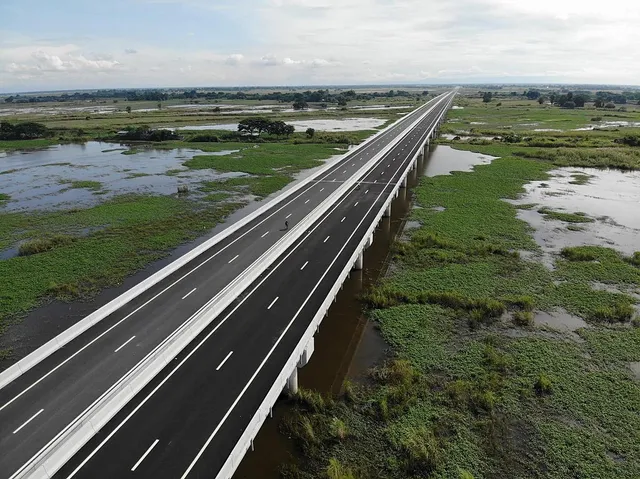
The Central Luzon Link Expressway (CLLEX) will be opened to the motoring public this week.
This was announced by DPWH Secretary Mark Villar in today, July 14, 2021 final inspection of the four (4)-lane expressway project connecting Tarlac and Nueva Ecija.
“As declared a month ago, we will inaugurate on Thursday, July 15, 2021, the first 18-kilometer section of CLLEX from Subic-Clark-Tarlac Expressway (SCTEX)/Tarlac-Pangasinan-La Union Expressway (TPLEX) connection in Tarlac City up to the intersection of Aliaga-Guimba Road in Aliaga, Nueva Ecija”, said Secretary Villar.
Secretary Villar was joined in the conduct of final safety checking before this new road network is opened to vehicular traffic by Undersecretary for Unified Project Management Office (UPMO) Operations Emil K. Sadain, and Project Director Benjamin A. Bautista.
This toll-free expressway project implemented by DPWH UPMO-Roads Management Cluster 1 is one of the key infrastructure projects with funding assistance from the Japan International Cooperation Agency (JICA) under the Build, Build, Build program.
The partial opening of CLLEX up to Aliaga is expected to provide options to motorists and spread out traffic better.
According to Undersecretary Sadain, the CLLEX sections covered by three (3) contract packages that will be opened are the 4.10 kilometer Tarlac Section, 6.40 kilometer Rio Chico River Bridge Section including 1.5 km Rio Chico Viaduct, and the Aliaga Section with up and down ramps at Guimba-Aliaga Road.
DPWH is committed to complete the entire 30-kilometer expressway project within the term of President Rodrigo Roa Duterte with the 10.3 kilometer Cabanatuan Section under Contract Package 4 already at 88.7 percent while the Zaragoza Interchange Section under Contract Package 5 is at 26.9 percent and expected to gain significant progress as site possessions are secured for the project’s right of way (ROW) requirements.
Once fully operational, the ₱11.811-Billion expressway is expected to shorten the usual travel time of 70 minutes between Tarlac City and Cabanatuan City to just 20 minutes.
This new expressway will also form an important east-west link for the expressway network of Central Luzon to ensure a continuous seamless traffic flow for the motoring public from Metro Manila and vice versa passing thru North Luzon Expressway (NLEX), Subic-Clark-Tarlac Expressway (SCTEX), Tarlac-Pangasinan-La Union Expressway (TPLEX).






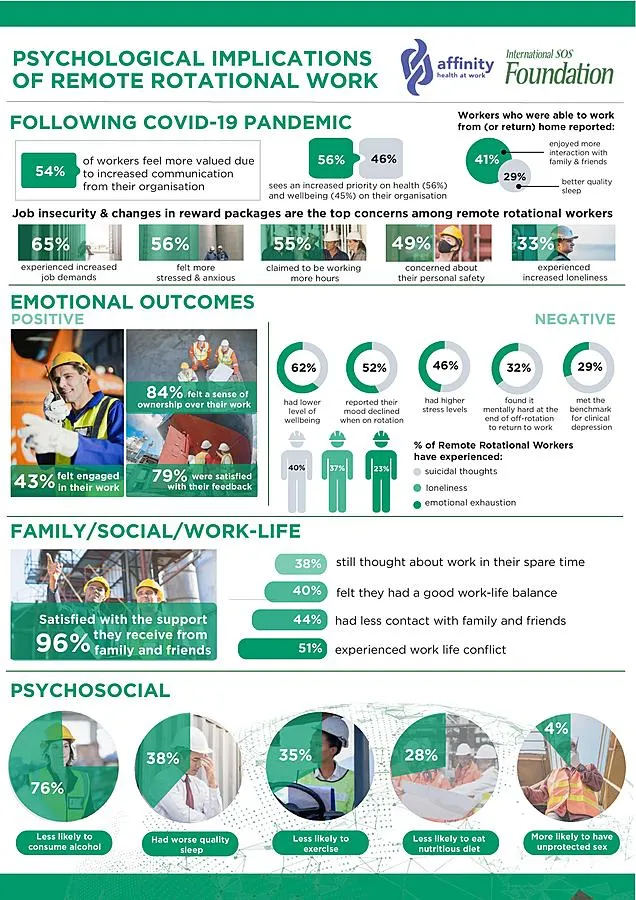
Ground-Breaking Global Study Unveils the Mental Health Minefield of the Remote Rotational Workforce
Whether on or offshore, the work and lifestyle of a remote rotational worker is unique. While lucrative for some, it has long been associated with a high impact on mental health and wellbeing. A groundbreaking global report from the International SOS Foundation and Affinity Health at Work, ‘Mental Health and the Remote Rotational Workforce’, provides in depth insight into the psychological impacts of this unique mode of working. The new study highlights evidence of the high level of suicidal thoughts, clinical depression, impacts on physical health (such as diet) and the impact of the COVID-19 pandemic on this workforce.
Dr Rodrigo Rodriguez-Fernandez, Medical Director Wellness and Non Communicable Diseases (NCDs) International SOS, commented, “There is an urgent need for increased focus, understanding and strategies to mitigate mental ill health and promote better mental health of the remote rotational workforce. This is highlighted in our survey, which uncovers significantly high levels of critical mental ill health issues, including suicidal thoughts and depression. The COVID-19 environment has also added increased stress on this already pressured working arrangement.”
Key study findings:
- 40% of all respondents experienced suicidal thoughts on rotation some or all the time (compared to average of 4-9%). 1 in 5 are feeling suicidal all or most of the time.
- 29% met the benchmark for clinical depression whilst on-rotation.
- 52% reported a decline in mood, and their mental health suffered whilst on rotation.
- 62% had worse mental health than would be the norm in a population. While off rotation, this remains at a high of 31% experiencing lower mental health than the general population.
Burn Out
The study also exposed that almost a quarter (23%) of the remote rotational workers surveyed experienced emotional exhaustion on a weekly basis. 46% experienced higher stress levels while on rotation and over half (57%) were not engaged in their work. 23% reported that they received no psychological support from their employers.
Dr Rachel Lewis commented, “We would expect burn out to be between 2-13% in the general population, so the almost quarter that we see from the survey is particularly high. Burn out can have a serious impact both personally and professionally, on the ability of an individual to carry out their role. Remote rotational work may come with the perks of higher pay, but with its propensity to be isolating at the best of times. On and offshore, working pressures and varying shift patterns also add their weight. And this is not to mention the impact of the current pandemic, which has seen may remote workers unexpectedly away from family and friend networks for longer than anticipated.”
Impacts of the COVID-19 pandemic
- 65% experienced increased job demands.
- 56% increased working hours stress, anxiety
- 49% concerned for personal safety (before pandemic?)
- 1/3 became increasingly lonely
- 23% had more negative physical symptoms (such as headaches and stomach issues)
The Tip of the Iceberg
Dr Rodriguez-Fernandez continues, “Mental and physical health are intrinsically linked. Organizations and individuals with a Duty of Care to their remote rotational workers should have visibility and a plan of support for their workforce encompassing both.”
- Over a third exercised less (35%)
- 38% experienced worse-quality sleep (38%)
- Over a quarter (28%) were less able to eat a nutritious diet whilst working
On the flipside, the majority of respondents felt that their health and safety was prioritized. They report a strong sense of community and support among co-workers and from managers. Many also felt that they could share their mental health concerns with colleagues.
Closer to Home
In the Philippines, the Department of Health (DOH) has reported an increase of calls on mental health and suicide through the National Center of Mental Health (NCMH) hotline, with over 3,000 individuals supported during the first quarter of 2021. The Department of Labor and Employment (DOLE)’s supplemental guidelines on workplace prevention and control of COVID-19 issued last year has mandated establishments to implement all necessary safety and health programs at no cost to employees.
Dr. Carrianne Ewe, Medical Director at International SOS Philippines shares, “Mental health has been an area of concern for organizations as we continue to navigate through this crisis. We have been supporting our clients with rotational workers by incorporating mental health support into their health and wellness programmes.
This has become essential to support employees who are experiencing mental stress and pandemic fatigue. It is important to message that they are not alone in their journey and support is within reach through the Employee Assistance Programmes (EAP) which can help them with sessions on mindfulness and tips on improving one’s mental wellbeing. This approach helps organizations build the resilience of their employees, ensuring that they are healthy and productive during these challenging times.”
The full report, including practical recommendations on mitigation measures for companies is now available here.