Category:

Finding One’s Voice: Mentorship and Leadership Lessons for Women in Mining
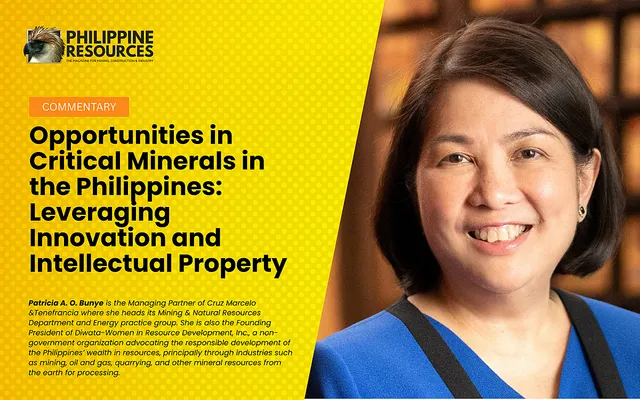
As we celebrate International Women’s Month this March, I am reflecting on how our organization, Diwata – Women in Resource Development, Inc. (“Diwata”) has presented itself as a platform for enabling women's leadership through mentoring and presenting examples of strong women leaders in the mining industry.
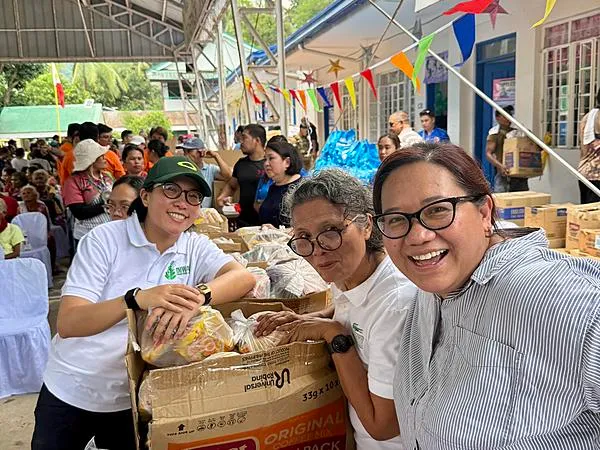
On 18 November 2025, on the sidelines of the Philippine Mine Safety and Environment Association’s Annual National Mine Safety and Environment Conference in Baguio, Diwata hosted "Network to the Next Level", an informal discussion featuring Tanya Cambetis, Business Optimization Manager of Didipio Mine and Engr. Rodalee Ofiaza, Diwata’s incumbent President.
Both speakers had fascinating stories to tell about how they navigated and thrived in a male-dominated industry. Among our special guests were Sweden’s Ambassador to the Philippines, H.E. Anna Ferry, and Eleonore Rupprecht, Counsellor and Trade Commissioner of the Embassy of Canada to the Philippines.
For many women in mining, the greatest challenge is often not technical competence or work ethic. It is confidence: finding the courage to speak, to lead, and to believe that leadership is attainable even when the path is unclear. In telling the story of her career journey, Cambetis offered valuable lessons for women navigating these realities across the mining sector, including here in the Philippines.
Cambetis did not enter mining through a conventional route. Her early career was far removed from heavy industry, and she did not begin with an engineering degree or a clearly defined leadership trajectory. Instead, her entry point was operational, hands-on, and deeply human. What followed was a career shaped by persistence, self-doubt, mentorship, both its presence and its absence, and an unwavering commitment to inclusion.
Her role as Manager for Business Improvement and Optimization at the Didipio Mine places her squarely within leadership, yet her perspective remains grounded in the experiences that nearly pushed her out of the industry.
Leadership Without a Map
One of the defining features of women’s careers in mining is the lack of a visible leadership pathway. While technical roles may be clearly structured, progression into leadership often depends on informal networks, sponsorship, and confidence: areas where women are frequently disadvantaged.
Cambetis’ experience reflects this reality. Despite capability and ambition, there were moments when she questioned whether she belonged. These doubts did not stem from an inability to perform, but from the absence of guidance and representation. Like many women, she struggled with the sense that leadership was something to be “invited into,” rather than claimed.
When Mentorship Misses the Mark
Mentorship is widely promoted as a solution to gender disparity in mining, yet Cambetis’ early experience with a women’s organization revealed a critical gap. While the initiative was intended to support women, it failed to make space for difference: difference in role, background, age, and life stage.
At the time, she internalized this exclusion as a personal failure. In hindsight, it became clear that the issue was not a lack of fit, but a lack of inclusion. Representation alone is insufficient. Mentorship must be intentional, empathetic, and accessible to women across the full spectrum of mining roles, from operators to engineers to administrators.
This lesson later shaped Cambetis’ own leadership approach. When she assumed mentoring and leadership roles, her guiding principle was simple but powerful: no woman should ever feel that she does not belong in a space created to support women.
The Hidden Impact of Everyday Interactions
One of the most compelling lessons from Cambetis’ journey is the long-lasting impact of small moments. A passing comment, a dismissive tone, or an unspoken exclusion can shape someone’s confidence for years. Conversely, a brief word of encouragement can re-direct an entire career.
In mining environments, often hierarchical and high-pressure, this awareness is particularly important. Leadership is not confined to formal authority. It is exercised daily through behavior, language, and attentiveness to others.
For women already in senior or influential positions, Cambetis’ experience serves as a reminder: someone is always watching, learning what leadership looks like by observing how it is practiced.
Balancing Leadership and Life
Cambetis’ career progression was accompanied by profound personal sacrifice. Leaving children to work remotely and overseas remains one of the most emotionally challenging aspects of mining careers for women. These decisions are rarely visible in performance metrics, yet they shape leadership resilience in profound ways.
In the Philippine mining context, where family and community ties are deeply rooted, these experiences resonate strongly. Cambetis’ story reflects the reality that leadership does not require choosing between ambition and care, but demands honesty, support, and flexibility.
Completing a mining engineering degree later in life became a defining milestone for Cambetis, not simply as a professional achievement, but as a demonstration of perseverance. It reinforced an essential message for women in mining: growth is not limited by age or timing.
Letting Go of the Myth of Readiness
A recurring barrier for women entering leadership is the belief that they must be fully prepared before stepping forward. Cambetis’ career illustrates how damaging this belief can be.
Leadership does not require having all the answers. It requires curiosity, accountability, and willingness to learn. The expectation of perfection disproportionately affects women, often causing them to hesitate while opportunities pass.
The turning point in Cambetis’ leadership journey came when she stopped allowing doubt to dominate her decisions. Saying “yes” before feeling ready did not diminish her effectiveness but accelerated her growth.
For women developing leadership skills, this also means learning to claim space. Speaking up in meetings, sharing ideas, and encouraging quieter voices are all acts of leadership, particularly in environments where women remain underrepresented.
A Call to Action for Women Seeking Mentorship and Leadership
Cambetis’ journey offers a clear message to women in mining: do not wait for permission to lead. Leadership is built through action, persistence, and support networks intentionally cultivated over time.
“If I could give one piece of advice about how my career has gone, it would be: don’t let that voice be the one that tells you that you don’t belong. When that voice says you can’t, or won’t, or shouldn’t, stand up and say I can, I will, and I absolutely should. Surround yourself with people who support and believe in you. Build your network, seek mentors, and be a mentor. The mining industry needs more women, and each one of us can make a difference”, says Cambetis.
The Philippine mining industry needs women who are willing to step forward, support one another, and redefine leadership through inclusion.
As Tanya Cambetis exhorted the attendees of our forum, “Stand up, speak out, and never let that voice of doubt define your path.”


Mining and Data Privacy: Protecting Both Natural and Digital Resources
Minerals, Data, and a New Kind of Resource Wealth
By Fernando Penarroyo
The Philippines has long been recognized as one of the world’s most mineral-rich countries. With deposits of nickel, copper, and gold, it plays a vital role in global supply chains, especially at a time when electric cars, batteries, and renewable energy systems are driving demand for these resources.
Even though mining can create jobs, bring in much-needed revenue, and connect the Philippines to international markets, there is still the lingering perception that it can harm the environment and displace communities.
Now, another kind of resource is taking center stage alongside minerals—data. Mining in the twenty-first century is not only about extracting ores from the earth; it is also about gathering information.
While mining companies use drones to map terrain, satellites to track environmental changes, and sensors to monitor everything from air quality to worker safety, they also collect information from host communities and indigenous peoples.
Through surveys on health, demographics, and community sentiment, mining companies are no longer just extracting resources from the ground, they also “extracting” information from people and the environment.
Handled poorly, this new form of extraction can create serious risks for privacy, fairness, and sovereignty. But handled well, it can be turned into an opportunity to strengthen communities, improve governance, and protect national interests.
The Philippines has the chance to set an example by treating both minerals and data as shared resources that must be managed responsibly for the benefit of Filipinos.
Digital Mining: How Data Transforms Operations
Mining today is highly digitized. Advanced technologies have transformed operations, making it possible for companies to work more efficiently and safely. Drones are used to create detailed maps of landscapes, satellites help track changes in forests and water bodies, and sensors provide constant updates on machinery and safety conditions. These tools generate huge amounts of data that can be used to comply with environmental rules, improve productivity, and reduce accidents.
Beyond technology, mining firms also collect information directly from communities. Environmental and social impact assessments often involve surveys about health and livelihoods, while corporate social responsibility programs may gather data on education and living standards. In some cases, companies or their contractors even monitor social media to see how people feel about mining projects.
When collected and shared responsibly, this kind of information can be valuable. It can help companies respond more quickly to community concerns, give government agencies evidence to enforce rules, and provide communities with the data they need to push for better services.
For example, if surveys show an increase in health issues near a mining site, this could become the basis for improved health care in the area. If water quality tests reveal pollution, communities could use this data to demand cleaner practices or compensation. In this way, data has the potential to balance power between corporations, the state, and its citizens.
The Risks of Data Extraction
However, risks arise when data collection is done without fairness or transparency. One of the biggest concerns is that communities may not give informed consent for how their data is used.
Under the Indigenous Peoples’ Rights Act, indigenous groups must give their free, prior, and informed consent (FPIC) before mineral exploration and mining operations begin on their land.
Yet FPIC usually does not extend to data collection. This means a community might allow a project to operate but not realize their personal information and opinions, or household details are being stored and possibly shared with third parties.
Another issue is information imbalance. Often, companies collect data and share it with investors or government agencies but not with the very people from whom the information was generated and most affected by the operations.
A mining company may test river water quality and submit a report to regulators saying conditions are safe, but families who depend on that water for farming or drinking may never see the full results. This creates an unfair situation where those who face the risks have the least access to the knowledge that could help them.
There is also the potential for misuse. In areas where opposition to mining is strong, information about community leaders or activists could be used to monitor them. Even if this is not the intention, the risk remains that data collected for one purpose could later be applied in ways that put individuals at risk.
Data as Resource Wealth
Despite these challenges, data can be seen as an opportunity if it is treated as a resource in its own right. Just as minerals are considered part of national patrimony, there is a strong case for viewing mining-related data as a national asset.
Companies see it as part of their business operations, but governments recognize its value for planning, monitoring, and security, while communities see it as essential for protecting their health and livelihoods. Balancing these interests is key.
This debate mirrors the general struggle over mineral sovereignty. For decades, Filipinos have insisted that the benefits of mining flow to the nation before being repatriated abroad. The same logic can apply to information.
The Philippines supplies large amounts of nickel and copper, which are critical for the global shift to clean energy. Investors often require access to operational data before they commit funds. If the Philippines asserts sovereignty over this information, it can make sure it is shared under terms that benefit the country, not just outside players.
Mining Data, Geopolitics and National Security
The strategic value of mining-related data goes beyond economics. Geological surveys, environmental records, and infrastructure maps have national security implications. If such information is stored abroad or left in foreign hands, the Philippines could lose control over knowledge about its own resources.
This is especially important in a world where powerful nations like the United States and China are competing for control of supply chains for clean energy. In this context, protecting mining data is not only about fairness for host communities but also about protecting sovereignty at the national level.
Handled wisely, mining data can enhance the Philippines’ negotiating position. A country that demonstrates strong data governance signals to investors and partners that it values not only economic efficiency but also sovereignty and rights. This can attract responsible investment, increase trust, and prevent exploitative practices.
Toward Dual Stewardship of Resources and Data
Critics of mining often use the term “extractivism” to describe the large-scale removal of resources that benefits outsiders more than locals. Increasingly, some fear that the same thing is happening with information. Data is being “extracted” from people without giving them anything in return.
Yet the Philippines has an opportunity to change this narrative. Instead of allowing extractivism to dominate, the country can practice shared stewardship. This means treating minerals and data not as things to be taken but as resources to be managed responsibly, with benefits fairly distributed.
Imagine if every community near a mine automatically received the results of environmental and health studies in plain, easy-to-understand language.
Imagine if mining companies used the data they collect not just to meet legal requirements but also to invest in cleaner water, stronger health systems, and better local infrastructure.
Imagine if the government stored mining data locally and used it to guide national plans for disaster preparedness and climate resilience.
This is the vision of stewardship: turning data into a tool for empowerment.
The Role of the Data Privacy Act of 2012
The Data Privacy Act of 2012 (Republic Act No. 10173) provides a foundation for this. The law protects individual personal information in both government and private sectors by regulating the collection, processing, and storage of personal data.
It created the National Privacy Commission to implement regulations, protect data subjects' rights, and ensure the country's data protection measures are in line with international standards.
The law emphasizes transparency, legitimate purpose, and proportionality, meaning that data must be collected openly, only for clear reasons, and in amounts that are necessary. For mining companies, this means employee records, health surveys, and community data must all be handled responsibly.
In practice, enforcement is still uneven. Many communities are not fully aware of their rights under the law, and the National Privacy Commission has limited resources to enforce such rights.
Environmental regulators rarely coordinate with privacy regulators, leaving gaps in oversight. But these challenges can be addressed. With stronger cooperation, more training, and better resources, the Data Privacy Act can become a powerful tool for protecting and empowering both people and the nation.
Artificial Intelligence and Data Privacy Issues
Artificial intelligence (AI) is now integral to modern mining operations, optimizing exploration, production, logistics, and sustainability. However, this integration brings complex data-privacy challenges.
AI systems in mining collect vast amounts of information ranging from worker biometrics to operational performance data, which may contain personally identifiable or sensitive industrial details.
These systems often aggregate and analyze data across departments, leading to privacy risks such as surveillance concerns, unintentional re-identification, and exposure through third-party vendors or cross-border data transfers.
The growing use of AI also introduces risks tied to the difficulty of explaining or contesting automated decisions affecting individuals.
As AI systems become more involved in making or supporting decisions, it becomes harder for people and sometimes even for the companies using them to understand how or why those decisions were made. The Data Privacy Act demand stronger governance, emphasizing employee consent, data minimization, and transparency.
Meanwhile, regulatory trends such as data localization are reshaping how global mining firms handle information.
Data localization prohibits or restricts the transfer of certain types of data (especially personal, environmental, or strategic industrial data) to servers or cloud platforms located outside the country. The goal is to protect national sovereignty, privacy, and security by keeping sensitive data under Philippine jurisdiction.
Beyond compliance, these measures have strategic implications. As AI turns data into a valuable asset, privacy management becomes central to maintaining corporate reputation and social license to operate. Breaches or unethical use of data could harm community trust and investor confidence.
Ultimately, while AI enhances efficiency and sustainability, it also demands rigorous, transparent, and ethical data governance to ensure that innovation aligns with human rights and privacy standards.
Policy Pathways: From Protection to Empowerment
Several steps can help move toward this vision. Extending social license and community consent to cover digital data would give communities control over how their information is collected and used. Guaranteeing that communities have access to health and environmental data would ensure transparency.
Requiring that sensitive mining information be stored properly would protect sovereignty. Including data practices in environmental impact assessments would mandate companies to explain not only how they treat land and water but also how they handle digital information.
Strengthening the capacity of regulators and encouraging public-private partnerships could further build systems where digital data is shared responsibly. Each of these pathways transforms digital information from a potential liability into a tool for empowerment and development.
Conclusion
Mining in the Philippines has never been just about minerals. It has always been about who benefits, who bears the costs, and who gets to decide.
In the digital age, this struggle now extends to data. Communities that once fought for land rights must now also claim their informational rights, while the state must balance local needs with global pressures. This is not only a challenge but also an opportunity.
By protecting both natural and digital resources, the Philippines can move beyond extractivism and build a model of stewardship that is inclusive, sustainable, and sovereign.
If mining is left unchecked, it could continue to drain both natural wealth and informational resources without fairly benefiting the country. But if managed wisely, the Philippines can turn mining into a force for justice and sustainability.
Protecting both land and information ensures that communities are empowered, companies are accountable, and the nation secures its place in a competitive world. Mining responsibly and governing data fairly are not separate goals. They are part of the same fight for dignity, sovereignty, and the future of the Filipino people.
Fernando “Ronnie” S. Penarroyo specializes in Energy and Resources Law, Project Finance and Business Development. He is also currently the Chair of the Professional Regulatory Board of Geology, the government agency mandated under law to regulate and develop the geology profession. For any matters or inquiries in relation to the Philippine resources industry and suggested topics for commentaries, contact him at fspenarroyo@penpalaw.com. Atty. Penarroyo’s commentaries are also archived at his professional blogsite www.penarroyo.com
Bridging the Jobs-Skills Mismatch in PH: Women in Mining and STEM Education
In August, I attended the launch of Unilab Education (UniEd), the Unilab Group’s response to a longstanding national challenge: the mismatch between graduates’ skills and the available jobs.
At this event, attended by the Secretary of Education, the Director General of the Technical Education and Skills Development Authority (TESDA), the Chair of the Commission on Higher Education (CHED), industry leaders and heads of educational institutions discussed the need to reshape how education is delivered and ensure that Filipino graduates are job-ready.
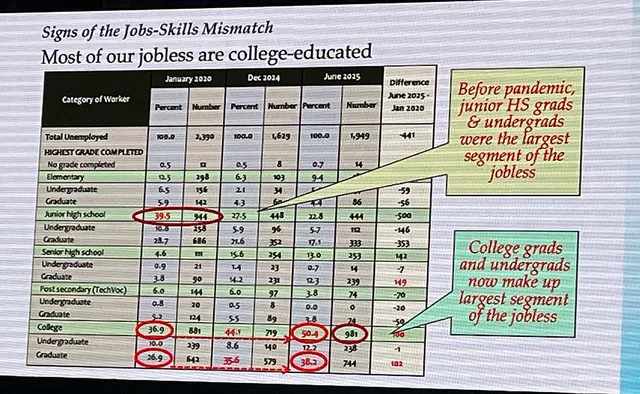
In his keynote address, Dr. Cielito Habito, former Secretary of the National Economic and Development Authority (NEDA, recently renamed the Department of Economy, Planning, and Development or DEPDev under Republic Act No. 12145), delivered some disturbing statistics, including that college graduates now account for the single largest segment of the unemployed at 38.2%. He emphasized the need for integrated education and workforce development planning, closer coordination in curriculum design, and better anticipation of future skills demand.
Equally, if not more disturbing was the recurring observation that the concerned agencies, namely the Department of Education, TESDA and CHED, have not been properly coordinating. Simply put, until recently, they were not talking to each other. Fortunately, these agencies have come to the realization that closer inter-agency collaboration is required to achieve to stronger industry alignment and policies that improve graduate employability.
UniEd, for its part, is batting for industry certifications, microcredentialing [i.e., earning short, modular certifications for specific, in-demand skills, enabling workers to upskill, reskill, gain formal recognition for competencies, and advance in their careers without completing an entire degree or lengthy course], apprenticeship and on-the-job training, senior high school immersion, and skills-based continuing professional development courses to specifically address the jobs–skills mismatch.
An Ernst & Young paper entitled “Can ASEAN move forward if women are left behind?” observes that, with 40% of global employers today reporting talent shortage, education systems need to prepare graduates with relevant skills.
In ASEAN, the skills gap is largely marked by a shortage of technical knowledge. Science, Technology, Engineering and Mathematics (STEM) education is therefore particularly relevant given rapid technological shifts and the rise of industry automation, alongside the emphasis on infrastructure development in many emerging ASEAN economies.
In the Philippines, the skills gap is very much pronounced with the country having the lowest gender parity in the region. It records the widest STEM workforce gender gap in AsiaPacific, with women in just 36.3% of STEM roles, compared to nearly 59% in non-STEM fields. Although around 41% of STEM graduates are women, only 36.6% enter the STEM workforce within a year from graduation.
The decline continues as careers progress. Employers cite that women are less prepared due to fewer internships or technical opportunities. Many mid-career women opt out due to caregiving demands or biased perceptions.
Mining is one industry that would benefit from a closer look at how STEM Education may help close the jobs-skills mismatch, especially for women.
The convergence of mining and STEM offers unique opportunities to counteract gendered mismatches:
-
Empowerment via technical training: Tailored STEM education programs could equip women miners with essential competencies to open pathways to formal, technical roles.
-
From informality to formal inclusion: Launching bridging programs that connect women in small-scale mining to technical certification and STEM jobs can reduce informal vulnerabilities and prepare them for emerging green technologies in mining.
-
Visibility and leadership: Mentorship programs and representation are required to boost women in the workforce. Highlighting female engineers, geologists, and other female leaders can inspire younger women to pursue both STEM and mining careers.
In the aforementioned Ernst & Young paper, Ambassador Delia Domingo Albert, Chairman of Diwata-Women in Resource Development, Inc., noted that “(T)here are horizontal gaps that consist of development gaps between and among the member countries, as well as gender equality gaps. There are also the vertical gaps between women who are well-educated and have better access to leadership roles and those who have fewer possibilities and are stymied by economic and social circumstances. These gaps hinder the possibilities for leadership roles.”
STEM Education may help close this vertical gap through, among others, better designed curricula to anticipate both current and future skills demands; targeted technical training; and more vibrant academe-industry exchanges [with teachers immersing themselves by working in firms to improve their own skills and ‘real world’ application of what is being taught].
STEM education is also the backbone of a responsible, sustainable, and competitive mining industry in the Philippines. It ensures that local talent can fill technical roles, reducing reliance on foreign experts, and also fosters innovation in exploration, extraction, safety, and sustainability.
With these institutional shifts, and reimagined narratives, we can create pathways where women not only participate, but thrive, in the mining and STEM sectors.