
February 16, 2026


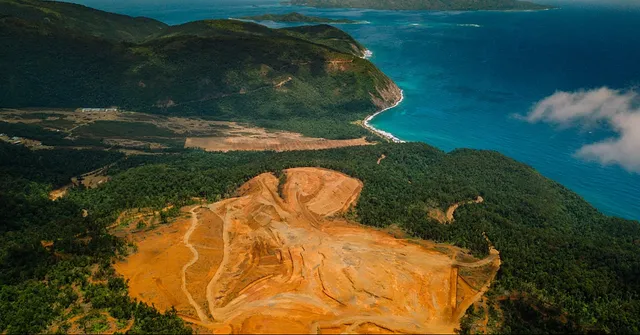
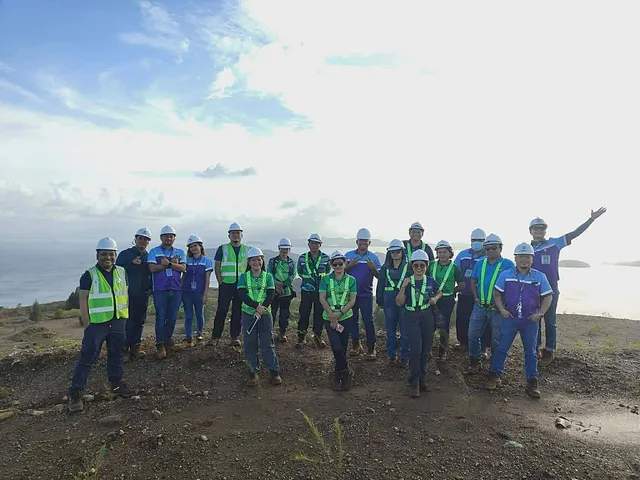
A Multi-partite Monitoring Team (MMT) convened from January 27 to 30, 2026, to conduct a comprehensive validation of the Hinatuan Mining Corporation-Tagana-an Nickel Project (HMC-TNP), focusing on the implementation of its Environmental Protection and Enhancement Program (EPEP) for the third and fourth quarters of 2025, as well as the project’s annual environmental performance.

The four-day assessment involved on-site inspections across the HMC-TNP operations, including mining areas, waste management facilities, reforestation sites, and water quality monitoring stations. The team verified compliance with national and local environmental regulations, reviewed the effectiveness of mitigation measures, and assessed the company’s efforts in protecting biodiversity, conserving natural resources, and enhancing environmental conditions in surrounding communities.

Collaborative Oversight

The validation exercise brought together a diverse group of stakeholders, reflecting a collaborative approach to responsible mining. Members of the MMT included:

  1. MGB Region XIII – Chairperson
  2. EMB Region XIII – Co-chairperson
  3. DENR CENRO/CDD – Member
  4. DENR PENRO – Member
  5. DENR CENRO – Member
  6. Department of Health – Member
  7. REACH Foundation – Member
  8. Our Lady of Mt. Carmel Parish Church – Member
  9. MENRO-Tagana-an – Member
  10. BLGU-Talavera – Member

Through active engagement with HMC-TNP management and staff, the team reviewed documentation, conducted field verifications, and observed the company’s environmental programs in action.

Promoting Sustainable Mining

The MMT emphasized the critical role of sustained EPEP implementation in ensuring that economic development is balanced with environmental protection and community well-being.

The validation exercise reinforces the shared commitment of stakeholders, regulators, and the company to responsible mining. Protecting natural resources today ensures their availability for future generations.

The Hinatuan project, part of the Philippines’ growing nickel sector, continues to demonstrate how large-scale mining operations can integrate environmental stewardship into daily operations, particularly in reforestation, water management, and biodiversity conservation. By validating EPEP performance, the MMT strengthens transparency, accountability, and confidence in the project’s environmental management practices.

This exercise highlights how regulatory agencies, community representatives, and civil society groups can work together to support sustainable development while safeguarding the environment, the team added.

HMC-TNP management reaffirmed its commitment to continuous improvement in environmental performance and adherence to the highest standards of sustainable mining.

February 16, 2026

APNI, PNIA Forge Strategic Partnership to Promote Regional Cooperation and Sustainable Development

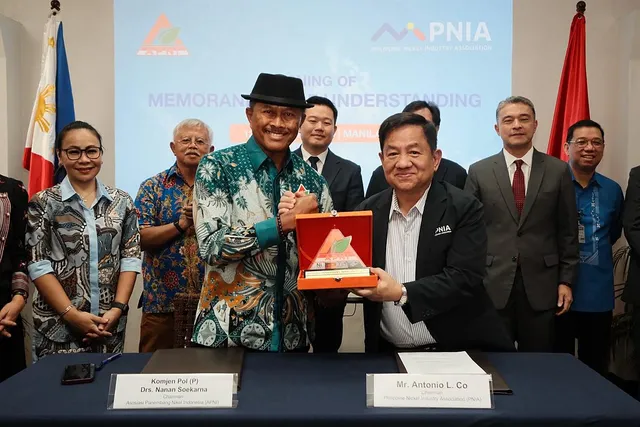
The Asosiasi Penambang Nikel Indonesia (APNI), or Indonesia Nickel Miners Association and the Philippine Nickel Industry Association (PNIA) recently signed a partnership agreement aimed at deepening cooperation across the nickel value chain. The move comes as secure, responsibly sourced critical minerals become increasingly central to the global energy transition.

The partnership brings together industry leaders from Indonesia and the Philippines, the world’s top nickel-producing countries, to set a shared direction for investment confidence, policy dialogue, and responsible mining that supports the future of energy and sustainable growth.

The signing ceremony was hosted by PNIA’s academic partner, the University of Asia and the Pacific (UA&P), and attended by APNI Chairman Komjen Pol. (Purn) Drs. Nanan Soekarna and PNIA Chairman Antonio L. Co. The event was also witnessed by Department of Environment and Natural Resources Undersecretary Juan Miguel Cuna; Department of Trade and Industry Undersecretary Ceferino S. Rodolfo; DENR–MGB Officer-in-Charge Assistant Secretary Engr. Michael V. Cabalda; UA&P President Atty. John Philip Yeung; APNI Secretary General Meidy Lengkey; APNI Deputy Secretary Sucianti Saenong; and APNI Advisory Board Member Djokno Widajatno Soewanto.

PNIA Executive Director Charmaine Olea-Capili emphasized that the partnership aligns with the ASEAN Principles for Sustainable Minerals Development, adopted by ASEAN Ministers responsible for minerals development on October 2, 2025, in Vientiane, Lao PDR. The Principles recognize the critical role of minerals in supporting strategic sectors such as energy, mobility, infrastructure, and the green and digital transitions. They call for coordinated regional efforts to uphold high standards of environmental stewardship, social responsibility, and good governance to build public trust and investor confidence.

“While this partnership was initiated by industry, we were deliberate in ensuring our cooperation is anchored in and responsive to ASEAN’s direction,” Olea-Capili said. “We identified five collaboration pillars to translate those regional principles into practical industry action: sharing data and policy perspectives; creating platforms for industry dialogue; facilitating learning and exposure; supporting capability, human capital, and ESG development; and ensuring cooperation remains adaptive as priorities evolve.”

She further explained that the partnership is guided by a common agenda across several priority areas: governance and regulatory coherence; ESG, EITI, and Sustainable Development Goals alignment; investment promotion and value-adding minerals; human capital and talent development; and community development and social acceptance. These pillars provide a framework for how the industry collectively engages governments, investors, peers, and host communities across the nickel value chain.

“These priorities send a clear signal to investors, governments, and other stakeholders about the direction of our industries,” Olea-Capili said. “They demonstrate that APNI and PNIA are committed to building a nickel value chain within the IndoPhil Nickel Corridor that stakeholders can trust to support the energy transition, deliver shared prosperity, and earn long-term credibility.”

IndoPhil Nickel Corridor as a Platform for Regional Nickel Leadership

An immediate outcome of the APNI–PNIA partnership is the promotion of the IndoPhil Nickel Corridor as a platform highlighting the regional significance of Indonesian and Philippine nickel. The initiative aims to support investment, policy coordination, and the global energy transition.

“The Corridor signals that Philippine and Indonesian nickel is developed with clear standards and accountability,” Olea-Capili said.

From Framework to Action

With the partnership formalized, APNI and PNIA will advance implementation through technical working meetings, stakeholder engagement rounds in Indonesia and the Philippines, reciprocal mine visits, and joint learning sessions—turning shared priorities into concrete actions.

“This is where plans meet practice,” Olea-Capili said. “We invite government partners, investors, communities, and other stakeholders to join us. Responsible nickel development must support not only the global energy transition but also deliver tangible benefits to communities on the ground. APNI and PNIA remain committed to listening, engaging, and ensuring this cooperation continues to build trust.”

February 10, 2026

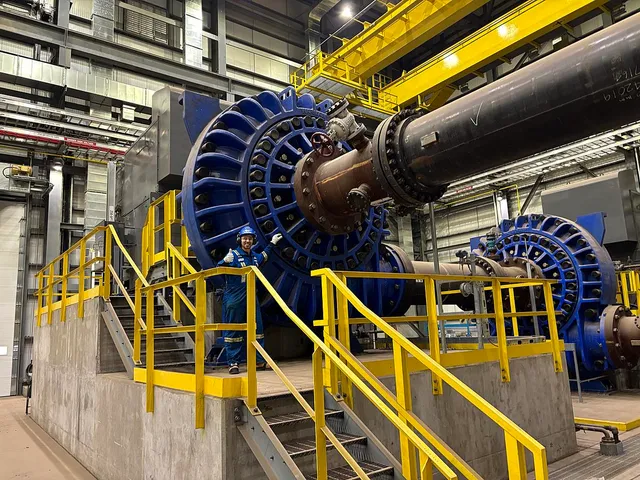
Weir’s materials technology capabilities are a key factor in WARMAN® MCR® slurry pumps remaining the preferred solution for mill circuit applications among the world’s major miners. Notably, Weir’s long-standing expertise in elastomer science enables its rubber-lined pumps to compete directly with, and often outperform, metal-lined alternatives in abrasive slurry applications.

Advanced elastomer development

Mill circuit slurries typically present a challenging wear environment due to wide particle-size distributions and the presence of hard, angular particles. To address this, Weir formulates and manufactures proprietary elastomer compounds engineered for high abrasion resistance, energy absorption, and tear strength. These compounds are developed in-house, allowing precise control over polymer chemistry, filler systems, and curing processes to optimise performance under dynamic slurry loading.

Continuous R&D investment underpins this capability. Weir’s materials scientists and mechanical engineers collaborate to characterise wear mechanisms, refine compound formulations, and validate performance through laboratory testing and field trials. This iterative development cycle ensures that the WARMAN® MCR® pump remains aligned with evolving operational requirements in the mining and minerals processing sector.

Customer-driven engineering

Weir’s engineering teams work directly with mine operators to diagnose wear patterns, understand process variability, and design component solutions that improve pump reliability and reduce total cost of ownership. This collaborative approach supports broader industry goals around sustainability, process efficiency, and operational safety.

The WARMAN® MCR® pump is a direct outcome of this long-term engineering focus, incorporating decades of empirical data, computational modelling, and materials innovation.

Developing wear-resistant alloys

A key advancement in recent years is the expanded use of Armachrome®, a highly wear-resistant overlay material engineered for extreme abrasion environments. Armachrome® wear parts are now applied to critical pump components such as throatbushes, volute liners, and, increasingly, impellers.

The material’s high hardness and superior erosion resistance enable significant extension of component life. Importantly, Weir applies Armachrome® selectively—targeting high-wear zones such as the impeller eye—rather than coating entire components. This precision application reduces material usage while maximising functional benefit.

Field data has demonstrated substantial performance gains. In oil sands operations, Armachrome® components have shown markedly improved wear life compared with white iron. Similar results have been observed in WARMAN® mill circuit pump installations, validating the material’s effectiveness across multiple slurry environments.

Future materials innovation

As the mining industry seeks to reduce energy consumption, extend maintenance intervals, and lower carbon intensity, advanced wear materials will play an increasingly important role. Weir’s ongoing investment in materials R&D—spanning elastomers, overlays, and composite systems—positions the company to deliver solutions that enhance pump efficiency and durability.

Customers are increasingly selecting Weir products not only for performance, but also for their contribution to sustainability objectives, driven by longer wear life, reduced waste, and improved operational efficiency.

February 09, 2026

DMCI Mining Corporation reported record nickel ore production in 2025, driven by higher output from its Zambales operations and the start of initial mining at its Long Point project.

The emerging nickel producer said it produced 2.0 million wet metric tons of nickel ore during the year, a 33% increase from 1.5 million wet metric tons in 2024. Shipments rose 31% to 1.9 million wet metric tons, marking the company’s second-highest shipment level on record.

The production gains were supported by improved operating conditions in Zambales and the commissioning of initial operations at the Long Point mine, the company said.

DMCI Mining President Tulsi Das C. Reyes said the company is seeing stronger prospects following a difficult period for the nickel sector.

“We are encouraged by the improving fundamentals of the nickel industry after a challenging period,” Reyes said. “The combination of our record production, strong prices and the continued progress of our Long Point development gives us solid growth prospects, both for the company and for our host communities.”

Nickel prices also strengthened during the year. Average benchmark Philippine free-on-board prices for 1.5% grade laterite nickel ore rose 26% year over year to $45.7 per wet metric ton, from $36.3 in 2024.

The company highlighted progress in mine rehabilitation efforts led by its subsidiary Berong Nickel Corporation in Palawan. Guided by the Philippines’ first approved Final Mine Rehabilitation and Decommissioning Plan for a nickel mine, Berong has rehabilitated more than 174 hectares to date, exceeding its third-year targets. The rehabilitation program remains on track for completion in 2027, after which the site is scheduled to be turned over to the government.

Environmental and safety performance was also cited as a key focus. In November, Zambales Diversified Mining Corp., another DMCI Mining subsidiary, received its second Presidential Mineral Industry Environmental Award, recognizing its compliance with environmental standards and safety practices.

DMCI Mining is a wholly owned subsidiary of DMCI Holdings Inc. and engages in surface mining of nickel ore, which it ships primarily to China and other international markets. Its operating assets include Berong Nickel Corporation in Palawan, as well as Zambales Diversified Metals Corporation and Zambales Chromite Mining Company.

February 09, 2026

The Philippines has taken a decisive step toward a stronger role in global critical minerals supply chains with a new memorandum of understanding signed with the United States—a move industry experts say could open the door to investment, technology transfer, and more sustainable mining practices.

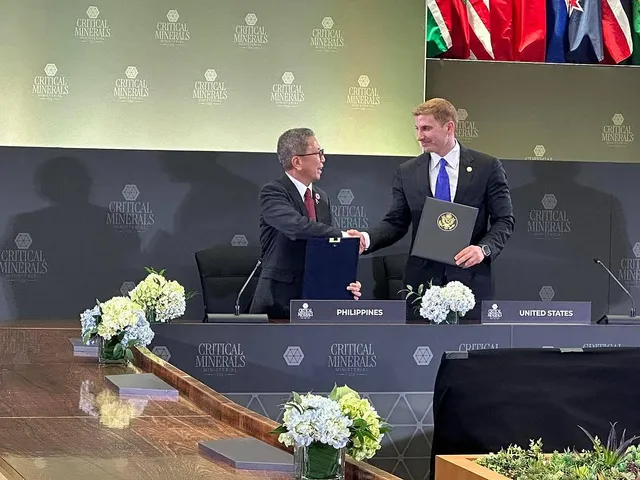
The deal was inked on February 4, 2026 in Washington at the first-ever Critical Minerals Ministerial, a US-hosted forum bringing together more than a dozen nations to rethink cooperation around minerals essential to modern technologies and the energy transition. Environment Secretary Raphael Lotilla signed for the Philippines, while US Undersecretary of State for Economic Affairs Jacob Helberg signed on behalf of Washington.

According to the State Department, the MOU creates a platform for collaboration on supply chains, market development, financing access, and efforts to make critical minerals markets more predictable and resilient.

PH–US Critical Minerals Pact: Timeline & What It Means

The agreement also sets a clear roadmap to shift the Philippines from primarily exporting raw ores to becoming a regional hub for processing minerals that feed clean energy technologies.

The initiative’s timeline began on February 2, 2026, when US President Donald Trump announced Project Vault, a US$10-billion Export-Import Bank initiative to build a strategic reserve of critical minerals—laying the groundwork for the ministerial talks. On February 3, pre-summit meetings brought together government officials and private-sector leaders to discuss investment, supply chains, and downstream processing.

The following day, February 4, Philippine Environment Secretary Raphael Lotilla and US Undersecretary Jacob Helberg formally signed the MOU on the sidelines of the 2026 Critical Minerals Ministerial.

On February 5, the US Department of State released an official fact sheet identifying the pact as one of 11 bilateral agreements aimed at reducing global dependence on China-dominated mineral markets. By February 6, Manila’s Department of Environment and Natural Resources confirmed the deal’s core objective: to pivot the Philippine mining industry toward high-value domestic processing rather than raw ore exports.

Historical groundwork also laid the foundation for this agreement. In November 2023, a ₱280-million USAID technical assistance program began supporting regulatory reforms and capacity-building in the Philippine mining sector. In April 2024, Manila formally proposed joining the US–Japan Critical Minerals framework during a Trilateral Economic Ministers Meeting.

Why it matters

The agreement is more than diplomatic symbolism—it could move the Philippines up the mineral value chain, attract foreign direct investment into processing and refining, link Philippine mining to clean energy, electric vehicles, and battery supply chains, and position the country as a strategic Indo-Pacific partner.

Industry reaction and economic potential

The partnership has drawn a positive response from industry groups. Michael Toledo, chair of the Chamber of Mines of the Philippines, called it a “positive step toward strengthening responsible mining, advancing sustainable resource development, and enhancing the country’s role in securing critical minerals essential for the global energy transition.”

Lotilla told local media the agreement could “advance critical minerals processing at home,” highlighting the potential to generate jobs, retain revenue, and attract technology-driven industries. “Building domestic capacity for downstream activities multiplies economic benefits,” he said.

Strategic and U.S. policy dimensions

U.S. officials emphasized critical minerals’ role in economic security and technological leadership. At the ministerial, policymakers framed these resources as foundational to infrastructure, defense systems, and cutting-edge technologies. US Vice President J.D. Vance noted that unpredictable pricing has historically discouraged investment and outlined plans for reference pricing floors and tariff adjustments to stabilize markets and support allied supply chains.

While the Philippines has not confirmed participation in a proposed preferential trading zone, analysts say joining could boost export opportunities, market access, and foreign investment in mining, processing, and related technologies.

Balancing growth and community concerns

The deal arrives amid ongoing scrutiny of the Philippine mining sector, particularly environmental impacts, community displacement, and governance transparency. Industry leaders argue that international frameworks like the US MOU provide benchmarks for responsible mining, including stricter environmental management, community engagement, and sustainability reporting. The Chamber of Mines stressed that economic gains should go hand-in-hand with social and environmental safeguards.

Regional outlook

Southeast Asia is becoming increasingly central to global sourcing of nickel, cobalt, manganese, and rare earths—key for EVs, renewable energy, and semiconductors. By integrating its mining sector into multilateral frameworks, the Philippines may accelerate its economic transformation, strengthen its bargaining position in trade talks, and attract technology partners and downstream industries as global demand for critical minerals rises.

The Philippines-US MOU marks a pivotal moment for Manila’s engagement in the global minerals market. By aligning with U.S. strategic goals, the country could gain investment, technology transfer, and improved market access while reinforcing sustainable mining practices. The real impact will hinge on how both sides implement the framework and translate commitments into tangible results for industry, communities, and the national economy.

February 05, 2026

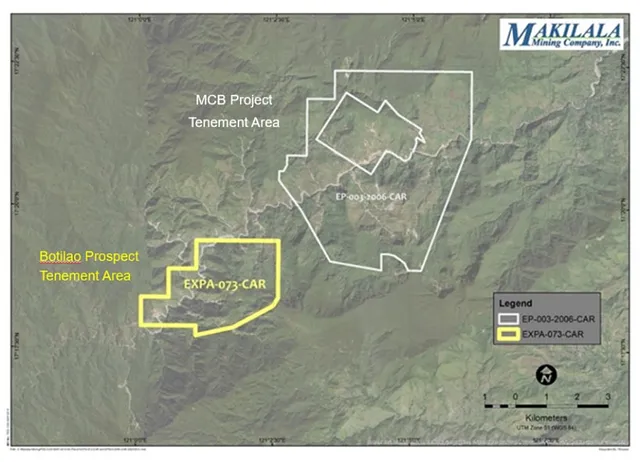
The Philippine Mines and Geosciences Bureau (MGB) has approved the first renewal of Exploration Permit No. 011-2023-CAR for the Botilao Porphyry Copper-Gold Prospect, located in the Cordillera Administrative Region (CAR), under the Philippine affiliate of Celsius Resources Limited, Makilala Mining Company, Inc. (MMCI).

The two-year renewal allows MMCI to continue its exploration activities, including geological studies, surface mapping, geochemical sampling, and evaluation of targets for potential geophysical surveys and drilling, subject to regulatory approvals. These efforts aim to better define the extent and characteristics of mineralization in the permit area.

The renewed permit also supports environmental protection measures under the approved Environmental Work Program, as well as socio-economic initiatives under the Community Development Program, in consultation with local communities and government units.

MMCI Technical Director Peter Hume said that the renewal of the Botilao exploration permit represents an important milestone, enabling the company to build on the technical work completed to date. Botilao remains a highly prospective tenement with geological similarities to the nearby Maalinao-Caigutan-Biyog (MCB) Project deposit and has the potential to provide additional feed that could extend the operating life of the MCB Project process plant.

"The renewal allows exploration activities to be progressed in a systematic and responsible manner, consistent with the company’s commitments to environmental stewardship and community engagement," Hume said.

Botilao covers 947.67 hectares southwest of Celsius’ MCB Project. Historical exploration by Lepanto Consolidated Mining Inc. in the 1970s included diamond drilling and tunnel sampling along Botilao Creek, which identified two major ore zones with copper grades reaching about 1%.

The site’s geological similarities to the MCB Project position it as a potential source to supplement future concentrate supply, reinforcing Celsius’ exploration strategy in the Philippines.

February 05, 2026

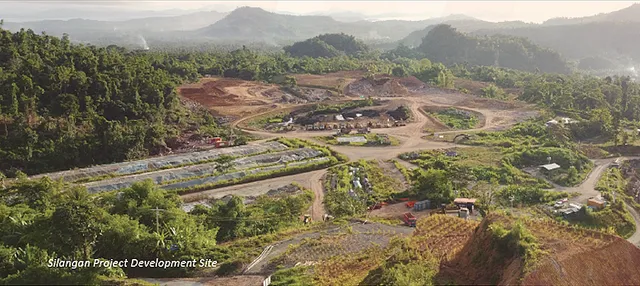
As the first quarter of 2026 gets under way, Silangan Mindanao Mining Co., Inc. (SMMCI) has entered a critical stage of final preparations ahead of its anticipated commercial production, marking a major milestone in the development of the Silangan copper-gold project in Surigao del Norte.

The milestone was underscored by the first site visit of the year led by President and Chief Executive Officer Engr. Eulalio B. Austin Jr. The visit highlighted strong leadership, technical discipline and progress across key project components as the company pushes toward commissioning its facilities.

On the first day of the visit, attention focused on crucial infrastructure, including the Tailings Storage Facility (TSF) in the municipality of Sison, which is set to receive its first tailings in the coming months. Accompanied by members of the management committee, the project management team and project contractors, Austin assessed site readiness and verified alignment with project schedules.

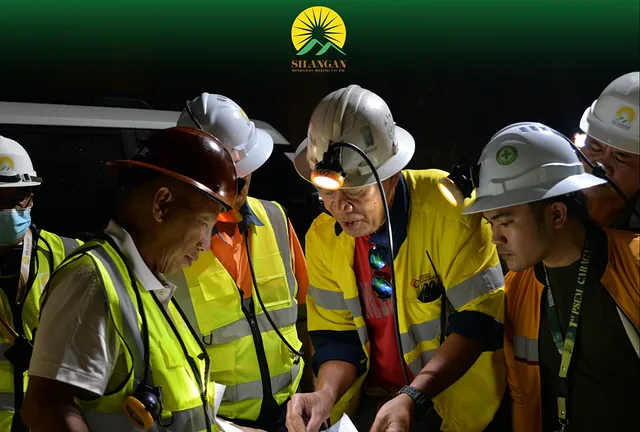
The delegation also inspected the underground mine, the heart of the Silangan Project, where Austin met with technical teams to review operations and provide guidance grounded in his decades of mining experience.

Day two centred on the process plant, one of the most critical facilities at Silangan. Joined by technical specialists from the process plant contractor and on-site engineers, Austin led a detailed walkthrough of the facility. Each major component was reviewed not just as a symbol of progress but as part of the company’s commitment to functionality, accountability and timely completion ahead of the next site visit.

Latest updates show that the Silangan Project has entered the final stretch of development as it readies for commissioning and first metal production, targeted for the first quarter of 2026. Mine development, particularly at Level 95, remains on track, with production drifts expected to be completed by February, clearing the way for initial metal output by March. Stockpiled ore at the surface is sufficient to support early operations once processing begins.

Despite unfavourable weather conditions, progress across the Silangan Project has remained resilient. Guided by the leadership of the company’s president and CEO, bolstered by the expertise of technical teams and consultants, and supported by stakeholders — particularly host communities — the project continues to advance steadily.

The Silangan mine is expected to make a significant contribution to the Philippine mining sector when it comes online, with plans under discussion to progressively ramp up production to take advantage of rising global metal prices and potential foreign investment interest.

With construction and commissioning activities progressing as planned, the Silangan Project is now firmly positioned for the transition to commercial production. The countdown continues.

January 30, 2026

Global Ferronickel Holdings Inc. (PSE: FNI), one of the Philippines’ leading nickel ore exporters, has earned international recognition for its strong governance and corporate social responsibility practices after securing top honors at the prestigious In-House Community (IHC) Counsel of the Year Awards 2025.

Out of a record-breaking 200 nominations across 11 jurisdictions submitted by leading corporations and legal teams in the region, FNI received the Best Practice Management Award for Corporate Social Responsibility. The company was also shortlisted in the highly competitive Industry Awards – Energy and Natural Resources category, underscoring its leadership in governance, sustainability, and legal excellence.

The IHC Counsel of the Year Awards recognize excellence, leadership, and innovation in the in-house legal profession. FNI’s recognition in the Corporate Social Responsibility category affirms the company’s robust governance framework, values-driven culture, and sustained commitment to responsible mining, environmental stewardship, and community development—key pillars of its long-term business strategy and value creation agenda. The honors place FNI’s legal team among the most respected across Asia, the Middle East, and India.

Further strengthening the company’s global profile, FNI’s Senior Vice President for Legal and Regulatory Affairs, Atty. Noel B. Lazaro, was named to the IHC Top Tier In-House Counsel List 2025, which recognizes the world’s most outstanding in-house legal and compliance leaders.

The Top Tier In-House Counsel List celebrates professionals who exemplify innovation, dedication, operational excellence, corporate social responsibility, and a commitment to diversity. Atty. Lazaro’s inclusion reflects his strategic leadership in enhancing FNI’s legal, regulatory, and governance capabilities amid an increasingly complex operating environment.

“In a workplace as nurturing and values-driven as FNI, the unwavering support and encouragement of our employees truly make all the difference. This recognition reflects not only individual effort, but the collective commitment of our entire organization to excellence, integrity, and responsible corporate governance,” Atty. Lazaro said.

FNI’s international recognition reinforces its strategic focus on strong corporate governance, regulatory discipline, environmental protection, and social development. As global demand for responsibly sourced minerals continues to rise, the company remains well-positioned as a trusted mining partner and industry leader, guided by world-class leadership and a robust ESG-driven operating framework.

January 30, 2026

Ipilan Nickel Corporation (INC), the Palawan-based operating subsidiary of Global Ferronickel Holdings Inc. (PSE: FNI), has officially commenced its mining operations for calendar year 2026 following the successful loading of its first nickel ore shipment for the year.

The bulk carrier MV RU Cheng Shan has completed loading at Ipilan’s anchorage area in Brooke’s Point, Palawan, and has departed for China carrying 53,912 wet metric tons (WMT) of low-grade nickel ore with an average grade of 1.30 percent nickel.

With favorable operating conditions and weather permitting, Ipilan is targeting at least 1.5 million WMT in total production for 2026. The projected sales mix for the year consists of 52.6 percent low-grade and 47.4 percent medium-grade nickel ore, consistent with the company’s market strategy and customer requirements.

The start of shipments highlights the strong operational readiness of Ipilan’s mine site and its continued ramp-up under a comprehensive mine development program for the year. Key initiatives include the expansion of mining areas, construction of additional haul roads, and installation of critical environmental protection structures. These efforts are designed to support targeted production volumes while ensuring strict compliance with environmental and regulatory standards.

Ipilan operates under a Mineral Production Sharing Agreement (MPSA) with the Philippine government, which grants the company the right to conduct mining operations in the Municipality of Brooke’s Point, Palawan, covering a total contract area of 2,835 hectares.

The commencement of Ipilan’s 2026 operations underscores FNI’s continued execution of its growth strategy, anchored on disciplined mine development, responsible mining practices, and long-term value creation for shareholders.

The company likewise reiterated its commitment to close coordination with national and local government agencies, as well as host communities, to ensure that mining activities contribute to inclusive economic growth, employment generation, and sustainable community development.

January 28, 2026

By Noel B. Lazaro and Reeno E. Febrero

There are moments in geopolitics when the choreography matters less than the quiet exchanges behind it. In late October in Busan, on the sidelines of the Asia-Pacific Economic Cooperation summit, Donald Trump and Xi Jinping staged one of those scenes: a handshake, a photo-op, and a declaration that the rare-earths dispute was “settled.” In reality, the settlement was transactional. Washington agreed to ease a tranche of tariffs and reopen the door to large U.S. soybean shipments to China, while Beijing pledged a one-year pause on its threatened export restrictions on rare-earth minerals and magnets to the United States. Markets exhaled. Analysts sifted through tone and subtext. But the real story—the underlying logic of power at play—remained unchanged. The agreement did not reorder the world; it merely clarified the minerals that now anchor it.

For a century, great-power politics pivoted on barrels of oil. Then, at the height of the digital boom, it seemed the future would be written in bytes. But the energy transition—and the militarization of supply chains—have rearranged the hierarchy. The building blocks of modern life are no longer fossil fuels or data streams but the atoms embedded in things: lithium in batteries, cobalt in electronics, neodymium in magnets, gallium in chips. The periodic table has become a map of twenty-first-century geopolitical anxiety.

The world according to minerals

Rare earth elements—17 metals with names that sound like they belong to speculative fiction—are geologically abundant but industrially elusive. They rarely occur in high concentrations, and separating them from ore requires complex, hazardous processing. This is why the world’s dependence on China is not an accident but the result of decades of strategic investment.

Today, China mines about 70 percent of global rare earths, refines over 90 percent, and manufactures nearly all high-performance magnets, the essential cores of electric vehicles, wind turbines, and precision-guided weapons. In 2024, it exported 58,000 tonnes of magnets—a volume not just of trade but of leverage.

Even when Beijing loosened export licenses earlier this year, it did so after demonstrating a simple lesson: it can constrict supply at will. Goldman Sachs estimates that diversifying refining capacity will require a decade of massive capital outlay, assuming geopolitical conditions remain stable—which they will not.

The Busan announcement, then, was a strategic feint. A temporary pause is not a policy shift; it is a warning shot. Scholars call this “deterrence by demonstration”: wield the weapon once, then sheath it. The world will remember who holds the handle.

The global scramble to escape gravity

In Washington, the truce buys time for the Pentagon’s magnet stockpile and for chipmakers to secure alternative sources. In Brussels, it reinforces the urgency behind the EU Critical Raw Materials Act, which limits reliance on any single supplier to 65 percent. Canada has launched a Critical Minerals Alliance. Japan quietly expanded its Strategic Metals Reserve. The G7 is building buffers, offtake contracts, and recycling mandates.

Yet progress is uneven. According to the International Energy Agency, global demand for critical minerals will triple by 2040; demand for rare earths used in EV motors could grow sevenfold. But outside China, refining capacity is thin, fragmented, and vulnerable to political risk. The United States may have copper, but it lacks separation plants. Australia excels at mining but not processing. Europe has technology but few deposits.

“Security of supply,” once a term of art, has become the central preoccupation of ministries and militaries.

A Philippine story hiding in plain sight

The Philippines is rarely mentioned in rare-earths analyses—yet it should be. The archipelago sits atop one of the world’s richest mineral belts, including nickel, cobalt, and copper, the backbone metals of the energy transition. Geological surveys have also identified rare earth occurrences in Palawan and Nueva Vizcaya, comparable in concentration to deposits in China and the United States.

In 2024, the country produced ₱94 billion in nickel despite global price softness. But the economic story is incomplete. The Philippines exports raw ore—low value, high volume. The higher-order value, the conversion of ore into materials and components, continues to accrue to other economies. Only two hydrometallurgical processing plants operate nationwide—Taganito and Coral Bay—with a third planned in Leyte.

The result is a familiar trap: a resource-rich nation earning the smallest share of value.

A sector meeting its inflection point

In September 2025, a Philippine Mining Club luncheon on “green mining technologies” set the tone. There, Department of Science and Technology (DOST) Undersecretary Sancho A. Mabborang underscored that under the Harmonized National R&D Agenda 2022–2028, DOST has earmarked about ₱300 million for a critical minerals R&D roadmap for 2026–2028, with the long-term goal of positioning the Philippines as a hub for critical minerals and green technology applications, especially for electric vehicles.

A month after, at the Mining Philippines 2025 conference in Taguig, the conversation widened from laboratories to innovation. Speaking at a plenary session, Department of Environment and Natural Resources (DENR) Undersecretary Carlos Primo David explained that new regulations and the auctioning of idle mineral assets aim to lift mining’s share of GDP from about 0.5 percent to roughly 2 percent and revive long-stalled tenements.

By November 21, at the StratBase ADR Institute’s Pilipinas Conference in Makati, the agenda had become explicitly strategic. DENR Secretary Raphael Lotilla announced that the agency is finalizing an executive order to establish a national framework for developing a critical minerals industry, stressing that “the goal is not simply to mine more, but to mine better, process smarter, and govern with integrity” so that the Philippines becomes a reliable contributor to the clean-energy transition.

In substance, that framework rests on three pillars: responsible exploration and extraction aligned with modern ESG standards; downstream processing and circular value chains that reduce dependence on ore exports; and domestic manufacturing that links minerals to industries—batteries, electronics, renewable energy, and defense. Lotilla has also signaled that environmental safeguards will be modernized to keep pace with innovation, climate realities, and market demand, a quiet rebuke to past eras when rules were either weakened or ignored.

Laws are evolving, but the challenge is coherence

Legal reforms point in the right direction. The Philippine Mining Fiscal Regime secures a fairer return for the State, the Corporate Recovery and Tax Incentives for Enterprises to Maximize Opportunities for Reinvigorating the Economy (CREATE MORE) Act directs incentives toward value-added processing, and the amended Investors’ Lease Act lengthens leases for foreign investors to support more sustained investment.

But these instruments need to hold together. Policy remains siloed. Agencies pull in different directions. The DENR cannot build a critical-minerals industry without synchronized work from the Departments of Trade, Science and Technology, Energy, Foreign Affairs, and, increasingly, Defense.

The reality is stark: China’s advantage is not mineral abundance but metallurgical mastery. If the Philippines desires a place in the global value chain, it must build capacity not just to extract but to transform.

ASEAN’s moment—and a door for the Philippines

The geopolitics of minerals is shifting toward Southeast Asia. ASEAN produces nearly half the world’s nickel and over a third of its tin. Indonesia has used export bans to force domestic processing, with significant success. Vietnam is entering the magnet industry. Malaysia and Thailand house advanced electronics clusters. The region is becoming a manufacturing basin searching for secure inputs.

The Philippines could be the bridge: a mining powerhouse on the supply side, linked geographically and economically to manufacturing hubs.

The U.S.-led Minerals Security Partnership is looking for “second-source” jurisdictions—reliable alternatives to China. Regional manufacturers—from Japan to South Korea—seek diversified supply chains anchored in ESG compliance.

Recognizing the fluidity of global supply chains, the StratBase ADR Institute observes that Manila could strengthen its position by securing a long-term commitment from Washington, ensuring relevance within the U.S.-led critical-minerals network.

But they will only invest where institutions are predictable.

Material power in a fragile age

The deeper lesson of the Busan truce is that geopolitical rivalry is now embedded in the stuff of things. Nations that control the minerals and manufacturing of the energy transition will shape the century that follows.

But the world also faces a paradox: the clean-energy future requires extracting more minerals, not fewer. Each electric vehicle needs six times more mineral input than a combustion car; each offshore wind turbine needs nine times more rare earths than its fossil-fuel equivalents. The green transition is, in this sense, a mining story.

This raises a fundamental question for resource-rich democracies like the Philippines: will we remain exporters of the past or architects of the future?

To choose the latter will require industrial policy, environmental credibility, social legitimacy, and geopolitical clarity—an alignment of institutions rarely attempted, let alone sustained.

The rarest resource of all

When Trump and Xi posed for cameras in Busan, it was easy to imagine a world on pause. But the clock did not stop. Demand for critical minerals continues to rise. Refining bottlenecks grow sharper. The energy transition accelerates, even as geopolitical tension thickens.

Beneath our feet lie minerals that could define—not merely enrich—the country. They will not wait for us to decide.

In a century shaped by materials more strategic than oil and more enduring than currency, foresight is the rarest resource of all.


Noel B. Lazaro and Reeno E. Febrero serve with Global Ferronickel Holdings, Inc. They were recognized at the 2025 Asian Legal Business Philippine Law Awards as finalist for In-House Counsel of the Year and winner of Young In-House Counsel of the Year, respectively. They teach law and write opinion columns.

January 27, 2026

Silangan Mindanao Mining Co., Inc. (SMMCI) has marked a major step forward after its Five-Year Social Development and Management Program (SDMP) received official approval from the Mines and Geosciences Bureau (MGB) Region XIII. The deliberation was held at the MGB Region XIII Training Center.

Engr. Francis Glenn N. Suante, chief of the Mine Safety, Environment, and Social Development Division of MGB Region XIII, led the deliberation, which included active participation from SMMCI’s Community Relations team, Community Relations Manager Janrie Dudang, Corporate Community Relations Manager Nancy Baldoza, and company Community Organizers.

Adding to the achievement, the Annual Social Development and Management Program (ASDMP) for 2026 was also approved, giving the Community Relations team a double milestone. Both programs are aligned with the United Nations’ 17 Sustainable Development Goals (SDGs), ensuring initiatives address the evolving needs of Silangan’s host communities.

The approval process followed the recently concluded SDMP Planning Workshops, attended by host community representatives. Their feedback helped shape programs that go beyond regulatory compliance to deliver long-term, meaningful impact.

A performance review was also conducted to assess the implementation of previous programs, confirming that initiatives were executed according to high standards of transparency, accountability, and social responsibility.

“This milestone is a shared achievement,” SMMCI said. “It strengthens partnerships, uplifts communities, and shows that responsible mining can drive inclusive growth and sustainable development.”

January 26, 2026

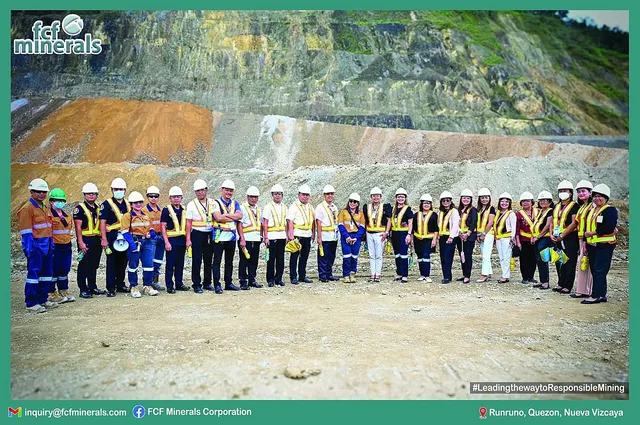
A delegation of 22 personnel from the Municipal Local Government Unit (MLGU) of Quezon, led by Mayor Anabelle Binwag, visited the Runruno Gold Project on January 19 for a mine tour aimed at deepening understanding of the site’s operations and responsible mining practices.

The visit provided participants with first-hand exposure to the operations of FCF Minerals Corporation, the operator of the Runruno Gold Project, as well as the company’s community development initiatives and environmental rehabilitation and protection programmes. The group was also briefed on the project’s Final Mine Rehabilitation and Decommissioning Plan (FMRDP).

Located in Barangay Runruno in the municipality of Quezon, Nueva Vizcaya, the Runruno Gold Project is an open-pit gold mine that has been in commercial operation since 2016. The site includes a processing plant, waste rock facilities and a Residual Storage Impoundment (RSI) used for the safe storage of mine residues. The project plays a significant role in the local economy through employment, procurement and support for community development programmes.

During the tour, the delegation engaged with FCF’s technical personnel at key areas of the site, including the mine view deck, the RSI embankment area and the RSI Final Spillway view deck. Discussions focused on mine operations, environmental safeguards and rehabilitation measures being implemented throughout the life of the mine.

Officials said the visit helped strengthen their understanding of the importance of collaboration between the mining company and local government to ensure that mining activities continue to support local communities, effective governance and environmental protection.

At the conclusion of the tour, participants expressed appreciation for the opportunity to visit the site and indicated interest in undertaking further learning visits ahead of the company’s planned end of operations.

January 24, 2026

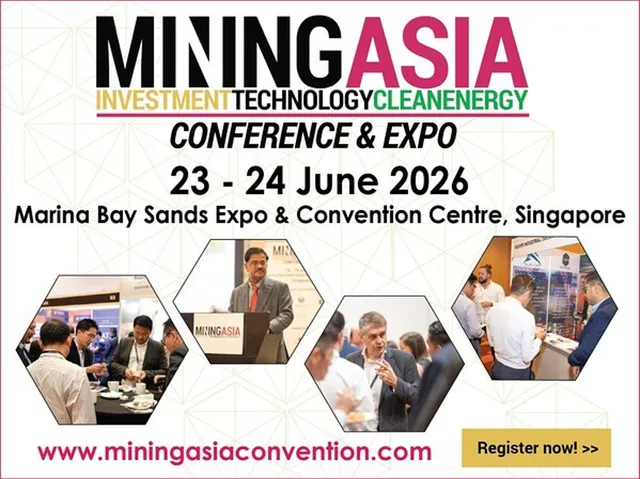
Mining Asia (https://www.miningasiaconvention.com), Southeast Asia’s largest and longest-standing mining conference and exhibition, showcasing the region’s dynamic mining sector to an international audience of investors, industry leaders, and key mining stakeholders, is returning to Singapore’s Marina Bay Sands Expo and Convention Centre from June 23–24, 2026.

For the 2026 edition, Mining Asia is expanding its focus to include clean energy technologies, batteries, EVs, and renewable energy within its conference themes. This evolution reflects the industry’s shift toward sustainable mining practices and the integration of green technologies across mining operations.

Clean Energy, Batteries, and Renewables at Mining Asia

The current energy transition toward a clean energy future—powered by renewable energy and electric vehicles—is one of the defining conversations of our time. For Southeast Asia, this transition carries particular urgency, as the region faces escalating impacts of climate change, including record-breaking heat waves, severe droughts, and rising sea levels.

Mining Asia has long been at the forefront of championing the Southeast Asian and wider Asian mining sector, recognizing mining’s vital role as a key economic driver for the region. As the world pivots away from coal and accelerates the shift toward clean energy, critical minerals such as nickel, lithium, and rare earths have become essential to reducing dependence on fossil fuels.

With Asia-Pacific countries such as Indonesia, China, and Australia emerging as major critical minerals producers, Singapore’s strategic location and reputation as a global finance hub position it as the ideal gateway for fostering investment and dialogue on clean energy, batteries, and renewables. Mining Asia therefore serves as a premier platform to help shape the region’s sustainable energy future.

Attendee Profile

More than 70 percent of attendees at Mining Asia come from Asia and the Middle East, while Australia, Europe, and the Americas make up the remaining 30 percent. This strong regional presence makes Mining Asia an ideal platform for international mining and energy companies seeking to connect with Asia-based investors and showcase their projects to a highly targeted audience.

The investor base includes banks, institutional and private investors, all seeking new opportunities in the mining, energy, and clean technology sectors. This qualified investor pool continues to grow annually, underscoring Mining Asia’s proven ability to attract new investors to the event.

Daniel Radziszewski, managing director of Spire Events—organizers of Mining Asia since 2015—said, “Over the past 11 years, the high quality of speakers assembled at this event has provided insightful regional and international perspectives, leading to Mining Asia being recognized as the leading event in the region for global companies and individuals who wish to understand what makes the Southeast Asian mining industry tick.”

He added, “Regular attendees at Mining Asia over the past decade have given feedback that they appreciate the diversity of conference topics, speakers, and exhibitors, as it provides valuable opportunities to learn about the latest industry developments and establish new business contacts.”

Spaces are available for sponsors, exhibitors, and delegates who wish to be part of Mining Asia 2026. Enquiries can be sent to Daniel via email at daniel.radz@spire-events.com. More information is available at https://www.miningasiaconvention.com.

Background on Spire Events

Spire Events is a Singapore-based events company specializing in mining and energy conferences and expos. Mining Asia is part of the global Critical Minerals, Mining & Clean Energy Conference Series, which spans locations across Asia, Europe, Latin America, North America, and Australia.

Spire Events also organizes the MiningTech Conference Series, which focuses on mining technology and is held in Brazil and Canada. In addition, Spire Events organizes large-scale mining and energy expos in Africa, including events in Mauritania and Botswana. The full calendar of events can be found at www.spire-events.com.
January 24, 2026

Celsius Resources Limited says the Maalinao-Caigutan-Biyog Copper-Gold Project is technically robust and financially compelling

Celsius Resources Limited has announced the results of a Definitive Feasibility Study (DFS) for its Maalinao-Caigutan-Biyog (MCB) Copper-Gold Project in the Philippines, confirming what the company described as a technically and economically robust development with strong long-term fundamentals.

The DFS outlines pre-tax net present value (NPV) at an 8 percent discount rate of US$1.3 billion, with an internal rate of return (IRR) of 31 percent. On a post-tax basis, the study reports an NPV of US$771 million and an IRR of 24 percent, based on long-range copper and gold price assumptions of US$4.30 per pound of copper and US$3,000 per ounce of gold for the first nine years, increasing to US$7.00 per pound of copper and US$4,500 per ounce of gold in subsequent years.

At current spot prices of approximately US$6.00 per pound of copper and US$4,500 per ounce of gold, the economics improve further, with pre-tax NPV rising to US$1.9 billion and IRR to 42 percent, while post-tax NPV increases to US$1.2 billion with an IRR of 34 percent.

The DFS confirms a large-scale, long-life underground operation supported by a JORC (2012) compliant Mineral Resource of 343 million metric tons and a maiden Ore Reserve of 130.2 million metric tons. The Ore Reserve underpins a mine life of more than 35 years and includes 22.1 million metric tons of Proven Reserves and 108.2 million metric tons of Probable Reserves.

Celsius Executive Director Neil Grimes said the study represents a major step forward for the project.

“The MCB Definitive Feasibility Study marks a significant milestone, positioning the MCB Project as a leading near-term copper-gold development opportunity in the Philippines,” Grimes said. “The Study demonstrates a technically robust and economically enhanced project, with competitive capital intensity and operating costs. The Company is progressing funding and offtake discussions to advance the Project toward a Final Investment Decision and construction.”

According to the DFS, early production will focus on a high-grade core during the first 10 years of operation, delivering strong early cash flow. Average C1 cash costs during this period are estimated at US$0.41 per pound of copper, net of by-product credits, with life-of-mine average C1 costs of US$1.73 per pound.

Initial capital expenditure is estimated at US$276 million, including contingency and growth allowances, with a projected payback period of 4.7 years from the start of production.

Mining is planned using sublevel open stoping with paste backfill, supported by decline access transitioning to a shaft and hoisting system. Ore will be processed through a conventional crushing, grinding and flotation concentrator to produce a high-quality copper-gold concentrate.

The DFS was prepared following a scoping study released in December 2021 and involved Ausenco as lead engineer for the process plant and surface infrastructure, DMT Consulting Limited for mining, Makilala Mining Company Inc. (MMCI), and other contractors and consultants.

MMCI Chief Operations Officer Patrique Jane Duran said the completion of the DFS confirms the project’s readiness to advance.

“The completion of the DFS represents a major milestone and value inflection point for the MCB Copper-Gold Project, confirming it as a long-life, technically robust and finance-ready underground operation with strong economics and a clear development plan,” Duran said.

“Importantly, the DFS demonstrates a competitive cost structure, strong margins, and early cash flow, from the substantial Ore Reserve and a disciplined, risk-managed development strategy,” she added.

The MCB Project is held under Celsius’ Philippine affiliate MMCI and is located in Barangay Balatoc, Municipality of Pasil, Kalinga Province, approximately 320 kilometers north of Manila. The project covers about 2,500 hectares in the Cordillera Administrative Region.

The Mines and Geosciences Bureau issued Mineral Production Sharing Agreement MPSA-356-2024-CAR to MMCI on March 15, 2024. The permit provides for an initial 25-year mine life, with the option to renew for a further 25 years.

Celsius said that, with the DFS now complete, the company is focused on advancing funding discussions, finalizing execution planning and moving toward a Final Investment Decision, positioning the MCB Project to become a significant new copper-gold producer in the Philippines.

January 19, 2026

Silangan Mindanao Mining Co., Inc. (SMMCI) welcomed science, technology, engineering and mathematics (STEM) students from Caraga Regional Science High School and Surigao City National High School for a one-day educational mine site tour at the Silangan Project, marking the company’s first official site visit of 2026.

The visit was part of an academic immersion program aimed at exposing students to modern mining operations and responsible mining practices in the region. The students were accompanied by Engr. Francis Glenn N. Suante, chief of the Mine Safety, Environment, and Social Development Division of the Mines and Geosciences Bureau (MGB) Region XIII, underscoring the collaboration among industry, government and educational institutions.

Upon arrival at the site, the delegation was received by SMMCI Project Lead Engr. Venancio Gel A. Romero and briefed on safety protocols by SMMCI Safety Manager Engr. Joel Reyes to ensure a safe and productive learning experience.

Guided by SMMCI’s technical team, the students were introduced to the overall operations of the Silangan Project, including environmental safeguards, community development initiatives and core mining activities. A highlight of the tour was the descent to the Level +95 production level, where the students experienced the underground mining environment. This portion of the visit was led by Head of Planning and Engineering Engr. Ryan C. Pacot, together with safety supervisors.

The tour continued at the Silangan Process Plant, where the students were introduced to mineral processing and hydrometallurgy by the plant’s technical team. The program concluded at the pavilion area overlooking the Silangan Project, giving the students a panoramic view of the operation.

During the culminating program, students shared reflections on their experience, noting their appreciation for learning how mining operations are conducted alongside environmental protection measures and employee safety practices.

“I would like to thank the entire Silangan Mindanao Mining Co., Inc. team for their guidance and support throughout this tour. I truly believe that these students are the future ambassadors of the mining industry, not only in the region, but across the country. Immersive experiences like this play a vital role in helping them understand responsible mining and in shaping their future career paths,” Suante said.

SMMCI said it remains committed to strengthening partnerships with educational institutions and working closely with MGB Region XIII to help develop informed, responsible and future-ready leaders through initiatives that promote awareness of responsible mining.

January 13, 2026

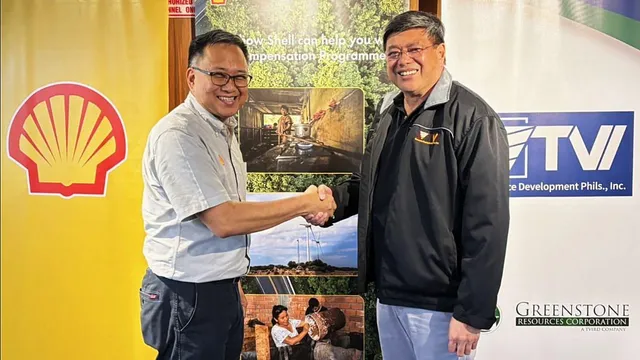
Shell Philippines has awarded certificates of Carbon Credits Retirement to two operating projects of TVI Resource Development Philippines Inc. (TVIRD), recognizing their responsible mining practices and climate leadership. The Balabag project in Zamboanga del Sur and the Siana project in Surigao del Norte were honored under Shell’s Carbon Compensation Program, which allows businesses and retail customers to offset unavoidable CO₂ emissions through investments in reforestation and conservation initiatives.

The private ceremony, held at Shell’s Makati headquarters, was attended by key officers and staff from both projects and included a learning session on joint sustainability efforts. Shell Sales Manager for Commercial Fuels Jose Mari Macaspac officially handed the certificates to TVIRD President Michael G. Regino and Chief Finance Officer Cynthia S. Delfin.

TVIRD directly operates the Balabag Gold and Silver Project, which utilizes hybrid Merrill-Crowe and Carbon-in-Leach technology powered by diesel. The Siana Gold Project is operated by TVIRD’s wholly owned subsidiary, Greenstone Resource Corporation, and features a modern 1.1-million-ton-per-year Outotec mill, gravity, and Carbon-in-Leach (CIL) facility.

In terms of reforestation and conservation, both projects have planted and maintained a combined total of 1.8 million trees, effectively offsetting carbon emissions and ensuring a sustainable future for their host communities.

Grounded in Climate Responsibility

Shell officials highlighted the importance of carbon credits in reducing the environmental impact of industrial emissions. “While [carbon emissions] are inevitable, these can be balanced and supported by verified global climate projects,” the company noted.

The Carbon Compensation Program enables companies to offset unavoidable greenhouse gas emissions through carbon credits from projects worldwide that actively remove or avoid CO₂, helping organizations demonstrate their climate commitment while working toward long-term decarbonization.

“This partnership reflects our shared commitment to advancing sustainable solutions and supporting high-quality projects that deliver meaningful environmental impact. TVIRD and Greenstone were selected based on their strong alignment with Shell’s vision for responsible and sustainable development,” said Shell Philippines Commercial Fuels Account Manager Isabel Cuevas.

She added, “By working together, we aim to accelerate progress toward climate goals while promoting practices that benefit both local communities and the global environment.”

Greenstone was recognized for sequestering 900 tonnes of CO₂-equivalent emissions into Shell’s global carbon credit portfolio in 2025, while the Balabag Project was awarded for sequestering 965 tonnes of CO₂-equivalent emissions in 2024.

January 13, 2026

Hallmark Mining Corporation (HMC) has set aside at least P20 million each year to support Indigenous Peoples (IP) through its Social Development and Management Program (SDMP), providing legally mandated royalties and benefits that include scholarships, basic services, water systems, and road maintenance.

The mining firm said its initiatives also cover agriculture, education, healthcare, livelihood programs, and local employment, aiming to create lasting community benefits beyond the life of the mine. HMC emphasized the importance of rehabilitation, skills training, and alternative livelihood programs to ensure long-term self-sufficiency for host communities.

Nickel from Mati is increasingly feeding into the global supply chain for electric vehicles (EVs) and renewable energy systems, underscoring the Philippines’ growing role in the clean energy transition. HMC has supplied nickel laterite ore to processing hubs in China and Indonesia between 2022 and 2025. The material is used in EV batteries and energy storage systems, sectors that contribute to global decarbonization.

Once primarily valued for stainless steel production, nickel has become a key component in EV battery technology. The Philippines ranked as the world’s second-largest nickel producer in 2023, producing roughly 330,000 metric tons, mostly from laterite deposits.

HMC said its operations adhere to government-approved Mineral Production Sharing Agreements (MPSAs) and comply with Department of Environment and Natural Resources standards for erosion control, watershed monitoring, dust management, land rehabilitation, and native tree planting, reflecting its commitment to responsible mining and sustainable community development.

January 09, 2026

Celsius Resources Limited has appointed Grant Samuel Capital Advisory Pty Limited to assist in finalizing financing for its Maalinao-Caigutan-Biyog (MCB) Copper-Gold Project, held under Philippine affiliate Makilala Mining Co., Inc. (MMCI).

The company said it has received “strong interest in financing the MCB Project from numerous well-qualified international mining financiers, offtakers and investment groups with proven track-records in copper and gold project finance, streaming, and offtake arrangements.”

Celsius noted that proposals received cover “offtake, structured and debt financing as well as equity participation at a Project level.”

Following the receipt of these proposals and with the imminent completion of the MCB Definitive Feasibility Study, the board has engaged Grant Samuel “to assist Celsius’ management and Board in the coordination of an integrated financing process and the structuring and negotiation of an optimal funding package.”

In addition, Bardin Davis has been appointed as a consultant to the board on matters of strategy, financing, and project development.

The company said Davis has “significant mining and emerging market experience within both an investment banking and corporate environment.” It noted he was most recently the CEO of Peak Rare Earths, where he “led a financing process for the company’s Tanzanian project,” and added, “We welcome Bardin and look forward to his advice and support around the crucial Board decisions to be taken in this quarter.”

Established in 1988, Grant Samuel is a leading independent corporate advisory firm “renowned for its commitment to delivering tailored financial advice and strategic solutions to clients across Australia and internationally.”

The firm has recently provided strategic and financing advice to several mineral development companies in Southeast Asia. Headquartered in Sydney with offices in Melbourne and Hong Kong, Grant Samuel acted as lead financial adviser to Asiamet Resources Limited on the proposed conditional sale of its interest in the KSK Project to Norin Mining (Hong Kong) Limited for a gross cash consideration of US$105 million. The transaction, announced on November 6, 2025, remains subject to shareholder and regulatory approvals.

Bardin Davis has approximately 30 years of mining experience in both investment banking and corporate roles, including nearly 12 years in Asia. He has held senior positions with Macquarie Capital, HSBC, and ABN AMRO. As CEO of Peak Rare Earths Limited, he oversaw “a project financing process, the execution of a binding offtake agreement as well as the completion of a BFS Update and FEED Study for the company’s Tanzanian rare earths project.”

Celsius said Davis “will provide advice to the Board as we finalise the Project financing for MCB and move into construction.”

January 09, 2026

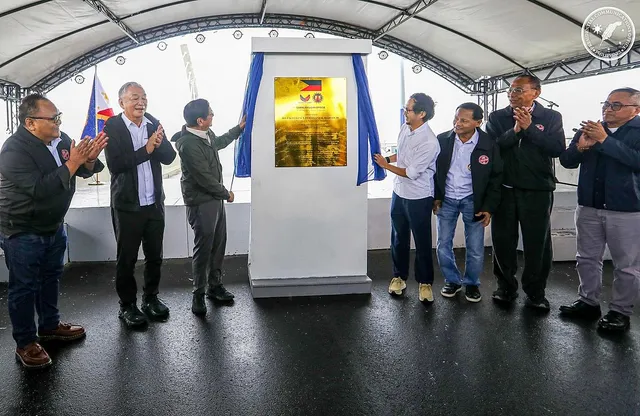
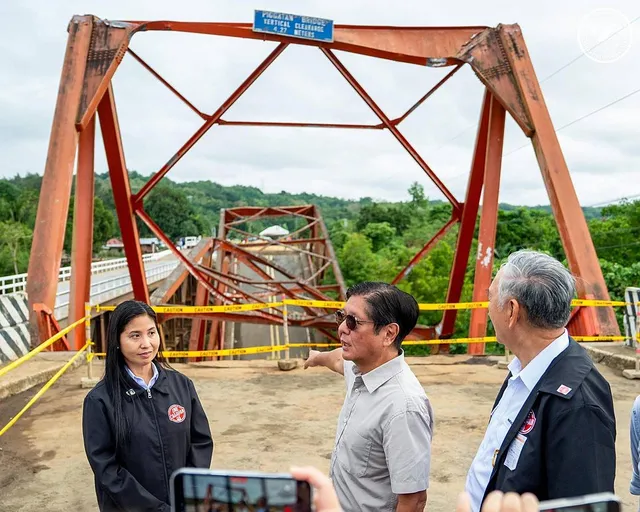
​​​​​President Ferdinand R. Marcos Jr. on January 8, 2026 led the inauguration of the PhP2.3-billion Camalaniugan Bridge, a project expected to boost economic activity in northern Cagayan.

“I think this will serve as a model for many of the other bridge projects that we will be seeing around the country,” Marcos said during the ceremony.

The 2.16-kilometer, two-lane bridge spans the Cagayan River, providing an alternative route to the Magapit Suspension Bridge, which was previously the only crossing in the area. The bridge is designed to support heavy vehicles and ensure smooth traffic flow while meeting current safety standards.

Marcos noted that the bridge would significantly cut travel time for residents and travelers. “It is gratifying because the installation of this kind of bridge is a major development. Instead of taking a long detour to cross the river, the Camalaniugan Bridge is now here,” he said.

The bridge features reinforced concrete piers, steel girders, and modern flood-control measures, designed to withstand the region’s seasonal typhoons and heavy rains. Its construction included access roads on both ends, linking Barangays Camalaniugan and Ballesteros.

Marcos said the government accelerated the project to benefit the public and local communities. “I am sure this bridge will transform the economy on both sides. Many opportunities will open up for new jobs and businesses, and you will feel the economic effects very soon,” he added.

He also congratulated the Department of Public Works and Highways for completing the project on time and on budget.

With the bridge’s completion, travel time between Aparri and Ballesteros is expected to drop from one hour to just 20 minutes, benefiting about 6,000 daily commuters and travelers. Marcos said the project reflects the government’s commitment to infrastructure that directly benefits Filipinos.

January 09, 2026

President Ferdinand R. Marcos Jr. on Thursday personally inspected the ongoing rehabilitation of the Piggatan Bridge, underscoring the government’s commitment to restoring the critical transportation link along the Maharlika Highway in Barangay Piggatan, Alcala.

President Marcos was joined by Cagayan Governor Edgar Aglipay, Alcala Mayor Christina Ignacio-Antonio, Department of Public Works and Highways (DPWH) Secretary Vince Dizon, and DPWH Region II Assistant Regional Director Ronalyn Ubiña.

During the visit, the Chief Executive was briefed on the project’s progress, including the successful completion and opening of the temporary detour steel bridge last month. He was also presented with plans for the permanent bridge, which will replace the old structure and provide a long-term, climate-resilient solution to meet growing traffic demands along the national highway.

President Marcos directed the DPWH to ensure that the new bridge is properly designed and constructed to be safe, durable, and compliant with engineering standards.

Built in 1980 and designed for up to 18 tons, the 74.4-meter Piggatan Bridge collapsed on October 6, 2025, after four overloaded trucks carrying an estimated total of over 130 tons crossed the bridge. Six individuals were injured in the incident.

Following the collapse, the President ordered the fast-tracking of a temporary detour bridge, which was officially opened to traffic on December 19, 2025. The structure was built on land donated by Piggatan residents, ensuring uninterrupted mobility of people, goods, and services while preparations for the permanent bridge are underway.

“Kaya’t minadali natin na maglagay nitong tinatawag naming temporary [bridge]. Pero, pagka nagawa natin, hindi na natin aalisin ‘yan para may extra lane,” President Marcos said during the inspection. He also highlighted the efficient use of previously stored construction materials, noting that resources kept in DPWH storage for nearly 15 years due to cancelled projects were finally put to productive use.

The President’s visit emphasized the importance of fast-tracking the permanent bridge to enhance public safety, strengthen regional connectivity, and support economic activity in Northern Luzon.

January 07, 2026

JOGMEC conducts mine pollution control training in Japan

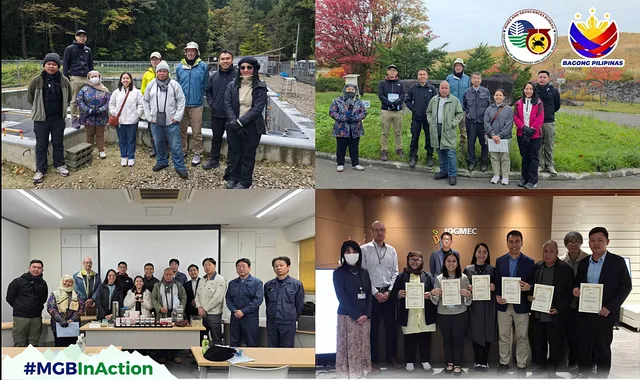
TOKYO — The Japan Organization for Metals and Energy Security (JOGMEC) hosted a nine-day Mine Pollution Control Training for Philippine mining regulators from Oct. 16 to 24, 2025, as part of ongoing cooperation with the Mines and Geosciences Bureau (MGB).

The programme was conducted in connection with a memorandum of understanding between MGB and JOGMEC, and a formal letter of cooperation addressed to the Department of Environment and Natural Resources (DENR). It aimed to strengthen mine pollution control in the Philippines by sharing Japan’s experience, systems and best practices in managing mining-related environmental impacts.

Training modules focused on the management of abandoned mines, mine water treatment and sustainable practices developed to ensure the long-term operation of pollution control facilities. Lectures covered remote sensing applications for artisanal and small-scale gold mining, mine pollution control systems in Japan, passive treatment technologies, supervision of the mining industry, and mercury distribution in artisanal and small-scale gold mining.

Participants also undertook site visits to key facilities, including the Matsuo Water Treatment Plant, JOGMEC Process Test Site, Ainai Water Treatment Facility and the Itomuka Mercury-Recycling Plant. Museum tours at the Matsuo Mine Historical Museum and the Osarizawa Mine Historic Site were included to provide historical context on Japan’s mining legacy and environmental rehabilitation efforts.

According to organisers, the site visits enhanced participants’ understanding of Japan’s long-term commitment to environmental protection, particularly in the treatment of mine water from abandoned mines and the recycling of mercury waste.

The training was attended by six technical personnel from the MGB Central Office and MGB regional offices in Regions IV-A, VII, VIII, X and XII.

January 04, 2026

The Mines and Geosciences Bureau (MGB) has officially opened the nomination period for the 2026 Presidential Mineral Industry Environmental Award (PMIEA), marking the full implementation of the revised guidelines and procedures outlined in MGB Memorandum Circular (MC) No. 2025-002, signed on February 18, 2025.

The 2026 PMIEA will be implemented in accordance with the new framework introduced by MC No. 2025-002, following the transitory cycle applied during the 2025 PMIEA. Under this revised system, the PMIEA Selection Committee will continue to recognize outstanding mining, mineral processing, and mineral exploration companies whose initiatives and performance demonstrate excellence that goes beyond regulatory compliance.

The said Presidential Award seeks to honor mining companies that have shown exemplary achievements in environmental protection and ecological preservation, made meaningful contributions to national economic growth, and implemented programs that enhance the quality of life of Filipinos, particularly in mining-affected communities. Emphasis is placed on strong performance in Environmental Management, Safety and Health Management, and Social Development and Management, consistent with the strengthened evaluation standards of the revised PMIEA guidelines.

Through an official Memorandum dated December 18, 2025, all MGB Regional Offices (ROs) are instructed to notify the opening of nominations and invite qualified mining companies within their respective jurisdictions to participate. Only companies that satisfy the minimum eligibility requirements and submit complete and compliant documentary requirements shall be endorsed by the MGB ROs for national-level evaluation.

Endorsed nominations, together with electronic copies of all required entry materials, must be submitted to the MGB Central Office via email at mgbpmiea@gmail.com or through a digital storage device (e.g., flash drive) on or before March 27, 2026.

The 2026 PMIEA continues to serve as a premier platform for recognizing excellence in the minerals industry, reinforcing the government’s commitment to responsible mining, environmental stewardship, workplace safety, and sustainable community development under the enhanced PMIEA framework.

For reference, copies of MGB Memorandum Circular No. 2025-002 and related issuances may be accessed through this link: https://tinyurl.com/2026PMIEA.
December 18, 2025

Walk past any construction site in the Philippines and you’ll likely see a familiar sight — piles of plywood stacked near a freshly poured foundation, warped and water-stained from repeated use. For decades, plywood has been the go-to material for local formwork, even as builders quietly acknowledge its flaws: it’s heavy, wasteful and short-lived, especially in the country’s hot, humid climate.

That may soon change. A new system called PECAFORM, developed by Malaysia-based PLYTEC Group and brought to the country by FASI Forms Inc., is offering Filipino contractors an alternative — a soil-supported, reusable formwork system that reduces waste and speeds up construction.

“The idea appealed to us because it directly addresses the recurring pain points of builders here,” said Frederick Erum, founder and CEO of FASI Forms Inc. “It’s simple, efficient, and it works with the way projects are managed locally.”

Rethinking the Everyday Foundation

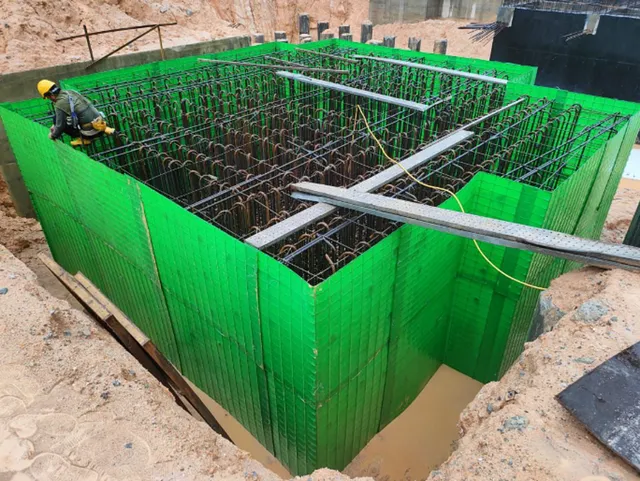
The concept behind PECAFORM is straightforward: let the soil do the work. Traditional formwork relies on timber or steel supports, adding cost, time and labor to every pour. PECAFORM replaces those with a lightweight polymer sheet that holds the concrete in place using compacted soil for support.

Once the soil is backfilled, the form becomes stable enough for pouring. Because the panels don’t absorb water, they produce a smooth finish and last far longer than plywood.

“We’ve all seen how much material gets discarded after just a few uses,” Erum said. “If you can get the same or better result with something that doesn’t rot or warp, it’s worth adopting.”

Each panel weighs about 2.64 kilograms per square meter, light enough for one person to carry and install without machinery. The lighter handling helps reduce labor hours and improve on-site safety.

Designed for the Philippines

The country’s humid climate and frequent rainfall have long been a challenge for construction. Timber formwork tends to absorb moisture, deform and fail after short use cycles — driving up rework costs.

PECAFORM was designed for exactly these conditions. Made from water-resistant engineered material, it can be reused multiple times and withstand the elements without degrading. On-site, it also reduces waste and clutter.

“It doesn’t take long for people to get used to it,” Erum said. “After a short orientation, crews start working faster because there’s less preparation and cleanup involved.”

The system has been successfully used in Malaysia and Singapore, where similar weather conditions test the durability of formwork. At Aspen Vision City in Malaysia, contractors reported completing formwork cycles up to 70 percent faster and cutting costs by as much as 40 percent compared to plywood systems.

Faster Builds, Cleaner Sites

In an industry where time directly affects profitability, shorter construction cycles can have a significant impact. PECAFORM helps reduce setup and removal time since the forms are left in place permanently, eliminating dismantling and disposal.

“You can see the efficiency on-site,” Erum said. “Workers spend more time doing structural work instead of setting up and tearing down temporary forms.”

The result is a more organized work environment and a safer workflow, especially in repetitive casting jobs such as footings and retaining walls.

Sustainability That Makes Business Sense

Erum said the system’s appeal goes beyond convenience. Its long life cycle and recyclable composition align with the growing demand for sustainable construction practices.

“Contractors today are under more pressure to consider sustainability,” he said. “If a material helps reduce waste and lasts longer, it makes both environmental and financial sense.”

Each panel is 100 percent recyclable and microplastic-free, meeting Green Building Index (GBI) and VOC-safe standards. The elimination of timber backing reduces the need for lumber and minimizes landfill waste — increasingly important metrics for developers and project financiers.

“Sustainability shouldn’t come at the expense of practicality,” Erum added. “The key is to find solutions that make everyday work more efficient while lessening impact on the environment.”

Made for Real-World Worksites

PECAFORM is most effective for retaining walls, pile caps, edge forms and ground beams — repetitive concrete structures that often slow down project timelines.

The system’s consistent dimensions and finish quality also minimize rework. In large-scale projects, the cumulative time savings can be substantial.

“Small efficiencies become significant when you apply them across kilometers of formwork,” Erum said. “That’s where systems like this make sense — in the details.”

Bringing Global Technology Home

Erum, a member of the Filipino Inventors Society, has long been known for his contributions to improving construction methods. Over the years, he has registered four patents, including designs for a concrete shuttering system, table formwork and support system, and reusable plastic panel innovations.

“We’ve always tried to look for better ways to build,” he said. “Not necessarily more expensive or complicated — just more efficient.”

Through its partnership with PLYTEC, FASI Forms Inc. brings proven formwork technologies to the Philippine market, adapting them for local contractors through training and technical support (fasiformsystem.com/about-us; plytec.com.my).

“Our goal is to make modern systems accessible,” Erum said. “Technology should work for the people using it, not the other way around.”

Laying the Groundwork for the Future

As infrastructure investment continues under the government’s Build Better More program, Erum sees an opportunity for the local industry to adopt better construction systems.

“We’ve relied on the same materials for decades,” he said. “But conditions and expectations have changed. If we want to stay competitive, we need to do faster construction operations.”

He believes the shift toward smarter systems like PECAFORM will not happen overnight, but sees it as inevitable.

“Change in construction is always gradual,” Erum said. “But once people experience the advantages firsthand — the speed, the cleanliness, the savings — it becomes hard to go back.”

For him, innovation is not about replacing tradition but refining it.

“At the end of the day, the goal is simple,” he said. “Build better, build responsibly, and keep building faster with each project.”

December 18, 2025

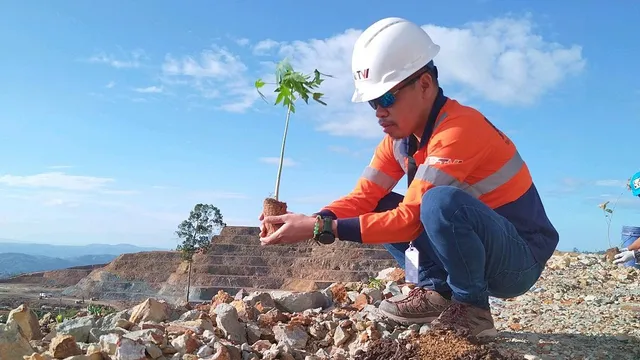
At TVI Resource Development Philippines Inc. (TVIRD), rehabilitating the environment is not just a matter of compliance — it is a long-term commitment deeply rooted in the organization’s respect for nature’s healing processes. Guided by the principles of natural plant succession, the company’s approach to revegetation mirrors the natural growth of forests over time. This dedication is a cornerstone of TVIRD’s operations, ensuring a lasting positive impact on its surrounding environment.

This method, while simple and cost-effective, has proven highly effective in restoring wildlife habitats. It begins with planting fast-growing grasses, followed by shrubs and vines, and eventually native tree species that form mature woodlands. TVIRD strengthens this approach by cultivating suitable indigenous plant species in its own nursery — homegrown seedlings that support reforestation efforts and are well-adapted to the local environment.

Environmental Manager Jjam Cutillas explained, “At TVIRD, rehabilitation is not just the title of our manual — it’s a long-term promise to nature. We follow nature’s rhythm in healing the land, allowing vegetation to return in the same order it once grew.”

As of June this year, 31.88 hectares of disturbed areas have already been successfully rehabilitated in Sitio Balabag, with pioneering grasses and shallow-rooted fruit trees establishing the foundation for future growth and biodiversity.

A Massive Undertaking

TVIRD’s impact goes well beyond the restoration of mined-out areas. To date, it has established plantations within and beyond its mining areas, totaling 1,136 hectares. This translates to more than 1.2 million trees planted — an impressive effort backed by a remarkable survival rate of 94.10%, thanks to rigorous care and monitoring practices that ensure trees not only survive but thrive.

“What makes our work meaningful is knowing that every tree we plant has a purpose, whether it’s to bring back wildlife, stabilize the soil, or one day be part of a larger forest. We take pride in growing most of these from our very own nursery and using native species that truly belong to the land,” Cutillas added.

Regenerating Forests the Natural Way

TVIRD also champions Assisted Natural Regeneration (ANR) — a sustainable method focused on enhancing existing forest vegetation and allowing nature to lead the way. In collaboration with DENR Region IX, strategic areas within the company’s mining area were identified for this initiative. ANR involves nurturing naturally growing trees, planting indigenous species, and ensuring consistent maintenance and protection.

As of June 2025, a total of 456.44 hectares of ANR and enhancement plantations have been established, where earth-balled saplings and wildlings were planted in compliance with Special Tree Cutting and Earth-balling Permit (STCEP) conditions.

Of this total, the 152.67-hectare enhancement plantation established from July 2024 to June 2025 saw the planting of 152,670 indigenous and fruit tree species within the MPSA, mostly dipterocarp species. Additionally, 1,667 bamboo trees covering 8.33 hectares were planted during the same period.

Environmental Stewardship as a Shared Commitment

“Our environmental programs are driven by a shared commitment — one that every employee participates in. From weekly tree-planting activities to major rehabilitation projects, we all play a part in rebuilding what nature has given us. And that’s something we take to heart,” Cutillas concluded.

Environmental awareness is deeply instilled in TVIRD Group’s culture. Through its weekly tree-growing program, various departments come together regularly to plant and care for the land. Everyone in TVIRD has a role to play in restoring the balance of nature, with purpose for every week and every season.