
August 31, 2021

Photo Caption: Our future. Children study and play at the Canatuan Elementary and National High School – an institution that TVIRD helped build during its operations in the area from 2004-2014, and from which time the company has been the host municipality’s strongest partner in promoting responsive education. (TVIRD file photo)

Siocon, Zamboanga del Norte / July 2021 – She knows what it is to be poor at a young age, being born to poor parents and raised by a single mother who died while she was in her primary years.  The harrowing experience of being bullied because of poverty made Joanamarie Gabayan vow to have a stable job in the future.

At 19, she fulfilled her promise to herself and joined the academe where a decent, fulfilling and stable job as a professional teacher awaited her.

Joanamarie, “Joan” to family and friends, earned her degree in elementary education in 2015.  She took and passed the professional board examination for teachers then and landed a teaching job the following year – thanks to the scholarship program of TVI Resource Development Philippines Inc. (TVIRD) in Canatuan.

Now 25 years old and already married, Joan is currently teaching the Subanon children at Barangay Tabayo Elementary School of this town.  Assigned as an Indigenous People Education (IPEd) teacher by the Department of Education (DepEd), she instructs her pupils on basic education that is responsive to their context, respects their identities and promotes the values of their indigenous knowledge, skills and other aspects of their cultural heritage – all in line with DepEd Order 50 series of 2016.

Looking back at her humble beginning, Joan said she is forever grateful to the company that helped her realize her dream. “I could not have reached this far without TVIRD,” she said.

Giving back

Police Corporal Rasul Agang, also a former scholar of the company agrees with her. A graduate of BS in Criminology at a state university in Siocon town, Corporal Agang is now proudly serving his “kababayans” as a member of the Siocon Police Station.  At 27, Rasul said he “walks the talk” of the PNP Motto which is to “Serve and protect.”

A son of a fisherman, Rasul shared that ever since he was young, he wanted to become a police officer. “That was my dream, and I was able to achieve it through the help of the company.  I am always proud of being a scholar and part of the TVIRD family, knowing that it is a responsible mining company,” he said.

Rasul cited TVIRD’s ongoing final mine rehabilitation in Canatuan, which started in 2016.  The program consists of “re-greening” and restoring the company’s former mine site to its former condition and covers all disturbed areas during its 10-year mining operations from 2004.

Equally thankful is geologist-scholar Ryan Lumabi, also a Subanon from Sitio Canatuan.  Ryan currently works as a project geologist at Premium Megastructures Inc. in Misamis Oriental.

“I just want to say thank you very much to TVIRD for making my dream possible.  It really was impossible for me to reach my dream given that we were poor.  But (they) gave me the opportunity to study and graduate as well as assisted me financially while taking the board examinations,” he said. 

Investing in education

“TVIRD believes that education plays a vital role in empowering its Subanon partners; hence, the company must invest on it,” according to TVIRD President Yulo Perez who was then Canatuan General Manager who institutionalized the company’s College Scholarship Program in early 2005.

According to him the program seeks to provide the poor but deserving Subanons with access to education so they will be able to help the tribe’s elders in managing the development of their homeland – all according to their needs and outlook, and within their cultural and traditional framework.

Also included in the grant were underprivileged but deserving non-tribal scholars residing within the immediate community and the host municipality of Siocon.

From 2004 to 2020, TVIRD spent more than Php11-million pesos for its scholarship program.  The amount is on top of the construction cost of the first school buildings and library of Canatuan Elementary and National High School as well as the salaries of both school’s first four school teachers.

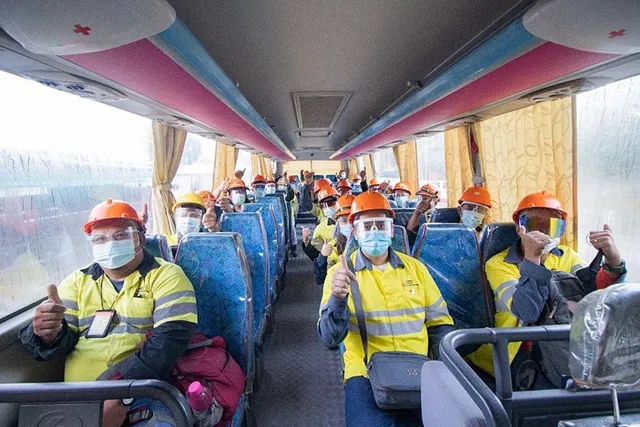
TVIRD also provided school buses for the pupils and students of both schools. The first bus could accommodate 48 passengers and ferried the children as far as Sitio Kilometer 8, a sub-village of Kilalaban of the neighboring town of Baliguian, and Sitio Paduan of Barangay Candiz in Siocon town.

When TVIRD concluded its Canatuan operations in 2014, it also produced professional teachers, nurses, midwives, civil engineers, agriculturists, geologists, an environmental engineer, a forester and a member of the Philippine Navy.

Geologist Ryan Lumabi mentioned earlier that the education provided to him by the company gave him the fighting chance to reach his dream.

“Mining may cease, and TVIRD may eventually leave Canatuan.  But the education it provided will live on in the hearts of its scholars whose lives were touched and changed for the better,” he concluded.

August 31, 2021

3 Key Trends Transforming the Industry in 2021


Changing the way we work: Measures across Asia-Pacific economies to slow the spread of the pandemic meant a rapid reduction in staff working on building sites and in contractor and consultant offices, resulting in an acceleration in the rate of digital transformation.

Smart sensors are being used in building systems and infrastructure assets to enable remote monitoring of performance. These, coupled with data integration platforms, give real-time insights 24/7 from anywhere.

Drones have been used for spatial surveys and asset mapping before the pandemic; last year saw a new emphasis on remote surveying for more detailed and specific applications, such as progress reporting and workplace safety monitoring.

People with skills to manage and operate telematics, drones, digital modelling, the streams of data generated by IoT, virtual inspection tools and digitised safety reporting, are now in demand. Without them, all that information will be next to useless as builders won’t be able to apply those insights to improve performance and productivity.

Automation and AI: In Asia, the uptake and installation of process robotics have reached record levels, with two-thirds installed in factories across Asia. On commercial and residential building sites, the impact of robotics and automation will be seen more immediately in supply chains, for example, automated equipment used for manufacturing materials and components. Such robots will soon be tackling jobs like materials handling, welding and small parts assembly.

Another type of robotic technology whose role in design, delivery, compliance and asset operation will become increasingly pervasive is AI. AI can assess plans at light-speed against the hundreds of standards and compliance requirements in the building code. The computational design generated by AI can be then analysed by more AI. The resulting analysis can help generate accurate costings, procurement plans, programming and more effective management of milestones, progress payments, safety reporting and quality verification.

Digital twins: A digital twin integrates multiple technologies, such as advanced Building Information Modelling, IoT, AI, machine learning, spatial technologies, virtual reality and augmented information management, all stored in the cloud.

One company that has adopted such a technology is Gammon Construction in Hong Kong, thus offering real-time visibility of pours, curing rates and productivity. This has enabled the company to strike its pours 38% faster, and saved over 110 tons of concrete waste.

Optimising construction outcomes in terms of quality, safety, and financials is the ultimate benefit of digital transformation. Paper forms, Excel spreadsheets, cluttered email inboxes, and voicemails won’t get us there. Change and progress start from the ground up, and what’s needed is a sound toolkit of digital productivity, project management and business management systems. What’s needed is a transformation in smarter construction.

Talk to Procore today about how we can help you face the changes ahead or visit: https://proco.re/3rQtgMl to find out more about how to build smarter.
August 31, 2021

With global OEM production slow-moving due to the pandemic and secondhand equipment prices reaching new heights, Ritchie Bros. Senior Territory Sales Manager Chris Edwards is encouraging consignors in the Philippines to bring their assets to market.

Chris Edwards, who is based in Manila, was appointed at the beginning of 2021 to accommodate rising demand in the Philippines.

Chris Edwards

“Ritchie Bros. has a long-standing reputation in the Philippines. The first Ritchie Bros. auction ever hosted in Asia was in Subic Bay in 1994. We pioneered the auctioneering business in the Philippines with permanent live auction sites from 1994 to 1999, now we’re back with a new office in Manila to support buyers and sellers in the Philippines” said Mr. Edwards.

“We have returned to the Philippines as the global market appetite for used equipment and machinery has burgeoned over the last 18 months with no sign of demand slowing down.

“Philippine mining companies have experienced record-breaking quarters and rising commodity prices. This is a great time to bring used equipment to our global market and get the best possible price. We continue to secure great results for mining companies across Asia through our various sales channels.

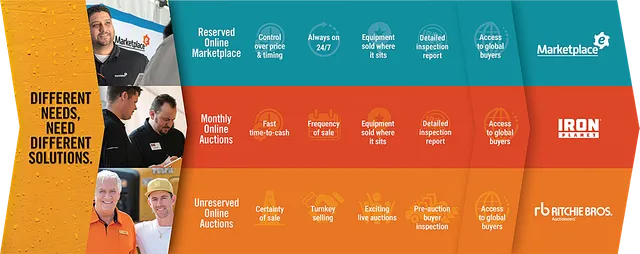
“We have Territory Managers all throughout the Asia-Pacific region ready to help consignors get the best price for their used equipment. As world-leading asset remarketers, with expertise on the ground, our comprehensive sales solutions give consigners a choice of selling solutions through Ritchie Bros. Auctioneers unreserved auctions, IronPlanet reserved auctions, or our 24/7 Marketplace-E.” 

Ritchie Bros. sold more equipment and machinery in 2020 than any other auction company. The Covid-19 pandemic has continued to accelerate acceptance of large-scale online equipment sales and purchases. Since shifting to exclusively online auctions, the market leader has continued to see record-breaking bidder participation, strong buyer demand, and outstanding results for sellers.

Need help selling your assets? Contact Chris Edwards on +63.917.149.8545 or cedwards@ritchiebros.com

August 31, 2021

​

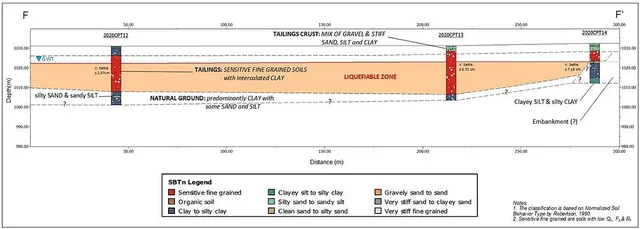
Tailings dams are the most common means of waste disposal in the mining industry because of their ability to hold huge amounts of material, as well as cost effectiveness. Tailings dams can represent an ongoing liability, long after mine operations cease and facilities are closed and reclaimed. There is a global drive to ensure tailings dams are engineered during construction and evaluated for closure following the end of production.

A tailings dam failure is defined as a physical breach of the dam followed by uncontrolled and typically sudden release of stored materials (e.g., fluids, tailings, sludge, etc.). There are several cases per year of significant failures, with many of these claiming lives. As an industry, we have a duty of care to improve approaches and ensure risks are lowered. Often complacency in operations and storage with an approach of “doing the minimum’’ is not the best practice, and every engineer and organization must do better to raise the bar and protect the lives and environments surrounding these often huge structures.

In the Philippines, with our frequent and often severe earthquakes, tailings dams require robust engineering, high quality monitoring and civil, geotechnical and environmental engineering assessments to ensure the sites are stable long after a mine is a distant memory.

Stability assessments referred to as a Tailings Dam Breach Analyses (TDBA) are a common approach to investigating tailings dams, and this requires detailed, high quality site investigation works. This is where RDCL provides various geotechnical and geophysics techniques that feed engineering data into ground models for breach analyses.

The most common forms for geotechnical investigations are drilling and installation of ground water piezometers. RDCL takes intrusive testing beyond drilling with highly accurate Cone Penetrometer Testing (CPT) and seismic testing.

The cone of the CPT rig is made up of load cells or pressure sensors, collecting a variety of data used directly in engineering calculations. CPT testing is calibrated to international standards, and is repeatable. The data is digital, and the quality control checks during testing removes the risk of collecting poor data, leading to poor engineering assumptions.  Do it right to design it right, remove the requirement for over-engineering which can lead to significant cost increases.

RDCL operates GeoMil CPT rigs in Philippines and has tested to 68 m below ground in tailings dams. Typically, CPT tests reach depths of 20-30 m. In one day 6-8 CPT tests can be completed, pending site constraints.

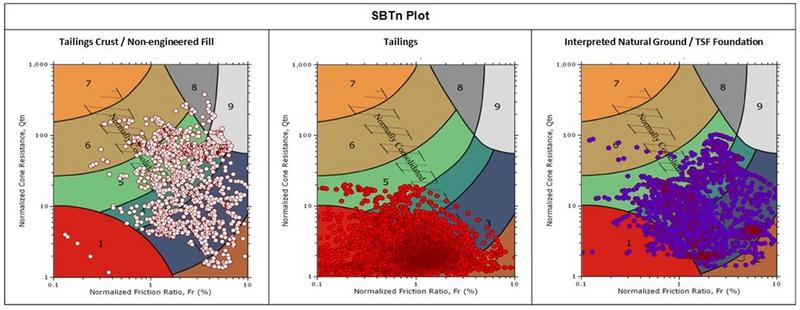
The CPT rig also has options to deploy seismic geophones, soil samplers and electronic shear vanes, all of which allow discreet soil testing at specific depths. These additional tools, all part of the Geomil suite of equipment allow in-situ measurements of soil characteristics targeting specific layers within tailings, often to determine liquefaction risk.

RDCL often recommends more than CPT and drilling data across tailings dams, as both techniques are vertical datasets, effectively creating a series of pin-point datasets across often very large areas. This leads to interpolation between datasets, and generalization of ground features.

Surface seismic testing can provide 2D profiles across tailing dams, linking drilling or CPT data creating with good visualizations improving the understanding of soil characteristics across sites.

Two common seismic methods are used;

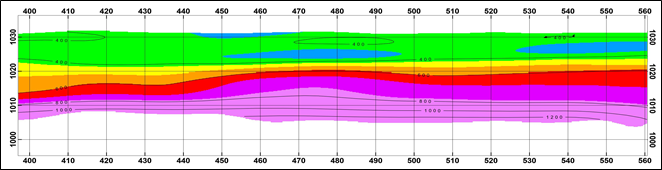
  • MASW (Multi-channel Analysis of Surface Wave), deliver Shear wave (Vs) data
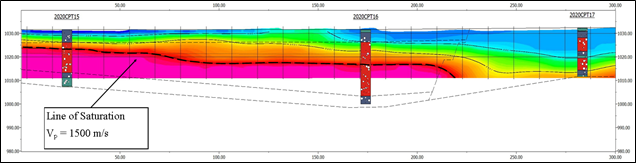
  • SRT (Seismic Refraction Tomography), delivers compressional wave (Vp) data

The deployment of surface seismic methods typically involving a long seismic array of 24 to 48 geophones in a straight line and seismic shots (mostly via a sledge hammer), which propagate along and through the ground generating profiles as shown in this article.

Engineering modulus and Poission’s ratio are a common output from seismic surveys. And ground water levels are also derived, via the compressional wave velocity (Vp). A measure of 1500m/s Vp in soils indicates the soils are >99% saturated – and may be prone to liquefaction.

Seismic Refraction Tomography (SRT) is a good way to define the saturation level of soils, 1500m/s Vp indicated >99% saturation. This provides are very useful “delineation” of where tailings materials may liquefy. This interface between dry and saturated tailings allows determination of groundwater level geometries.

Multi-channel Analysis of Surface Waves (MASW) can provide information on the internal structure of enclosing material, as shown in the equations above. The Vs of soils increases as soil stiffness increases. A high Vs means a higher shear strength. When an earthquake shears the ground, soils with a low Vs are more prone to liquefy if they are silts and sands.

In summary tailings dams are not naturally occurring, consolidated deposits. They are often accumulated in very short time scales and can be prone to failure.

If Tailings dams are engineered, monitored and have robust testing techniques described here, we, as an industry, can lower the risk of catastrophic failures improving the lives of everyone involved working on them and living around them.

​

August 31, 2021

In my previous column, I had mentioned that, in the Stakeholders’ Forum on Recent Policy Issuances Relating to Mining conducted by the Mines and Geosciences Bureau (MGB) last June, hopes were raised that the ban on open pit mining would finally be lifted.  In response to a question in the open forum, MGB Director Wilfredo Moncano stated that the repealing clause of the draft Implementing Rules and Regulations (IRR) of Executive Order No. 130 (EO 130) would refer to Department Administrative Order 2017-10 (DAO 2017-10) on the ban on open pit mining.  Thus, while EO 130 itself does not explicitly refer to the lifting of the ban on open pit mining, the intent was to lift it since, in the proposed IRR, Section 11 referred to the repeal of the said DAO.

Administrative Order No. 2021-25, or the IRR of EO 130, which was published on 08 August 2021, and which will take effect 15 days therefrom and registration with the Office of the National Administrative Register, did not repeal DAO 2017-10 or mention open pit mining at all, dashing any expectation that the ban will be lifted during this administration, notwithstanding the professed objectives of, among others: promoting direct investment for significant economic benefits of the country; ensuring adequate raw materials to support the various government projects, such as the Build, Build, Build Program and the mineral and allied industries; and promoting the development and increasing of employment opportunities in remote rural areas where there are mining activities in support to the Balik Probinsya, Bagong Pag-asa Program the government.  All of these laudable objectives would be met if only the long-stalled priority open pit mining projects were allowed to proceed to operate.

On the positive side, with respect to the grant of new mineral agreements, upon effectivity of the IRR, all qualified applicants for a Mineral Agreement may now file their applications pursuant to Department Administrative Order No. 2010-21 and Republic Act No. 11032 (the Anti-Red Tape Act).

Further, the permittee of an existing Exploration Permit with an approved Declaration of Mining Project Feasibility (DMPF) may apply for a Mineral Agreement and submit to the MGB Regional Office concerned within 90 days the mandatory requirements outlined in the IRR.  If complete, the MGB Central Office, 15 days from receipt of the Mineral Agreement application, shall review and shall endorse the same, to the DENR Secretary, for approval and issuance of the Mineral Agreement.

It must be noted that new Mineral Agreements shall include a stipulation that they shall adhere to the existing revenue sharing scheme and to any future legislation pertaining to revenue sharing, taxes, fees, royalties, and charges.

Previously, I also touched on how artifical intelligence (AI), which is defined as the ability of a digital computer or computer-controlled robot to perform tasks commonly associated with intelligent beings, such as learning from past experience, is creeping into many aspects of how we do our work.  Repetitive tasks, or those which may be done more efficiently are seen as better done by AI.  The mining industry,  where efficiency and productivity are paramount, has made profitable use of AI throughout the world.

In Bagdad, Arizona, for example, data scientists, metallurgists, and engineers from Freeport-McMoRan created a custom AI model at a copper-ore concentrating mill in 2018 which was loaded with three years’ worth of operating data. It was programmed to look for operational tweaks to boost output. Thirteen monitors were placed in the control room to show readings from hundreds of performance sensors located around the mill.  Over time, the collected data were used to maximize copper production at a reasonable cost, with little new capital investment.  The team created, tested, and refined algorithms that would look into the data and recommend settings to maximize the copper output.  Their prediction model, called “TROI”, became so agile, that it was capable of issuing recommendations every 12 hours.

Though not initially reliable, “TROI” was continuously improved by the team such that its recommendations became more plausible, to the point that 80% of its recommendations were accepted by the company’s metallurgists. The mill’s production substantially increased in just four quarters with its throughput exceeding 85,000 tons of ore per day, while its copper-recovery rate rose by 10% and its operations became more stable.

In Canada, the government utilizes AI to promote clean, sustainable growth of its mining sector competitiveness by reducing costs and increasing productivity through automation. It recognizes that innovation may lead to increased efficiency and productivity, reduced costs, and improved environmental performance.  The Canadian government is now using machine learning to develop better models for the prediction of rock type and economical mineral deposit locations for extraction purposes without engaging in time and resource-intensive approaches.  It also uses AI to map Canada’s water and infrastructure, and to improve its ability to create geospatial data layers which can be used for emergency management, flood mapping, and change detection.

In the Philippines, despite rapid technological developments, there are currently no government issuances governing the use of AI-related technologies in the mining industry.  Nevertheless, the DENR appears to recognize the impact that AI can make in preserving and protecting natural resources as it recently partnered with SMART and PLDT to protect peatlands in the Philippines using AI solutions.

Outside the mining industry, other government agencies, notably the Department of Trade and Industry considers AI as a “nation defining capability” as it created an AI Roadmap to provide an actionable guide on how to “harness AI’s potential to uplift Filipinos, our local industries, and our economy.” It is geared towards preparing the nation to maximize the benefits of employing AI technologies.   The Philippines is supposedly among the first 50 countries in the world to have a national strategy and policy on AI. Such a policy is touted to increase the Philippines’ gross domestic product by 12% by 2030 as the roadmap can establish the Philippines as an “AI Center for Excellence in the region” and be a “hub for data processing” which can provide high-value data analytics and AI services to the world.

The trouble with such projections and roadmaps is that, unless they are acted upon, and until we stop shooting ourselves in the foot, they remain aspirational.  We have roadmaps for practically every industry, yet we have spent decades going around in circles instead.  Back in 2004, a Mineral Action Plan for the revitalization of the mining industry had already been put in place to implement Executive Order 270 (The National Policy Agenda on Revitalizing Mining in the Philippines). The DENR was to be the lead agency in crafting and implementing a strategic plan, in consultation with the other concerned agencies, such as, but not limited to, the Department of Trade and Industry, the Department of the Interior and Local Government, the Department of Finance, the National Economic Development Authority, the National Anti-Poverty Commission, the National Commission on Indigenous Peoples, the mining industry and civil society.

Despite the fantastic roadmap laid out, and three administrations later, we all sadly know what followed next: the saga of Executive Order 49 and all the other monkey wrenches thrown in, which prevented the approval of new mining agreements and projects from proceeding for many years.  While this may be oversimplifying all the myriad challenges the mining industry has faced, instead of trying to find new solutions to age-old problems, it may be worth taking a second look at prescriptions that may have been there all along.  Unfortunately, rare is the administration that considers and implements the plans and strategies of the previous ones, no matter how well thought out, for the simple reason that it is ‘contra-partido’ or someone else’s idea, which is why our country has not fared as well as others in the execution of long-term strategic plans. 

The issuance of Administrative Order No. 2021-25 is undoubtedly a welcome development, but the road (though paved with good intentions) is still littered with obstacles, many of our own making.  As we soldier on, I cannot help but wonder whether it is AI that can help humans truly learn from past experiences by warning us against committing the same mistakes and allowing us to make better decisions, or humans should finally just face up to the consequences of our folly.  

August 31, 2021

During the early stages of the pandemic, the performance of the mineral industry was seriously dictated by the slowdown of economic activities, lethargic world metal prices, and limited and hampered mining operations. The mining index however, made a turnaround by the end of 2020 and has recovered by an astonishing US$636 billion thanks to a boom in spending brought about by the current green energy and digital transition, and unprecedented infrastructure-focused stimulus packages initiated by many governments to lift their economies.

As the global economy slowly recovers, prices for energy and metals are helping big commodity producers and exporters. Big miners, awash with cash from record-high metals prices and forced to adapt operational efficiencies during the pandemic, are returning billions of dollars to shareholders through dividends and buybacks. Bullish investor sentiment has been a critical driver of surging metal prices as the rollout of Covid-19 vaccines sees major economies emerge from lockdown restrictions. Mining financing hit an eight-year high in 2020.

Dawn of a Super-cycle?

The rapid expansion of a global middle class continue to fuel the demand for coal, copper and iron ore. While the mining and refining sectors for ‘traditional’ base metals are well established, lithium and cobalt mining will develop quickly in the coming years. Copper, nickel, tin, aluminium and rare earths which, together with lithium and cobalt, are expected to see a demand boom amidst the battery revolution.

In the case of copper, some major banks are already predicting a super-cycle, i.e., a sustained spell of abnormally strong demand growth that producers struggle to match, sparking a rally in prices that can last decades. Previous copper rallies reveal a pattern of broad-based growth, industrialization, and new technologies that can help drive demand and prices. As copper is set to play a key role in electricity infrastructure, electric vehicles (EV) including hybrids and renewables fuel additional demand. The copper price hit a record high in May 2021 ($10,476 a tonne) and trading house Trafigura Group, Goldman Sachs, and Bank of America expect the metal to extend its recent gains. Market watchers and analysts, however, have debated how long the boom will last.

On the other hand, the EV Metal Index, which tracks the value of battery metals in newly registered passenger EVs around the world, came in at $477 million in April, an increase of 326% over the same month last year and bringing the year-to-date total to $2.03 billion. Lithium prices are averaging $10,800 so far in 2021 versus over $17,000 in 2018. Fitch Solutions Country Risk & Industry Research expects lithium consumption growth to outpace current supply developments. Demand is to be boosted by strong government support to promote EVs and large-scale energy storage systems. Low supply means that prices will remain high in the short term.

Mining as a Contributor to a Battered Economy

The Philippines is one of the countries that has a high vulnerability to Covid-19 as it continues to struggle to contain the Covid-19 pandemic and normalize economic activity. The economy contracted last year by 9.6% while GDP shrank by 3.9% in the first quarter this year. While the economy registered 11.8% growth in the second quarter, the country is currently battling the latest surge of Covid-19 cases under the more infectious Delta variant. With the reimposition of the enhanced community quarantine in the national capital region, renewed mobility restrictions, and higher petroleum prices, full economic recovery is expected to be delayed further. According to a report from the Asian Development Bank, public spending on infrastructure and social assistance, better progress in the country’s vaccination drive, and a steady recovery in the global economy will underpin the growth of the Philippine economy this year and the next.

Despite the pandemic, the Mines and Geosciences Bureau (MGB) reported that the metallic mineral production value ended 2020 on a positive note with a 1.13% gain from ₱130.74 billion in 2019 to ₱132.21 billion, a ₱1.47 billion increase. The gains were driven mainly by nickel demand from China and high gold prices. The MGB further reported that:

  • Mining industry contributed ₱102.3 billion to the GDP in 2020 comprising 0.76% and ₱25.52 billion from national and local taxes, fees and royalties;
  • Mining and quarrying activities generated 184,000 jobs and around ₱25.71 billion was committed for Social Development and Management Program to host communities;
  • Metallic mineral production was at ₱132.69 billion; and
  • Total value of minerals, mineral products, and non-metallic mineral manufacture exported was at US$5.2 billion.

The domestic nickel industry also benefitted as Indonesia, the world’s biggest nickel producer, continues to impose an export ban on the metal. The Philippines, the world’s number two producer, stepped in to fill the demand from China, exporting 333,962 tonnes in 2020. Government policy changes and upbeat commodity prices boosted mining and oil stocks in the Philippine Stock Exchange (PSE). The sector closed 17.5% higher by the end of 2020, making it one of the biggest gainers for the year.

According to the Philippine Statistics Office (PSO), the government expects an increase in earnings from excise tax collections. The PSO attributes this to the Tax Reform for Acceleration of Inclusion (TRAIN) Act passed in 2017, which doubled excise taxes on minerals, mineral products and quarry resources from 2% to 4%. Meanwhile, the Department of Finance (DOF) is proposing further amendments to fiscal provisions in mining laws that will allow for the rationalization of existing revenue-and benefit-sharing schemes and incentives given to companies to ensure that the country benefits from mineral resources.

Government’s New Policies Expected to Give Mining a Boost

President Rodrigo Duterte’s earlier policies on mining have caused anxiety in the industry. At the start of his administration, the Department of Environment and Natural Resources (DENR) issued  MO 2016-01 on 08 July 2016, mandating the audit of all operating mines and declaring a moratorium on new mining projects, covering the environmental, economic, social, legal, and technical aspects of the mining operations. In addition, DAO 2017-10, issued on 27 April 2017, banned the open pit mining method for gold, silver, copper, and complex ores describing open-pit mines as “perpetual liabilities, causing adverse impacts to the environment, particularly due to the generation of acidic and/or heavy metal-laden water, erosion of mine waste dumps and/or vulnerability of tailings dams to geological hazards.” What hit the industry real hard was when former DENR Secretary Regina Paz Lopez ordered the closure of twenty-eight (28) operating mines and the cancellation of seventy-five (75) Mineral Production Sharing Agreements (MPSA) as they allegedly encroached on watersheds and destroyed marine ecosystems. These development dampened investor interests in the local industry.

Lately however, the Philippine government seemed to be considering the mining industry as part of its economic recovery plans in light of the havoc created by the pandemic. Various policies and administrative actions, notably the lifting of the moratorium on new mining agreements and the favorable resolution of an FTAA renewal, were implemented with the view of attracting more mining investments.

Lifting the moratorium on new mining agreements

The industry was given a boost when President Duterte issued Executive Order (EO) No. 130 on 14 April 2021, which lifted the nine-year moratorium on mineral agreements. EO 130 amended Section 4 of EO No. 79, series of 2012 that prohibits the grant of mineral agreements “until a new legislation rationalizing existing revenue sharing schemes and mechanisms shall have taken effect”.

The MGB has noted an increase in mining applications, especially coming from inactive mining companies and exploration permittees that have scaled down their operations in the last few years. Three months after the issuance of EO 130, the MGB approved 26 out of 36 applications for new non-metallic mining operations. In April this year, 36 new metallic and non-metallic mines have been identified as priority in terms of the processing of applications. The MGB will also be prioritizing 65 applications that are likely to be granted with MPSAs. These mining applications were accepted and processed and the MPSAs will be issued once EO 130’s implementing rules and regulations (IRR) take effect.

According to the DOF during the Philippine-Extractive Industries Transparency Initiative National Conference 2021, the lifting of the moratorium on new mining projects is expected to boost mineral production by around ₱15 billion every year until 2023, and an additional ₱43 billion annually until 2027. Potential new entrants will increase exports by $1 billion to $2 billion every year, as well as employ as many as 1.3 times more workers. The DOF is expected to collect an additional ₱34 billion in taxes and fees.

In the same conference, Rep. Joey Salceda, Chair of the House Committee on Ways and Means, however, identified key deficiencies in the country’s extractive industry governance framework which could be resolved by a “coherent tax regime.” He noted that in EO 130, neither Congress nor the DOF is given a specific role in the taxation process. Salceda also observed that EO 130 delegated some powers that were not supported by law, including the power of the DENR to negotiate tax agreements with mining applicants. He recommended that the DOF, which has the experience in financial management, negotiate revenue sharing agreements on the government’s behalf. 

Resolution of OceanaGold FTAA Renewal

Another recent bright spot for the industry was the much-awaited government’s renewal of the Financial or Technical Assistance Agreement ("FTAA") of OceanaGold Corporation’s Didipio operations. The FTAA was renewed for an additional 25-year period on substantially the same terms and conditions but included certain modifications:

  • The equivalent of an additional 1.5% of gross revenue shall be allocated to community development in the form of increased contributions to communities in the region and provincial development projects in addition to the existing fund for Social Development and Management Program provided to the host and neighboring communities. One percent (1.0% ) will be allocated to community development for additional communities and half-percent (0.5%) to the host provinces of Nueva Vizcaya and Quirino;
  • Net Smelter Return will be reclassified as an allowable deduction and shared 60%/40% rather than wholly included in government share;
  • At least 10% of the common shares in OceanaGold Philippines Inc. ("OGPI"), the Company's Philippine operating subsidiary and holder of the FTAA, shall be listed at the Philippine Stock Exchange within the next three years;
  • OGPI shall offer to the Banko Sentral ng Pilipinas  for the latter to buy not less than 25% of OGPI’s annual gold doré production at fair market price and mutually agreed upon terms; and
  • OGPI's principal office shall be transferred to the host province within the next two years from execution of the renewal agreement on 19 June 2019.

OGPI plans a staged restart of operations with milling to recommence utilizing stockpiled ore approximately 19 million tonnes. It also aims to achieve full underground production capacity within twelve months. Once fully ramped-up, OGPI expects Didipio to produce approximately 10,000 gold ounces and 1,000 tonnes of copper per month. The resumption of Didipio’s mine operations will give direct employment to about 1,800 people and indirect employment for another 2,000 to 3,000 employees.

Addressing the open pit mining ban

The issuance of EO 130 sparked some hope in the industry that President Duterte will give the go-signal to the DENR to lift the ban on open-pit mining, which has been a contentious issue among miners, host communities, local government units, and environmental advocates. Among the salient features of the DENR-drafted EO 130 IRR was the provision lifting the ban on the open-pit mining method.

Open pit mines are often used in mining near-surface metallic or non-metallic deposits and more sparingly in coal and other bedded deposits. Open pit mining is an internationally accepted method done in many countries and repeatedly proven to be safe for miners, the community and the environment.  While the environmental footprint may be visibly large, open pit mines can be successfully rehabilitated and converted into other land uses like agriculture, forestry, tourism, and recently as sites for renewables. For shallow ore deposits, such as nickel, iron, coal, and copper, open pit mining is the only economically viable method extraction. An open pit mining ban will also have adverse impacts on our energy security, as coal mining is presently done in the country only through open pit mines.

In the meantime, the definition of open pit mining method as per DAO No. 2017-10 vis a vis other surface mining methods was clarified  by the MGB through the issuance of MC 2019-08 on 10 December 2019. Open pit mining method is the process of mining by means of a surface pit excavated using one or more horizontal benches. The MC defined and clarified that open cast mining, strip mining, and quarrying are not considered as open pit mining methods.

PMRC 2020 Approval and CRIRSCO Membership to Boost Investor Confidence

The ongoing revisions to the Philippine Mineral Reporting Code for Reporting of Exploration Results, Mineral Resources and Ore Reserves (“PMRC”) is considered auspicious by the industry as investors are expected to take a look at the Philippines following the lifting of the nine-year moratorium on new mining projects.

The PMRC was created on 08 August 2007 to set out the standards, recommendations and guidelines for public reporting of exploration results, mineral resources and ore reserves, as may be required as a listed company or when applying for listing with the PSE. The PMRC is also currently used as a reporting standard by the DENR/MGB in technical submissions by mining companies under DAO 2010-09, “Providing for the Classification and Reporting Standards of Explorations Results, Mineral Resources and Ore Reserves.”

Last 26 February 2019, the PMRC Committee (PMRCC) applied for membership in the Committee for Mineral Reserves International Reporting Standards (CRIRSCO), the committee of all internationally recognized national reporting organizations. When implemented in 2008, PMRC was compatible with the Australian Joint Ore Reserve Code of 2004 and CRIRSCO Template 2006. 

As a condition for PMRCC’s acceptance under the Memorandum of Understanding dated 27 February 2019, there is a need to revise the 2007 PMRC to make it compatible with the current 2019 CRIRSCO template. The PMRCC Standards Sub-Committee (StandCom) completed the current draft of PMRC Edition 2020 after CRIRSCO finished its detailed review on 10 October 2020.

The PMRCC submitted the draft to the PSE on 30 October 2020 that was followed by a public comment period from 04 to 16 March 2021. The PMRCC conducted virtual public consultations on the drafts on 11 June and 18 November 2020. The PSE Board approved the draft on 25 March 2021 with additional revisions on sustainability: such as mitigation and remediation plans to solve environmental, social, and health and safety impacts; and the inclusion of a consent form to indicate the accredited competent person agrees to the public disclosure of the report.

The PSE endorsed the revised draft to the Securities and Exchange Commission (SEC) which is currently under deliberation. Once the PMRC has been upgraded to the 2019 CRIRSCO Template and approved by the PSE and SEC, the PMRCC is expected to be accepted as a CRIRSCO member. The sooner the PSE and SEC approve the submitted draft, the better for the mining industry so that it will be at par with global reporting standards to professionalize the industry and attract investors. Meanwhile, the PMRC StandCom is currently reviewing the draft IRR of PMRC 2020, which is targeted for completion in 2021 and will be subsequently submitted to the PSE anew for endorsement and approval.

Offshore Mining Permits

Another area of interest for possible investments is offshore mining. MGB MC 2016-05 covers the conduct of offshore mining within the country’s territorial sea and exclusive economic zone and extended continental shelf, as established under Parts V and VI, respectively, of the United Nations Convention on the Law of the Sea. Under MGB MC 2016-05, offshore mining operations shall be conducted in a manner that will not adversely affect biodiversity, safety of sea navigation, and other marine activities.

The Offshore Mining Chamber of the Philippines (OMCP) announced that it received numerous expressions of interest in offshore mining following the issuance of EO 130. The OMCP urged the MGB to approve offshore mining tenement applications only from qualified offshore mining companies with adequate capital, proven technical expertise and demonstrated capability to engage and deploy offshore equipment for exploration, seabed scientific research, and sea bottom profiling. OMCP further recommended that the MGB should start a review of mine tenement systems and processes, with a view towards terminating inactive claims for offshore mining.

Dealing with Mining Industry Risks

Uncertainty concerning the administration, interpretation, or enforcement of existing laws and regulations on environment, taxes, land use, infrastructure, socio-economic agreements, and labor remain to be the biggest investment barriers to mining investments according to the Fraser Institute Annual Survey of Mining Companies 2020. Companies are also more exposed now to political risks and security issues. In addition to the traditional risk factors, the mining industry faces a wider range of challenges such as climate change, new technologies, and economic uncertainties.

The economic crisis caused by the pandemic that heightened fiscal and external imbalances in many emerging markets has led host governments to review existing mining contracts and legislations, and introduce new taxes and royalties to replace lost revenues. Resource nationalism has become much more sophisticated and complex in the forms it takes, not purely driven by nationalistic policies but by wider political, economic, social and environmental drivers.

The Philippine government is fully aware that existing mineral agreements entail that some deposits can only be extracted through open pit mining given the available data already known to both regulators and developers. An open pit mining ban would in effect cause these resources to be stranded and mineral agreements impaired if the ban is continuously imposed. The government must put in place stable policies if it wants the industry to move forward by expeditiously lifting the open-pit mining ban and existing suspension orders. The industry is keenly awaiting for a favorable outcome on these issues.

Conclusion

Recent policy initiatives by the government are laudable to erase policy uncertainties that can be extremely damaging to both investors and the host country, and hamper the successful development of mineral endowments.  The key challenge is to bring back investors’ confidence to the mining industry that will assure appropriate profit to investors, protect our natural resources, and provide other long-term benefits to the Filipinos.

Fernando “Ronnie” S. Penarroyo specializes in Energy and Resources Law, Project Finance and Business Development. He may be contacted at fspenarroyo@penpalaw.com for any matters or inquiries in relation to the Philippine resources industry and suggested topics for commentaries. Atty. Penarroyo’s commentaries are also archived at his professional blogsite at www.penarroyo.com


References

Annual Survey of Mining Companies, 2020, Fraser Institute, 23 February 2021, https://www.fraserinstitute.org/studies/annual-survey-of-mining-companies-2020

Are Copper Prices in a Supercycle? A 120-Year Perspective, MINING.com, 19 July 2021, https://www.mining.com/web/are-copper-prices-in-a-supercycle-a-120-year-perspective/

COVID-19 Impact & Recovery: Metals & Mining, S&P Global Market Intelligence, https://www.spglobal.com/marketintelligence/en/news-insights/blog/covid-19-impact-recovery-metals-mining

EO 130 Spurs Growth of Offshore Mining, Manila Standard, June 13, 2021, https://manilastandard.net/mobile/article/356999

EV Metal Index Quadruples Year-on-year as Lithium, Nickel Prices Rally, MINING.com, 19 July 2021, https://www.mining.com/ev-metal-index-quadruples-year-on-year-as-lithium-nickel-prices-rally/

Miraflor, Madelaine B., 26 New Non-metallic Mines Cleared to Operate, Manila Bulletin 19 July 2021, https://mb.com.ph/2021/07/19/26-new-non-metallic-mines-cleared-to-operate/?fbclid=IwAR3UL8vfSYuCqu_zMLzt3LRp6th9_xOa99V5afeF4xXZQHQhXodpkHp7CfQ

Oceanagold Advises Didipio FTAA Renewal and Provides Operations Update, 14 July 2021, https://www.newswire.ca/news-releases/oceanagold-advises-didipio-ftaa-renewal-and-provides-operations-update-844978564.html

Philippine Economy Seen Recovering in 2021, with Stronger Growth in 2022 - ADB, 28 April 2021, https://www.adb.org/news/philippine-economy-seen-recovering-2021-stronger-growth-2022-adb

Solutions to Mining Industry Risk Challenges, Marsh, https://www.marsh.com/us/industries/mining-metals-minerals-insurance/solutions-to-mining-risk-challenges.html
August 26, 2021

​

By: Engr. Jeffrey Geronimo

Data remains one of the most important assets of any mining company – and for these to become assets, these must be accurate and reliable. Data drives mineral exploration and mining operations. However, with the sheer volume of data we obtain, no one would object that these are usually overwhelming to manage; from the location and geochemistry of every hand sample; to the structural-geochemical-geophysical information collected from the nth drill hole just to define the resource; and even up to the 4D mine model showing the depth, thickness, grade.

Gathering geoscience data is crucial for a mining project. Millions of pesos are invested in the process of obtaining new and managing old data. New data brings fresh interpretations to keep mine models updated. Older data may increase in value as the degree of confidence becomes higher proven by the new data obtained.  In addition, discoveries and deeper understanding of the project are often attained by continuously reinterpreting data from the past.

When effectively managed, geoscience datasets can be aggregated to generate subsurface and resource models that underpin critical financial and engineering decisions.

THE BIGGEST CHALLENGES: DISCOVERY, ACCESSIBILITY, AND SHARING

What data do we have? Where are these?  How do we access these? These are three of the biggest data management challenges faced by mining companies. In most instances, files are just locally stored on each of the user’s laptops or desktops with the occasional habit of backing it up via the company’s file server. Moreover, sharing of valuable company data is done by just using e-mails, flash drives, FTP servers or even just through social media platforms. All these methods provide limited traceability and will compromise data security.

While the abovementioned file management styles can get the job done, these could eventually reduce business efficiency and lead to reduced productivity. Do we have the latest version of the drillhole data? What if I was basing my work on outdated data the whole time? Where was the document saved by my colleague prior to his leave of absence? It is a formula for disaster! Therefore, having a transparent process workflow can ensure geoscience data management be aligned and supported in mining projects.

THE SOLUTION: STRATEGIC GEOLOGY MODELING

Paramina Earth Technologies, Inc. is proud to bring the golden standard for geoscience data management. Through our “Strategic Geology Modeling” solution developed by Dassault Systèmes, it blends the power of the industry-leading 3DEXPERIENCE platform to ensure customers unlock and harness the value held within their geoscience data. It seamlessly integrates GEOVIA Surpac, the world’s most popular geology and mine planning software, and ENOVIA Project & Document Management applications.

Strategic Geology Modeling enables multiple users to work safely and securely on the same data and also at the same time. It enables tracking and managing user access and file permissions on top of retaining and tracing all changes to the data via document versioning. This gives the manager confidence that the latest interpretation, model, or plan uses the most up-to-date information - allowing real-time decisions and improved business agility.

With Strategic Geology Modeling, your geoscience datasets are safe as these are securely stored in the 3DEXPERIENCE platform - whether on a public or private cloud, or on-premise.  With an intuitive and user-friendly interface, users can simply drag-and-drop data on the platform into the GEOVIA Surpac      graphics window to begin work - no need to undergo tedious conversions! It also enables:

  • Document versioning for traceability and accountability
  • Check-in/out of data
  • The ability to ‘sync’ data for fast visualization
  • User file and folder permissions
  • Bookmark workspaces and folders to create personalized views

The synced geoscience data on the platform is accessible anywhere and from any device. Users can build customized dashboards containing the applications and data of their choice, providing a dynamic real- time view of operational information and KPI’s - accessible via web browser.

Strategic Geology Modeling combines these benefits with GEOVIA Surpac’s out-of-the-box functionality such as drillhole database, surfaces, and solids modeling tools. This allows geologists to truly represent the real world with a digital twin of the subsurface environment.

The evolution of the geology model from interpretation, model generation to validation, can be tracked using ENOVIA’s Project Management applications. Managers can assign tasks, create a project plan, and monitor the progress against the plan using various charts. This complete project visibility in real-time means issues or delays are addressed as soon as they occur, reducing the impact on the business and allowing decision-makers to make critical business decisions faster. This undeniably improves business performance and operational agility.
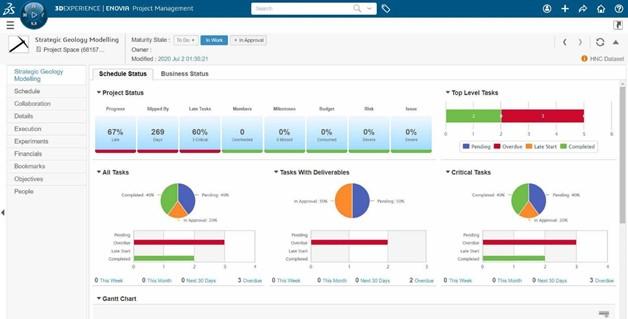
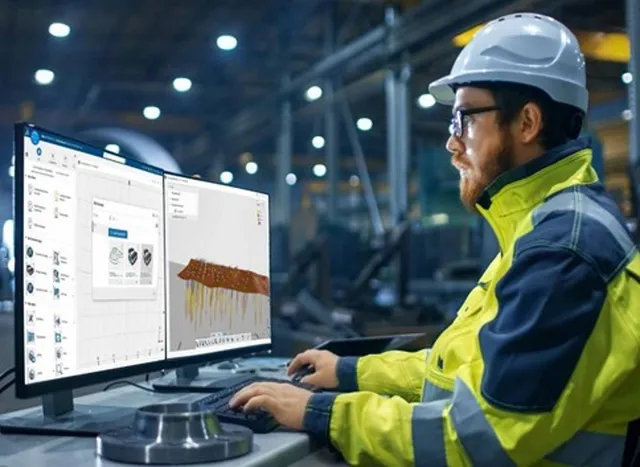
Figure 1: Geoscience Data Management utilizing the 3DEXPERIENCE ENOVIA application

Once the model is uploaded to the 3DEXPERIENCE platform, content can be shared with all stakeholders via collaboration tools such as Communities & Conversations, Dashboards and Collaborative Tasks. Users can dynamically visualize GEOVIA Surpac content in 3D within the platform. They can also engage with colleagues or contractors at the same time through 3DSwym communities and conversations, or comment on the data itself.

The connection enabled by our Strategic Geology Modeling solution saves time and helps the user identify issues and bottlenecks earlier in the modeling process. These dynamic datasets and user-centric collaboration help staff understand the real-world problems that impact business performance and agility, ensuring operational excellence in the age of mine digitalization. Let Paramina Earth Technologies, Inc. be your partner towards your mining journey! Contact paramina_solutions@paramina.com or www.paramina.com for more  information.

REFERENCE: Dassault Systèmes. (2021). Geoscience Data Management: Challenges and a Solution.
​

August 26, 2021

By Dr Olivier Lo, Medical Director, International SOS & Rita Dayoub, Health Consultant, International SOS

While most of the patients suffering from “acute” COVID-19 would recover fully in a maximum period a four weeks’ time, others will experience long-term after-effects. When existing symptoms may last longer than expected or new ones develop following the “acute” COVID-19 infection, we refer to “ongoing” symptomatic COVID-19 (from four to twelve weeks). In certain cases, this could also lead to more chronic conditions, usually identified as “Post COVID-19” syndrome (when signs and symptoms continue for more than twelve weeks). For simplicity, we will use “long-COVID” definition to describe signs and symptoms that continue to develop after “acute” COVID-19. It includes both “ongoing symptomatic” and “post-COVID-19” syndrome. 

Even people who did not have symptoms when they were infected can have long-COVID. These conditions can have different types and combinations of health problems for different lengths of time. They can last for months and impact significantly both the physical and mental health of the patient as well as their ability to cope. 

What should organisations consider managing return-to-work for long-COVID employees? How can employers ensure a safe work environment despite long-COVID risks? How can long-COVID impact employees’ productivity and business continuity? A variety of questions and doubts subsist for organisations on how to approach and manage effectively this emerging and concerning phenomenon.


HR preparedness & long absenteeism

With this emerging concern around long-COVID, Human Resources professionals must be prepared to respond efficiently, both addressing long-COVID employee concerns and needs and ensuring a safe work environment for their overall workforce. Some preventive measures can be considered to help ensure a smooth return to work despite the long-COVID threat:

Support your long-COVID employees

Providing easy access to quality care and treatment for your long-COVID employees is crucial and a key part of your Duty of Care as an employer. Should there be a simple question on their condition or a need for medical assistance, ensure your employees can have access to qualified medical professionals at any time.

Reinforce your mental health & wellbeing agenda

Mental health and emotional struggles are the most important stigma of the COVID-19 pandemic. If individuals who suffered from COVID-19 are recovered, they still have higher probabilities to experience emotional health issues. There is even a higher risk of this for people with long-COVID. Make sure your people’s emotional needs are addressed by dedicated experts through an appropriate Employee Assistance Programme. Employees should be provided with a route to confidentially discuss their emotional health issues away from their direct managers and team members. This could be with HR or through independent expert support activated by the company and should be communicated widely and consistently. Counselling support services will help you assist your workforce encountering psychological issues. 

For further information contact: Gmenier Mendoza, Marketing Communications Manager, International SOS Philippines

M: +63 998 963 3802 E: gmenier.mendoza@internationalsos.com
August 26, 2021

​

 Considered a mix of science and art, flotation is the most widely used process for extracting vital minerals in the modern mining operation. As the amount and type of froth changes from cell to cell, the best recovery systems must be able to accommodate variable froth conditions, otherwise valuable materials end up being lost to tailings.

Newer technologies eliminate the guesswork previously associated with flotation, and the latest advancements allow for adapting to the unique conditions within each cell. This improves control of the froth phase and directly affects the mine’s ability to recover either higher volumes or higher grades.

As a leading innovator in froth recovery, FLSmidth has created a Froth Recovery Upgrade package that provides customers with more control, resulting in better overall metallurgical performance. The package includes four critical technologies:

  1. A level sensor with a robust design and no moving parts, which accurately senses the depth and level of slurry within the cell.
  2. Actuators that receive data from the level sensor and adjust the dart valve position to maintain slurry levels.
  3. Radial froth crowders to reduce top-of-froth surface area and facilitate movement to the nearest radial launder.
  4. Froth cameras, which measure the froth’s velocity and stability and can also infer the froth grade.

Ideally, a flotation operation would utilise all four technologies to achieve optimal recovery; however, the full package can be segmented and installed as individual components, based on customers’ needs. This flexibility, and the real-world customer results, are illustrated by the examples below.

Customer 1 – Level Sensor and Actuator

A large copper mine in Peru approached FLSmidth to increase recovery in an 8-cell flotation bank. The mine’s existing equipment for monitoring slurry levels and controlling dart valves lacked consistency, which caused large deviations in level control. The lack of control and stability reduced overall copper recovery and had a significant impact to the bottom line.

Left: Multisense Level Sesnor. Right: Festo Actuator160

Every large fluctuation in level control resulted in two scenarios: First, the cell level would become too high, and pulp would overflow into the launders, resulting in unacceptable grade. Then the level would drop too low and result in little to no recovery of the froth phase, impacting overall recovery.

Data from the condition monitoring system revealed an opportunity for improvement, as shown in Figure 1. Sporadic movement of the actuator (blue) caused unstable deviations to the slurry level (green), causing it to fall short of the target level (yellow) needed for optimal performance.

Actuator Figure 1

FLSmidth engineers recommended installation of new level sensors and FESTO actuators. The customer agreed to replace its current equipment, and the upgrade yielded immediate improvements. Following the retrofit, slurry levels showed significantly higher stability and remained consistent within the target level, shown in Figure 2.

Actuator Figure 2

After a month with the new equipment, slurry levels consistently remained on target. As a result, the customer recovered 0.5% to 0.8% more copper than previously possible with the older equipment. Based on the short-term results, the customer anticipated replacing the remaining flotation cells in the entire plant with new level control. The mine’s return on investment was less than three months.

Customer 2 – Adjustable Radial Froth Crowders

Another copper mine in Peru consulted with the FLSmidth Flotation team to improve its froth phase control and improve performance of its rougher flotation circuit. The customer was seeking a low-capital solution using its existing equipment and opted to install FLSmidth’s Adjustable Radial Froth Crowders.

Radial Froth Crowders

Installation of the crowders required no cutting or welding and was completed during a scheduled downtime. With no required permanent structural changes to the cell, modifications could easily be reversed if the customer chose.

After installation of the package on just one row of its rougher flotation cells, the customer noticed significant improvements to its operation. Operators were able to decrease reagent consumption, increase the froth phase depth by 3 to 10 cm, and ultimately improve the downstream operations by stabilising concentrate mass flows. With the economic gains seen from the retrofit’s improved performance, the mine retrofitted the remaining two concentrator plants with the same type of adjustable radial froth crowders.

Customer 3 – Froth Camera

A mine in western Canada contacted FLSmidth with concerns about frequent variations in its copper grade, along with low recovery numbers in its flotation circuit. FLSmidth determined that the frequent variations were caused by poor setpoint control and selection, and that a software solution would provide immediate benefits without a large capital investment.  The three-part solution utilised a combination of Model Predictive Control (MPC), fuzzy logic and FLSmidth’s newest technology in froth vision systems, to improve recovery by 4% at the desired grade with less variation.

The first step was to ensure stabile level control throughout the flotation circuit. This was accomplished by controlling the dart valve positions directly using an MPC controller which greatly reduces setpoint error and variation. This process ensures that when a level setpoint is sent to a cell, that the dart valve position will be adjusted to reach the desired level set point in a quick and efficient manner.

Summary

With these advanced level sensors, actuators, radial froth crowders and froth cameras – installed individually or combined as a package – FLSmidth has proven its technology will allow for quicker reactions to flow and slurry density changes, greatly improving the performance of flotation machines. Better froth phase control methods can not only improve metallurgical performance in existing operations, but also allow performance prediction in greenfield operations.

​

August 26, 2021

Mining and Exploration

Today, it is crucial to have an in-depth and well-defined understanding of the geological region when targeting and developing prospective sites. Extensive field work is essential to identify economically significant deposits prior to any extraction operation. This includes comprehensive geologic sampling and analysis, which is costly and time consuming when performed with traditional laboratory-based methods.

The Terraspec Halo portable mineral analyzer has made a major impact on mining exploration by providing real time mineralogical information allowing geologists to make more informed decisions; lowering field and drilling costs. When used at an outcrop, at the drilling site, in the core shack, or in the open pit, the TerraSpec Halo mineral analyzer provides the mineralogical information needed to understand the relationship between the potential economic deposit and the local geology and provides the means to use that relationship to better target exploration efforts. As a rapid and reliable analytical technique that requires no sample preparation, it has proven to be an essential tool for field geologists and mine operators.

Advantages:

  • Rapid and Accurate Results. Results are presented within seconds and are available for analysis through a range of spectral analysis software. It has 350-2500 nm range which gives full accurate analysis on minerals.
  • Point and Shoot, Ease of Use. Handy and can easily bring to the field. Non-technical operators can have used the unit.
  • Portable. Both the TerraSpec Halo mineral analyzers are portable devices well-suited for both field, drill site and laboratory analysis.
  • Widely Used. TerraSpec instruments are the most widely used spectrometers for alteration zone and gangue mineralogy mapping, whether it is for early-stage target generation or late-stage geometallurgical studies. In production, the TerraSpec Halo mineral analyzer is optimal for a wide range of operations including ore sorting, blending, feed control and tailing monitoring for both heap leach and mineral processing
  • Sample Flexibility. Working with a full line of accessories, TerraSpec analyzers are suitable for measurement of outcrops, hand samples, tailings, drill cores, cuttings and pulps
  • Non-Destructive Analysis. Materials are analyzed in their original state, intact and unprocessed.

Applications

Exploration

  • Geological/deposit field mapping
  • Indicator mineral identification
  • Mineralogical parameters related to thermal and chemical zonation
  • Drill cuttings analysis
  • Core logging

Laboratory Analysis

  • Acid consumption determination
  • Swelling clay assessment
  • Gangue mineral concentrations
  • Blast chip analysis

Extractive Metallurgy

  • Ore sorting and blending
  • Block model development
  • Improved site mapping
  • Agglomeration optimization
  • Heap leach optimization
  • Flotation feed control

Features

  • Minerals and Scalars which includes mineral library and easy to export to 3rd party software such as Aesiris and TSG
  • Audio Notes which recording of voice notes while in the field
  • Viewing of Spectra which includes viewing of peaks with full range of wavelength numbers to    see the difference of minerals analysis
  • Getting your Data which includes synchronization of collected data from Halo to the computer for post processing of results

In Summary,

The ASD TerraSpec Halo and Terraspec 4 Hi-Res and QS7000 line of mineral analyzers provide portable, rapid and non-destructive analysis of minerals in the lab or the field. Exploration geologists appreciate the ASD TerraSpec mineral analyzer’s portability and ability to rapidly identify key minerals. When used as an ore analyzer, results are presented in seconds to speed ore processing decisions.

TerraSpec 4 Hi-Res for High-tech Mineral Exploration

The TerraSpec 4 Hi-Res spectrometer is a portable, rugged analyzer for field mineral mapping and analysis that represents a new generation of high-speed, high-performance field portable analyzers. It provides mineralogy of altered rocks and hence assists in classifying ore systems, identifying alteration patterns and vectoring to areas of potential interest. The ability to rapidly identify and determine key alteration minerals, and in many cases, the thermal and chemical environs of their formation, makes the TerraSpec an ideal tool for field mapping in mineral exploration.

TerraSpec Halo

Terraspec Halo is portable full-range handheld spectrometer that is fast, accurate, and easy to use for the exploration geology market.

QualitySpec 7000 for Measurement of Material Moving on a Conveyor

The QualitySpec 7000 analyzer embodies state-of-the-art spectroscopic technology capable of accurately measuring material as it is transported on a conveyor belt. This stationary unit is designed to produce real-time, accurate data in a non-contact manner for process control. The QualitySpec 7000 system saves significant cost in material sorting and quantifying gangue mineralogy. In copper production, the system monitors ore entering the agglomerator to predict and potentially reduce acid usage, and measures swelling clay content for proper hydration.

August 26, 2021

Hinatuan Mining Corporation (HMC), a subsidiary of Nickel Asia Corp. (NAC), donates five (5) million pesos for the construction of the first phase of a new Rural Health Unit building in close partnership with Hon. Cesar B. Diaz, Jr., Municipal Mayor of Tagana-an, and Dr. Benjielita P. Notada, Municipal Health Officer (MHO).

“HMC committed a total of 10 million pesos for the realization of the infrastructure. The remaining amount will be released on the first quarter of 2022,” said Dr. Oliver Dennis O. Lao, HMC Admin Manager/Company Physician.

Fund used for the donation is part of the Corporate Social Responsibility (CSR) fund of HMC.

The construction cost of the RHU building is pegged at fifteen (15) million pesos as per individual work plan. The Local Government Unit (LGU) of Tagana-an will finance the remaining five (5) million pesos of the project cost.

Dr. Notada said that the project will bring positive impact to health care workers and Tagana-an residents, “The completion of the new RHU building will greatly improve the provision of health care services to all residents of Tagana-an. It will bring comfort to both medical and health workers, and our patients in terms of facilities.”

“HMC has been our partner in providing medical services to the people of Tagana-an,” said Dr. Notada. “HMC supported us by providing ambulance, medicines, personal protective equipment (PPE) such as face masks and face shields, supplies for this pandemic battle and food supplies at the entry checkpoints in our municipality, air coolers, and almost daily food assistance during our COVID-19 vaccination (Resbakuna) activities”, she added.

Dr. Notada also expresses her gratitude to HMC for the support given to her team and her municipality, “We are very grateful to HMC for the constant support they have provided to our medical team The support allows us to deliver the needed health services of the people of Tagana-an. They had been a constant partner in our commitment to bring quality health services to the community.”

August 26, 2021

The new Atlas Copco’s XAS boX range is the result of 10 years of continuous development and addresses the changing needs of our customers. This range, from 400-850 cfm, combines the rugged durability you need with the performance efficiency you deserve. When we focus on efficiency within this range, it’s all about the strategic triangle of size, flow, and fuel efficiency. Excelling in one of these areas is wasted excellence if you cannot provide the other two. Therefore, our promise to our customers is an industry leading range of optimized size-to-flow compressors, which have unparalleled levels of fuel efficiency and autonomy.

The XAS boX range comes with Pressure Adjusted through Cognitive Electronics (PACE) technology. This electronic pressure regulation system brings a wider pressure range to cover more applications. PACE optimizes your compressor’s efficiency, especially at partial load or idle status and is the smart technology that increases your utilization and improves your compressor’s fuel economy.

This range is also designed to withstand the toughest working conditions. With a standard operating temperature range of -10°C to +50°C and a strong undercarriage, the range’s robust nature guarantees reliable operation. The design, controller and modularity put you in control. You will see we have also focused heavily on ease of service to ensure uptime and utilization. This range is all about you!
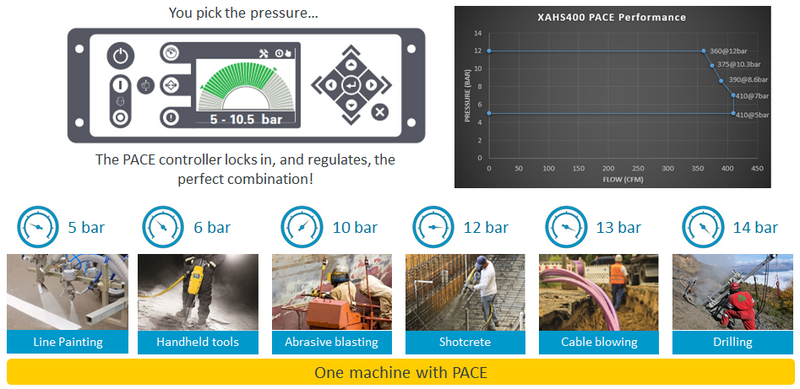
 

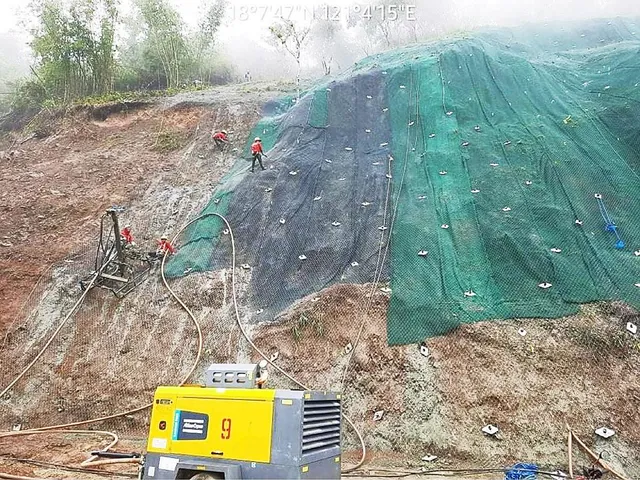
Huge number of Atlas Copco machines used in Slope Protection projects

Rebtrade International Corporation started its formal operations in 1980 as a trading company for specialty construction chemicals, particularly waterproofing and non-shrink grouts. In 1984, Rebtrade entered a manufacturing licensing agreement with an established Swiss manufacturing conglomerate. The thrust is to provide quality products meeting international standards using majority of its components from locally available sources. This created a major advantage for the company in terms of pricing and delivery, as our competitors sold finished products imported from either USA or Europe.

At present, Rebtrade has more than 50 specialty construction products such as Waterproofing, Waterstops, Fireproofing, Flooring Compounds and Treatments, Adhesives, Non-shrink Grouts, Epoxies, Caulks and Sealants, Concrete Admixtures, Firestops, Carbon Fiber, etc. Rebtrade represents various principal companies from Europe and America and have also exported products to different parts of Asia. The company is constantly evolving as more innovative products are being developed and introduced to the market to cater to all clients in the construction industry. It is now one of the leading manufacturing and trading companies in the country to date.
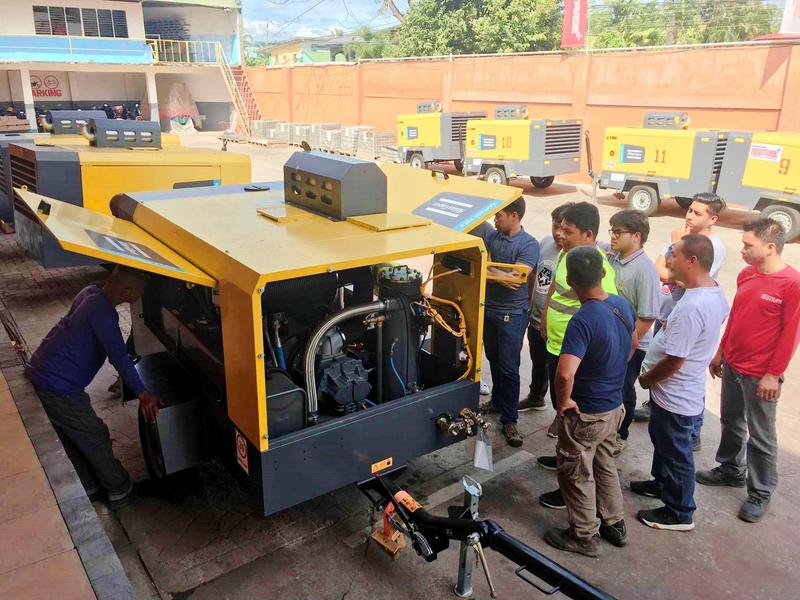
“Rebtrade International Corporation is one of the pioneers for specialty construction materials, slope protection and road stabilization installation. We started out as a trading company way back in 1980 for specialty construction materials. As we continued to expand and diversify, we needed to find good and reliable suppliers to help in our growth, that’s when we partnered with Atlas Copco. This was more than 8 years ago and to this day, Atlas Copco continues to be our go-to supplier for compressed air supply, among other things”, said Mr. Manuel Syyap, President of Rebtrade International Corporation. “We are happy that we have grown together with Atlas Copco, a company who shares our ideals and our vision. We hope that this partnership will continue in the years to come.”, he added.

Discover the products and services offered by Rebtrade International Corporation via www.rebtrade.com or contact them at info@rebtrade.com and +632 584 6070 to 71.

To know more about Atlas Copco’s range of products and services, visit https://www.atlascopco.com/en-ph/construction-equipment or email powertechnique.SEA@atlascopco.com.
August 25, 2021

Photo Credit: Department of Public Works and Highways

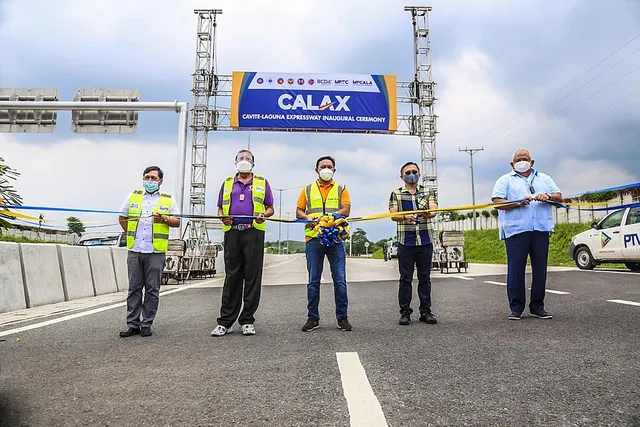
Public Works and Highways Secretary Mark Villar on Tuesday led the ceremonial opening of the Cavite-Laguna Expressway (CALAx) Sub-section 5 from Silang East Interchange to Sta Rosa-Tagaytay Interchange in Cavite.

“While this pandemic may have slowed down and disrupted the implementation of projects, the Sub-section 5 or 5.14 kilometers Silang East Interchange to Sta. Rosa-Tagaytay Interchange component of Cavite Laguna Expressway or CALAX Project was completed and will be now opened to public use,” said Secretary Villar during the event.

“The opening of Sub-section 5 will be able to cater to around 5,000 motorists daily, adding to the roughly 10,000 users of the already opened CALAx subsections 6, 7, and 8 from Sta. Rosa to Mamplasan,” said Secretary Villar.

According to Secretary Villar, ongoing subsections are also being fast-tracked by concessionaire MPCALA Holdings to be able to fully-open the entire 45-kilometer CALAx connecting CAVITEX in Kawit, Cavite and South Luzon Expressway-Mamplasan Interchange in Biñan, Laguna.

Once fully-completed, CALAx will significantly reduce travel time between CAVITEX and SLEX to only 45 minutes, reducing traffic congestion particularly in Governor’s Drive, Aguinaldo Highway and Sta. Rosa-Tagaytay Road which are heavily congested and supporting national development policy and provide efficient transport facilities for the Eco-zones in Cavite and Laguna Provinces.

“More than providing efficient transportation links, the CALAX project under public-private partnership arrangement with the MPCALA Holdings - a unit of the Metro Pacific Investments Corporation, will help hasten economic recovery by providing jobs and promote the Calabarzon as a preferred destination for investment and growth,” added Secretary Villar.

The P35.68 Billion Cavite-Laguna Expressway which began construction in July 2017 is part of a bigger Build, Build, Build Program of the government.


Article courtesy of the Department of Public Works and Highways

August 23, 2021

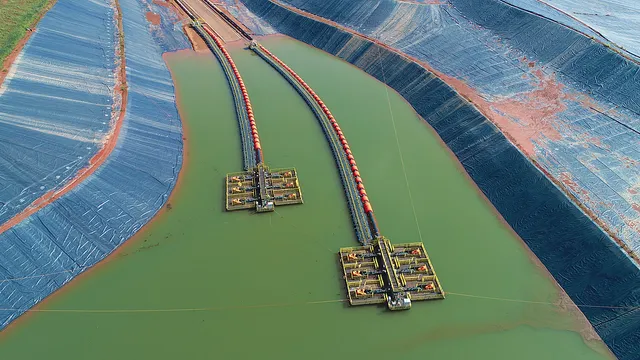
Photo: Multiflo® mega barges on site in Brazil

Dewatering is critical to a mine’s operations and more resources are being allocated to its optimisation. Traditionally, there’s been a tendency among some mine and quarry operations to view dewatering as something to be avoided at all costs – until it can’t be. Therefore, cost minimisation has been the primary focus when it comes to implementing a dewatering or fluid management solution. However, with dewatering becoming increasingly necessary, operators are approaching these challenges in more sophisticated and methodical ways.

The trends informing dewatering practices mirror many of those that are observable across all mining processes: a focus on sustainability and the efficient use of energy and other resources; customised, holistic solutions based on each sites unique geological and climatic conditions; and the emergence of new technologies, with a particular focus on real-time monitoring.

Dewatering solutions that are carefully designed and implemented have the potential to reduce energy usage, CO2 emissions and significantly lower OPEX over the life of the mine. The overall efficiency is affected by individual elements, but also by how these elements interact and operate with one another.

The renewed focus on pumping efficiency requires a significant shift in how many operators have previously approached dewatering and fluid management on site. Because most dewatering programs have been designed with the singular focus of lowering groundwater levels as quickly as possible, they often have excess pumping capacity and oversized pipes and pumps operating at only a fraction of their capacity – a process that’s inherently inefficient. This needs to change to accommodate the increased focus on efficient use of energy and water, which is critical to maintaining a social licence to operate.

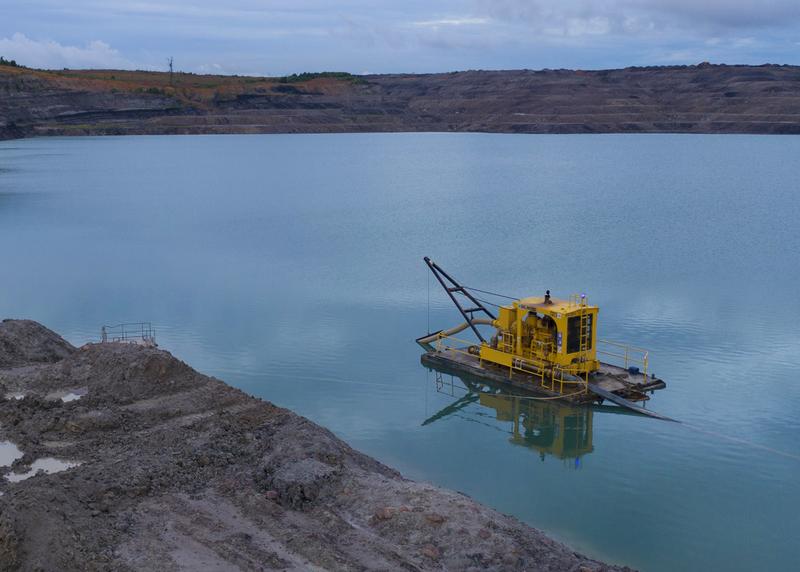
Multiflo® MF pump unit on site in Indonesia

Improving pump efficiency begins with effective monitoring. There have been enormous improvements in electronic control and communication systems in the last few decades. Real time reporting and control of pumping systems can now be an economic reality for almost any mine site. The more visibility you have over your fluid management on site – flow rates, operating pressures, groundwater level, water quality, system relocations, alternate drive solutions, equipment selections to reduce maintenance and repair cycles, etc. – the better placed you will be to install the most appropriate equipment. The industry is moving towards customised solutions and there’s a growing awareness that no two sites are the same, which means a one-size-fits-all approach to dewatering is neither cost effective nor sustainable.

Weir Minerals has a global team of dewatering experts who partner with mine operators to assess their specific requirements and provide integrated solutions. With a long and proud history of innovative engineering, Weir Minerals has a team of process and design engineers armed with the latest technology, specific process knowledge and site experience to optimise your dewatering management processes. We take advantage of our global capabilities and engineering skills to provide our customers with the best solution as quickly as possible.

With an extensive global network and the ability to service on-site or at one of our 130 dedicated service centres, we are always there when you need us - no matter how remote your operation is.

August 23, 2021

​

Making good its promise to take drastic action against illegal settlers in the mineral-rich Barangay Runruno in the town of Quezon, Nueva Vizcaya, the Mines and Geosciences Bureau (MGB) has led an operation leading to the dismantling and confiscation of illegally operating ball-mills, a device used by traditional miners to process gold ore.

“The operation came in as a surprise. Even the members of the local media took days to find out,” says Leander Domingo of Manila Times, who rushed to the scene with local journalists and Philippine Information Agency staff stationed in Bayombong.

It was only when social media posts began spreading that houses are allegedly being demolished in Runruno in the last days of July 2021 that newsmen learned about the operation. The MGB involved the National Bureau of Investigation, the Philippine National Police, and the Philippine Army to assist them.

Cagayan Valley Regional Executive Director Gwendolyn Bambalan of DENR was quick to dispel the rumour, citing that it is only the illegal ball-mills that were dismantled during the operation.

“These areas were classified as high-risk geo-hazard zones, so we are encouraging them to vacate the area. If needed, we will file appropriate charges just to enforce the law,” she said.

In violation of Presidential Decree 705, 32 lawsuits were filed by the DENR against those occupying the prohibited zones, most of them are operators and workers who owned the confiscated illegal gold mining and processing equipment.

The sub-villages of Bit-ang and Balcony in Runruno have long history of unreported deaths due to landslides and caving-in of make-shift tunnels. “Although there was no official confirmation, reports of deaths due to cave-ins and premature explosions as well as the use of deadly chemicals from small scale mining operations have been taking place in these villages,” a 2011 news report of the Philippine Star reads.

In November last year, Typhoon Ulysses brought the largest number of casualties in a single incident. The reported death of 10 people at the aftermath of Typhoon Ulysses alarmed authorities, and even Malacañang Palace issued an order creating the Build Back Better Task Force.

ILLEGAL MINING BUSTED. Regional Executive Director Gwendolyn Bambalan of DENR Cagayan Valley (in green shirt) personally inspected the dismantled and confiscated gold processing equipment in Barangay Runruno, Quezon, Nueva Vizcaya. Regional Director Mario Ancheta of the MGB (in blue shirt), PENRO Edgar Martin (second from left, front row) and CENRO Giovanni Magat (extreme left, front row) joined in the inspection. (Photo Credits: Benjamin Moses Ebreo, PIA Nueva Vizcaya)

The ‘Minahang Bayan’ as a National Strategy

DENR has long advised that there are legal ways for traditional artisanal miners to benefit from the country’s mineral resources.

“We can find appropriate places to establish a Minahang Bayan, just approach the MGB. You can look for Director Mario Ancheta,” she told Runruno residents in a video-taped interview with the Philippine Information Agency.

Last May, DENR Undersecretary Jonas Leones told the Philippine Daily Inquirer that creating Minahang Bayan sites will generate more jobs in the countryside and fuel economic growth.

Republic Act 7076 established the people’s small-scale mining program. It seeks to achieve an orderly, systematic, and rational scheme for the small-scale development and utilization of mineral resources.

According to RA 7076, small-scale mining “refers to mining activities which rely heavily on manual labour using simple implements and methods and do not use explosives or heavy mining equipment.”

DENR Assistant Secretary Nonita Caguioa, however, clarified that small-scale mining is applicable to gold, silver, and chromite only, and cited a restriction on extracting metallic minerals.

The Minahang Bayan is the only area where small-scale miners can operate legally according to the law. In this way, government can better monitor and regulate extractive activities.  The safety of the mine workers, protection of the environment, and generation revenues for the government could be tracked along this set-up.

“It is difficult to monitor small-scale miners if they are operating outside Minahang Bayan areas,” MGB Small-Scale Mining Development Section chief Joel Natividad.

As of May 2021, there are 39 operating Minahang Bayan in the country, almost twice more than the 20 recorded in 2018. MGB has targeted 150 Minahang Bayan to be established by 2022.

“Our crackdown on illegal miners continues as we also put up more Minahang Bayan areas. This is to ensure that mining will be concentrated in one area where the DENR can regulate and monitor small-scale operations,” Leones said.

Emerging Clean Mining Technology

In the Philippines, Executive Order 79 series of 2012 has already prohibited the use of mercury in small-scale mining, yet almost all artisanal miners continue to use it.

Since 2019, MGB Acting Director Wilfredo Moncano has been collaborating with a Global Environment Facility-funded USD11.70-million project to help eliminate the use of mercury in artisanal and small-scale gold mining sectors in the country and Mongolia.

The long-awaited substitute for mercury and cyanide finally came out very recently. Clean Earth Technologies now owns a technology that was tested at Barrick Goldstrike mine by CSIRO. This technology is being expanded to cover other types of ore.

Last 18 June 2021, Kevin Fell, Executive Director and CEO of Clean Mining Technologies made a presentation before a webinar with the Philippine Mining Club. His strategy for the Philippine market is founded on favourable environment where the authorities are now embracing more sustainable and environmentally friendly mining processes and opening up to approving licenses that benefit the community and economy.

Fell also believes that foreign Investment is now more palatable with stability and governance which assures tenure.

As the CML is the “only available genuine, non-toxic solution that meets all the needs of government authorities and mining communities,” Clean Mining Technologies throws its full support and collaboration with Artisanal Gold Council in the creation of community hubs to process gold extracted by artisanal miners, which is basically the same as the Minahang Bayan.

“We are very excited about this opportunity which will set world first standards in the artisanal space which accounts for over 25% of the worlds gold production,” said Fell.

As to how quick the government and mining stakeholders can put this technology to work is an interesting research subject in the coming years.

​

August 23, 2021

A month after Australian-Canadian miner OceanaGold Corporation (OGC) announced that the company hurdled a breakthrough after more than two years of operational stand-by in Didipio, jobseekers virtually flocked to the company’s local social media page.

Didipio mine is OGC’s major asset in the Philippines located 364 kilometres north of Manila. It is under the Financial and/or Technical Assistance Agreement (FTAA) scheme provided by the Philippine Mining Act of 1995 which was renewed for another 25 years after Pres. Rodrigo Duterte signed the agreement, its effectivity commencing June 19, 2021.

The social media page “Didipio Mine” has made its following jump to 18,264 with 17,159 likes after a month when job openings were posted.

At least 174 job openings were recently announced. OceanaGold Philippines, Inc. (OGPI), the company’s local subsidiary and holder of the FTAA, has 141 positions open as announced in various social media posts from July 21 to August 4.

Its homegrown contractor, DiCorp, also announced 19 vacancies. SGS Philippines, its assay laboratory contractor, has two jobs open while Delta Earthmoving has 12 vacancies announced recently.

The Didipio Mine page has pledged to abide by the Data Privacy Act to assure applicants that any sensitive information they passed to the hiring department will be treated with strict confidentiality.

“Didipio Mine employees work on a family-friendly roster schedule (10 days on/5 days off; 14 days on/7 days off; 20 days on/10 days off and 28 days on/14 days off) and working 11- hour shifts.  Meals and accommodations are provided for non Didipio residents in the mine’s camp facilities,” the job offer reads.

As new jobs are generated, the government hopes for an economic rebound from the effects of lockdowns last year. Income taxes paid by Didipio mine employees alone has made the Bureau of Internal Revenue district here as a top achiever in terms of collection since 2013.

Locals First Policy

One of the demands raised by residents when they opted to endorse the first FTAA in 1994 is to have the right to priority employment. As this is easier said than done, OGPI explored many options to abide by this commitment of its predecessor companies.

OGPI’s most notable innovation is the creation of DiCorp, a local company established by long-time residents whose lands were affected during the construction of the Didipio mine. Since the mine needs a variety of services such as laundry, housekeeping, food catering and transport, OGPI encouraged those compensated with large sums of money for their lands to invest in DiCorp.

DiCorp was established before Didipio mine commenced commercial operation in 2013. It has played a major role in the operation of the mine since then.

“Today and onwards, we see a brighter future, better opportunities and hopefully a stronger DiCorp in terms of dedicated, sensible and responsible staff, improved income, and credibility,” said Simplicia D. Ananayo, who was then serving at the Community Relations Office when DiCorp was established 10 years ago.

Ananayo has retired after reaching the mandatory age serving at the Community Relations Office of OGPI. She is now part of DiCorp’s top management since she had acquired some of the company stocks when it was established.

Hope in Pandemic Times

The resumption of Didipio mine’s operation will certainly boost the country’s economic survival amidst pandemic times. As hundreds of companies went broke or were forced to close, and even Filipinos gainfully employed oversees came home, Didipio mine is a good choice of employment.

Furthermore, the new FTAA widened the scope of its Social Development Management Plan (SDMP). The company explained that the FTAA was renewed on substantially the same terms and conditions and includes the following modifications:

  • The equivalent of an additional 1.5% of gross revenue to be allocated to community development.
  • Reclassification of Net Smelter Return to be an allowable deduction and shared 60%/40% rather than wholly included in government share.
  • Listing of at least 10% of the common shares in OceanaGold Philippines Inc. (“OGPI”), the Company’s Philippine operating subsidiary and holder of the FTAA, on the Philippine Stock Exchange within the next three years.
  • OGPI shall offer for purchase by the Philippine Central Bank not less than 25% of its annual gold doré production at fair market price and mutually agreed upon terms.
  • Transfer of OGPI’s principal office to a host province within the next two years.

“The additional 1.5% allocated to community development will take the form of increased contributions to communities in the region and provincial development projects. While the existing fund for Social Development and Management Program will continue to be provided for the host and neighbouring communities, 1.0% of the additional 1.5% will be allocated to community development for additional communities and 0.5% to the host Provinces of Nueva Vizcaya and Quirino,” OGC explained in a press statement. 

August 23, 2021

Photo Credit: Carmen Copper - With its health and safety protocols already in place, Carmen Copper Corporations was able to maintain full operations throughout 2020.

While millions of jobs were lost last year across most sectors following the lockdowns put in place to contain the Covid-19 pandemic, employment in the Philippine mining industry remains largely unaffected.  This is due mainly to the resilience of the minerals development sector and the efforts of mining firms to keep their workers employed.

According to the Philippine Statistics Authority, the country’s unemployment rate was 8.7% in April 2021, an improvement from the 10.4% posted at the end of 2020 – the highest in 15 years.  In terms of magnitude, the April figures translate to a total of 4.14 million unemployed individuals who are 15 years old and above.

The Asian Development Bank’s (ADB) estimates the Philippines’ total job losses at 2.1 million in 2020, around 500,000 of which were in construction and another 100,000 in manufacturing, with the steepest decline in employment in the services sector reliant on tourism.  ADB pegs the job losses north of 500,000 in wholesale and retail; 265,000 in accommodation and food; and a drop of about 100,000 jobs in transport, public administration, and other services.

Meanwhile, the Mines and Geosciences Bureau says the mining and quarrying sectors even posted a slight increase in employment numbers, from 182,000 in 2019 to 184,000 in 2020.  In April 2021, however, employment in mining and quarrying dropped by 7,000, which can be attributed to the temporary closure of some operations due to local government directives. Nevertheless, this figure is expected to improve particularly in the large-scale metallic sector with the resumption of OceanaGold Phils. Inc.’s Didipio Project operations soon following the renewal of its mining agreement with the Philippine government.

Quick response

Members of the Chamber of Mines of the Philippines (COMP) – composed primarily of the country’s largest metallic mines –  responded early to the pandemic, enabling them to effectively mitigate the risks of infection within and around their mines.  In Carmen Copper Corporation’s (CCC) mine in Toledo City, Cebu, for instance, the company secured its employees’ livelihood by assuring continued salaries, providing assistance to protect their health, and setting up precautionary measures to reduce infection risks. CCC instituted flexible work arrangements, such as work-from-home options for non-critical employees and accommodations for workers directly involved in the mine and mill operations. The company also provided free service buses for commuting personnel as public transportation was halted during the lockdowns.

Health and safety measures were strictly implemented in the workplace such as social distancing and mandatory wearing of personal protective equipment. CCC also conducted regular disinfection and housekeeping of work areas and facilities.

CCC followed the “Trace, Test and Treat” strategy in managing the Covid-19 pandemic. The company’s emergency responders and medical teams meticulously traced contacts people exposed to persons positive with Covid-19 and provided regular testing. It also established quarantine areas inside the mine site and provided nutritious meals, vitamins and supplements for workers who have been exposed to positive patients.

Thankful

CCC’s efforts to secure jobs and keep employees safe are being replicated by COMP member-firms across the country.  These efforts have not gone unnoticed by their workforce. 

“During the onset of the pandemic, we did not report for work for 15 days,” recalls Jordan Zamuco, a company driver at Philex Mining Corp.’s Padcal Operations in Tuba, Benguet.  “We were on on-call duty since there were company volunteer programs where our assistance to transport donations to our host and neighboring communities were needed. After 15 days, we were back on track; our work has been continuous since. There were instances when the skeletal workforce arrangement was necessary in our department but we were well compensated. We received our daily salary. What I am most thankful for are the continued benefits from the company that we received without delay.”

“I am grateful to this company for continuing to provide benefits for us employees,” says Mine Operations Group manager Benedict Gapongli.  “Despite this situation we are all facing, the company even gave us bonuses and salary increases.”

None of Philex Padcal Mine’s nearly 1,900 employees – majority of whom are from the Cordillera Administrative Region (CAR), which posted a 25% unemployment rate at the start of the pandemic – were separated since the start of the pandemic.  Same with the company’s corporate offices in Mandaluyong, where some 80 employees are posted.

New Philex Mining Corp. (PMC) HR Senior Supervisor Luzbele Roxas, hired during the pandemic.  PMC is part of the MVP Group of Companies.

“In Philex, I can feel how agile the company is in adapting to the pandemic,” shares Human Resources senior supervisor Luzbele Roxas.  “The work-from-home setup and laptop subsidy keep me safe and make me productive at the same time. One of my key functions in HR is recruitment. I’m well equipped to handle challenges in this function with the aid of digital solutions. Moreover, with De Los Santos Medical Center, Cardinal Santos Medical Center, and other MVP partner medical institutions on my speed dial, I can confidently take care of our existing and prospective employees on their health needs. The work environment here in Philex is family oriented.  Perhaps that’s the reason why we have many long-tenured employees.”

“My work during this pandemic period has been most rewarding,” says Keith Conrad Fabros, a shop clerk and tool keeper at Padcal’s Mobile Equipment Department. “I may have additional workload, but I am quite able to cope with it. I am thankful that despite this pandemic, I still have a steady job and my family and I are healthy. The company provides free medical benefits to employees, such as the random swab tests. This makes us and our families protected from the virus.”

“There are so many things to be thankful about being part of this wonderful company, of course with the directives and supervision of our beloved president, Mr. Eules Austin,” says Irish Distor of Philex Mining Corp.’s Information Technology Department. “Thank you very much, Sir! Mabuhay po kayo!”

“During these difficult times a lot of people lost their jobs. That is why I am most thankful to Philex for ensuring that I keep my job and bring food on the table, and for helping keep our families safe,” says Irish Distor from Philex’s Corporate Office. “We were given the tools we need to do our jobs and the flexibility to work from home. Philex  also showed us how much they care for their employees when we were given flu and Covid-19 vaccines.”

Lucky

Benguet Corporation (BC), for its part, managed to secure the jobs of 1,433 employees in the company’s head office and various projects. The company’s gold operation in Itogon, Benguet managed to remain open even with the drastic decrease in the attendance of contract miners by 56%. Despite lower production, BC retained its 475 employees in its Baguio Gold Operation and is currently hiring for newly vacant positions.

“As the coronavirus continues to rapidly spread across the world, it is causing a considerable degree of anxiety, fear, and concern to all,” says Mark Gallo, Human Resources assistant at BC’s head office.  “Having this in mind, the company has safeguarded the welfare of its employees by providing flexible working hours, shuttle services, regular RT PCR screening tests, vaccines, quarantine facilities, and other safety essentials to protect them from the infection. We are lucky.”

The company’s subsidiary, BenguetCorp Nickel Mines Inc (BNMI) greatly contributed to the increase of employment in Sta. Cruz, Zambales when it resumed mining last year. Since October 2020, BNMI contracted additional 704 employees for it nickel mining operation.

“Hearing news of unemployment in the country and closing down of many businesses in different industries, makes me realize to be grateful that I still have a secured job I can count on during these trying times to provide for my family,” Gallo adds.

Roy Cale and 200 of his fellow workers and contractors at Sagittarius Mines Inc. (SMI) were able to keep their jobs despite the pandemic.  With his job secured, he and his nine teammates in the firm’s Mine Environmental Protection and Enhancement Team aim to produce up to 120,000 seedlings that SMI will then grow, propagate, plant, or distribute to community members in Tampakan, South Cotabato.

Roy Cale is one of the nine contractual workers under the Mine Environmental Protection and Enhancement Team (MEPE) of Sagittarius Mines Inc. (SMI).  As a nursery aide, he brings to life various seedlings that SMI will then grow, propagate, plant or distribute to community members.  This year, Cale and his other teammates aim to produce up to 120,000 seedlings of various tree species.

Cale is a resident of Barangay Tablu in Tampakan, South Cotabato. He joined the SMI MEPE Team in 2017 and has since helped produce more than half a million seedlings.

During the onset of COVID-19 pandemic last year, Cale was thankful that his workspace is in the great outdoors, making him feel safe from possible workplace infection. Cale was also thankful that, despite job losses that other industries suffered due to lockdowns and economic downturns, SMI immediately activated its crisis management and business continuity plans that allowed him to keep his job. Some 200 other SMI staff and contractors were able to keep their jobs as well.

‘Malasakit’

The pandemic served as an opportunity for Berong Nickel Corporation (BNC) in Quezon, Palawan to assuage its employees that no challenge is too difficult if they focus on their work and on showing their “malasakit” – or concern – for both the company and each other.

“Initially we were afraid that we will lose our jobs like what happened in other companies, Jay Dionisio, an artist at BNC’s Safety Department. “We were fetched from our homes by our company and made to stay in the mine to protect us from the virus.  This arrangement allowed us to work unhampered, thus ensuring our income kept coming and our families won’t go hungry.”

(Clockwise from top left) Rolando Sajot, Jaypee dela Cruz, Florita Mutas, and Jay Dionisio all showed “malasakit” for Berong Nickel Corp. and fellow employees, which helped the company to overcome the challenges posed by the pandemic.

Rolando Sajot, BNC Safety superintendent, says the strict enforcement of Health Protocols in the mine enabled the company to keep all its 778 employees safe.  “We managed to maintain our Safety Performance Indicator at ‘0’ – meaning there were no recorded accidents from 2019 to December 2020,” he points out.  “We posted 4 million man-hours of no lost time accident, and 25 million man-hours of no fatality since 2007.”

“Our efforts to care for and protect the forest and seas continued amid the pandemic,” says BNC Mine Environmental Protection and Enhancement officer Jaypee dela Cruz.  “One of the most important elements of our reforestation initiatives is our Nursery operations, manned by people like Mrs. Florita Mutas who, at 43, still sends seven of her children to school.”

“With God’s grace, we were able to continue our work here, which gave me the means to feed and provide for all the needs of my children,” Mutas relates.

Happy and Contented

While other companies have shut down their businesses due to the pandemic, exploration and community development work in and around TVI Resource Development Philippines Inc.’s (TVIRD) Balabag Project in Bayog, Zamboanga del Sur has not stopped, says Julito Bate, a carpenter and father of seven children.  “TVIRD values its workers, especially those who are honest in doing their work.”

Marvin Edal, a former illegal small-scale miner in this town, says working with TVIRD is his “dream come true”.  A member of the Subanen tribe, Edal was able to fulfill his wish of serving his community, especially in times of calamity and disaster, as part of the company’s exploration team.  On top of that, he now earns a lot more compared to the meager P20 he received per day in his old back-breaking job of carrying sacks of gold ore to his boss’ makeshift processing plant. 

The pandemic has not prevented him from helping his townmates and those in neighboring villages owing to the company’s continued operations.  “My only wish is for TVIRD to start its mining operations soon so we can further spread the benefits of responsible mining,” he says.

The chief’s grandson. Despite his lineage, Marvin Edal is described as “warm, approachable and hard-working – one of the best employees of TVIRD’s Community Relations group.”  Photo shows Marvin (in light blue) assisting his grandfather, Timuay Casiano Edal, in managing administrative duties for the Subanen tribe.

Edal’s sentiment is shared by Dionel Barut, an Administration assistant and in-charge of TVIRD’s kitchen staff, as well as the purchase of supplies for the kitchen, mess hall, and accommodation facilities in Balabag.  “I like working here because the company takes good care of its employees,” he relates.  “Besides the good pay, much importance is given to our health and safety.”

Barut worked once in a 5-star hotel at the Bonifacio Global City in Taguig but left and joined TVIRD in 2020.  He has no plans of leaving anytime soon.  “We are happy and contented here, especially whenever we see our fellow workers delighted with the food we serve – and then receive ‘thank-yous’ from them. Makes one forget there is a pandemic wreaking havoc all around,” he adds.

Manpower reduction never an option

Being in an export-oriented industry, Lepanto Consolidated Mining Company (LCMC) continued to operate albeit in a limited capacity and with due observance of the regulations set by the Inter-Agency Task Force for the Management of Emerging Infectious Diseases or IATF.  Manpower reduction was never an option for the company. Instead, LCMC opted to manage the employees’ earned leave credits not merely as a cost control measure, but more so to conform with the IATF protocols for companies allowed to operate and to help stem the spread of the virus in the work place.

“The good thing here is that even with the Covid-19 pandemic, Lepanto didn’t stop operating,” says Mauricio Bangngayon, a Mine Shift Boss at LCMC’s Mankayan, Benguet mine.  A high school undergraduate, Bangngayon left his village in Tanudan, Kalinga 10 years ago and found a job here, initially as a mucker, then as an LHD operator 3 years later, until he was promoted to his current post. 

“The company continues to fight, and I am still here,” he stresses.  “The thing I like most is that I am with my family here.  My wife doesn’t need to work abroad because I can provide them a decent living because of my job.”

Mauricio Bangngayon (center), flanked by the Uyod brothers Abelard (left) and Samel (right) are thankful that their company, Lepanto Consolidated Mining Co., continues to fight to keep their jobs at the firm’s Mine Division in Mankayan, Benguet.

The company put the welfare of its employees above anything else by providing them with the necessary personal protective equipment, vitamin C especially for the frontliners, shuttle services to ferry the employees to work and back home, and disinfectants for offices, to name a few.

Lepanto also conducted massive testing for all the mine site employees. Those who tested positive were sent to quarantine facilities with free meals. The Lepanto Hospital continues to give free medical services to all the Lepanto employees and dependents. With Lepanto’s good relationship with the Mankayan Local Government Unit, getting its employees vaccinated was never a problem.

Like Bangngayon, Abelard and Samel Uyod, both from Tadian, Mt. Province, found their luck in Lepanto, Mine Division.  Both of them are third generation employees, as their father and grandfather used to work for the company as lead miners.  The Uyod brothers are grateful for the opportunities given to them my LCMC even with their lack of college degrees. 

Abelard started working as a security guard in 2001 and eventually became a security officer, because of his dedication and excellent performance being an underground patrol.

“My being able to continue working here despite the pandemic is really a great help,” Abelard relates.  “My children are still studying – two of them are now in college – and we need to fund their tuition fees.  We don’t know any other income source that’s why my brother and I are so fortunate that we’re still here.”

His older brother Samel started as a mucker in 2004, then became a lead miner, and was promoted to LHD operator, until he bagged the senior surface safety inspector position in 2010. He says: “Our families’ primary source of livelihood – our salaries – wasn’t affected that’s why our standard of living remains steady even with Covid-19 wreaking havoc everywhere.  We are able to withstand the pandemic because we still have our jobs and for that we are most thankful.”

Solidarity in the time of Covid-19

Back in Toledo City, Carmen Copper Corporation (CCC) saw recently the signing of a Collective Bargaining Agreement (CBA) between management and workers.  Of CCC’s 2,365 employees, 1,916 or 81% are rank-and-file employees.

President and CEO Roy Deveraturda says the signing is a symbol of solidarity, regardless if you’re a union member, the management, a service provider, or contractor.  A key factor to the swift and peaceful CBA signing is the professionalism shown by the officers of the union, whom he described as "men of integrity and purpose."

Carmen Copper Corp. President and CEO Roy Deveraturda (right) shares a light moment with labor union president Herbert Cabaluna during the signing of the new CBA between the firm and its employees.

"They know that they also have responsibility because I believe they understand that before the wage earners can receive their share of the fruits of their labor, the wage giver must have the capability to give it to them. I salute the honesty, dedication and professionalism of the union members toward the common good," Deveraturda says.

After the first three years, another negotiation will be made to deliberate on the next salary increase for the last two years of the CBA, he adds. “In a scenario wherein the general situation, brought about by the current pandemic, talks of furlough, layoffs and retrenchments from other companies, CCC is talking about salary increases and enhancing the welfare of its employees.".

Union president Herbert Cabaluna, who described the CBA signing as a "very important" development, agrees: "Despite the pandemic and its effect to the economy, our CBA managed to increase and improve economic benefits like wages, benefits, allowances, bonus and programs. Aside from economic benefits, the CBA also institutionalized job security and protection of workers' rights."

As CCC continues to strive for its goals amid the pandemic, Deveraturda urged all employees to do what they can for the company: "We must all love the company, show your commitment, cooperation and of course, your competence in the performance of your assigned tasks."


Article Courtesy of the Chamber of Mines of the Philippines

August 23, 2021

Photo Credit: Victor Roman

The rehabilitation of the San Juanico Bridge has further delayed its much-awaited lighting project, a Department of Tourism (DOT) official said on Friday.

In an interview, DOT Eastern Visayas regional director Karina Rosa Tiopes said the completion of the lighting project will be pushed to early 2022 to give way to the repair of the 50-year-old bridge.

Tiopes said officials of the Department of Public Works and Highways (DPWH), bridge rehab contractor, and lighting project contractor Amigo Entertainment Technologies Inc., and others concerned agencies will meet regularly to resolve issues causing the delay of the tourism project.

Citing discussions in a recent meeting, Tiopes told the Philippine News Agency (PNA) that the DPWH contractor, M. G. Lualhati Construction Corp., unintentionally removed some of the bulbs and its fiber optics in their attempt to replace bridge bolts and install scaffoldings.

“Each bulb is linked to an address. Imagine how many bulbs were installed and each of these is interconnected to each other. If one is removed, other bulbs are affected,” Tiopes added.

The DOT regional office is tasked to monitor the project funded by the Tourism Infrastructure and Enterprise Authority (TIEZA), an attached agency of the tourism department.

Toribio Odtuhan, head of the DPWH San Juanico Bridge Task Force, said Amigo was informed about the rehabilitation plan, but the latter failed to follow the recommendations on where to specifically install the bulbs.

“Our contractor is willing to pay the cost of damage. We will meet again with the DOT contractor and the Samar provincial government to resolve the problem,” Odtuhan told PNA.

The PHP96.25 million major bridge repair projects include structural steel painting, tightening and replacement of bolts, and general scaffolding.

This is the first initiative to tighten and replace bolts since the bridge was built in 1969.

The bridge repair will be done in December this year, moving the lighting project completion to the first quarter of 2022.

The PHP80-million San Juanico Aesthetic Lighting project was approved in 2018, with bidding that started in 2019, and groundworks that began in the same year.

It was initially targeted for completion in the second quarter of 2020 but was affected by the restriction due to the coronavirus disease 2019 (Covid-19) pandemic, pushing the revised completion date to December last year.

However, during the test run, it was found that the power supply from a substation supplying electricity to the bridge was unstable. Major issues were addressed and officials revised the full completion date to Aug. 11, 2021 in time for the 180th Samar Day celebration.

“The entire project was 95 percent done when the DPWH started the bridge repair works. With this problem, there’s more work to be done again,” Tiopes added.

Under Amigo’s initial plan, the lighting will be in the default position for 45 minutes per hour in white and strobe lights. There will be a 10-minute light show six times nightly.

The colors may also depend on the occasion, such as red for Valentine's, red and green for Christmas, and violet for Lent.

Officials assured that lights will not distract traffic flow at the bridge that forms part of the country’s longest highway that links Luzon to Mindanao.

Aesthetic lights are not visible to motorists passing the bridge, according to the contractor.

The bridge’s transformation would be a new attraction under the Spark Samar, a branding campaign of the local government that was launched in 2015.

The San Juanico Bridge, which spans 2.162 kilometers, was built as part of the Pan-Philippine Highway now called the Maharlika Highway, a network of roads, bridges, and sea routes that connect the islands of Luzon, Samar, Leyte, and Mindanao. - By Sarwell Meniano


Article Courtesy of Philippine News Agency

August 21, 2021

When Indonesia announced the reimposition of their nickel export ban in 2019, why were many key players in the Philippine mining industry optimistic about this? Was their optimism based on the belief that Indonesia is out of the game due to their nickel export ban? Did the Philippines really benefit from Indonesia’s export ban on laterite nickel ores?

What actually happened is that during the years when Indonesia halted their laterite nickel ore exports to the world, outsiders still got their nickel supply from Indonesia by investing in the country, thus giving them internal access to Indonesia’s nickel. This investment strategy brought a win-win situation to both Indonesia and their foreign investors. This is an angle of the Indonesian nickel export ban story which is disadvantageous to the Philippine nickel industry. But are the industry players in the Philippines aware of this?

To give an in-depth analysis on what really happened to the Philippine nickel industry while Indonesia was implementing their nickel export ban, top Australian mining executive and CEO of Electric Metals Limited, George Bujtor shares his thorough research about the matter. 

For background, George Bujtor has extensive work experience in technical, financial and commercial aspects of mining operations. He is one of the authors of a paper titled “A Guide to the Understanding of Ore Reserves Estimation”.[1] The paper was published by the Australasian Institute of Mining and Metallurgy in March 1982 and was the basis for the development of the JORC Mineral Code used worldwide today. This study is a remarkable peer-reviewed journal and significant reference of most international mining studies and academic research in relation to JORC studies and Mineral Reporting Code.[2]

His career is notable as past General Manager and Managing Director during his 22 years in Rio Tinto, Australia, and as former CEO of Aldoga Aluminum, Australia. On his first years in the Philippines, he developed the Berong Nickel mines in Palawan as CEO of Berong Nickel Corporation. Following this, he became the CEO of Carmen Copper Corporation/Atlas Mining where he successfully raised over US$200M in bond issue for the expansion of the mine and processing operations.


He held numerous Board positions and is a Fellow of the Australasian Institute of Mining and Metallurgy, and is a Competent Person as defined by the JORC & NI 43-101 codes (Australasian Joint Ore Reserves Committee).


Here’s an extensive report, analysis and forecast by George Bujtor about the current situation of the Philippine nickel industry.

August 18, 2021

DMCI Mining shipped 1.24 million wet metric tons (WMT) of nickel ore from January to June, an all-time high for the company and 45 percent higher compared to the 853,000 MWT shipped during the same period last year.

Of the total shipments, 718,000 WMT came from Berong Nickel Corporation (BNC) while Zambales Diversified Metals Corporation (ZDMC) contributed 522,000 WMT.

“This is the first time that both our mining assets are operating at full capacity. We expect shipments to remain strong in the second half since we were able to extend Berong’s mine life from June until Q3 this year,” said DMCI Mining president Tulsi Das C. Reyes.

Average nickel grade of the shipped nickel dropped from 1.37% to 1.39% while average selling price per metric ton rallied 57 percent from USD28 to USD44 owing to China’s surging stainless steel production, strong demand for electric vehicles and the continuing Indonesian nickel ore export ban.

“The uptrend in nickel prices is likely to continue in the coming months because of production-consumption gaps. Major nickel producers are seeing lower output because of COVID-19 lockdowns and various operating issues but industrial manufacturing is still ramping up,” Reyes added.

DMCI Mining revenues in the first half grew 123 percent from P1.2 billion to P2.7 billion. Including a nonrecurring income of P247 million mainly due to deferred tax liability remeasurement and 2020 income tax adjustment under CREATE Act, its standalone net income soared 409 percent from P241 million to P1.2 billion.

Nickel is mainly used in stainless steelmaking, but is also a vital ingredient for the lithium-ion batteries used to power electric vehicles (EV). The International Energy Agency estimates that global EVs will grow 14 times to 145 million by 2030.

August 18, 2021

Photo Credit: The Department of Public Works and Highways

The Department of Public Works and Highways (DPWH) is on track to deliver the Lawton Avenue to Global City viaduct section of the Bonifacio Global City (BGC)-Ortigas Center Road Link Project by end of 3rd Quarter this year.

Secretary Mark Villar said that construction of viaduct and approach 3 along BGC’s 8th Avenue is now at an accelerated pace to meet the September completion target.

This project will soon provide motorists a much different travel experience between Ortigas and BGC, added Secretary Villar.

Secretary Villar together with Undersecretary for Unified Project Management Office (UPMO) Operations Emil K. Sadain and UPMO-Roads Management Cluster 1 (Bilateral) Project Director Benjamin Bautista and Project Manager Ricarte S. Mañalac made an inspection of the project on Tuesday, August 17, 2021.

According to Undersecretary Sadain, DPWH has already completed the deck slab of main viaduct from pier 13 to pier 22 while installation of deck slab reinforcements at pier 22 to abutment 3 including median, sidewalk and parapet reinforcements are on-going.

Although community quarantine is in place, DPWH and contractor Persan Construction Inc. has continued the work along the stretch of 8th Avenue from the Kalayaan Avenue intersection taking into consideration the construction health and safety protocols, said Undersecretary Sadain.

Construction of retaining and MSE wall for the 155 meter approach 3 are also on-going with the underground utilities of Meralco along 8th Avenue already relocated.

Once the Lawton Avenue to the Global City Viaduct section is fully completed, it will provide direct access from Ortigas Center heading towards the Kalayaan Bridge to Bonifacio Global City.

The entire 1.481-kilometer BGC-Ortigas Road Link Project, composed of the Kalayaan Bridge which was opened last June 12 and the improvements at Brixton and Fairlane Streets, and the Lawton Avenue – Global City Viaduct, is expected to reduce travel time between BGC and Ortigas Center from a one-hour trip to 12 minutes.


Article Courtesy of the Department of Public Works and Highways

August 17, 2021

Global Ferronickel Holdings, Inc. (FNI), the country’s second-largest nickel ore producer, recorded H1 net income of P640.8 million against the P195.8 million it posted during the same period last year. Revenues are up by 68.9% to P2.61 billion compared to P1.54 billion during the same period last year mainly due to higher nickel ore prices and increased shipment volume.

“We garnered more favorable results this year as the market experienced a big jump in the price of low-grade nickel ore. We did not experience a stoppage of operations as what happened in April last year,” said FNI President Dante R. Bravo.

The Group completed 32 nickel ore shipments in H1 2021 against 23 shipments during the same period last year resulting in a 38.3% increase in shipment volume to 1.740 million WMT against the 1.258 million WMT in 2020. These were 100% exported to China and consisted of 1.465 million WMT low-grade nickel ore and 0.275 million WMT medium-grade nickel ore. The resulting sales mix is 84% low-grade ore and 16% medium-grade ore in 2021 compared to 52% low-grade ore and 48% medium-grade ore in the previous year.

The overall average realized nickel ore price for the period ending 30 June 2021 was USD 31.10/WMT compared to USD 24.38/WMT for the period ending 30 June 2020, higher by USD 6.72/WMT or 27.6%. The price of low-grade ore went up by 61.7% to USD 31.01/WMT in 2021 against the 2020 price of USD 19.18/ WMT. Medium-grade ore, on the other hand, was USD 31.58/WMT or 5.2% higher than the 2020 price of USD 30.03/WMT.

To date, FNI has spent over 35 million pesos on its COVID-19 response. It works closely with various local government units in helping the local communities combat the spread of the virus and providing relief during this time of need. It has donated PPE supplies, test kits, disinfectants, vitamins, medical equipment, medical services, rice and other essential goods, and participated in building a molecular laboratory in Surigao and a COVID-19 test center in Palawan.

August 17, 2021

CAGDIANAO, Dinagat Islands -- Stress is a word that many people are not a friend of. In fact, never-ending problems or worries arise because of constant stress, dubbing it as the number one enemy of our existence.

In the world of the Blue Zone, we can find that most centenarians enjoy their prime years avoiding stress. Their healthy lifestyles take care of their physique and mental stability.

In our work environment, stress disrupts people from doing their best. The long tiring jobs drain them physically and mentally. Some may get involved to join drinking buddies to relieve stress -- only to find out that their health suffers as a consequence.

Some may even spend more overtime to get their jobs done, only worsening their physical conditions as they already are overworking. It is unproductive and unsafe.

Continuous stressful work for longer periods will cause fatigue, resulting in eye strain, back pains, and other maladies.

Many companies have created many ways to get their workers to embrace a healthy lifestyle, and Cagdianao Mining Corporation (CMC) is one of them.

At the heart of the campsite lies a large room stuffed with weights and training equipment, the humble FITNESS GYM.

CMC Fitness Gym’s history goes back a decade ago. It was a suggestion from a local Fire Brigade to build an indoor venue for the CMC workers to exercise for health reasons and at the same time, to boost up their morale.

There was no fitness equipment at that time yet, so some workers improvised a bench press made from used campsite lumber, and dumbbells and the barbell weights were made from junk humungous dump truck metal gears.

Currently, some employees go out from the campsite and hit the road for a bicycle ride, a hike, or even jogging a few kilometers and back. Some may play at a half-courted basketball ground.

In the past, the company had a program called “Shape-up CMC,” which introduced the exercise regimens like Zumba (which gradually dissolved), but nothing can beat the camaraderie inside the Fitness Gym (still going active and improving).

Inside the gym, you can already sweat out what you can do running by using the thread mill. The thread mill can be digitally programmed according to your needs like setting up how many minutes you want to run or walk. You can also program a steeper incline to increase difficulty and challenge yourself more. You can try other training equipment for the muscle that you preferred to get toned.

Exercising outside the camp premises could mean a higher possibility of injury (e.g. dog bites, sweltering heat of the sun, dust, sprains, knee tendonitis, dangerous slippery roads and the like). Inside the gym, you may encounter minor injuries, too, but thanks to the constant presence of the CMC work-out buddies, you are guarded.

These work-out buddies are employees from different departments who love to sweat their stresses out.

It may sound strange, but the more they sweat, the more that they are having fun. In the scientific world, this is called… feeling good brain chemicals -- endorphins, dopamine, norepinephrine, and serotonin are released to create a cocktail of enjoyable sensational experiences.  

Although the repetitive physical movements and weight resistance is tiring, the mood is converted into something positive through a healthy transformation of body cells, muscles, and brain tissues.  

After the workout, you will feel exhausted but that exhaustion will give you a better sleeping cycle. Once you have a good night's sleep, in the morning the feeling of soreness prevails but it’s a signal that your body is transforming into a better and healthier one.

“When I started in the field of fitness, I thought I needed to be healthy and physically strong under the influence of a best friend, I saw in him the dedication and motivation that pushed me to start going to the fitness gym and work out. And there I proved to myself that my decision was right from the advice of my close friend to enter the field of fitness, it also led to my diet discipline to eat healthy and nutritious foods that help me become strong, have a healthy body and mind. Time and health are two precious assets that we don't recognize and appreciate until they have been depleted.” – Junelan P. Petilo (CMC ERT Coordinator / Safety Inspector)

Hitting the fitness gym can also help build new friends inside the company that works at other departments. The CMC work-out buddies are also encouraging other co-employees to join them especially those that are too dependent on Medical Care benefits and living a sedentary lifestyle.

You cannot be healthy by just wishing about it: you have to take action; do it and live by it.  

Most of the CMC work-out buddies’ interests and conversations are focused on the well-being of every individual. You can enjoy physical stimulation through working out while having social stimulation as well.
 

“Am happy that I belong to a company that consider its employees’ health as a fundamental key to achieving goals, believing that a person’s well-being is second to none in terms of productivity. In-house fitness facility is convenient and time saving, of course, the camaraderie and friendship is priceless. Taking care of one’s self is a no brainer as Jim Rohn famously quoted ‘Take care of your body, it’s the only place you have to live’.” – Mcdodd Baylon (CMC Ship Loading Supervisor)


CMC also improved its employees’ health and wellness by catering them a healthy meal from nutritious recipes provided by their very own Dr. Alvin Pura (CMC Company Head Physician).  
 

This healthy lifestyle is crucial to the success of the company, as Papa Bear (John-Eric S. Taburada) always says: “I don’t want to be a liability to the company, and a great start would be, engaging in constructive habits -- starting with my HEALTH.”